
Yes, you can sleep in the back of a Toyota RAV4, but comfort depends on your model year, height, gear, and sleeping setup. Folding the rear seats, measuring the usable floor, leveling any slope, adding an insulated pad, and choosing a legal campsite can turn the RAV4 into a practical shelter for road trips and short camping stays. Toyota lists up to 37.8 cubic feet of cargo space behind the second row for the 2026 RAV4, but cargo volume does not tell you whether a mattress or sleeper will fit lengthwise.
Last updated: September 19, 2026. This guide was reviewed against current Toyota vehicle information and current CDC, National Weather Service, BLM, and U.S. Forest Service safety guidance.
Quick Answer
Most Toyota RAV4 models can provide enough room for one adult and, in some configurations, two adults to sleep with the rear seats folded. Measure your own usable length, narrowest width, floor slope, headroom, and hatch clearance before buying bedding or cutting plywood. Keep the engine off, maintain safe ventilation, and camp only where overnight vehicle use is permitted.
Key Takeaways
- Fold the rear seats first. Remove them only when your model-year manual and installation details support doing so safely.
- Measure the usable length, narrowest width, floor slope, headroom, and hatch clearance instead of choosing bedding from cargo volume alone.
- The 2026 RAV4 begins an all-new generation, so do not assume a platform or mattress template measured for a 2019–2025 RAV4 will fit.
- A folding foam pad or self-inflating camping mat is easier to fit than a rigid household mattress.
- Never sleep with the engine running or use a stove, grill, candle, generator, or fuel-burning heater inside the vehicle.
- Check campground rules, posted signs, weather, and emergency access before settling in for the night.
At a Glance
| Time Required | 15–30 minutes for a no-build setup; several hours for a measured plywood platform |
| Difficulty | Easy for a pad-only setup; moderate for a removable platform |
| Tools Needed | Measuring tape and cardboard; a saw, drill, fasteners, and sanding tools for a platform |
| Cost | Low when using existing camping gear; higher when adding custom lumber, hardware, screens, or window covers |
Can You Sleep in the Back of a Toyota RAV4?
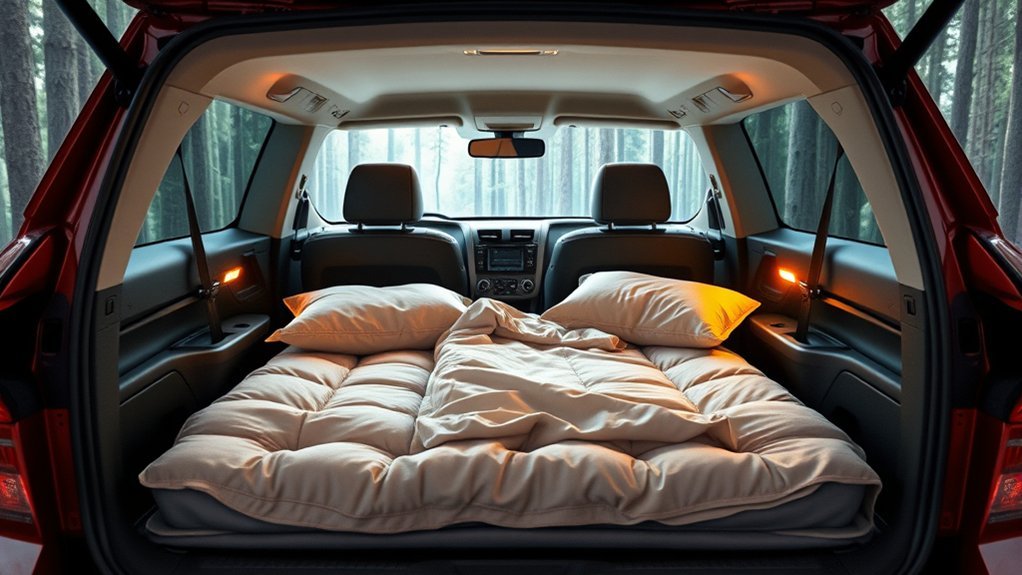
A Toyota RAV4 can work well as a compact car-camping shelter because the enclosed cargo area protects your bedding from rain, wind, and many insects. You also keep your sleeping gear close and avoid pitching a tent after arriving late.
However, not every RAV4 has the same interior. A 2008 model and a 2026 model have different seat designs, cargo contours, trim panels, and available space. Toyota currently lists up to 37.8 cubic feet of cargo capacity behind the second row for the 2026 RAV4, but cargo volume alone does not tell you whether your body or mattress will fit lengthwise. Check the current Toyota RAV4 specifications and measure your own vehicle.
Model-Year Note: Toyota introduced an all-new sixth-generation RAV4 for 2026. Do not assume measurements, plywood templates, mattress fit, or platform hardware developed for a 2019–2025 RAV4 will transfer to a 2026 model. Measure the actual vehicle before ordering or cutting anything.
One adult is usually easier to accommodate than two because bedding and equipment compete for the same floor space. Two adults may fit in some models when the front seats move forward and most gear is stored elsewhere, but test the complete arrangement with both sleepers before relying on it during a trip.
Note: The RAV4 keeps you out of direct wind and rain, but it is not an insulated or climate-controlled sleeping room once the engine is off. Your bedding must match the expected overnight weather.
Measure Your RAV4 Before Choosing a Sleeping Setup
Measure the cargo area with the vehicle parked on level ground and the rear seats folded. Move the front seats only as far forward as necessary for the sleeping test, then restore them to a safe driving position before driving.
Record these measurements:
- Usable sleeping length: Measure from the closed hatch to the nearest front-seat obstruction.
- Narrowest width: Measure between the wheel-well trim rather than only at the widest part of the cargo area.
- Maximum width: Measure above or around the wheel wells if your pad can flex.
- Floor slope: Place a straight board or long level across the folded seats and cargo floor to find gaps and raised sections.
- Headroom: Sit on the proposed mattress or platform before building anything permanent.
- Hatch clearance: Confirm that bedding, storage bins, and platform hinges do not interfere with the closed liftgate.
Also locate the spare tire, jack, tie-downs, vents, and any electrical components. Your setup should not block equipment or ventilation openings you may need during normal use or an emergency.
For more detail about the seat layout itself, see how Toyota RAV4 rear seats fold. If you are specifically considering a standard twin mattress, use the separate RAV4 twin-mattress fit guide after taking your measurements.
Pro Tip: Cut a full-size cardboard template before cutting plywood. Cardboard lets you test the hatch shape, wheel-well curves, seat slope, and access panels without wasting lumber.
Which RAV4 Sleeping Setup Should You Choose?
| Your Situation | Best Starting Setup | Main Trade-Off |
|---|---|---|
| First trip or occasional solo camping | Fold the seats and use a measured insulated pad | Fast and reversible, but you may still feel the seat slope or hinge area |
| Floor has a small step or slope | Firm foam leveling pieces beneath the sleeping pad | Lighter than plywood but provides less under-bed storage |
| Frequent camping with organized storage | Measured removable platform | Flatter surface and storage below, but more weight and less headroom |
| Two adults | Full-width flexible bedding matched to your measured cargo area | Gear space, shoulder room, and exit access become more limited |
Before a real trip, complete a full fit test at home. Lie down in your normal sleeping position, roll onto each side, sit up as far as the roof allows, confirm that the liftgate closes without touching the bedding, and make sure both sleepers can reach a usable door without unloading the vehicle. Then decide where shoes, water, keys, lights, and overnight gear will go.
How to Set Up Your RAV4 for Sleeping
You do not need to remove the rear seats or build a wooden bed for your first trip. Start with a reversible no-build setup, test it at home or at a nearby campground, and identify the problems that actually need fixing.
- Empty and clean the cargo area. Remove loose objects that could press into your bedding or move during the night.
- Fold the rear seats. Follow the instructions for your exact model year in Toyota’s manual and warranty library.
- Move the front seats as needed. Keep enough clearance to enter and exit through a side door if the hatch cannot be opened from inside.
- Level the main gaps. Use firm, closed-cell foam, folded blankets, or stable panels that cannot collapse unexpectedly.
- Add an insulated sleeping pad. A folding foam pad or self-inflating camping mat can conform to the cargo area better than a rigid mattress.
- Arrange ventilation and privacy. Install fitted window covers and bug screens while preserving safe airflow.
- Store your keys and essentials within reach. Keep a phone, light, shoes, water, and an exit route accessible throughout the night.
Do not assume any specific mattress or SUV sleeping pad will fit because it is marketed for crossovers. Compare its fully expanded dimensions with your own measured cargo floor, especially the narrow area between the wheel wells and the available length with the liftgate closed.
Warning: Turn the engine off before sleeping. Never use a camp stove, charcoal grill, candle, generator, or fuel-burning heater inside the RAV4. Carbon monoxide is colorless and odorless. CDC warns that even a small vehicle exhaust-system leak can allow carbon monoxide to build inside a vehicle, and a blocked tailpipe can cause dangerous accumulation. Keep the exhaust outlet clear of snow, mud, vegetation, and stored equipment.
Choose a Safe and Legal Place to Park
Sleeping inside a vehicle does not automatically make an overnight parking location legal. Rules can differ among campgrounds, rest areas, trailheads, city streets, private parking lots, national forests, and public lands.
Use an established campground or another location that expressly permits overnight vehicle camping. Read posted signs, confirm operating dates, pay required fees, and follow stay limits. The Bureau of Land Management camping guidance explains that restrictions and stay limits can vary by area, even where dispersed camping is generally allowed.
Before settling in, inspect the site for flood risk, falling branches, unstable ground, deep snow, exhaust-blocking vegetation, wildlife activity, and poor cell coverage. Park on a firm, level surface without blocking roads, gates, emergency routes, or other campsites.
How to Build a Bed Platform for Sleeping in Your RAV4
A removable bed platform can level the floor and create storage underneath, but it must fit your specific RAV4. Avoid copying fixed dimensions from another owner unless the vehicle generation, model year, powertrain, seat configuration, and cargo shape match yours.
A platform around 9 inches high may provide useful storage in some RAV4s, but it can also reduce sitting headroom. Treat that figure only as a design example, not a specification. Test your proposed height with stacked boxes or firm foam blocks before cutting the legs.
Materials Needed for Construction
Choose materials that are strong enough for the sleepers and bedding without making the platform unnecessarily heavy.
- Plywood of suitable thickness for the span and support layout
- Cardboard for the full-size template
- Lumber for legs, rails, or cross supports
- Bolts, locking pins, brackets, or other removable fasteners
- Non-slip material or carpet for the top surface
- Sandpaper or edge trim to remove sharp corners
- Measuring tape, straightedge, pencil, saw, and drill
Some DIY plans use 2×4 or 4×4 lumber for legs, but smaller or lighter supports may be sufficient when they are properly braced. Base the structure on the expected load and support spacing rather than copying one lumber size.
Do not copy another builder’s plywood dimensions without making your own template. The hatch opening, trim panels, folded seats, wheel wells, and floor shape can differ among RAV4 generations, and the 2026 redesign makes generation-specific measurement especially important.
Step-by-Step Assembly Guide
- Create the cardboard template. Trace the narrow points, hatch corners, wheel wells, and front-seat contours.
- Choose the platform height. Balance level sleeping space, storage clearance, mattress thickness, and sitting headroom.
- Plan two or more sections. A folding or removable front section makes the platform easier to install and store.
- Mark access openings. Preserve access to the spare tire, jack, tie-downs, vents, and other service points.
- Cut and test the plywood. Test every section before adding carpet or permanent hardware.
- Add supported legs or rails. Position supports so the plywood does not bow under the expected combined load.
- Secure the sections. Use locking pins, bolts, hinges, or brackets that prevent shifting but still allow removal.
- Finish the edges. Sand every cut and cover exposed corners that could damage upholstery or bedding.
- Perform a static test. Load the platform gradually while the vehicle is parked, and check for movement, flexing, or unstable supports.
If the folded-seat area rises toward the front, use measured leg heights or a slanted support design to keep the sleeping surface level. Do not let an unsupported section rest on fragile trim, seat controls, vents, or interior panels.
Enhancing Comfort and Stability
Add non-slip material between the platform and its support points to reduce movement and rattling. Carpet or a thin foam layer on top can soften the surface, reduce noise, and protect your sleeping pad.
A twin mattress topper may work in some RAV4s, but it is not a guaranteed fit. Flexible foam can be trimmed or folded around wheel-well intrusions, while inflatable pads must have enough clearance to expand without pressing hard against the liftgate or doors.
Drop pins or similar removable fasteners can make the platform easier to assemble, but every connection should lock securely. The platform and storage bins must remain restrained while you drive so they cannot become projectiles during sudden braking.
Essential Gear for Comfortable Sleep
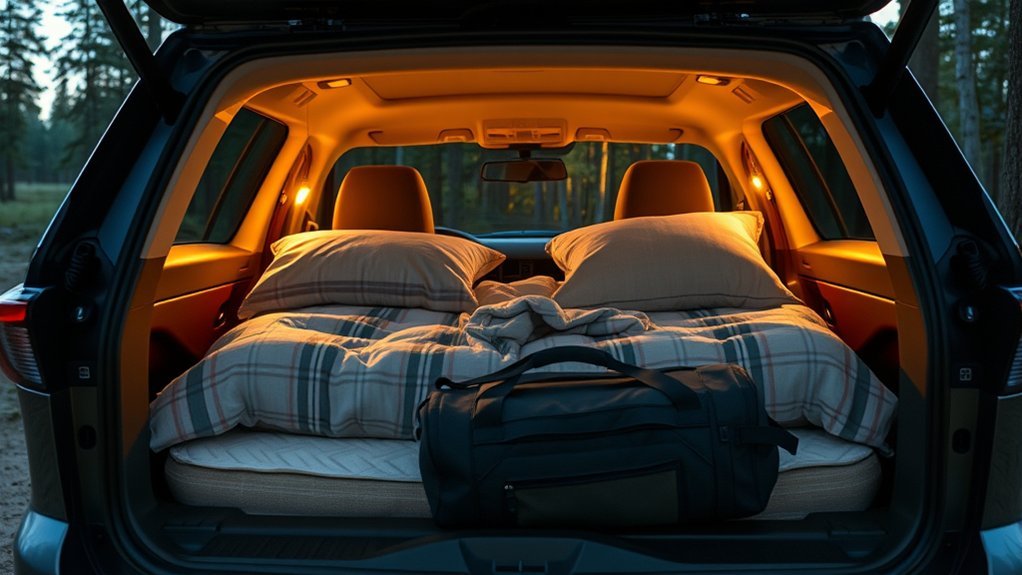
The best bedding depends on your measured space and the lowest temperature expected overnight. Pack for the weather rather than relying on the vehicle to stay warm or cool.
- Insulated sleeping pad: Choose a pad that fits the narrowest section of the cargo floor and provides enough insulation beneath you.
- Temperature-rated sleeping bag: Select a rating suitable for the forecast, your clothing, and your personal cold tolerance.
- Extra blanket or liner: Carry a dry backup layer for unexpected temperature drops.
- Supportive pillow: A compressible camping pillow uses less space than a household pillow.
- Battery-powered fan: A small fan can improve air movement but cannot make a dangerously hot vehicle safe.
- Window covers: Use fitted covers for privacy and light control without sealing every ventilation opening.
- Bug screens: Screens allow you to open selected windows while reducing insect entry.
- Battery-powered carbon-monoxide alarm: An alarm adds a layer of warning but does not make idling or indoor combustion safe.
- Emergency supplies: Keep water, a flashlight, weather-appropriate clothing, a first-aid kit, and a charged phone nearby.
The U.S. Forest Service recommends checking weather, keeping sleeping gear dry, carrying emergency supplies, and preparing for changing conditions. Review its camping safety guidance before your trip.
Tips for Maximizing Space in Your RAV4
Keep the sleeping floor clear by separating nighttime essentials from equipment you will not need until morning. Soft bags usually fit irregular spaces better than hard luggage.
Use low bins beneath a raised platform, small organizers behind the front seats, and narrow bags beside the mattress. Keep heavy items low and secure them before driving. Never stack equipment where it blocks a door, hatch, window, mirror, air vent, or emergency exit.
A roof rack can free interior space when it is approved for your vehicle and properly loaded. Follow the equipment instructions and your model-year owner’s manual, stay within every applicable load limit, and secure the cargo against wind and weather.
| Space Optimization Tip | Benefit and Limitation |
|---|---|
| Fold the rear seats | Creates the main sleeping area without permanent vehicle changes |
| Remove rear seats only when appropriate | May add space, but requires model-specific knowledge and safe handling of hardware or wiring |
| Use a measured foam pad | Conforms to the cargo shape more easily than a rigid mattress |
| Use low storage bins | Keeps essentials organized beneath a suitable platform |
| Use an approved roof rack | Frees interior room but adds loading, security, weather, and load-limit considerations |
| Build a removable platform | Levels the floor and adds storage but reduces headroom and increases weight |
What Accessories Improve a RAV4 Sleeping Setup?
Useful accessories solve a measured problem rather than simply adding more gear. Test your basic setup before deciding what to buy.
- Flexible camping mattress: Provides cushioning while fitting around narrow cargo contours.
- Windshield and window covers: Improve privacy, reduce early light, and limit some radiant heat loss.
- Bug screens: Allow selected windows or a sunroof to open without admitting as many insects.
- Rechargeable fan: Moves air across the cabin and may reduce condensation.
- Small organizers: Keep keys, lights, glasses, and water accessible.
- Moisture-absorbing cloth: Helps remove condensation from windows in the morning.
- Leveling blocks: Can help at permitted campsites when used safely and according to their instructions.
Sleeping bags and portable blankets provide warmth, but avoid piling so much gear around your body that you cannot reach a door, lower a window, or leave quickly.
Temperature, Ventilation, and Condensation
You cannot predict a fixed overnight temperature such as 60–70°F inside a parked RAV4. With the engine off, the cabin responds to outdoor temperature, wind, sunlight, humidity, your body heat, and the insulation in your bedding.
Direct sun can make a parked vehicle dangerously hot even on a mild day. The National Weather Service warns that parked vehicles can rapidly reach dangerous temperatures and that slightly opened windows do not significantly reduce the heating rate. Review its parked-vehicle heat guidance, avoid sleeping in direct daytime sun, and leave the vehicle if the cabin becomes hot, stuffy, or uncomfortable.
In cold weather, the vehicle blocks wind but provides little lasting heat after the engine shuts off. Use an insulated pad, a properly rated sleeping bag, dry clothing, and a backup plan for temperatures below your gear’s safe range.
Your breath releases moisture overnight, which can collect on cold glass. Open two screened windows slightly on opposite sides when weather and personal security allow. A small fan can improve circulation. Wipe wet windows in the morning and dry the bedding before packing it away.
RAV4 Camping Safety Checklist
- Confirm that overnight vehicle camping is permitted at the exact location.
- Check the forecast, alerts, wildfire restrictions, flood risk, and road conditions.
- Park on stable ground without blocking traffic or emergency access.
- Turn the engine off before sleeping.
- Confirm that the exhaust outlet is clear of snow, mud, grass, bags, and other obstructions.
- Never cook or burn fuel inside the vehicle.
- Keep at least one door or hatch exit clear.
- Store your keys, phone, flashlight, shoes, and glasses within reach.
- Secure every platform section, bin, and heavy object before driving.
- Tell someone where you plan to stay when camping in a remote area.
- Leave the vehicle and seek fresh air immediately if you develop headache, dizziness, weakness, nausea, confusion, or unusual sleepiness.
The CDC’s carbon-monoxide guidance recommends maintaining the vehicle’s exhaust system and warns that even a small exhaust leak can allow carbon monoxide to build inside a vehicle. CDC also warns that a blocked tailpipe can cause carbon monoxide to accumulate rapidly. A cracked window is not a substitute for keeping the engine off and eliminating combustion sources.
Frequently Asked Questions
Is it safe to sleep in a parked RAV4?
It can be safe when you park in a permitted location, turn the engine off, keep the exhaust clear, avoid every indoor flame or fuel-burning appliance, maintain a usable exit, and prepare for the weather. A slightly opened window alone does not address carbon-monoxide or heat risks.
Can two adults sleep in a Toyota RAV4?
Two adults may fit in many RAV4 configurations, but the usable width, sleeping length, body size, bedding, and gear determine whether the setup is practical. Test the complete arrangement with both sleepers inside, confirm shoulder and hip room, and make sure neither person blocks the other’s exit.
How much sleeping space is available in a RAV4?
The usable sleeping area varies by model year, front-seat position, powertrain, and interior equipment. Toyota lists up to 37.8 cubic feet behind the second row for the 2026 RAV4, but that number does not provide sleeping length. Measure from the closed hatch to the front-seat obstruction and between the narrowest wheel-well points.
Do I need to remove the rear seats?
Usually not. Begin by folding the rear seats and leveling the remaining slope with stable padding or a removable platform. Remove seats only after checking the model-year manual and confirming that you can handle the seat weight, mounting hardware, seat-belt components, and any electrical connections safely.
What sleeping bag is best for RAV4 camping?
Choose a sleeping bag by its temperature rating and the expected overnight low. Synthetic insulation handles damp conditions well, while down offers excellent warmth for its packed size when kept dry. Your sleeping pad is also important because it limits heat loss to the vehicle floor.
Can pets comfortably sleep in the back of a RAV4?
A pet may sleep comfortably with suitable bedding, water, ventilation, and enough room to change position. Restrain the pet properly while driving, protect it from sharp platform edges, and never leave it unattended in a parked vehicle when heat or cold could become dangerous.
What temperature should I expect inside the RAV4?
No fixed temperature can be promised. The cabin may become much hotter than the outdoor air in sunlight and will cool toward outdoor conditions at night. Plan your bedding around the forecast, avoid direct sun, ventilate safely, and leave the vehicle if conditions become uncomfortable or unsafe.
Can I leave the RAV4 running for heat or air conditioning?
Do not plan to sleep with the vehicle running. Exhaust leaks, blocked tailpipes, changing wind, snow, mud, or nearby barriers can allow carbon monoxide to enter the cabin. Use weather-rated sleeping gear and move to safer shelter when temperatures exceed your equipment or experience.
Conclusion
Sleeping in your Toyota RAV4 can be practical when the setup matches your exact vehicle and the conditions outside. Start by folding the seats, measuring the cargo floor, and testing a simple sleeping pad before building a platform.
Prioritize a permitted campsite, safe ventilation, dry bedding, an accessible exit, and weather-rated gear. Keep the engine off, avoid every combustion source inside the vehicle, and do not rely on a cracked window to control carbon monoxide or heat. If you own a 2026 RAV4, measure it independently rather than reusing a platform template from the previous generation.
Sources
- Toyota 2026 RAV4 Overview — current U.S. vehicle and cargo-capacity information
- Toyota USA Newsroom: All-New 2026 RAV4 — confirmation that 2026 begins the redesigned sixth generation
- Toyota Manuals and Warranties — model-year operating, seating, cargo, and equipment instructions
- CDC Carbon Monoxide Poisoning Basics — vehicle-exhaust, ventilation, symptoms, and prevention guidance
- CDC: Clear Snow from Tailpipes — blocked-tailpipe carbon-monoxide warning
- National Weather Service: Children, Pets and Vehicles — parked-vehicle heat risks and limits of cracked windows
- Bureau of Land Management Camping Guidance — dispersed-camping rules, posted restrictions, and stay limits
- U.S. Forest Service Camping Safety — weather preparation, emergency supplies, dry gear, and campsite planning
