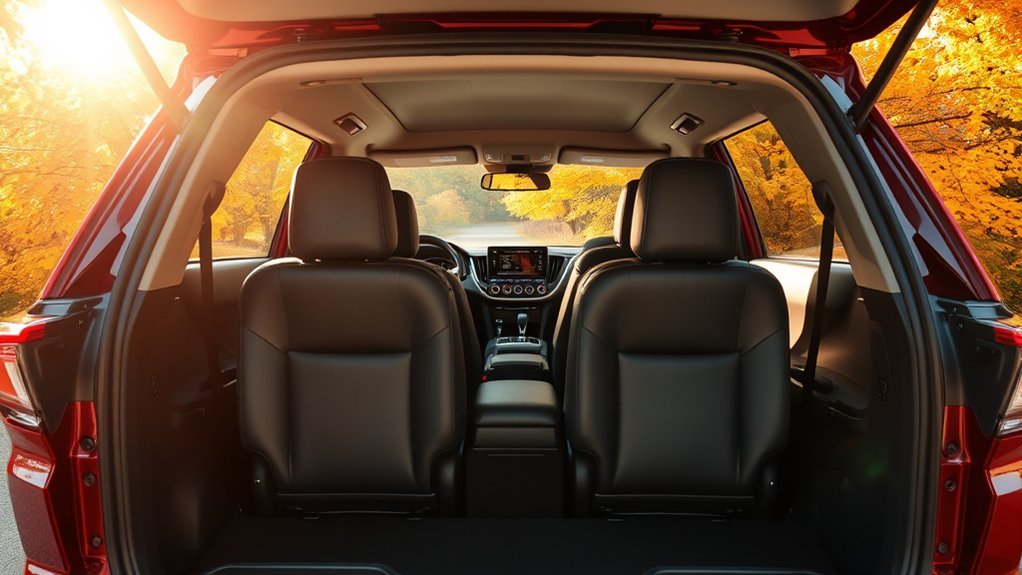
The current Toyota RAV4 gives you two rows of seating for five people, including the driver. It works well for couples, small families, and drivers who value cargo room more than a third row. However, seating dimensions and cargo figures can differ by model year, powertrain, roof design, and trim.
Quick Answer
Every current U.S.-market 2026 Toyota RAV4 has two rows and five seating positions, including the driver. It does not offer a third row. The rear seat uses a 60/40 split-folding design, so you can carry five people or expand the cargo area when you need more storage.
Key Takeaways
- The 2026 Toyota RAV4 seats five people in two rows and has no third-row option.
- Published 2026 specifications list 41.0 inches of front legroom, 37.8 inches of rear legroom, and 98.9 cubic feet of passenger volume.
- Toyota lists up to 37.8 cubic feet of cargo room behind the second row and up to 70.4 cubic feet with that row folded.
- Plug-in Hybrid cargo capacity can be lower, so check the specifications for the exact grade you are considering.
- Some 2006–2012 RAV4s offered an optional third row, but current models do not.
Note: This guide focuses on the U.S.-market 2026 RAV4. Do not assume that cargo, headroom, safety, or seating specifications are identical on an older model or a vehicle sold in another market.
Getting to Know the RAV4’s Seating Capacity
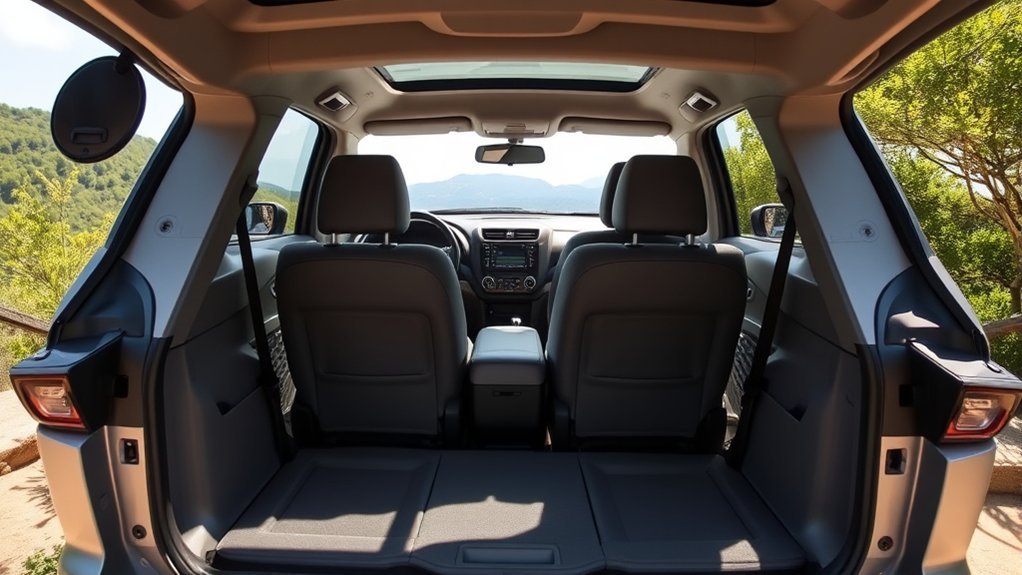
The 2026 Toyota RAV4 has five designated seating positions. You get two front seats and a three-person rear bench.
All current RAV4 Hybrid and RAV4 Plug-in Hybrid grades use this basic layout. Choosing a different drivetrain or trim may change the upholstery, seat adjustments, roof equipment, or cargo capacity, but it does not add another row.
The current RAV4 has five seats, two rows, and no third-row option.
The rear bench has a 60/40 split-folding seatback. You can fold one side while keeping one or two rear seating positions available, or fold both sections when cargo space is more important than passenger capacity.
Five listed seating positions do not automatically mean that five adults will be equally comfortable on a long trip. Two adults generally fit more comfortably in the rear than three, especially when the passengers have broad shoulders or need extra personal space.
Impact of Seating Configurations on Cargo Space
The RAV4 balances passenger seating with a large, square cargo area. The amount of usable room depends on whether the second row is upright or folded and whether you choose the regular Hybrid or Plug-in Hybrid.
| Specification | Published figure or layout | What it means |
|---|---|---|
| Seating capacity | 5 people | Two front seats and a three-person rear bench |
| Rear-seat design | 60/40 split-folding | Lets you combine passenger and cargo space |
| Cargo room behind second row | Up to 37.8 cubic feet | Available while all five seating positions remain usable |
| Maximum cargo room | Up to 70.4 cubic feet | Available when the second-row seatbacks are folded |
Toyota uses “up to” because cargo capacity can differ across grades and powertrains. Roof equipment, the cargo floor, the spare-tire arrangement, and Plug-in Hybrid battery packaging may affect the final figure.
Cargo Space With the Seats Up
With the second row upright, Toyota advertises up to 37.8 cubic feet of cargo capacity for the 2026 RAV4. This configuration keeps all five seating positions available.
That space is useful for grocery bags, suitcases, a folded stroller, sports equipment, or everyday work gear. However, an item’s shape matters as much as its measured volume. A wide stroller or rigid storage bin may consume more usable floor space than several soft bags.
Plug-in Hybrid models may provide less cargo space than comparable regular Hybrid models. Check the exact RAV4 Plug-in Hybrid specification page before buying cargo organizers, pet barriers, liners, or large travel equipment.
Cargo Space With the Seats Down
The 2026 RAV4 brochure lists up to 70.4 cubic feet of cargo room with the second-row seatbacks folded.
Folding only the narrow section can leave room for two rear passengers. Folding the wider section creates more space for long equipment while preserving one rear seating position.
Before loading a long or heavy object, make sure it cannot slide forward during braking. Do not stack cargo high enough to block rear visibility unless it is properly restrained and you can maintain a safe view with the vehicle’s mirrors and cameras.
Pro Tip: Measure the cargo-floor width, hatch opening, and item length instead of relying only on cubic-foot figures. Cargo volume cannot tell you whether a specific stroller, wheelchair, dog crate, bicycle, or storage box will fit.
Third-Row Seating: Key Insights
The current Toyota RAV4 does not offer a third row. Every U.S.-market 2026 RAV4 is a five-passenger vehicle with two rows.
If you see a used RAV4 advertised with seven seats, check its model year and equipment carefully. Certain third-generation RAV4 models from 2006 through 2012 offered a compact third row. Toyota’s 2012 RAV4 Quick Reference Guide, for example, includes instructions for third-row seats “if equipped.”
That historical option does not mean a third row can be added safely to a modern RAV4. Seating systems, seat belts, anchor points, airbags, cargo floors, and vehicle structures are designed and certified as a complete system.
Warning: Do not install an aftermarket passenger seat in the RAV4 cargo area. Use only factory-designated seating positions with the original seat belts, head restraints, and approved child-restraint anchor points.
If you regularly need six or more seats, a Highlander, Grand Highlander, 4Runner with its available third row, Sienna, or Sequoia will be a more appropriate Toyota choice.
Interior Dimensions: Headroom, Legroom, and More
Published specifications for the 2026 RAV4 include 98.9 cubic feet of passenger volume, 41.0 inches of front legroom, and 37.8 inches of rear legroom. These figures place the RAV4 within the normal range for a compact SUV.
Headroom can change with trim and roof equipment. A panoramic roof or moonroof may reduce available space above the front occupants, so taller buyers should sit in the exact grade they plan to purchase.
| Measurement | Figure | Buying consideration |
|---|---|---|
| Passenger volume | 98.9 cubic feet | A broad cabin measurement, not a guarantee of equal comfort in every seat |
| Front legroom | 41.0 inches | Useful for taller drivers, subject to seat position |
| Rear legroom | 37.8 inches | Check space after positioning the front seats for their regular users |
| Rear headroom | Approximately 39.5 inches | Confirm against the selected roof and trim configuration |
Headroom Measurements Overview
Rear headroom is generous for the vehicle’s class, but front headroom deserves closer attention when a moonroof or panoramic roof is fitted. Published figures cannot account for your posture, preferred seat height, hairstyle, or the shape of your torso.
During a test drive, adjust the driver’s seat, steering wheel, and backrest before judging headroom. Sitting lower may create more space, but you should still maintain a clear view of the road and easy access to the pedals and controls.
Legroom Space Analysis
The published 41.0 inches of front legroom and 37.8 inches of rear legroom provide useful space for four adults. Carrying three adults across the rear bench may feel tighter because shoulder and hip room become more important than legroom.
To evaluate rear comfort accurately, set both front seats where the regular driver and front passenger need them. Then sit behind each seat. Moving the front seats forward only for a showroom test can create an unrealistic impression of daily rear-seat space.
Top Comfort Features in the Toyota RAV4
The RAV4’s available comfort equipment changes by grade. Depending on the version, you may find SofTex-trimmed seating, heated front seats, ventilated front seats, power seat adjustment, rear climate vents, and upgraded climate controls.
The official RAV4 specifications should be your final reference because a feature that is standard on one grade may be optional or unavailable on another.
Useful comfort features to compare include:
- Driver-seat adjustment: More adjustment can help drivers find a comfortable relationship between the seat, pedals, and steering wheel.
- Rear climate vents: These help circulate conditioned air to rear passengers.
- Heated or ventilated seats: Availability depends on the selected grade and package.
- Upholstery material: Fabric and SofTex surfaces have different cleaning, temperature, and texture characteristics.
- Roof design: A larger glass roof can brighten the cabin but may affect front headroom.
A vehicle can meet published space measurements and still feel uncomfortable to a particular person. Seat cushion length, lumbar shape, door-armrest placement, and visibility are best judged in person.
[Amazon Products Picked for You]

Innovative Ventilation Seat Cushion: This wheelchair seat cushion is designed to provide innovative comfort through a heat dissipation system consisting of 30 air holes and 11 ventilated grooves. Even if you have to sit for a long time, this cushion can help prevent stuffiness and reduce the risk of bedsores

【UNRESTRICTED COMFORT FOR HEATED & VENTILATED SEATS】Don't compromise on the luxury features you paid for. Engineered with over 9,870 laser-drilled perforations, these seat covers are designed to be fully compatible with your vehicle’s factory heating and cooling functions. The highly breathable material allows air and warmth to pass through freely, ensuring you get maximum performance from your seats in any season.
Innovative Ventilation Seat Cushion: This wheelchair seat cushion is designed to provide innovative comfort through a heat dissipation system consisting of 30 air holes and 11 ventilated grooves. Even if you have to sit for a long time, this cushion can help prevent stuffiness and reduce the risk of bedsores
How RAV4 Seating Affects Safety Features
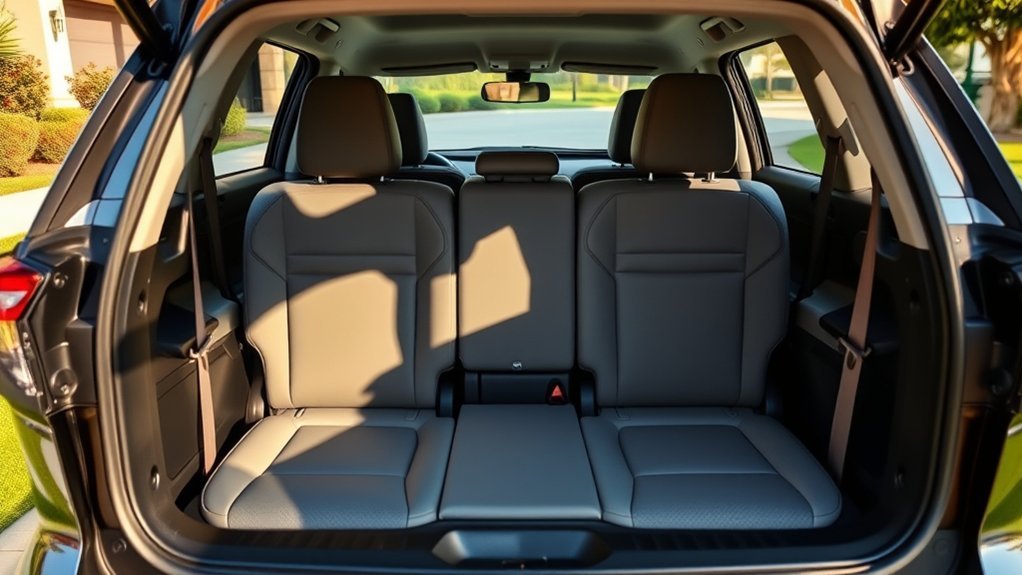
The five designated seating positions work with the RAV4’s original seat belts, head restraints, airbags, and child-restraint anchor system. Passengers should remain in those approved positions whenever the vehicle is moving.
| Feature | Purpose | Important limitation |
|---|---|---|
| Seat belts and head restraints | Help restrain and support occupants in designated seats | They must be positioned and worn correctly |
| LATCH child-restraint anchors | Provide approved attachment points for compatible child restraints | Anchor availability and weight limits depend on seating position and restraint instructions |
| Toyota Safety Sense 4.0 | Uses driver-assistance technologies to support awareness and safe driving | It cannot detect every hazard or replace an attentive driver |
| Blind-Spot Monitor and Rear Cross-Traffic Alert | Can warn about certain vehicles in monitored areas | You must still check mirrors, surroundings, and blind spots |
The 2026 RAV4 comes with Toyota Safety Sense 4.0. The suite includes systems such as the Pre-Collision System with Pedestrian Detection, Dynamic Radar Cruise Control, Lane Departure Alert with Steering Assist, Lane Tracing Assist, and Road Sign Assist.
Warning: Toyota Safety Sense and other driver-assistance systems have operating limits. Road markings, weather, lighting, object position, speed, and vehicle condition can affect performance. Stay attentive and consult the owner’s manual before using these systems.
For child seats, follow both the child-restraint manufacturer’s instructions and the RAV4 owner’s manual. The rear outboard positions provide lower anchors on current configurations, while top tether anchors are provided for designated rear seating positions. Do not borrow lower anchors from adjacent positions unless the owner’s manual and child-seat manufacturer expressly allow it.
Comparing the RAV4 With Other Toyota Models for Passenger Space
The RAV4 is a five-seat compact SUV. A larger Toyota may suit you better when you regularly transport more than five people or need to use passenger and cargo space at the same time.
| Toyota model | Maximum seating | Best suited to |
|---|---|---|
| RAV4 | 5 | Small families, couples, commuting, and compact-SUV cargo flexibility |
| Highlander | Up to 8 | Families needing a third row in a midsize SUV |
| Grand Highlander | Up to 8 | Drivers wanting more adult-friendly third-row and cargo space |
| 4Runner | Up to 7 when equipped | Drivers prioritizing SUV capability with an available third row |
| Sienna | 7 or 8, depending on configuration | Frequent car-seat use, easier rear access, and family travel |
A second-row bench generally increases maximum capacity, while captain’s chairs improve access and personal space but remove one seating position. Compare the exact configuration rather than relying only on the model’s maximum advertised capacity.
[Amazon Products Picked for You]

BLING DIAMOND CAR SEAT COVER: Premium Leather with pretty rhinestones Made. Black leather with shiny rhinestones, perfect for women, girls. Perfectly match your interior look. Ensure your seat covers will last for many years to come. Refresh your interior look. Beautiful design with good quality.

Package includes: 4 front low back bucket covers, 1 rear backrest cover, 1 rear bottom bench cover, 7 separate headrest covers and Hardware to install

🚘[PACKAGE INCLUDES] Two Front Bucket Car Seat Covers , Two Rear Backrest Seat Cover, Two Rear Bottom Bench Seat Cover, Eight Separate Headrest Covers And Hardware to Install Car Seat Cover
Tips for Maximizing Comfort and Space in the RAV4
You can improve comfort and cargo usability without changing the vehicle. Start with the seating positions you use most often, then organize the remaining space around them.
- Set the front seats first: Position the driver and front passenger seats for safe control and comfort before checking rear space.
- Test every regular passenger: Published measurements cannot predict comfort for a specific body type.
- Bring your child seats to the test: Confirm anchor access, front-seat clearance, buckle access, and door opening space.
- Check the roof option: Compare headroom with and without the selected moonroof or panoramic roof.
- Use the 60/40 split: Fold only the section you need so you can preserve one or two rear seats.
- Secure loose cargo: Use approved tie-down points and keep heavy objects low.
- Read the loading label: Passenger weight reduces the amount of cargo the vehicle can safely carry.
Note: The Tire and Loading Information label gives the maximum combined weight of occupants and cargo for your specific vehicle. The number is not a universal RAV4 passenger limit and may differ by configuration.
To calculate remaining cargo capacity, start with the combined occupant-and-cargo limit on the vehicle label. Subtract the combined weight of the driver and passengers. The remaining amount is available for luggage, accessories, cargo, and any applicable trailer tongue load.
[Amazon Products Picked for You]

EXTRA-LARGE STORAGE: Equipped with 3 large compartments, 8 additional pockets, and a cooler bag, the HOTOR car trunk organizer offers extra storage space up to 69L+23L for effectively arranging and storing various items such as groceries, drinks, tools, sports gear, and other belongings. Maintain a tidy and well-organized car trunk throughout all your journeys.

[ORGANIZE YOUR CAR TRUNK]: When you open the trunk after grocery shopping, you definitely don't want to have a mess of groceries splattered around the trunk. Our trunk organizer is secured with Velcro. It does a great job of helping you organize groceries

【Install Easily & Fit 90% Cars】The car trunk organizer holds with 3 strong straps and clip on and off buckles to install easily in seconds. Also fits 90% car types, this hanging trunk organizer for suv,jeep, trunk, minivan,ect.And it is perfect choice as car accessories for women and men.
Frequently Asked Questions
Can the RAV4 accommodate child car seats?
Yes. The RAV4 provides approved rear seating positions for child restraints. Lower anchors are available at designated outboard rear positions, and top tether anchors are provided for designated rear seats. Follow the child-seat instructions and the RAV4 owner’s manual because the correct installation method depends on the seat, child, seating position, and anchor-weight limits.
Can three child seats fit across the RAV4’s rear bench?
Possibly, but not every combination will fit safely. Child-seat width, belt-buckle access, anchor locations, installation direction, and front-seat clearance all matter. Test the exact three seats in the vehicle and have the installation checked by a qualified child-passenger-safety technician when possible.
What is the passenger-weight limit for a Toyota RAV4?
Toyota does not use one universal passenger-only limit for every RAV4. Check the Tire and Loading Information label on your vehicle for the maximum combined weight of occupants and cargo. Passenger weight, luggage, accessories, and trailer tongue load all count toward that limit.
Is the RAV4 comfortable for taller passengers?
The 2026 RAV4 has published measurements of 41.0 inches of front legroom and 37.8 inches of rear legroom. Taller passengers should test the exact grade because seat shape, driving position, roof equipment, and front-seat placement affect real comfort.
How do the RAV4’s rear seats fold for extra cargo space?
The rear seatback uses a 60/40 split. Clear the seat and footwell, move the front seats if necessary, release the appropriate seatback, and fold it forward. Follow the owner’s manual for the exact release points and head-restraint instructions for your model.
Does the current RAV4 have third-row seating for adults or children?
No. The current 2026 RAV4 has two rows and five seating positions. Certain 2006–2012 RAV4s offered a small optional third row, so confirm the model year and factory equipment when shopping for an older used vehicle.
Conclusion
The 2026 Toyota RAV4 seats five people in two rows and does not offer a third row. It gives you useful rear legroom, a 60/40 split-folding bench, and up to 70.4 cubic feet of cargo capacity when the second row is folded.
It is a practical choice when you usually carry four or five people and want compact-SUV cargo flexibility. Choose a larger three-row Toyota when six or more seats are a regular need. Before buying, test your passengers, child seats, and largest cargo items in the exact trim you are considering.
Sources
- Toyota: 2026 RAV4 overview — current cargo capacity, model lineup, and feature information
- Toyota: 2026 RAV4 brochure — maximum cargo space and 60/40 rear-seat information
- Toyota USA Newsroom: 2026 RAV4 launch information — redesigned model, seating functionality, and Toyota Safety Sense 4.0
- Toyota: Toyota Safety Sense 4.0 overview — system features, functions, and operating limitations
- National Highway Traffic Safety Administration: vehicle capacity-weight labeling — combined occupant-and-cargo loading-label requirements
