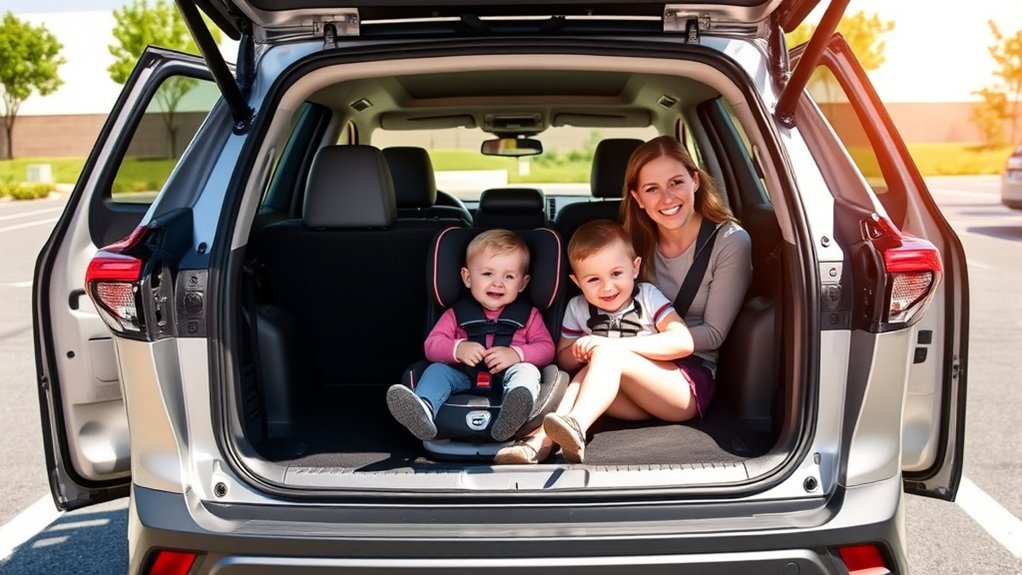
The Toyota RAV4 seats up to five people in two rows, with two positions in front and three across the rear bench. That layout works well for many couples and small families, but actual comfort depends on passenger height, child-seat size, trim, roof design, and model year. Checking the exact vehicle specifications is especially important because older RAV4 measurements do not always match the current model.
Quick Answer
A Toyota RAV4 seats five people in two rows: two in front and three in back. It does not offer a third row. For the current 2026 U.S. model, Toyota lists up to 37.8 cubic feet of cargo space behind the rear seats. Exact passenger-space measurements and features vary by trim and model year.
Key Takeaways
- The RAV4 is a two-row compact SUV with seating for five and no third-row option.
- Two adults normally fit comfortably in front, while rear-seat comfort depends on passenger size and front-seat position.
- IIHS identifies two rear seating positions with complete LATCH hardware on its current RAV4 listing; the center position requires closer attention to the manuals.
- Toyota lists up to 37.8 cubic feet of cargo room behind the rear seats for the current 2026 U.S. RAV4.
- Measurements, upholstery, power-seat functions, climate features, and liftgate equipment can vary by year and trim.
Note: RAV4 specifications change across model years and configurations. Measurements commonly published for 2019–2025 models should not automatically be applied to a 2026 vehicle. Confirm your vehicle through Toyota’s current specification page or the owner’s manual for the correct model year.
How Many Passengers Can the Toyota RAV4 Accommodate?
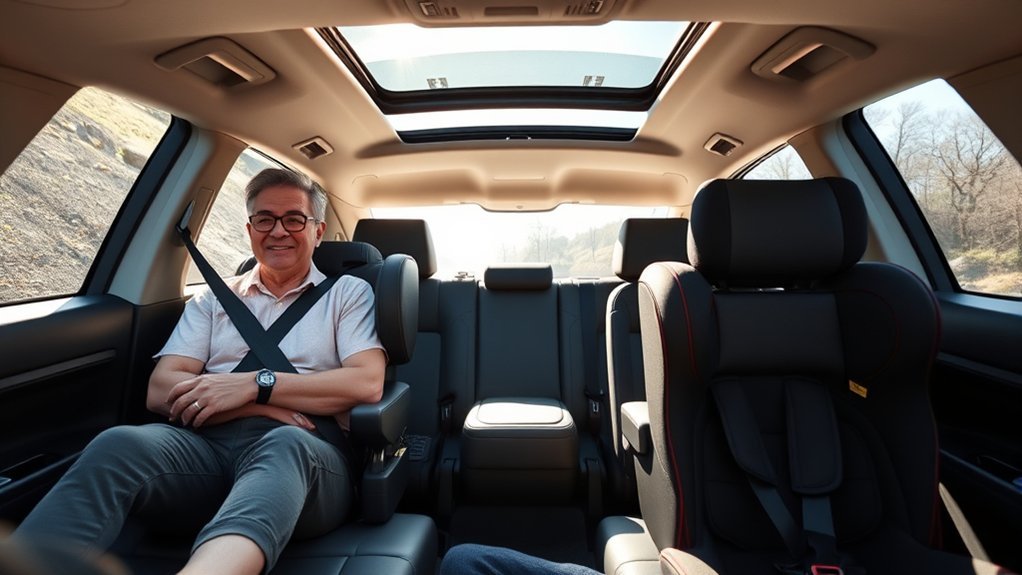
The Toyota RAV4 accommodates five occupants. The front row has a driver and front-passenger seat, while the rear bench provides three seating positions. Toyota does not offer a third row in the current RAV4, so families that regularly carry six or more people should compare three-row SUVs instead.
The five-seat rating does not mean every combination of five adults, child restraints, and luggage will feel equally comfortable. Three children may fit across the rear bench more easily than three adults, while three bulky child seats can be more difficult than three passengers.
The rear seat uses a split-folding design that lets you fold one portion for cargo while keeping part of the bench available. This is helpful when you need to carry a stroller, long item, suitcase, or sports equipment without giving up the entire rear row.
The RAV4’s official capacity is five, but the more useful question is whether your passengers, child seats, and cargo fit together comfortably in the specific model year and trim you are considering.
Front Row Seating: Comfort and Space in the RAV4
The RAV4’s front row is designed for two adults, with separate seat, steering-wheel, and climate adjustments depending on trim. Most drivers can create a comfortable position by balancing seat height, seatback angle, steering-wheel reach, and distance from the pedals.
Do not judge front-seat room from one published measurement alone. A sunroof or panoramic roof can reduce usable headroom, while a power-adjustable seat may offer a wider range of positioning than a basic manually adjusted seat.
Ample Legroom and Headroom
Older RAV4 specifications often list about 41 inches of front legroom, but that figure should be treated as a model-year reference rather than a universal measurement. The best approach is to check the official specification sheet for the exact year and then sit in the vehicle.
Taller drivers should confirm that they can maintain a safe distance from the steering wheel while keeping a comfortable bend in the knees. They should also check head clearance with the seat adjusted to their preferred height.
| Fit factor | What to check |
|---|---|
| Legroom | Can you reach the pedals without locking your knees or sitting too close to the wheel? |
| Headroom | Check clearance with the seat at your preferred height and with the vehicle’s actual roof option. |
| Shoulder space | Confirm that the center console and door do not restrict your normal arm position. |
| Rear-facing child seat | Install the child seat before judging how far the front passenger can move back. |
Comfortable Seating Materials
RAV4 seating materials depend on trim and model year. Entry configurations may use fabric upholstery, while selected higher trims offer SofTex-trimmed seating or combinations of SofTex and synthetic suede. These materials differ in texture, temperature, cleaning needs, and appearance.
Families may prefer an easy-to-wipe surface, while drivers in hot climates may place more value on ventilation or lighter upholstery. Seat heating, ventilation, memory settings, and power adjustment should always be confirmed on the exact trim rather than assumed from the model name alone.
| Seat feature | Why it matters | Availability |
|---|---|---|
| Fabric upholstery | Can feel less hot or cold when first entering the vehicle. | Varies by trim and year |
| SofTex-trimmed seating | Offers a leather-like surface that many families find easier to wipe clean. | Selected higher trims |
| Power driver’s seat | Provides finer position adjustments than a basic manual seat. | Trim-dependent |
| Heated or ventilated seats | Can improve comfort during very cold or hot weather. | Trim- and package-dependent |
Advanced Technology Features
Technology can make the front row more convenient, but the equipment list changes by trim. Depending on configuration, a RAV4 may include a digital instrument display, a larger infotainment screen, wireless phone connectivity, multiple USB-C ports, dual-zone climate control, and an available power liftgate.
The current 2026 RAV4 also uses Toyota Safety Sense 4.0. This is a driver-assistance package, not a replacement for attentive driving. Features, operating conditions, and limitations should be reviewed in the owner’s manual.
Rear Row Seating: Room for Kids and Adults
The rear bench has three designated seating positions. Two adults usually have more personal space than three, while the center position is narrower and may be less comfortable on a long trip.
Older RAV4 specifications commonly cite about 37.8 inches of rear legroom, but current shoppers should verify the number for their exact model year. Real usable space also changes with the position of the front seats. A tall driver can reduce knee room behind the driver’s seat, while a rear-facing child restraint can limit how far the front passenger moves back.
For adult passengers, check knee clearance, headroom, foot space beneath the front seats, seat-cushion support, door opening, and ease of entry. A published number cannot show whether the seat shape feels comfortable for a particular person.
Pro Tip: Bring every regularly used child seat to the dealership and install it before buying. Then place the tallest expected adult in front of each rear-facing seat. This test reveals space conflicts that a specification table cannot show.
Installing Car Seats: Tips for the RAV4
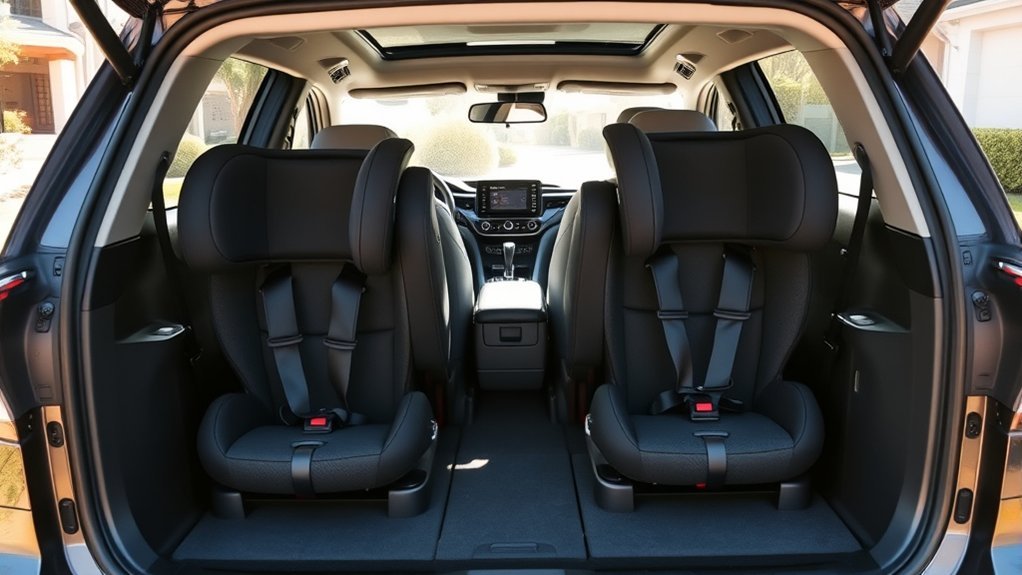
The RAV4 can work well with child restraints, but successful installation depends on the child seat, seating position, vehicle year, and installation method. A seat that fits one RAV4 generation may interact differently with another generation’s seat cushions, head restraints, belts, or anchors.
Warning: Always follow both the child-restraint instructions and the vehicle owner’s manual. Do not assume that a tether anchor is a complete LATCH position. Use the seat belt or lower anchors as directed, observe lower-anchor weight limits, and attach the top tether for a forward-facing restraint when instructed.
[Amazon Products Picked for You]

MEDIUM SIZE: Designed for 60/40 split‑bench cars and mid‑size SUVs/trucks. This durable back seat cover is ideal for families with kids and dogs, offering full coverage to guard against pet scratches, daily messes and wear from child seats. Keep your rear seats clean during busy family trips.

ISOFIX ADAPTER: Enables secure installation of ISOFIX safety seats in vehicles WITHOUT built-in ISOFIX anchors. Give older vehicles modern safety upgrades.
Car-Seat Compatibility Guide
According to the IIHS listing for the 2026 RAV4, two rear seating positions have complete LATCH hardware. The center position has a tether anchor and may allow lower anchors to be borrowed from the outboard positions, but that arrangement must be permitted by both the vehicle and child-seat manufacturers.
Do not use borrowed lower anchors simply because they appear reachable. Anchor spacing, seat width, and manufacturer approval matter. Using the center position can also make the outboard lower anchors unavailable for another restraint.
Before choosing a seat or seating position:
- Check the child’s age, height, weight, and developmental needs.
- Confirm that the restraint is approved for the intended rear- or forward-facing use.
- Read the child-seat manual and the RAV4 owner’s manual.
- Identify the lower anchors and top-tether anchors correctly.
- Check whether the vehicle head restraint interferes with the child seat.
- Make sure the front seats can remain in safe, usable positions.
- Verify that the restraint can be tightened correctly at the belt path.
Installation Techniques Overview
The National Highway Traffic Safety Administration recommends selecting a restraint that fits the child, vehicle, and seating position. Installation should follow these basic principles:
- Read both manuals first. The RAV4 manual identifies approved seating positions, anchor locations, belt-locking instructions, and restrictions.
- Choose the permitted installation method. Install with either the vehicle seat belt or lower anchors unless the manuals specifically authorize another arrangement.
- Follow lower-anchor limits. Move to a seat-belt installation when required by the child-seat or vehicle instructions.
- Use the top tether for a forward-facing restraint. The tether reduces forward movement when it is routed and attached correctly.
- Set the correct recline angle. Use the indicator or instructions supplied with the restraint.
- Check the installation at the belt path. The restraint should be secure according to its manufacturer’s movement limit.
- Position the harness correctly. Harness height, chest-clip position, and tightness must match the restraint instructions.
A certified Child Passenger Safety Technician can check the installation and teach you how to repeat it. NHTSA provides a locator for inspection stations and technicians.
Can Three Car Seats Fit Across the RAV4?
Three child restraints may fit across some RAV4 rear benches, but the five-passenger rating does not guarantee a workable three-across installation. Seat width, base shape, belt-buckle access, anchor locations, and the combination of rear-facing, forward-facing, and booster seats all matter.
Narrower restraints can improve the chances of a successful layout, but each seat must be independently secure. One child seat must not depend on pressure from the neighboring seat to remain stable. Booster riders must also be able to reach and buckle the seat belt without routing it incorrectly.
Test every intended combination in the exact vehicle. When three-across installation is essential, have the completed setup checked by a qualified technician.
Toyota RAV4 Cargo Space for Family Trips
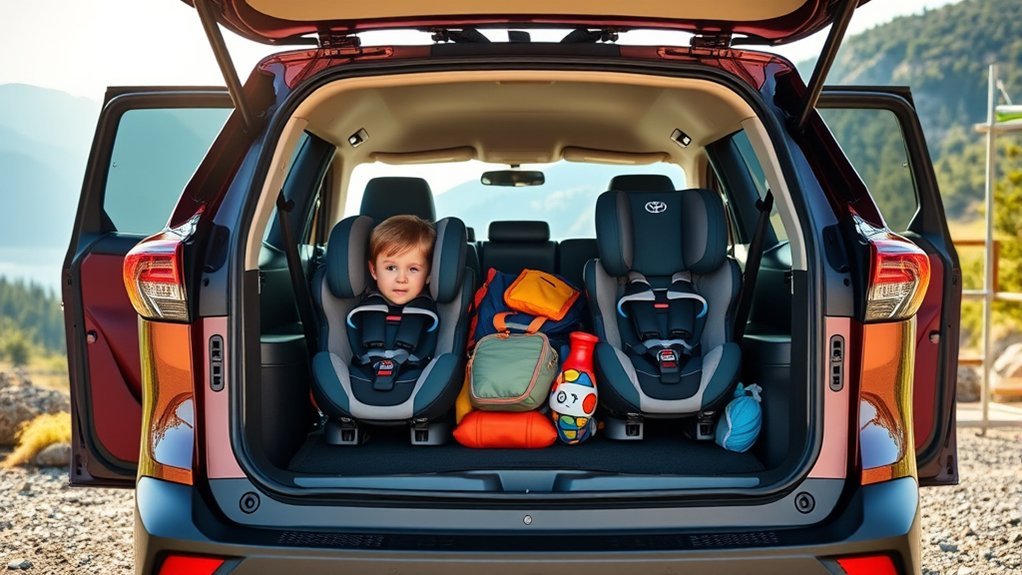
Toyota lists up to 37.8 cubic feet of cargo capacity behind the rear seats for the current 2026 U.S. RAV4. The exact capacity and cargo-floor arrangement can vary by drivetrain, trim, equipment, and model year.
The split-folding rear seat provides flexibility when carrying passengers and longer items together. Folding both sides creates more room, but Toyota’s official specification sheet for the exact vehicle should be used before relying on a maximum-volume figure.
Useful cargo considerations include:
- Whether a stroller fits without removing its wheels
- The height of the load floor and lift-over edge
- Whether the rear seats fold nearly flat
- Space remaining when all five seating positions are in use
- Access to tie-down points and underfloor storage
- Availability of a power or hands-free liftgate on the selected trim
A hands-free power liftgate can make loading easier when your hands are full, but it is an available feature rather than standard equipment on every RAV4.
[Amazon Products Picked for You]

Large Size & Universal Fit: Featuring expansive 53" x 79" dimensions, this foldable pet cargo cover is designed for a custom fit in full-size SUVs, mid-size SUVs, compact crossovers, minivans, and sedans. Ensure your pet has ample room to sit or lie down comfortably. Please measure your vehicle's cargo area before ordering.

Custom Fit: Compatible with 2019 2020 2021 2022 2023 2024 2025 Toyota RAV4 all gas and hybrid model, no need to cut, offering seamless fit and full coverage, ensuring all-round protection. Please confirm model years before purchasing

【Accessories for RAV4】The CARTIST trunk mat designed for Toyota RAV4 2019 2020 2021 2022 2023 2024 2025, Hybrid and Non-Hybrid all models. If your vehicle has a JBL speaker in the rear cargo area, please tuck it under the speaker panel.
How RAV4 Seating Compares With Competitors
The RAV4 competes with other two-row compact SUVs. Many rivals also seat five, so the best comparison is not simply the number of seat belts. Compare the specific features that affect your passengers and child restraints.
| Comparison point | What to evaluate |
|---|---|
| Rear-seat width | Test three adults or the exact child-seat combination you expect to carry. |
| Rear legroom | Position the front seats for the actual driver and passenger before judging rear space. |
| Door opening | Check whether a rear-facing carrier can be lifted through the opening easily. |
| LATCH access | Look for clearly marked anchors that are easy to reach without damaging upholstery. |
| Cargo usability | Load your stroller, luggage, mobility equipment, or sports gear instead of comparing volume alone. |
| Third-row need | Choose a larger three-row vehicle if you regularly need more than five seating positions. |
The RAV4 may be the right fit when you value a manageable exterior size, five-seat layout, flexible rear seat, and practical cargo area. Another SUV may be better when three-across width, wider-opening doors, greater rear legroom, or a third row is the priority.
Special Features for Enhanced Comfort in the RAV4
Selected RAV4 trims offer convenience features that can improve daily comfort. Availability changes by model year, trim, package, and market, so confirm each item on the vehicle’s window sticker or official build sheet.
- Split-folding rear seat: Lets you balance passenger and cargo needs.
- Dual-zone climate control: Allows the driver and front passenger to choose separate temperature settings when equipped.
- SofTex-trimmed seating: Provides an available leather-like seating surface on selected trims.
- Power-adjustable driver’s seat: Offers more precise positioning on equipped models.
- Heated or ventilated front seats: Can improve seasonal comfort when included.
- Available power liftgate: Makes the cargo area easier to access.
- Cabin storage: Trays, door pockets, cupholders, and console space help organize smaller items.
- USB-C ports: Help passengers keep compatible devices charged.
These features can make the RAV4 more convenient, but they should not be used to compare trims without checking the current equipment list.
[Amazon Products Picked for You]

More Breathable: Crafted from mesh fabric, our car seat cushion boosts air circulation to reduce sweat buildup in daily indoor or normal temperature environments (20-28℃). Ideal for summer, it minimizes heat and moisture even during long drives, preventing the burning feel on leather seats in midday heat. Note: Breathability is affected by scenarios—for high temperatures (above 30℃) or high humidity (e.g., outdoor exposure, strenuous exercise), loose clothing is recommended for better experience

【Soft Gel Cushion】The gel design cools off seat instantly and prevents heat accumulation after long sitting. Great for heat intolerant or high temperature people and loved by all in summer days Gel core also enhances the density of cushion for greater support.

【Keep Cooling While Driving】Tired of sticky seats in summer heat? This ventilated seat cushion delivers instant relief with high-powered fans that blast cool air in just 5 seconds. Perfect for beating wet leg/buttock and discomfort, it’s your go-to solution for staying dry and refreshed on even the hottest days. This cooling seat cover will definetely works great for those long trips in hot weather.
Why Do Families Choose the Toyota RAV4?
Families often consider the RAV4 because it combines five seating positions, a flexible rear bench, a useful cargo area, and widely available driver-assistance technology in a compact-SUV footprint.
For the 2026 model, Toyota lists Toyota Safety Sense 4.0. Buyers should still review the system’s limitations and compare current crash-test results rather than relying on a broad statement that the vehicle has one universal safety rating.
The IIHS 2026 RAV4 page reports separate results for different crashworthiness, crash-avoidance, headlight, and child-restraint evaluations. Those individual ratings provide more useful information than a general claim that every safety category performs identically.
| Family need | How the RAV4 may help | What to verify |
|---|---|---|
| Daily seating | Provides five designated positions in two rows. | Comfort with your regular passenger combination |
| Child restraints | Offers rear anchors and tether locations. | Correct installation in the intended position |
| Cargo | Includes a split-folding rear seat and useful space behind it. | Fit with all required seats occupied |
| Easy cleaning | Selected trims offer wipeable SofTex-trimmed surfaces. | Actual upholstery and care instructions |
| Driver assistance | Current models include a suite of assistance features. | Feature limitations and trim-specific equipment |
How to Check the RAV4’s Occupant and Cargo Weight Limit
The RAV4 does not have one universal passenger-only weight limit that applies to every vehicle. The relevant figure is the combined occupant-and-cargo limit for the specific RAV4.
Open the driver’s door and find the Tire and Loading Information label on the door pillar or door-jamb area. It states the maximum combined weight of occupants and cargo for that vehicle. Add the weight of every occupant, child restraint, bag, stroller, pet carrier, accessory, and other item placed inside the vehicle.
Do not confuse this label with the Gross Vehicle Weight Rating. Do not rely on a general online figure such as 1,100 pounds when the vehicle itself provides the applicable limit.
Related Guides
Frequently Asked Questions
What is the maximum weight capacity for passengers in a RAV4?
There is no single universal passenger-only limit for every RAV4. Check the Tire and Loading Information label on the driver-side door jamb. Its combined occupant-and-cargo figure covers passengers, child seats, luggage, and other items carried in the vehicle.
Can the RAV4 accommodate tall individuals comfortably?
Many tall drivers and passengers can fit comfortably, but roof type, seat adjustment, front-seat position, and model year affect usable space. Sit in the exact vehicle, adjust the seat and steering wheel, and test the rear row behind the normal driving position.
Does the RAV4 have a third-row seating option?
No. The current Toyota RAV4 is a two-row SUV with five seating positions. Drivers who regularly need room for six or more people should compare larger three-row vehicles.
Are special seating configurations available?
The RAV4 uses a split-folding rear bench that lets you fold part or all of the second row for cargo. Upholstery, power adjustment, heating, ventilation, and memory functions vary by model year and trim.
How does the RAV4 handle larger child seats?
Larger restraints may fit, but a rear-facing seat can reduce front-passenger space and a wide seat can affect the center position. Test-install the exact restraint, follow both manuals, and confirm that the neighboring seat belts and buckles remain usable.
How many complete LATCH positions does the RAV4 have?
IIHS’s current 2026 listing identifies two rear seating positions with complete LATCH hardware. The center has a tether anchor and may permit borrowed lower anchors only when the vehicle and child-seat instructions allow that arrangement.
Can three child seats fit across the rear bench?
Some combinations may fit, especially with narrower restraints, but the five-passenger rating does not guarantee a safe three-across setup. Each restraint must be installed independently and correctly. Test the complete combination and consider a technician inspection.
Conclusion
The Toyota RAV4 seats five people in two rows and does not provide a third row. Its front and rear space can suit many adults and families, while the split-folding rear seat supports a useful mix of passengers and cargo.
The best fit depends on the exact model year, trim, passenger sizes, and child restraints. Confirm current specifications, install your real child seats, check the door-jamb loading label, and test the vehicle with the people and equipment you expect to carry.
Sources
- Toyota RAV4 Overview — current seating-related features, cargo capacity, available equipment, and Toyota Safety Sense information.
- Toyota RAV4 Full Specifications — model-year and trim-specific specifications.
- Toyota RAV4 Owner’s Manuals — official loading, seat-belt, child-restraint, and vehicle-operation instructions.
- NHTSA Car Seats and Booster Seats — child-restraint selection, installation, tether, lower-anchor, and inspection guidance.
- IIHS 2026 Toyota RAV4 Ratings — crash-test information and LATCH ease-of-use details.
