
Last updated: September 22, 2026
This is a manufacturer-specification and safety guide, not a first-hand trail test.
There is no single “safe maximum” lift height for every Toyota RAV4. For 2019–2025 models, currently listed kits commonly add about 1.1 to 2.5 inches, but the correct height depends on the exact model year, trim, powertrain, kit design, wheel-and-tire setup, and vehicle load. Eibach lists roughly 1.1–1.7 inches depending on trim, Ironman 4×4 lists a 2-inch suspension kit for selected 2019–2025 RAV4s, and Rough Country lists a 2.5-inch kit for selected 2019–2025 non-hybrid configurations. The 2026 RAV4 is a redesigned sixth-generation vehicle, so do not assume a 2019–2025 kit fits it unless the kit maker explicitly lists your exact 2026 grade.
Quick Answer
- For 2019–2025 RAV4s, manufacturer-listed lift heights commonly fall around 1.1–2.5 inches, depending on the kit and trim.
- Lift height alone does not determine safety or ride quality; suspension geometry, spring rate, damping, tire size, wheel offset, and load all matter.
- Hybrid compatibility is kit-specific: some systems fit hybrids, while others specifically exclude Hybrid or Prime/PHEV models.
- Have the wheel alignment checked after installation and adjusted as needed; also verify tire clearance, brake-hose routing, ABS wiring, and fastener torque.
- For the redesigned 2026 RAV4, use only a kit that explicitly lists your exact model year, trim, and powertrain.
Understanding Lift Kits for the Toyota RAV4
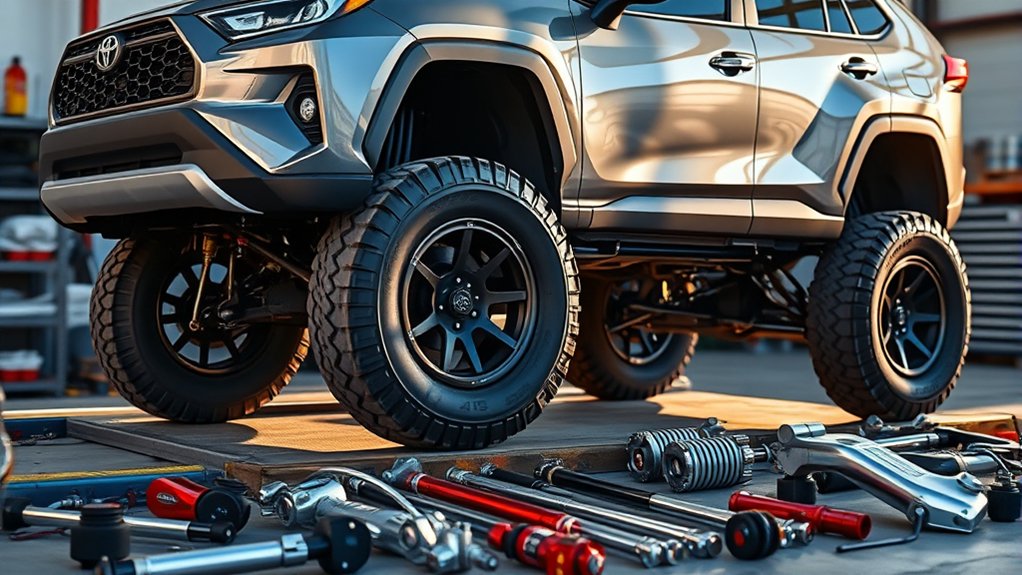
Most RAV4 lift products are suspension-based systems that use taller springs, strut or shock changes, spacers, or a combination of those parts. The RAV4 is a unibody crossover, so the traditional body lift used on a body-on-frame truck is not the normal approach here.
Different designs affect the vehicle differently. Eibach uses lift springs and lists different gains by trim for 2019–2025 applications. Ironman 4×4 lists a 2-inch spring-and-damper kit for selected 2019–2025 RAV4s. Rough Country lists a 2.5-inch N3 kit for selected 2019–2025 applications.
Choose a lift by exact year, trim, powertrain, kit architecture, and tire goal—not by lift height alone.
A lift can improve body clearance and approach, breakover, or departure geometry, but advertised lift height does not mean every low point under the vehicle rises by the same amount. Subframe position, suspension design, tire diameter, and vehicle load all affect the real clearance you gain.
After installation, have alignment measured and adjusted if needed. Eibach’s installation instructions also call for checking wheel alignment, tire-to-fender clearance, brake-line clearance, and ABS/anti-skid sensor routing after the springs are installed.
Choosing the Best Lift Kit for Your RAV4
Start with fitment, not brand reputation. The same lift height can be compatible with one RAV4 and excluded from another.
- Confirm generation and model year. The 2019–2025 RAV4 is the fifth generation. Toyota identifies the 2026 RAV4 as the redesigned sixth generation, so carry-over fitment should never be assumed.
- Confirm trim and powertrain. Eibach lists applications for Base AWD, Hybrid AWD, Adventure AWD, and TRD/TRD Off-Road, while Rough Country’s 2.5-inch N3 kit excludes Hybrid, Prime/PHEV, Adventure, and TRD Off-Road models. Ironman says its 2-inch kit fits hybrids but not Adventure or TRD.
- Match the kit type to your goal. Lift springs change ride height and spring characteristics; spacer systems reposition factory components; matched spring-and-damper systems also change damping control.
- Plan the wheel-and-tire package before buying. Tire width, actual mounted diameter, wheel width, offset, liner clearance, and suspension travel can matter as much as the advertised lift.
- Budget for post-install checks. Alignment, full-lock tire-clearance checks, brake-hose and ABS-wire clearance, and a fastener recheck are part of the job.
If you want a broader explanation of kit types before choosing a height, see our RAV4 suspension lift options guide.
Comparing Lift Heights: Which Kit Fits Your RAV4?
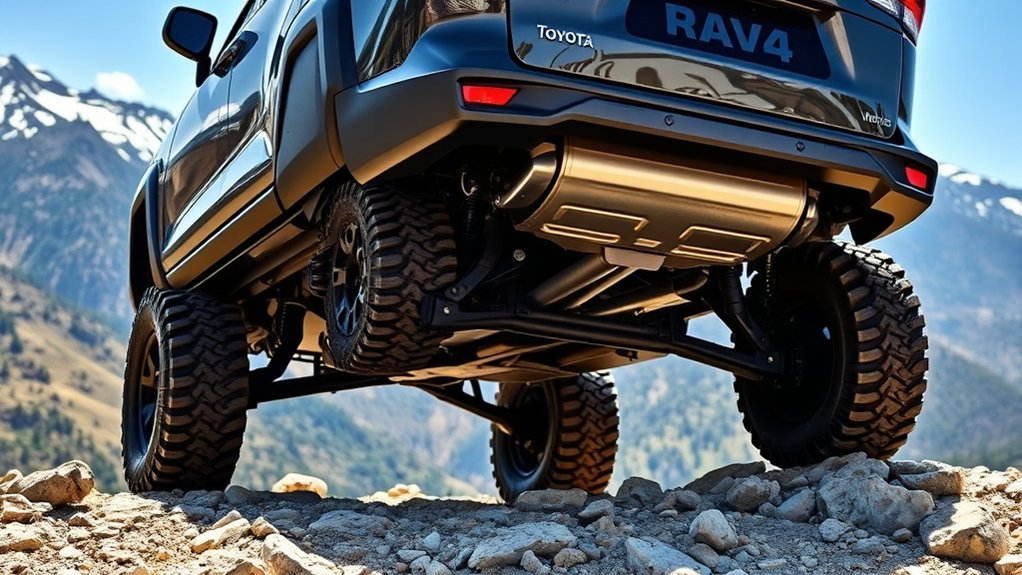
There is no universal compatibility chart based only on inches of lift. Current manufacturer listings show why:
| Example Kit | Advertised Lift | Key Fitment Notes |
|---|---|---|
| Eibach PRO-LIFT-KIT | About 1.1–1.7 in, depending on trim/axle | 2019–2025 listings include Base AWD, Hybrid AWD, Adventure AWD, and TRD/TRD Off-Road applications; lift amount varies by trim. |
| Ironman 4×4 ATS | 2 in | Listed for 2019–2025; fits Hybrid models; does not fit Adventure or TRD models. |
| Dobinsons suspension kit | About 2 in on listed spring options | Listed for 2019–2025; final ride height depends on drivetrain, load, and selected springs. |
| Rough Country N3 | 2.5 in | Listed for selected 2019–2025 AWD/FWD models; excludes Hybrid, Prime/PHEV, Adventure, and TRD Off-Road applications. |
These examples are not interchangeable. Use the kit maker’s current fitment page and part number for your exact RAV4 before ordering. For 2026, Toyota’s redesign means the model year deserves its own fitment check even if an aftermarket seller advertises a broad year range.
What to Expect in Ride Quality After Lifting
Ride quality is driven more by the parts and setup than by one universal lift-height threshold. A spacer lift may retain the original springs and dampers but changes component positions and available travel. Lift springs can change spring rate and ride height. A matched spring-and-damper kit changes both spring behavior and damping.
Impact on Handling Dynamics
A lifted RAV4 can feel different from stock because the center of gravity, alignment settings, tire package, and suspension geometry may all change. Focus on these checks:
- Alignment: Have toe, camber, and other adjustable angles measured after installation.
- Steering clearance: Turn from full left to full right and check tire contact at the liner, mud flap, strut, spring perch, and nearby hardware.
- Suspension movement: Make sure hoses, ABS wiring, and other components have enough slack through steering and suspension travel.
- Road behavior: New pulling, wandering, clunks, shudder, or vibration should be diagnosed rather than accepted as normal.
Vibration and Noise Levels
A properly selected and installed lift should not be judged by whether the driver can “get used to” a new vibration. If vibration appears after installation, check wheel balance, tire runout, alignment, rubbing, loose fasteners, strut or spring seating, axle/CV-joint angles, and driveline components as applicable to the vehicle.
Do not assume a specific speed or a specific lift height identifies the cause. Vibration at 20 mph, for example, can have more than one source. A repeatable new symptom deserves inspection before more suspension parts are added.
Shudder and Vibration Issues With Lifted RAV4s
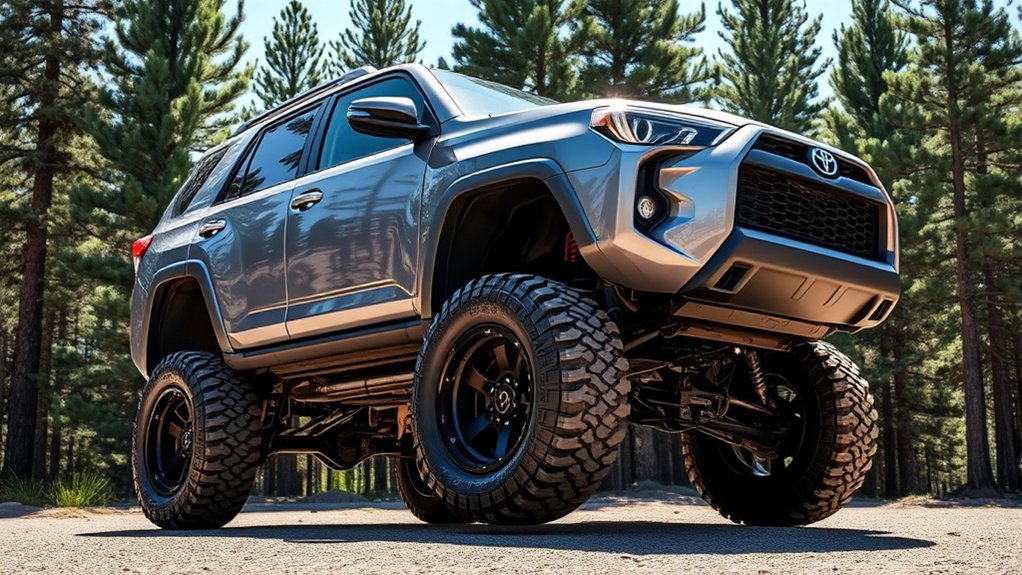
Lift-related geometry changes can increase stress on suspension and driveline parts, but the draft rule that “over 2.5 inches causes shudder” is too broad. Manufacturer kits use different combinations of springs, spacers, subframe parts, shocks, and struts, so a symptom must be diagnosed on the actual vehicle.
Common Causes of Shudder
If a new shudder or vibration starts after the lift, inspect the basics before blaming one component:
- Wheel and tire condition: balance, bent wheels, tire defects, and new rubbing can all create vibration.
- Alignment: incorrect toe or camber can create poor tracking and abnormal tire behavior.
- Installation: loose fasteners, incorrectly seated springs, or improperly oriented strut components can create noise or movement.
- Axle and driveline angles: changed operating angles can matter, especially if the kit raises suspension mounting relationships significantly.
- Clearance: check brake hoses, ABS wiring, sway-bar links, CV boots, and nearby components through the full range of motion.
Impact of Lift Height
More lift generally means a larger change from factory geometry, but there is no verified RAV4-wide inch threshold at which vibration automatically starts. The useful question is whether the chosen kit was engineered for your trim and whether the resulting alignment, travel, and driveline angles remain within the kit maker’s intended range.
The RAV4’s unibody design is also why traditional truck-style body-lift advice does not transfer cleanly to this vehicle. Use RAV4-specific suspension parts and installation instructions.
Mitigation Strategies and Solutions
- Use the exact application: Do not install a kit on an excluded trim or powertrain.
- Follow the complete kit instructions: Install every supplied bracket, spacer, spring, shock, or support in the specified position.
- Align and inspect: Check alignment, tire clearance, hoses, sensor wiring, and torque after installation.
- Diagnose symptoms: If the vehicle develops shudder, pulling, rubbing, clunks, or warning lights, stop treating the symptom as normal and find the cause.
How Shudder and Vibration Affect Suspension Travel
Suspension travel and ride height are related but not the same. A spacer can raise static ride height without adding the same amount of usable droop or compression travel. A spring-only lift can also change where the suspension rests within its travel, while a matched longer-travel damper package may be designed around a different operating range.
Advertised lift height tells you how much the vehicle is raised; it does not, by itself, tell you how much usable suspension travel you gained.
That distinction matters off-road. If a shock tops out, a tire rubs at compression, or a CV joint operates at an unfavorable angle, extra static height may not translate into better usable travel. Use the kit maker’s complete system instructions rather than adding unapproved “fix” spacers after a vibration appears.
How Much Does It Cost to Lift a RAV4?
Kit cost varies sharply by design and included parts. Product-only prices checked on September 22, 2026 illustrate the range: Rough Country lists its 2.5-inch spacer-style kit for 2019–2023 at about $300 and its N3 strut/shock kit for 2019–2025 at about $650; Eibach lists its 2019–2025 PRO-LIFT-KIT springs at $399; Ironman 4×4 lists its 2-inch ATS kit at about $1,199; and Dobinsons lists a 2019–2025 suspension kit starting around $1,370.
Labor and alignment prices vary by region, shop rate, rust level, and kit complexity, so a single nationwide labor figure is not reliable. Ask for a written quote that separates the kit, installation, alignment, tire or wheel changes, and any follow-up inspection. Prices can change after this update.
Installation: DIY vs. Professional Help
DIY suitability depends on the kit. Spacer systems, spring replacements, and complete strut assemblies do not require the same tools or skill level. Eibach’s instructions for its RAV4 lift springs state that qualified mechanics experienced with suspension-component removal and installation should perform the work.
Tools Required for Installation
Exact tools vary by kit, but a suspension installation commonly requires:
- Correct sockets and wrenches: Match the vehicle and kit fasteners.
- Torque wrench: Tighten critical hardware to the specified torque instead of estimating by feel.
- Rated lifting and support equipment: Never work under a vehicle supported only by a hydraulic jack.
- Appropriate strut or spring equipment: If the procedure requires spring compression, use professional-grade equipment and follow the kit instructions; stored spring energy can cause serious injury.
Common Installation Challenges
Fitment errors are one of the biggest risks. “2019–2025 RAV4” is not enough information when a product page also excludes specific trims or powertrains. Confirm the exact application before disassembly.
After the installation, check alignment, tire clearance at full steering lock, brake-hose routing, ABS wiring, spring and strut seating, sway-bar links, CV boots, and the kit’s required fastener recheck interval. If the vehicle pulls, rubs, vibrates, or shows a warning light, inspect it before normal driving continues.
Tire Selection for Your Lifted RAV4
There is no universal “maximum tire diameter” for every lifted RAV4; tire fitment depends on the exact lift, trim, wheel width, offset, tire construction, and alignment.
For one concrete example, Rough Country lists 235/70R17 on a 17×8 wheel with +38 offset for its eligible 2.5-inch RAV4 kits and still advises buyers to test-fit wheel-and-tire combinations. That fitment should not be copied to an excluded trim or a different lift system.
- Check full-lock clearance: Inspect both steering directions at normal ride height.
- Check suspension compression: A tire that clears while parked can still rub when the suspension compresses.
- Preserve load capacity: Use tires with an appropriate load rating for the vehicle and intended load.
- Watch wheel offset and width: They change where the tire sits relative to the strut, fender, and liner.
Use Toyota’s stock specifications as a baseline, then follow the tire guidance supplied with your lift kit. You can also compare factory clearance by trim in our Toyota RAV4 ground-clearance guide.
How Lift Height Affects Off-Road Performance
A lift can improve the clearance of the body and bumpers and can improve approach, breakover, or departure angles, but the real gain depends on what the kit moves. A subframe spacer can raise the body while leaving some suspension or drivetrain components closer to their original relationship with the ground. Larger-diameter tires can increase clearance at other low points, but they also affect gearing, braking feel, mass, and rubbing risk.
For daily-driven RAV4s, a moderate manufacturer-supported setup is usually easier to integrate than chasing maximum height. Compare the kit’s exact application, included geometry-correction parts, tire fitment, and post-install alignment requirements before deciding how high to go.
The key decision is not “what is the tallest kit sold?” It is “what is the tallest complete setup engineered for my exact RAV4 and the way I use it?”
Community Experiences With RAV4 Lift Kits
Owner forums and social groups are useful for spotting recurring installation issues, tire-rubbing locations, real ride-height measurements, and long-term wear. They are less reliable for universal rules such as “every lift above X inches vibrates” because vehicles, tires, loads, installation quality, and kit designs differ.
Use owner reports to generate questions for your own setup, then confirm fitment and corrective steps with the kit maker’s instructions and a qualified alignment or suspension shop.
- Look for reports that match your exact model year, trim, powertrain, wheel size, tire size, and kit part number.
- Give more weight to posts that include before-and-after measurements, alignment sheets, photos of clearance, and a documented fix.
- Treat “it vibrates but I got used to it” as a symptom report, not proof that the setup is safe or correctly installed.
- Recheck current manufacturer fitment because product applications can change even when older forum posts remain online.
Frequently Asked Questions
Can Lifting My RAV4 Void the Warranty?
Installing an aftermarket lift does not automatically erase the entire U.S. vehicle warranty. The Federal Trade Commission explains that a manufacturer or dealer can deny coverage for damage caused by a defective aftermarket part or improper installation, but simply using an aftermarket part does not by itself void all warranty coverage. Keep the kit instructions, alignment report, receipts, and maintenance records.
How Does Lift Height Affect Fuel Efficiency?
A lift can reduce fuel economy if it increases aerodynamic drag or is paired with heavier, wider, or more aggressive tires. The amount varies too much by vehicle speed, tire choice, wheel mass, pressure, alignment, and driving conditions to assign one reliable mpg penalty to a specific lift height.
Will Lifting My RAV4 Change Its Towing Capacity?
A lift kit does not create a higher Toyota tow rating. Continue to follow the limits for your exact RAV4, including trailer weight rating, gross vehicle weight rating, gross axle weight ratings, hitch rating, tire load limits, and tongue weight. Toyota’s owner information defines TWR as the maximum gross trailer weight the vehicle is rated to tow. A modification can change handling, ride height, and hitch geometry, so verify the complete towing setup rather than assuming the lift increases capability.
Can I Use Stock Tires After Lifting?
Usually, yes, if the lift kit is designed to work with the factory wheel-and-tire package and the tires remain in good condition. A lift does not require larger tires by itself. Check the kit maker’s fitment notes and confirm alignment and clearance after installation.
What Maintenance Is Required After Lifting My RAV4?
Follow the kit maker’s inspection and retorque schedule. After installation, check alignment, tire wear, fasteners, spring and strut seating, shocks, CV boots, brake hoses, ABS wiring, sway-bar links, and tire clearance. Reinspect sooner if you hear a new clunk, feel a vibration, see uneven tire wear, or drive off-road regularly.
Can I Lift a 2026 Toyota RAV4?
Yes, aftermarket companies may list 2026-compatible systems, but the 2026 RAV4 is Toyota’s redesigned sixth generation with new suspension components. Use only a kit whose manufacturer explicitly lists your exact 2026 grade and powertrain; do not assume a 2019–2025 part carries over.
How High Can I Lift a RAV4 Without Problems?
There is no verified inch value that guarantees zero problems across every RAV4. For 2019–2025 models, current manufacturer examples range from roughly 1.1 inches on some Eibach applications to 2.5 inches on selected Rough Country applications. The safest decision is the complete, vehicle-specific system whose fitment, alignment, tire clearance, and post-install checks you can verify.
Final Thoughts
For most 2019–2025 RAV4 owners, the practical question is not whether 3 inches is “safe,” but which manufacturer-supported setup fits the exact trim and use case. Current examples cluster around roughly 1.1–2.5 inches, with major differences in hybrid, Adventure, TRD, and Prime/PHEV compatibility. For 2026, treat the redesigned sixth generation separately.
Before buying, verify the part number against your VIN-level configuration, choose the wheel-and-tire package at the same time, and plan for an alignment and clearance inspection after installation. That approach gives you a more defensible lift than relying on a universal height rule.
