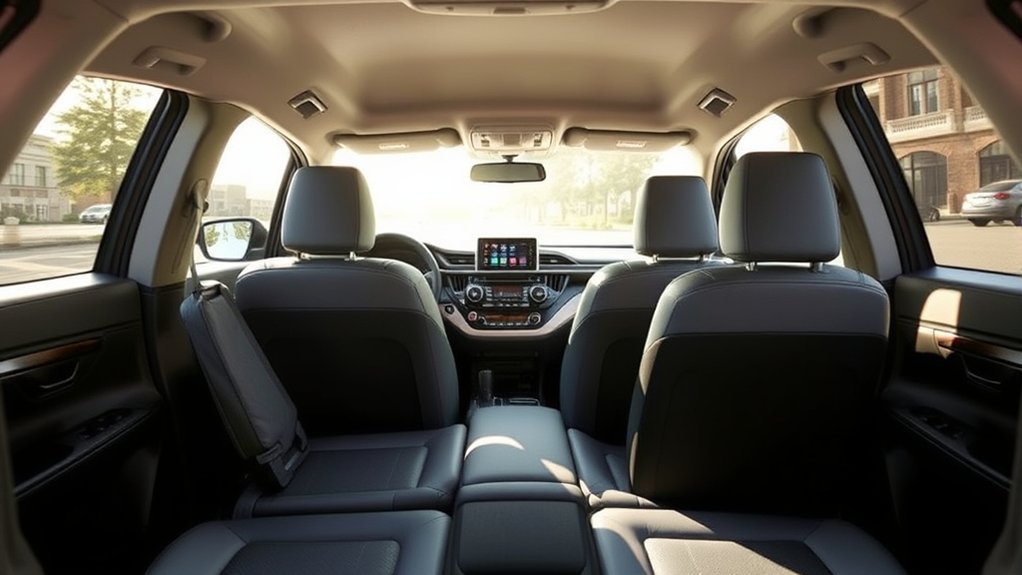
The current 2026 U.S.-market Toyota RAV4 has five seating positions total, including the driver, arranged in two rows: two front seats and a three-person rear bench. It does not offer a factory third row. If you mean passengers other than the driver, that is one driver plus up to four passengers. Older RAV4 history is different: select 2006–2012 U.S. models could be factory-equipped with a small third row for up to seven occupants.
Last updated: September 19, 2026. Rechecked against Toyota’s current 2026 RAV4 specifications and NHTSA child-seat guidance.
Quick Answer
The 2026 Toyota RAV4 seats five occupants total in two rows: the driver and one front passenger, plus three rear seating positions. Current models do not offer a third row. Select 2006–2012 U.S. RAV4s were an exception and could have a factory third row, so used-vehicle shoppers should verify the exact year and equipment.
Key Takeaways
- The current 2026 RAV4 has five seating positions total, including the driver, across two rows.
- No current 2026 U.S. RAV4 has a factory third row; select 2006–2012 U.S. models could seat up to seven when equipped with the optional third row.
- Toyota lists a 60/40 split reclining fold-flat rear seat for the 2026 RAV4, so you can trade rear seating positions for cargo length.
- Toyota’s 2026 U.S. specifications list 41.0 inches of front legroom and 37.8 inches of rear legroom; other dimensions and cargo figures depend on configuration.
- Three child restraints may not fit safely across the rear bench, so check both the vehicle and child-restraint manuals before installation.
How Many Passengers Can Fit in a Toyota RAV4?
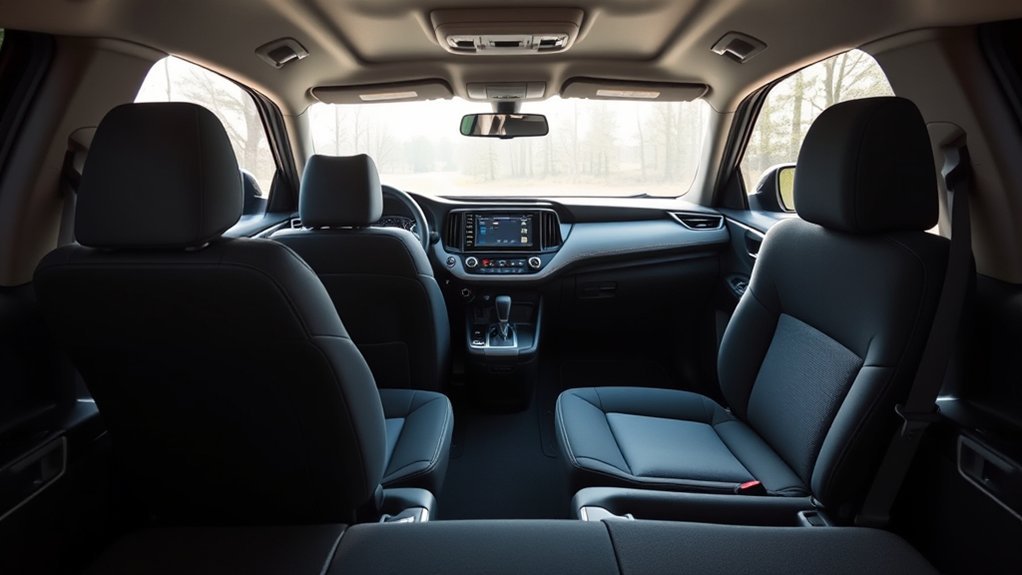
The current 2026 RAV4 has five designated seating positions, counting the driver. Toyota’s 2026 RAV4 comparison specifications list seating capacity as five and the rear seat as a 60/40 split. In everyday terms, that means one driver plus up to four passengers.
Five seating positions do not mean every position offers the same amount of room. The rear center position shares shoulder and hip space with both outboard passengers, so three adults across the rear bench will feel tighter than two. For the 2026 RAV4, Toyota lists 56.4 inches of rear shoulder room and 49.6 inches of rear hip room.
For the current RAV4, five designated seating positions mean five occupants total, including the driver; passenger size, child restraints, and trip length determine how comfortable that capacity feels.
[Amazon Products Picked for You]

【Precision Fit & Luxury Upgrade】Specifically tailored for Toyota Rav4(Gasoline) 2019 2020 2021 2022 2023 2024 2025 LE/XLE/XLE Premium/Limited. Our solvent-free leatherette delivers a premium soft-touch feel with an OEM-inspired finish—instantly elevating your truck’s interior to a cleaner, more upscale look.
【Precision Fit & Luxury Upgrade】Specifically tailored for Toyota Rav4 (Only Hybrid)2019-2025 LE,XLE,XLE Premium,Limited,Woodland Edition. Our solvent-free leatherette delivers a premium soft-touch feel with an OEM-inspired finish—instantly elevating your truck’s interior to a cleaner, more upscale look.

【Custom Fit 】This full set of seat covers custom fit for the 2019–2026 2025 2024 Toyota RAV4 Hybrid/Gas(LE, SE, XLE, Limited, Premium). They maintain a smooth, snug fit during daily driving, without loosening or slipping.
Does the RAV4 Have a Third Row?
No current U.S.-market RAV4 has a third row. The 2026 model has two rows and five seats. However, select third-generation RAV4s sold in the United States from 2006 through 2012 could be factory-equipped with a small third row for up to seven occupants. Toyota’s 2012 RAV4 product information describes an optional two-passenger third row, and the 2008 RAV4 owner’s manual includes instructions for stowing the third seats. Because the option was not installed on every 2006–2012 vehicle, verify the individual used RAV4 rather than relying on model year alone.
| U.S. RAV4 Model Years | Factory Seating Layout | Maximum Seating |
|---|---|---|
| 2006–2012 | Two rows standard; optional third row on select configurations | Up to seven when factory-equipped |
| 2013–2025 | Two rows | Five |
| 2026 current model | Two rows | Five |
Families that regularly need six or more seating positions should compare a purpose-built three-row SUV or minivan rather than adding an unapproved cargo-area seat to a five-seat RAV4.
Note: Avoid aftermarket cargo-area seats. A passenger should use only a factory-designed seating position with an approved seatbelt and the required occupant-protection equipment.
Can Five Adults Sit Comfortably?
Five adults can occupy all five designated seating positions when everyone can sit and buckle properly and the vehicle’s loading limits are not exceeded, but comfort is subjective. Rear shoulder width, center-seat shape, front-seat position, passenger height, winter clothing, and trip duration all affect the experience.
Before buying a RAV4 for frequent five-adult travel, sit in all three rear positions with the front seats adjusted for the actual drivers. Pay attention to knee clearance, head clearance, shoulder overlap, access through the rear doors, and the rear center passenger’s foot space.
What Are the RAV4’s Seating Configurations?
The current 2026 RAV4 uses a conventional two-front-seat and three-person rear-bench layout with a 60/40 split reclining fold-flat rear seat. Older model years also commonly use split-folding rear seats, but the exact folding controls, reclining function, center armrest, heating, and upholstery depend on the vehicle’s year and trim.
How the 60/40 Rear Seat Works
A 60/40 split lets you fold either the wider or narrower section of the rear seat. This creates three practical layouts:
- All rear seats raised: You retain five seating positions and use the cargo area behind the second row.
- One section folded: You can carry a longer item while keeping one or two rear seating positions available.
- Both sections folded: You maximize the load floor but reduce passenger capacity to the two front seats.
Remove loose objects before folding a seatback, lower or reposition the head restraint as directed, and make sure no seatbelt is trapped. After raising the seatback, pull it gently to confirm that it has latched.
Do the Rear Seats Slide to Add Legroom?
For the 2026 RAV4, Toyota lists a 60/40 split reclining fold-flat rear seat and does not list a fore-aft sliding rear bench. Reclining changes the seatback angle; it does not move the entire bench farther from the front row.
Older generations can differ, especially 2006–2012 vehicles equipped with a factory third row. Use the owner’s manual for the exact vehicle before folding, reclining, sliding, or returning any seat to its upright position.
RAV4 Interior Space and Model-Year Differences
Avoid treating one set of RAV4 interior measurements as universal. Toyota has sold several generations, and equipment such as a moonroof, power seat, hybrid battery packaging, or different seat design can affect measurements and usable space.
The redesigned 2026 Toyota RAV4 should not be evaluated using unqualified dimensions from a 2023, 2024, or 2025 model. Toyota’s current full-specification page also notes that equipment and specifications may vary by configuration and region.
[Amazon Products Picked for You]

Comfortable Car Seat Cushion: The breathable fabric, polymer memory foam and non-slip silicone gel of this car seat cushion with right thickness help you to reduce the pressure on the coccyx

Ergonomic Design for Superior Comfort and Support: Unique U-shaped cutout suspends your tailbone, reducing pressure points and relieving pain, while the contoured shape promotes proper posture and spinal alignment to alleviate lower back discomfort from prolonged sitting

ELEVATED U-SHAPED CUTOUT FOR COCCYX RELIEF: Introducing our car seat cushion, specially designed with a car seat-specific design to fit seamlessly into the seat of your car. Designed for exceptional comfort and support, while reducing tailbone pain and promoting healthy posture; Ideal for long sitting sessions, long car rides, and daily communting. The seat cushion includes a U- Shaped cut out that conforms to your body and adapts to your car chair, great for drivers on the road
2026 RAV4 Passenger-Space Snapshot
Toyota’s 2026 U.S. sales guide lists 41.0 inches of front legroom, 37.8 inches of rear legroom, 57.0/56.4 inches of front/rear shoulder room, and 55.3/49.6 inches of front/rear hip room. That guide lists 37.8 cubic feet of cargo volume behind the second row and 70.4 cubic feet behind the front row with the second row folded. Toyota’s current online comparison tool displays 69.8 cubic feet with the rear seat down for the RAV4 configuration shown there, so treat the folded-seat figure as configuration/source-specific rather than universal.
| 2026 RAV4 Reference | Front | Rear / Cargo |
|---|---|---|
| Legroom | 41.0 in. | 37.8 in. |
| Shoulder room | 57.0 in. | 56.4 in. |
| Hip room | 55.3 in. | 49.6 in. |
| Cargo volume (2026 sales guide) | 70.4 cu. ft. behind front row with second row folded | 37.8 cu. ft. behind second row |
Front-Seat Comfort
The front row usually gives the driver and passenger the most room and adjustment range. Depending on the trim, features may include a power-adjustable driver’s seat, heated front seats, ventilated front seats, lumbar adjustment, and different seat materials.
Drivers should check whether they can reach the steering wheel and pedals without sitting too close to the airbag. They should also confirm that the steering wheel, mirrors, head restraint, and seatbelt can be positioned correctly.
Rear-Seat Comfort
The rear bench works well for two adults, three children, or a changing mix of passengers, but the center position is narrower than the two outboard positions. A tall front occupant can also reduce knee space for the person seated behind.
Rear comfort is easier to judge in person than from one legroom number. Sit behind your normal front-seat position and check head clearance, knee clearance, foot space, seatback angle, window visibility, and access to rear air vents where equipped.
What Makes the RAV4 Comfortable for Passengers?
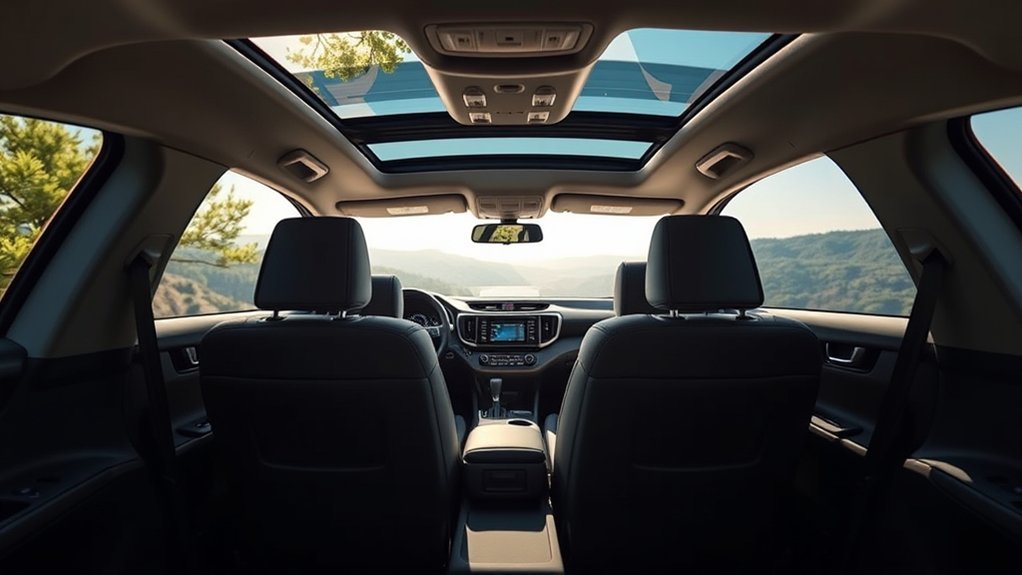
Passenger comfort comes from more than dimensions. Seat shape, adjustment range, upholstery, climate controls, storage placement, visibility, noise levels, and ride quality can all affect how the cabin feels during a longer drive.
[Amazon Products Picked for You]


🚘🚘UNIVERSAL FIT: Our semi-customized car seat cushion fits most vehicles better than other universal covers in the market. Our design features hook-and-loop attachments and straps for a snug fi
Upholstery and Seat Features
RAV4 upholstery varies by year, grade, and powertrain. Toyota’s 2026 U.S. materials list SofTex-trimmed seating on grades including XLE Premium, while XSE materials can combine SofTex with suede-style trim; the Plug-in Hybrid XSE is listed with SofTex/synthetic-suede trim. GR SPORT uses Brin Naub synthetic suede with SofTex. Check the exact grade specification before assuming two 2026 RAV4s use the same upholstery.
Do not assume that a listing described as “leather” has factory leather upholstery. Review the window sticker, trim specifications, or vehicle history to determine whether the material is factory-installed, dealer-installed, or aftermarket.
Climate Control and Rear Airflow
Depending on the model year and trim, a RAV4 may have manual climate control, dual-zone automatic climate control, heated or ventilated front seats, and rear air vents. These features are not identical across the entire lineup.
Dual-zone control lets the driver and front passenger select different temperature settings. Rear vents help circulate conditioned air to the second row, but they do not necessarily create a separate rear temperature zone.
Cabin Storage
Door pockets, cup holders, the center console, dashboard trays, and cargo-area storage can help keep small items organized. Some versions may also have an underfloor compartment or accessory cargo organizer.
Underfloor storage is supplemental space within the cargo area. It should not be described as adding dozens of cubic feet beyond the vehicle’s published cargo capacity.
RAV4 Cargo Capacity: What to Expect
Toyota’s current 2026 RAV4 overview lists cargo capacity of up to 37.8 cubic feet behind the second row. For folded-seat capacity, Toyota’s 2026 sales guide lists 70.4 cubic feet behind the front row, while Toyota’s current online comparison tool displays 69.8 cubic feet for the RAV4 configuration shown there. Because Toyota’s own current sources differ on the folded-seat figure, use the exact grade and powertrain specification when that measurement matters.
Older RAV4 articles commonly quote different figures for gasoline, hybrid, and plug-in-hybrid versions. Keep every measurement attached to the exact model year and configuration it describes; the 2026 redesign makes that especially important.
| Configuration | Passenger Capacity | Cargo Use |
|---|---|---|
| Rear seat fully raised | Up to five people | Cargo remains behind the second row. |
| Smaller section folded | Usually up to four people | Creates room for a narrow or long item. |
| Larger section folded | Usually up to three people | Provides a wider loading area while retaining one rear seat. |
| Both rear sections folded | Two people | Provides the largest available load floor. |
Published volume does not describe every real-world limitation. The cargo opening’s width and height, wheel-well intrusion, roofline, floor angle, liftgate clearance, and the shape of your belongings can determine whether an item actually fits.
Pro Tip: Measure the cargo opening and the item itself instead of relying only on cubic-foot capacity. Leave enough space for the liftgate to close without pressing against the load.
Child Seats and Passenger Safety
RAV4 models include child-restraint anchorage provisions, but the exact lower-anchor and tether locations must be confirmed in the owner’s manual for that model year. A child restraint may be installed with approved lower anchors or a seatbelt according to the restraint and vehicle instructions.
The National Highway Traffic Safety Administration advises parents to choose a restraint for the child’s age and size, confirm that it fits the vehicle, and follow both the child-restraint instructions and vehicle owner’s manual. NHTSA also notes that not all car seats fit all vehicles, which is why three-across fit should be tested rather than assumed.
Warning: Do not assume three child restraints will fit safely across the rear bench because the vehicle has three rear seatbelts. Restraint width, buckle access, anchor positions, installation method, and manufacturer limits all matter. Have the installation checked by a certified child-passenger-safety technician when needed.
Keep unused seatbelts and buckles accessible, route tethers only to the specified tether anchors, and never attach a tether to a cargo tie-down. When one side of the rear seat is folded, make sure the remaining child restraint and seatback are still installed and latched exactly as their instructions require.
How to Check the Exact Specifications for a RAV4
Use the following process when comparing a new or used RAV4:
- Confirm the model year. A specification from a 2025 model may not apply to the redesigned 2026 vehicle.
- Identify the trim and powertrain. Seat material, power adjustments, cargo packaging, climate equipment, and comfort features can vary.
- Check optional equipment. A moonroof, premium seat package, or accessory cargo system may affect usable space or features.
- Review Toyota’s official specifications. Use the page for that exact model year rather than a general dealership summary.
- Read the owner’s manual. Confirm seat operation, child-restraint anchors, cleaning guidance, head-restraint use, and cargo warnings.
- Test the actual vehicle. Bring frequent passengers, child restraints, a stroller, mobility equipment, or other important cargo.
Toyota provides model-specific manuals through its owners and manuals portal. For a used RAV4, select the correct year before relying on the instructions.
Maintenance Tips for Keeping Your RAV4 Interior in Good Condition
Interior care should be based on use, spills, climate, and material type rather than an invented monthly or quarterly schedule.
- Vacuum gently: Use a soft brush attachment on seats, carpet, seams, and around seat tracks. Avoid striking wiring or connectors beneath powered or heated seats.
- Blot spills promptly: Absorb liquid instead of rubbing it deeper into fabric or seams.
- Use material-compatible products: Check the cleaner’s label and test it in a hidden area. Products intended for genuine leather may not be suitable for fabric, SofTex, or synthetic-suede trim.
- Limit moisture: Do not soak seat cushions, switches, buckles, electrical connectors, or climate controls.
- Keep tracks clear: Remove coins, gravel, toys, and other objects that could interfere with seat movement or latching.
- Avoid unnecessary lubricant: Do not lubricate seat tracks, hinges, or latches unless the owner’s manual or a qualified technician directs you to do so.
- Inspect safety components: Make sure seatbelts retract correctly, buckles latch, head restraints remain secure, and folded seatbacks lock after being raised.
Note: Cleaning guidance can differ by upholstery and model year. Follow the owner’s manual and the cleaner manufacturer’s instructions before treating a visible stain.
Related Guides
Frequently Asked Questions
What safety features are available for RAV4 seating?
RAV4 seating areas include seatbelts, head restraints, airbags, and child-restraint anchorage provisions. Seatbelt reminders, airbag coverage, driver-assistance systems, and other equipment vary by model year and trim, so review the official specifications and owner’s manual for the exact vehicle.
Are there child-seat anchor points in the RAV4?
Yes. The RAV4 provides child-restraint anchorage points, but lower-anchor and tether locations can differ by seating position and model year. Follow the RAV4 owner’s manual and the child-restraint manufacturer’s instructions rather than assuming every rear position uses the same installation method.
Can three child seats fit across the RAV4’s rear bench?
Possibly, but it cannot be guaranteed. Fit depends on the restraints’ widths, the children’s required seating modes, buckle access, anchor positions, and approved installation methods. Test the exact restraint combination in the vehicle and seek help from a certified child-passenger-safety technician when necessary.
Can the rear seats be adjusted for more legroom?
For the 2026 RAV4, Toyota lists a 60/40 split reclining fold-flat rear seat and does not list a fore-aft sliding rear bench. Older models can differ, so check the exact vehicle’s owner’s manual.
What upholstery options are available for the RAV4?
Options vary by year, grade, and powertrain. Toyota’s 2026 U.S. materials list SofTex on several grades, SofTex with suede-style trim on some XSE configurations, and Brin Naub synthetic suede with SofTex on GR SPORT. Confirm the material through the official grade specifications or window sticker.
Does the Toyota RAV4 have a third row?
No. The current 2026 U.S.-market RAV4 has two rows and five seating positions. Buyers who regularly need six or more seats should consider a purpose-built three-row vehicle.
Did older Toyota RAV4 models have seven seats?
Yes, some did. Select U.S.-market RAV4s from 2006 through 2012 could be factory-equipped with a small third row for up to seven occupants. The option was not installed on every vehicle, and current RAV4 models returned to a two-row, five-seat layout.
How much cargo space does the RAV4 have?
Toyota lists up to 37.8 cubic feet behind the second row for the 2026 RAV4. Its 2026 sales guide lists 70.4 cubic feet behind the front row with the second row folded, while Toyota’s current comparison tool displays 69.8 cubic feet for the configuration shown there. Check the exact year, powertrain, and grade when folded-seat capacity matters.
How does RAV4 seating compare with competing SUVs?
For the 2026 RAV4, Toyota lists 37.8 inches of rear legroom and 56.4 inches of rear shoulder room. Compare those same-year measurements with rival SUVs, then check rear-door access, child-seat fit, cargo shape, and seat comfort in person because dimensions alone do not show how three people or multiple restraints will fit.
Sources
- 2026 Toyota RAV4 Overview — current model information and published cargo capacity.
- 2026 Toyota RAV4 Comparison Specifications — seating capacity, 60/40 rear-seat layout, passenger dimensions, and comparison data.
- Toyota 2026 RAV4 Sales Consultant Guide — current-generation interior dimensions, cargo volume, and grade equipment.
- 2026 Toyota RAV4 Full Specifications — configuration-specific features, dimensions, capacities, and equipment notes.
- 2026 Toyota RAV4 Plug-in Hybrid Overview — current plug-in-hybrid grades and equipment.
- Toyota USA Newsroom: 2012 RAV4 — optional two-passenger third-row availability on RAV4 and Limited grades.
- 2008 Toyota RAV4 Owner’s Manual — factory third-row seat operation and stowing instructions for equipped vehicles.
- Toyota RAV4 Manuals and Warranties — model-specific seat operation, maintenance, safety, and feature instructions.
- NHTSA Car Seats and Booster Seats — child-restraint selection, installation, fit, and inspection guidance.
Conclusion
The current 2026 Toyota RAV4 accommodates five occupants total across two rows and does not offer a factory third row. Its 60/40 split reclining fold-flat rear seat makes it practical for changing combinations of passengers and cargo. The historical exception is select 2006–2012 U.S. RAV4s that could be factory-equipped for up to seven occupants.
Use specifications for the exact model year, powertrain, and grade instead of mixing measurements from different generations. Before buying, place your regular passengers or child restraints in the actual vehicle, check the cargo you carry most often, and confirm seat operation and safety requirements in the correct owner’s manual.
