Last updated: September 19, 2026
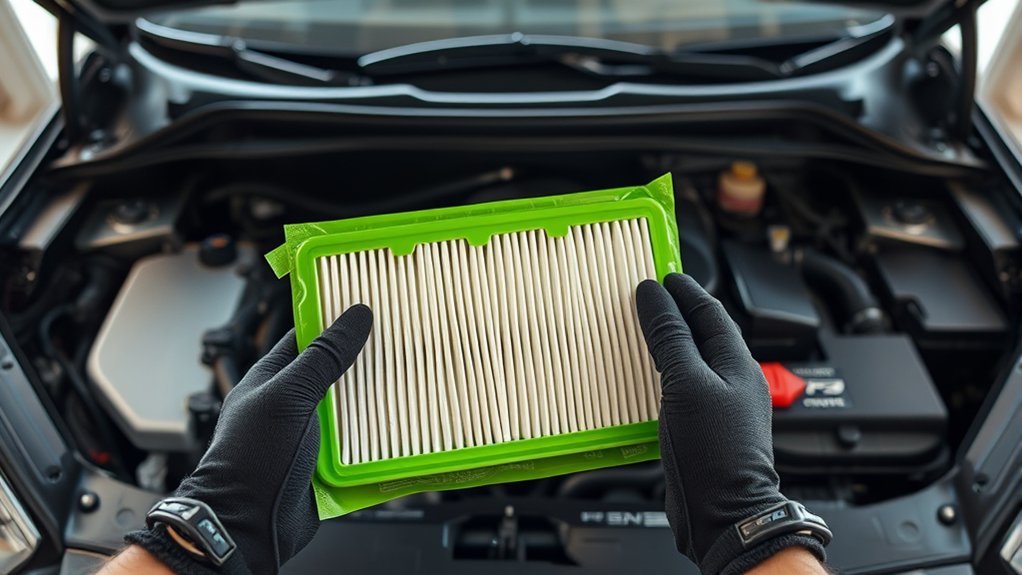
For recent U.S.-market Toyota RAV4 models, the engine air filter is scheduled for replacement at the 30,000-mile service point, which corresponds to 36 months under Toyota’s 5,000-mile/6-month maintenance cadence. If you drive primarily on dirt or dusty roads, inspect it at the intervening 5,000-mile service points and replace it sooner if the media or seal is damaged, oily, excessively worn, or badly clogged.
Quick Answer
For many recent U.S.-market Toyota RAV4 models, including the current 2026 maintenance schedule, replace the engine air filter at 30,000-mile intervals, or about every 36 months under Toyota’s normal maintenance cadence. If most of your driving is on dirt or dusty roads, inspect the filter at the 5,000-mile service points and replace it sooner when its physical condition requires it.
Key Takeaways
- Check your exact model-year maintenance guide instead of treating one interval as universal.
- Recent U.S. RAV4 schedules place engine air filter replacement at 30,000-mile intervals, which corresponds to 36 months under Toyota’s standard service cadence.
- Primarily dirt- or dusty-road driving calls for additional inspections at the 5,000-mile service points, not a universal 10,000-mile replacement rule.
- Do not confuse engine filter symptoms with cabin filter problems such as weak vent airflow or easy window fogging.
- Use a filter cataloged for your RAV4’s year and powertrain, and make sure the housing seals fully after installation.
At a Glance
| Time Required | About 10 to 20 minutes |
| Difficulty | Easy for most RAV4 model years |
| Tools Needed | Correct replacement filter, clean cloth, and possibly a screwdriver or socket if your housing uses fasteners |
| Cost | Low; it varies by model year, engine, filter brand, and whether you pay for labor |
How Often Should You Change Your RAV4 Engine Air Filter?
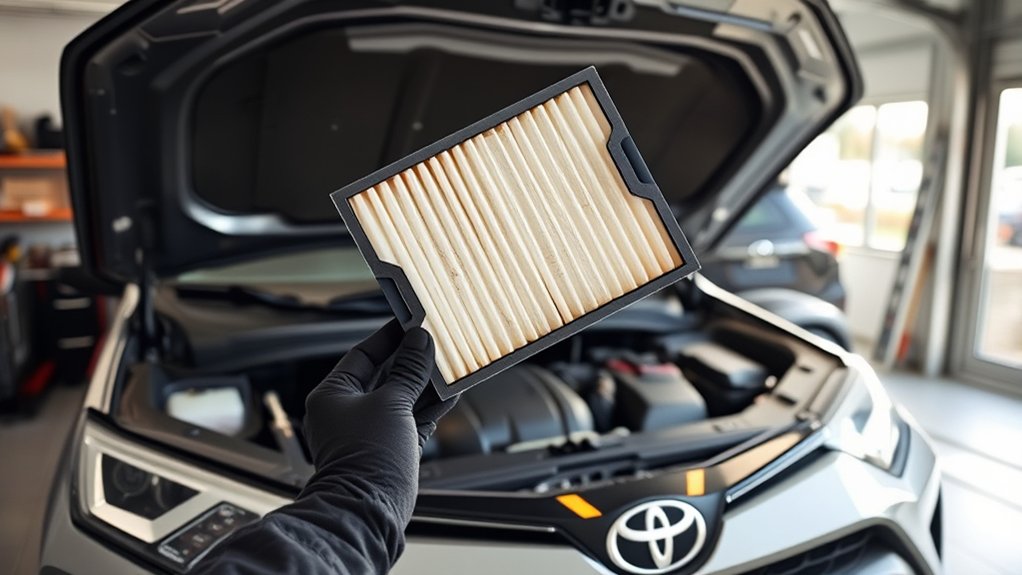
For the 2024 and 2025 U.S.-market RAV4, Toyota’s maintenance guides schedule engine air filter replacement at the 30,000-mile service point. Toyota’s 2026 U.S. maintenance chart continues to mark the engine air filter for replacement at 30,000-mile intervals. Because Toyota schedules routine maintenance every 5,000 miles or six months, the 30,000-mile point corresponds to 36 months for a low-mileage vehicle.
You can review the 2025 Toyota RAV4 Warranty and Maintenance Guide or use Toyota’s Manuals and Warranties portal to select the guide for your exact model year. Your vehicle identification number, model year, and powertrain help you find the correct information.
Normal Driving Conditions
Under ordinary paved-road use, follow the scheduled replacement interval in your model-year guide. You should still inspect the filter if the air box has been opened, the vehicle has traveled through unusually dusty conditions, or you suspect water or oil contamination.
Dusty or Dirt-Road Driving
Toyota lists additional engine air filter inspections when most of your driving occurs on dirt or dusty roads. In the 2026 RAV4 maintenance chart, the filter is inspected at the intervening 5,000-mile service points and replaced at the scheduled 30,000-mile milestones. Replace it earlier when inspection shows damage, excessive wear, oiliness, heavy contamination, or a sealing problem.
Note: Heavy traffic and urban, desert, or dusty conditions are also conditions Toyota identifies as potentially shortening cabin air filter life. Do not turn that cabin-filter guidance into an automatic 10,000-mile engine-filter replacement rule.
RAV4 Engine Air Filter Decision Guide
| Situation | What to Do |
|---|---|
| Normal paved-road driving | Follow the maintenance guide for your exact model year; recent U.S. schedules place replacement at 30,000-mile intervals. |
| Primarily dirt or dusty roads | Inspect at the additional 5,000-mile service points. Replace at the scheduled interval or sooner when the filter’s condition requires it. |
| Unknown maintenance history | Inspect the filter now. If you replace it, record the date, mileage, brand, and part number so the next interval is known. |
| Torn, oily, wet, badly clogged, or unable to seal | Replace it rather than waiting for the normal mileage interval. Investigate unexpected oil or water contamination instead of treating the filter as the only problem. |
Engine Air Filter vs. Cabin Air Filter
Your RAV4 has two different filters that serve different systems. Mixing them together creates confusing symptoms and incorrect replacement advice.
- Engine air filter: Sits in the engine intake system and helps prevent dust, grit, leaves, and other debris from reaching the engine.
- Cabin air filter: Filters air entering the heating and air-conditioning system. On many RAV4 models, it is accessed behind the glove box.
Recent Toyota maintenance schedules also list cabin filter replacement at regular service intervals, but heavy traffic, dirt roads, and urban, desert, or dusty conditions may shorten its life. Weak vent airflow, easy window fogging in fresh-air mode, or persistent odors point more strongly toward the cabin filter than the engine filter.
What the Engine Air Filter Does for Your RAV4
The engine air filter helps keep abrasive particles out of the intake while allowing the engine to draw the air it needs. A correctly fitted filter also seals the air box so incoming air must pass through the filter media instead of slipping around the edges.
Protects Engine Components
Dust and grit can contribute to wear when they enter the intake. The filter is a simple barrier that supports long-term engine protection, especially when you drive on unpaved roads or in dry, dusty areas.
Supports Correct Airflow
A severely restricted filter can limit airflow at higher engine loads and may make acceleration feel weaker. An Oak Ridge National Laboratory study found no significant fuel-economy effect from clogged filters in the newer closed-loop fuel-injected vehicles it tested, although acceleration performance improved with a clean filter. Replace a dirty RAV4 filter for correct filtration and airflow, not for a promised percentage gain in fuel economy.
The best replacement interval is the one in your exact RAV4 maintenance guide, adjusted for the conditions in which you actually drive.
Signs Your Toyota RAV4 Engine Air Filter Needs Attention
Mileage is useful, but the filter’s physical condition matters too. Inspect it if you notice any of the following:
- Heavy dirt loading across the pleats
- Torn, crushed, warped, or water-damaged filter media
- Oil contamination on a filter that should be dry
- A damaged or distorted sealing gasket
- Leaves, nesting material, or debris inside the air box
- Reduced power under heavy acceleration with no other known cause
- A housing cover that is loose, cracked, or unable to seal
Note: A check-engine light, black exhaust smoke, rough running, or misfires can have many causes. Do not assume the air filter is responsible. Read the diagnostic codes and inspect the intake system if those symptoms appear.
Where Is the Toyota RAV4 Engine Air Filter Located?
The RAV4 engine air filter is under the hood inside the plastic air-filter housing, or air box, connected to the engine’s intake duct. The exact position, cover design, clips, and fasteners vary by model year and powertrain, so identify the intake air box before releasing anything and use the owner information for your exact vehicle if the layout differs.
How to Inspect the RAV4 Engine Air Filter
- Park safely. Turn the engine off, set the parking brake, and allow hot components to cool.
- Find the air-filter housing. Look for the plastic air box connected to the engine’s intake duct.
- Release the cover. Undo the clips or fasteners used on your model year. Do not force the lid past attached hoses or wiring.
- Remove the filter carefully. Note which side faces up and how the gasket sits in the housing.
- Inspect the filter and air box. Look for damage, excessive dirt, oiliness, water, debris, and evidence that unfiltered air has bypassed the seal.
- Reinstall or replace it. If the filter remains serviceable, return it in the same orientation. Replace it if it is damaged, excessively worn, oily, or unable to seal correctly.
DIY Steps for Replacing Your Toyota RAV4 Engine Air Filter
Most RAV4 engine air filter replacements are simple, but housing design varies by generation and powertrain. Read your owner’s information first and compare the old and new filters before installation.
Warning: Never run the engine with the filter removed. Keep loose dirt, tools, and cleaning material away from the open intake, and do not force a housing cover that will not close. On Hybrid, Plug-in Hybrid, and other electrified RAV4 versions, keep the vehicle fully off and do not touch orange high-voltage wiring, connectors, or components.
1. Confirm the Filter and Gather Supplies
Match the replacement filter to your RAV4’s model year, powertrain, and application listing. You will usually need only the new filter and a clean cloth. Some housings may require a screwdriver or small socket.
2. Open the Housing and Remove the Old Filter
Release the clips or fasteners, then lift the housing cover only as far as needed. Remove the old filter without shaking dirt into the clean side of the intake. Note its orientation and gasket position.
3. Clean the Housing Safely
Wipe loose debris from the lower housing with a clean, slightly damp cloth, or use a vacuum carefully. Do not push dirt toward the intake opening. Avoid spraying cleaners or compressed air into the intake tract.
4. Install the New Filter
Place the new filter in the same orientation as the old one. Make sure the gasket sits flat in its channel and the element is not pinched, folded, or sitting on top of debris.
5. Secure the Housing Cover
Lower the cover evenly, confirm that every edge sits flush, and reconnect all clips or fasteners. Check any nearby intake hose or electrical connector you moved during the job.
6. Verify the Replacement
Start the vehicle and listen for unusual whistling or intake noise. If the engine runs normally and the housing remains fully closed, record the date and mileage for your maintenance history.
Pro Tip: Photograph the old filter’s orientation before removing it. The photo gives you a quick reference if the new filter can fit more than one way.
Troubleshooting After Replacement
The Housing Cover Will Not Close
Do not force it. Remove the filter and compare its length, width, height, gasket shape, and corner design with the old one. A wrong filter or misaligned gasket is the most common reason the lid will not seat.
You Hear New Whistling or Intake Noise
Recheck the cover, clips, intake duct, and filter gasket. A gap can allow air to bypass the filter or create a whistle.
The Engine Runs Rough or a Warning Light Appears
Turn the vehicle off and inspect any hose, clamp, or electrical connector disturbed during the job. If everything is connected and the problem remains, scan the diagnostic codes or have the vehicle inspected. The filter itself may not be the cause.
How to Choose the Correct Engine Air Filter for Your RAV4
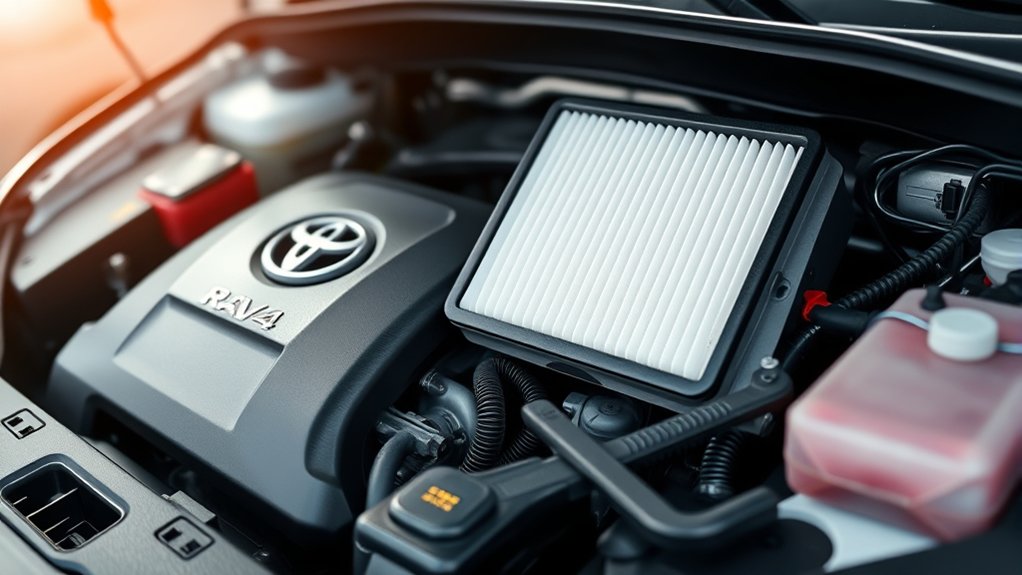
Choose a filter listed for your exact RAV4 year and powertrain. Correct dimensions and a secure gasket matter more than broad claims such as “universal fit” or “high performance.”
OEM vs. Aftermarket Filters
Toyota recommends Toyota Genuine Parts, but Toyota’s warranty guidance does not make coverage dependent on one replacement-parts brand. The Federal Trade Commission’s auto-warranty guidance also explains that using aftermarket parts does not by itself void a vehicle warranty. However, warranty coverage for resulting damage can be denied when a defective aftermarket part or improper installation caused that damage.
A quality aftermarket filter can therefore be suitable when it is cataloged for your exact vehicle, matches the required design and dimensions, seals correctly, and is backed by its manufacturer. See Toyota’s replacement-parts and maintenance guidance for Toyota’s wording.
Disposable vs. Reusable Filters
- Dry pleated filter: This is the common replacement style. Do not wash a disposable paper element or reinstall one with torn or distorted media.
- Reusable filter: Clean and service it only when the manufacturer specifically designed it for reuse. Follow its drying and oiling instructions exactly.
- Universal filter: Avoid a filter that is not explicitly cataloged for your RAV4. A poor seal can allow unfiltered air around the element.
Why Regular Air Filter Maintenance Matters
Timely inspection and replacement help keep dirt out of the intake, maintain the intended airflow path, and reduce the chance of a damaged gasket or loose housing allowing debris to bypass the filter.
A new filter may restore performance if the old one was severely restricted. However, modern RAV4 owners should not expect a fixed mileage increase or guaranteed annual fuel saving. In testing of newer closed-loop fuel-injected vehicles, Oak Ridge National Laboratory found no significant fuel-economy change from a clogged air filter, although acceleration performance improved with a clean filter. Tire pressure, driving style, weather, trip length, vehicle load, and mechanical condition can also affect real-world fuel use.
Where to Get Your Toyota RAV4 Air Filter Changed
You have three practical options:
- Do it yourself: Best when the housing is easy to reach and you can verify the correct filter.
- Toyota dealer: Useful when you want Toyota parts, model-specific service records, or help with a damaged housing or intake component.
- Qualified independent shop: A convenient option for routine maintenance. Toyota and FTC guidance make clear that routine maintenance does not have to be performed by a Toyota dealership merely to keep warranty coverage in effect, although damage caused by improper maintenance, installation, or a defective replacement part may not be covered.
Keep the receipt and record the mileage, date, filter brand, and part number. Clear records make future maintenance easier and can help document that the vehicle was maintained appropriately.
Related Guides
Frequently Asked Questions
How often should I replace a Toyota RAV4 engine air filter?
For many recent U.S.-market RAV4 models, including the current 2026 maintenance schedule, Toyota places engine air filter replacement at 30,000-mile intervals. Under Toyota’s 5,000-mile/6-month maintenance cadence, that corresponds to about 36 months. Check the guide for your exact model year.
How often should I inspect the filter if I drive on dusty roads?
If you drive primarily on dirt or dusty roads, Toyota’s 2026 special-operating-conditions chart calls for engine air filter inspection at the intervening 5,000-mile service points. Replace it at the scheduled interval or sooner when inspection shows damage, excessive wear, oiliness, heavy contamination, or a poor seal.
Where is the engine air filter located on a Toyota RAV4?
It is under the hood inside the plastic air-filter housing connected to the engine’s intake duct. The exact position and cover fasteners vary by model year and powertrain.
Is the engine air filter the same as the cabin air filter?
No. The engine filter protects the engine intake, while the cabin filter cleans air entering the heating and air-conditioning system. Weak vent airflow and window fogging are cabin filter clues, not reliable engine filter symptoms.
Can a dirty RAV4 engine air filter cause a check-engine light?
A check-engine light is not a reliable air-filter diagnosis because many intake, sensor, ignition, fuel, and emissions faults can trigger it. If the light appears immediately after filter replacement, recheck any hose or electrical connector you disturbed, then read the diagnostic code if the light remains on.
Can I use a universal air filter in my RAV4?
Use a filter only when its manufacturer catalogs it for your RAV4’s model year and powertrain. A filter that is merely described as universal may not fit or seal the air box correctly.
Will a new engine air filter improve fuel economy?
Do not expect a guaranteed fuel-economy increase. Testing by Oak Ridge National Laboratory found no significant fuel-economy effect from clogged filters in the newer closed-loop fuel-injected vehicles it tested, although a clean filter improved acceleration performance. Replace the filter for correct filtration, airflow, and maintenance.
Can I clean and reuse my RAV4 engine air filter?
Do not wash or reuse a disposable paper filter. A reusable filter can be serviced only if its manufacturer designed it for cleaning. Follow the product instructions and replace it if the media or sealing edge is damaged.
What tools do I need to replace the filter?
Many RAV4 air boxes use clips and need no hand tools. Some model years use screws or bolts, so you may need a screwdriver or small socket. A clean cloth and the correctly matched filter are the main supplies.
Why will the air-filter housing not close after replacement?
The filter may be the wrong size, incorrectly oriented, or outside its sealing channel. Remove it, compare it with the old filter, clear debris from the gasket surface, and reinstall it without forcing the cover.
Conclusion
For many recent Toyota RAV4 models, including the current 2026 schedule, 30,000 miles is the scheduled engine air filter replacement point, equivalent to about 36 months under Toyota’s normal service cadence. Primarily dirt- or dusty-road driving calls for additional inspections, while visible damage, excessive wear, oiliness, heavy clogging, or a failed seal can justify earlier replacement.
Use the maintenance guide for your exact model year, keep engine and cabin filter symptoms separate, and install only a correctly cataloged filter. After installation, make sure the housing sits flush, every fastener is secure, and any hose or electrical connector you disturbed is properly reconnected.
Sources
- Toyota Manuals and Warranties — official portal for current model-year owner, warranty, and maintenance documents.
- 2025 Toyota RAV4 Warranty and Maintenance Guide — scheduled maintenance, special operating conditions, replacement-parts guidance, and owner maintenance information.
- 2024 Toyota RAV4 Warranty and Maintenance Guide — model-year maintenance intervals and special-condition guidance.
- Oak Ridge National Laboratory: Effect of Intake Air Filter Condition on Vehicle Fuel Economy — fuel-economy and acceleration testing with clogged and clean air filters.
- Federal Trade Commission: Auto Warranties and Auto Service Contracts — aftermarket parts, independent maintenance, and warranty coverage guidance.
