
Last updated: September 19, 2026.
Yes, the Toyota RAV4 is generally a reliable compact SUV, but reliability is not equal across every model year, powertrain, or individual vehicle. RepairPal currently rates the RAV4 4.0 out of 5.0, ranking it 3rd of 26 compact SUVs, with an average annual repair and maintenance cost of $429. That is a useful fleet-wide benchmark, not a guarantee for one vehicle. A used RAV4 should still be judged by its VIN, maintenance records, known year-specific issues, diagnostic history, rust exposure, previous damage, and current mechanical condition.
Quick Answer
The Toyota RAV4 has a strong overall reliability record, but several model-year groups deserve specific checks. Certain 2006–2008 four-cylinder models had an oil-consumption warranty program; certain 2013–2015 models had a torque-converter-shudder program; 2019 gasoline models had a hesitation bulletin; and certain 2019–2020 Hybrids had a refueling-performance program. Check the VIN for open recalls and Toyota campaigns and inspect the exact vehicle before buying.
Key Takeaways
- Aggregate ratings support the RAV4’s reliability reputation, but model year, maintenance, mileage, climate, accident history, and present condition still determine whether one vehicle is a good purchase.
- Documented inspection points include oil consumption on certain 2006–2008 RAV4s, torque-converter shudder on certain 2013–2015 models, and hesitation on some 2019 gasoline models.
- Certain 2019–2020 RAV4 Hybrids had a Toyota refueling-performance program, while certain 2019–2022 Hybrid AWD vehicles were covered for rear traction-motor cable corrosion.
- Safety recalls, Toyota customer-support programs, warranty enhancements, technical service bulletins, and owner complaints are different. Use the VIN to determine what applies to the specific vehicle.
- The redesigned 2026 RAV4 uses hybrid or plug-in hybrid powertrains, but it is still too new for meaningful long-term reliability conclusions.
Is the Toyota RAV4 Reliable?
For many drivers, the RAV4 can be a dependable daily vehicle when it receives the correct maintenance and repairs. RepairPal’s current model-wide data gives the RAV4 a 4.0/5.0 reliability rating, with an average 0.26 unscheduled repair-shop visits per year and a 10% probability that a repair is classified as severe. Those figures combine data across multiple model years, so they should be treated as context rather than a prediction for a specific used RAV4.
Model-year patterns still matter. Toyota has issued recalls, technical service bulletins, warranty enhancements, and customer-support programs for particular RAV4 years and configurations. An online complaint shows that an owner experienced a problem, but it does not prove that every RAV4 from that year has the same defect. A recall or Toyota program also does not automatically include every vehicle from the listed model years. Check the VIN through the NHTSA recall database and Toyota’s recall and service-campaign lookup.
Note: Use model-year reliability data to decide what to inspect, not as a substitute for a VIN search, service-record review, diagnostic scan, road test, and independent pre-purchase inspection.
Common Toyota RAV4 Reliability Issues to Check

RAV4 problems differ by generation and powertrain. The most useful inspection points are conditions Toyota itself documented through recalls, warranty enhancements, technical service bulletins, or customer-support programs, combined with normal age- and mileage-related wear.
Oil Consumption on Certain 2006–2008 Four-Cylinder RAV4s
Toyota’s Warranty Enhancement Program ZE7 included certain 2006–2008 RAV4 vehicles for excessive engine oil consumption. Eligibility for the original repair program depended on a Toyota dealer oil-consumption test, and the existence of the program does not mean every vehicle developed the condition.
If you are shopping for one of these older four-cylinder RAV4s, check the oil level before the engine starts, ask how often oil is added between changes, look for blue exhaust smoke or heavy deposits, and review documentation for any previous oil-consumption test or engine repair. A low dipstick reading or a seller who cannot explain repeated top-ups deserves further diagnosis before purchase.
Transmission and Drivability Patterns by Model Year
Certain 2001–2003 RAV4 automatics were covered by Toyota technical information addressing harsh shifting and specific transmission-related diagnostic trouble codes, with ECM manufacturing changes included in the repair approach. On these vehicles, harsh engagement or shifting should be diagnosed before assuming the transmission itself requires replacement.
Toyota also created Warranty Enhancement Program ZH1 for certain 2013–2015 RAV4s that could develop an intermittent torque-converter shudder under light throttle at roughly 25–50 mph. For the 2019 gasoline RAV4, Toyota T-SB-0107-19 addressed hesitation when accelerating from a slow roll or rolling stop under defined conditions and called for an ECM calibration update.
During a used-car road test, include low-speed stop-and-go driving and steady light-throttle acceleration. Do not approve a major transmission repair until stored codes, software/calibration status, fluid condition where applicable, and the exact symptom have been diagnosed.
Electrical Warnings and the 12-Volt Battery
A weak or incorrectly installed 12-volt battery can cause slow starting, intermittent warning messages, accessory problems, or several unrelated-looking dashboard alerts. Before replacing expensive modules, a technician should test battery condition, terminal security, charging voltage, ground connections, and stored diagnostic codes.
NHTSA campaign 23V-734 covered certain 2013–2018 RAV4 vehicles because some replacement 12-volt batteries with smaller top dimensions could move if they were not secured correctly. NHTSA listed 1,853,568 potentially affected vehicles. The remedy includes revised battery securing components and a positive-terminal cover. Do not assume every 2013–2018 RAV4 is affected; check the VIN.
Fuel-Filling and Fuel-System Complaints
Toyota documented a specific refueling-performance concern on certain 2019–2020 RAV4 Hybrid vehicles through Customer Support Program 20TE04. Toyota described reports in which the fuel gauge displayed less than full, the amount of fuel dispensed was lower than expected when the nozzle clicked off, or the displayed distance to empty was lower than expected. Toyota stated that approximately 143,600 vehicles were covered at that stage of the program.
If a 2019–2020 RAV4 Hybrid repeatedly accepts much less fuel than expected or the gauge behaves inconsistently after refueling, record the gauge position, mileage, fuel amount, and distance traveled. Ask a Toyota dealer to check the VIN and service history before replacing parts independently.
Water Intrusion and Interior Leaks
Water inside the headliner, cargo area, footwells, or spare-tire compartment requires prompt investigation. On certain 2019–2021 RAV4, RAV4 Hybrid, and 2021 RAV4 Prime vehicles, Toyota Customer Support Program 22TE05 addressed water leakage from deteriorated seals at roof-rail mounting clips. Toyota’s program documentation provided coverage for the specified condition for 10 years from the date of first use, subject to the program terms.
Other leaks can still come from weatherstripping, body seams, door membranes, windshield bonding, hatch seals, or sunroof drains on equipped vehicles. Trace the entry point rather than assuming every wet headliner has the same cause. Dry affected carpet and insulation thoroughly because trapped moisture can lead to odor, corrosion, mold, and electrical connector damage.
Hybrid-System and Underbody Checks
RAV4 Hybrid and Plug-in Hybrid models add high-voltage components, power electronics, electric motors, cooling systems, and underbody wiring. One important used-RAV4 inspection point is Toyota Customer Support Program 22TE09, which covered certain 2019–2022 RAV4 Hybrid AWD vehicles and certain 2021–2022 RAV4 Prime vehicles for excessive corrosion at the connection between the high-voltage floor wire harness and rear traction-motor cable.
Toyota stated that excessive corrosion could lead to AM-radio static during some drive cycles or, following warning indicators, a no-start condition. Vehicles driven in road-salt regions deserve a careful underbody and connector inspection. Also keep the hybrid-battery cooling intake unobstructed; Toyota manuals warn that blocking the intake with luggage or coverings can restrict cooling.
Warning: Stop driving and follow the owner’s manual or professional guidance if you notice smoke, a strong fuel smell, overheating, loss of braking or steering assistance, severe power loss, or a high-voltage system warning. Do not open, probe, or repair orange high-voltage cables yourself.
Which Toyota RAV4 Years Need Extra Reliability Checks?
No model year guarantees a good or bad vehicle. A more useful approach is to identify the documented problem areas for each generation and then determine whether the specific vehicle has the symptom, applicable VIN coverage, completed repair, or unresolved damage.
| Model-Year Group | What to Check |
|---|---|
| 2001–2003 | On automatic-transmission vehicles, test cold and warm shift quality and review any ECM or transmission repair history. Age-related rust, cooling-system condition, suspension, seals, hoses, and previous collision repairs are also major purchase factors. |
| 2004–2005 | Focus on age-related deterioration: corrosion, cooling-system leaks, suspension wear, wheel bearings, air-conditioning operation, tires, rubber components, and maintenance documentation. |
| 2006–2008 | On relevant four-cylinder vehicles, investigate oil-consumption history and previous ZE7-related testing or repair. Also inspect rust, cooling-system condition, accessory-drive components, suspension, wheel bearings, and exhaust corrosion. |
| 2009–2012 | Age and maintenance increasingly dominate. Check oil level, leaks, coolant condition, brakes, suspension, wheel bearings, AWD operation where equipped, underbody corrosion, tires, and service records. |
| 2013–2015 | Road-test for intermittent torque-converter shudder under light throttle around 25–50 mph, check ZH1 repair history where applicable, verify recall status, and inspect battery fitment, water intrusion, brakes, suspension, and accident repairs. |
| 2016–2018 | Check VIN applicability and completion of the 12-volt battery recall, then inspect suspension, brakes, water intrusion, warning lights, hybrid-system condition where applicable, and evidence of collision or underbody damage. |
| 2019–2020 | On 2019 gasoline models, test for low-speed hesitation and review ECM-update history. On Hybrids, check refueling performance. Also inspect for roof-rail water leakage and, on AWD Hybrids, rear traction-motor cable corrosion where applicable. |
| 2021–2025 | Check current VIN recalls and campaigns, roof-rail leak history on covered 2021 vehicles, rear traction-motor cable condition on applicable 2021–2022 Hybrid AWD/Prime vehicles, electronic features, driver-assistance operation, and underbody corrosion in road-salt regions. |
| 2026 | The sixth-generation RAV4 introduces new hybrid/PHEV hardware, multimedia software, driver-assistance technology, and other changes. Check current recall and software status, but recognize that age- and high-mileage reliability evidence is not yet available. |
Maintenance Practices That Matter Most for RAV4 Reliability
Use the Toyota manual and warranty library to find the maintenance guide for the exact model year and powertrain. Do not apply one oil-change, fluid, or inspection interval to every generation. Follow any additional maintenance Toyota specifies for repeated short trips, extensive idling, towing, dusty roads, low-speed heavy use, or other special operating conditions.
| Maintenance Area | Recommended Approach | Why It Matters |
|---|---|---|
| Engine oil and filter | Use the oil grade and service interval specified for the exact model year and operating conditions. Check the level between services, especially on an older vehicle with unknown history. | Correct lubrication and early detection of abnormal oil use help control wear, deposits, and avoidable engine damage. |
| Tires and alignment | Check cold pressure regularly, rotate as specified, and investigate uneven or rapid wear. | Incorrect pressure or alignment affects braking, handling, noise, tire life, and fuel use. |
| 12-volt battery | Test it when starting becomes slow or electronic warnings appear. Confirm the correct battery size, terminals, tray, and hold-down hardware. | Low voltage or poor connections can create intermittent faults and unreliable starting. |
| Brakes and fluids | Inspect pads, rotors, hoses, fluid condition, coolant, and visible leaks at the scheduled service points. | Regenerative braking can reduce friction-brake use on hybrids, but corrosion, age, and hydraulic components still require inspection. |
| Hybrid cooling airflow | Keep the traction-battery cooling intake unobstructed and follow the manual’s inspection or cleaning guidance. | Restricted airflow can increase battery temperature and may limit performance or cause warning messages. |
| Underbody and suspension | Inspect after rough-road use and before or after winters in road-salt regions. | Early detection of damaged covers, loose fasteners, leaks, cable corrosion, and structural rust can prevent larger repairs. |
Common Repair Symptoms
A symptom may have several causes. Record when it happens, whether the vehicle is cold or warm, outside temperature, fuel level, speed, throttle position, and any warning messages. That information can shorten diagnostic time and help distinguish a known model-year pattern from an unrelated fault.
- Multiple warning lights: Test the 12-volt battery and scan every control module before replacing parts.
- Light-throttle shudder around 25–50 mph on a 2013–2015 vehicle: Check whether the symptom matches Toyota’s torque-converter guidance and review previous repair history.
- Hesitation from a slow roll on a 2019 gasoline model: Check ECM calibration history and diagnose the condition before assuming a mechanical transmission failure.
- Water under carpet or trim: Trace the entry point, check roof-rail leak history on applicable 2019–2021 vehicles, repair the source, and dry hidden padding.
- Fuel gauge or refueling concern on a 2019–2020 Hybrid: Save fuel receipts and record amount added, gauge position, and distance traveled.
- Clunking over bumps: Inspect bushings, links, struts, mounts, wheel bearings, and loose underbody parts.
- Hybrid warning or reduced power: Arrange a qualified diagnostic scan rather than disconnecting or probing high-voltage components.
- Persistent brake noise or vibration: Inspect friction surfaces, hardware, calipers, and corrosion even if regenerative braking handles part of the stopping load.
Toyota RAV4 Hybrid vs. Gas vs. Plug-in Hybrid Reliability
Gas, hybrid, and plug-in hybrid RAV4 models have different inspection needs. A gas-only model uses a conventional gasoline powertrain without a high-voltage traction battery or electric drive motors. A RAV4 Hybrid adds electric motors, power electronics, a traction battery, regenerative braking, and an electronic continuously variable transmission. A Plug-in Hybrid adds a larger traction battery and external charging equipment.
Hybrid models can provide strong efficiency in stop-and-go driving because they can recover some energy during deceleration. Actual fuel economy varies by model year, trim, drivetrain, temperature, speed, tires, and driving style. Compare the exact vehicle on the official FuelEconomy.gov database rather than applying one mpg number to every RAV4.
A hybrid does not automatically cost more to maintain. Regenerative braking can reduce friction-pad use, and Toyota’s hybrid transaxle differs from a conventional stepped automatic transmission. High-voltage diagnosis and major battery, inverter, or rear-motor repairs do require appropriate training and equipment.
For U.S.-market Toyota hybrid vehicles beginning with model year 2020, Toyota increased the hybrid traction-battery warranty to 10 years or 150,000 miles from the original date of first use, whichever comes first, subject to warranty terms. Earlier model years may have different coverage. Warranty length should not be treated as a prediction of battery lifespan.
Note: When evaluating an older RAV4 Hybrid, check traction-battery diagnostic data, cooling-intake condition, 12-volt battery health, warning history, underbody corrosion, and applicable rear-motor cable program history rather than judging the battery by age alone.
RAV4 Repair Experiences: What Owners Should Know
Repair experiences often depend as much on diagnosis and documentation as on the original fault. Intermittent electrical, drivability, and water-intrusion problems can require more than one visit because the symptom may not appear while the vehicle is at the shop.
Before approving a major repair, ask the service department to document the diagnostic trouble codes, test results, failed component, applicable recall, bulletin, customer-support program, warranty coverage, and reason the recommended repair should correct the symptom. A written estimate should identify parts, labor, taxes, shop charges, and any work that is optional rather than required.
If a warning returns after a repair, bring the previous invoice and explain whether the symptom is identical or different. Avoid clearing warning codes immediately before an appointment because stored freeze-frame and diagnostic information may help the technician identify the cause.
The strongest reliability evidence for a used RAV4 is the combination of its VIN history, service records, diagnostic results, known model-year inspection points, and present mechanical condition.
How Driving Conditions Affect RAV4 Reliability
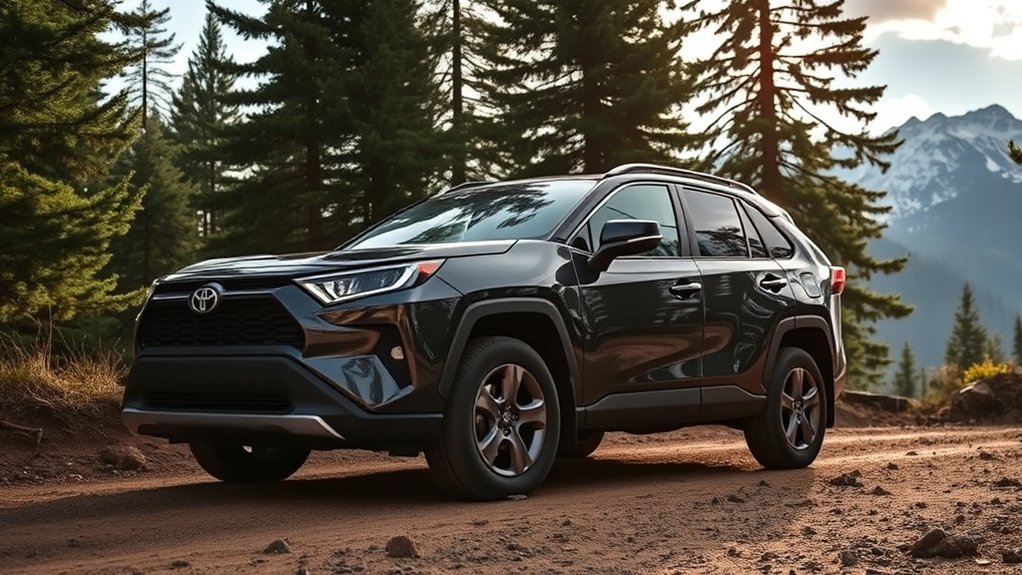
Driving conditions can change how quickly fluids, brakes, tires, suspension parts, batteries, seals, electrical connectors, and underbody hardware age. Review the special-operating-condition section in the maintenance guide rather than assuming the standard schedule covers every use pattern.
Off-Road and Rough-Road Use
Repeated travel on rutted roads, rocks, deep mud, or washboard surfaces can increase wear on tires, wheel bearings, bushings, shocks, protective panels, and exhaust or underbody components. Check for fluid leaks, loose shields, damaged tires, bent brackets, and packed mud after a demanding trip.
Use only suspension, wheel, tire, and recovery equipment designed for the exact RAV4 model and load. A part intended for a different Toyota or a full-size truck may have the wrong dimensions, spring rate, mounting points, or safety characteristics.
Weather Impact on Durability
Heat can accelerate aging of rubber parts, interior materials, 12-volt batteries, and fluids. Extreme cold can temporarily reduce battery output, tire pressure, and plug-in electric range. Road salt can promote corrosion on fasteners, brake hardware, suspension parts, body seams, and electrical connectors.
Wash road salt from the underbody when conditions allow, repair chipped paint before corrosion spreads, and keep drain paths clear. On applicable RAV4 Hybrid AWD and Plug-in Hybrid vehicles, pay particular attention to high-voltage rear-motor cable and connector condition in corrosion-prone regions.
Urban vs. Rural Usage
Frequent short trips may prevent the engine and 12-volt electrical system from spending much time at full operating conditions. Stop-and-go traffic can increase low-speed operating hours, although a hybrid may recover energy during deceleration and operate efficiently in this environment.
Rural driving may involve fewer stops but more gravel, potholes, wildlife impacts, dust, or long distances from service. Inspect the air filter, tires, suspension, windshield, lights, and underbody more often when the vehicle regularly travels on unpaved roads.
Cabin and Build-Quality Checks on a Used RAV4
Cabin condition can reveal reliability problems that are easy to miss during a quick mechanical inspection. Test every switch, screen, camera, charging port, seat adjustment, lock, window, climate-control mode, liftgate function, and driver-assistance setting. Electronic faults after collision, windshield, or water-leak repairs may be expensive to diagnose.
Inspect the headliner, carpet edges, cargo floor, spare-tire area, seat hardware, and electrical connectors for staining, moisture, rust, or musty odor. During the road test, listen for trim rattles, suspension knocks, wind noise, tire roar, or wheel-bearing hum and determine whether the sound changes with speed or road surface.
| Interior Area | Inspection Point |
|---|---|
| Seats and driving position | Confirm support, visibility, adjustment range, heating or ventilation, and that powered functions operate normally. |
| Controls and displays | Test the instrument panel, multimedia system, cameras, steering-wheel controls, ports, and driver-assistance menus. |
| Water intrusion | Look for stains, damp carpet, musty odor, rusted seat hardware, or moisture below the cargo floor, and check applicable roof-rail leak history. |
| Ride and noise | Drive on several road surfaces and listen for tire roar, wind noise, rattles, suspension knocks, or wheel-bearing hum. |
| Panel condition | Check for broken clips, uneven repair work, overspray, mismatched trim, or signs that panels were removed after a collision or water leak. |
What Changed for the 2026 RAV4?
The 2026 RAV4 begins the vehicle’s sixth generation. Toyota changed the U.S. lineup to hybrid and plug-in hybrid powertrains rather than offering a conventional gas-only version. According to Toyota’s official 2026 RAV4 launch information, front-wheel-drive Hybrid models produce 226 net combined horsepower, all-wheel-drive Hybrids produce 236 horsepower, and Plug-in Hybrid models produce 324 horsepower.
Toyota also introduced Toyota Safety Sense 4.0, a new Toyota Audio Multimedia system with onboard 5G connectivity, revised chassis and suspension hardware, and a manufacturer-estimated electric range of up to 52 miles for certain Plug-in Hybrid grades.
Those specifications describe features and performance, not proven long-term durability. The 2026 redesign has not been on the road long enough to establish recurring high-mileage or age-related failure patterns. Owners and used buyers should keep software current, save service documentation, and check the VIN for newly issued recalls or Toyota campaigns.
Tips for Navigating RAV4 Dealer Experiences
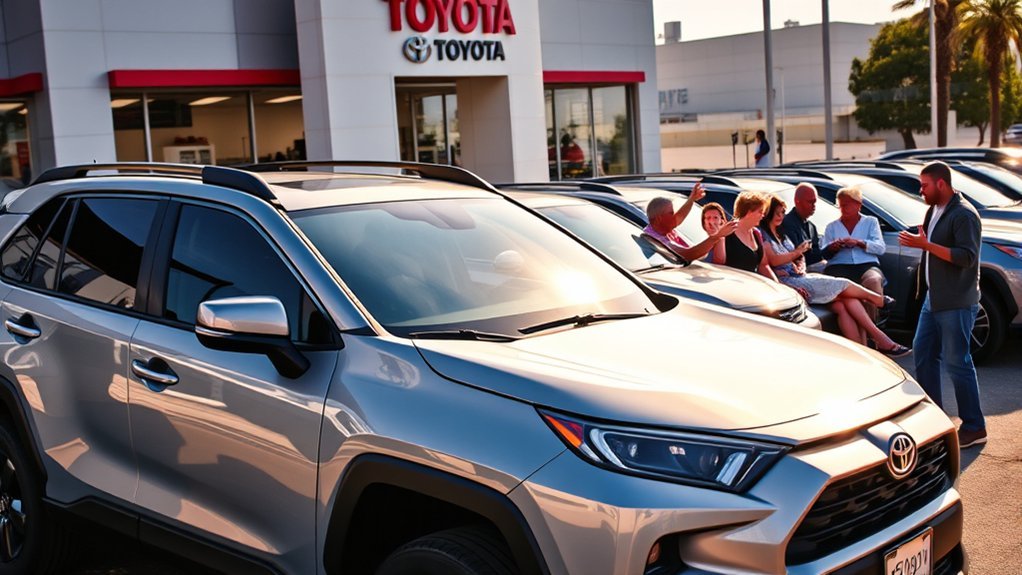
Clear documentation can make a dealer visit more productive, especially when a problem is intermittent. Write down the date, mileage, weather, vehicle temperature, fuel level, speed, throttle condition, warning message, sounds, and steps that reproduce the symptom. Photos or a short video can help when the problem disappears before the appointment.
- Ask whether the VIN has open safety recalls, special service campaigns, limited service campaigns, customer-support programs, software updates, or warranty extensions.
- Request a copy of the diagnostic report and all stored, pending, and history trouble codes.
- Ask the advisor to write your complete concern on the repair order, even when the shop cannot reproduce it.
- Confirm whether diagnostic time is covered by warranty or a Toyota program before authorizing work.
- Keep invoices, inspection sheets, campaign notices, and maintenance receipts in one file.
- Escalate an unresolved concern through the service manager and Toyota customer support when appropriate.
Pro Tip: Search the VIN on both Toyota’s campaign page and NHTSA. Toyota’s system can show manufacturer service or customer-support campaigns that are not federal safety recalls.
Used RAV4 Pre-Purchase Checklist
A clean appearance and a short drive around the block cannot confirm reliability. Arrange an independent inspection before purchase, preferably with a technician experienced with Toyota vehicles and hybrid systems when applicable.
- Verify the VIN: Check for open NHTSA recalls and Toyota recalls, campaigns, or warranty programs.
- Review service records: Confirm oil changes, fluid service, brake work, tire replacement, campaign repairs, software updates, and major component replacements.
- Check the oil level before starting: On older four-cylinder vehicles, investigate unexplained low oil, repeated top-ups, smoke, or previous oil-consumption repairs.
- Start it cold: Listen for prolonged rattles, knocking, belt or accessory noise, exhaust leaks, or abnormal vibration.
- Road-test known conditions: Include light-throttle driving around 25–50 mph on 2013–2015 models and low-speed roll-on acceleration on a 2019 gasoline model.
- Scan all modules: Look for current, pending, history, and recently cleared diagnostic codes.
- Inspect for leaks: Check the engine, cooling system, drivetrain, shocks, brake system, roof/headliner, carpet edges, cargo floor, and the ground below the vehicle.
- Examine the underbody: Look for structural corrosion, bent panels, missing fasteners, damaged shields, off-road impact, and applicable Hybrid rear-motor cable corrosion.
- Test road behavior: Check acceleration, braking, steering, alignment, transmission response, suspension noise, wheel-bearing noise, and highway stability.
- Evaluate the hybrid system: Ask for traction-battery and hybrid-system diagnostic data rather than relying only on the absence of warning lights.
- Check the 12-volt battery: Confirm battery health, correct fitment, terminals, tray, and hold-down hardware.
- Confirm tire condition: Matching tires with even wear can support a good maintenance history, while old date codes, severe edge wear, or mismatched tires justify further inspection.
Related RAV4 Reliability Guides
- Are Old Toyota RAV4s Reliable?
- Are Toyota RAV4 Hybrids Reliable?
- Toyota RAV4 Recall History
- How Many Miles Will a Toyota RAV4 Last?
Related Guides
Frequently Asked Questions
Is the Toyota RAV4 generally reliable?
Yes. Model-wide repair data supports the RAV4’s strong reliability reputation, but one vehicle’s condition depends on its year, powertrain, maintenance history, mileage, climate, accident history, and unresolved recalls or Toyota programs. Evaluate the specific VIN and vehicle rather than relying only on the badge.
Which Toyota RAV4 years need extra reliability checks?
Give extra attention to 2001–2003 automatic models for harsh-shift history, certain 2006–2008 four-cylinder vehicles for oil consumption, certain 2013–2015 models for torque-converter shudder, 2019 gasoline models for low-speed hesitation, and 2019–2020 Hybrids for documented refueling concerns. These are inspection priorities, not automatic reasons to reject a vehicle.
What are the most important RAV4 problems to check before buying?
Check for abnormal oil use, transmission or drivability symptoms, weak 12-volt battery voltage, water intrusion, unresolved recalls, underbody corrosion, uneven tire wear, warning lights, previous collision repairs, and Hybrid rear-motor cable corrosion where applicable. Match the inspection to the exact model year and powertrain.
How do I check a RAV4 for recalls and Toyota service programs?
Enter the 17-character VIN on Toyota’s recall and service-campaign page and on NHTSA’s recall website. Toyota’s database may show manufacturer campaigns or support programs that are not federal safety recalls, while NHTSA provides federal recall records.
How long does a RAV4 Hybrid battery last?
No single mileage or age applies to every traction battery. Condition depends on temperature, mileage, cooling airflow, storage, operating history, and individual battery health. For U.S.-market Toyota hybrids beginning with model year 2020, the traction-battery warranty is 10 years or 150,000 miles, whichever comes first, subject to warranty terms; that coverage is not a guaranteed lifespan.
What was the 2019–2020 RAV4 Hybrid refueling problem?
Toyota Customer Support Program 20TE04 covered certain 2019–2020 RAV4 Hybrid vehicles whose fuel gauge could show less than full, whose tank could accept less fuel than expected when the nozzle clicked off, or whose displayed distance to empty could be lower than expected. Check the VIN and repair history if you are considering one of these vehicles.
What should I inspect before buying a used RAV4 Hybrid?
Check recall and Toyota-program status, maintenance records, diagnostic codes, traction-battery data, cooling-intake cleanliness, 12-volt battery condition, underbody corrosion, rear-motor cable condition where applicable, warning lights, water intrusion, tire wear, brakes, and accident history. Use a technician familiar with Toyota hybrid systems.
Is the 2026 Toyota RAV4 proven reliable yet?
No long-term conclusion is possible yet. The 2026 RAV4 begins a new generation with revised hybrid and plug-in hybrid systems, electronics, multimedia, and Toyota Safety Sense 4.0. Early ownership data can identify launch issues, but several years of real-world age and mileage are needed to judge long-term durability.
Conclusion
The Toyota RAV4 has a strong overall reliability case, but the most useful answer is model-year specific. Certain older four-cylinder vehicles deserve oil-consumption checks; certain 2013–2015 models deserve a torque-converter-shudder road test; 2019 gasoline models deserve a hesitation check; and specific Hybrid years have documented refueling, roof-leak, and rear-motor cable programs.
Before buying a used RAV4, check Toyota and NHTSA records, review maintenance and repair documentation, test the known conditions for that model year, scan the vehicle for diagnostic history, and arrange an independent inspection. Those steps give you a much clearer reliability picture than a simple good-year/bad-year list.
Sources
- National Highway Traffic Safety Administration Recall Lookup — VIN-specific federal safety recalls, investigations, complaints, and manufacturer communications.
- Toyota Safety Recall and Service Campaign Lookup — Toyota recalls and manufacturer service campaigns by VIN or license plate.
- Toyota Manuals and Warranties — model-year owner’s manuals, warranty information, and maintenance guidance.
- RepairPal Toyota RAV4 Reliability Rating — model-wide repair-frequency, severity, and cost benchmark.
- NHTSA Recall 23V-734 — certain 2013–2018 RAV4 replacement-battery fitment and short-circuit risk.
- Toyota Warranty Enhancement ZE7 — excessive engine oil consumption on certain vehicles including certain 2006–2008 RAV4s.
- Toyota Warranty Enhancement ZH1 — torque-converter shudder coverage for certain 2013–2015 RAV4s.
- Toyota T-SB-0107-19 — hesitation on acceleration from a slow roll or rolling stop on certain 2019 RAV4s.
- Toyota Customer Support Program 20TE04 — vehicle refueling performance on certain 2019–2020 RAV4 Hybrid vehicles.
- Toyota Customer Support Program 22TE05 — roof-rail water leak coverage on certain 2019–2021 RAV4-family vehicles.
- Toyota Customer Support Program 22TE09 — high-voltage rear traction-motor cable corrosion on specified Hybrid and Plug-in Hybrid vehicles.
- Toyota Electrified Vehicle Warranty — current U.S. Hybrid traction-battery warranty information.
- Toyota USA: 2026 RAV4 — sixth-generation powertrains, output, technology, and manufacturer-estimated range.
- FuelEconomy.gov Vehicle Search — configuration-specific official fuel-economy information.
