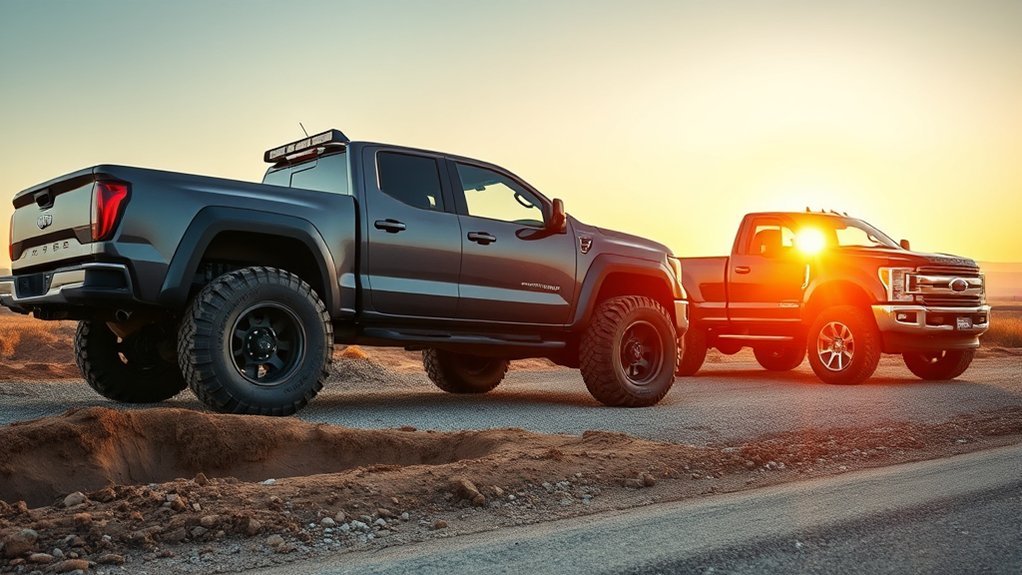
All-terrain, mud-terrain, and highway tires are built around different priorities. All-terrain (A/T) tires aim to balance paved-road manners with off-road traction, mud-terrain (M/T) tires focus on loose and rugged surfaces, and highway-terrain (H/T) tires emphasize paved-road comfort, quietness, and efficiency. The best choice depends on where you actually drive, your vehicle’s required tire size and load rating, and the weather you face.
Quick Answer
Choose all-terrain tires for mixed pavement and light-to-moderate off-road use, mud-terrain tires for frequent deep mud and rugged trails, and highway tires for mostly paved-road driving. Do not choose by category name alone: compare the exact tire’s wet grip, snow rating, load capacity, warranty, noise, and fitment for your vehicle.
Key Takeaways
- All-terrain: the most versatile choice if your week includes pavement plus gravel, dirt, or mild trails.
- Mud-terrain: best suited to drivers who regularly need aggressive off-road traction and can accept more road noise and possible on-road trade-offs.
- Highway-terrain: usually the strongest fit for commuting, road trips, towing on pavement, and drivers who value a quiet ride and low rolling resistance.
- Snow labels matter: M+S and the three-peak mountain snowflake (3PMSF) do not mean the same thing.
- Life expectancy is model-specific: mileage warranties, tire pressure, alignment, rotation, load, road surface, and driving style matter more than a universal mileage estimate for an entire tire category.
Introduction to Tire Types: What You Need to Know
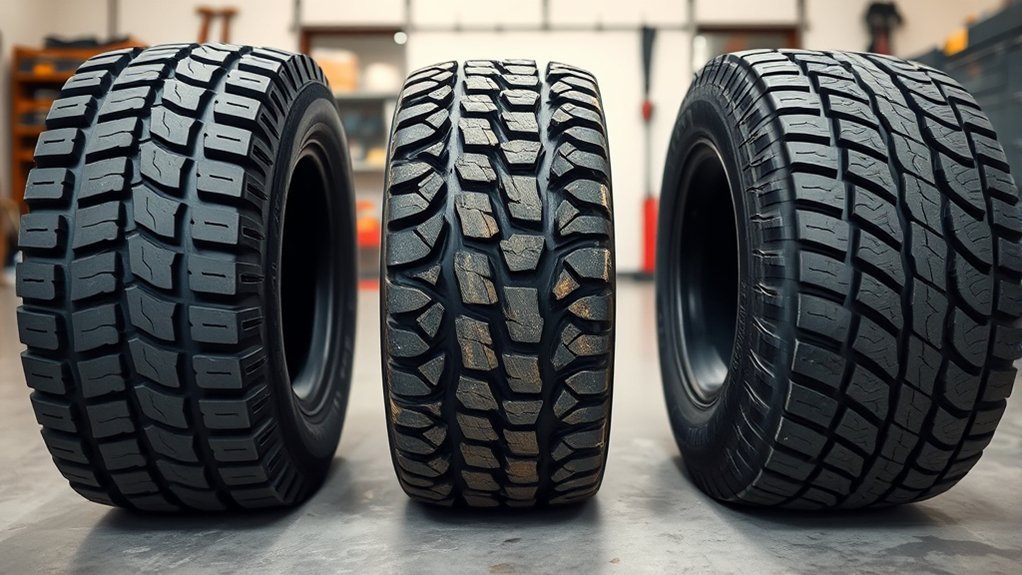
When choosing the right tires for your vehicle, it helps to understand what each category is trying to do. The three common light-truck and SUV labels in this comparison are all-terrain tires, mud-terrain tires, and highway-terrain tires.
All-terrain (A/T) tires are designed as a compromise between on-road driving and off-road capability. That matches the National Highway Traffic Safety Administration’s description of all-terrain tires as a compromise between on-road and off-road use. They commonly use more open tread patterns than highway-oriented tires while still trying to control noise and maintain stable pavement handling.
Mud-terrain (M/T) tires use more aggressive tread blocks, larger voids, and off-road-focused construction to help find traction in deep mud, loose dirt, rocks, and other demanding terrain. Those features can also bring trade-offs on pavement, including more tread noise and, depending on the exact model, different wet-braking, ride, and fuel-economy characteristics.
Highway-terrain (H/T) tires prioritize paved-road behavior. Their tread and compounds are generally tuned for comfort, predictable handling, lower noise, and efficient rolling. If nearly all of your mileage is on streets and highways, an H/T tire is often the most natural starting point.
All-Terrain vs. Mud-Terrain vs. Highway Tires: Quick Comparison
| Factor | All-Terrain (A/T) | Mud-Terrain (M/T) | Highway-Terrain (H/T) |
|---|---|---|---|
| Best use | Mixed pavement and light-to-moderate off-road driving | Frequent mud, rocks, loose soil, and demanding trails | Mostly paved roads, commuting, and highway travel |
| Road noise | Usually moderate, but model-dependent | Often highest because of aggressive tread | Usually lowest of the three |
| Off-road traction | Good for mixed surfaces | Strongest in deep mud and loose terrain | Limited |
| Wet-road performance | Varies by model and compound | Varies; do not assume aggressive tread means better wet braking | Often a design priority, but still model-specific |
| Snow | Can be capable; check for 3PMSF if severe-snow traction matters | Deep-snow ability varies; mud traction is not the same as tested severe-snow traction | Varies widely; some models are 3PMSF-rated |
| Fuel efficiency | Usually a compromise | May have higher rolling resistance | Lower rolling resistance is often a design goal |
| Tread life | Model-, use-, and maintenance-dependent | Can wear faster with heavy pavement use | Often optimized for long road mileage, but warranty varies by model |
Understanding All-Terrain Tires: Features and Benefits
All-terrain tires aim to balance off-road capability with acceptable on-road comfort. They are a strong fit for drivers who commute during the week but also travel on gravel roads, forest roads, job sites, campsites, or moderate trails.
Versatile Off-Road Performance
All-terrain tires bridge the gap between road-focused and highly aggressive off-road tires. Their most useful benefits are:
- Mixed-surface traction: More open tread blocks and shoulder features can improve grip on dirt, gravel, and loose surfaces while keeping the tire practical on pavement.
- Road usability: Compared with many mud-terrain designs, A/T tires usually place more emphasis on noise control, steering stability, and everyday comfort.
- Broad product choice: A/T tires are available with different load ranges, snow ratings, treadwear warranties, and off-road durability features, so you can match the tire to the vehicle rather than relying on the A/T label alone.
That versatility is why A/T tires are often the middle-ground choice for pickups and SUVs that see both daily driving and recreational off-road use.
Enhanced On-Road Comfort
All-terrain tires generally use less extreme tread patterns than mud-terrain tires, which can help with on-road comfort and noise. However, not every A/T tire is quiet, and some road-focused tires will still be smoother and quieter. Michelin, for example, describes its LTX A/T2 as an all-terrain tire engineered for a quiet, comfortable ride, showing that comfort depends on the individual tire design rather than the category name alone.
Fuel economy is also model-specific. Rolling resistance affects energy use, but tire construction, compound, inflation pressure, size, vehicle weight, and driving conditions all contribute. A/T tires should not be assumed to add a fixed number of miles per gallon.
Long Tread Life
All-terrain tires can deliver long service life, but there is no reliable universal mileage range for the whole category. Manufacturer mileage warranties vary by tire line, and real-world life depends on pavement use, off-road use, inflation, alignment, rotation, load, speed, and driving style.
Also, do not confuse a mileage warranty with a UTQG treadwear grade. For passenger tires covered by the Uniform Tire Quality Grading system, NHTSA explains that the treadwear number is a relative wear-rate grade compared with a control tire; it is not a promise that a tire will last a certain number of miles.
Pros and Cons of Mud-Terrain Tires: What to Expect
If you regularly tackle deep mud, loose soil, rocks, or demanding trails, mud-terrain tires can provide the aggressive off-road traction you need. Large tread blocks, open voids, and strong shoulder features help the tread bite into loose surfaces and clear debris. Many M/T designs also use construction features intended to resist off-road cuts and impacts.
The trade-off is that the same aggressive pattern can create more road noise and vibration on pavement. Fuel economy may also fall if the tire has greater mass or rolling resistance. Wet-road behavior must be judged by the exact model: it is too broad to say all M/T tires are poor in rain simply because of their tread spacing. Compare independent wet-braking tests and, when applicable, the tire’s UTQG traction grade.
Tread life is equally model- and use-dependent. A mud-terrain tire that spends most of its life on pavement can wear differently from one used mainly off-road, so a fixed 35,000- to 45,000-mile expectation is not dependable across the category.
Note: Aggressive off-road tread does not automatically mean better traction in every condition. Mud, wet pavement, packed snow, ice, and dry asphalt place different demands on the tread compound and pattern.
Highway Tire Performance: What Makes Them Ideal for Paved Roads
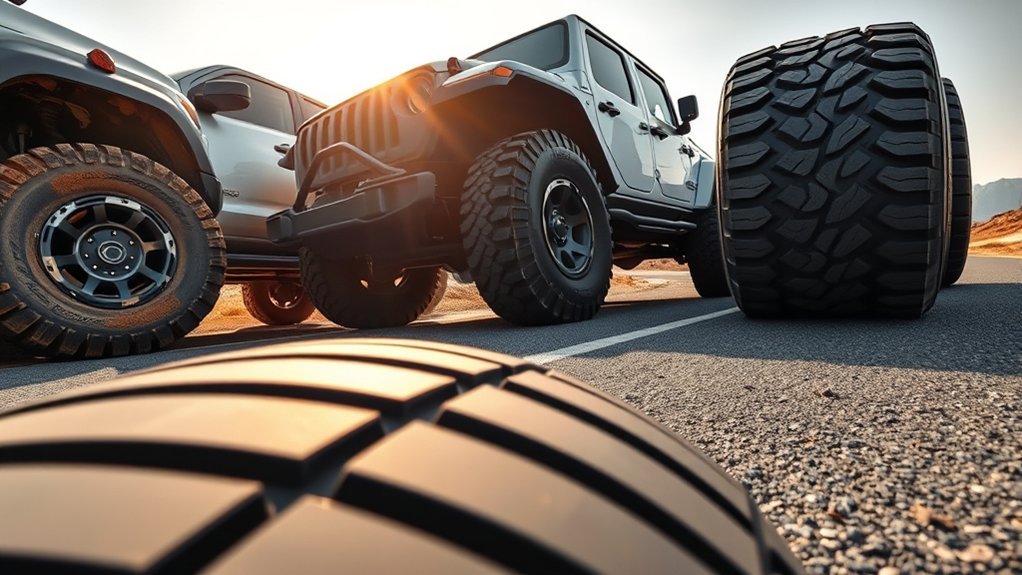
Highway-terrain tires are the road-focused option in this comparison. Their tread patterns and compounds generally prioritize comfort, quietness, stable handling, efficient rolling, and long pavement use. That makes them a strong fit for commuting, long road trips, family SUVs, and trucks that rarely leave maintained roads.
Longevity and Durability
Highway-oriented tires often emphasize long wear, but there is no universal 50,000- to 70,000-mile life span for every H/T tire. Check the actual manufacturer warranty for the exact model and size you are buying. Mileage warranties can vary substantially even within the same brand.
- Road-focused wear: Tread compounds and contact patches are typically optimized for sustained paved-road use.
- Rolling efficiency: Highway-oriented tires often prioritize lower rolling resistance, which can help fuel economy or EV range compared with a more aggressive tire of similar size and load rating.
- Wet-road design: Many use circumferential grooves, sipes, and road-focused compounds to manage water, but real wet braking and hydroplaning resistance still vary by model.
Comfort and Noise Levels
Highway tires usually have a less aggressive tread pattern than A/T or M/T tires, so they are commonly the quietest and smoothest choice on pavement. Tread-block sequencing, groove shape, casing design, and compound all affect noise and ride quality. The exact tire model matters more than a generic label.
| Feature | Highway Tires | More Aggressive Off-Road Tires |
|---|---|---|
| Tread Pattern | Road-focused | More open/aggressive |
| Noise Level | Usually lower | Usually higher, especially M/T |
| Fuel Efficiency | Often a design priority | May trade efficiency for traction/durability |
| Tread Life | Often optimized for road mileage; model-specific | Model- and use-dependent |
| Off-Road Capability | Limited | Higher |
Comparing All-Terrain and Mud-Terrain Tires: Key Differences
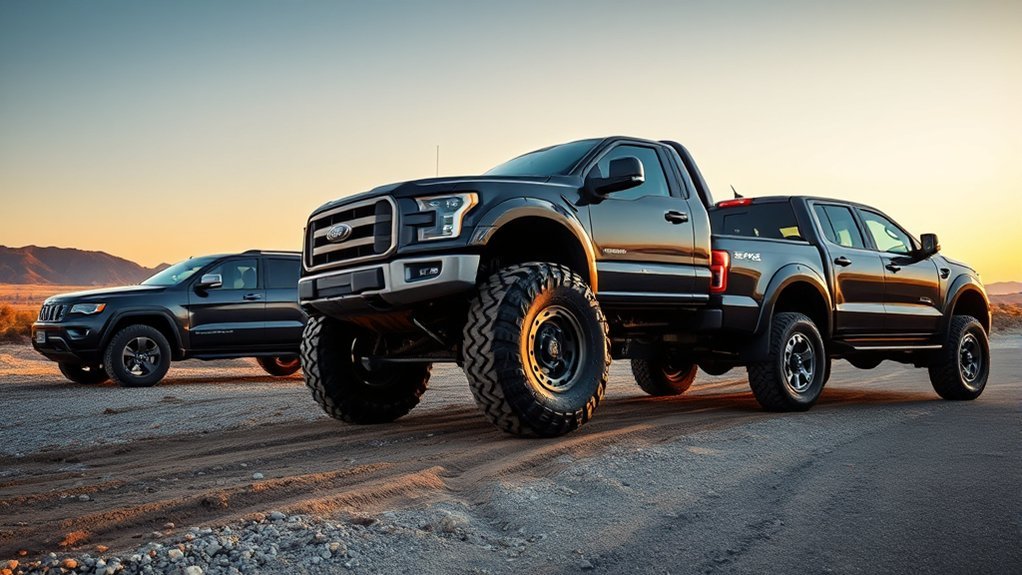
Both all-terrain and mud-terrain tires are built for drivers who leave pavement, but they serve different priorities:
- Traction: M/T tires generally use more aggressive blocks and voids for deep mud and loose terrain. A/T tires provide a broader compromise for pavement, gravel, dirt, and moderate trails.
- Comfort: A/T tires usually place more emphasis on road noise, ride, and steering stability. M/T tires commonly accept more on-road noise in exchange for aggressive off-road capability.
- Wet-road behavior: Neither category wins automatically. Water evacuation, rubber compound, siping, tread depth, temperature, tire pressure, and vehicle setup all affect wet traction.
- Snow: Do not use the A/T or M/T label as a substitute for a winter rating. Check the sidewall for M+S and, more importantly when severe-snow capability matters, the 3PMSF symbol.
The category name tells you what a tire is designed to prioritize; the exact model’s ratings, tests, load capacity, and fitment tell you whether it is right for your vehicle.
[Amazon Products Picked for You]

BFGOODRICH MUD-TERRAIN T/A KM3 TIRES: Must-have equipment for the serious off-road enthusiast when conditions require extreme traction and toughness

Designed for use on light trucks and SUVs

FOUR DEEP GROOVES FOR ALL-WEATHER CONFIDENCE – Four deep grooves channel water and mud out of the contact patch fast, resisting hydroplaning on wet highways and slick trails. A chip-resistant compound stands up to gravel, debris, and rough job-site surfaces, ensuring tough, dependable traction in dry and wet conditions all year round.
Tire Longevity: Which Types Last Longer?
Highway-oriented tires often prioritize long pavement wear, all-terrain tires balance wear with mixed-surface traction, and mud-terrain tires sacrifice more road refinement for off-road capability. But you should not treat any category-wide mileage range as guaranteed.
Manufacturer mileage warranties are a better comparison point than generic internet averages, although a warranty still is not a prediction of exact service life. Michelin, for example, gives different limited-mileage warranties across different tire lines, reinforcing that tread life must be compared model by model.
| Tire Type | Tread-Life Expectation | Efficiency Tendency |
|---|---|---|
| All-Terrain Tires | Varies by model, warranty, and on/off-road use | Balanced |
| Mud-Terrain Tires | Highly use-dependent; heavy pavement use can accelerate wear | Often lower than road-focused designs |
| Highway-Terrain Tires | Often optimized for road mileage; check the exact warranty | Often highest priority of the three |
Pro Tip: Check tire pressure monthly when the tires are cold, follow the vehicle manufacturer’s pressure on the door placard or owner’s manual, rotate tires as recommended, and correct alignment problems early. NHTSA says proper inflation, rotation, balance, and alignment help tire life and fuel economy.
Performance in Various Weather Conditions: Snow, Rain, and More
Weather performance is one of the biggest reasons not to choose a tire by A/T, M/T, or H/T label alone. The actual tread compound, siping, grooves, temperature range, and certifications matter.
- All-Terrain Tires (A/T): Many provide useful light-snow and wet-road capability, and some carry the 3PMSF severe-snow symbol. Others do not.
- Mud-Terrain Tires (M/T): Deep mud traction can be excellent, but mud performance does not guarantee strong wet-pavement, packed-snow, or ice performance.
- Highway-Terrain Tires (H/T): Road-focused designs often prioritize dry and wet pavement. Snow capability ranges from basic all-season performance to models that carry the 3PMSF symbol.
M+S vs. 3PMSF: What the Snow Markings Mean
The distinction matters. The U.S. Tire Manufacturers Association describes M+S (also shown as M/S, M&S, MS, or similar) as a marking commonly used for tires intended for limited mud and snow service. It is not the same as a severe-snow performance certification.
The three-peak mountain snowflake (3PMSF) symbol identifies tires that meet a defined severe-snow traction performance threshold. If you routinely drive in substantial winter precipitation or very cold conditions, a dedicated winter tire may still be the better choice; Michelin notes that winter tires are specifically designed for traction on ice, snow, and slush in severe cold.
Warning: Never assume a tire is safe for your vehicle simply because its tread looks aggressive. Use the vehicle manufacturer’s specified tire size and load requirements, and make sure the replacement tire can safely carry the vehicle and expected load.
Noise Levels: How Different Tires Affect Your Driving Experience
The tire you select affects more than traction. Tread-block size, spacing, pitch sequencing, casing design, and compound can all change road noise and ride quality.
Mud-terrain tires are commonly the loudest of these three categories because their open, aggressive tread interacts more strongly with pavement. All-terrain tires usually sit in the middle, balancing off-road traction with acceptable road manners. Highway-terrain tires generally place the greatest emphasis on quiet cruising and comfort.
Still, there is substantial overlap. A modern A/T tire engineered for noise control may be quieter than an older H/T design, so review the exact model rather than assuming every tire in a category behaves the same way.
Fitment, Load Rating, and Speed Rating Matter More Than the Category Label
Before choosing A/T, M/T, or H/T, confirm that the tire is appropriate for your vehicle. NHTSA advises using the tire size specified on the driver-side Tire and Loading Information label or in the owner’s manual. The correct inflation pressure also comes from the vehicle manufacturer, not from the maximum pressure molded on the tire sidewall.
- Size: Match the original-equipment size or a manufacturer-approved alternative.
- Load capacity: Choose a tire that can support the vehicle, passengers, cargo, and towing loads within the vehicle manufacturer’s limits.
- Speed rating: Use a rating suitable for the vehicle and intended use.
- Wheel clearance: Larger off-road tires can affect suspension, steering, speedometer accuracy, gearing, and fender clearance, so upsizing should be evaluated carefully.
Choosing the Right Tire for Your Driving Style and Needs
Start with your real driving pattern, not the look of the tread. Then narrow the choice using vehicle fitment, weather, load, and the individual tire’s tested performance.
- Mixed Driving: If you regularly split time between pavement, gravel, dirt roads, and moderate trails, all-terrain tires are usually the most balanced choice.
- Extreme Off-Roading: If deep mud, loose soil, rocks, and difficult trails are routine, mud-terrain tires offer the most specialized tread design, with clear trade-offs in pavement noise and refinement.
- Highway Commuting: If nearly all driving is on paved roads, highway-terrain tires usually offer the best combination of quietness, comfort, road manners, and rolling efficiency.
Then check local weather. If severe snow matters, prioritize a 3PMSF-rated tire or a dedicated winter tire rather than assuming one tread category is automatically better in snow.
[Amazon Products Picked for You]

All-Terrain SUV Performance – Designed for SUVs, this all-terrain tire provides stable handling, reliable traction, and confident performance on highways, city roads, and light off-road terrain, making it ideal for everyday driving and weekend adventures.

Designed for use on Jeeps, light trucks, and SUVs

TOUGHNESS MEETS COMFORT: BFGoodrich All-Terrain T/A KO2 radial car tires offer durability, control and comfort on and off the road: in mud, dirt, snow, sand and rocks
How to Compare Two Tires Before You Buy
- Confirm both tires fit the vehicle’s required size and load capacity.
- Compare the exact manufacturer mileage warranty instead of relying on a generic category estimate.
- Check whether each tire is M+S or 3PMSF-rated if winter driving matters.
- Look for trustworthy wet-braking, hydroplaning, snow, noise, and rolling-resistance testing for the exact model.
- Consider how much of your annual mileage is actually off-road. If it is only a small percentage, an A/T or H/T tire may be more comfortable than an M/T tire for the other 95% of your driving.
- Check replacement cost, availability, and whether the tire can be rotated normally on your vehicle.
[Amazon Products Picked for You]
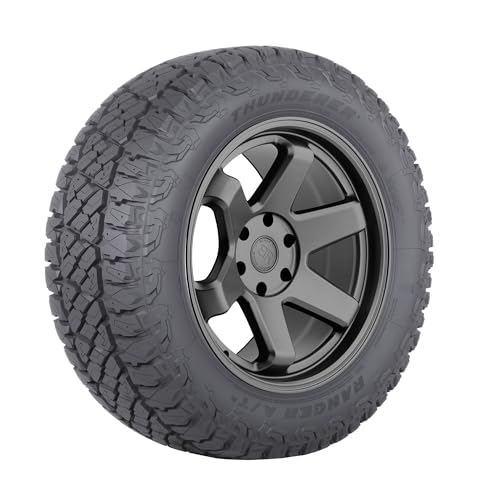
Designed for use on light trucks and SUVs

Designed for use on Jeeps, light trucks, and SUVs

Designed for use on light trucks and SUVs
Related Guides
Frequently Asked Questions
Are all-terrain or highway tires better?
Highway tires are usually better if almost all of your driving is on pavement and you value quietness, comfort, and rolling efficiency. All-terrain tires are better if you regularly drive on gravel, dirt, job sites, or moderate trails and still need reasonable road manners.
Should I get all-terrain or mud-terrain tires?
Choose all-terrain tires for mixed daily driving and moderate off-road use. Choose mud-terrain tires when deep mud, loose soil, rocks, and demanding trails are a frequent part of your driving and you accept more on-road noise and possible efficiency trade-offs.
Are mud-terrain tires good for everyday driving?
They can be used every day when correctly sized and rated for the vehicle, but they are usually not the most comfortable choice for a pavement-only commute. Expect more tread noise, and compare the exact model’s wet-road behavior, warranty, and rolling resistance before buying.
What are the disadvantages of all-terrain tires?
Compared with a road-focused highway tire, an all-terrain tire may be noisier, heavier, less fuel-efficient, and less refined on pavement. Compared with a mud-terrain tire, it usually gives up some deep-mud and extreme off-road traction. The size of those trade-offs varies by model.
Is M+S the same as the three-peak mountain snowflake?
No. M+S indicates a tire intended for limited mud and snow service, while the three-peak mountain snowflake identifies a tire that meets a defined severe-snow traction performance requirement. If winter traction is important, check the sidewall for the 3PMSF symbol.
Which tire type lasts the longest?
Highway-oriented tires often prioritize long pavement wear, but there is no universal winner. Compare the exact tire’s mileage warranty and expected use. Inflation pressure, alignment, rotation, load, road surface, and driving style can change real-world tire life substantially.
Conclusion
Choosing the right tire is about matching the tire to your real driving. All-terrain tires are the versatile middle ground, mud-terrain tires are the specialist choice for demanding off-road use, and highway-terrain tires make the most sense for drivers who stay mostly on pavement. After choosing the category, compare the exact model’s fitment, load capacity, wet performance, snow rating, noise, rolling resistance, and warranty before you buy.
Sources
- NHTSA TireWise: Tire Safety Ratings and Awareness — tire categories, UTQG, tire sizing, pressure, tread, rotation, and maintenance guidance.
- U.S. Tire Manufacturers Association: Care and Service of Passenger and Light Truck Tires — M+S and 3PMSF markings, load information, inflation, and tire-service guidance.
- Michelin: Differences in Types of Seasonal Tires — all-terrain and winter-tire use characteristics.
- Michelin LTX A/T2 Product Information — example of model-specific all-terrain comfort and mileage warranty.
- U.S. Department of Energy: Improved Tire Efficiency — relationship between rolling resistance and vehicle fuel economy.