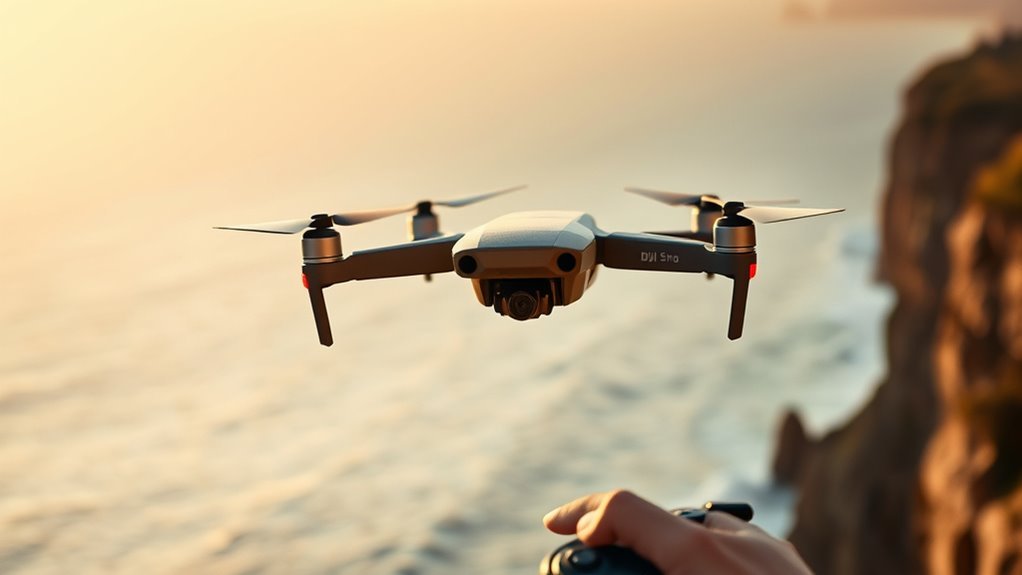
The DJI Mini 5 Pro combines a 1-inch camera sensor, 4K/120fps video, advanced obstacle sensing, and a lightweight design. Its advertised 36-minute standard-battery flight time and 20 km transmission rating sound impressive, but neither represents a guaranteed everyday result.
Before buying, it helps to understand how battery choice, wind, Return-to-Home, and U.S. drone rules affect what you can actually do with it. This guide explains those limits and where the Mini 5 Pro offers meaningful advantages over its predecessor.
Quick Answer
The DJI Mini 5 Pro is worth considering if you want strong image quality in a travel-friendly drone. DJI rates it for up to 36 minutes with the standard battery, 52 minutes with Battery Plus, and 12 m/s wind resistance. Actual endurance varies, and the heavier Plus battery changes registration requirements in some countries.
Key Takeaways
- The 20 km transmission figure describes an ideal radio link, not a safe or automatically legal flight distance.
- A larger sensor and improved gimbal make the Mini 5 Pro more appealing for photography than its modest endurance increase suggests.
- Low-battery Return-to-Home depends on distance, flight conditions, and remaining power. It does not always begin at 15%.
- Using Battery Plus or adding accessories can push the aircraft above the 250 g registration threshold.
- U.S. buyers should distinguish DJI’s corporate store from independently operated resellers and confirm warranty coverage.
Is the Mini 5 Pro Worth Buying?
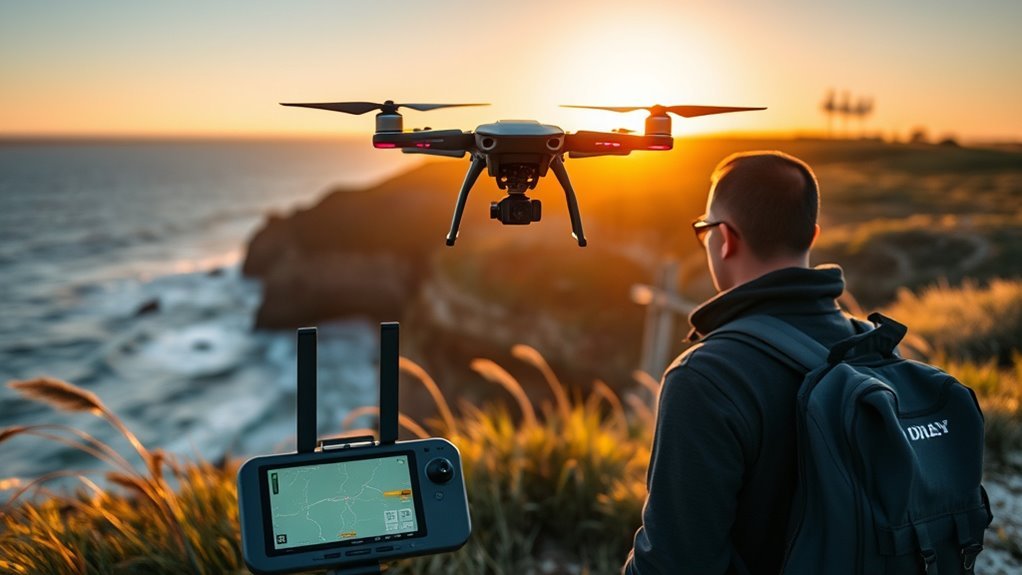
Yes, the DJI Mini 5 Pro is worth buying for travel photography and compact video production if you value camera performance more than maximum flight endurance. It delivers several important upgrades over the Mini 4 Pro without moving into a much heavier aircraft class.
Its 1-inch CMOS sensor captures 50MP stills and supports 4K/60fps HDR video, plus 4K/120fps slow motion. The larger sensor gives photographers more flexibility in changing light and challenging scenes.
The improved three-axis gimbal supports true vertical shooting and up to 225° of roll rotation. These features are useful for landscape photography, creative camera movements, and social video production.
However, the Mini 5 Pro is less appealing if you need long flights in strong winds or cannot accept battery-related operating limits.
Who Should Buy the Mini 5 Pro?
- Travel photographers: People who want detailed aerial photos without carrying a large drone.
- Content creators: Users producing 4K videos, vertical clips, and controlled slow-motion footage.
- Intermediate pilots: Operators seeking improved tracking, obstacle sensing, and camera controls.
- Mini 4 Pro owners: Photographers who specifically need the larger sensor or advanced gimbal movement.
Who Should Skip It?
- Pilots whose main priority is maximum flight time in demanding weather.
- Buyers who need a heavier aircraft for greater stability in exposed locations.
- Casual users who rarely need high-resolution photography or advanced camera settings.
- U.S. buyers who cannot confirm suitable warranty support for the unit being offered.
The strongest reason to upgrade is the camera system. If you already own a Mini 4 Pro and mostly shoot daylight video, the difference may not justify replacing a working drone.
Mini 5 Pro Real Flight Time
The DJI Mini 5 Pro has an advertised maximum flight time of 36 minutes with its standard battery. The optional Intelligent Flight Battery Plus raises the published maximum to 52 minutes.
These are controlled-test figures, not guaranteed durations for normal photography flights. The usable time depends on wind, speed, temperature, altitude, and how much battery you keep for a safe landing.
DJI measures its published endurance under carefully controlled conditions. Its official Mini 5 Pro product information explains how those ideal figures are obtained.
Real-World Flight Duration
Real flight duration can be shorter than DJI’s laboratory maximum, particularly when you fly aggressively or encounter headwinds.
A 20–25-minute flight window is a conservative starting estimate for planning trips with a comfortable battery reserve. It should not be treated as a verified average for every pilot. Gentle flying in calm conditions can provide substantially longer results.
Your actual endurance depends on several factors:
- Flight speed and repeated acceleration.
- Wind speed and flight direction.
- Air temperature and battery condition.
- Climbing, hovering, and frequent camera-position adjustments.
- How early you decide to return and land.
Video recording and obstacle sensing also use electricity, but motor propulsion is the major power demand. Short 4K clips alone should not be assumed to cause a dramatic reduction in flight time.
Battery Reserve Behavior
The standard DJI Mini 5 Pro Intelligent Flight Battery has a capacity of 2,788 mAh. The optional Intelligent Flight Battery Plus has a larger 4,680 mAh capacity.
DJI identifies both capacities in its battery documentation.
A practical starting rule is to plan a return while roughly 25–30% of battery remains. This is a planning margin, not a DJI requirement or an automatic RTH setting.
Long-distance flights, strong headwinds, and unexpected obstacles may require returning much earlier. Watch the flight application’s remaining-power estimate rather than relying only on a fixed percentage.
For maximum safety, arrange your route so you can land with power remaining, even if conditions change during the flight.
Factors Reducing Airtime
The largest reductions in flight time often come from weather and demanding control inputs. Battery capacity alone does not determine how long the drone can stay airborne.
- Headwinds: The motors work harder to maintain ground speed when flying into wind.
- Aggressive movement: Fast acceleration, braking, and sharp turns increase power demand.
- Vertical climbs: Repeated altitude changes consume additional energy.
- Cold temperatures: Batteries can provide less usable performance when cold.
- Battery aging: Repeated charging and normal wear gradually reduce available capacity.
For repeatable results, compare your own flight logs under similar conditions. Record total flight time, landing battery level, wind, and flight mode to establish a realistic planning baseline.
How Far the Mini 5 Pro Can Fly
The DJI Mini 5 Pro supports a maximum advertised 20 km (12.4 miles) video transmission distance under FCC-standard conditions. In regions using CE transmission limits, DJI publishes a lower maximum of 10 km.
These figures describe radio-link performance in favorable environments. They do not mean you can safely fly 20 km away and return, or that such a flight would be legal.
The actual communication range depends on obstacles, interference, terrain, antenna orientation, and local transmission rules.
| Environment | DJI Reference Transmission Distance |
|---|---|
| Unobstructed, strong interference | Approximately 1.5–4 km |
| Unobstructed, medium interference | Approximately 4–10 km |
| Unobstructed, low interference | Approximately 10–20 km |
| Buildings obstructing the link | Approximately 0–0.7 km in DJI’s reference test |
These are DJI’s indicative FCC-condition transmission tests, not guaranteed field performance or permitted flight distances.
The Mini 5 Pro supports GPS, Galileo, and BeiDou satellite positioning systems. Satellite positioning helps the aircraft establish its location and return home, but does not replace pilot awareness.
Its upgraded ActiveTrack 360° system can adjust tracking behavior for subjects such as cyclists. Tracking performance still depends on the environment and the drone’s ability to detect obstacles.
For U.S. pilots, visual line of sight is a major practical limit. A strong signal does not grant permission to fly beyond the distance at which you can meet the applicable FAA visual-line-of-sight rule.
Mini 5 Pro Wind Limits
The DJI Mini 5 Pro has a published maximum wind-speed resistance of 12 m/s, approximately 26.8 mph or 43.2 km/h. This is higher than the 10 m/s figure sometimes associated with other compact drones.
That rating describes an operating limit under specified conditions, not a recommended wind speed for ordinary flights.
Even when wind remains below the published maximum, gusts can affect stability, battery usage, and the distance the aircraft can safely return.
What Happens in Strong Wind?
- Greater energy demand: More motor power may be required to hold position or return against the wind.
- Reduced ground speed: A strong headwind can slow progress toward the Home Point.
- More difficult camera movements: Gusts may interrupt smooth tracking and precise framing.
- Limited recovery margin: A distant drone may consume more power than expected while returning.
Wind also changes with altitude. Calm conditions near your takeoff point do not guarantee similarly calm air higher above the ground.
Choose more sheltered locations when possible and avoid approaching the aircraft’s published limit deliberately.
If strong wind develops, stop unnecessary filming, assess the safest return path, and land while adequate battery remains.
What Auto-RTH Means for Range
Return-to-Home (RTH) is a safety feature, not a substitute for battery planning. The Mini 5 Pro can return after a pilot command, certain signal-loss events, or a low-battery warning.
Contrary to the fixed 15% claim in the original article, low-battery RTH does not always activate at one universal percentage.
DJI explains that the aircraft calculates the power needed to return based on its position and flight conditions. When it estimates that remaining power is only enough for the return, it issues a warning and can initiate RTH after a countdown.
The details appear in DJI’s official Return-to-Home guidance.
| Factor | Effect |
|---|---|
| Battery level | Determines available flight energy and affects RTH calculations |
| Flight time | Varies with battery, flight style, and weather |
| Wind | Can increase power consumption and reduce return speed |
| Environmental factors | Affect obstacle sensing, navigation, and available range |
| Maximum ascent speed | Affects how quickly the aircraft can gain altitude during recovery |
Advanced RTH can plan a route using the aircraft’s navigation and sensing systems. However, obstacle detection has environmental limits, especially around thin wires, reflective surfaces, and poorly textured objects.
Before takeoff, confirm that the Home Point has been recorded and that the planned return route is safe.
A sufficiently high return altitude can help avoid obstacles, but excessive climbing also uses battery. Choose an altitude appropriate for the surrounding environment and applicable flight restrictions.
Warning: Do not depend on automatic RTH to rescue a drone from severe headwinds or an exhausted battery. If the aircraft reaches its critical landing threshold, it may begin an automatic descent that cannot be canceled. Always leave enough energy for a safe return and landing.
How to Extend Mini 5 Pro Flight Time
You can improve the DJI Mini 5 Pro’s usable flight time by reducing unnecessary motor demand, choosing favorable conditions, and managing battery power carefully.
The greatest gains usually come from smoother flying and a well-planned route rather than turning off individual camera or safety features.
Reduce Power-Hungry Features
Features such as advanced tracking and obstacle avoidance use onboard processing power, but DJI does not establish that disabling them produces a large, predictable endurance increase.
Do not switch off obstacle sensing simply to gain a small or uncertain battery advantage in an area with hazards.
Instead, prioritize these practical improvements:
- Choose calm weather to reduce wind-related power consumption.
- Avoid unnecessary rapid acceleration and braking.
- Plan camera angles before takeoff to reduce repeated repositioning.
- Use a healthy, fully charged battery within its recommended temperature range.
- Return early enough to preserve a suitable landing reserve.
You can also shorten filming sessions by arranging several shots within one efficient flight path.
Fly Smarter, Not Harder
Smooth, deliberate flying helps conserve the Mini 5 Pro’s battery. Constant changes in speed, direction, and altitude increase the workload on its motors.
A useful approach is to perform one planned filming sequence, then return to a safe landing area instead of extending the flight until a low-battery warning appears.
When filming coastlines or other open areas, consider the return journey before flying outward. Flying home against a headwind may require much more power than the outbound leg.
Does the Intelligent Flight Battery Plus Help?
Yes. DJI advertises up to 52 minutes of maximum flight time with the Intelligent Flight Battery Plus, compared with 36 minutes for the standard battery.
The Plus pack has a 4,680 mAh capacity. Its larger energy reserve can be useful for longer shoots or locations where changing batteries is inconvenient.
However, the DJI Battery Plus specifications warn that the aircraft weighs more than 249 g when this battery is installed.
That extra weight is important because it can change which flight regulations apply.
Mini 5 Pro Vs. Mini 4 Pro
The DJI Mini 5 Pro is a meaningful upgrade over the Mini 4 Pro, mainly because of its larger imaging sensor, improved gimbal movement, and night obstacle-sensing capability.
The difference in maximum standard-battery flight time is relatively small: 36 minutes versus 34 minutes.
| Feature | DJI Mini 5 Pro | DJI Mini 4 Pro |
|---|---|---|
| Camera sensor | 1-inch CMOS | 1/1.3-inch CMOS |
| Maximum photo resolution | 50MP | 48MP |
| 4K slow motion | Up to 120fps | Up to 100fps |
| Standard battery maximum | 36 minutes | 34 minutes |
| Maximum with Battery Plus | 52 minutes | 45 minutes |
| Internal storage | 42GB | 2GB |
| Obstacle sensing | Nightscape omnidirectional sensing with forward LiDAR | Omnidirectional vision sensing |
For users who primarily shoot video in good daylight, the Mini 4 Pro remains capable. Both support 4K/60fps HDR capture and intelligent shooting features.
The Mini 5 Pro becomes more attractive for low-light photography, detailed still images, and creative movement using its expanded gimbal rotation.
Its 42GB built-in storage is another practical improvement, especially when you forget a memory card or need temporary recording space.
The strongest Mini 5 Pro upgrade is its camera flexibility, not simply a longer advertised flight time.
Night Flight Safety
The DJI Mini 5 Pro includes Nightscape Omnidirectional Obstacle Sensing, using forward-facing LiDAR and vision sensors to help detect obstacles under suitable lighting and surface conditions.
DJI specifies that its vision-based obstacle sensing requires adequately lit, textured surroundings. The published conditions include illumination above 1 lux for relevant sensing surfaces.
That does not mean every obstacle can be detected at night. Dark surfaces, thin cables, reflective water, poor textures, and unsuitable lighting can all reduce detection reliability.
Its advanced RTH system can also use memorized flight-route information when the required conditions are met. This helps in some situations where satellite positioning becomes unavailable, but it is not a guarantee of successful return.
U.S. Night-Flight Requirements
In the United States, night flying requires more than a drone with obstacle-avoidance sensors.
Recreational pilots must follow the relevant community-based organization’s night-operation guidelines, including its lighting requirements. Part 107 operators must meet the FAA’s night-flight requirements, including anti-collision lighting visible for at least three statute miles.
These rules are explained in the FAA’s drone guidance.
Keep the drone within the required visual line of sight and follow applicable airspace restrictions. Built-in obstacle sensing does not replace required lighting or airspace authorization.
U.S. Price and Availability
The DJI Mini 5 Pro is sold in several international markets, but its U.S. purchasing situation differs from a normal direct launch through DJI’s corporate U.S. online store.
DJI’s international prices vary by country and package. For example, the United Kingdom’s official DJI Store lists the base Mini 5 Pro at approximately £689, while bundles with additional batteries and controllers cost more.
These international prices should not be treated as official U.S. retail prices.
Independent U.S. resellers have listed the Mini 5 Pro, including standard and Fly More packages. One independently operated retailer using the DJI USA name advertised a $759 base package during this review, but that is a reseller listing rather than a confirmed DJI corporate U.S. MSRP.
Retail inventory, regional product support, warranty coverage, and pricing can change. Check the exact package and seller before paying.
What Should U.S. Buyers Check?
- Seller authorization: Confirm whether the store is an authorized dealer.
- Warranty coverage: Establish which organization provides repair and warranty service in your country.
- Battery configuration: Check whether the package includes standard or Plus batteries.
- Controller: Confirm whether you are buying the RC-N3 smartphone-based controller or the RC 2 display controller.
- Regulatory compatibility: Confirm the drone and operating configuration meet the rules applicable to your flights.
DJI explains its authorized-dealer and warranty policy through its official dealer information.
Does the Mini 5 Pro Need FAA Registration?
For flights conducted exclusively under the FAA’s recreational exception, a drone weighing less than 250 g at takeoff generally does not require FAA registration.
However, the exemption does not automatically extend to every Mini 5 Pro configuration.
Using a heavier battery or adding accessories can bring the aircraft to 250 g or more. That can create a registration requirement, even for recreational operations.
Also, all drones operated under Part 107 must be registered, regardless of weight. Registration and Remote ID obligations are explained in the FAA registration guidance.
Recreational pilots must still complete the FAA’s TRUST test, follow applicable safety guidelines, comply with airspace rules, and maintain the required visual line of sight.
Under the recreational rules, flying in controlled airspace requires prior FAA authorization. In uncontrolled Class G airspace, recreational flights generally must stay at or below 400 feet above ground level.
The FAA recreational flyer rules explain these operating requirements.
Note: A sub-250 g takeoff weight does not remove all drone rules. Recreational purpose, actual takeoff weight, registration status, airspace, and operating location all matter. Legal requirements can also differ substantially between countries.
What About Flying in Europe?
DJI identifies C0 and C1 configurations for the Mini 5 Pro in Europe, depending on the package and battery.
A camera-equipped C0 drone can have lighter pilot-training requirements, but that does not mean the operator is automatically exempt from registration.
Under EASA rules, operators of camera-equipped drones generally need operator registration unless a specific exception applies, such as qualifying toy aircraft.
The EASA registration requirements explain these rules.
Installing Battery Plus can also affect the aircraft’s C0 eligibility, making it important to verify the approved operating class before flying.
Best Uses for the Mini 5 Pro
The Mini 5 Pro works best when portability and high-quality imaging matter more than heavy-duty flight performance.
Its main strengths are travel photography, short-form video production, controlled cinematic footage, and intelligent subject tracking.
Travel And Portability
With its standard battery, DJI markets the Mini 5 Pro as a lightweight aircraft in the roughly 249 g class. Its folding design makes it easy to carry in a small camera bag or backpack.
That compact profile is useful when traveling between several shooting locations or walking to a launch area.
For flights across national borders, check the registration and aircraft rules of each destination. A small drone may still require operator registration, permits, or airspace authorization.
Travelers should also check airline battery-transport requirements and keep spare lithium batteries protected against short circuits.
Travel Video Work
The Mini 5 Pro supports high-quality travel video through its 1-inch sensor, 4K recording capabilities, and flexible gimbal system.
Its 4K/60fps HDR mode is suited to ordinary travel filmmaking, while 4K/120fps enables smoother slow-motion playback.
| Capability | Value |
|---|---|
| Sensor | 1-inch CMOS |
| Stills | 50MP |
| Video | 4K video up to 120fps |
| Flight time | Up to 36 minutes standard; up to 52 minutes Plus |
| Orientation | True vertical shooting |
ActiveTrack 360° can help keep moving subjects framed, and intelligent modes such as MasterShots and QuickShots simplify certain camera movements.
These tools work best when there is sufficient room around the drone and good visibility of surrounding obstacles.
Landscape Photography
Landscape photography is another strong use for the Mini 5 Pro. Its larger sensor and high-resolution still-image mode help capture detail in wide outdoor scenes.
For changing light, avoid assuming that automatic exposure will always preserve both bright skies and dark foregrounds.
Use appropriate exposure settings and review the image before leaving the location. RAW capture offers additional flexibility when editing photos later.
Automated Subject Tracking
ActiveTrack 360° can help follow moving subjects while adjusting framing and flight behavior.
For example, it can be useful when filming a cyclist along a clear, open route with appropriate authorization and safe separation from people and other aircraft.
Tracking is less suitable in crowded areas, complex tree cover, or places with unpredictable obstacles. A pilot must remain ready to take manual control.
Frequently Asked Questions
How Strong Winds Can the DJI Mini 5 Pro Handle?
The DJI Mini 5 Pro has a maximum published wind-speed resistance of 12 m/s, approximately 26.8 mph. This rating is not a recommended flying condition. Strong gusts can increase power consumption, reduce ground speed, and make returning more difficult. Flying in calmer conditions gives you greater control and battery margin.
Can You Legally Fly the DJI Mini 5 Pro in the US?
Yes, the DJI Mini 5 Pro can be flown in the United States when the aircraft and operation comply with applicable FAA requirements. Recreational pilots must complete TRUST and follow the applicable flight rules. Part 107 flights require a qualified remote pilot and aircraft registration. Airspace authorization, Remote ID, and night-flight requirements may also apply.
How Far Away Can I Fly My DJI Mini 5 Pro?
DJI rates the Mini 5 Pro’s O4+ transmission system for up to 20 km under ideal FCC-standard conditions. That is a radio-link specification, not a permitted operating distance or guaranteed round-trip range. Actual distance is limited by signal conditions, battery energy, obstacles, and rules requiring the aircraft to remain within visual line of sight.
Can FAA Know You Flew a DJI Drone?
Yes, a drone flight can leave evidence that authorities may use to identify an operation. Registered drones subject to Remote ID requirements can broadcast identification and location information. Flight logs, images, reports, and other evidence may also be relevant. However, a sub-250 g drone flown exclusively under the recreational exception does not automatically require Remote ID.
Does the DJI Mini 5 Pro Automatically Return at 15% Battery?
No, the Mini 5 Pro does not use a universal 15% threshold for automatic Return-to-Home. DJI calculates when remaining power may be only sufficient for the return journey. The warning can therefore occur at different battery levels. Plan to return earlier rather than depending on an automatic low-battery warning.
Does the DJI Mini 5 Pro Battery Plus Require Registration?
The Intelligent Flight Battery Plus can increase the Mini 5 Pro’s takeoff weight beyond the 250 g threshold. In the United States, recreational operators must register aircraft weighing 250 g or more. Part 107 operations require registration regardless of weight. In Europe, the heavier battery can also affect the drone’s operating class and related requirements.
Conclusion
The DJI Mini 5 Pro offers an impressive balance of portability, camera quality, and intelligent flight features. Its 1-inch sensor, flexible gimbal, and advanced obstacle sensing provide meaningful advantages over earlier Mini models.
However, its advertised 36-minute standard flight time, 52-minute Plus battery capability, and 20 km transmission rating all have practical limits.
For travel photographers and video creators, it is a compelling compact option. Before buying, compare the exact battery and controller package, confirm warranty support, and understand the flight rules that apply where you plan to use it.
Sources
- DJI Mini 5 Pro Official Product Information: Camera features, battery endurance, transmission specifications, and comparison details.
- DJI Intelligent Flight Battery Documentation: Battery capacity and charging-related information.
- DJI Mini 5 Pro Intelligent Flight Battery Plus: Extended endurance, battery capacity, and weight warning.
- DJI Return-to-Home Logic: Low-battery warnings, automatic return behavior, and landing precautions.
- FAA Recreational Flyer Rules: Recreational operating requirements, TRUST, airspace authorization, and visual line of sight.
- FAA Drone Registration: Weight-based registration exemptions, Part 107 registration, and Remote ID requirements.
- FAA Getting Started: General drone operating requirements and night-flight guidance.
- EASA Registration Requirements: European drone-operator registration rules and exceptions.
- DJI Authorized Dealer Information: Seller authorization and warranty-related buying precautions.

