Toyota Tundra ground clearance is not one lineup-wide number. It varies by model year, trim, powertrain, drivetrain, cab, tire package, sales market, and the type of clearance being measured. Toyota’s 2021 U.S. brochure lists 10.0 to 10.6 inches depending on configuration. For 2025, Toyota’s U.S. eBrochure groups minimum clearance at 9.3 inches for the gas rows and 8.5 inches for the hybrid CrewMax rows, while Toyota’s detailed 2025 product data includes trim-specific figures such as 9.4 inches for gas Limited configurations and 9.0 inches for TRD Pro.
Last updated: September 22, 2026. Current Toyota specifications, model-year status, and measurement terminology were rechecked for this update.
Quick Answer
For a Toyota Tundra, use the clearance figure for the exact year and configuration rather than one generic number. Toyota’s 2021 U.S. brochure spans 10.0 to 10.6 inches. The 2025 U.S. eBrochure groups minimum clearance at 9.3 inches for gas rows and 8.5 inches for hybrid CrewMax rows, but detailed 2025 data lists 9.4 inches for gas Limited and 9.0 inches for TRD Pro. Toyota USVI’s current 2026 specification lists 9.4 inches for the configuration shown on that market page.
Key Takeaways
- Toyota’s published clearance can differ by model year, trim, powertrain, cab, drivetrain, tire package, sales market, and measurement definition.
- The 2025 U.S. brochure’s 9.3-inch gas and 8.5-inch hybrid figures are grouped brochure values, not universal trim-by-trim numbers.
- Toyota’s detailed 2025 data shows why the measurement definition matters: TRD Pro is listed at 9.0 inches of ground clearance and 10.9 inches of running ground clearance.
- A suspension lift can raise the frame and body without increasing clearance beneath a solid rear differential.
- Larger tires can increase axle clearance, but fitment, rubbing, load rating, alignment, braking, and sensor operation must be checked.
- Approach, departure, and breakover angles also affect whether your Tundra can clear an obstacle.
2027 model-year note: Toyota announced the 2027 Tundra on July 21, 2026, but said full 2027 specifications and pricing were planned for fall 2026. This guide therefore keeps its verified clearance table through 2026 until Toyota publishes the complete 2027 specification set. See Toyota’s 2027 Tundra announcement.
Understanding Ground Clearance in the Toyota Tundra
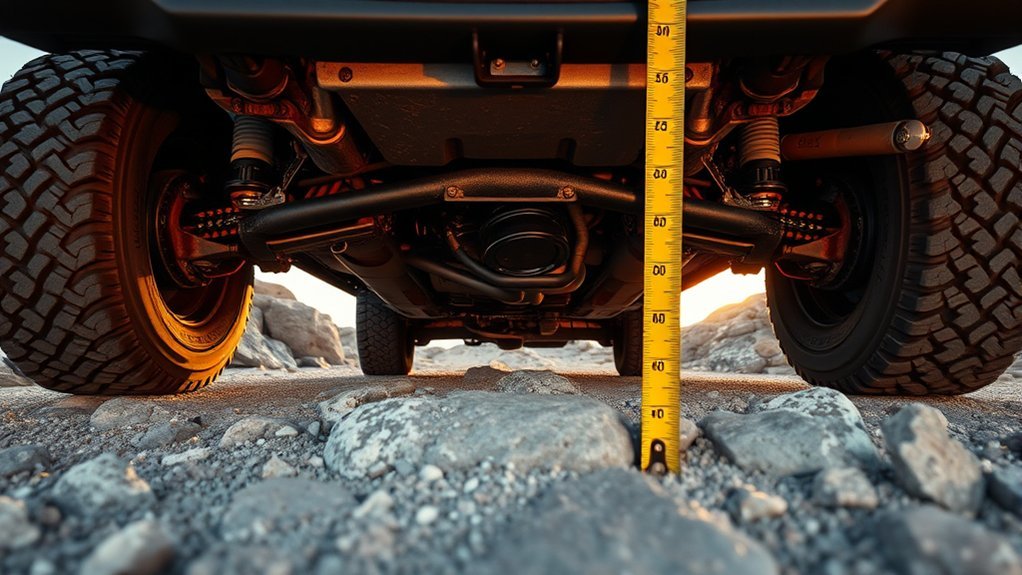
Ground clearance describes the vertical space between the ground and a specified point beneath your truck. Manufacturers can publish more than one clearance measurement because the lowest sprung component, axle differential, skid plate, and other underside points are not necessarily at the same height.
The 2025 Toyota Tundra eBrochure groups minimum ground clearance at 9.3 inches for its gas rows and 8.5 inches for the hybrid CrewMax rows. Toyota’s more detailed 2025 Product Specs, available from the 2025 Toyota Tundra newsroom page, break the figures down further by trim and configuration. Those detailed specifications list 9.4 inches for gas Limited configurations and 9.0 inches for the hybrid TRD Pro.
For 2026, Toyota’s specifications also need to be read by configuration and market. The current Toyota USVI 2026 Tundra specification lists 9.4 inches of minimum ground clearance for the configuration displayed on that page. Do not carry that number, or a 9.3-inch figure from another configuration, across the entire 2026 lineup without checking the exact build.
| Model year or configuration | Published ground clearance | What the number represents |
|---|---|---|
| 2026 Toyota USVI configuration | 9.4 inches | Current Toyota USVI market specification. Do not treat it as a universal figure for every 2026 U.S. trim. |
| 2025 U.S. eBrochure — gas rows | 9.3 inches | Grouped brochure figure by cab/powertrain; detailed Toyota product data lists 9.4 inches for gas Limited configurations. |
| 2025 U.S. eBrochure — hybrid CrewMax rows | 8.5 inches | Grouped brochure figure; detailed product data lists 9.0 inches for TRD Pro. |
| 2025 TRD Pro | 9.0 inches ground clearance | Toyota’s detailed product data separately lists 10.9 inches of running ground clearance for the same TRD Pro configuration. |
| 2022 U.S. brochure — grouped gas / hybrid figures | 9.3 / 8.5 inches | The brochure groups values by powertrain/cab. Detailed 2022 data also lists 9.4-inch Limited and 9.0-inch TRD Pro configurations. |
| 2021 lineup | 10.0 to 10.6 inches | Exact figure depends on cab, trim, and 4×2 or 4×4 drivetrain. |
| 2021 SR5 4×4 and TRD Pro 4×4 | 10.6 inches | Listed in Toyota’s 2021 U.S. brochure for those 4×4 configurations. |
Important: Two published clearance numbers can both be valid if they use different measurement definitions. Before comparing trucks, identify whether the figure describes Toyota’s listed ground clearance, running clearance, or clearance beneath an axle or differential.
How Ground Clearance Is Measured
Ground clearance is measured vertically from a level surface to a specified point beneath the vehicle. The truck’s load, tire pressure, tire wear, suspension position, and accessories can all change a real-world measurement, so the measurement point and test conditions matter.
Measurement Points Explained
Several terms appear in manufacturer specifications, regulations, and off-road discussions:
- Ground or minimum ground clearance: The manufacturer-published distance associated with the measurement definition used for that specification.
- Running clearance: Under federal terminology, the distance from the surface to the lowest point on the vehicle while excluding unsprung weight.
- Axle clearance: Under federal terminology, the vertical distance from the surface to the lowest point on the axle differential.
- Body or frame clearance: A practical measurement beneath a frame rail, crossmember, skid plate, battery enclosure, exhaust component, or body section. The exact point must be stated for the number to be useful.
The federal definitions for running and axle clearance explain why these measurements should not be treated as interchangeable. A solid rear axle and differential are unsprung components, while the body and much of the frame move with the suspension.
Why Do Tundra Ground-Clearance Numbers Differ?
Toyota’s own 2025 detailed specifications provide a useful example. The 2025 Tundra TRD Pro is listed at 9.0 inches of ground clearance, while its running ground clearance is 10.9 inches. Those figures are not necessarily contradictory because they describe different measurement concepts. Federal terminology defines running clearance as the distance to the lowest point on the vehicle while excluding unsprung weight, and separately defines axle clearance to the lowest point on the axle differential.
That distinction matters on a live-axle truck. A figure that describes clearance beneath a sprung component can be much larger than the space beneath the differential. When comparing specifications from Toyota, a dealer, a third-party database, or an owner’s tape measure, first identify the measurement point. Otherwise, a 9.0-inch number and a 10.9-inch number may look inconsistent even though each describes a different part of the truck.
Which Ground-Clearance Number Should You Use?
| What you are trying to judge | Most useful measurement |
|---|---|
| Compare two factory Tundra configurations | Use the same manufacturer-defined ground-clearance specification for both configurations. |
| Avoid hitting the rear differential on rocks or ruts | Measure axle/differential clearance directly with the truck loaded and tires set as they will be on the trail. |
| Avoid high-centering on a crest | Consider belly/running clearance together with wheelbase and breakover angle. |
| Climb a ledge without touching the front bumper | Approach angle is more informative than ground clearance alone. |
| Leave a drop or obstacle without dragging the rear | Departure angle is more informative than ground clearance alone. |
How to Measure Your Tundra Accurately
- Park on a hard, level surface. Avoid gravel, deep tire grooves, ramps, or uneven pavement.
- Set the correct tire pressure. Use the cold-pressure specification on the driver-door label, not the tire’s maximum sidewall pressure.
- Record the vehicle load. Remove unusual cargo and note heavy accessories, passengers, fuel level, and trailer tongue weight.
- Check several rigid points. Measure beneath the front skid plate, crossmembers, exhaust, frame, transfer-case protection, and rear differential.
- Label each result. Record body clearance and axle/differential clearance separately instead of reporting one unexplained number.
Pro Tip: Measure both sides of the truck and repeat the measurement after rolling forward one tire rotation. This can help reveal uneven pavement, tire deformation, or suspension that has not fully settled.
Factors Influencing Accuracy
A repeatable measurement should use controlled conditions. Federal light-truck criteria reference curb weight, a level surface, front wheels parallel with the vehicle, and tires inflated to the manufacturer’s recommended pressure. The NHTSA light-truck classification test procedure provides additional measurement context.
Your reading can still differ from a published specification because of worn tires, nonfactory wheels, aftermarket skid plates, suspension changes, additional cargo, or a different measurement point. A difference of a few tenths of an inch does not automatically mean the manufacturer or your measurement is wrong.
Why Ground Clearance Matters for Off-Roading
More clearance can reduce the chance of striking rocks, roots, ledges, frozen ruts, or the center ridge of a trail. However, ground clearance is only one part of off-road geometry.
You should also consider:
- Approach angle: How steep an obstacle the front of the truck can meet before the bumper or lower body contacts it.
- Departure angle: How steeply the truck can leave an obstacle without dragging the rear.
- Breakover angle: The sharpest crest the truck can cross without grounding the center of its wheelbase.
- Wheelbase: A longer truck generally needs a gentler crest to avoid high-centering. See the site’s guide to Toyota Tundra wheelbase and overall dimensions for configuration-specific size context.
- Traction and articulation: Clearance is less useful if the tires cannot maintain grip or contact with the terrain.
- Skid protection: Skid plates can reduce damage when contact cannot be avoided.
Toyota’s 2025 U.S. brochure lists standard approach and departure angles of 21.0 and 24.0 degrees, while TRD Pro is listed at 26.2 and 24.2 degrees. This illustrates why a trim can improve obstacle clearance at the bumpers even when another published minimum-clearance figure appears lower than expected. For a deeper geometry comparison, see Toyota Tundra approach, departure, and breakover angles.
A single ground-clearance number cannot describe the truck’s wheelbase, bumper angles, traction, suspension travel, differential height, or underbody protection.
[Amazon Products Picked for You]

Off-Road Protection: Tackle the toughest trails with confidence, as the heavy-duty 14-gauge steel skid plate shields your undercarriage from rocks, debris, and any debris nature throws at you.


✅This handy 4-in-1 tool acts as a skid plate, wheel chock, recovery point and a step fitting right into your 2" hitch.
Comparing Ground Clearance Across Tundra Generations
The most noticeable published change occurs between the 2021 second-generation Tundra and the redesigned 2022 third generation.
The 2021 Toyota brochure lists ground-clearance figures from 10.0 to 10.6 inches. SR5 4×4 and TRD Pro 4×4 configurations are listed at 10.6 inches, while some 4×2 and luxury configurations use lower values.
The 2022 U.S. brochure uses grouped figures of 9.3 inches for its gas rows and 8.5 inches for its hybrid CrewMax rows. More detailed 2022 configuration data also lists 9.4 inches for Limited and 9.0 inches for TRD Pro, so the grouped brochure rows should not be interpreted as the only two possible values.
The same caution applies to 2025. Toyota’s eBrochure gives the simple grouped 9.3/8.5-inch view, while detailed Toyota product specifications distinguish individual trims and also publish separate running-clearance values.
This does not mean every third-generation Tundra is less capable than a 2021 truck in every off-road situation. The redesign changed the frame, rear suspension, available cameras, traction systems, skid protection, and bumper geometry. Compare the exact measurement definition and complete vehicle geometry rather than ranking generations from one number.
[Amazon Products Picked for You]

Give your Tundra the Perfect Blend of Performance, Protection, and Style from Rough Country.

Give your Tundra the Perfect Blend of Performance, Protection, and Style from Rough Country.
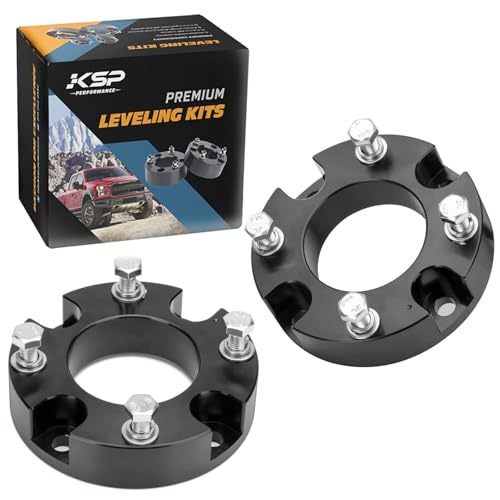
Compatibility:Fit for 2007-2026 Tundra 2WD 4WD. Fit for 2007-2026 Toyota Sequoia 2WD 4WD (Does NOT fit electric front struts, Does NOT fit TRD Pro models, Does NOT fit XSP-X models).
What Influences Your Ground Clearance?
Your truck’s measured clearance can change even when the published factory specification stays the same. The main influences are payload, tire dimensions, inflation pressure, suspension design, and aftermarket equipment.
Vehicle Load and Weight
Passengers, tools, bed cargo, accessories, and trailer tongue weight compress the suspension. That compression lowers sprung parts such as the frame, body, skid plates, and bumpers.
- Stay within the payload rating printed on the driver-door label.
- Distribute cargo correctly and secure it before driving.
- Remember that bumpers, winches, racks, steps, and skid plates count as added weight.
- Recheck headlight aim and ride height after adding permanent equipment.
Payload has less direct effect on the height of a solid rear differential because the axle moves with the wheels. However, increased tire deflection or reduced tire pressure can reduce loaded tire radius and therefore reduce axle clearance.
Tire Size and Type
A larger tire raises the wheel hub and axle by approximately half the increase in actual tire diameter. For example, moving from a true 33-inch tire to a true 35-inch tire provides about one inch of theoretical axle-clearance gain, not two inches.
Actual tire dimensions often differ from the nominal size printed on the sidewall. Wheel width, pressure, tread wear, vehicle load, and tire construction all affect loaded radius.
Before fitting larger tires, check:
- Wheel offset and width
- Upper control-arm clearance
- Body-mount, liner, mud-flap, and bumper clearance
- Clearance at full steering lock and suspension compression
- Load and speed ratings
- Spare-tire fitment
- Speedometer and odometer accuracy
- Final-drive gearing and braking performance
Suspension Design Variations
The 2021 and earlier Tundra uses a leaf-spring live rear axle. Toyota replaced that arrangement with a multi-link, coil-spring live rear suspension for the redesigned third-generation Tundra. Some third-generation configurations also offer rear air suspension.
A suspension lift raises much of the frame and body. It can improve approach, departure, and breakover geometry, but it normally does not raise a solid rear differential relative to the wheel hubs. Increasing loaded tire radius is the main way to gain additional differential-to-ground clearance.
A body lift raises the body relative to the frame but does not raise the frame, axles, transfer case, or most drivetrain components. It should not be described as an equal increase in usable underbody clearance.
Debunking Myths About Tundra Ground Clearance
Myth 1: Every Tundra trim has the same clearance.
Model year, trim, cab, drivetrain, powertrain, suspension, wheels, tires, sales market, and measurement definition can change the published or measured figure.
Myth 2: Every 2022 Tundra has either 9.3 or 8.5 inches.
Toyota’s 2022 brochure uses grouped 9.3-inch gas and 8.5-inch hybrid figures, but detailed configuration data also lists 9.4 inches for Limited and 9.0 inches for TRD Pro.
Myth 3: A three-inch suspension lift adds three inches beneath the differential.
A suspension lift raises sprung components. Differential clearance on a solid axle primarily changes when loaded tire radius changes.
Myth 4: Ground clearance alone determines off-road capability.
Wheelbase, approach angle, departure angle, breakover angle, traction, suspension travel, driver technique, tire construction, and skid protection also matter.
Myth 5: More clearance always improves road performance.
Raising a truck changes its geometry and can affect center of gravity, steering, braking, alignment, aerodynamic drag, component wear, and emergency handling.
Increasing Ground Clearance: Tips for Modifications
You can increase some forms of clearance with tires, suspension components, or an application-specific lift kit. The appropriate system depends on the exact model year, powertrain, drivetrain, suspension equipment, and driver-assistance hardware.
Toyota’s official TRD three-inch suspension lift kit for specified gas Tundras raises the front by 3 inches and the rear by 2 inches. Toyota states that the kit provides 2.6 inches of additional overall ground clearance and is designed to remain compatible with Toyota Safety Sense 2.5 for its approved application.
Toyota’s published launch guidance for the Tundra TRD lift kit covered applicable 2022-and-newer i-FORCE and i-FORCE MAX 4×4 trucks with 5.5- or 6.5-foot beds and excluded TRD Pro, TRD Sport, Adaptive Variable Suspension, and air-suspension applications. Because accessory fitment can be revised, confirm the current kit and VIN-specific application with Toyota before ordering or installing it.
Toyota also recommends OEM wheel and tire sizes with the current gas lift kit and warns that tires larger than 285/65R20 may rub or contact surrounding parts. This is why nominal tire diameter alone should never determine fitment.
Warning: A lift or wheel-and-tire change can affect handling, braking, alignment, headlight aim, camera or radar calibration, speedometer accuracy, component wear, tire clearance, and warranty coverage. Use components approved for your exact truck and have the completed vehicle inspected and aligned by a qualified technician.
Before modifying your Tundra:
- Confirm the exact model year, trim, powertrain, drivetrain, cab, bed, and suspension equipment.
- Read the kit manufacturer’s exclusions and required supporting parts.
- Check wheel offset, actual tire dimensions, and clearance through full steering lock and suspension travel.
- Confirm whether cameras, radar, headlights, or other systems require inspection or calibration.
- Perform a professional alignment after suspension work.
- Recheck fastener torque at the interval specified by the component or kit manufacturer.
- Verify local rules for bumper, frame, headlight, and overall vehicle height.
[Amazon Products Picked for You]

Give your Tundra the Perfect Blend of Performance, Protection, and Style from Rough Country.

Compatibility: 2007-2026 Tundra 2WD 4WD, 2007-2026 Sequoia 2WD 4WD

Give your Tundra the Perfect Blend of Performance, Protection, and Style from Rough Country.
How to Evaluate Owner-Reported Ground-Clearance Measurements
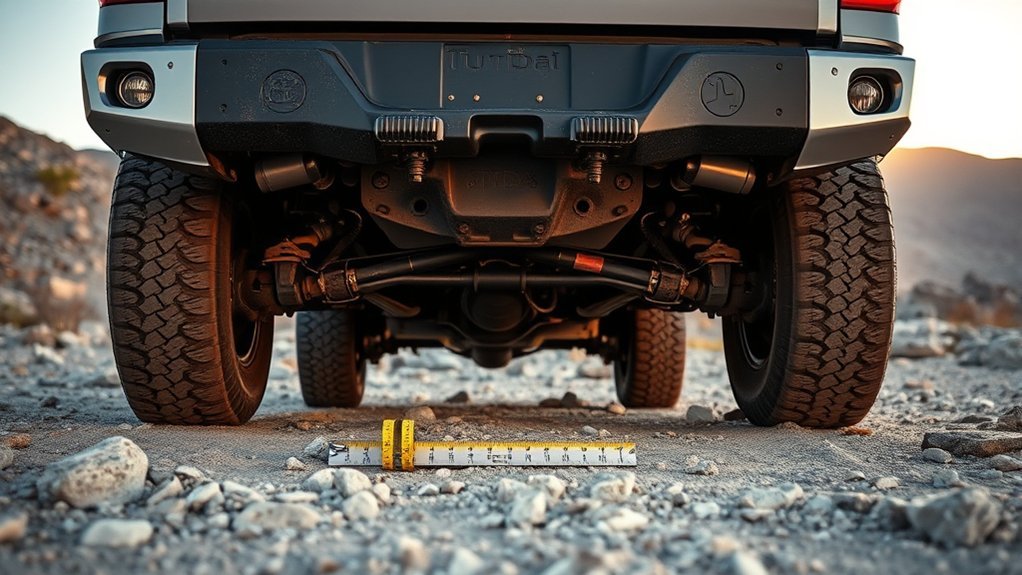
Owner measurements can help you estimate real-world clearance, but only when the measurement method is documented. Two owners with similar trucks can report different figures because one measured beneath a skid plate or frame member while the other measured beneath the rear differential.
Tire pressure, tread wear, cargo, fuel, permanent accessories, surface slope, wheel position, and the measuring tool can create additional differences. A useful measurement should identify the exact contact point, confirm a reasonably level surface, and show the ruler or measuring device held vertically.
When evaluating an owner-reported measurement, look for these details:
- Exact model year, trim, cab, drivetrain, bed, and powertrain
- Factory or aftermarket suspension
- Actual tire brand, size, pressure, and tread condition
- Payload and permanent accessories
- The component used as the measurement point
- Whether the surface was confirmed level
A carefully documented owner measurement can help you understand the usable clearance of a specific truck. An unexplained forum number should not replace Toyota’s published specification or a direct measurement of the vehicle you intend to drive.
Related Guides
Frequently Asked Questions
What is the ground clearance of the Toyota Tundra?
It depends on the year, trim, configuration, market, and measurement definition. Toyota’s 2021 U.S. brochure lists 10.0 to 10.6 inches. Toyota’s 2025 U.S. eBrochure uses grouped minimum figures of 9.3 inches for the gas rows and 8.5 inches for the hybrid CrewMax rows, while detailed 2025 data lists 9.4 inches for gas Limited and 9.0 inches for TRD Pro.
How much ground clearance does a 2026 Toyota Tundra have?
There is no single number that should be applied automatically to every 2026 configuration. Toyota USVI’s current 2026 specification lists 9.4 inches for the configuration shown on that market page. Check the exact trim, powertrain, drivetrain, tire package, and sales-market specification for the truck you are comparing.
Why do Toyota Tundra ground-clearance numbers differ?
Different sources may use different configurations or measurement definitions. Toyota’s detailed 2025 data, for example, lists the TRD Pro at 9.0 inches of ground clearance but 10.9 inches of running ground clearance. Federal terminology defines running clearance as clearance to the lowest point of the vehicle while excluding unsprung weight, so it should not be treated as identical to axle or differential clearance.
Does the Tundra TRD Pro have more ground clearance?
It depends on the measurement being compared. Toyota’s detailed 2025 specifications list TRD Pro at 9.0 inches of ground clearance and 10.9 inches of running ground clearance. The 2025 brochure also gives TRD Pro better approach and departure angles than the standard figures, so off-road geometry cannot be judged from one clearance number alone.
Does a suspension lift increase rear differential clearance?
Not by itself on a Tundra with a solid rear axle. A suspension lift raises the frame and body relative to the axle. The distance beneath the rear differential mainly increases when loaded tire radius increases.
How much ground clearance do larger tires add?
The theoretical axle-clearance gain is half the increase in actual tire diameter. A tire that is two inches taller can add about one inch beneath the axle. Real gains may be smaller because of load, inflation pressure, tread wear, and differences between nominal and measured tire dimensions.
Conclusion
Toyota Tundra ground clearance cannot be reduced to one number for every year and trim. The 2021 U.S. lineup spans 10.0 to 10.6 inches in Toyota’s brochure. For 2025, Toyota’s eBrochure uses grouped 9.3-inch gas and 8.5-inch hybrid figures, while its detailed product data includes configuration-specific values such as 9.4 inches for gas Limited and 9.0 inches for TRD Pro. Toyota USVI’s current 2026 specification lists 9.4 inches for the configuration shown in that market.
For the most useful comparison, match the model year, trim, powertrain, cab, drivetrain, tires, market, and measurement definition. For trail use, measure the actual low points on your own truck and consider differential clearance, approach and departure angles, breakover geometry, wheelbase, tires, payload, traction, and skid protection together. When modifying the truck, verify fitment, alignment, calibration requirements, tire clearance, and handling before relying on the added height.
Sources
- Toyota USVI 2026 Tundra Specifications — supports the current 9.4-inch minimum-ground-clearance figure for the configuration shown on that market page.
- Toyota USA Newsroom — 2025 Toyota Tundra — provides Toyota’s detailed 2025 Product Specs download used for configuration-specific ground and running-clearance data.
- 2025 Toyota Tundra eBrochure — supports the grouped minimum-clearance figures and 2025 approach/departure-angle figures.
- 2022 Toyota Tundra Brochure — supports third-generation grouped clearance figures and factory configuration details.
- 2021 Toyota Tundra Brochure — supports second-generation clearance figures and configuration differences.
- 49 CFR § 523.2 Definitions — defines running clearance, axle clearance, approach angle, and static loaded radius terminology.
- Toyota TRD Three-Inch Suspension Lift Kit — Gas — supports the current 3-inch front/2-inch rear lift, 2.6-inch overall clearance gain, TSS 2.5 compatibility, and tire-size warning.
- Toyota USA Newsroom — Tundra TRD Three-Inch Lift Kit — supports Toyota’s published kit application and exclusion guidance.
- NHTSA Laboratory Test Procedure TP-523-00 — provides controlled light-truck classification and geometry measurement context.
- Toyota USA Newsroom — 2027 Tundra Announcement — confirms the July 21, 2026 announcement and Toyota’s stated timing for full 2027 specifications.
