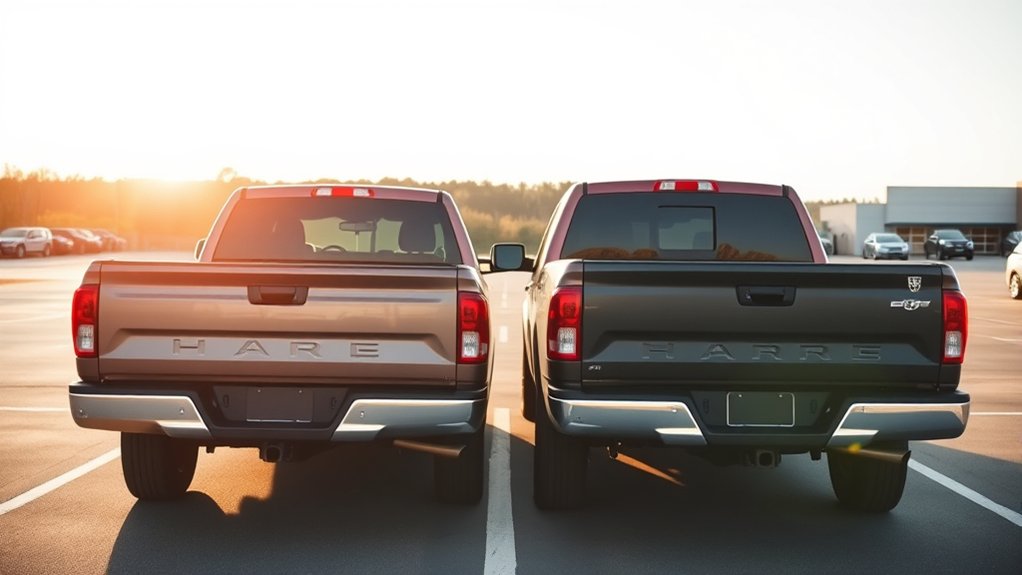
Choosing between a short bed and a long bed truck is not simply a question of which one can carry more. Bed length affects cargo room, total vehicle length, turning space, garage fit, accessory compatibility, and some fifth-wheel setups. Your ideal choice also depends on the cab, powertrain, payload rating, trailer, and type of driving you do most often.
Quick Answer
Choose a short bed when easier parking, a shorter overall truck, and daily maneuverability matter most. Choose a long bed when you regularly carry long or bulky cargo or need extra fifth-wheel clearance. Do not assume a long bed automatically tows more; compare the exact truck’s payload, axle, hitch, and towing ratings.
Key Takeaways
- Bed-size labels are not universal. One brand may call a 6.5-foot box “standard,” while another uses a different nominal length.
- A short bed is usually easier to park, but garage fit depends on the truck’s complete bumper-to-bumper length, width, height, and mirrors.
- A long bed carries longer cargo with less overhang and can provide useful fifth-wheel clearance, but it does not automatically increase towing or payload ratings.
- Passengers, cargo, accessories, hitch hardware, and trailer tongue or kingpin weight all consume the truck’s available payload.
- Before buying, verify the exact configuration’s door labels, towing guide, hitch instructions, trailer geometry, and accessory fit.
Understanding Truck Bed Length: Definitions and Importance
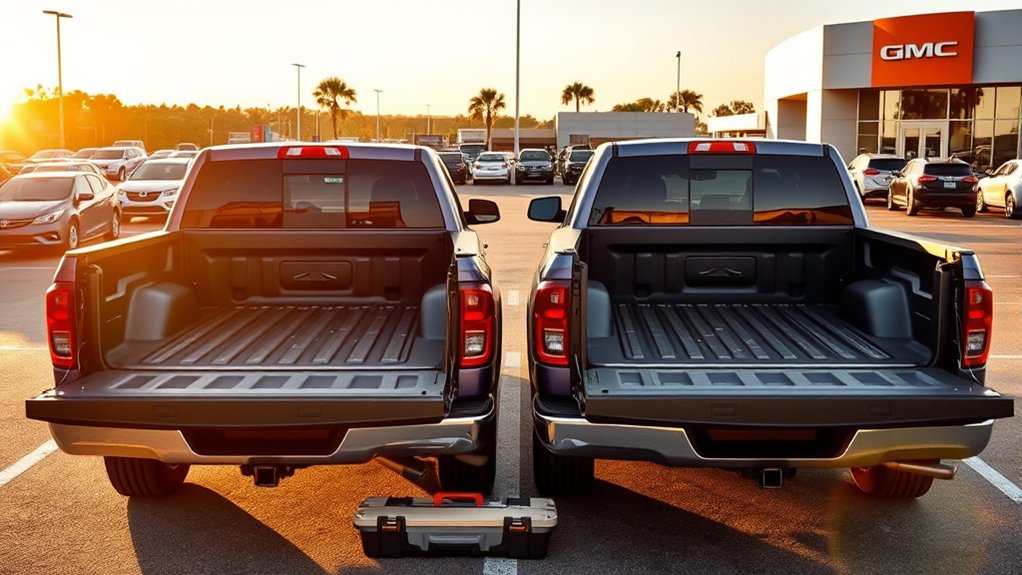
Truck-bed length is usually measured along the bed floor from the inside of the front bulkhead to the inside of the closed tailgate. Manufacturers often round that measurement when naming the box. A bed advertised as 5.5 feet, for example, may have an actual floor length that differs by an inch or more.
The labels short bed, standard bed, regular bed, and long bed are not industry-wide standards. They also mean different things in compact, midsize, full-size, and heavy-duty truck classes. Common full-size pickup choices include a bed near 5.5 feet, a middle bed near 6.5 feet, and a long bed near 8 feet, but not every cab is offered with every bed.
As one current example, the 2026 Ford F-150 technical specifications list interior floor lengths of 67.1, 78.9, and 97.6 inches for its nominal 5.5-, 6.5-, and 8-foot boxes. Those measurements illustrate why you should use the manufacturer’s actual dimensions instead of relying only on a rounded label.
Note: Bed length and overall truck length are not the same measurement. Cab style, bumpers, wheelbase, steps, mirrors, and other equipment affect whether the truck fits your garage or parking space.
Bed Length, Wheelbase, and Overall Length
A longer bed often comes with a longer wheelbase, but cab and bed combinations vary. When comparing two trucks, record all four of these measurements:
- Interior bed length: The usable floor distance from the bulkhead to the tailgate.
- Wheelbase: The distance between the front and rear axle centers.
- Overall length: The complete bumper-to-bumper measurement.
- Turning diameter: The space required to complete a turn.
A longer wheelbase usually requires more turning space. For example, Ford’s current F-150 specifications list curb-to-curb turning diameters ranging from 41.2 feet for one 122.8-inch-wheelbase configuration to more than 50 feet for several longer configurations. This does not mean every short bed is easy to park or every long bed is difficult; it shows why exact dimensions matter.
Cargo Volume Varies by Model
Bed length is only one part of cargo volume. Bed width, depth, wheelhouse shape, bedside design, and the manufacturer’s calculation method also matter. The following figures show why cargo-volume numbers must be identified by model rather than used as universal short-bed and long-bed values:
| Current Full-Size Example | Shortest Bed | Middle Bed | Longest Bed |
|---|---|---|---|
| 2026 Ford F-150 | 52.8 cu. ft. | 62.3 cu. ft. | 77.4 cu. ft. |
| 2026 Chevrolet Silverado 1500 | 62.9 cu. ft. | 71.7 cu. ft. | 89.1 cu. ft. |
The Chevrolet figures are published on its Silverado 1500 comparison page. These examples should not be used to predict the measurements of another make, model, or truck class.
Key Differences Between Short Bed and Long Bed Trucks
| Factor | Short Bed | Long Bed |
|---|---|---|
| Parking | Usually easier when paired with a shorter wheelbase and overall length | May require longer spaces and wider turns |
| Cargo length | More long-item overhang or greater reliance on an open tailgate or extender | Carries more long items with the tailgate closed |
| Cargo volume | Lower within the same truck family | Higher within the same truck family |
| Towing rating | Can be high or low depending on the complete configuration | Can be high or low depending on the complete configuration |
| Fifth-wheel clearance | Requires careful compatibility checks; some combinations are unsuitable | Generally provides more cab-to-trailer turning clearance |
| Daily use | Often preferred for commuting and mixed urban use | Often preferred for work cargo, farm use, or frequent long-load hauling |
Maneuverability and Parking Ease
A short-bed configuration commonly has a shorter overall length and wheelbase than a comparable long-bed configuration. That can make U-turns, parking structures, drive-through lanes, trail access, and crowded lots easier to manage.
However, do not assume a crew-cab short bed will fit anywhere simply because its bed is short. Some crew-cab trucks are still more than 19 feet long. Measure your garage from the closed door to the front wall, account for shelving and the garage-door mechanism, and leave enough room to walk around the truck.
Towing Capacity Comparison
Bed length alone does not establish towing capacity. The exact rating may change with the engine, transmission, axle ratio, two- or four-wheel drive, cab, wheelbase, tires, suspension, tow package, installed options, and available payload.
Current Ford and Chevrolet towing charts show different ratings across configurations that may share the same bed length. Ford also states that maximum towing varies with cargo, passengers, accessories, and vehicle configuration. Therefore, a short-bed truck with the proper engine and tow equipment may have a higher published rating than a differently equipped long-bed truck.
A longer wheelbase can feel more settled with a trailer, but that handling benefit does not authorize you to exceed any published limit. Compare:
- The truck’s maximum loaded trailer weight
- Gross Combined Weight Rating, or GCWR
- Gross Vehicle Weight Rating, or GVWR
- Rear Gross Axle Weight Rating, or rear GAWR
- The specific truck’s payload label
- Receiver, fifth-wheel, or gooseneck hitch rating
- Trailer tongue or kingpin weight
Cargo Space Availability
Within the same truck family, a longer bed normally provides more floor length and cargo volume. This makes it easier to carry lumber, ladders, motorcycles, camping equipment, landscaping supplies, and jobsite materials without leaving the tailgate open.
An approximately eight-foot bed may carry common eight-foot building materials with the tailgate closed, but width still matters. Verify the distance between the wheelhouses before assuming a wide item will lie flat. Also remember that physical space does not equal weight capacity: a bed can have room left while the truck has already reached its payload or rear-axle limit.
Cargo volume tells you how much space is available. Payload tells you how much combined passenger, cargo, accessory, hitch, and trailer-imposed weight the truck may carry.
What About a Standard or Regular Bed?
A standard or regular bed—often near 6.5 feet on a full-size pickup—can be the best compromise. It provides noticeably more cargo floor than the shortest box without making the truck as long as an eight-foot-bed version.
Consider the middle bed when you:
- Carry tools, bicycles, camping gear, or home-improvement materials regularly
- Want to close the tailgate with more cargo
- Can accommodate a moderately longer truck but not an eight-foot bed
- Need more accessory space for a toolbox and usable floor area
- Want broader cab-and-bed choices than some long-bed configurations offer
Because manufacturers use different names, compare actual dimensions rather than shopping only for the phrase “standard bed.”
Advantages of Short Bed Trucks: Maneuverability and Daily Use
A short-bed truck is often the most practical choice for drivers who use a pickup as both a passenger vehicle and a cargo hauler. It may be easier to position in residential garages, urban lots, parking structures, and narrow driveways.
Enhanced Parking Flexibility
The main parking benefit comes from the complete truck being shorter, not from the bed label by itself. A shorter wheelbase may also reduce turning diameter. Before buying, compare the actual overall length and turning specification of every configuration on your list.
A short bed may suit you when most loads consist of groceries, luggage, sports equipment, small tools, household supplies, or recreational gear rather than full-length construction materials.
Purchase Price and Operating Cost
A short bed is not always cheaper. Price differences can be hidden by cab availability, trim, powertrain, drivetrain, wheelbase, and equipment packages. Compare otherwise equivalent builds rather than assuming the shortest bed has the lowest sticker price.
The same caution applies to fuel economy. A shorter or lighter truck may use less fuel in some comparisons, but four-wheel drive, tires, axle ratio, engine, cab, and towing equipment can have a larger effect. Compare the government fuel-economy listing or window sticker for the exact configurations you are considering.
Easier Urban Navigation
For frequent city driving, a shorter truck can reduce the amount of space needed to turn into parking aisles, enter alleys, or clear obstacles. It may also improve breakover clearance when the shorter bed is paired with a shorter wheelbase, although off-road performance still depends on ground clearance, suspension, tires, approach and departure angles, and vehicle weight.
Benefits of Long Bed Trucks: Cargo Capacity and Usability
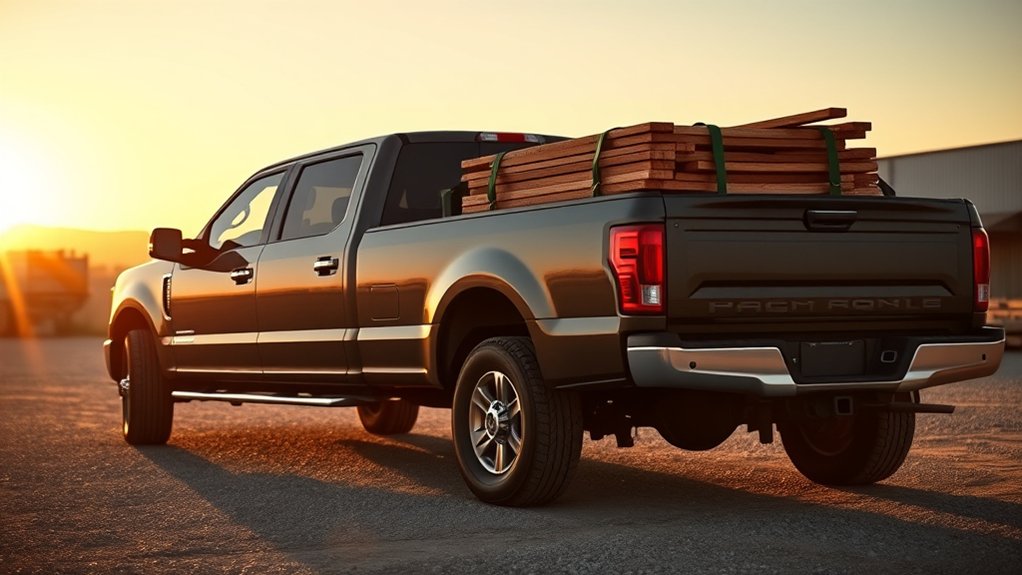
A long bed is designed for buyers who value usable floor length more than compact exterior dimensions. It reduces the need to lower the tailgate, use a bed extender, or leave long cargo projecting as far beyond the truck.
Long beds are especially useful for:
- Construction, maintenance, landscaping, and farm work
- Eight-foot lumber and sheet materials
- Long toolboxes, transfer tanks, or organized jobsite storage
- Motorcycles, equipment, and bulky recreational cargo
- Truck campers designed for the exact bed and payload rating
- Fifth-wheel or gooseneck setups requiring additional cab-to-trailer clearance
A longer wheelbase may provide a more settled highway feel, but towing safety still depends on ratings, loading, tires, hitch setup, trailer brakes, and driving conditions. Long-bed availability also varies by cab; some manufacturers restrict an eight-foot box to regular- or crew-cab configurations and selected trims.
Do not assume a long bed includes a larger fuel tank. Tank size and availability are configuration-specific items that should be checked on the build sheet.
How to Measure Your Truck Bed for Accurate Dimensions
Measure the actual truck before ordering a tonneau cover, cap, toolbox, rack, liner, camper, divider, or bed extender. Even trucks marketed with the same nominal bed length can use different dimensions, mounting systems, or tailgates.
At a Glance
| Time Required | 5–10 minutes |
| Difficulty | Easy |
| Tools Needed | Locking tape measure, notepad, and helper if measuring a cap or rack |
| Cost | $0 if you already own a tape measure |
- Park on level ground. Empty or organize the bed so the tape can lie straight.
- Measure the interior floor length. Run the tape from the inside face of the front bulkhead to the inside face or closed position of the tailgate. You may open the tailgate for access, but measure to the point where its interior face sits when closed.
- Measure the maximum interior width. Record the distance between the inner bedside walls.
- Measure between the wheelhouses. This determines whether wide cargo or an accessory can sit flat on the floor.
- Measure bed depth and rail height. Measure from the floor to the top of the bed rail and note any caps, liners, or covers.
- Measure the tailgate opening. The narrowest opening can limit loading even when the bed itself is wider.
- Inspect mounting surfaces. Note stake pockets, factory rails, utility tracks, electrical outlets, camera locations, and multifunction tailgate hardware.
- Confirm the truck identity. Use the year, make, model, cab, bed, trim, and VIN or build sheet when ordering accessories.
Pro Tip: Photograph each tape measurement and the truck’s build or payload labels. These photos reduce mistakes when an accessory seller asks which bed, rail system, liner, tailgate, or cab configuration you own.
Best Accessories for Short and Long Bed Trucks
The correct accessory depends on more than nominal bed length. Check the exact year, model, cab, bed, liner, rail system, tailgate, and factory cargo options before ordering.
Essential Short-Bed Accessories
- Bed extender: Supports selected longer cargo when used within the extender and tailgate ratings.
- Adjustable cargo divider: Prevents small loads from sliding through unused floor space.
- Low-profile toolbox: Preserves more usable floor length and rearward visibility.
- Model-specific tonneau cover: Protects cargo when correctly matched to the bed and rail system.
- Roof or bed rack: Carries suitable long items while keeping the load within rack, roof, and truck limits.
- Manufacturer-approved fifth-wheel equipment: Used only after the truck, hitch, and trailer manufacturers confirm compatibility and turning clearance.
A sliding hitch or rotating pin-box system may improve clearance in some short-bed combinations, but it does not make every trailer compatible. Ford’s current F-150 guide states that a 5.5-foot box can accept a fifth-wheel hitch while most fifth-wheel trailer designs remain incompatible with that model.
Must-Have Long-Bed Tools and Accessories
| Accessory | Purpose | What to Verify |
|---|---|---|
| Toolbox | Organizes and protects tools | Rail width, lid clearance, rear-window clearance, and added weight |
| Bed divider | Keeps smaller loads from moving through the long box | Track compatibility and load rating |
| Tonneau cover or cap | Provides weather protection and security | Exact bed, tailgate, rail, camera, and rack compatibility |
| Bed rack | Supports ladders and suitable long cargo | Dynamic and static ratings, height, tie-down locations, and cover compatibility |
| Fifth-wheel or gooseneck hitch | Connects a compatible trailer near the rear axle | Truck preparation package, frame attachment, hitch rating, kingpin load, and all clearances |
Every installed accessory reduces remaining payload by its weight. A toolbox, cap, transfer tank, hitch, cargo rack, and bed contents must all be included in the load calculation.
Towing Capabilities: Short vs. Long Bed Trucks
The safest way to compare towing capability is to evaluate complete truck configurations rather than bed lengths. Current manufacturer guides calculate ratings from combinations of powertrain, axle, cab, drivetrain, wheelbase, equipment, payload, and other variables. Many published ratings use the SAE J2807 tow-vehicle rating methodology.
Calculate Remaining Payload First
Start with the occupant-and-cargo capacity printed on the individual truck’s Tire and Loading Information label. Then subtract everything carried by the truck:
Remaining payload = door-label payload − passengers − in-cab cargo − bed cargo − accessories − hitch hardware − trailer tongue or kingpin load
For example, suppose a truck’s door label allows 1,800 pounds of occupants and cargo. If passengers weigh 500 pounds, installed and carried equipment weighs 250 pounds, and the hitch assembly weighs 200 pounds, only 850 pounds remain for additional cargo and trailer-imposed tongue or kingpin load. This example does not establish a towing rating; it shows how quickly payload can be consumed.
Ford’s 2026 F-150 towing guide instructs owners to include passengers, cargo, and trailer tongue or kingpin load without exceeding GVWR or rear GAWR. Chevrolet provides similar instructions in its 2026 Trailering Guide.
Fifth-Wheel and Gooseneck Clearance
A long bed normally provides more distance between the truck cab and a fifth-wheel trailer during a tight turn. A short bed requires a detailed geometry check that includes:
- Distance from the rear axle or hitch pivot to the cab
- Trailer front-cap width and shape
- Kingpin position
- Hitch movement and locking procedure
- Bed-rail and tailgate clearance
- Clearance on uneven ground, not only on flat pavement
- Compatibility of any rotating pin box or sliding hitch
Chevrolet states that a fifth-wheel or gooseneck hitch must be attached to the truck frame and positioned so the kingpin load is near the rear axle centerline. Its guide also notes that passengers and added equipment reduce the payload available for kingpin load.
Warning: Never select a truck or trailer from an advertised maximum towing number alone. Confirm the individual truck’s payload, GVWR, rear GAWR, GCWR, trailer rating, hitch rating, tire ratings, tongue or kingpin load, and physical clearances. Bed length cannot compensate for an overloaded axle or an incompatible hitch-and-trailer combination.
Real-World Scenarios: Choosing Between Short and Long Bed
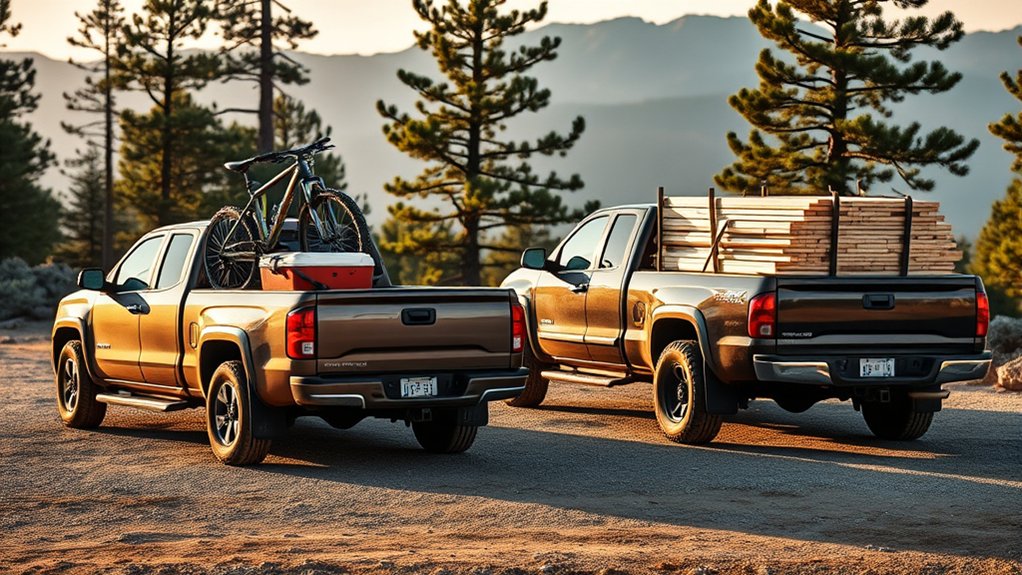
| Typical Use | Likely Starting Point | Verify Before Buying |
|---|---|---|
| Urban commuting with occasional household cargo | Short bed | Overall length, garage fit, rear-seat needs, and actual payload |
| Mixed family use, camping, bicycles, and home projects | Short or standard bed | Cab space, closed-tailgate cargo length, rack or cover fit |
| Regular construction or landscaping work | Standard or long bed | Payload label, toolbox weight, material dimensions, and tie-downs |
| Frequent long-load hauling | Long bed | Bed width, load weight, securement, parking, and garage length |
| Conventional trailer towing | Whichever exact configuration meets all ratings | Payload, tongue weight, rear GAWR, GCWR, hitch, brakes, and tires |
| Fifth-wheel towing | Long bed is usually the simpler starting point | Manufacturer approval, turning clearance, hitch location, payload, and kingpin weight |
If you rarely carry loads longer than the short bed, accepting a much longer truck may create daily inconvenience without providing meaningful value. Conversely, repeatedly operating with the tailgate down, using extenders, or arranging long materials around a short toolbox may indicate that a standard or long bed would suit your work better.
Resale Value of Short vs. Long Bed Trucks
Resale value varies by market. Short-bed crew-cab trucks may attract more family and urban buyers, while long-bed trucks may be more desirable to contractors, farmers, commercial users, and buyers seeking particular towing or camper configurations.
Bed length is only one valuation factor. Make, model, powertrain, drivetrain, trim, mileage, maintenance, rust, accident history, modifications, payload package, towing equipment, and local demand may have a greater effect.
To estimate local resale demand, compare listings for trucks that are otherwise as similar as possible. Do not compare a basic regular-cab long bed with a luxury crew-cab short bed and attribute the entire price difference to the box.
Common Issues With Truck Bed Accessories
- Nominal length mismatch: An accessory advertised for a “six-foot bed” may not fit every bed marketed near that length.
- Rail and liner interference: Drop-in liners, spray-in liners, utility tracks, rail caps, and tie-down systems can change mounting clearances.
- Tailgate incompatibility: Multifunction tailgates, steps, cameras, sensors, and powered mechanisms may interfere with covers or extenders.
- Toolbox obstruction: A box can contact the cab, block a cover, reduce fifth-wheel clearance, or prevent the lid from opening fully.
- Rack conflicts: A rack may not work with the selected tonneau cover or may block cargo lights, cameras, antennas, or the rear window.
- Payload loss: Heavy caps, tanks, drawers, racks, hitches, and tools reduce the truck’s remaining carrying capacity.
- Fifth-wheel clearance: A hitch that physically fits in the bed may still be incompatible with the trailer during tight turns or uneven travel.
- Water management: Poor alignment or incompatible rails can allow leakage even when the cover is the nominally correct length.
Use only accessories with ratings suitable for the intended load. Secure cargo to rated attachment points, follow the truck and accessory instructions, and comply with local rules for projecting loads, flags, lights, and tailgate position.
Decision Checklist Before Buying
- List the longest, widest, tallest, and heaviest cargo you carry regularly.
- Decide whether that cargo must fit with the tailgate closed.
- Measure your garage, driveway, workplace parking, and common parking structures.
- Compare actual bed, wheelbase, turning, and overall dimensions.
- Confirm which cabs and bed lengths are available with your preferred engine and drivetrain.
- Read the individual truck’s payload label rather than relying on the advertised maximum.
- Calculate passengers, accessories, tools, hitch hardware, cargo, and trailer-imposed load.
- Check the manufacturer’s towing chart for the exact configuration.
- Confirm fifth-wheel or gooseneck compatibility with the truck, hitch, and trailer manufacturers.
- Verify every planned accessory by year, make, model, cab, bed, liner, rail, and tailgate.
- Test-drive the truck through a tight turn and park it in a space similar to the ones you use.
- Compare local prices and resale listings for otherwise similar builds.
Related Guides
Frequently Asked Questions
How much longer is a long-bed truck than a short-bed truck?
It depends on which sizes and cab configurations you compare. In the 2026 Ford F-150 example, the eight-foot bed floor is about 30.5 inches longer than the 5.5-foot bed floor and about 18.7 inches longer than the 6.5-foot bed floor. The difference in overall vehicle length may not exactly match the bed-floor difference.
Should I buy a long-bed or short-bed truck?
Choose a short bed when parking, garage fit, and daily maneuverability are your priorities. Choose a long bed when you frequently carry long cargo or need additional fifth-wheel clearance. A standard bed may be the best compromise. In every case, verify the exact payload and towing ratings.
What is the ideal truck-bed length?
There is no universal ideal length. The best bed is the shortest one that safely carries your normal cargo and works with your trailer and accessories without making the truck unnecessarily difficult to store or park.
Why do people prefer short-bed trucks?
Short-bed trucks are often chosen because they can combine a roomy crew cab with a shorter overall vehicle. That can make commuting, parking, residential storage, and recreational use easier when maximum bed length is not needed.
Does a long-bed truck always tow more?
No. Towing ratings depend on the complete configuration, including powertrain, axle ratio, cab, drivetrain, wheelbase, equipment, payload, and other factors. A properly equipped short-bed configuration can have a higher rating than a differently equipped long-bed truck.
Can a short-bed truck tow a fifth-wheel trailer?
Some can, but compatibility is not guaranteed. The truck, hitch, pin box, and trailer must provide adequate cab, bed-rail, and tailgate clearance while remaining within payload, axle, hitch, tire, and towing ratings. Some very short boxes are incompatible with most fifth-wheel designs even when a hitch can be installed.
Conclusion
A short bed is usually the better fit when you prioritize parking, garage space, and everyday maneuverability. A long bed makes more sense when long cargo, work equipment, or fifth-wheel clearance regularly justify the extra exterior length. A standard bed can split the difference.
Make the final decision from actual measurements and the individual truck’s ratings—not broad assumptions about bed length. Check the payload label, GVWR, rear GAWR, GCWR, towing chart, hitch instructions, trailer geometry, accessory fit, garage dimensions, and the cargo you carry most often.
Sources
- 2026 Ford F-150 Technical Specifications — bed floor lengths, cargo volumes, wheelbases, and turning diameters.
- 2026 Ford F-150 Towing Guide — configuration-specific towing, payload, tongue and kingpin load, and short-box fifth-wheel limitations.
- Chevrolet Silverado 1500 Comparison — current Silverado short-, regular-, and long-bed cargo-volume examples.
- 2026 Chevrolet Trailering Guide — configuration-specific ratings, hitch installation, kingpin load, payload, GVWR, and rear-GAWR guidance.
- 2026 Ram Heavy Duty Payload and Towing Chart — examples showing how payload and towing vary by truck class and configuration.
- SAE J2807 Tow-Vehicle Rating Standard — current performance criteria and methodology for determining GCWR and trailer weight ratings.