
Toyota Tundra traction control (TRAC) limits drive-wheel spin during acceleration, while Vehicle Stability Control (VSC) helps correct unintended understeer or oversteer. Keep both systems enabled for normal road driving. If the truck is stuck in mud, snow, or sand, use only the model-specific VSC OFF/TRAC procedure or Toyota-approved off-road mode needed for recovery. On a 2020 Tundra, switch behavior differs between 2WD/2WD mode, 4H, and 4L; 2022-and-newer off-road-equipped trucks may instead add systems such as Multi-Terrain Select, Crawl Control, and an electronic rear differential lock. Confirm the dashboard indicators and the owner’s manual for your exact truck before changing a setting.
Last updated: September 19, 2026 — model-year guidance and source links rechecked.
Affiliate disclosure: This page may contain affiliate links. If you buy through them, we may earn a commission at no extra cost to you.
Quick Answer
Leave TRAC and VSC on for normal driving, including rain, ice, and ordinary snow. Reduce intervention only for a low-speed recovery when the system is preventing the wheelspin needed to move. A 2020 Tundra uses different switch logic in 2WD/2WD mode, 4H, and 4L, while newer off-road-equipped trucks can add terrain-specific controls. Stop safely, use the least-aggressive setting that works, verify the dashboard message, and restore normal assistance as soon as the truck is free.
Key Takeaways
- Traction control limits drive-wheel slip, while VSC helps correct understeer or oversteer and maintain the intended direction.
- ABS, traction control, VSC, Auto LSD, A-TRAC, and 4WD have related but different jobs.
- Button behavior is not universal. A short press, long press, 2WD/2WD mode, 4H, or 4L setting can produce different results.
- Keep normal stability assistance on for paved-road driving, including rain, ice, and ordinary snow.
- On some model years, fully disabling VSC also disables Trailer Sway Control and can limit pre-collision braking functions.
- There is no universally safe off-road tire pressure. Use the door placard for road travel and reinflate before returning to normal speed.
At a Glance
| Normal Road Setting | TRAC and VSC enabled |
| Before Changing a Mode | Stop safely; identify the model year, drivetrain, and selected 2WD/4WD range |
| Reference Needed | Exact owner’s manual plus the instrument-panel indicator or message that confirms the selected state |
| If Airing Down Off-Road | Carry a tire gauge and suitable compressor, and restore the road pressure before higher-speed pavement travel |
Overview of Traction Control and Vehicle Stability Control Systems

Traction control and Vehicle Stability Control address different types of vehicle movement. They may share wheel-speed sensors, brake hardware, steering information, and powertrain controls, but they should not be treated as interchangeable names.
| System | Primary Job | What the Driver May Notice |
|---|---|---|
| ABS | Helps prevent wheel lock during hard braking so the driver can retain steering ability. | Brake-pedal pulsing, noise, or vibration during an ABS stop. |
| TRAC/TCS | Limits excessive drive-wheel slip during acceleration by using brake and powertrain intervention. | Reduced engine response, brake activity, or a flashing slip indicator. |
| VSC/ESC | Helps the truck follow the driver’s intended direction when it detects understeer or oversteer. | Individual-wheel braking, reduced torque, and a flashing stability indicator. |
| Auto LSD | On equipped Tundras operating in 2WD, uses brake and powertrain control to manage a spinning rear drive wheel and preserve usable drive force. | An Auto LSD indicator and more permitted wheelspin than in the normal traction-control setting. |
| A-TRAC or off-road traction modes | On certain second-generation 4WD Tundras, A-TRAC helps manage wheel slip on loose terrain; newer off-road-equipped trucks may use Multi-Terrain Select and related controls instead. | Brake modulation, sounds from the actuator, and mode-specific dashboard indicators. |
| 4WD | Distributes drive force to both axles in an appropriate 4WD setting. | Improved ability to move on loose ground, but no increase in the tire’s basic grip while steering or braking. |
During ordinary acceleration, traction control watches for a drive wheel rotating faster than expected. It may brake that wheel, reduce available engine or motor torque, or combine both actions. The goal is not to eliminate every trace of slip; it is to prevent uncontrolled slip that wastes traction or destabilizes the truck.
VSC looks at the truck’s direction, steering input, yaw, and wheel behavior. When the truck begins to rotate more or less than the driver intended, VSC can adjust individual wheel-brake torque and powertrain output to help restore directional control. This is the type of electronic stability function described in the federal Electronic Stability Control standard.
For normal road driving, the safest default is simple: leave traction control and VSC enabled and let the systems assist when grip changes unexpectedly.
Note: A flashing slip or stability indicator can mean the system is actively helping. A warning that stays on continuously, especially with an ABS or brake warning, may indicate a disabled function or malfunction. For fault-focused checks, see the Toyota Tundra traction-control light troubleshooting guide.
How 2WD and 4WD Traction Control Differ
The Tundra’s traction strategy changes when drive force is sent through two wheels rather than all four. However, there is no single 2WD-versus-4WD button sequence that applies to every Tundra.
Toyota’s 2020 Tundra guidance distinguishes Auto LSD in 2WD/2WD mode from A-TRAC and other 4WD behavior. For the current generation, Toyota lists Multi-Terrain Select, Crawl Control, Downhill Assist Control, and an electronically locking rear differential on TRD Pro and qualifying TRD Off-Road-equipped 4WD trucks. Review the Toyota owner’s manual portal for the exact model year, and use the Toyota Tundra 4WD system guide for transfer-case-specific 2H/4H/4L guidance.
[Amazon Products Picked for You]

[Vehicle Fitment]: Compatible with Toyota Yaris 2007-2009, Venza 2009 & 2014-2015, Tundra 2005-2010 & 2014-2021, Tacoma 2005-2009 & 2014-2023, Solara 2004-2008, Sienna 2004-2010 & 2013-2015, RAV4 2004-2009, Prius 2004-2022, Matrix 2009-2010, Land Cruiser 2003-2009 & 2014-2021, Highlander 2005-2009, FJ Cruiser 2007-2009, Corolla 2009-2010 & 2014-2016, Camry 2005-2010 & 2014-2017, Avalon 2005-2013, 4Runner 2003-2009 & 2014-2019 --- without Adaptive Cruise Control & Collision Mitigation Braking
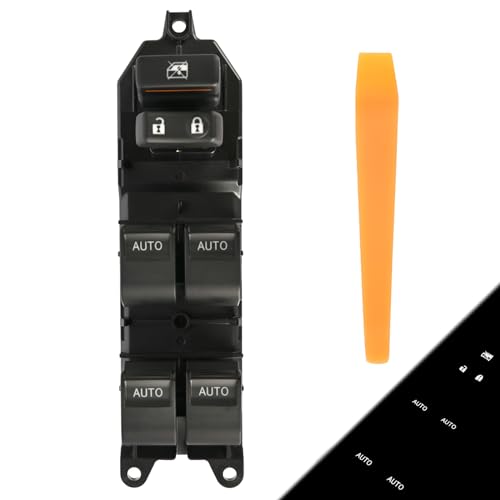
[Compatible With]: The power window switch is compatible with Toyota Tundra 2007 2008 2009 2010 2011 2012 2013 2014 2015 2016 2017 2018 2019 2020 2021 (NOT fit for the 1794/Limited/Platinum Edition).

Compatible with Toyota 2014-up 4Runner, 2013-up Axio, 2006-2017 Camry, 2008-2018 Corolla, 2008-2016 Highlander, 2006-up Land Cruiser, 2010-2013 Prius, 2014-up Prius V, 2006-2012/2016-up RAV4, 2012-up Sienna, 2016-up Tacoma, 2014-up Tundra, 2007-2014 Yaris, etc (it's the customer's responsibility to verify the size and shape prior to purchase!)
2WD System Functionality Overview
In normal 2WD operation, traction control monitors the driven wheels and intervenes when excessive slip is detected. The system may apply a brake to a slipping wheel and reduce power until grip improves.
On the 2020 Tundra, Toyota specifies Auto LSD for 2WD models and for 4WD models while they are in 2WD mode. Auto LSD is not a conventional mechanical limited-slip differential; it uses traction-control logic to manage engine output and braking when a rear drive wheel spins.
For that 2020 configuration, a quick press of the VSC OFF switch turns TRAC off and illuminates the AUTO LSD indicator. A longer press can change additional stability functions, but the required sequence differs by drive mode. Do not apply the 2020 sequence to another model year without checking its manual.
4WD System Functionality Overview
Four-wheel drive allows the truck to send drive force to both axles, which can make it easier to move on snow, loose dirt, sand, or uneven ground. It does not shorten every stopping distance, increase lateral tire grip, or override the laws of traction.
Available 4WD traction functions differ by year and trim. On the 2020 Tundra, Toyota distinguishes 4H and 4L switch behavior and uses A-TRAC terminology for four-wheel-drive traction assistance. On current-generation TRD Pro and qualifying TRD Off-Road 4WD trucks, Toyota instead highlights Multi-Terrain Select, Crawl Control, Downhill Assist Control, and an electronic rear differential lock. The selected 4HI/4LO or terrain mode can change which stability functions are available and how much wheelspin is permitted.
Select 4WD only on an appropriate surface and according to the manual. Part-time 4WD settings that mechanically link the front and rear driveline should not be used on dry, high-grip pavement unless the manual explicitly allows that mode.
Key Differences Between Modes
| Driving Situation | Preferred Starting Point | Important Limitation |
|---|---|---|
| Dry or wet paved road | Normal drive mode with TRAC and VSC enabled | Do not disable stability assistance for routine driving. |
| Packed snow or ordinary winter road | Normal intervention; select an approved 4WD mode if equipped and conditions warrant it | Suitable winter tires remain essential. |
| Starting from rest on loose ground | Use the manual-approved traction or off-road mode | Too much throttle can dig the tires in. |
| Deep snow, mud, or sand while stuck | Low-speed recovery procedure; temporarily reduce intervention only if necessary | Re-enable normal assistance as soon as the truck is moving securely. |
| Technical low-speed trail | Use the equipped 4WD/off-road mode specified by Toyota | Mode availability and speed limits vary by truck. |
Verified Example: 2020 Tundra VSC OFF Switch Behavior
The table below is specific to the 2020 U.S.-market Tundra. It shows why generic “press the traction-control button” advice is unreliable across the lineup.
| 2020 Drive Setting | VSC OFF Switch Action | Result Toyota Specifies |
|---|---|---|
| 2WD model or 2WD mode on a 4WD model | Quick press | TRAC turns off and the AUTO LSD indicator illuminates. |
| 4H on a 4WD model | Quick press | TRAC turns off and the TRAC OFF indicator illuminates. |
| 4L on a 4WD model | Press and hold for more than 3 seconds while stopped | The VSC OFF and TRAC OFF indicators illuminate. |
| 2WD/2WD mode, full TRAC + VSC + Trailer Sway Control disable | Stop, activate AUTO LSD, then hold for more than 3 seconds | TRAC, VSC, and Trailer Sway Control turn off. |
| 4H, full TRAC + VSC + Trailer Sway Control disable | Press and hold for more than 3 seconds while stopped | TRAC, VSC, and Trailer Sway Control turn off. |
2020 safety note: Toyota states that using the VSC OFF switch to turn VSC or TRAC off on vehicles with the Pre-Collision System also disables pre-collision brake assist and pre-collision braking. Restore normal assistance before returning to ordinary driving or towing.
How ABS and Traction Control Boost Safety
ABS, traction control, and VSC support the driver at different moments. ABS is primarily a braking aid, traction control addresses drive-wheel slip during acceleration, and VSC addresses the truck’s directional stability.
| Feature | Main Safety Benefit |
|---|---|
| ABS | Helps retain steering control during hard braking by limiting wheel lock. |
| TRAC/TCS | Limits excessive drive-wheel slip while accelerating. |
| VSC/ESC | Helps correct a developing skid or unintended rotation. |
These systems can improve control, but they cannot overcome unsuitable tires, excessive speed, poor visibility, an overloaded truck, or an unsafe following distance. Their intervention also does not mean the road has regained full grip.
If the slip indicator flashes, ease the accelerator and make smooth steering inputs. If ABS activates during emergency braking, maintain firm, steady pressure rather than pumping the brake pedal.
Warning: Electronic traction and stability systems cannot make excessive speed safe. Slow down before a curve, leave additional stopping distance, and avoid sudden steering, braking, or throttle inputs on snow, ice, gravel, or standing water.
[Amazon Products Picked for You]
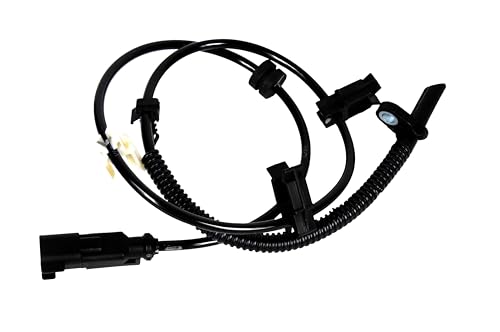
restores abs function and performance caused by failed wheel speed sensor

COMPATIABLE WITH: ABS speed sensor fit for 2011-2012 2014-2015 For Dodge Durango, 2011-2016 For Jeep For Grand Cherokee. Replacement Part Number: 56029447AE, 56029447AF, 970054, 970-054, SU14755, GT7610-865-RLR, 5154230AA, 5154230AB, 5154230AC, 5154230AD, 5154230AE, GT7610-865-FRL

【Compatible Models】ABS wheel speed sensor compatible with BMW 528i 1997 1998 | 540i 1997 1998
Essential Tips for Snow and Off-Road Driving
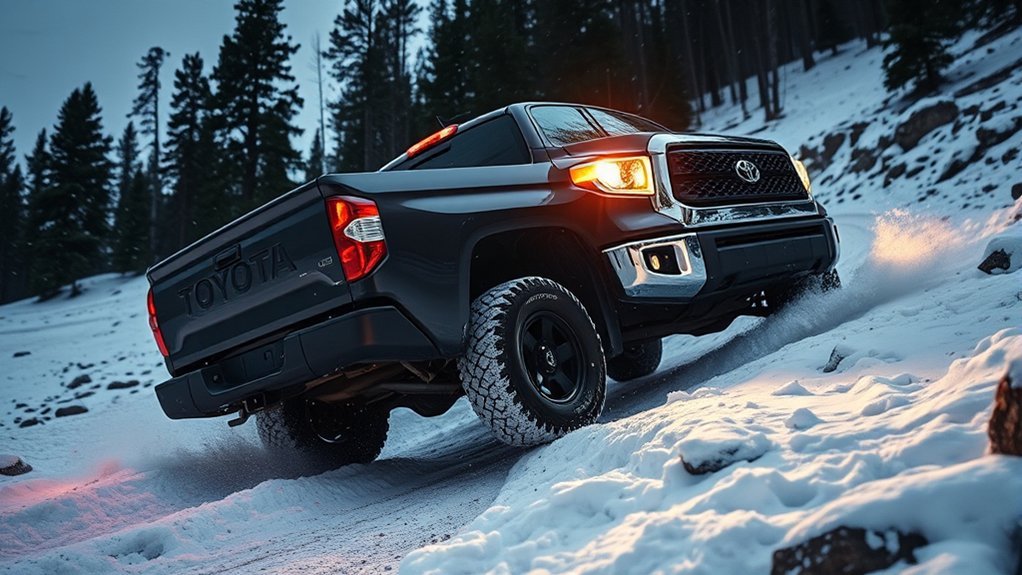
Good traction begins with the tires. Use tires suited to the weather and terrain, maintain adequate tread, and check pressure before relying on electronic controls or 4WD.
For winter road driving, keep VSC and traction control enabled. Smooth acceleration is usually more effective than forcing the tires to spin. If the truck becomes stuck in deep snow, mud, or sand, controlled wheelspin may sometimes help clear the tread or build momentum, but it should be used only at low speed and for the shortest practical time.
[Amazon Products Picked for You]

Dimensions (Each): 55.9 cm (L) x 17.8 cm (W) x 1.1 cm (H). Pack of 2.
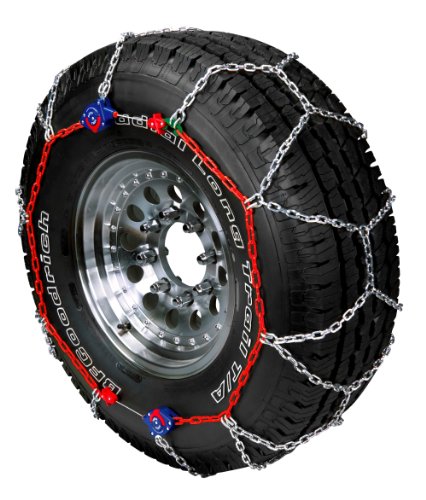
Worry-Free Self-Tightening Ratchets Provide Automatic Tightening And Centering

Ultra-durable & reusable zip ties for tire traction – This 10-piece emergency set bites into mud, snow, or sand to help your vehicle break free. Drive strictly below 25 mph and remove them once unstuck; avoid dry pavement to preserve the textured grip.
Tire Pressure Adjustments
For paved-road use, inflate the tires to the cold pressure listed on the driver-side Tire and Loading Information label or in the exact owner’s manual. The number molded into a tire’s sidewall is not the normal vehicle inflation recommendation. The NHTSA TireWise guidance also recommends checking pressure when the tires are cold and not relying on TPMS as a substitute for a gauge.
Airing down can enlarge the tire’s footprint and improve comfort or flotation on some low-speed off-road surfaces, but there is no universal pressure that is safe for every Tundra. Vehicle load, tire construction, wheel width, terrain, temperature, speed, and the risk of the tire unseating from the wheel all matter.
| Terrain | Safe Pressure Guidance |
|---|---|
| Snow-covered public road | Use the vehicle’s recommended cold road pressure unless Toyota or the tire manufacturer specifies otherwise. |
| Loose dirt or rocky trail | Air down only with tire- and load-specific knowledge, remain at low speed, and watch for sidewall or wheel contact. |
| Sand | Use an experienced, tire-specific approach rather than a universal PSI target; avoid sharp steering that could unseat a bead. |
Warning: Do not drive at normal highway speed on intentionally aired-down tires. Reinstate the correct cold road pressure with a suitable compressor before returning to paved or higher-speed travel.
Disabling Traction Control
Do not begin with the assumption that traction control must be switched off. First identify why the truck is not moving:
- Stop applying heavy throttle. Continued spinning may dig the tires deeper.
- Straighten the front wheels where practical.
- Clear packed snow, mud, or sand from around the tires and under the chassis.
- Select the Toyota-approved 2WD, 4HI, 4LO, Auto LSD, A-TRAC, Multi-Terrain Select, Crawl Control, or other off-road setting available on that truck. Use the least-aggressive intervention change that fits the terrain.
- If intervention still prevents the small amount of wheelspin needed for recovery, use the manual-defined switch procedure while stationary.
- Confirm the selected mode through the instrument-panel indicator or message.
- Use light, steady throttle and stop if the truck begins sliding sideways or digging in.
- Restore the normal traction and VSC setting once the truck reaches firm ground.
The 2020 example above shows how much the sequence can change with drive mode: a quick press has one result in 2WD/2WD mode and another in 4H, while 4L uses a hold of more than 3 seconds while stopped. Newer trucks can add terrain-specific controls. Never copy a switch sequence from a different year without checking the manual.
Pro Tip: Photograph the owner’s-manual pages for the traction and 4WD controls and save them on your phone before an off-road trip. That gives you the correct sequence even when there is no mobile signal.
When using traction boards, place them according to the manufacturer’s instructions, keep people away from the projected path of the boards, and apply the minimum throttle needed to climb onto them. Disabling traction intervention can allow more—not less—wheelspin, so aggressive throttle can eject a board or damage the tire, vehicle, or surrounding property.
When to Turn Off Traction Control

Reducing traction-control intervention can be useful only when some controlled wheelspin is necessary and the truck is moving at low speed. Reasonable examples may include:
- Rocking the truck gently out of deep snow or mud.
- Building limited momentum in soft sand.
- Clearing packed material from the tire tread.
- Using a manual-approved Auto LSD, A-TRAC, or off-road mode for a specific obstacle.
- Operating on a closed private course under trained supervision.
Do not switch VSC off simply because the pavement is wet, snowy, icy, or winding. Those are conditions in which unexpected directional assistance may be most valuable.
Drifting, donuts, and deliberate sliding should never be attempted on a public road, parking area open to traffic, or an uncontrolled trail. Turning stability assistance off removes a safety layer but does not increase the available tire grip or the driver’s skill.
Warning: If the truck is near a drop-off, traffic lane, person, building, tree, recovery strap, or other hazard, do not experiment with wheelspin. Stop and use properly rated recovery equipment or professional assistance.
Debunking Myths About Traction Control and VSC in Tundra
| Myth | Reality |
|---|---|
| Traction control prevents all wheelspin. | It limits excessive slip. The amount permitted depends on the mode and conditions. |
| VSC and traction control are the same feature. | Traction control focuses on drive-wheel slip; VSC focuses on the truck’s directional behavior. |
| 4WD makes the truck stop faster on ice. | 4WD can improve the ability to move, but braking and cornering still depend primarily on tire grip and speed. |
| Turning traction control off always improves off-road performance. | Brake-based traction aids can be highly useful off-road. Reduced intervention is appropriate only for certain obstacles or recovery situations. |
| Every Tundra uses the same Auto LSD or A-TRAC sequence. | Controls vary by generation, trim, drivetrain, transfer-case setting, and model year. |
| A stability system can compensate for worn or improperly inflated tires. | The system can only work with the traction the tires provide. Tire condition remains fundamental. |
Disabling traction control does not create traction. It only changes how the truck responds when the tires begin to slip.
Pre-Drive Checks That Help the Tundra Traction Systems Work Properly
Traction-control advice is only useful when it matches the truck’s actual configuration. Before snow travel or off-road use, document the model year, drivetrain, tire setup, load, and selected drive mode, then verify the relevant control sequence in Toyota’s manual.
- State the full configuration: Include model year, 2WD or 4WD, trim, tire size, tire type, load, and selected mode when comparing experiences.
- Practice controls safely: Identify the switches and dashboard messages on level private ground before encountering snow or a trail obstacle.
- Carry basic equipment: A reliable tire gauge, compressor, shovel, gloves, rated recovery points, and properly rated recovery equipment are more useful than relying on wheelspin alone.
- Inspect the tires: Check tread, sidewall condition, load rating, and cold pressure before a trip.
- Make one change at a time: Changing drive mode, tire pressure, throttle technique, and recovery equipment simultaneously makes it difficult to know what solved the problem.
- Use a spotter correctly: Agree on hand signals and keep the spotter out of the truck’s path and away from tensioned recovery equipment.
Aftermarket tires, suspension parts, differential changes, and electronic modifications can alter how the truck behaves. Verify load capacity, wheel clearance, alignment, calibration needs, and warranty implications before modifying a safety-related system.
Should You Disable Traction Control? A Decision Checklist
Use this decision process rather than automatically pressing the VSC or traction-control switch:
- Are you on a normal public road? Keep the systems enabled.
- Is an OFF or warning indicator already illuminated? Confirm whether a mode was selected or a malfunction is present before continuing.
- Is the truck merely slipping briefly while still moving? Ease the throttle and let the system work.
- Is the truck stuck because the system is cutting power before the tires can clear material or build slight momentum? Consider the manual-approved loose-surface or recovery mode.
- Is the area clear? Keep people and property away from the truck, tires, traction boards, and recovery equipment.
- Can you identify the exact result of the switch press? Verify the dashboard indicator rather than assuming the system is fully on or off.
- Has the truck reached firm ground? Restore the default setting immediately, especially before normal road driving or towing.
Federal stability-control requirements generally call for the system to return to its normal default mode after a new ignition cycle, with limited exceptions for certain four-wheel-drive configurations. Even so, always verify the instrument panel after restarting.
Frequently Asked Questions
How does Toyota Tundra traction control work?
It monitors wheel behavior during acceleration. When a drive wheel slips excessively, the truck can apply braking to that wheel, reduce powertrain torque, or use both actions. The exact intervention depends on the model year, drivetrain, and selected drive or off-road mode.
How do you turn Toyota Tundra traction control back on?
First check which OFF or mode indicator is illuminated, then press the VSC/TRAC switch as specified for your model to restore normal operation. Federal ESC rules generally require the system to return to its default compliant mode at a new ignition cycle, with limited four-wheel-drive exceptions. Confirm the OFF indicator or message has cleared before normal driving.
Should I drive with Tundra traction control on or off?
Keep it on for normal paved-road driving, including rain, ordinary snow, and icy conditions. Temporarily reduce intervention only when controlled wheelspin is needed for a low-speed recovery or when Toyota specifies a particular off-road mode.
How do you turn off traction control on a 2020 Toyota Tundra?
On a 2020 Tundra, a quick press in 2WD or 2WD mode on a 4WD truck turns TRAC off and illuminates AUTO LSD; in 4H, a quick press turns TRAC off and illuminates TRAC OFF. In 4L, stop the truck and hold the switch for more than 3 seconds; the VSC OFF and TRAC OFF indicators illuminate. Follow the separate manual sequence if you intend to disable TRAC, VSC, and Trailer Sway Control together.
What does a flashing slip indicator mean?
A flashing indicator commonly means traction or stability assistance is actively intervening. Ease the accelerator and use smooth steering. If a warning remains steadily illuminated after restarting, check the manual and arrange diagnosis if the indicated system is unavailable or malfunctioning.
Does four-wheel drive replace traction control or VSC?
No. Four-wheel drive changes how drive force reaches the axles. Traction control manages wheel slip, and VSC helps maintain directional control. Appropriate tires, safe speed, and smooth driver inputs remain essential.
Is Toyota Tundra Auto LSD the same as turning VSC off?
No. Auto LSD is a brake- and powertrain-based traction aid used on equipped Tundras in 2WD operation. Depending on the model year and switch sequence, Auto LSD can be active while some stability functions remain available. Treat the dashboard indicators and exact owner’s manual as the authority for which systems are active.
Conclusion
Toyota Tundra traction control and VSC are designed to assist the driver, not restrict normal driving. Keep them enabled on ordinary roads, use the correct 2WD or 4WD setting for the surface, and reduce intervention only when a specific low-speed situation requires controlled wheelspin.
The most important limitation is that Tundra controls vary by model year, drivetrain, drive range, and equipment. The verified 2020 procedure changes between 2WD/2WD mode, 4H, and 4L, while current off-road-equipped trucks can add Multi-Terrain Select, Crawl Control, Downhill Assist Control, and a rear locker. Check the exact manual, watch the dashboard indicators, use minimal throttle, and restore the normal setting as soon as the recovery or obstacle is complete.
Sources
- Toyota 2020 Tundra Manuals and Warranties — model-year-specific owner information and VSC/TRAC control guidance.
- Toyota USA Newsroom: 2020 Tundra — Toyota description of Auto LSD, A-TRAC, normal mode, and VSC/TRAC modes on the second-generation truck.
- Toyota USA Newsroom: 2026 Tundra — current-generation Multi-Terrain Select, Crawl Control, Downhill Assist Control, and rear-locker availability.
- Toyota 2024 Tundra Manuals and Warranties — current-generation manual access and feature guidance.
- Toyota Tundra Official Vehicle Page — current Tundra lineup, configurations, and capability information.
- NHTSA TireWise — official guidance on cold tire pressure, placard information, TPMS, tread, and tire maintenance.
- 49 CFR 571.126, Electronic Stability Control Systems — federal definitions, performance requirements, indicators, and default-mode provisions for ESC.
