
Toyota Tacoma oil capacity depends on the model year, engine, and sometimes the drivetrain. A 2016–2023 Tacoma with a 2.7L four-cylinder or 3.5L V6 commonly takes about 6.2 US quarts with a new filter, but older Tacomas may require 4.8 to 6.1 quarts, while a 2024 2.4L turbo model is listed at about 5.9 quarts. Confirm your exact specification before filling.
Quick Answer
A Toyota Tacoma can take roughly 4.8 to 6.2 US quarts of engine oil with a new filter, depending on its year, engine, and drivetrain. Third-generation 2.7L and 3.5L models commonly use 6.2 quarts. Verify the exact capacity in your owner’s manual, fill slightly below it, and finish with the dipstick.
Key Takeaways
- No single oil capacity applies to every Toyota Tacoma.
- The 2016–2023 2.7L and 3.5L engines commonly take 6.2 US quarts with a new filter.
- Older Tacoma capacities vary by engine and, on some models, by drivetrain.
- Use the viscosity printed in your exact owner’s manual or on the oil-fill cap.
- Add slightly less than the published capacity first, circulate the oil, and finish by checking the dipstick on level ground.
At a Glance
| Time Required | About 45–90 minutes |
| Difficulty | Beginner to intermediate |
| Tools Needed | Drain pan, socket and ratchet, filter wrench or housing tool, funnel, torque wrench, gloves, rags, wheel chocks, and approved lifting equipment if needed |
| Cost | Varies by oil quantity, filter type, and local pricing |
Warning: Never work beneath a Tacoma supported only by a hydraulic jack. Use level ground, apply the parking brake, chock the wheels, and support the truck with properly rated jack stands or ramps. Let very hot oil cool enough to handle safely.
Exact Toyota Tacoma Oil Capacity by Year and Engine
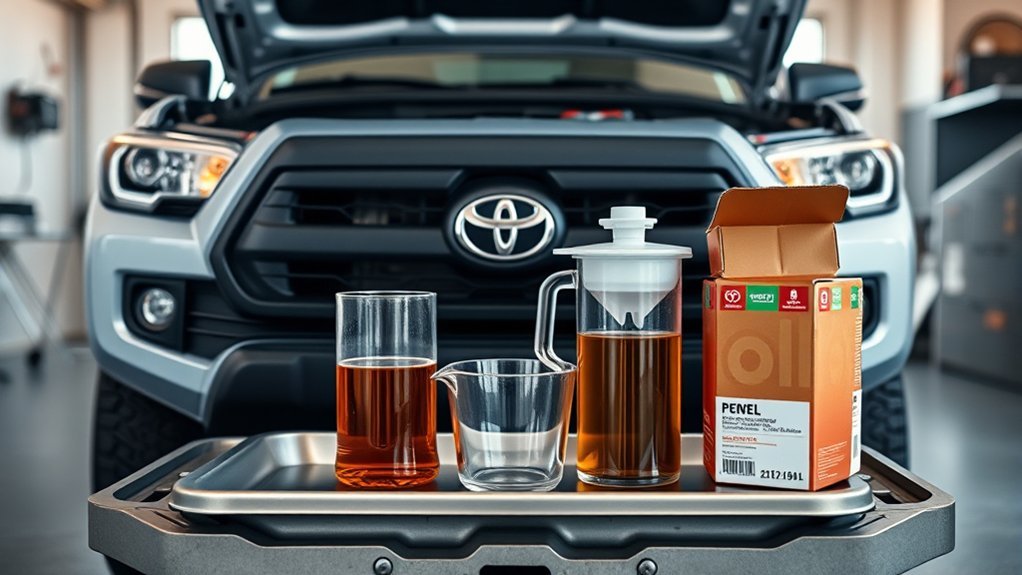
The correct refill amount comes from your Tacoma’s exact model-year manual. Toyota publishes separate figures for oil changes performed with a new filter and, in many manuals, without a filter change. The figures below are representative U.S.-market specifications and should not replace the manual for your truck.
| Model years | Engine or configuration | Approximate capacity with filter |
| 1995–2004 | Varies by four-cylinder or 3.4L V6 engine and drivetrain | A 2004 Tacoma is listed at 5.5–5.8 US qt, depending on configuration |
| 2005–2015 | 2.7L four-cylinder | About 6.1 US qt on the verified 2005 specification |
| 2005–2015 | 4.0L V6 | About 4.8 US qt on a 2WD base model or 5.5 US qt on a 4WD or PreRunner configuration |
| 2016–2023 | 2.7L four-cylinder or 3.5L V6 | About 6.2 US qt (5.9 L) |
| 2024–2025 | 2.4L turbo engine family | About 5.9 US qt (5.6 L); verify the exact powertrain and year |
| 2026 and later | Confirm by model year, engine, and VIN | Use Toyota’s current manual lookup rather than assuming the previous year is unchanged |
You can find the exact document through Toyota’s Manuals and Warranties lookup. Check the “Specifications,” “Maintenance data,” or “Engine lubrication” section. Confirm whether the stated amount includes a replacement filter.
Note: Published capacity is a reference amount, not permission to pour in the full quantity without checking. Some old oil remains in the engine, while differences in drain time and vehicle angle can change the final amount slightly.
How to Identify Your Tacoma Engine and Correct Specification
Before buying oil, confirm your truck’s model year and engine. You can check the registration, emissions-information label under the hood, original window sticker, maintenance records, or the Toyota manual associated with the vehicle.
- Confirm the model year. Do not rely only on the purchase date because a truck sold in one year may belong to the previous model year.
- Identify the engine. Common Tacoma engines include the 2.4L, 2.7L, 3.4L V6, 4.0L V6, 3.5L V6, and newer 2.4L turbo family.
- Check the drivetrain when required. Some older manuals list different capacities for 2WD base, PreRunner, and 4WD configurations.
- Open the exact owner’s manual. Record the capacity with a new filter, oil viscosity, required performance standard, drain-plug torque, and filter instructions.
The safest answer to “How much oil does a Tacoma take?” is the figure listed for that exact model year, engine, drivetrain, and filter-change condition.
Tools, Supplies, and Preparation
Gather everything before opening the drain plug. The exact socket and filter tool can vary by generation and engine.
- The correct quantity and viscosity of engine oil
- A compatible OEM or reputable equivalent oil filter
- A new drain-plug gasket or crush washer
- A drain pan large enough for the full oil capacity
- The correct socket, ratchet, and filter wrench or cartridge-housing tool
- A torque wrench covering the specifications in your manual
- A funnel, gloves, safety glasses, shop towels, and a sealable used-oil container
- Wheel chocks and properly rated ramps or jack stands if extra clearance is required
A compatible aftermarket filter does not automatically cancel warranty coverage. Choose a filter specifically cataloged for your engine and install it correctly. The Federal Trade Commission’s warranty guidance explains that a manufacturer generally must connect an aftermarket part or its installation to the claimed damage before denying coverage for that damage.
[Amazon Products Picked for You]

COMPATIBLE WITH ALL TOYOTA CARTRIDGE STYLE OIL FILTERS - The Motivx Tools 64.3mm 14 flute oil filter wrench is compatible with all Toyota and Lexus cartridge style oil filter caps from 1.8L - 5.7L engines. This includes popular models like Camry, Tundra, Tacoma, 4Runner, RAV4, Corolla, Highlander, Prius and more that use a cartridge style filter where you remove a plastic cap to expose the paper filter element inside.

64mm 14-Flute Oil Filter Fit: Designed for oil filters with a 64mm diameter and 14-flute pattern, this 3/8" drive cap wrench provides a secure fit for proper engagement. The 4 bottom slots align with compatible catridge oil filter cap tabs to help maintain grip and reduce slipping during removal
How to Change, Fill, and Check Tacoma Oil
[Amazon Products Picked for You]

★【 GENUINE OIL FILTER 04152-YZZA1 X 3 ....CANISTER WRENCH】W/ 3 Drain plug Gasket. Enter vehicle into AMAZON FITMENT > TO VERIFY IT FITS YOUR VEHICLE!
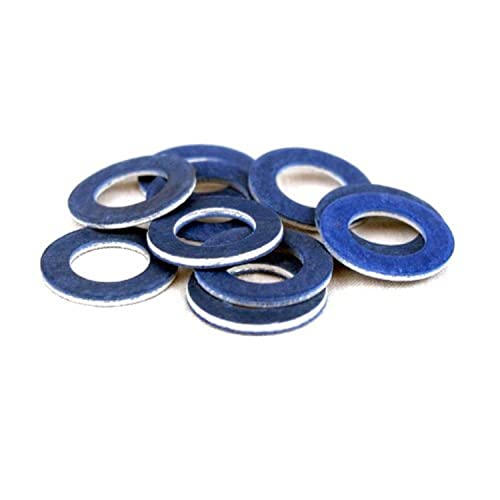
Genuine Toyota - Oil Drain Plug Gaskets (QTY10)

Effectively removes contaminants
1. Park and Prepare the Truck
Park on firm, level ground, apply the parking brake, and chock the wheels. Run the engine briefly if it is completely cold, then shut it off. Warm oil drains more readily, but it should not be hot enough to burn you.
Raise the truck only if you cannot reach the drain plug and filter safely. Use the lifting points in the manual and support the vehicle with rated stands or ramps. Remove the applicable skid plate or access panel without damaging its fasteners.
2. Drain the Old Engine Oil
Position the drain pan under the oil-pan plug. Loosen the plug carefully while keeping your hands away from the oil stream. Allow the oil to drain until it slows to an occasional drip.
Inspect the plug and threads. Replace the sealing gasket rather than reusing a flattened or damaged one. Reinstall the plug by hand first so it does not cross-thread, then tighten it to the specification in your exact manual.
3. Replace the Oil Filter
Remove the old filter or cartridge housing with the correct tool. Confirm that the old spin-on filter gasket came off with the filter. A gasket left against the engine can create a double-gasket leak when the new filter is installed.
For a spin-on filter, lightly coat the new rubber gasket with clean engine oil and tighten the filter according to its instructions. For a cartridge system, replace the specified O-rings, place each O-ring in the correct groove, and tighten the housing and drain cap to their separate manual specifications.
Warning: Do not use an impact wrench on a plastic or aluminum filter housing. Excess force can crack the housing, distort an O-ring, or make the next service difficult.
4. Add the Initial Oil Fill
Lower the Tacoma so it sits level before making the final measurement. Remove the oil-filler cap and insert a clean funnel.
Start with approximately 0.3 to 0.5 quart less than the verified capacity. For a truck specified at 6.2 quarts, an initial fill of about 5.7 to 5.9 quarts is more appropriate than running the engine after adding only five quarts.
Replace the filler cap and confirm that the drain plug and filter are installed. Check the dipstick to make sure oil registers before starting the engine.
5. Circulate the Oil and Check for Leaks
Start the engine and let it idle for about 30 to 60 seconds. Watch the oil-pressure warning light. It should turn off promptly. Shut the engine down immediately if the warning remains on, the engine sounds abnormal, or oil begins leaking.
Inspect the drain plug, filter, and cartridge housing. Shut the engine off and let the oil settle for at least five minutes on level ground.
6. Read the Dipstick Correctly
Pull the dipstick, wipe it clean, insert it fully, and remove it again. Read the clearer side and compare the level with the low and full marks.
If the level is low, add approximately 0.1 to 0.2 quart at a time. Wait briefly and recheck after each addition. Stop when the oil reaches the full mark without passing it.
Pro Tip: A fresh oil film can smear along the dipstick tube. After wiping the dipstick, leave it out for a minute, then insert it once for a cleaner reading. Check both sides and use the lower, more distinct line when one side is smeared.
7. Finish the Oil Change
Reinstall any skid plates or access covers with their original fasteners. Record the mileage, date, oil viscosity, quantity added, filter part number, and final dipstick position.
Reset the maintenance reminder only after completing the service. Reset steps differ by year and instrument cluster, so follow the procedure in your owner’s manual rather than using a generic sequence.
What to Pour First: Practical Starting Fills and Dipstick Checks
A conservative initial fill is useful, but it should be based on the verified specification. Do not use five quarts as a universal starting point.
Start Slightly Below the Published Capacity
If your manual lists 6.2 quarts with a new filter, begin around 5.7 to 5.9 quarts. If it lists 5.5 quarts, begin around 5.0 to 5.2 quarts. This approach leaves room for the oil that may remain in the engine after draining.
Check the Dipstick Before and After Running
Confirm that oil appears on the dipstick before starting the engine. After a short idle, shut the engine off and wait at least five minutes. The second reading accounts for oil that has filled the filter and lubrication passages.
- Verify the drain plug, filter, and filler cap are installed.
- Confirm oil registers on the dipstick before starting.
- Idle briefly while checking the oil-pressure light and looking for leaks.
- Shut down, wait for drainback, and read the dipstick again.
- Add small amounts until the level reaches the full mark.
Add Small Increments
Add approximately 0.1 to 0.2 quart at a time near the end of the refill. Six fluid ounces is about 0.19 US quart, so even a small pour can move the level noticeably.
You do not need to restart the engine after every small top-up once the filter has been filled and the engine has completed its initial circulation. Add oil, wait for it to reach the pan, and recheck the dipstick.
Fixing Common Oil-Level Problems
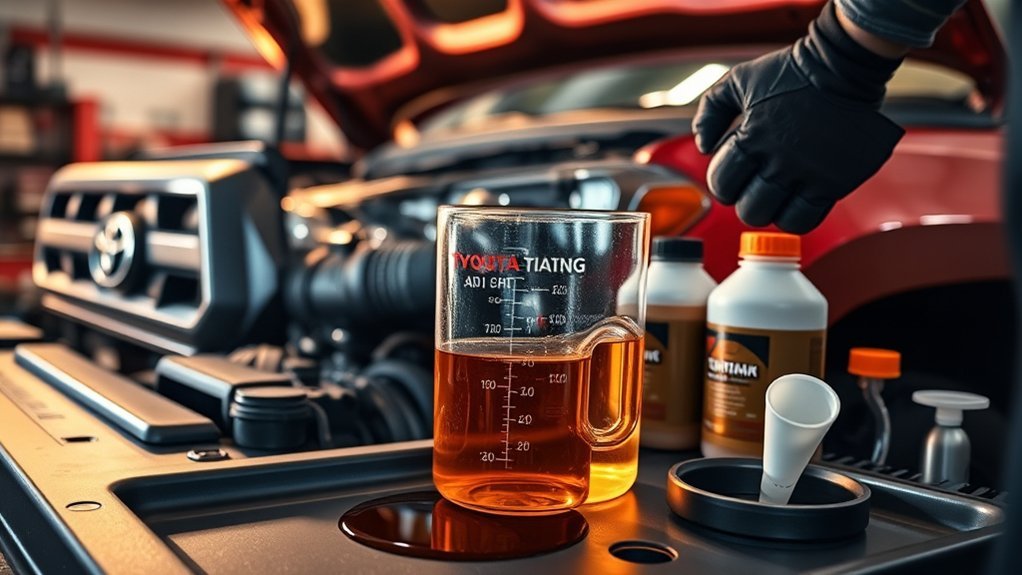
Oil Level Is Above the Full Mark
Park on level ground and repeat the dipstick check after the engine has been off for several minutes. If the level remains above the full mark, remove a small amount through the drain plug or with a suitable oil extractor. Recheck until the level is correct.
Do not try to correct an overfill by estimating how much oil should remain in the engine. The dipstick is the final check after a normal drain and refill.
Oil Level Drops After Starting
A modest drop after the first start is normal because the new filter and engine passages fill with oil. Wait at least five minutes after shutdown and recheck.
If the level continues falling, inspect beneath the truck, around the drain plug, and around the filter. Look for a doubled spin-on gasket, misplaced cartridge O-ring, cracked housing, loose plug, or damaged sealing washer.
The Dipstick Is Difficult to Read
Wipe the dipstick completely, let the oil in the tube settle, and insert the stick only once. Hold it horizontally after removal. Read both sides under bright light and use the lowest clear boundary.
The Oil-Pressure Light Stays On
Turn the engine off immediately. Confirm that the engine contains oil, the correct filter is installed, the filter housing is assembled correctly, and no major leak is present. Do not continue running the engine to see whether the warning disappears.
The Oil Level Falls Between Services
Check the level regularly and note how much oil you add. External leaks, extended high-speed driving, towing, engine wear, or other faults can increase consumption. Seek professional diagnosis if the level falls rapidly, smoke appears from the exhaust, the oil-pressure light comes on, or the engine develops new noises.
Why Manuals List Different Units and Capacities
Toyota manuals may show liters, US quarts, and imperial quarts in the same specification. These units are not equal:
- 1 US quart equals 32 US fluid ounces and approximately 0.946 liter.
- 1 imperial quart equals 40 imperial fluid ounces and approximately 1.137 liters.
- 6.2 US quarts is approximately 5.9 liters or 5.2 imperial quarts.
Manuals may also list separate figures with and without a replacement filter. Engine, oil-pan, drivetrain, and generation changes create further differences. These are real mechanical differences, not merely conversion errors.
Recommended Oil Type, Filter, and Spare Oil
Use the viscosity and performance standard specified for your exact year and engine. Do not assume that the recommendation for a third-generation truck also applies to a first-, second-, or fourth-generation Tacoma.
| Tacoma generation | General viscosity guidance |
| Many 1995–2015 models | Toyota manuals commonly specify 5W-30, but check the exact year and engine. |
| Many 2016–2023 models | 0W-20 is the normal recommendation. Toyota permits 5W-20 temporarily on applicable vehicles when 0W-20 is unavailable, with a return to 0W-20 at the next change. |
| 2024 and newer | Check the exact 2.4L turbo or hybrid manual. Verified 2024 guidance specifies 0W-20, with 5W-20 as a temporary substitute where permitted. |
Full-synthetic oil is a practical choice for engines that specify 0W-20, but the bottle must also meet the required performance standard. The American Petroleum Institute’s current oil-category guidance explains API SP and ILSAC GF-6 licensing marks.
Use a genuine Toyota filter or a reputable equivalent cataloged for the exact engine. Correct dimensions, bypass-valve design, sealing surfaces, and cartridge O-rings matter more than the brand name alone.
Keep one sealed quart of the correct oil for top-ups. Label it if you maintain several vehicles with different viscosities. Store it upright, away from moisture and extreme heat.
[Amazon Products Picked for You]


Contains synthetic fibers, which help promote clean oil - to support long engine life and performance
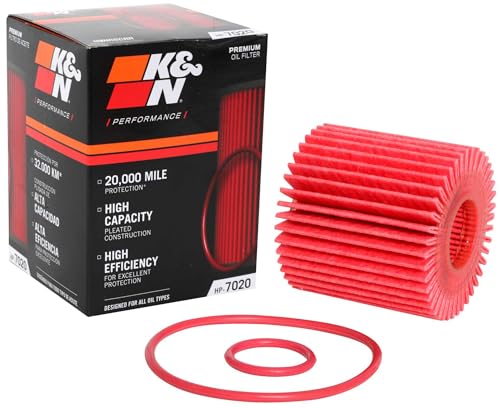
HIGH FLOW RATES: Designed to provide exceptional flow rates and a consistent flow of oil to your engine
How to Dispose of Used Oil and Filters
Pour used oil into a clean, leakproof container with a secure cap. Do not mix it with coolant, brake fluid, gasoline, solvents, or household chemicals. Drain the old filter according to local requirements and place it in a suitable bag or container for transport.
Take the oil and filter to an automotive store, repair facility, recycling center, or household hazardous-waste location that accepts them. The U.S. Environmental Protection Agency recommends recycling used oil because improper disposal can contaminate soil and water.
Sources
- Toyota Manuals and Warranties — exact model-year manual lookup.
- Toyota 2023 Tacoma Manuals — third-generation owner documentation.
- Toyota 2005 Tacoma Owner’s Manual — engine-specific capacities and 5W-30 viscosity.
- Toyota 2004 Tacoma Owner’s Manual — first-generation capacities by engine and drivetrain.
- Toyota 2022 Tacoma Warranty and Maintenance Guide — 0W-20 guidance, temporary 5W-20 use, and service intervals.
- U.S. EPA Used-Oil Recycling Guidance — safe collection and recycling of used motor oil and filters.
Related Guides
Frequently Asked Questions
How many quarts of oil does a Toyota Tacoma take?
A Tacoma can take approximately 4.8 to 6.2 US quarts with a new filter, depending on the year, engine, and drivetrain. The common 6.2-quart figure applies to 2016–2023 models with the 2.7L four-cylinder or 3.5L V6, not every Tacoma.
How many quarts of oil does the 3.5L Tacoma V6 hold?
A 2016–2023 Tacoma with the 3.5L V6 commonly takes about 6.2 US quarts, or 5.9 liters, when the filter is replaced. Add slightly less first, circulate the oil, and finish according to the dipstick.
Does Tacoma oil capacity include the filter?
The capacities in this guide refer to a drain-and-refill service with a new filter. Toyota manuals often show separate “with filter” and “without filter” amounts, so check which figure you are reading.
How many quarts does a 3.0L V6 Toyota take?
Do not use the Tacoma’s 6.2-quart figure for a 3.0L V6 Toyota. The U.S.-market Tacoma used a 3.4L V6 in its first generation, while the 3.0L V6 appeared in earlier Toyota Pickup models. Use the manual for the exact vehicle, engine, drivetrain, and model year.
How much oil does a 2024 Toyota Tacoma take?
A verified 2024 Tacoma 2.4L turbo specification is about 5.9 US quarts, or 5.6 liters, with a new filter. Confirm the exact conventional or hybrid powertrain in Toyota’s manual lookup before filling.
What should I do if I overfill my Tacoma’s engine oil?
Recheck the dipstick on level ground after the engine has been off for several minutes. If the oil remains above the full mark, remove a small amount through the drain plug or with a suitable extractor. Recheck until the level reaches the correct range.
Conclusion
Your Tacoma’s correct oil capacity is determined by its model year, engine, drivetrain, and whether you replace the filter. The widely quoted 6.2-quart figure is correct for many 2016–2023 2.7L and 3.5L trucks, but it is not universal. Verify the manual, use the specified viscosity, start slightly below the listed capacity, and make the dipstick your final check.
