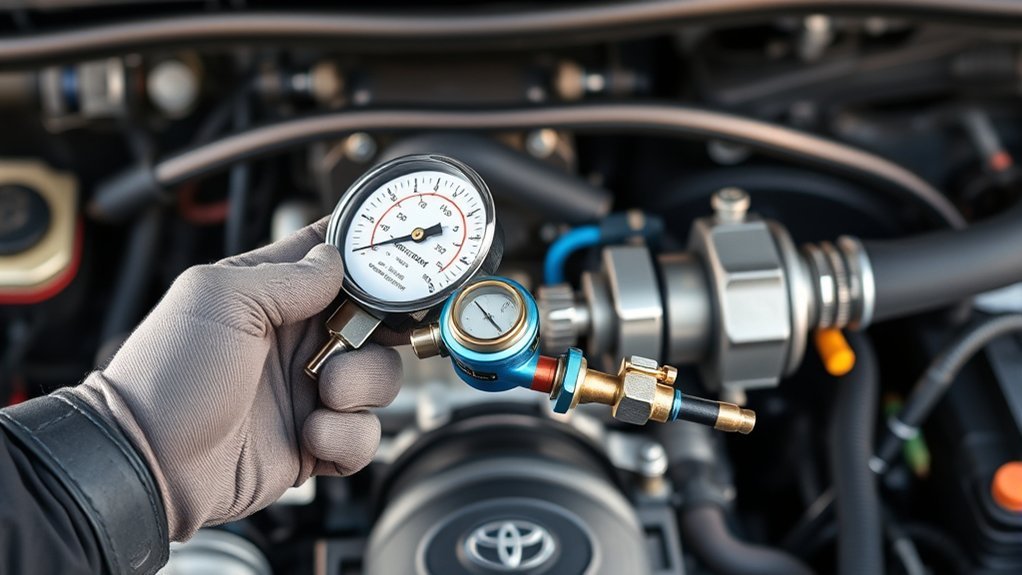
Toyota Tacoma A/C refrigerant depends on the model year and system configuration. Toyota states that the 2016 U.S.-market Tacoma uses HFO-1234yf, while earlier Tacoma service information such as 2007 specifies HFC-134a. The under-hood refrigerant label still controls because the correct charge weight and compressor oil can vary by system. Read that label before buying refrigerant, and diagnose warm-air symptoms before assuming the charge is low.
Last updated: September 19, 2026.
Quick Answer
Toyota identifies HFO-1234yf for the 2016 U.S.-market Tacoma. Earlier service information, such as the 2007 Tacoma procedure, specifies HFC-134a. Do not buy refrigerant from a year-range chart alone; follow the under-hood label and exact charge weight for your truck. Never mix refrigerants or assume one compressor oil applies to every Tacoma.
Key Takeaways
- Toyota identifies HFO-1234yf for the 2016 U.S.-market Tacoma; earlier Tacoma service information includes HFC-134a systems.
- Check the under-hood label for the exact refrigerant type, charge weight, and oil specification for your truck.
- Charge capacity is not universal: Toyota’s 2021–2022 Tacoma bulletin lists different R-1234yf amounts for the 2TR-FE and 2GR-FKS engines.
- Warm air does not automatically prove that the system is low on refrigerant.
- Never mix refrigerants or use an adapter to defeat refrigerant-specific service fittings.
- A proper sealed-system service recovers refrigerant, repairs leaks, evacuates the system, and charges by weight.
At a Glance
| Time Required | 15–30 minutes for basic checks; sealed-system diagnosis and repair time varies. |
| Difficulty | Basic inspection: beginner. Refrigerant recovery, leak repair, and charging: advanced. |
| Tools Needed | Flashlight, vent thermometer, gloves, and eye protection. Sealed-system work requires approved recovery, evacuation, leak-detection, and charging equipment. |
| Cost | Varies with the leak location and failed component. Diagnosis should come before purchasing refrigerant. |
What Refrigerant Does a Toyota Tacoma Use?
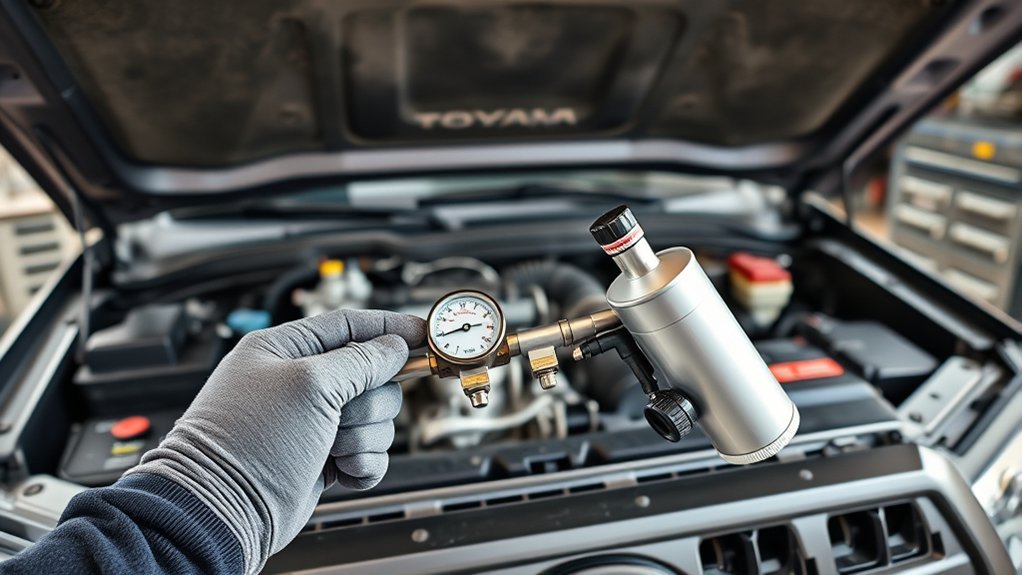
Your Tacoma’s A/C system moves heat from the cabin to the outside air through a closed refrigerant circuit. The compressor circulates refrigerant, the condenser releases heat, the expansion device lowers pressure, and the evaporator absorbs heat from cabin air. The blower then pushes cooled air through the vents.
The refrigerant type is model-specific. Toyota Tech Tip T-TT-0370-15 states that the 2016 U.S.-market Tacoma A/C system uses HFO-1234yf, while earlier service information such as the 2007 Tacoma procedure specifies HFC-134a. The Toyota manuals and warranties portal can help you locate model-year information, but the under-hood refrigerant label remains the fastest vehicle-specific reference for the refrigerant, charge weight, and oil designation.
Verified Tacoma Refrigerant Examples
| Tacoma example | Refrigerant | Factory service amount |
|---|---|---|
| 2007 Tacoma service information | HFC-134a (R-134a) | 570–630 g (20.10–22.22 oz) |
| 2021–2022 Tacoma, 2TR-FE | HFO-1234yf (R-1234yf) | 480–540 g (16.9–19.1 oz) |
| 2021–2022 Tacoma, 2GR-FKS | HFO-1234yf (R-1234yf) | 495–555 g (17.5–19.6 oz) |
These are verified examples, not a universal capacity chart. Even within the 2021–2022 bulletin, the specified amount changes with engine type. Use the label on your Tacoma and the Toyota service information for the exact vehicle before charging.
Warning: Never substitute one refrigerant for another, mix refrigerants, or use an adapter to defeat different service-port fittings. The EPA requires unique fittings to reduce accidental cross-contamination.
Why Warm Air Does Not Always Mean Low Refrigerant
Understanding the main components helps you separate an airflow problem from a sealed-system problem:
- Compressor: Circulates and compresses refrigerant. Some Tacoma systems use a clutch, while others use a variable-displacement design.
- Condenser: Sits near the radiator and releases heat. Bent fins, debris, impact damage, or poor fan airflow can reduce cooling.
- Expansion device: Controls refrigerant flow into the evaporator and creates the pressure drop needed for cooling.
- Evaporator: Absorbs heat inside the HVAC case. Moisture on the coil drains beneath the truck during normal operation.
- Receiver-drier or accumulator: Filters debris and manages moisture, depending on the system design.
- Blower, cabin filter, doors, and controls: Move and direct cabin air. A weak blower or blocked filter can feel like poor refrigeration.
- Pressure sensors and control electronics: Protect the system and determine when the compressor can operate.
A fault in any of these areas can cause warm air. Adding refrigerant without diagnosis may hide the symptom briefly while leaving the real problem unresolved. For a full symptom-based diagnostic flow, see Toyota Tacoma A/C not blowing cold troubleshooting. If cooling mainly fades at idle or in extreme heat, see Toyota Tacoma A/C performance in heat.
Why Refrigerant Charge Weight and Oil Matter
The correct refrigerant and charge weight are essential because the system is designed around specific pressures, fittings, oil chemistry, and heat-transfer characteristics. The EPA notes that R-134a was common in U.S. motor vehicles for decades and that manufacturers later transitioned many vehicles to lower-global-warming-potential refrigerants such as R-1234yf.
[Amazon Products Picked for You]

High Quality Material: This R134A charging hose for automotive air conditioning with pressure gauge is made of high-quality rubber material, corrosion resistance, and durability, ensuring high heat resistance built-in safety valve to prevent accidental discharge of refrigerant, reliable performance, and long-term use.

★【Dimension】R134A AC Refrigerant Charge Hose Kit comes with Piercing Can Tap Valve 1/2" ACME, Low Side Quick Coupler 13mm, 15inch recharge hose (slight dimensional tolerances, no impact on use), 2.76inch length gauge. T type knobs have internal pin with sharp tip help to pierce refrigerant bottle easily and quickly. ONLY work with piercing cans of Freon. For R12 R22 refrigerant charging, you need use an adapter converter to charging.

How Do You Identify the Correct Tacoma Refrigerant?
Do not assume every Toyota Tacoma uses R-134a. Check the label in the engine compartment for wording such as HFC-134a or HFO-1234yf. Toyota’s 2016 Tacoma Tech Tip identifies HFO-1234yf for that model year and specifically tells technicians to follow the on-vehicle label for compressor oil.
R-134a and R-1234yf are not interchangeable. They use refrigerant-specific service fittings, and R-1234yf is classified as mildly flammable. The EPA’s refrigerant guidance explains the transition and servicing requirements.
How Much Refrigerant Does a Toyota Tacoma Take?
There is no single Toyota Tacoma A/C refrigerant capacity. For example, archived 2007 Tacoma service information specifies 570–630 g (20.10–22.22 oz) of R-134a. Toyota’s 2021–2022 Tacoma bulletin lists 480–540 g (16.9–19.1 oz) of R-1234yf for the 2TR-FE and 495–555 g (17.5–19.6 oz) for the 2GR-FKS. Charge by the exact weight shown on the vehicle label or the correct Toyota service information for the exact truck.
Pressure alone cannot confirm the total charge. Readings change with ambient temperature, engine speed, airflow across the condenser, humidity, compressor control strategy, and the amount of heat entering the cabin. A digital scale and the vehicle-specific charge specification provide a more reliable final charge.
Pro Tip: Photograph the under-hood A/C label before buying refrigerant, oil, fittings, or service equipment. That one step prevents many compatibility mistakes.
What Happens If the A/C Is Undercharged or Overcharged?
Both undercharging and overcharging can reduce cooling. Too little refrigerant can starve the evaporator; if the loss came from a leak, that leak still needs repair, and an opened or empty system can admit air and moisture. Too much refrigerant can raise high-side pressure, reduce condenser efficiency, and increase compressor load.
Incorrect oil quantity can also reduce performance. Too little oil can damage the compressor, while too much oil can occupy space needed for refrigerant and coat heat-exchanger surfaces. Add oil only when the repair procedure calls for it, using the exact type and replacement quantity specified for the component and model.
The refrigerant label on your Tacoma is more reliable than a year-range chart, a can label, or a generic pressure reading.
How to Check for A/C System Leaks
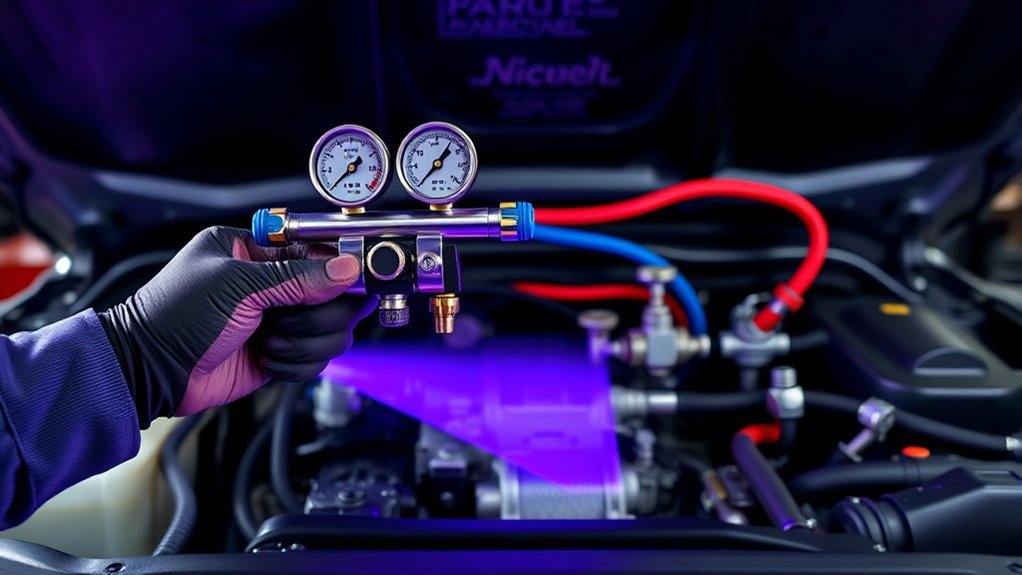
Refrigerant does not get “used up” during normal operation. If a system needs repeated recharging, it likely has a leak or an earlier service error. Begin with non-invasive checks before opening the system.
[Amazon Products Picked for You]

Professional AC Leak Detector Kit: Designed specifically for detecting automotive air conditioner leak, Vansky AC leak detector flashlight incorporates cutting-edge R&D technologies. Equipped with 68 high-quality LED beads, it can accurately pinpoint leaks, even in garage or indoor space. Compared to other flashlights, Vansky optimized ultraviolet light operates at a level 40% brighter, setting it apart in brightness.
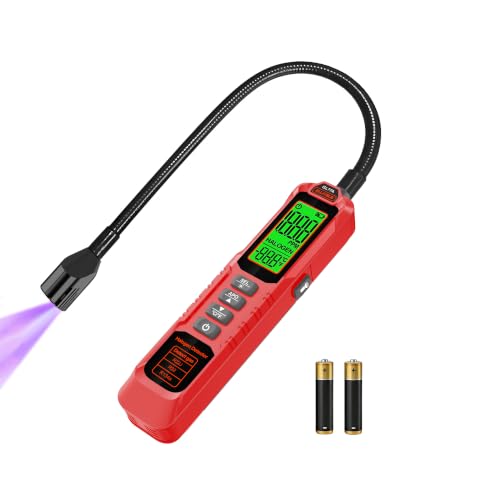
High-Sensitivity Freon Leak Detector: The GL77A refrigerant leak detector utilizes a premium heat dioxide semiconductor sensor. Boasting a maximum sensitivity of 0.49oz/year (14g/year), it accurately detects a wide range of halogenated refrigerants. Detection for R134a, R1234yf, R410a, R22, R404a, R407c, R454b, R32, and more. (Note: Due to space limitations, the user manual only lists common models, but this device is fully capable of detecting all halogen refrigerants).

Upgraded version of WJL-6000. Traditional corona sensor with updated analogue circuit, fast triggers on R11, R22, R134A, R404a, R410A and all halogenated refrigerants including HFCs, CFCs,HCFCs and blends.
Visual Inspection Techniques
- Confirm airflow first. Check blower speed, vent selection, cabin filter condition, and whether the temperature door changes outlet temperature.
- Inspect the condenser. Look for impact damage, oily dirt, corrosion, bent fins, or blocked airflow.
- Inspect hoses and fittings. Search for oily residue around crimps, service ports, compressor seals, and connections.
- Check the compressor area. Look for belt damage, connector problems, clutch issues where fitted, or obvious mechanical noise.
- Check condensate drainage. Water beneath the passenger-side area can be normal when the evaporator is removing humidity.
Oil staining can indicate a leak, but a clean surface does not prove the system is sealed. Some leaks are too small or hidden to see.
Using Leak Detection Tools
| Method | Best Use | Limitation |
|---|---|---|
| Electronic leak detector | Finding small refrigerant leaks near fittings and components | Requires the correct detector type, clean technique, and some refrigerant in the system |
| UV dye | Tracing leaks that leave dye and oil residue | Use only approved dye in the correct amount; excess dye can contaminate equipment |
| Dry nitrogen pressure test | Checking an empty, recovered system after repair | Requires a regulator, safe pressure limits, and trained handling |
| Bubble solution | Confirming a suspected accessible leak during a controlled pressure test | May miss slow or hidden leaks |
| Vacuum decay test | Identifying a large leak or moisture problem before charging | A vacuum hold alone does not prove that the system is leak-free under operating pressure |
Pressure Testing Methodologies
A correct leak test depends on the system’s condition. A shop first recovers any remaining refrigerant with approved equipment. It may then use dry nitrogen and a suitable trace-gas or electronic method, following service information and equipment pressure limits. Oxygen, compressed shop air, and unapproved flammable gases should never be used to pressurize an A/C system.
Evacuation removes air and moisture after the leak is repaired. The time needed depends on equipment, humidity, system size, and how long the system was open. A fixed “30 minutes plus 30 minutes” rule is not a substitute for reaching and holding the required vacuum with reliable instruments.
Note: Toyota Tech Tip T-TT-0441-17, which includes 2016–2018 Tacoma, says adding A/C stop-leak is not a recommended or approved Toyota repair process. Toyota warns that moisture can react with previously added stop-leak and form a gelatinous material that may bind or seize the compressor.
How Should a Toyota Tacoma A/C System Be Recharged?
A complete recharge is more than connecting a can to the low-side port. The correct process restores the specified refrigerant mass after the leak or failed component has been addressed.
- Identify the refrigerant and charge specification. Read the under-hood label and confirm the information for the exact vehicle.
- Diagnose the original complaint. Check airflow, electrical controls, condenser airflow, compressor operation, and leak evidence.
- Recover the existing refrigerant. Use approved recovery or recovery/recycling equipment. Do not intentionally vent refrigerant.
- Repair the leak or failed component. Replace seals, the drier or accumulator, and other parts only as required by the service procedure.
- Add the correct oil quantity. Measure oil removed from replaced components when the procedure calls for it. Do not pour a generic “full system” amount into an assembled system.
- Evacuate the system. Use a vacuum pump and accurate instruments to remove air and moisture, then verify system integrity.
- Charge by weight. Add the exact listed refrigerant mass with the correct equipment and a calibrated scale.
- Verify operation. Check vent temperature, compressor behavior, pressures, condenser airflow, abnormal noise, and leaks under the specified test conditions.
Warning: Liquid refrigerant can cause frostbite, and moving belts or fans can cause severe injury. R-1234yf is mildly flammable. Keep ignition sources away and use equipment designed for the refrigerant shown on the vehicle label.
Under U.S. EPA rules, technicians servicing motor-vehicle A/C systems for payment must hold Section 609 certification and use approved equipment. The EPA also prohibits intentional venting of most refrigerants and requires recovered refrigerant to be recycled or reclaimed before reuse.
[Amazon Products Picked for You]

One A/C Pro Auto AC Recharge Gauge and Hose Dispenser, R1234yf

[Product Suitability] - Exclusively designed for R-1234YF LH SELF-SEALING cans and NOT compatible with other can types including R-1234yf SEALED cans and R-134a sealed cans to prevent leakage at connections

READY-TO-USE RECHARGE KIT: This all-in-one AC refrigerant recharge kit includes everything you need: 1 can of R1234YF refrigerant and a 24" can tap with gauge. Whether you’re a DIYer or a professional, this kit ensures your AC system stays cool and smooth
Common Signs That Your A/C Needs Maintenance or Repair
- Warm or inconsistent vent air: Possible causes include low charge, a control-door problem, poor condenser airflow, compressor trouble, or an electrical fault.
- Weak airflow: Check the cabin filter, blower motor, evaporator icing, and duct or door operation.
- Rapid compressor cycling: This can relate to refrigerant charge, pressure-sensor input, temperature control, or compressor strategy. Some systems vary displacement instead of cycling a clutch.
- Hissing, grinding, or rattling: Brief equalization sounds can be normal, but persistent or mechanical noises need diagnosis.
- Musty odor: Moisture and debris on the evaporator or a blocked drain can support odor-producing growth.
- Oily residue: Oil around fittings, hose crimps, the condenser, or compressor may identify a leak path.
- Cooling that improves only while driving: Suspect poor condenser airflow, a fan problem, debris, or high system pressure at idle.
What Are Common Troubleshooting Tips for A/C Problems?
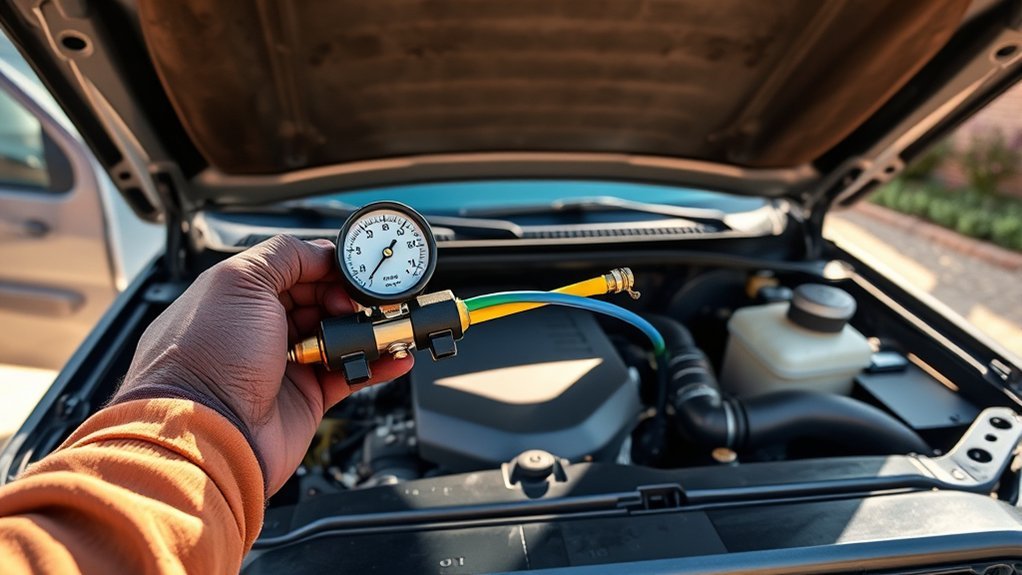
Use a symptom-first approach instead of assuming the charge is low. For a broader diagnostic tree covering airflow, electrical, compressor, and temperature-door faults, see Toyota Tacoma A/C not blowing cold troubleshooting. The checks below focus on deciding whether refrigerant service is appropriate.
- Confirm the complaint. Record outside temperature, humidity, vent temperature, blower speed, recirculation setting, and whether the truck is idling or moving.
- Check airflow. Inspect the cabin filter, blower speeds, vent modes, and blend-door response.
- Check condenser airflow. Remove debris and confirm the cooling fans operate as designed.
- Check electrical inputs. Inspect relevant fuses, relays, connectors, pressure-sensor data, and HVAC fault codes using correct service information.
- Inspect for leaks. Look for oil staining and use an approved detector when needed.
- Evaluate pressures in context. Compare both high- and low-side readings with ambient conditions and Toyota service data. A single low-side gauge cannot diagnose the system reliably.
- Check superheat or subcooling only when applicable. These measurements require correct procedures and system knowledge. They should not replace charging by specified weight.
- Document earlier repairs. Record refrigerant recovered, refrigerant added, oil added, components replaced, and leak-test results.
If the A/C cools after a recharge but becomes warm again, locate the leak rather than repeatedly topping off the system.
Why Oil Matters for Your A/C System Performance
Compressor oil is not a universal Tacoma specification. Toyota Tech Tip T-TT-0370-15 is a useful example: for the 2016 Tacoma, Toyota says the under-hood and compressor labels specify PS-D1 oil and tells technicians to follow the on-vehicle label because the Repair Manual referenced ND-12. That is why generic claims that every Tacoma needs 5.1 ounces of PAG oil, one ounce in each component, or one fixed oil such as RL-897 are not safe across all years and configurations.
During component replacement, follow Toyota service information for the exact amount to add or subtract. New compressors may arrive with oil already installed, and replacement condensers, evaporators, hoses, or driers can require different adjustments. Over-oiling can reduce cooling and raise system load; under-oiling can damage the compressor.
A vacuum pump is used to remove air and water vapor; it is not a method for setting compressor-oil quantity. Oil balance must be managed during recovery and component replacement according to the Toyota procedure, not guessed after vacuuming.
When to Consult a Professional for A/C Issues?
Schedule professional diagnosis when the system is empty, repeatedly loses cooling, contains an unknown refrigerant, has been contaminated with sealer, or needs a compressor, condenser, evaporator, hose, or drier replacement. You should also seek help when pressures are abnormal, the compressor is noisy, the system will not hold a controlled test, or the truck uses R-1234yf and you lack refrigerant-specific equipment.
A qualified shop can recover and identify refrigerant, test for leaks, measure recovered oil, evacuate the system, and charge the exact weight. In the United States, anyone servicing a motor-vehicle A/C system for compensation must be trained and certified under EPA Section 609.
Frequently Asked Questions
What type of refrigerant does a Toyota Tacoma use?
It depends on the model year and system. Toyota identifies HFO-1234yf for the 2016 U.S.-market Tacoma, while earlier Tacoma service information includes HFC-134a systems. Read the refrigerant label under the hood before buying refrigerant or service tools.
How do I know what A/C refrigerant and capacity to use?
Use the under-hood refrigerant label and the correct Toyota service information for the exact truck. The label normally identifies the refrigerant and charge weight. Capacity can vary by configuration; Toyota’s 2021–2022 Tacoma bulletin, for example, gives different R-1234yf amounts for the 2TR-FE and 2GR-FKS engines.
What refrigerant does a 2016 Toyota Tacoma use?
Toyota Tech Tip T-TT-0370-15 states that the 2016 U.S.-market Tacoma A/C system uses HFO-1234yf. The same Tech Tip says to follow the on-vehicle label for compressor oil, where Toyota specified PS-D1.
Can you recharge R-1234yf yourself?
Small consumer containers may be available in some locations, but safe and accurate service requires R-1234yf-compatible equipment, leak diagnosis, charging by weight, and control of ignition sources. Because R-1234yf is mildly flammable and cross-contamination is costly, professional service is usually the safer choice.
Can R-134a and R-1234yf be mixed?
No. They use refrigerant-specific fittings and service procedures, and the compressor oil must match the exact system. Mixing refrigerants contaminates the vehicle and recovery equipment. Use only the refrigerant listed on the Tacoma’s under-hood label.
Why is my Tacoma’s A/C still warm after a recharge?
The system may have a leak, incorrect charge, weak condenser airflow, a compressor fault, a pressure-sensor or electrical problem, poor cabin airflow, or a blend-door issue. A recharge cannot repair those faults.
Conclusion
Keeping your Toyota Tacoma’s A/C reliable starts with vehicle-specific information. Toyota identifies HFO-1234yf for the 2016 U.S.-market Tacoma, but the under-hood label remains the final check for refrigerant, charge weight, and oil. Diagnose airflow and electrical problems before opening the sealed system, repair leaks before recharging, and avoid mixed refrigerants, stop-leak products, and guessed oil quantities. When specialized recovery, evacuation, leak-testing, or charging equipment is required, use a qualified A/C technician.
Sources
- Toyota Manuals and Warranties — model-specific owner information and manual lookup.
- Toyota Tech Tip T-TT-0370-15 — 2016 Tacoma HFO-1234yf refrigerant and PS-D1 compressor-oil label guidance.
- Toyota Service Bulletin T-SB-0052-22 — 2021–2022 Tacoma R-1234yf service references and engine-specific charge amounts.
- Toyota Tech Tip T-TT-0441-17 — A/C stop-leak precautions for applicable 2016–2018 Tacoma and other Toyota models.
- Archived 2007 Toyota Tacoma service information — HFC-134a refrigerant and 570–630 g charge specification.
- U.S. EPA: Acceptable Refrigerants and Their Impacts — R-134a, R-1234yf, environmental impact, and use conditions.
- U.S. EPA: Unique Fittings and Label Colors — refrigerant-specific fittings and cross-contamination prevention.
- U.S. EPA: Regulatory Requirements for MVAC Servicing — refrigerant recovery, approved equipment, reuse, and venting rules.
- U.S. EPA: Section 609 Technician Training and Certification — certification requirements for paid motor-vehicle A/C service.
