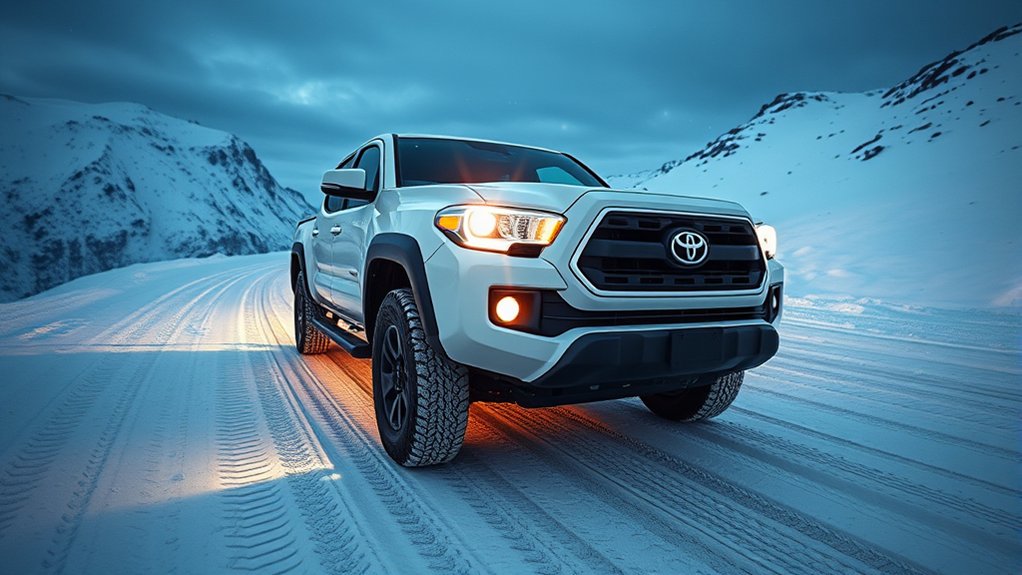
Your Toyota Tacoma’s traction control can help reduce wheelspin on snowy or icy roads, but it cannot create grip where the tires have none. The safest approach is to leave the system active during normal winter driving, use smooth inputs, select the correct drive mode for the road, and follow the instructions for your exact model year.
Quick Answer
Keep your Tacoma’s traction control on for normal snow and ice driving. It can reduce engine power and apply brake force when a driven wheel spins. Turn it off only briefly if the system prevents you from rocking or easing out of deep snow, then switch it back on once you are moving.
Key Takeaways
- Traction control, often labeled TRAC, mainly limits wheelspin during acceleration.
- Vehicle Stability Control, or VSC, helps the truck follow your intended direction during a skid.
- A flashing slip indicator usually means the system is actively correcting wheelspin or instability.
- Use 4H only when the road is loose or slippery, and follow the owner’s manual for shifting limits and model-specific controls.
- Winter tires, correct tire pressure, slower speeds, and longer following distance matter more than any electronic aid alone.
What Is the Traction Control System in the Toyota Tacoma?
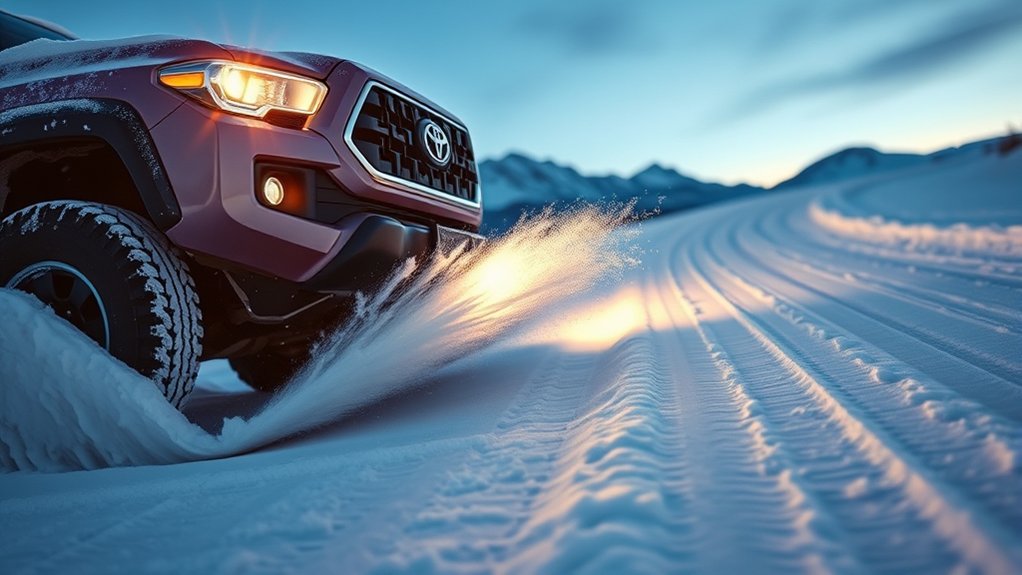
The Tacoma’s traction control system monitors wheel-speed information and reacts when one or more driven wheels begin spinning faster than the available road grip allows. Depending on the truck’s model year, trim, drivetrain, and selected drive mode, the system may reduce engine torque, apply brake force to a spinning wheel, or coordinate both actions.
Toyota commonly uses the name TRAC for traction control and VSC for Vehicle Stability Control. These systems share information with the anti-lock braking system, but they do different jobs. TRAC manages wheelspin during acceleration, while VSC helps correct understeer or oversteer when the truck starts moving away from the driver’s intended path.
Note: Tacoma controls and dashboard symbols differ across generations and trims. Use Toyota’s manual lookup for the exact button procedure, shift limits, chain guidance, and indicator meanings for your truck.
How Does Traction Control Enhance Winter Driving?
Snow and ice reduce the friction available for accelerating, steering, and braking. Traction control helps most during acceleration by limiting excess wheelspin before it turns into a larger loss of grip. The system can make starts smoother and help the truck continue moving on a slippery incline, but it cannot shorten every stop or overcome poor tires.
How TRAC Reduces Wheelspin
When you press the accelerator and a driven wheel begins to spin, TRAC can reduce engine output or pulse the brake at that wheel. You may hear a brief buzzing sound, feel a slight vibration, or see the slip indicator flash. Those signs can be normal while the system is working.
If the indicator flashes often, ease off the accelerator. Repeated intervention means the tires are reaching the limit of available grip. More throttle usually creates more wheelspin rather than more forward motion.
How TRAC, ABS, and VSC Work Together
| System | Primary Job | When You May Notice It |
|---|---|---|
| TRAC | Limits driven-wheel spin during acceleration. | Starting on snow, climbing a slippery grade, or accelerating through slush. |
| ABS | Helps prevent wheel lock during hard braking. | A pulsing brake pedal during an emergency stop. |
| VSC | Helps correct a developing skid and maintain direction. | Turning or changing direction when the truck begins to slide. |
These systems support the driver; they do not replace safe speed, suitable tires, or enough space to stop. NHTSA advises drivers to slow down and increase following distance because slick roads make vehicles harder to control and stop.
What Traction Control Cannot Do
Traction control cannot increase the physical grip between the tire and the road. It also cannot make a 2WD Tacoma behave like a 4WD model, prevent every skid, or compensate for worn tread. A four-wheel-drive system may help the truck accelerate, but all four tires still depend on the same limited grip when you brake or turn.
NHTSA reported 320 fatal crashes and an estimated 22,293 injury crashes in 2023 when snow or sleet was present. Electronic aids help, but winter speed and stopping distance still matter.
Warning: Do not use cruise control on a snow-covered or icy road. Keep both hands available, make small steering changes, and avoid sudden throttle or brake inputs.
Signs of Traction Control Malfunction
A flashing slip indicator during wheelspin is usually an operating signal, not a failure warning. A light that stays on, appears with ABS or brake warnings, or returns after restarting the truck deserves attention. Indicator names and symbols vary, so compare what you see with the manual for your exact Tacoma.
| Sign | Likely Meaning and Next Step |
|---|---|
| Slip indicator flashes during acceleration | TRAC or VSC is intervening. Reduce throttle and continue smoothly. |
| TRAC OFF or VSC OFF indicator is illuminated | A system has been disabled or a drive mode has changed its operation. Re-enable it when normal driving resumes. |
| Slip, ABS, or brake warning remains on | A fault may have been stored. Drive cautiously and arrange diagnosis. |
| System does not respond to obvious wheelspin | Check whether TRAC was disabled, then have the truck inspected if the concern continues. |
| Grinding noise, harsh repeated braking, or warning message | Stop treating the symptom as normal operation and schedule service. |
Toyota notes that warning-light information is vehicle-specific. If a safety-system light fails its normal startup check or remains illuminated, consult the owner’s manual and arrange an inspection. You can also check your VIN through the NHTSA recall lookup.
Should You Turn Off Traction Control in Snow?
Keep traction control on during ordinary snow and ice driving. The main exception is a low-speed recovery attempt when the truck is stuck and TRAC repeatedly cuts power before the tires can clear loose snow. Even then, disable it only for the brief attempt and switch it back on once the truck is moving.
When to Disable It
Temporary deactivation may help when you need a small amount of controlled wheelspin to rock the truck, climb out of a soft snow pocket, or move through loose material. The exact effect of the button can change with model year, drive mode, and how long you press it. Some Tacoma configurations change TRAC and VSC separately, while others use off-road systems that manage wheelspin differently.
Before pressing anything, confirm that the wheels have a clear path and that nobody is standing near the tires. Use very light throttle. High-speed wheelspin can polish snow into ice, overheat components, damage a tire, or cause the truck to lurch when grip returns.
Benefits of Keeping It Enabled
With TRAC active, the truck can respond faster than most drivers to a spinning wheel. This can improve low-speed acceleration and reduce sideways movement when one side of the road has less grip than the other. VSC remains important during turns because it helps the truck stay closer to the intended direction.
Re-enable the system after freeing the truck. Normal road driving with the system disabled removes a useful layer of support at the exact time snow and ice make mistakes harder to correct.
Driving Techniques in Snow
- Accelerate gently enough that the slip indicator rarely flashes.
- Look farther ahead and begin slowing earlier than you would on dry pavement.
- Brake in a straight line when possible, then steer smoothly through the turn.
- Increase following distance and avoid abrupt lane changes.
- If the truck begins to slide, look and steer toward the path you want while easing off abrupt inputs.
- Do not assume four-wheel drive improves braking distance.
Which Drive Mode Should You Use in Snow?
The correct choice depends on your Tacoma’s drivetrain and the road surface. Many Tacomas use part-time four-wheel drive, while certain newer configurations may use different hardware or drive-mode controls. Follow the label on the selector and the exact owner’s manual.
| Mode | Typical Winter Use | Important Limit |
|---|---|---|
| 2H | Clear or mostly clear roads where extra front-axle traction is not needed. | A 2WD Tacoma can still travel in winter, but it needs suitable tires and careful throttle control. |
| 4H | Snow-covered, icy, gravel, or otherwise slippery roads where extra traction is useful. | Do not use part-time 4H on dry, high-traction pavement. Follow the manual’s shift-speed limits. |
| 4L | Very low-speed travel through deep snow, steep grades, or recovery situations. | Not for normal road speed. Engage only by the procedure listed for your truck. |
Pro Tip: Select 4H before entering a long snow-covered section instead of waiting until the rear tires are already spinning. Return to the appropriate road mode when the surface becomes clear and dry.
Tips for Maximizing Traction Control Performance
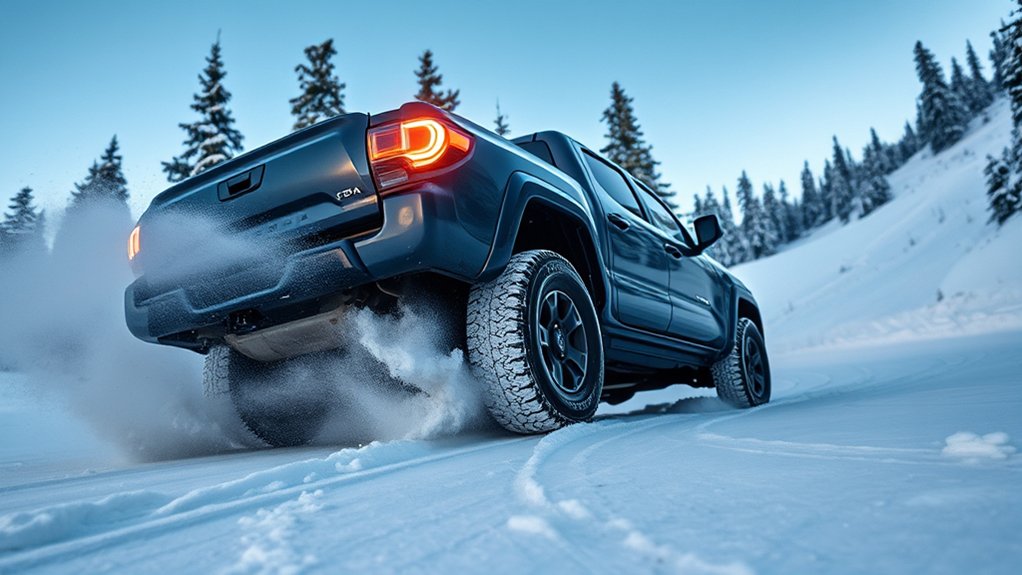
Traction control performs best when the tires and braking system are in good condition. Use this checklist before winter weather arrives:
- Check cold tire pressure against the driver-door label, not the maximum pressure printed on the tire sidewall.
- Inspect tread depth, cuts, bulges, uneven wear, and the spare tire.
- Consider dedicated winter tires if you regularly drive in deep snow or freezing conditions.
- Keep all four tires matched in size and similar in wear unless Toyota specifies otherwise.
- Clear packed snow from the wheel wells so it does not restrict steering or rub the tires.
- Confirm that ABS, TRAC, and VSC warning lights complete their normal startup check.
- Carry a shovel, traction material, gloves, a flashlight, and recovery gear rated for the truck.
NHTSA recommends checking tire pressure when the tires are cold and notes that winter tires are more effective than all-season tires in deep snow. Review its winter driving guidance and TireWise information before the season begins.
Tires, Chains, and Traction Aids for a Snowy Tacoma
Good tires are the foundation of winter traction. A 4WD Tacoma on worn or unsuitable tires may struggle more than a 2WD truck on quality winter tires. Choose the factory-specified size and load rating, and replace tires that are damaged or worn to an unsafe tread depth.
Chains can add grip in severe conditions, but compatibility, placement, speed limits, and clearance vary by tire size and Tacoma configuration. Install chains only where the owner’s manual permits, follow the chain maker’s instructions, and obey local chain-control signs. Stop immediately if a chain strikes the suspension, brake line, or body.
For a stuck truck, clear snow from ahead of the tires and under the frame before adding throttle. Place sand or another approved traction material where the driven tires can use it. If recovery requires another vehicle, use rated recovery points and equipment rather than a bumper, suspension arm, or ordinary tie-down point.
Comparing Traction Control and Stability Control: What’s the Difference?
Traction control and stability control work together, but they respond to different problems. TRAC focuses on driven-wheel spin during acceleration. VSC compares the driver’s intended direction with the truck’s actual movement and may brake individual wheels or reduce engine output to help correct a developing skid.
Neither system guarantees control. They work within the traction available from the tires. Smooth steering, lower speed, longer following distance, and winter-ready tires give the electronics a better chance to help.
Related Guides
Frequently Asked Questions
Should traction control be on when driving in snow?
Yes. Keep it on for normal snow and ice driving. It can reduce wheelspin during acceleration. Disable it only briefly if the system prevents a low-speed recovery from deep, loose snow, then switch it back on.
How does a Toyota Tacoma do in snow?
A Tacoma can handle winter roads well when it has suitable tires, correct pressure, and a careful driver. Four-wheel drive can improve acceleration on slippery surfaces, but it does not shorten braking distance or prevent every skid.
Should I drive in 2H or 4H in snow?
Use 4H on a snow-covered or otherwise slippery surface when extra traction is needed. Use 2H on clear pavement unless your specific Tacoma has a different full-time system. Do not use part-time 4H on dry, high-traction pavement.
What does traction control do on a Tacoma?
It detects excessive driven-wheel spin and can reduce engine torque, apply brake force, or use both actions. The goal is to help the tires regain usable grip during acceleration.
Why is the slip indicator flashing?
A flashing slip indicator usually means TRAC or VSC is actively intervening. Reduce throttle and drive smoothly. If the light remains on or appears with ABS or brake warnings, check the owner’s manual and arrange service.
Do I still need winter tires if my Tacoma has four-wheel drive?
Four-wheel drive helps distribute driving force, but tires provide the actual grip for accelerating, turning, and braking. Dedicated winter tires are a strong upgrade for frequent snow, ice, and deep-snow use.
Conclusion
Your Tacoma’s traction control is most useful when you let it work quietly in the background. Keep TRAC and VSC active for normal winter driving, use 4H only on appropriate slippery surfaces, and make every steering, throttle, and braking input smooth. If you become stuck, use a brief, low-speed recovery method rather than uncontrolled wheelspin.
The truck’s exact controls depend on its year, trim, and drivetrain. Match this general guidance with your Toyota owner’s manual, winter-ready tires, proper tire pressure, and current road conditions before heading into snow or ice.
Sources
- Toyota Manuals and Warranties — model-specific operating procedures, indicators, drive modes, and limitations.
- Toyota Warning Lights — guidance on model-specific indicators and safety-system warnings.
- NHTSA Winter Weather Driving Tips — winter speed, following distance, tire-pressure, vehicle-preparation, and emergency guidance.
- NHTSA TireWise — tire selection, winter-tire effectiveness, pressure, tread, and maintenance guidance.
- NHTSA Recall Lookup — VIN-based safety recall checks.
