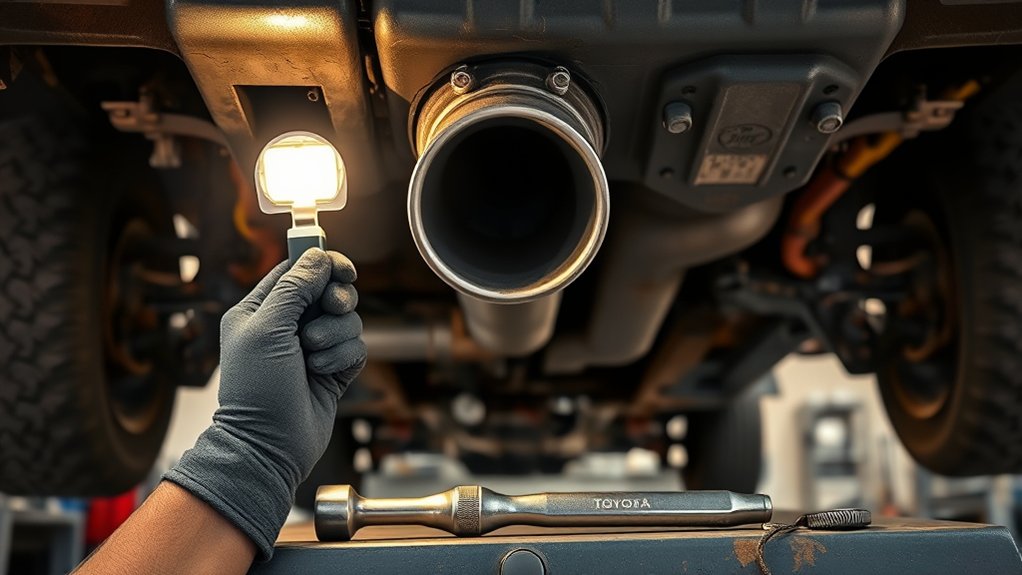
A new ticking sound beneath your Toyota Tacoma may seem minor, but an exhaust leak can become a safety problem if fumes reach the cabin. The safest response depends on the leak’s location, the symptoms you notice, and whether the truck stores emissions-related trouble codes. This guide shows you how to inspect the system without taking unnecessary risks.
Quick Answer
A Toyota Tacoma exhaust leak may cause ticking, hissing, a louder exhaust note, soot around a joint, reduced power, or exhaust odor near the cab. Stop driving if fumes enter the cabin or anyone feels headache or dizziness. Inspect only when the system is cool, then have the leak tested and repaired correctly.
Key Takeaways
- A sharp tick, hiss, louder exhaust note, soot mark, or cabin exhaust odor can indicate a leak.
- Carbon monoxide has no smell, so the absence of an odor does not prove the cabin is safe.
- Inspect the exhaust only outdoors, after it cools, and never crawl beneath a truck supported only by a jack.
- Temporary patches are unsuitable for manifolds, gaskets, flex joints, catalytic converters, or leaks that may affect the cabin.
- Repair cost depends on the failed component, corrosion, broken hardware, model year, engine, and local labor rate.
At a Glance
| Time Required | About 20 to 40 minutes for a basic visual and sound check. Repair time varies by component and corrosion. |
| Difficulty | Beginner for observation; intermediate to advanced for parts replacement. Welding, manifold, converter, and broken-stud work should be handled professionally. |
| Tools Needed | Flashlight, gloves, eye protection, wheel chocks, and an optional OBD-II scanner. Use rated jack stands only if you know how to lift the truck safely. |
| Cost | Varies by leak location, part quality, rust, broken fasteners, emissions equipment, and labor. Request an itemized estimate before authorizing repairs. |
What Is an Exhaust Leak and How Does It Affect Your Tacoma?
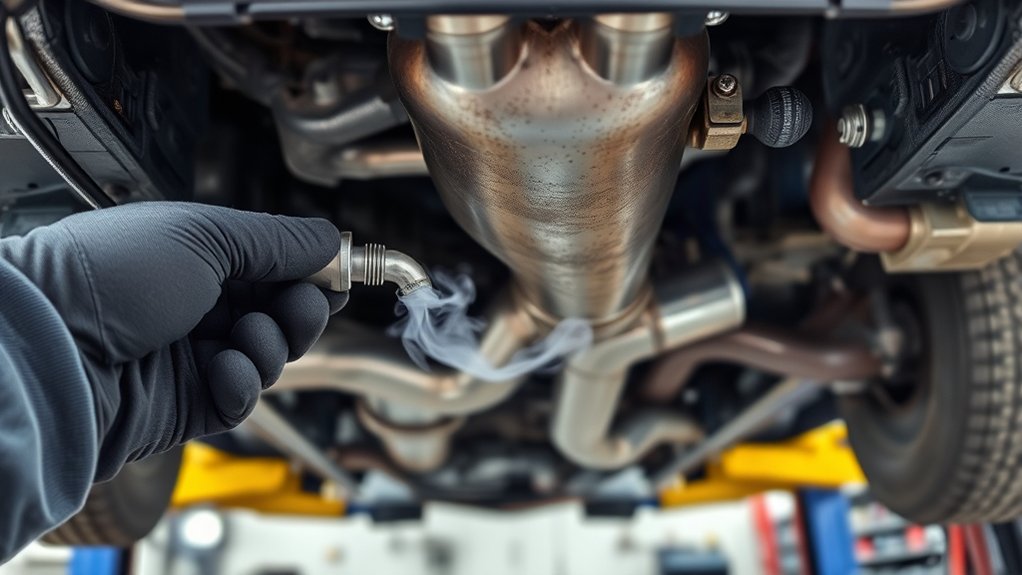
An exhaust leak is an opening in the system that carries combustion gases from the engine to the tailpipe. Possible leak points include the exhaust manifold, manifold gasket, flange connections, front pipe, flex section, catalytic converter connections, muffler, and tailpipe.
The effect depends heavily on where the opening sits. A leak near the engine or an oxygen sensor may affect emissions readings, trigger a warning light, or contribute to poor running. A small hole farther downstream may mainly create noise, although any leak can become dangerous if exhaust is drawn into the passenger compartment.
Rust, impact damage, loose hardware, failed gaskets, cracked welds, broken hangers, and repeated heating and cooling can all weaken exhaust components. Tacoma layouts vary by model year, engine, cab, drivetrain, and wheelbase, so use your truck’s Toyota owner information when checking component locations or service requirements.
A small exhaust leak can be more than a noise problem if gases find a path into the cabin.
Common Symptoms of an Exhaust Leak in Your Tacoma
No single symptom proves that your Tacoma has an exhaust leak. Look for a combination of sound, odor, visible damage, stored trouble codes, and changes in how the truck runs.
- Ticking or hissing: Often most noticeable during a cold start or acceleration.
- Louder exhaust note: The truck may sound deeper, sharper, or more aggressive than normal.
- Metallic rattle: A loose heat shield, broken hanger, damaged pipe, or failed converter may rattle at certain engine speeds.
- Black or gray soot: Deposits around a flange, crack, or weld can mark escaping exhaust.
- Exhaust odor near the cab: Odor inside the vehicle requires immediate attention.
- Warning light: A leak near monitored components may contribute to oxygen-sensor, fuel-trim, or catalyst-efficiency codes.
- Reduced power or fuel economy: These symptoms may occur with an upstream leak, but they can also have many unrelated causes.
Rattling Noises During Acceleration
A rattle during acceleration does not always mean exhaust gas is escaping. Loose heat shields often create a thin metallic buzz within a narrow engine-speed range. A broken hanger may cause a pipe or muffler to strike the frame, crossmember, or body.
An actual leak more often creates a sharp tick, puff, or hiss that follows engine speed. It may sound louder during a cold start because metal joints have not fully expanded. The sound can become less obvious as the exhaust warms, but that does not mean the opening has repaired itself.
Pro Tip: Record the sound during a cold start from outside the truck. A short recording can help a technician hear a noise that fades after the system warms.
Decreased Engine Performance Indicators
A leak near the exhaust manifold or an upstream sensor may allow outside air into the exhaust stream. That extra oxygen can affect sensor data and may influence fuel-control or catalyst-monitor calculations. Possible symptoms include hesitation, rough running, reduced acceleration, poor fuel economy, or a check engine light.
A downstream muffler or tailpipe hole may create substantial noise without changing engine operation. Avoid replacing sensors or a catalytic converter based only on a trouble code. The system should be checked for leaks, wiring faults, engine problems, and sensor data before expensive parts are ordered.
Health Risks of Ignoring an Exhaust Leak
Vehicle exhaust can contain carbon monoxide, a colorless and odorless gas. You may smell other exhaust compounds, but you cannot use your nose to determine whether carbon monoxide is present.
According to the Centers for Disease Control and Prevention, common carbon-monoxide poisoning symptoms include headache, dizziness, weakness, upset stomach, vomiting, chest pain, and confusion. Heavy exposure can cause unconsciousness or death.
Warning: If exhaust odor enters the cabin or anyone develops headache, dizziness, nausea, weakness, chest pain, or confusion, pull over safely, switch off the engine, leave the vehicle, and move to fresh air. Seek emergency medical help for serious or persistent symptoms. Do not continue driving the truck until it has been inspected.
Never run your Tacoma inside an attached garage, even with the garage door open. Do not perform engine-running tests in another enclosed or poorly ventilated area. The U.S. Environmental Protection Agency explains that high carbon-monoxide concentrations reduce the amount of oxygen the blood can carry to critical organs such as the heart and brain.
Before You Inspect the Exhaust System
A safe setup matters more than finding the leak quickly. Exhaust components can remain hot long after you shut off the engine, and a vehicle jack alone cannot safely support a truck while someone works underneath it.
- Park outdoors on a firm, level surface away from traffic and dry vegetation.
- Apply the parking brake, select Park or first gear, and chock the wheels.
- Let the engine and exhaust cool before touching any component.
- Wear eye protection and gloves because rust flakes can fall during inspection.
- Use ramps or rated jack stands on approved lift points if underbody access is required.
- Never place any part of your body beneath a truck supported only by a hydraulic or emergency jack.
- Do not block the tailpipe, use an open flame, or spray flammable liquid near the exhaust.
Steps to Diagnose an Exhaust Leak in Your Tacoma
Start with observations that do not require touching the exhaust. Work from the symptoms toward the source instead of replacing the first component associated with a trouble code.
Common Symptoms to Observe
- Note when the sound occurs. Record whether it appears during a cold start, idle, acceleration, deceleration, or a narrow engine-speed range.
- Check for cabin odor. Stop using the truck if exhaust odor enters the passenger area.
- Scan stored codes. Connect an OBD-II scanner and record confirmed, pending, and permanent codes before clearing anything.
- Review other symptoms. Note rough idle, hesitation, fuel-economy changes, or recent underbody impact.
- Look for recent work. A leak may follow exhaust, engine, transmission, skid-plate, or suspension service if a joint or support was disturbed.
Visual Inspection Techniques
With the system cool, use a flashlight to trace the exhaust from the engine toward the tailpipe. Look around flange connections, welds, pipe bends, flex sections, oxygen-sensor bungs, catalytic-converter joints, muffler seams, and hanger points.
Possible evidence includes:
- Dry black or gray soot around a joint
- A split seam or visible crack
- Heavy scaling or perforated rust
- A loose flange or missing fastener
- A damaged gasket
- A torn flex section
- A broken rubber isolator or metal hanger
- A pipe touching the frame, body, skid plate, or crossmember
- A loose or bent heat shield
A visual check may miss a hairline crack or a leak hidden above a shield. A repair shop can use controlled low-pressure smoke or another approved leak-detection method to locate openings that are difficult to see.
Note: Do not improvise a pressure test with high-pressure shop air. Excess pressure can damage exhaust components or produce misleading results.
How to Identify the Source of an Exhaust Leak
Different components tend to produce different clues. Use the following comparison as a starting point, not as a substitute for hands-on diagnosis.
| Possible Area | Common Clues | Recommended Action |
|---|---|---|
| Manifold or manifold gasket | Sharp ticking near the engine, often louder when cold; soot near a flange; possible emissions codes | Professional inspection, especially if studs or bolts are rusted or broken |
| Front pipe or flex section | Hissing or rasping beneath the front of the truck; visible fraying, split metal, or movement | Replace or professionally repair the failed section |
| Flange or gasket | Soot around a connection, loose hardware, or a puffing sound during acceleration | Inspect the flange surfaces and replace damaged hardware and gaskets |
| Catalytic converter or shield | Metallic rattle, warning light, damaged shell, or loose shield | Confirm whether the noise comes from the shield, pipe, or converter before replacing parts |
| Muffler or rear pipe | Louder exhaust note, rust hole, split seam, or soot near the rear of the system | Replace the damaged section or use a suitable short-term patch only when safe |
| Hanger or heat shield | Clunk, buzz, or rattle without soot or escaping-gas noise | Secure or replace the support after checking that the pipe has not cracked |
Quick Fixes for Exhaust Leaks in Your Tacoma
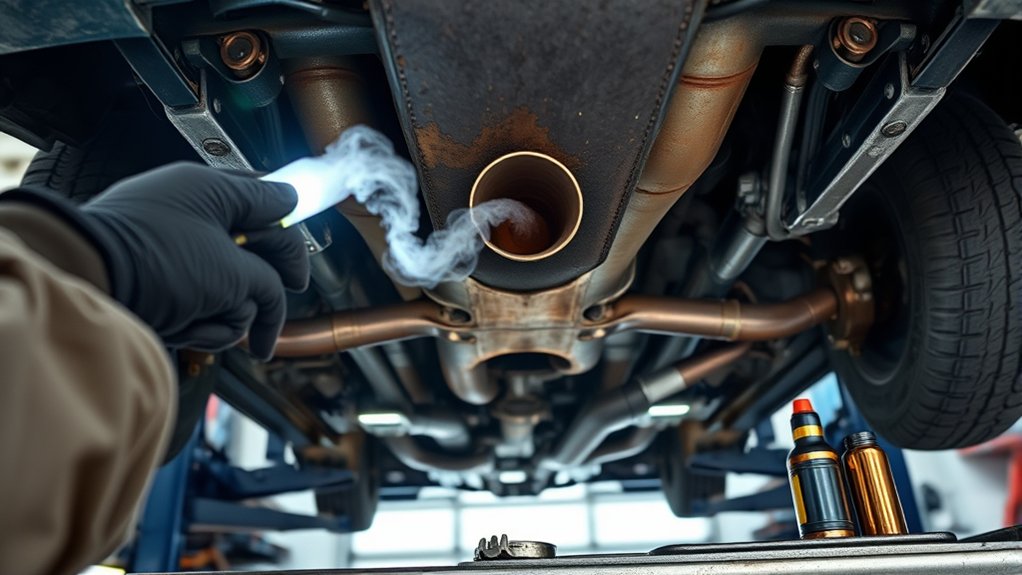
A temporary repair may reduce noise from a small hole in a downstream pipe or muffler, but it does not make every exhaust problem safe. Cabin fumes, manifold leaks, failed flex joints, loose flanges, and damaged emissions components require proper repair.
Temporary Repair Solutions
Exhaust tape, high-temperature repair compound, or a purpose-made patch may be suitable for a small opening in a cool, structurally sound pipe or muffler. Follow the product’s preparation, temperature, curing, and application instructions exactly.
Do not apply a patch over loose scale, wet metal, oil contamination, a moving joint, or metal that has become too thin to support the repair. Treat any patch as a short-term measure until the failed section can be replaced or welded correctly.
Repairs You Should Not Patch
A patch is generally inappropriate for:
- An exhaust manifold or manifold gasket
- A flange that requires a new gasket or hardware
- A flex joint that moves with the powertrain
- A cracked catalytic converter
- An oxygen-sensor mounting point
- A pipe with widespread rust or multiple perforations
- Any leak associated with exhaust odor inside the cabin
- A component that has separated or lost structural support
Professional Repair Recommendations
A qualified exhaust shop can inspect the complete system, check mounting points, perform a controlled leak test, and determine whether welding or replacement is more appropriate. Replacing a gasket without correcting a warped flange, broken hanger, or misaligned pipe may allow the leak to return.
Ask the shop to show you the failed area and explain whether the estimate includes gaskets, clamps, bolts, studs, oxygen-sensor removal, welding, and post-repair testing.
When to Consult a Professional for Exhaust Leak Repairs
Arrange professional diagnosis when:
- Exhaust odor enters the cabin
- Anyone experiences possible carbon-monoxide symptoms
- The leak is near the engine, firewall, or front floor area
- The manifold is cracked or has broken hardware
- The flex section or catalytic converter is damaged
- The check engine light flashes or the engine runs poorly
- A catalyst-efficiency or oxygen-sensor code returns after clearing
- Rust affects several connected components
- You cannot lift and support the truck safely
- A temporary patch loosens, burns, or fails
Do not drive a Tacoma that allows exhaust fumes into the passenger compartment. Towing or mobile repair is safer than continuing to operate the truck with a possible cabin-exposure risk.
Long-Term Solutions for Exhaust Leaks in Your Tacoma
A lasting repair addresses both the opening and the condition that caused it. Depending on the diagnosis, the correct repair may include a new gasket, replacement hardware, a repaired flange, a welded pipe section, a new flex joint, or replacement of a damaged muffler, converter, or manifold.
Aluminized steel can provide good value in many applications, while stainless steel may offer stronger corrosion resistance. Material alone does not guarantee long life. Proper fit, pipe alignment, drainage, hanger condition, welding quality, and compatible hardware also matter.
Replace weak hangers and isolators when needed. A poorly supported exhaust can move excessively, stress welds, open flange joints, and cause pipes to contact the body or frame.
Exhaust Leak Repair Costs
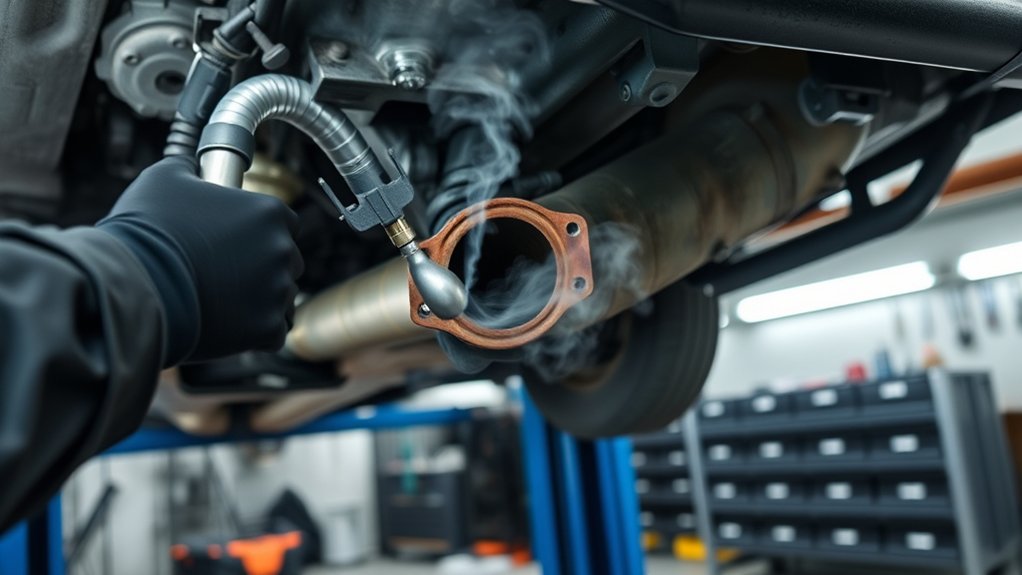
No single price accurately represents every Tacoma exhaust repair. The model year, engine, drivetrain, failed component, corrosion level, local labor rate, part source, and emissions requirements can change the total substantially.
| Cost Factor | Why It Matters |
|---|---|
| Leak location | A rear pipe repair is usually simpler than manifold, broken-stud, or converter work. |
| Rust and seized hardware | Corroded fasteners can increase labor and may damage nearby flanges or sensors during removal. |
| Welding versus replacement | Localized solid metal may be repairable, while thin or widespread rust usually requires replacement. |
| Part type | OEM, direct-fit aftermarket, universal, aluminized, and stainless parts can differ in fit and durability. |
| Emissions equipment | Catalytic converters and monitored components may need to meet model-specific and local requirements. |
| Diagnostic work | Smoke testing, scan-data review, and post-repair verification may be billed separately or included. |
Request a written estimate that identifies the leaking component, recommended repair, parts, labor, taxes, warranty, and any work that may become necessary if rusted hardware breaks during removal.
Tips for Maintaining a Healthy Exhaust System in Your Tacoma
- Schedule regular inspections. The CDC recommends having a mechanic inspect a car or truck’s exhaust system every year.
- Inspect after an impact. Rocks, road debris, deep ruts, and improper lifting can dent pipes or damage hangers.
- Address rattles early. A loose shield or hanger can place additional stress on nearby components.
- Repair fluid leaks. Oil or coolant contacting hot exhaust parts can produce odor, smoke, and fire risk.
- Keep drain paths open. Moisture trapped in a muffler or low section can speed corrosion.
- Use compatible parts. Confirm fitment by model year, engine, drivetrain, cab, and wheelbase.
- Check recalls and campaigns. Search your VIN through the Toyota recall and service-campaign lookup and the NHTSA recall database.
- Verify the repair. Confirm that the sound and odor are gone, inspect the repaired area, rescan the truck, and make sure warning lights do not return.
Related Guides
Frequently Asked Questions
How do you identify where a Tacoma exhaust leak is coming from?
Listen for ticking, hissing, or puffing during a cold start, then inspect the cool system for soot, cracks, failed gaskets, torn flex material, rust holes, and loose connections. A professional low-pressure smoke test can reveal small or hidden leaks.
How do you diagnose and fix an exhaust leak?
Record the symptoms, scan stored codes, inspect the system when cool, and confirm the source with an approved leak test. The correct repair may involve a gasket, hardware, welding, pipe replacement, a new flex section, or replacement of a damaged manifold, muffler, or converter.
How can you tell an exhaust leak from a lifter or valvetrain tick?
An exhaust leak often sounds sharper near a manifold or pipe joint and may be loudest during a cold start. A valvetrain tick usually comes from the top of the engine and follows engine speed. Sound location alone is not conclusive, so inspect for soot and use professional diagnosis when uncertain.
Can an exhaust leak contribute to a P0430 code?
It can contribute if the leak changes the oxygen content measured by the relevant sensors, but P0430 does not prove that a leak exists. The diagnosis may also involve the catalytic converter, oxygen sensors, wiring, fuel control, misfires, or other engine conditions.
Can you drive a Toyota Tacoma with an exhaust leak?
Do not continue driving if fumes enter the cabin, anyone develops possible carbon-monoxide symptoms, the check engine light flashes, the pipe has separated, or hot exhaust is directed at wiring, fuel, brake, or body components. A minor downstream noise still deserves prompt inspection because the damage can worsen.
Conclusion
A Toyota Tacoma exhaust leak deserves prompt attention, especially when you notice cabin odor, a sharp cold-start tick, visible soot, poor running, or an emissions warning light. Begin with a safe outdoor inspection, record stored codes, and avoid crawling beneath an unsupported truck.
A small downstream hole may accept a temporary patch, but manifold, flex-joint, catalytic-converter, heavily rusted, and cabin-exposure problems require a proper repair. Confirm the source before buying parts, and verify that the noise, odor, and warning codes are gone after the work is complete.
Sources
- Centers for Disease Control and Prevention: Carbon Monoxide Poisoning Basics — supports carbon-monoxide symptoms, vehicle-exhaust risks, garage precautions, and annual exhaust inspections.
- U.S. Environmental Protection Agency: Carbon Monoxide Information — supports the health effects of high carbon-monoxide exposure.
- Toyota Manuals and Warranties — provides model-year-specific owner information.
- Toyota Safety Recall and Service Campaign Lookup — provides VIN-based Toyota recall and campaign information.
- National Highway Traffic Safety Administration Recall Lookup — provides recall, investigation, complaint, and manufacturer-communication searches.
