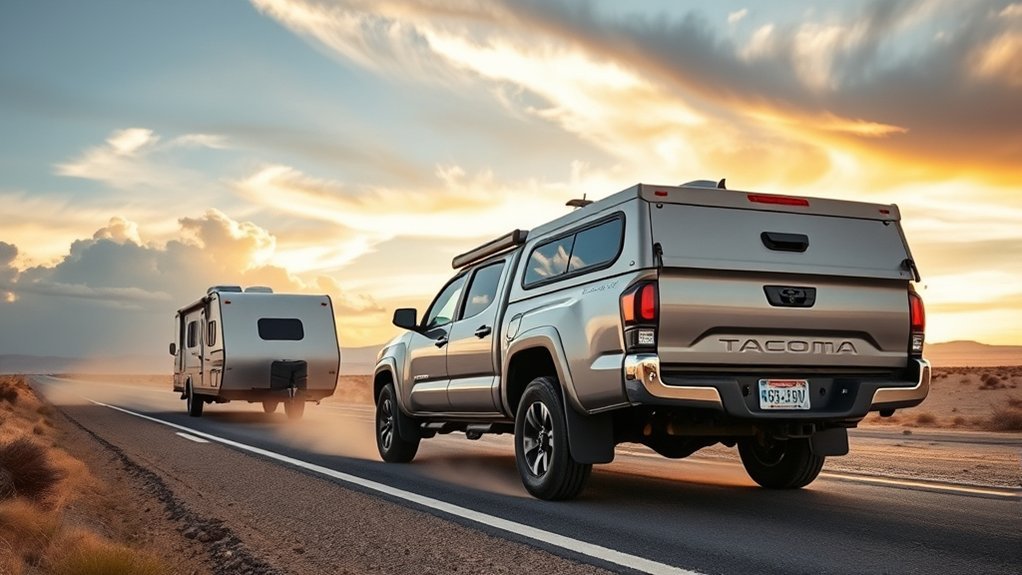
High winds can push a trailer sideways, reduce steering control, and turn a small loading problem into severe sway. Safe Toyota Tacoma towing starts before you move: check the weather, confirm every weight rating for your exact truck, load and secure the trailer correctly, and postpone the trip when gusts make the combination difficult to control.
Quick Answer
To tow a Toyota Tacoma safely in high winds, slow to a speed that keeps the rig stable, leave extra space, use smooth steering, and avoid exposed routes. Confirm the truck, hitch, tires, brakes, and trailer are within their ratings. If gusts cause repeated lane movement or sway, pull over safely and wait.
Key Takeaways
- No single wind speed or fixed speed reduction makes every Tacoma-and-trailer combination safe.
- Use the ratings in your exact Tacoma owner’s manual, certification label, hitch label, and trailer data plate.
- For many conventional trailers, tongue weight commonly falls near 10% to 15% of loaded trailer weight, but the trailer and hitch instructions control.
- Set cold tire pressure from the vehicle or trailer placard, not from the maximum pressure molded into the tire sidewall.
- If sway begins, hold the wheel steady, ease off the accelerator, avoid abrupt steering or braking, and follow the brake-controller instructions for your setup.
- Suspension helpers and sway-control equipment can improve handling, but they never increase the truck’s legal or manufacturer-rated capacities.
At a Glance
| Time Required | 20 to 40 minutes for inspection and setup, plus extra time to weigh or reload the trailer |
| Difficulty | Moderate; get professional help if you are unsure about hitch adjustment, trailer brakes, or weight limits |
| Tools Needed | Accurate tire gauge, torque wrench, wheel chocks, tongue-weight scale or public scale, towing mirrors, and compatible hitch equipment |
| Cost | Often no added cost with existing equipment; scale fees and approved hitch, brake, mirror, or tire upgrades vary |
How to Safely Tow a Tacoma in High Winds
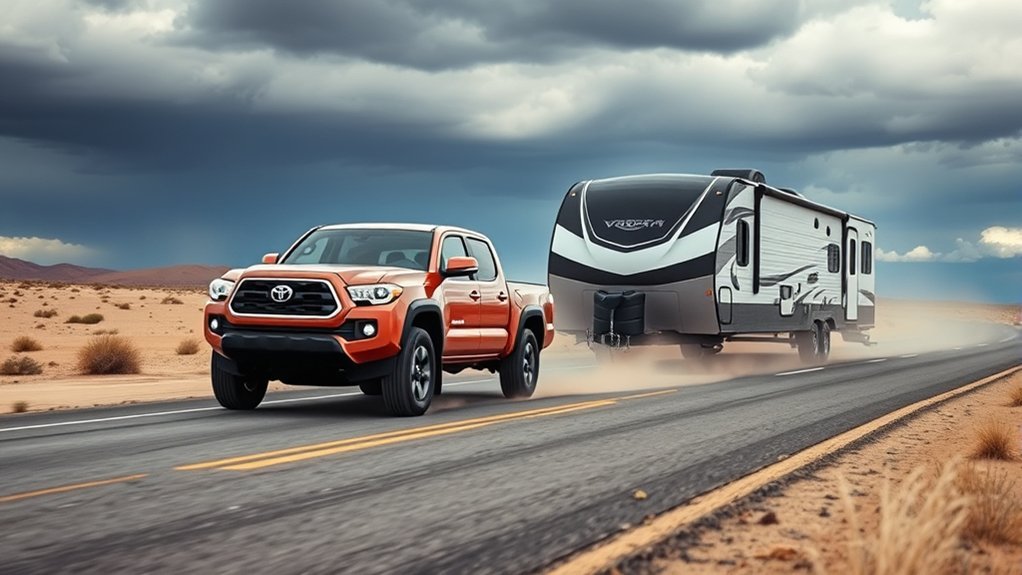
Start with a go-or-no-go decision. Check current forecasts, watches, advisories, and warnings for your entire route. The National Weather Service wind-alert guide explains when conditions require caution, changed plans, or immediate protective action. A trailer presents a large side area, so a gust that feels manageable in the Tacoma alone may move the full combination across a lane.
Warning: Postpone towing when a warning is active, crosswinds are moving the trailer within its lane, steering corrections become frequent, visibility is poor, or you cannot hold a safe speed without disrupting traffic. No hitch or electronic aid makes severe wind safe.
Next, confirm the ratings for your exact model year, cab, bed, engine or powertrain, drivetrain, axle ratio, and factory equipment. Use Toyota’s owner’s manual portal, the certification label on the truck, and the labels on the receiver, ball mount, hitch ball, and trailer. Do not rely on a single advertised maximum because your usable capacity can be lower.
Check all of these limits before departure:
- Towing capacity: The greatest loaded trailer weight allowed for your exact configuration.
- Payload: The combined weight of passengers, cargo, accessories, hitch equipment, and trailer tongue weight carried by the Tacoma.
- GVWR and GAWR: The maximum loaded truck weight and the limit for each axle.
- GCWR: The maximum combined loaded weight of the truck and trailer, when listed for your model.
- Hitch and trailer ratings: The lowest-rated component sets the working limit.
Perform a complete connection check. Confirm the coupler is fully seated and latched, insert the hitch pin and retaining clip, cross the safety chains under the tongue without letting them drag, attach the breakaway cable to a separate secure point, connect the wiring, and test the running lights, turn signals, brake lights, and trailer brakes. Extend towing mirrors so you can see both sides and the rear corners of the trailer.
Some Tacoma configurations offer towing aids such as an integrated trailer brake controller, Trailer Backup Guide, and trailer-aware blind-spot monitoring. Toyota lists these as available features on current models, so verify what your truck actually has. These systems support the driver but do not replace correct loading, safe speed, or the decision to stop.
Proper Weight Distribution for Your Trailer
Stable towing depends on measured weight, not appearance. Load the trailer fully for travel, including water, batteries, propane, tools, food, and accessories. Then confirm the loaded trailer weight, tongue weight, truck axle weights, and combined weight remain within every applicable rating.
Ideal Tongue Weight Percentage
For many conventional bumper-pull trailers, tongue weight commonly starts near 10% to 15% of loaded trailer weight. Your trailer manufacturer, hitch instructions, and Toyota manual may set a different range or a lower maximum, so those instructions take priority.
If a loaded trailer weighs 4,800 pounds, 10% to 15% equals 480 to 720 pounds. That weight is carried by the Tacoma and must be included in payload calculations with passengers, bed cargo, accessories, and hitch hardware. Measure it with a rated tongue-weight scale or obtain axle weights at a public vehicle scale.
Tongue weight is part of the Tacoma’s payload. A trailer can be below the advertised tow rating while the truck is already over payload or rear-axle limits.
Load Distribution Techniques
Place heavy cargo low and close to the trailer’s axle group, with enough weight forward of the axles to reach the manufacturer’s tongue-weight range. Secure every item against forward, rearward, and side-to-side movement. Do not put heavy cargo at the far rear, and do not follow a generic “80/20” cargo rule.
Recheck tongue weight after adding water, motorcycles, generators, coolers, or cargo on a rear rack. Small changes far from the axles can make a large difference at the hitch. Also confirm left-to-right balance so one trailer tire or axle end is not overloaded.
Pro Tip: Weigh the loaded Tacoma and trailer in travel condition. Record the truck’s front and rear axle weights, the trailer axle weight, and the combined weight. Compare each result with the labels and manual instead of relying only on a tongue-weight estimate.
Adjusting Hitch Height
Set the ball mount so the loaded trailer sits level or at the attitude specified by its manufacturer. A nose-high or severely nose-low trailer can change tongue weight, suspension movement, braking, and clearance. Adjust hitch height only with components rated for the full loaded trailer and tongue weight.
| Check | What to confirm |
|---|---|
| Hitch height | The loaded trailer sits at the manufacturer’s specified attitude. |
| Tongue weight | The measured value remains within trailer, truck, and hitch limits. |
| Ground clearance | The coupler, jack, chains, and weight-distribution bars will not strike the road. |
| Front-axle load | A weight-distribution hitch is adjusted according to Toyota and hitch-maker instructions. |
Choosing the Right Sway Control Hitch for Stability
A sway-control device can reduce unwanted trailer movement, but it must match the trailer type, loaded weight, tongue weight, frame, coupler, and Tacoma receiver. Check both the Toyota manual and hitch manufacturer’s instructions before using a weight-distribution hitch because not every receiver or trailer frame permits one.
[Amazon Products Picked for You]

Provides a mounting tab for a sway control trailer ball

Helps limit lateral trailer movement to reduce sway

Hitch-mounted attachment ball for the CURT sway control unit #17200
Types of Sway Control Hitches
- Friction sway control: A separate friction bar resists side-to-side movement. It requires correct adjustment and may have restrictions for backing, rain, or slippery roads.
- Weight distribution with integrated sway control: Spring bars help distribute hitch load, while built-in friction or cam systems resist yaw. Weight distribution and sway control are related but are not the same function.
- Geometry-based hitches: Premium systems such as the ProPride 3P and Hensley design change the effective pivot geometry. They still require correct sizing, installation, loading, and maintenance.
- Electronic trailer sway control: Some trailers or tow vehicles use selective braking or engine-torque reduction. Availability and operation vary, so read the exact manuals.
No device can overcome excessive speed, rear-heavy loading, worn tires, failed brakes, or severe crosswinds. If the trailer repeatedly moves despite a correct setup, stop and correct the cause rather than increasing speed or tightening a device beyond its instructions.
Key Features to Consider
| Feature | Why it matters |
|---|---|
| Correct weight range | The hitch must cover actual loaded trailer and tongue weights without exceeding any receiver limit. |
| Vehicle and frame compatibility | Toyota, trailer, coupler, and frame instructions must permit the system. |
| Adjustment method | A repeatable setup helps restore proper load and control after cargo changes. |
| Backing and weather limits | Some friction systems require removal or different adjustment in certain conditions. |
| Service and inspection | Pins, brackets, bars, fasteners, friction surfaces, and lubrication points need scheduled checks. |
Driving Techniques to Minimize Sway in Windy Conditions
Use a speed that allows the combination to track straight with small, smooth corrections. A fixed rule such as “5 to 10 mph below the limit” is not enough because the safe speed depends on gusts, trailer height, traffic, road surface, and your setup. Slow further whenever steering effort rises, and stop if stable lane position becomes difficult.
Hold the wheel with both hands, look far ahead, and make gradual steering, throttle, and braking inputs. Increase following distance so you can slow without abrupt braking. Avoid cruise control when gusts or grades require frequent speed changes.
Expect sudden pressure changes when passing trucks, leaving a protected cut, entering an open bridge, or moving past trees and buildings. Give high-profile vehicles extra room and avoid lingering beside them. Plan a route with fewer exposed bridges, mountain passes, and open plains when strong crosswinds are forecast.
Note: A lower speed improves control only while the rig remains stable. Repeated sway, lane drift, or steering corrections mean you should leave the roadway at a safe location and reassess conditions.
Tire Pressure and Load Ratings for Safe Towing
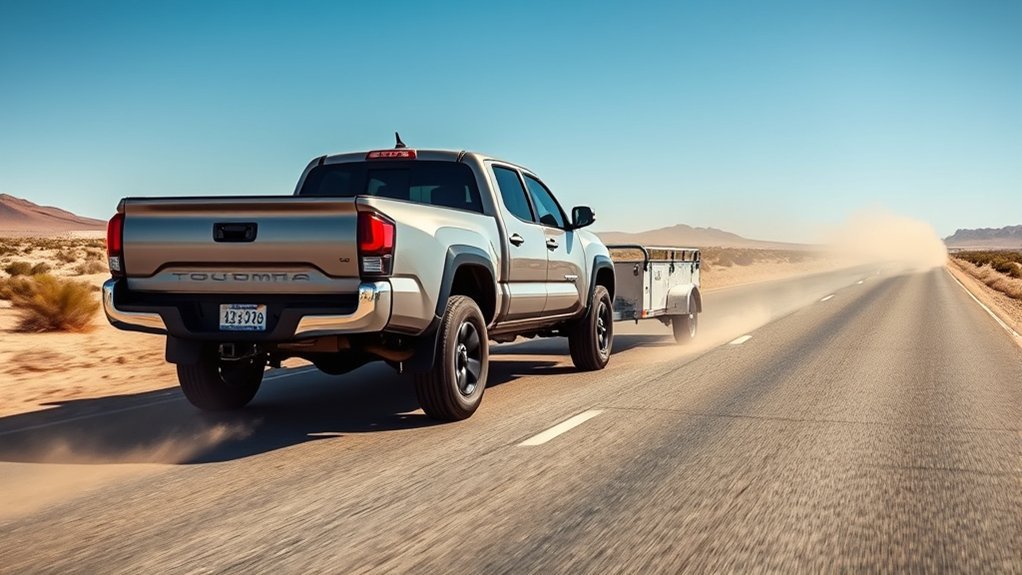
Check tire pressure when the tires are cold. For the Tacoma, use the pressure on the driver-door placard or in the exact owner’s manual. For the trailer, use its certification label and tire or trailer manufacturer’s instructions. The National Highway Traffic Safety Administration tire guide warns that the number on the tire sidewall is not the recommended operating pressure for the vehicle.
Do not assume all Load Range E tires should be inflated to 80 psi or that all passenger tires share one maximum. Required pressure depends on the tire, wheel, axle load, and manufacturer specifications. Never exceed the tire or wheel limit, and never lower pressure to soften the ride while towing unless the approved load-and-inflation guidance supports it.
- Inspect tread, sidewalls, valve stems, and wheels for cuts, bulges, cracks, punctures, or impact damage.
- Confirm each tire’s load capacity is adequate for the actual load on that axle.
- Check the spare tire and verify you have tools that fit the trailer lug nuts.
- Torque wheel fasteners to the trailer and Tacoma specifications.
- Replace tires based on condition, age, and manufacturer guidance, not tread depth alone.
Choose tires by approved size, load rating, speed rating, wheel compatibility, and actual axle load. A specific all-terrain brand or reinforced construction is not automatically safer for every Tacoma. Changing tire type can also affect ride, braking, heat, and pressure requirements.
[Amazon Products Picked for You]

PROCESS LEVEL ACCURACY: Each ETENWOLF’s digital tire pressure gauge is calibrated manually to ANSI B40.7 Grade 2A(plus-minus 1 PSI).Presta valve adapter not included, if used for bicycles, it must be purchased separately
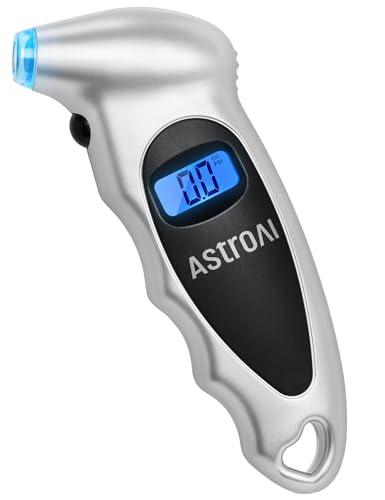
Accurate, Dependable Readings: Factory‑calibrated to ±1 PSI, so you can confidently match your vehicle’s recommended PSI (check the door jamb sticker). Ideal for monthly checks and road trips — consistent results every time, cold or warm.

Enhanced Visibility in Low Light: Features a green backlit LCD screen and integrated flashlight, allowing for clear reading of tire pressure even in dark or dimly light conditions.
Adjusting Your Driving Technique to Manage Sway
Early recognition matters. Watch the trailer in your mirrors and notice whether it begins moving side to side after a gust, lane change, downhill section, or passing vehicle. Respond with calm, limited inputs instead of trying to steer against every movement.
| Action | Purpose | Safe-use note |
|---|---|---|
| Reduce speed before exposed areas | Lowers the forces that can build sway | Do not wait for severe movement before slowing. |
| Hold the wheel steady | Prevents overcorrection | Keep the tow vehicle pointed straight along the lane. |
| Ease off the accelerator | Lets the combination slow gradually | Do not accelerate through sway. |
| Increase following distance | Creates time for smooth braking | Allow more space in rain, darkness, or poor visibility. |
| Use the trailer brake control only as instructed | May help straighten certain equipped trailers | Follow the Toyota, trailer, and controller manuals; do not improvise. |
What to Do If Your Trailer Starts Swaying?
Use the procedure required by your Toyota, trailer, and brake-controller manuals. General emergency steps are:
- Stay calm and hold the steering wheel steady. Keep the Tacoma pointed straight along the lane. Do not chase the trailer with rapid steering.
- Ease off the accelerator. Let the combination slow gradually without adding power.
- Avoid abrupt tow-vehicle braking. Hard braking can worsen some sway events, especially on slippery roads.
- Use manual trailer braking only when approved. If your trailer has an independent manual brake control and its instructions specifically call for it, apply it gently. Some trailer instructions tell drivers not to brake during sway, so follow the equipment-specific procedure.
- Move off the roadway safely. Once the combination is stable, signal, slow, and stop at a level location away from traffic.
- Find the cause before continuing. Check cargo movement, tongue weight, hitch connections, tire condition and pressure, wind conditions, and trailer brakes. Do not continue until the problem is corrected.
Warning: Never make a sharp steering correction or accelerate to “pull out” of sway. If the movement is severe, focus on keeping the Tacoma straight while the combination slows according to your equipment instructions.
Benefits of Upgrading Your Towing Equipment
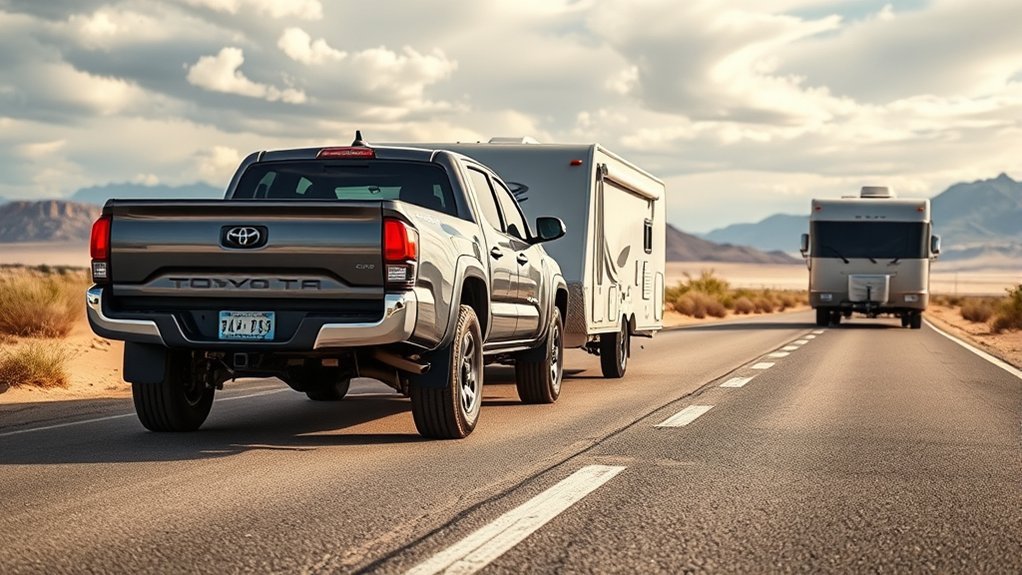
The right equipment can improve visibility, braking control, load distribution, and resistance to small disturbances. Useful upgrades may include extended towing mirrors, a compatible brake controller, a correctly rated ball mount and hitch ball, a weight-distribution system approved for the truck and trailer, and sway control matched to the loaded tongue weight.
Geometry-based hitches such as the ProPride 3P or Hensley design can be options for compatible bumper-pull trailers. They should not be described as eliminating all sway, and their higher price and different hookup process may not suit every owner. Compare the manufacturer’s ratings and installation requirements with your actual setup.
Heavy-duty or higher-load-range tires can help only when their size, wheel rating, load capacity, and pressure requirements are correct for the vehicle. They do not create additional payload, axle, or towing capacity. The same limit applies to helper springs and suspension products.
Products such as trailer SumoSprings or Timbren SES may reduce squat, harshness, or suspension movement when correctly selected. They do not raise GVWR, GAWR, GCWR, payload, receiver rating, or trailer rating. If the rear of the Tacoma sags because the truck is overloaded or tongue weight is excessive, remove or redistribute weight rather than masking the condition.
[Amazon Products Picked for You]

LEVEL TOWING — Distributes trailer tongue weight across the tow vehicle and trailer to help level the load, improve control and smooth the ride; includes sway control kit #17200 to help reduce trailer sway.

Attaches directly to trailer frame for attachment of sway control #17200

Integrated sway control reduces sway and levels the vehicle and trailer
Regular Maintenance Tips for Safe Towing Adventures
Inspect the Tacoma and trailer before every trip, after loading changes, and after any sway event or hard impact. Use this checklist:
- Verify loaded weights and tongue weight remain within all truck, hitch, axle, tire, and trailer ratings.
- Check cold tire pressures, tread, sidewalls, wheel condition, and lug-nut torque.
- Inspect the receiver, ball mount, hitch ball, coupler, latch, pins, brackets, chains, and breakaway cable.
- Test running lights, turn signals, brake lights, electric trailer brakes, and the breakaway system according to its instructions.
- Confirm cargo tie-downs are tight and doors, ramps, awnings, jacks, and steps are secured.
- Check mirrors, windshield wipers, brakes, fluids, and fuel range before entering an exposed route.
- Service sway-control and weight-distribution components at the intervals specified by their manufacturers.
Recheck connections and tire temperatures at the first safe stop. Uneven heat, a new vibration, a change in ride height, or a shifted load deserves immediate inspection. Trailer-brake, safety-chain, lighting, and equipment laws vary by state, so confirm the rules for every jurisdiction on your route.
Frequently Asked Questions
How do you reduce sway when towing?
Load and secure the trailer correctly, measure tongue weight, stay within every rating, set cold tire pressure from the placards, maintain the hitch and brakes, and use compatible sway-control equipment. Slow for conditions, make smooth inputs, and stop when wind or repeated movement prevents stable tracking.
What is the 80/20 rule for towing?
No universal rule says to place 80% of trailer cargo at the front. That can overload the tongue, hitch, rear axle, or truck payload. Load according to the trailer manufacturer’s instructions and measure tongue weight. Some rental-trailer instructions use a 60/40 front-to-rear cargo split for their own equipment, which is not a universal specification.
What should you not tow with a Tacoma?
Do not tow any loaded trailer that exceeds the limits for your exact Tacoma, receiver, ball mount, hitch ball, tires, axles, or trailer. Avoid combinations that exceed payload after passengers and tongue weight are added. Also postpone towing a high-profile trailer when wind conditions prevent stable control.
How do you prevent sag when towing?
First verify the truck is not overloaded and the tongue weight is within its required range. Correct cargo distribution and hitch height. Use a compatible weight-distribution hitch only when Toyota and the trailer manufacturer permit it. Suspension helpers may reduce visible squat, but they do not increase payload or axle ratings.
How much wind is too much for towing a trailer?
No single wind speed is safe for every trailer. Trailer height, gust direction, road exposure, speed, loading, and driver control all matter. Treat official warnings as a reason to delay, and stop when gusts cause repeated lane movement, steering corrections, or sway.
Does electronic trailer sway control prevent all sway?
No. Electronic systems may apply selected brakes or reduce power after they detect instability, but they cannot correct overloading, poor cargo placement, tire problems, excessive speed, or dangerous wind. Availability and operation vary by Tacoma model and trailer, so follow the exact manuals.
Sources
- National Weather Service: During a High Wind Event – wind-driving hazards and guidance for vehicles towing trailers
- National Weather Service: Wind Warnings, Watches and Advisories – alert meanings and recommended action
- Toyota Owner’s Manuals – model-specific towing, weight, hitch, and safety instructions
- Toyota Tacoma – current available towing and driver-assistance features
- NHTSA Tire Safety – cold-pressure checks and use of the vehicle placard
- U-Haul Trailer User Instructions – equipment-specific loading, inspection, and sway-response guidance
Conclusion
Safe Tacoma towing in high winds depends on judgment more than equipment. Verify the limits for your exact truck, weigh the loaded combination, set tire pressure from the proper labels, and use only compatible hitch and brake systems. Drive smoothly and leave extra room, but do not force the trip when gusts cause sway or repeated lane movement. Pulling over and waiting is often the safest towing decision.
