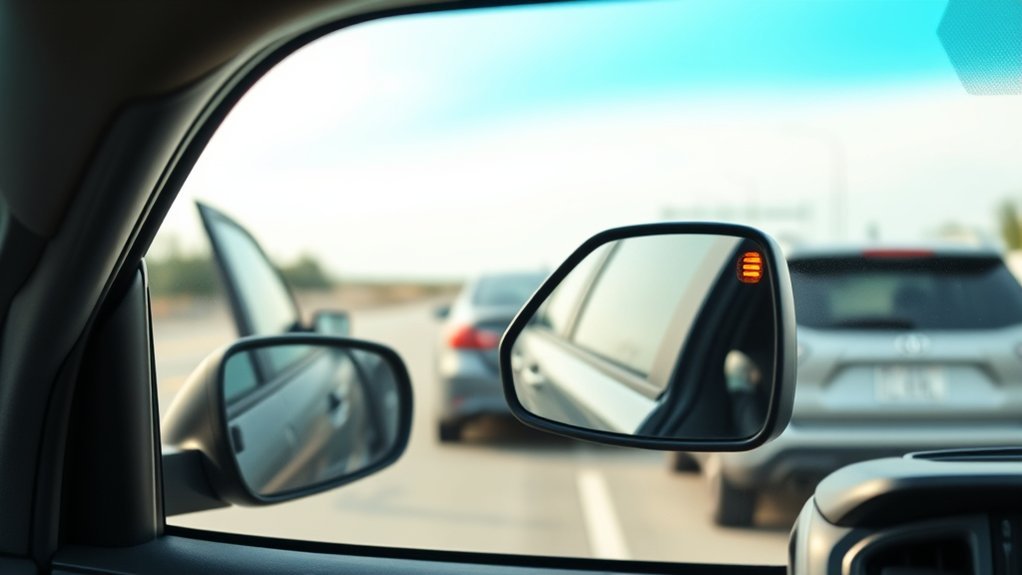
Toyota Tacoma Blind Spot Monitor (BSM) and Rear Cross-Traffic Alert (RCTA) can warn you about vehicles beside the truck or crossing behind it. The controls and operating limits vary by model year, so use the instructions that match your Tacoma and confirm them in the owner’s manual.
Reviewed for accuracy: July 14, 2026. This guide covers common U.S.-spec Tacoma systems, including the button-equipped third-generation Tacoma and the redesigned 2024 Tacoma. BSM and RCTA are optional on some trims and configurations.
Quick Answer
On many equipped 2016–2023 Tacomas, press the BSM main switch on the lower dash to turn the combined BSM/RCTA system on or off. On the 2024 Tacoma, use the steering-wheel controls and Multi-Information Display to select BSM or RCTA separately. BSM uses mirror lights; the RCTA reversing alert also uses a buzzer.
Key Takeaways
- Tacoma BSM controls differ by model year. Older equipped models commonly use a dash switch, while the 2024 model uses the Multi-Information Display.
- A steady mirror indicator means the system detects a vehicle. It flashes when you signal toward the detected side.
- The cited 2023 and 2024 Tacoma guides identify the audible buzzer as an RCTA alert, not a normal BSM lane-change chime.
- For the 2024 Tacoma, BSM operates above approximately 6 mph. RCTA operates below approximately 9 mph while approaching traffic is moving approximately 5–34 mph.
- Keep the rear bumper clean and leave radar alignment, calibration, bumper repair, and persistent faults to a qualified technician.
At a Glance
| Time Required | About 2–5 minutes to check settings and inspect the bumper |
| Difficulty | Easy for settings and cleaning; professional service for calibration or faults |
| Tools Needed | Owner’s manual, water, and a soft microfiber cloth |
| Cost | Usually $0 for settings and cleaning; diagnosis or bumper-related repair varies |
Warning: BSM and RCTA are warning systems. They do not confirm that a lane change or backing maneuver is safe, and standard BSM does not steer or brake for you. Check your mirrors, look over your shoulder, scan the backup camera, and visually confirm the path before moving.
Turn Tacoma BSM and RCTA On or Off

First, confirm that your Tacoma is equipped with Blind Spot Monitor. BSM and RCTA were optional or trim-dependent on many model years. A BSM switch, BSM menu item, or warning symbol in each outside mirror usually confirms that the equipment is present.
Button-Equipped Tacoma Models
On many equipped 2016–2023 Tacomas, Toyota places a dedicated BSM main switch on the lower dashboard near the steering wheel. Press the switch to change the combined BSM/RCTA system between on and off. The exact switch location can vary with trim and other dashboard controls.
The 2023 Toyota Tacoma Quick Reference Guide shows the BSM main switch, outside-mirror indicators, and an RCTA-only buzzer. Check your model-year manual if the switch or indicator behavior differs.
2024 Tacoma Multi-Information Display Controls
The redesigned 2024 Tacoma does not rely on the older dedicated BSM button. Use the steering-wheel meter controls:
- Turn the ignition or power switch on and stop the truck in a safe location.
- Use the steering-wheel arrows to open the settings menu in the Multi-Information Display.
- Select BSM or RCTA.
- Press the center or OK control to turn the selected function on or off.
- Exit the settings menu and check for an off indicator or status message.
Toyota’s 2024 Tacoma Quick Reference Guide shows separate BSM and RCTA menu selections. The U.S. owner’s manual also states that each function is enabled when the power switch is turned on.
Note: A missing BSM switch does not always mean the system is absent. Newer Tacomas may place the control in the instrument-cluster menu. If you have neither a switch nor a BSM/RCTA menu item, check the vehicle’s build information or owner’s manual.
Read BSM and RCTA Lights and Chimes
BSM and RCTA use the same rear-side radar sensors, but they warn you in different driving situations. BSM supports lane-change awareness while moving forward. RCTA watches for cross traffic while you reverse.
| Situation | What You See or Hear | What to Do |
|---|---|---|
| Vehicle detected beside the Tacoma | The indicator in the corresponding outside mirror illuminates. | Hold your lane and check mirrors and the blind area before changing lanes. |
| Turn signal activated toward a detected vehicle | The mirror indicator flashes. The cited Tacoma guides do not identify a normal BSM buzzer. | Delay the lane change until you have visually confirmed a safe gap. |
| Cross traffic detected while reversing | The outside-mirror indicators flash, an RCTA icon may appear, and a buzzer sounds. | Stop or continue only at a crawl while checking both sides and the camera view. |
| BSM or RCTA turned off | An off indicator or message may appear in the instrument display. | Turn the function back on unless conditions require it to remain disabled. |
Indicator Lights Meaning
A steady outside-mirror indicator means the system detects a vehicle in the monitored area or, on applicable models, approaching rapidly from behind. The light does not measure whether you have enough room to merge.
If you operate the turn signal toward the detected side, the mirror indicator flashes. Cancel or delay the maneuver, scan the rearview and side mirrors, and make a brief shoulder check before moving laterally.
Strong sunlight can make a mirror indicator harder to see. Keep both mirrors clean and do not rely on the warning light as your only check.
Warning Chime Signals
On the Tacoma systems covered by Toyota’s 2023 and 2024 quick guides, the audible buzzer belongs to Rear Cross-Traffic Alert. A normal BSM lane warning uses the mirror indicator rather than a dedicated lane-change chime.
Other Tacoma systems can also beep, including Lane Departure Alert, parking assist, Rear Camera Detection, and seat-belt warnings. Check the instrument or multimedia display before assuming that a chime came from BSM.
The mirror light can warn you that a vehicle is present, but only your visual check can confirm that a lane change is safe.
What to Do When the Blind-Spot Warning Lights or Flashes
Respond calmly when a blind-spot indicator illuminates. Do not steer abruptly or brake hard only because the light appears. Maintain control, assess surrounding traffic, and postpone the maneuver until you can confirm a safe opening.
Immediate Driver Actions
- Hold your lane. Avoid drifting toward the detected vehicle.
- Check the rearview mirror. Identify traffic approaching from behind.
- Check the side mirror. Confirm which vehicle may have triggered the indicator.
- Glance over your shoulder. Visually inspect the blind area without taking your eyes off the road for too long.
- Wait for a safe gap. Recheck the mirrors before changing lanes.
If RCTA sounds while you are reversing, stop or reduce speed to a crawl. Check the backup camera, look through the rear and side windows, and scan both directions before continuing.
Troubleshooting And Checks
Use the following checks when BSM or RCTA does not operate as expected. Do not test the system by intentionally driving toward another vehicle or backing into moving traffic.
| Step | Action | Goal |
|---|---|---|
| 1 | Confirm that BSM and RCTA are turned on. | Rule out an accidentally disabled setting. |
| 2 | Check the correct operating conditions for your model year. | Avoid mistaking normal inactivity for a fault. |
| 3 | Inspect both rear bumper corners for mud, snow, ice, stickers, damage, or accessories. | Find anything that may block or misalign the hidden radar sensors. |
| 4 | Clean the bumper gently with water and a soft cloth. | Restore a clear radar path without scratching the bumper. |
| 5 | Restart the truck and drive normally if conditions are safe. | Allow a temporary obstruction warning to clear. |
| 6 | Arrange professional diagnosis if the message remains or the bumper was struck or replaced. | Check sensor aim, mounting, wiring, calibration, and stored fault codes. |
Tacoma BSM and RCTA Operating Speeds
Operating speeds vary by model year, so the following figures apply specifically to the 2024 U.S. Toyota Tacoma Owner’s Manual:
- BSM: The system operates when BSM is on, the transmission is not in Reverse, and the Tacoma is traveling faster than approximately 6 mph (10 km/h).
- RCTA: The system operates in Reverse while the Tacoma is traveling below approximately 9 mph (15 km/h).
- Approaching cross traffic: RCTA is designed around approaching vehicle speeds of approximately 5–34 mph (8–56 km/h).
Do not apply these figures automatically to every Tacoma. Earlier models may use different thresholds, detection zones, or display behavior.
Pro Tip: Search the PDF version of your owner’s manual for “Blind Spot Monitor” and “Rear Cross Traffic Alert.” The manual will show the exact controls, speeds, warning messages, and equipment limitations for your truck.
Why BSM and RCTA May Miss a Vehicle
The rear-side radar sensors cannot detect every road user or object in every situation. Detection can be delayed, intermittent, or unavailable when the target is outside the radar zone or the signal is obstructed.
BSM may have difficulty with:
- Small motorcycles, bicycles, or pedestrians
- Vehicles two lanes away
- Vehicles moving at nearly the same speed as your Tacoma
- A vehicle extremely close to a rear bumper corner
- Sharp curves, steep hills, dips, or uneven roads
- A large height difference between vehicles
- Heavy rain, snow, fog, or standing water
- Mud, ice, snow, stickers, metal tape, or accessories near a sensor
- A bicycle rack, bumper guard, snowplow, towing accessory, or modified bumper
- A sensor shifted by a collision or strong impact
RCTA is intended to detect moving vehicles approaching from either side while you reverse. It is not designed to identify every pedestrian, bicycle, stationary object, vehicle directly behind you, or vehicle backing from the space beside you.
Angled parking spaces, steep slopes, walls, parked vehicles, metal guardrails, and nearby structures can block the radar path or create an alert even when no collision is likely.
Check and Maintain BSM/ RCTA Sensors (Common Fixes)
The Tacoma’s BSM radar sensors sit behind the left and right sides of the rear bumper. You normally cannot see the sensor modules from outside, so clean the bumper surface in those areas rather than searching for exposed lenses.
Keep the rear bumper clean, but leave radar alignment, calibration, wiring diagnosis, and sensor replacement to a qualified repair facility.
- Remove mud, road salt, snow, and ice with water and a soft cloth.
- Avoid abrasive cleaners, scrapers, polishers, or high-force impacts.
- Do not place stickers, aluminum tape, metal trim, or accessories over the sensor areas.
- Inspect the bumper for dents, cracks, loose sections, or evidence of an impact.
- Check whether a bicycle rack, tow accessory, bumper guard, or aftermarket bumper blocks a rear corner.
- Do not disassemble, reposition, or paint the radar sensors.
- Have the system inspected after bumper removal, bumper replacement, collision repair, or a strong rear-corner impact.
Clear a BSM Unavailable Message
If dirt, snow, or ice causes a temporary warning, park safely and clean both rear bumper corners. On the 2024 Tacoma, Toyota instructs the driver to clear the obstruction and drive for approximately 10 minutes with the normal BSM operating conditions satisfied.
Arrange service when the warning remains after cleaning and normal driving, appears repeatedly in clear conditions, follows an impact, or is accompanied by another warning light.
Avoid DIY Sensor Alignment
Radar aim can be affected by small changes in sensor position or bumper shape. Visual measurements cannot confirm proper alignment. A repair facility may need Toyota-compatible diagnostic equipment, aiming targets, measurements, and calibration procedures.
Using Tacoma BSM and RCTA While Towing
A trailer changes the blind area and can block the rear-side radar sensors. Behavior depends heavily on the Tacoma’s model year and towing equipment.
The 2024 Tacoma can use available Auto Trailer Detection and trailer settings to adjust blind-spot monitoring for certain trailers. When a trailer is detected, the system can extend the monitored area for Trailer Merge Warning. Toyota notes that performance still depends on trailer width, length, tongue design, bumper type, and correct trailer configuration.
On the 2024 system, RCTA and several parking-related functions can turn off after the truck detects a trailer. This is normal because a trailer blocks the cross-traffic detection area.
Note: Enter or confirm the trailer information shown in your Tacoma’s Multi-Information Display. Never assume the extended trailer detection zone covers the full length or width of every trailer.
Drive Safely With Tacoma BSM and RCTA : Practical Tips
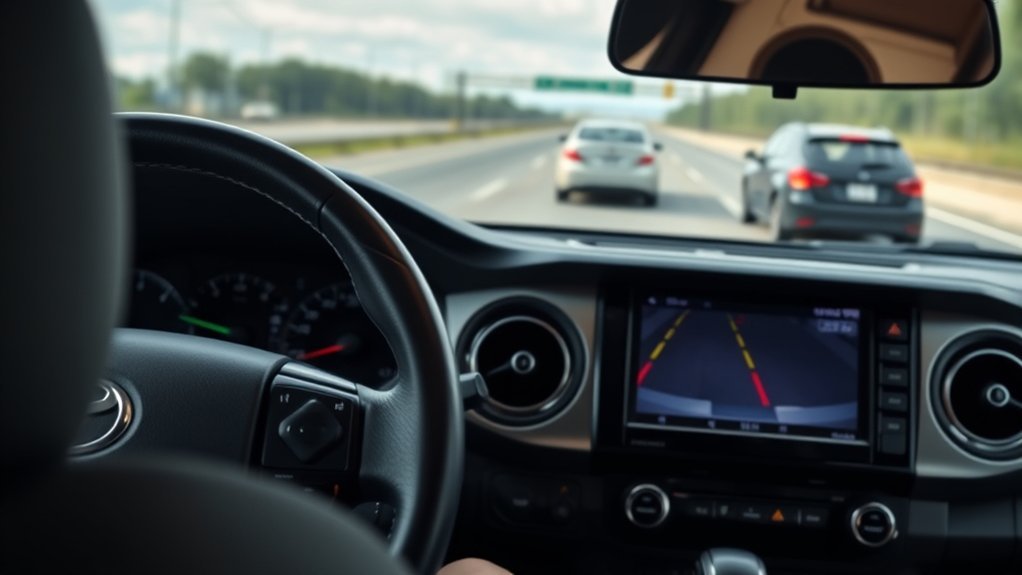
Use BSM as an extra visual check during lane changes. Signal early, read the mirror indicator, check the mirrors, glance over your shoulder, and move only after you confirm adequate space.
Use RCTA when slowly backing from a parking space or driveway with restricted side visibility. Keep your foot ready over the brake, scan the backup-camera image, look through the windows, and stop when the buzzer sounds.
Reduce speed and allow extra time in rain, snow, darkness, crowded parking areas, and narrow lanes. Sensor performance can decline in poor weather or when surrounding objects block the radar path.
Do not confuse the systems:
- BSM warns about vehicles beside or rapidly approaching the truck.
- RCTA warns about moving cross traffic while reversing.
- The backup camera shows an image but does not make every object visible.
- Parking assist uses separate sensors to warn about nearby obstacles.
- Lane Departure Alert monitors lane markings and may produce its own warning sound.
The National Highway Traffic Safety Administration classifies blind-spot and rear cross-traffic warnings as driver-assistance technologies. You remain responsible for steering, braking, acceleration, and observing the area around the truck.
Related Guides
Frequently Asked Questions
How does a Toyota blind spot monitor work?
Rear-side radar sensors monitor defined areas beside and behind the truck. When the system detects a vehicle, the indicator in the corresponding outside mirror illuminates. It flashes if you signal toward that side while the vehicle remains detected.
How do you turn on the blind spot monitor on a Toyota Tacoma?
On many equipped 2016–2023 Tacomas, press the BSM main switch on the lower dash. On the 2024 Tacoma, use the steering-wheel controls to open the Multi-Information Display settings, select BSM, and turn it on. Check your model-year manual when the controls differ.
Does the Tacoma BSM beep during a lane change?
The cited 2023 and 2024 Tacoma guides show BSM lane warnings through the outside-mirror indicators and label the audible buzzer as RCTA only. A chime during forward driving may come from Lane Departure Alert or another vehicle system.
Are add-on blind spot mirrors a substitute for BSM?
No. Small convex mirrors can widen your view, but they make objects appear smaller and farther away. Position them carefully so they do not cover an important part of the regular mirror, and continue using normal mirror and shoulder checks.
Will BSM still work if it is raining?
It can operate in ordinary rain, but heavy rain, standing water, snow, fog, ice, and road grime can reduce radar performance. Keep the rear bumper clean and increase your visual checks when weather or visibility is poor.
Do all Toyota Tacomas have BSM and RCTA?
No. Availability varies by model year, trim, package, cab configuration, and market. Check for mirror indicators and a BSM switch or menu item, then confirm the equipment through the owner’s manual or vehicle specifications.
Conclusion
Tacoma BSM and RCTA are easiest to use when you separate their jobs. BSM uses outside-mirror indicators to support forward lane changes, while RCTA adds a buzzer and visual warnings for moving cross traffic during low-speed reversing.
Use the dash switch on applicable older models or the Multi-Information Display on the 2024 Tacoma. Keep both rear bumper corners clean, avoid accessories that block the radar areas, and arrange professional inspection after bumper damage or a persistent warning. Most importantly, treat every alert as a prompt to look, not as permission to move.
Sources
- 2023 Toyota Tacoma Quick Reference Guide — older BSM main-switch location, mirror indicators, and RCTA-only buzzer.
- 2024 Toyota Tacoma Quick Reference Guide — MID controls, separate BSM/RCTA settings, displays, and warning behavior.
- 2024 Toyota Tacoma Owner’s Manual — operating speeds, detection areas, sensor precautions, limitations, towing behavior, and troubleshooting.
- Toyota Customer Support: Blind Spot Monitor — general Toyota mirror-indicator behavior.
- NHTSA Driver Assistance Technologies — definitions and safety context for blind-spot and rear cross-traffic warnings.
