If your Toyota Tacoma’s AC is blowing hot air, don’t assume it only needs more refrigerant. The cause may be a leak, weak condenser airflow, a compressor or control fault, a clogged cabin filter, or an electrical problem. The way the symptoms change at idle, on the road, and between fan speeds can help narrow the cause.
Quick Answer
A Toyota Tacoma AC usually blows hot air because the refrigerant charge is low from a leak, the condenser cannot release heat, the compressor is not operating correctly, or a temperature-control component has failed. Weak vent airflow points more toward the cabin filter, blower motor, resistor, or an iced evaporator.
Key Takeaways
- Strong airflow that remains warm usually indicates a cooling-system or temperature-control problem, not a cabin filter.
- An automotive AC system should not routinely consume refrigerant. A low charge may indicate a leak or previous incorrect service.
- Cooling that improves while driving but weakens at idle may point to condenser airflow, cooling-fan operation, or a model-specific Tacoma condition.
- Check the underhood label before discussing refrigerant service because Tacoma model years do not all use the same refrigerant and equipment.
- Do not add AC stop-leak or replace a blown fuse with a higher-rated fuse.
At a Glance
| Time Required | 15–30 minutes for safe owner checks |
| Difficulty | Easy for visual inspection; advanced for refrigerant or electrical diagnosis |
| Tools Needed | Flashlight, vent thermometer, owner’s manual, and basic hand tools for the cabin filter if applicable |
| Cost | Visual checks may cost nothing; parts and professional diagnosis vary by model year and confirmed fault |
Common Reasons Your Toyota Tacoma AC Is Blowing Hot Air

Your Tacoma’s symptoms matter more than any single list of common parts. Start by deciding whether the problem is weak airflow, warm airflow, or cooling that changes under certain driving conditions.
| Symptom | Possible Causes | First Check |
|---|---|---|
| Strong airflow but warm air | Low refrigerant charge, compressor fault, condenser airflow problem, blend door, sensor, or control issue | Compare cooling at idle and while driving |
| Weak airflow at every temperature | Cabin filter, blower motor, blower resistor or controller, blocked duct, or evaporator icing | Check every fan speed and inspect the filter |
| Cold while moving but warm at idle | Poor condenser airflow, cooling-fan issue, high system pressure, or applicable Tacoma service condition | Observe whether the cooling fan operates with the AC on |
| Cold and warm air alternate | Low charge, evaporator icing, pressure-sensor fault, compressor control, or electrical interruption | Record when the change occurs and whether airflow also falls |
| One side is warmer | Blend-door actuator, control calibration, duct issue, or an uneven evaporator temperature caused by low charge | Compare center, driver, and passenger vents |
| No blower operation | Fuse, relay, blower motor, controller, switch, wiring, or ground fault | Check whether any fan speed works |
Check the Basic Controls Before Diagnosing Parts
Use the same settings each time you test the system. This gives you a useful baseline and prevents a control setting from looking like a mechanical failure.
- Park safely outdoors and apply the parking brake.
- Start the engine and set the temperature to its coldest position.
- Turn the AC on, select recirculation, and set the blower to a medium or high speed.
- Open the windows briefly to release trapped cabin heat, then close them.
- Compare the vents for airflow strength and temperature.
- Repeat the observation while driving if the truck is safe to operate.
Write down whether the problem occurs only at idle, after extended driving, during high outside temperatures, on one side of the cabin, or after the system has operated for several minutes. These details are often more useful than guessing which component failed.
Pro Tip: Place a thermometer in a center vent and record the outside temperature, vent temperature, blower setting, engine speed, and whether the truck is moving. A technician can use that pattern to reproduce the problem faster.
Is Low Refrigerant Causing Your AC Problems?
Low refrigerant can prevent the evaporator from removing enough heat from the cabin. However, refrigerant is not a routine fluid that should disappear during normal operation. If the charge is low, the system may have a leak, may have been serviced incorrectly, or may have released refrigerant because of an abnormal pressure condition.
[Amazon Products Picked for You]

Upgraded version of WJL-6000. Traditional corona sensor with updated analogue circuit, fast triggers on R11, R22, R134A, R404a, R410A and all halogenated refrigerants including HFCs, CFCs,HCFCs and blends.

【Professional Grade & High Accuracy】-- Pro High-intensity true UV leak detection flashlight, INCLUDE GLASSES! 12.3 W 385-395nm leak detection flashlight with 68 top quality LED helps you to find leak stains EVEN in indoor or streetlight. AC Leak Detector Flashlight is 40% Brighter than other light, best choice for Automotive Air Conditioner Leak Detection!

RECHARGEABLE LITHIUM BATTERY: A 2500mAh built-in lithium battery delivers up to 24 hours of continuous work on a single charge, so the detector is ready whenever a call comes in. Charges from any USB-C power source; cable included. No disposable batteries to buy or carry.
Signs of Low Refrigerant
Possible signs include:
- Air that feels cooler than outside air but never becomes properly cold
- Cooling that changes as engine speed or outside temperature changes
- Compressor operation that repeatedly starts and stops under similar conditions
- Uneven temperatures between vents
- Visible oil or fluorescent dye near a hose, fitting, condenser, compressor, or service port
Oil or dye residue is only a clue. The absence of visible residue does not prove that the system is leak-free. Small evaporator leaks and slow seal leaks may require an electronic detector, ultraviolet inspection, or another approved test.
Common Refrigerant-Leak Areas
Leaks may develop at hose crimps, O-rings, service valves, the condenser, the evaporator, compressor seals, or another joint. Physical damage, corrosion, vibration, seal aging, and previous service can all contribute.
Some applicable 2021–2022 Tacomas are covered by a Toyota bulletin for poor cooling caused by the compressor pressure-relief valve releasing refrigerant below the intended pressure. The bulletin applies only to specified vehicles and production ranges, so a dealer or qualified shop should check the VIN rather than assume every 2021–2022 Tacoma has the condition.
Warning: Do not connect a recharge can until you have confirmed the exact refrigerant on the underhood label. Do not mix refrigerants, open a pressurized line, or release refrigerant into the air. Proper diagnosis requires equipment that can recover, evacuate, measure, and recharge the specified refrigerant by weight.
Why Topping Off Is Not a Complete Repair
Adding refrigerant without measuring the recovered charge can hide a leak, overcharge the system, or produce misleading pressure readings. A single low-side gauge cannot confirm the total charge or prove that the compressor, condenser, expansion device, and sensors are working correctly.
A proper service normally includes refrigerant identification, recovery, leak inspection, evacuation, a measured recharge, pressure and temperature checks, and confirmation that the system performs consistently.
Warning: Avoid AC stop-leak products. Toyota has stated that stop-leak is not an approved repair process and that it can react with moisture to form material that may bind or seize the compressor.
How a Dirty Cabin Air Filter Affects Your Tacoma AC
A dirty cabin air filter mainly reduces the amount of air moving through the vents. It can make the cabin cool slowly even when the air passing through the evaporator is cold.
Common filter-related symptoms include:
- Weak airflow on every vent setting
- More fan noise without a matching increase in airflow
- Dust or debris around the filter
- Musty odors
- Windows that clear more slowly when using fresh-air mode
If airflow is strong but the air remains warm, the filter is unlikely to be the main cause. Inspect or replace it according to the maintenance information for your Tacoma’s model year. Dusty roads, heavy traffic, smoke, and desert conditions may shorten its useful life.
Install the replacement in the airflow direction shown on the filter or housing. Make sure the access cover and glove compartment are secured before testing the blower.
Identifying Condenser and Cooling-Fan Problems
The condenser sits in front of the radiator and releases heat carried by the refrigerant. Dirt, leaves, plastic bags, bent fins, internal restriction, or poor cooling-fan operation can reduce its ability to reject heat.
A condenser-airflow problem often produces a specific pattern: the AC cools better while the Tacoma is moving but becomes warmer during slow traffic or extended idle. Road speed forces air through the condenser, so cooling may temporarily improve once the truck begins moving.
Look through the grille for debris without removing a hot radiator cap or placing your hands near a fan. With the AC operating, observe from a safe distance whether the cooling fan runs when commanded. A fan may start without warning, even when it was previously stopped.
Note: A condenser problem can make the air warmer, but it does not normally reduce the volume of air leaving the dashboard vents. Weak vent airflow points toward the cabin filter, blower circuit, ducting, or evaporator icing.
Avoid placing a high-pressure washer close to the condenser because it can bend the thin fins. If the engine temperature also rises, diagnose the engine cooling system rather than assuming the AC condenser is the only problem.
[Amazon Products Picked for You]
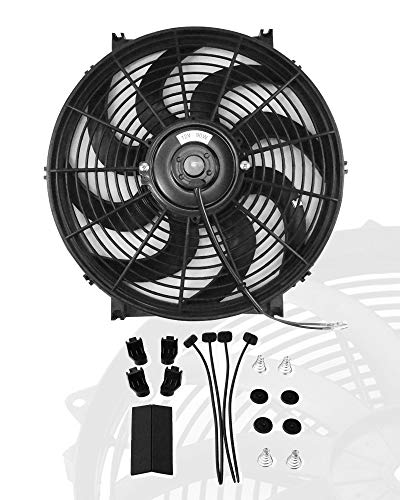
HIGH-PERFORMANCE:10 Blades 12V 80W 12 Inch radiator engine cooling fan with mount brackets and tie straps kit.Maximum Fan CFM=800 CFM, Maximum Fan RPM=2000±10% RPM.Overall Diameter (in): 12.44''.Thickness (in): 2.36''.Amp Draw: ≤7.5 amp.

HIGH-PERFORMANCE:6 Blades 12V 80W 10 Inch radiator engine cooling fan with mount brackets and tie straps kit.Maximum Fan CFM=800 CFM, Maximum Fan RPM=2400+10% RPM.Overall Diameter (in): 11.42''.Thickness (in): 2.536''.Amp Draw: ≤6Amp

[Vehicle Fitment]: Compatible with Honda CR-V 2010-2011 L4 2.4L Sport Utility--with Motor; Right Side
Diagnose Compressor Issues in Your Tacoma’s AC System
The compressor circulates refrigerant and creates the pressure difference needed for cooling. A failed compressor can cause warm air, but warm air alone does not prove the compressor is defective.
Possible compressor-related symptoms include:
- Grinding, knocking, or harsh rattling from the compressor area
- A seized pulley or belt-related noise
- Visible leakage around the compressor body or relief valve
- Abnormal high-side and low-side pressures during professional testing
- No meaningful temperature change even though the controls request cooling
Squealing may come from the drive belt, pulley, or tensioner rather than the compressor itself. A click or change in engine load also does not confirm that the compressor is producing the correct pressure.
A compressor should be condemned only after the refrigerant charge, electrical command, pressure readings, condenser airflow, and related controls have been tested.
[Amazon Products Picked for You]

Fitment for A/C Compressor with Clutch: for Toyota for Tacoma 2.7L 2005 2006 2007 2008 2009 2010 2011 2012 2013 2014 2015, for Toyota for Tacoma 4.0L 2005 2006 2007 2008 2009 2010 2011 2012 2013 2014 2015

[Specifications]: ①Compressor Type: 10PA15L; ②Oil Type: PAG100; ③Oil Prefilled: 130 ml (10 ml tolerance); ④Pulley Grooves: 4; ⑤Clutch Included: Yes

Fitment: Replacement for Tacoma 1998-2004 L4 2.4L 2.7L
How Electrical Issues Affect Your Toyota Tacoma AC
Electrical faults can stop the blower, prevent compressor operation, disable a cooling fan, or command the wrong air temperature. The symptom depends on which circuit has failed.
Fuses, Relays, Wiring, and Grounds
Inspect the fuse-box diagram for AC, HVAC, blower, and cooling-fan circuits that apply to your model year. A blown fuse should be replaced only with the specified rating.
If the replacement fuse blows again, stop testing. A repeated failure may indicate a short circuit, seized motor, damaged connector, or overloaded component.
Loose, corroded, overheated, or damaged connections may cause intermittent operation. A problem that appears after bumps, vibration, or high cabin temperatures deserves an electrical inspection.
Blower Motor and Speed-Control Problems
The blower motor determines how much air moves through the vents. Depending on the Tacoma’s system, fan speed may be controlled by a resistor, transistorized controller, switch, relay, or climate-control module.
| Symptom | Possible Area | Next Step |
|---|---|---|
| No airflow on any speed | Fuse, relay, blower motor, ground, switch, controller, or wiring | Check the specified fuse and seek circuit testing if it is intact |
| Only some fan speeds work | Blower resistor, controller, switch, or connector | Inspect for overheated connectors and test the control circuit |
| Blower changes over bumps | Loose connector, worn motor brushes, wiring, or ground | Inspect and voltage-test the circuit |
| Airflow is strong but warm | Refrigerant circuit, compressor control, condenser airflow, or blend door | Move beyond the blower circuit and test cooling performance |
Sensors, Blend Doors, and Control Problems
The HVAC system may use cabin-temperature, ambient-temperature, evaporator-temperature, and refrigerant-pressure information to control cooling. A faulty sensor, damaged wiring, or implausible signal can cause poor cooling, cycling, or compressor shutdown.
A blend door controls how much cooled or heated air enters the cabin. If its actuator sticks or loses calibration, the vents may blow warm air even when the refrigerant circuit is working. Clicking behind the dashboard, one side staying warmer, or no change when adjusting the temperature may point toward a door or actuator problem.
Diagnosis may require a scan tool that can read HVAC data and trouble codes. Replacing a sensor or actuator based only on a symptom can waste money because low refrigerant and wiring problems may produce similar results.
Tacoma-Specific AC Service Bulletins to Know
Toyota has published service information for several Tacoma AC symptoms. A technical service bulletin is model-specific diagnostic and repair guidance. It does not mean that every Tacoma in the listed years has the condition.
| Model Years | Documented Symptom | Bulletin |
|---|---|---|
| 2016–2020, specified configurations | Cooling shuts down during prolonged idle when the outside temperature is above 100°F | Toyota T-SB-0093-20 |
| 2021–2022, applicable production ranges | Poor cooling, sometimes with refrigerant vapor visible under the vehicle, caused by a compressor pressure-relief valve leak | Toyota T-SB-0052-22 |
| 2016–2023 | A one- to three-second whistle from the vents as the compressor cycles, often during hot weather and higher engine speed | Toyota T-SB-0004-22 Rev1 |
Ask a Toyota dealer or qualified repair shop to check your VIN, production information, previous repairs, warranty status, and the latest service information. Do not assume a bulletin applies based on the model year alone.
What to Do When You Notice AC Temperature Fluctuations
Air that alternates between cold and warm can result from low refrigerant, evaporator icing, compressor control, a pressure-sensor signal, a blend-door problem, or an intermittent electrical connection.
- Watch the airflow. If the airflow becomes weak before the air turns warm, the evaporator may be icing or the blower may be losing speed.
- Change the fan speed. Note whether every speed works and whether airflow remains stable.
- Compare idle and road speed. Cooling that returns while moving may indicate inadequate condenser airflow at idle.
- Compare the vents. A large side-to-side difference may indicate a blend-door problem or uneven evaporator cooling.
- Note the timing. Record whether the problem starts after several minutes, only in extreme heat, or after prolonged idling.
- Listen carefully. Clicking behind the dashboard differs from belt squeal, blower noise, compressor grinding, or a brief whistle.
If cooling is restored after switching the AC off for several minutes and the airflow had gradually weakened, evaporator icing is possible. A technician should inspect the evaporator-temperature input, airflow restriction, refrigerant charge, and control operation.
Safe Checks You Can Perform at Home
You can collect useful information without opening the refrigerant system.
1. Confirm Control Operation
Move the temperature control from hot to cold and listen for changes behind the dashboard. Test panel, floor, and defrost modes. A mode or temperature command that produces no change may indicate an actuator, door, switch, module, or wiring problem.
2. Compare Airflow at Each Speed
Test every blower setting. If only one or two speeds work, focus on the blower control circuit. If all speeds are weak, inspect the cabin filter and air inlet.
3. Inspect the Cabin Filter
Follow the owner’s manual procedure for your model year. Replace a heavily loaded, wet, damaged, or incorrectly installed filter. Do not operate the system long-term without the filter unless Toyota’s instructions specifically permit it.
4. Inspect the Condenser Area
Look through the grille for leaves, road debris, plastic, or obvious impact damage. Keep hands, clothing, and tools away from the fan and belt system.
5. Check the Correct Fuses
Use the owner’s manual and fuse-box labels. Replace a failed fuse only with the listed amperage. A second failure requires circuit diagnosis.
6. Record the Operating Pattern
Write down the outside temperature, vent temperature, fan setting, vehicle speed, engine speed, and how long the system ran before the problem appeared. Include noises, odors, warning lights, visible dye, and recent AC repairs.
When to Seek Professional Help for Your Tacoma’s AC Troubles
Arrange professional diagnosis when:
- The AC consistently blows warm air despite strong airflow
- You see oil, fluorescent dye, or refrigerant vapor near an AC component
- The compressor, belt, or pulley makes grinding, knocking, or severe squealing noises
- A fuse repeatedly fails
- The cooling fan does not operate when expected
- The system becomes warm during extended idle in extreme heat
- Airflow gradually disappears and later returns
- One side of the cabin stays much warmer than the other
- The truck has recently been recharged but has lost cooling again
A complete diagnosis may include refrigerant identification, recovery and charge measurement, high- and low-side pressure testing, vent-temperature measurement, electronic or ultraviolet leak inspection, cooling-fan testing, scan-tool data, trouble-code checks, and blend-door operation.
Ask for test results before approving a compressor replacement. A compressor can appear inactive because of low refrigerant pressure, a sensor signal, wiring, a relay, a control command, or another protective shutdown.
Under EPA Section 609, technicians who service motor-vehicle AC systems for payment must be properly trained and certified through an approved program. You can review the requirements on the EPA Motor Vehicle Air Conditioner page.
Frequently Asked Questions
Why does my Tacoma AC struggle more in extreme heat?
The AC must remove more heat when the cabin, dashboard, and outside air are extremely hot. A marginal refrigerant charge, dirty condenser, weak cooling fan, compressor-control problem, or airflow restriction may become more noticeable under that higher load. Cooling should still become stable after the cabin heat is released.
Why is my Tacoma AC cold while driving but warm at idle?
Road speed forces air through the condenser. If cooling weakens at idle, inspect cooling-fan operation, condenser airflow, system pressure, and refrigerant charge. Some specified 2016–2020 Tacoma configurations also have Toyota service guidance for cooling loss during extended idle above 100°F.
Can a dirty cabin air filter make the AC blow hot air?
A dirty filter normally reduces airflow rather than changing the refrigerant temperature directly. The cabin may feel warmer because less cooled air reaches you. If the airflow is strong but warm, investigate the refrigerant circuit, condenser, compressor control, or blend door.
Can I recharge my Toyota Tacoma AC myself?
First confirm the exact refrigerant and charge information on the underhood label. A recharge can cannot measure the total charge or repair a leak, and adding the wrong refrigerant can contaminate the system. Professional recovery, leak testing, evacuation, and charging by weight provide a more reliable repair.
Why is one side of my Tacoma warmer than the other?
Uneven temperatures may come from a blend-door actuator, control calibration, duct problem, or uneven evaporator cooling caused by a low refrigerant charge. Compare all vents and have the HVAC data and actuator operation tested before replacing parts.
What is the $5,000 rule for AC repair?
The $5,000 rule is a rough residential HVAC guideline that multiplies a home system’s age by an estimated repair cost. It does not apply to a Toyota Tacoma. Vehicle repair decisions should consider the confirmed fault, repair estimate, truck condition, mileage, warranty coverage, and expected ownership period.
What is the most common Toyota Tacoma AC problem?
No single failure applies to every Tacoma generation. Refrigerant leaks, condenser-airflow problems, cabin-filter restrictions, blower faults, compressor-control issues, and blend-door problems can produce different symptoms. Model year, operating conditions, and test results are needed before identifying the cause.
Conclusion
When your Toyota Tacoma AC blows hot air, start by separating an airflow problem from a cooling-temperature problem. Check the controls, fan speeds, cabin filter, condenser area, fuse information, and the conditions under which cooling fails.
Do not assume that the system only needs refrigerant or that the compressor has failed. Refrigerant leaks, condenser airflow, electrical controls, blend doors, sensors, and model-specific Tacoma conditions can produce similar symptoms. A measured, evidence-based diagnosis is safer and usually less expensive than replacing parts by guesswork.
Sources
- Toyota: Troubleshooting Common Car AC Issues — cabin-filter guidance and common automotive AC symptoms
- U.S. Environmental Protection Agency: Motor Vehicle Air Conditioner Servicing — refrigerant-service and Section 609 information
- Toyota T-SB-0093-20 — lack of Tacoma AC performance at idle in high ambient temperatures
- Toyota T-SB-0052-22 — 2021–2022 Tacoma compressor pressure-relief valve leakage
- Toyota T-SB-0004-22 Rev1 — intermittent HVAC whistle on certain 2016–2023 Tacomas
- Toyota Tech Tip T-TT-0441-17 — precautions against using AC stop-leak products
