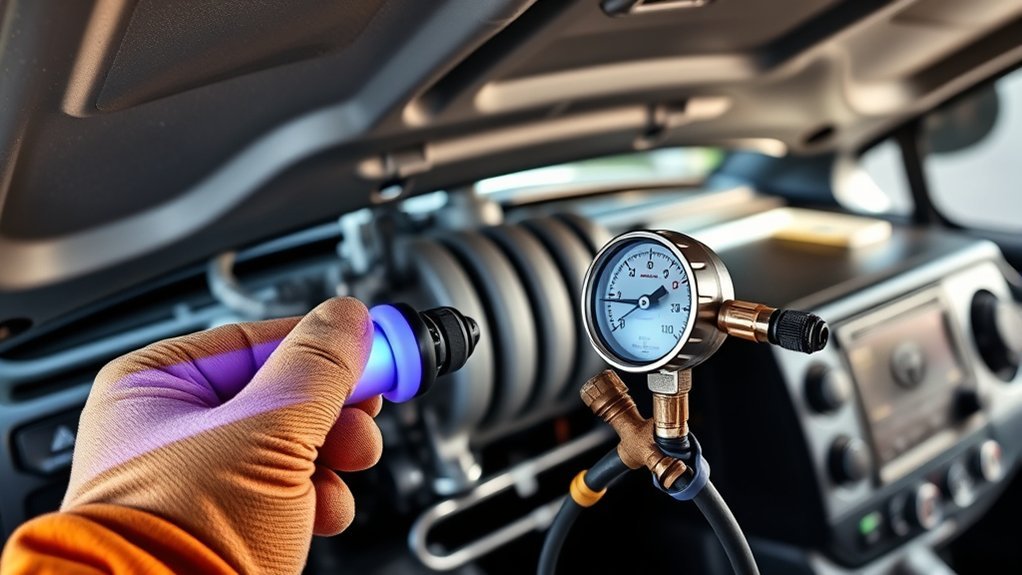
If your Toyota Tacoma A/C is not blowing cold air, first separate a cooling problem from an airflow problem. Strong airflow that stays warm points toward refrigerant, compressor-control, condenser-airflow or temperature-door faults; weak airflow points more toward the cabin filter, blower system or evaporator icing. Cooling that improves while driving but fades at idle often shifts attention to condenser airflow. Your Tacoma’s model year, refrigerant label and climate-control configuration determine the correct service procedure.
Last updated: September 19, 2026 — refreshed with current Toyota and EPA guidance, clearer symptom-based diagnosis and compliant structured data.
Quick Answer
A Toyota Tacoma A/C may stop blowing cold because of refrigerant loss from a leak, poor condenser airflow, a compressor or compressor-control fault, a clogged cabin filter, a blower problem, an electrical fault or a temperature-door problem. Start with the symptom: strong-but-warm airflow, weak airflow, cooling that fades, or cooling that improves while driving. Check the controls, cabin filter, blower speeds, fuses, condenser condition and visible wiring first. Leave refrigerant recovery, evacuation and charging to properly equipped service personnel.
Key Takeaways
- Strong airflow that stays warm usually points toward a refrigeration, compressor-control or temperature-door problem.
- Weak airflow is more likely to involve the cabin filter, blower motor, blower control circuit, evaporator icing or ductwork.
- Cooling that improves while driving but weakens at idle often indicates poor airflow across the condenser.
- Do not rely on a universal low-side pressure range or add refrigerant until a gauge reaches an arbitrary number.
- Use the refrigerant type and charge information printed on your Tacoma’s under-hood label.
- Professional service is appropriate when the system is empty, repeatedly loses cooling, makes mechanical noise or requires refrigerant-line work.
At a Glance
| Time Required | 20–40 minutes for preliminary checks |
| Difficulty | Easy for visual and airflow checks; advanced for electrical or refrigerant diagnosis |
| Tools Needed | Flashlight, gloves, owner’s manual and possibly a replacement cabin filter; electrical tests require a suitable meter and wiring information |
| Cost | Visual checks are free; filter, electrical diagnosis, leak repair and refrigerant service costs vary by model and fault |
Why Is Your Toyota Tacoma A/C Not Blowing Cold?

Your Tacoma’s A/C can lose cooling even when air still comes through the vents. The symptom you observe is the fastest way to narrow the problem.
- Low refrigerant charge or a leak: A sealed system that has lost a meaningful amount of refrigerant often has a leak. Cooling may gradually weaken, and the compressor may cycle or be disabled by the control system.
- Poor condenser airflow: Debris on the condenser or a cooling-fan problem can make the A/C cool while driving but blow warmer air at idle.
- Compressor or compressor-control problem: A worn compressor, failed clutch on an equipped model, control-valve issue, sensor fault or missing electrical command can stop refrigerant circulation.
- Restricted cabin airflow: A dirty cabin filter, weak blower motor, failed blower-control component or evaporator icing can reduce air from the vents.
- Temperature-door fault: A blend door or actuator may route air through the heater core even when you select maximum cooling.
- Electrical fault: A blown fuse, failed relay, damaged connector, bad pressure sensor or climate-control fault may prevent proper operation.
Toyota’s current car A/C troubleshooting guidance also identifies low refrigerant from leaks, restricted condenser airflow, compressor faults and dirty cabin filters as common reasons an automotive A/C system may cool poorly.
Warning: Do not loosen A/C lines, intentionally release refrigerant, mix refrigerants or use adapters between different service fittings. Read the under-hood refrigerant label before any service. Refrigerant recovery, evacuation and charging require the correct equipment. Keep clear of orange high-voltage components on electrified Tacoma models.
Signs Your Tacoma’s A/C Needs Attention
Warm vent air is only one warning sign. Note exactly when the problem appears, because changing symptoms often reveal the affected system.
| Symptom | Likely areas to check | First safe check |
|---|---|---|
| Strong airflow but warm air | Refrigerant charge, leak, compressor command, condenser airflow or blend door | Confirm MAX COLD/recirculation, inspect the condenser and note whether cooling improves while moving |
| Very weak airflow at every temperature | Cabin filter, blower motor, blower controller, ducts or evaporator icing | Inspect the cabin filter and test every blower speed before checking refrigerant |
| Cold while driving but warmer at idle | Condenser blockage, cooling-fan operation or excessive system pressure | Inspect the condenser for debris and record whether the symptom changes with vehicle speed |
| Cold at first, then airflow or cooling fades | Evaporator icing, sensor fault, restricted airflow or compressor-control issue | Note whether airflow returns after the A/C is switched off while the blower continues to run |
| One vent area is warmer than another | Blend-door actuator, duct seal or climate-control calibration fault | Sweep the temperature and mode settings and note which vents fail to respond |
| Clicking, rattling or grinding | Actuator gears, blower debris, pulley, bearing or compressor damage | Stop the test for grinding, knocking or scraping and inspect only with the engine off |
| Musty odor or water inside the cabin | Dirty filter, evaporator contamination or blocked condensate drain | Inspect the cabin filter and check for damp carpet or water that suggests a drain problem |
Perform a Basic A/C Performance Check
Park outdoors in a ventilated area, start the engine and allow it to settle at normal idle. Close the windows, select the coldest temperature, choose panel vents, set the blower to medium or high and turn on recirculation. Confirm that the A/C indicator responds.
- Compare airflow from the driver, center and passenger vents.
- Switch through every blower speed and note any setting that does not work.
- Change from recirculation to fresh air and listen for an actuator response.
- Move the temperature setting from cold to warm, then back to cold.
- Observe whether the air becomes colder when engine speed rises slightly or the truck begins moving.
- Watch the engine-temperature display. Stop the test if the engine begins overheating.
Pro Tip: Record the outside temperature, vent behavior, blower setting and whether the truck was moving. Those details help a technician reproduce an intermittent problem.
How to Check Your A/C Compressor
Inspect the compressor area only with the engine off at first. Look for a damaged belt, loose connector, oily residue, damaged hoses or obvious impact damage around the condenser and lines. Keep hands, clothing and tools away from belts and fans whenever the engine is running.
| Inspection | What to look for |
|---|---|
| Drive belt | Missing ribs, glazing, looseness or contamination on belt-driven systems |
| Compressor command | A clutch-equipped compressor may click or show hub movement, but other designs may not produce an obvious click |
| Noise | Grinding, scraping, knocking or a changing pulley noise |
| Leak evidence | Oily dirt around the compressor body, hose crimps, service ports or connections |
| Scan data | A technician can compare A/C request, pressure-sensor data, compressor command and stored HVAC or engine codes |
A clutch click alone does not prove that the compressor is pumping correctly. The system may still have a weak compressor, incorrect charge, restriction, sensor problem or inadequate condenser airflow.
How Should Tacoma A/C Refrigerant Be Checked?

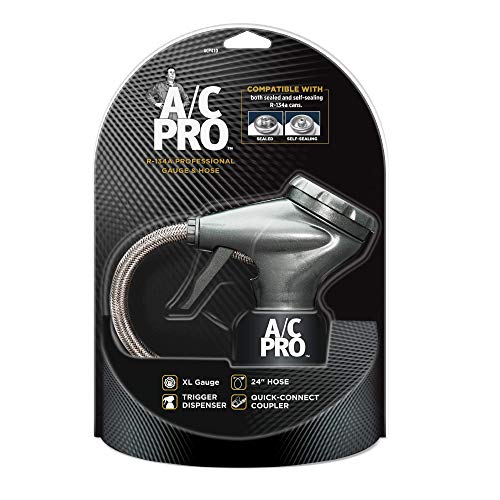
Refrigerant diagnosis requires more than connecting a single low-side gauge. Pressure changes with ambient temperature, humidity, airflow, compressor command and refrigerant type. The correct refrigerant and factory charge amount are printed on the vehicle’s under-hood A/C label.
[Amazon Products Picked for You]
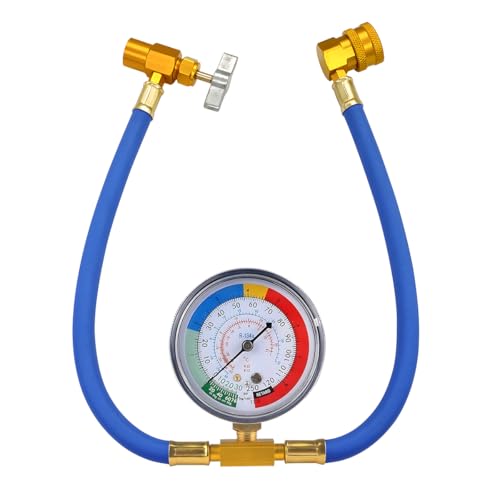
High Quality Material: This car AC refrigerant charge hose is crafted with high-strength aluminum material, which strong pressure resistance and corrosion resistance, not prone to deformation, extending the service life of the hose. Meanwhile, aluminum material has good thermal conductivity, which helps to quickly balance the temperature of the hose and the environment during filling, reducing pressure fluctuations caused by temperature differences and improving filling accuracy.

DUAL REFRIGERANT COMPATIBILITY: Works with both R1234yf and R134a AC systems so you need only one kit for any vehicle in your garage or shop.
What Refrigerant Does Your Tacoma Use?
Before connecting any equipment, read the label under the hood. Do not assume every Tacoma uses the same refrigerant or charge amount. Different refrigerants use different service fittings to reduce the chance of accidental mixing.
You can locate model-specific operating and maintenance information through the Toyota Manuals and Warranties portal. Select the exact model year and configuration rather than using a procedure written for another generation.
Check Refrigerant Pressure Levels
Do not diagnose the system from a universal “normal” low-side pressure range. A low-side reading that looks plausible can occur in an undercharged system, an airflow problem, a metering-device fault or a variable-compressor control problem.
A complete professional test may include:
- Ambient temperature and humidity
- Center-vent temperature
- High- and low-side pressures
- Condenser and radiator-fan operation
- Compressor command or displacement data
- Refrigerant identification
- Recovery and measurement of the existing charge
- Evacuation and recharge by the specified weight
Adding refrigerant until a low-side gauge reaches a chosen number can overcharge the system and does not repair a leak. EPA’s recharging guidance notes that a top-off does not permanently fix a refrigerant leak, while an evacuation and recharge allows the specified refrigerant amount to be installed.
Inspect System for Leaks
Low refrigerant may indicate a leak at a hose crimp, service port, seal, compressor, condenser or evaporator. A visual inspection can reveal oily dirt or physical damage, but many leaks are too small or hidden to see.
Professional leak detection may combine:
- An electronic refrigerant detector
- Approved ultraviolet dye and a UV lamp
- Inspection of service-port caps, fittings and hose crimps
- A controlled pressure test using the specified service procedure
- Evaporator testing through the condensate drain or vent system
A vacuum-hold test may reveal a major sealing problem, but it does not always identify the location of a pressure-side leak. Do not pressurize the system with shop air or oxygen.
When Does Refrigerant Service Need a Professional?
Professional service is the safest option when the system is empty, the refrigerant type is uncertain, the compressor makes mechanical noise, the charge repeatedly drops or a line must be opened. A technician can recover the existing refrigerant, repair the leak, evacuate the system and install the specified charge.
The U.S. Environmental Protection Agency explains current requirements for motor-vehicle A/C servicing on its Motor Vehicle Air Conditioner System Servicing page. In the United States, technicians who service MVAC systems for payment must be Section 609 certified and use approved refrigerant-handling equipment. EPA rules also prohibit intentional venting of most automotive refrigerants.
Troubleshooting A/C Airflow Problems in Your Tacoma
If the air feels cold near the vent but barely reaches you, focus on the cabin-air side before blaming the refrigerant circuit. Airflow problems can make a functioning evaporator appear ineffective.
Check Cabin Air Filter
A heavily loaded cabin filter restricts the volume of air passing through the evaporator and vents. Remove the filter according to the instructions for your model year and inspect both sides under good lighting.
- Turn the ignition and blower off.
- Access the filter housing, commonly located behind the glove compartment.
- Note the airflow arrow before removing the filter.
- Check for dust, leaves, insects, moisture, tears or collapsed pleats.
- Install the correct replacement in the marked airflow direction.
- Close the housing securely and retest every blower speed.
Follow your Tacoma’s maintenance guide rather than assuming one replacement mileage fits every model. Inspect the filter sooner if you drive on dusty roads, around wildfire smoke or in heavy pollen.
Inspect Blower Motor Function
The blower motor should respond smoothly across its available speed range. Missing speeds may indicate a resistor, control module, switch, connector or wiring fault. No airflow at any speed may point to a fuse, relay, power, ground or failed blower motor.
| Inspection | Action |
|---|---|
| Test fan speeds | Check airflow at every available setting |
| Listen for debris | A tapping or rattling sound may indicate leaves or damage near the blower wheel |
| Inspect the fuse | Use the fuse-box diagram and replace only with the specified rating |
| Check power and ground | Use model-specific wiring data before testing connectors |
| Inspect the connector | Look for looseness, corrosion, heat damage or melted plastic |
Evaluate Air Ducts Condition
Move the mode control through panel, floor and defrost positions. Air should redirect to the selected outlets. Air that remains in one position may indicate a mode-door actuator or linkage problem rather than a blocked duct.
Also check for:
- Loose or disconnected duct sections
- Foreign objects near accessible vents
- A clicking actuator behind the dashboard
- Air that changes temperature on only one side
- Airflow that fades after several minutes and returns after the A/C is turned off
Airflow that gradually disappears may indicate evaporator icing. Possible causes include restricted airflow, a temperature-sensor fault, incorrect refrigerant conditions or a compressor-control problem.
Can a Dirty Cabin Filter Make Your Tacoma A/C Blow Warm?
A dirty cabin filter can reduce airflow, increase blower noise and contribute to unpleasant odors. It does not normally explain strong airflow that remains warm, so use the symptom to avoid replacing unrelated parts.
Replace the filter when the pleats are heavily loaded, damaged, damp or contaminated. Do not wash a disposable paper filter unless its manufacturer specifically identifies it as reusable. Before closing the housing, remove loose leaves without pushing debris into the blower or evaporator case.
Note: A new cabin filter may restore airflow, but it cannot repair a refrigerant leak, failed compressor or blend-door fault. Retest the system after replacement before drawing a conclusion.
[Amazon Products Picked for You]

Compatible Auto List: Dodge: Dart (2013-2016), Pontiac: Vibe (2003-2008), Tacoma (2005-2023). Replacement for: CF10374, CP374, 87139-YZZ09, 88508-04010, Chrysler: 68164981AA, LUBER-FINER: CAF1765 and CAF7765.
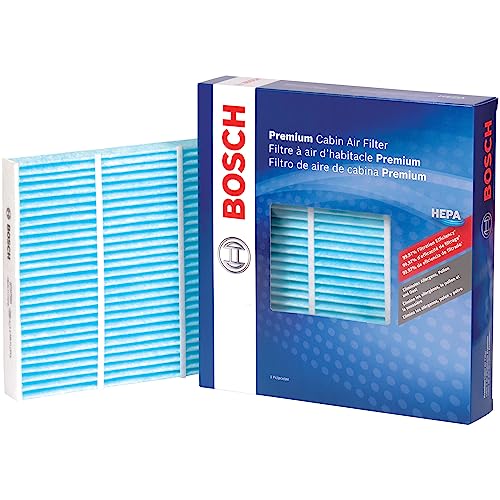
Bosch HEPA Premium Cabin Air Filters are designed and tested to meet High Efficiency Particulate Air (HEPA) standards based on ISO 29463-3:2011 and provide filtration efficiency of 99.97% at 0.3 microns
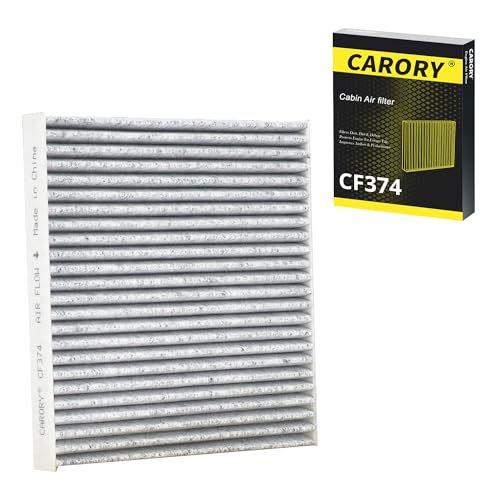
[Vehicle Fitment] Replacement for Toyota: Tacoma (2005-2023).
Is Your A/C Electrical System Acting Up?
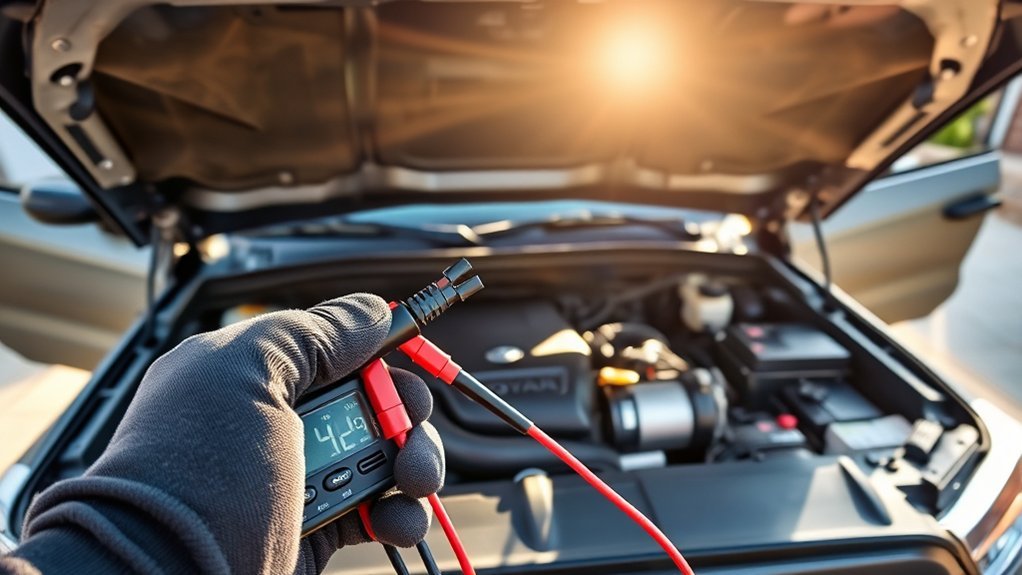
The climate-control system depends on fuses, sensors, actuators, modules, connectors and network communication. A visible compressor that does not engage is not automatically a failed compressor; the control system may be withholding operation because of pressure, temperature or electrical data.
Check Fuses and Relays
- Use the owner’s manual and fuse-box covers to identify A/C, heater, blower and related control fuses.
- Turn the vehicle off before removing a fuse.
- Inspect or test the fuse rather than relying only on a visual glance.
- Replace a failed fuse with the same specified amperage.
- Stop if the replacement fuse fails again. A repeated failure indicates a circuit problem that needs diagnosis.
Do not assume every Tacoma uses a removable A/C relay in the same location. Some relay functions may be integrated into a larger junction block or control assembly.
Check A/C Control and Sensor Data
Before suspecting the control module, confirm that the display, buttons, temperature settings, mode selection and blower commands respond normally. A scan tool capable of communicating with the HVAC and engine-control systems can reveal stored codes and live data that a basic code reader may not show.
Useful data may include:
- A/C request status
- Refrigerant pressure-sensor reading
- Ambient and evaporator temperature
- Compressor command
- Blend-door position
- Cooling-fan command
Replace a control module only after verifying its power, ground, communication and inputs. Guessing at an expensive module can leave the original fault unchanged.
Test Wiring Connections Thoroughly
Inspect accessible connectors for corrosion, loose terminals, broken locks, rubbing damage and signs of heat. Use the correct wiring diagram before checking voltage or continuity, because circuit design and connector pinouts vary by model year.
- Confirm battery voltage is adequate.
- Check the relevant fuse and power supply.
- Inspect grounds for looseness or corrosion.
- Verify sensor reference voltage and signal only when service information provides the expected values.
- Avoid probing sealed terminals with oversized test leads that can spread or damage the contacts.
Check Condenser and Cooling-Fan Operation
The condenser releases cabin heat to the outside air. Mud, leaves, insects or bent fins can reduce airflow. Inspect the condenser through the grille with the engine off and cool. Do not use a pressure washer close to the fins because it can flatten them.
If the A/C is cold on the highway but warm in traffic, check whether the applicable cooling fans operate when commanded. Fan strategy varies, so a stationary fan at one moment does not prove failure. A technician may need to compare fan command, coolant temperature, refrigerant pressure and actual fan operation.
Also make sure the engine is not overheating. Some control systems reduce or disable compressor operation to protect the powertrain when temperature or pressure moves outside the allowed range.
How Is a Tacoma Refrigerant Leak Diagnosed and Repaired?
Begin with a visual inspection rather than immediately adding refrigerant. Look for condenser impact damage, oily dirt around hose crimps, staining near the compressor and missing service-port caps. A cap is part of the service-port seal and should be present. The visual checks below are owner-safe; leak testing that requires refrigerant handling, opening the system, evacuation or charging belongs with properly equipped service personnel.
- Confirm the symptom: Verify that airflow is strong enough and the controls respond normally.
- Read the refrigerant label: Identify the specified refrigerant and factory charge.
- Inspect visible components: Check the condenser, hoses, compressor and service-port area.
- Scan for faults: Read HVAC and engine-control codes when suitable equipment is available.
- Test for leaks: Use an electronic detector, approved dye or the model-specific service procedure.
- Repair the leak: Replace the failed seal, hose, condenser, compressor or other confirmed component.
- Recover and recharge correctly: Evacuate and recharge the system with the specified refrigerant weight.
- Verify performance: Recheck vent temperature, pressure behavior, fan operation and leak integrity.
Refrigerant is not consumed like engine oil. Repeatedly adding it without repairing the leak only delays the fault and increases the risk of an incorrect charge.
[Amazon Products Picked for You]

Professional AC Leak Detector Kit: Designed specifically for detecting automotive air conditioner leak, Vansky AC leak detector flashlight incorporates cutting-edge R&D technologies. Equipped with 68 high-quality LED beads, it can accurately pinpoint leaks, even in garage or indoor space. Compared to other flashlights, Vansky optimized ultraviolet light operates at a level 40% brighter, setting it apart in brightness.

Upgraded version of WJL-6000. Traditional corona sensor with updated analogue circuit, fast triggers on R11, R22, R134A, R404a, R410A and all halogenated refrigerants including HFCs, CFCs,HCFCs and blends.

One application of oil and fuel system UV leak detection dye
When to Seek Professional A/C Repair Services
Arrange professional diagnosis when the preliminary checks do not identify a simple airflow or fuse problem. Stop DIY testing when any of the following applies:
- The system has no measurable charge or repeatedly loses cooling.
- The compressor, pulley or belt area makes grinding, knocking or scraping noises.
- The condenser is damaged or oily.
- A fuse fails repeatedly.
- The blower, compressor or cooling fan lacks a verified electrical command.
- The system requires refrigerant recovery or a line must be opened.
- An expansion-valve, evaporator or internal compressor restriction is suspected.
- The truck has an electrified powertrain and the work approaches high-voltage components.
- The A/C stops working while the engine-temperature warning is active.
A qualified shop should document the refrigerant type, recovered amount, leak-test result, repair performed and final charge amount. Ask for the actual diagnosis rather than authorizing a recharge as the only step.
Preventative Maintenance Tips for Your Tacoma’s A/C System
- Inspect the cabin filter according to the model-year maintenance guide and sooner in dusty conditions.
- Keep leaves, mud and insects from building up on the condenser and radiator area.
- Run the A/C periodically during cooler months when operating conditions allow.
- Address oil staining, unusual compressor noise and declining cooling before the system becomes empty.
- Keep service-port caps installed and replace damaged caps with the correct type.
- Do not add stop-leak products unless the vehicle manufacturer’s service information specifically approves them.
- Use only the refrigerant and oil specified for the exact vehicle.
- Have the system inspected if cooling performance changes noticeably rather than scheduling unnecessary routine recharges.
Related Guides
Frequently Asked Questions
Why is my Toyota Tacoma A/C not blowing cold air?
Common causes include a low refrigerant charge from a leak, poor condenser airflow, a compressor-control fault, a failed sensor, a blend-door problem or an electrical issue. If airflow itself is weak, inspect the cabin filter, blower system and possible evaporator icing first.
How do I reset a Toyota Tacoma A/C system?
No single battery-disconnection procedure resets every Tacoma A/C fault. Turn the vehicle off, restart it and verify the temperature, mode, blower and recirculation settings. Persistent actuator, sensor or control faults may require model-specific initialization or a scan tool. Do not disconnect the battery merely as a substitute for diagnosis.
What is the most common cause of A/C not blowing cold air?
Refrigerant loss is common, but it is not the only cause. The correct first step depends on the symptom. Strong warm airflow suggests a refrigeration or temperature-control fault, while weak airflow points more toward the filter, blower or evaporator.
Can I unclog an automotive expansion valve?
Do not try to flush an installed expansion valve with solvent. A suspected restriction requires refrigerant recovery, pressure and temperature diagnosis, contamination inspection and often replacement of the valve or affected components. Internal compressor debris may require additional system cleaning and parts replacement.
Why is my Tacoma A/C cold while driving but warm at idle?
The condenser may not receive enough airflow at low speed. Check for debris on the condenser and have the cooling-fan command and operation tested. Incorrect refrigerant charge, excessive pressure and compressor-control faults can produce similar symptoms.
Can a dirty cabin filter make the A/C blow warm air?
A dirty filter mainly reduces airflow. The air near the vent may still be cold, but too little reaches the cabin. Strong airflow that remains warm is more likely to involve the refrigerant circuit, compressor control, condenser airflow or a temperature-door problem.
What refrigerant does a Toyota Tacoma use?
Use the refrigerant type and charge amount printed on your Tacoma’s under-hood A/C label. Do not assume every model year uses the same refrigerant. EPA requires refrigerant-specific service fittings to help prevent accidental mixing.
Does a Toyota Tacoma A/C need regular refrigerant recharging?
Do not treat refrigerant as a routine top-off item. If cooling performance drops and the charge is low, diagnose why refrigerant was lost. EPA notes that topping off can restore cooling temporarily but does not permanently repair a leak.
Conclusion
A Toyota Tacoma A/C problem is easier to diagnose when you separate airflow symptoms from cooling symptoms. Check the control settings, cabin filter, blower speeds, fuses, condenser condition and visible wiring before suspecting an expensive component.
Avoid fixed pressure targets, blind refrigerant top-ups and generic battery-reset advice. If the charge is low, the system is empty, a compressor makes noise or refrigerant-line work is required, use a properly equipped technician who can identify the leak and recharge the exact specified amount.
Sources
- Toyota Manuals and Warranties — model-specific owner, warranty and maintenance information
- U.S. EPA: Motor Vehicle Air Conditioner System Servicing — current overview of MVAC service requirements
- U.S. EPA: Regulatory Requirements for MVAC System Servicing — refrigerant handling, approved equipment and venting requirements
- U.S. EPA: Unique Fittings and Label Colors — refrigerant-specific fittings and labeling guidance
- Toyota: Troubleshooting Common Car A/C Issues — general causes of weak cooling and airflow problems
- U.S. EPA: Options for Recharging Your Air Conditioner — top-off, evacuation/recharge and leak-repair guidance
