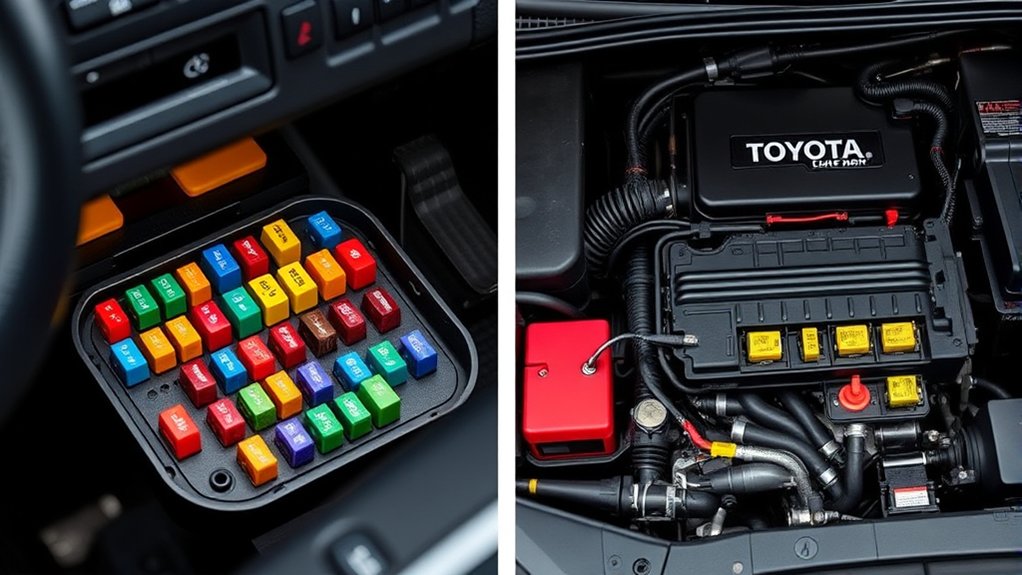
Finding the fuse boxes in your Toyota Camry is usually simple once you know where to look. Most Camry models have one fuse box in the engine compartment and another inside the cabin near the driver-side lower dash or footwell, but the exact layout can change by model year.
Quick Answer
Most Toyota Camry models have an engine-compartment fuse box near the battery or driver-side engine bay and an interior fuse panel near the driver-side lower dash or footwell. Use the diagram on the fuse-box cover or your Toyota owner’s manual to match the exact fuse location, rating, and circuit.
Key Takeaways
- Your Camry usually has one fuse box under the hood and one inside the cabin.
- Always check the fuse-box cover diagram or your model-year owner’s manual before pulling a fuse.
- Replace a blown fuse only with the same amperage rating and the same physical fuse type.
- If the new fuse blows again, stop replacing it and have the circuit diagnosed.
At a Glance
| Time Required | 5 to 15 minutes for inspection or a simple fuse replacement |
| Difficulty | Easy for basic fuse checks |
| Tools Needed | Fuse puller, small flashlight, and the correct replacement fuse |
| Cost | Usually low for a basic replacement fuse; diagnosis costs more if the fuse keeps blowing |
How to Locate and Understand Your Toyota Camry’s Fuse Boxes
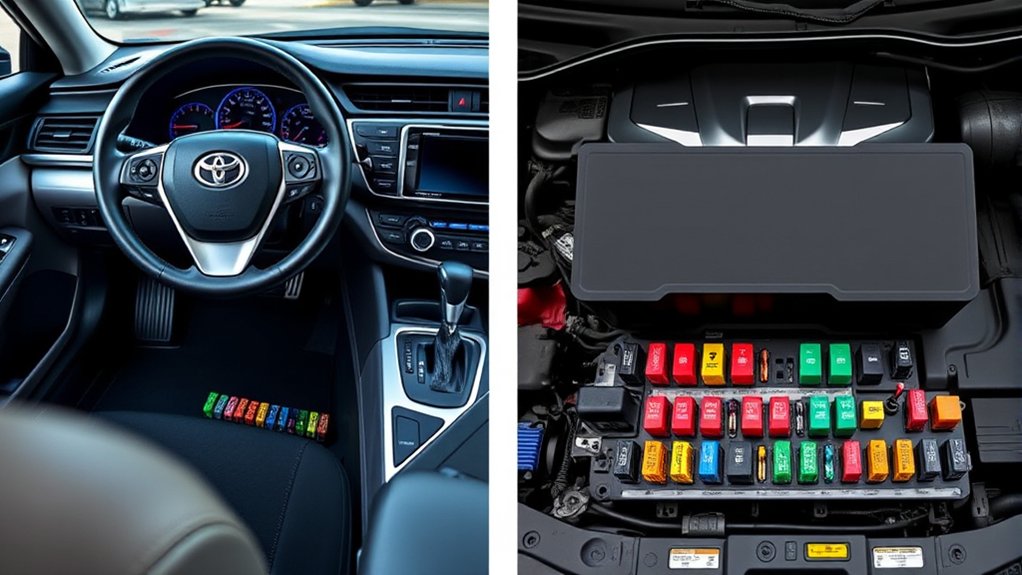
To find your Toyota Camry’s fuse boxes, start with the two common locations: the engine compartment and the driver-side interior area. The engine-compartment fuse box is usually near the battery or along the driver-side area of the engine bay. The cabin fuse panel is commonly under the driver-side lower dashboard, near the kick panel, or close to the footwell.
Because Toyota changes layouts by model year and trim, use the diagram on the fuse-box cover before removing anything. You can also check the correct model-year manual through Toyota Owner’s Manuals and Warranties.
The fuse-box cover diagram is your fastest guide because it shows the fuse name, location, and amp rating for that specific fuse panel.
Most fuse boxes use blade-style fuses, cartridge fuses, or fusible links depending on the circuit. Small circuits, such as interior lights or power outlets, often use smaller blade fuses. Higher-load circuits may use larger cartridge-style fuses or fusible links.
Note: Do not rely only on a photo from another Camry year. A 2013 Camry, a 2018 Camry, and a newer hybrid model may place or label some fuses differently.
Importance of Regular Fuse Inspections for Your Toyota Camry
Regular fuse checks help you catch simple electrical issues before you spend time replacing parts that may not be faulty. A blown fuse can stop a power window, interior light, radio, accessory outlet, horn, wiper, or headlight circuit from working.
You do not need to inspect every fuse every week. A practical approach is to check the fuse box when an electrical feature stops working, after water intrusion near the cabin, after battery work, or before replacing a related electrical component.
Keeping a few spare fuses in common ratings can help, but only if they match your Camry’s diagram. If you need replacement parts by fitment, use the official Toyota Genuine Parts store or confirm the rating with your owner’s manual.
How to Access the Engine Bay Fuse Box
Accessing the engine bay fuse box is usually straightforward. Park on level ground, turn the vehicle off, set the parking brake, and let the engine bay cool before working near the fuse box.
Warning: Never replace a fuse with a higher-amp fuse. The fuse protects the wiring. If the correct replacement fuse blows again, the circuit may have a short or overloaded component that needs diagnosis.
Open the hood and look for a black plastic fuse-box cover near the battery or along the side of the engine bay. Press the cover tabs gently and lift the cover straight up. Some covers use clips that require light pressure from both sides.
Look inside the cover for the fuse diagram. The diagram may use labels such as HEAD, ECU, HORN, DOME, P/OUTLET, or WIPER. Match the label to the feature that stopped working, then confirm the fuse rating before pulling it.
Many Camry models include a small fuse puller inside one of the fuse boxes. If yours does not, use a plastic fuse puller or insulated needle-nose pliers and pull the fuse straight out without twisting it.
How to Navigate the Cabin Fuse Box?
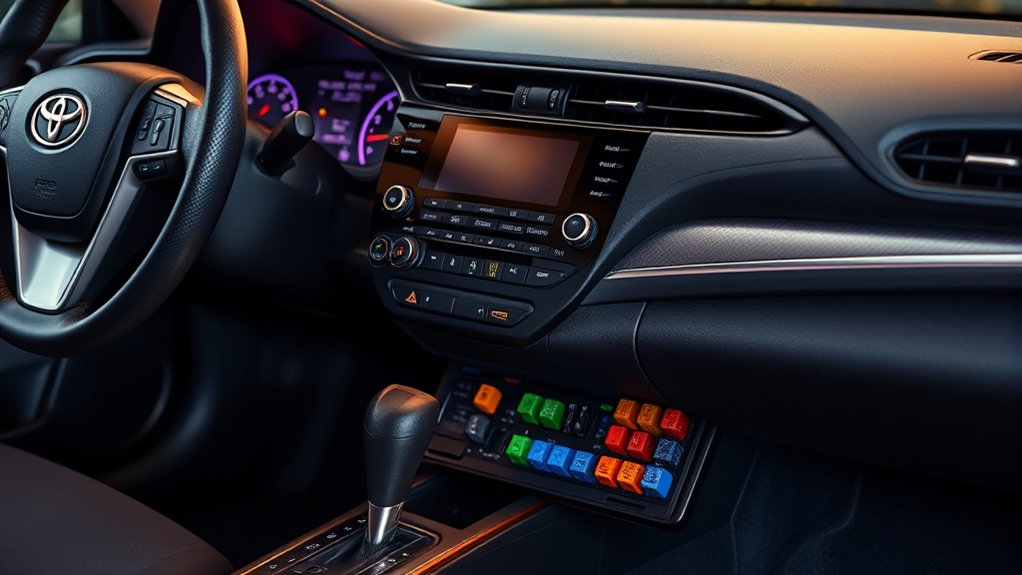
The cabin fuse box controls many interior and convenience circuits. On many Toyota Camry models, you will find it below the driver-side dashboard, near the kick panel, or in the footwell area.
Move the driver’s seat back, use a flashlight, and look for a small removable cover. The cover may pull off by hand, or it may use tabs that need gentle pressure. Do not force it because the clips can break.
Once the cover is off, use the printed diagram to find the fuse you need. Interior fuse labels may point to circuits for the radio, power outlet, interior lights, mirrors, door locks, or power windows.
Pro Tip: Take a clear photo of the fuse diagram before you pull a fuse. It helps you confirm the correct slot and makes rechecking easier if the cover is hard to read.
Step-by-Step Guide for Replacing and Installing Fuses
Replacing a fuse is a small job, but accuracy matters. The goal is not just to make the circuit work again. You also need to protect the wiring and avoid masking a deeper electrical problem.
Tools Required For Replacement
You only need a few basic tools for most Toyota Camry fuse checks:
- A fuse puller or insulated needle-nose pliers
- A flashlight
- Replacement fuses that match the exact amp rating and physical type
- Your fuse-box cover diagram or model-year owner’s manual
Spare fuses are helpful, but they must match the circuit rating. For example, if the cover diagram lists a 10A fuse, replace it with a 10A fuse of the same type, not a 15A or 20A fuse.
Step-By-Step Replacement Process
- Turn the Camry off and remove the key or keep the smart key away from the vehicle.
- Open the correct fuse box and read the diagram on the cover.
- Find the fuse for the circuit that stopped working.
- Pull the fuse straight out with a fuse puller.
- Inspect the metal strip inside the fuse. If the strip is broken or burned, the fuse is blown.
- Install a new fuse with the same amp rating and same physical style.
- Push the fuse fully into the slot until it seats firmly.
- Reinstall the fuse-box cover and test the electrical feature.
Proper Installation Tips
When you install the replacement fuse, make sure it sits flat and fully inserted. A loose fuse can cause intermittent power, flickering, or repeated circuit failure.
- Match the fuse amperage exactly.
- Use the correct fuse size and style.
- Do not bridge a fuse slot with wire, foil, or another object.
- Do not swap fuses from safety systems unless the manual tells you to.
- Put the cover back on to protect the panel from dust and moisture.
Common Fuse Issues and Troubleshooting Tips for Your Toyota Camry
A blown fuse often points to a circuit problem, not a failed fuse by itself. If one feature stops working, check the related fuse first. If several features fail together, check the fuse diagram because they may share a fuse, relay, or power feed.
| Symptom | What to Check First |
| Power outlet does not work | Accessory outlet or P/OUTLET fuse |
| Interior lights do not turn on | DOME or interior lamp fuse |
| Horn does not work | HORN fuse and related relay |
| Wipers stop working | WIPER fuse before replacing the motor |
| Fuse blows again right away | Stop replacing fuses and diagnose the circuit |
If a fuse looks good but the feature still does not work, the issue may involve a relay, switch, wiring connection, module, or the component itself. At that point, a digital multimeter and wiring diagram may be needed.
For deeper service information, Toyota’s Technical Information System is the official source for repair information and service documents.
Frequently Asked Questions
Where is the fuse box in the Toyota Camry engine bay?
On most Toyota Camry models, the engine-bay fuse box is near the battery or along the side of the engine compartment. Open the hood and look for a black plastic fuse-box cover with a diagram on the underside.
Where is the interior fuse panel?
The interior fuse panel is commonly under the driver-side lower dashboard, near the kick panel, or close to the footwell. Move the seat back, use a flashlight, and check the small cover or panel near the driver’s feet.
Do Toyota Camry fuse box locations change by model year?
Yes. The general locations are similar across many Camry years, but the exact panel layout, fuse names, and amp ratings can change. Always use your fuse-box cover diagram or the owner’s manual for your exact year.
Where is the fuse box in a 2013 Toyota Camry?
A 2013 Toyota Camry typically has an engine-compartment fuse box under the hood and an interior fuse panel near the driver-side lower dash or footwell. Check the cover diagram before replacing any fuse because the diagram identifies the exact circuit and amp rating.
How can I tell if a Camry fuse is blown?
Pull the suspected fuse and look through the clear plastic body. If the thin metal strip inside is broken, burned, or separated, the fuse is blown. If you cannot see clearly, test the fuse with a multimeter or fuse tester.
Conclusion
Your Toyota Camry’s fuse boxes give you a quick way to troubleshoot many simple electrical problems. Start with the engine-bay fuse box and the interior fuse panel, then use the cover diagram to find the correct circuit.
Work carefully, replace fuses only with the same amperage, and reinstall the covers when you finish. If a replacement fuse blows again, do not keep swapping fuses. That usually means the circuit needs proper diagnosis before more parts are damaged.
Sources
- Toyota Owner’s Manuals and Warranties — confirms Toyota provides model-specific owner manuals for vehicle functions and reference information.
- Toyota Technical Information System — official Toyota repair and service information source for deeper diagnostics.
- Toyota Genuine Parts and Accessories — official Toyota parts store for vehicle-fitment-based replacement parts.
