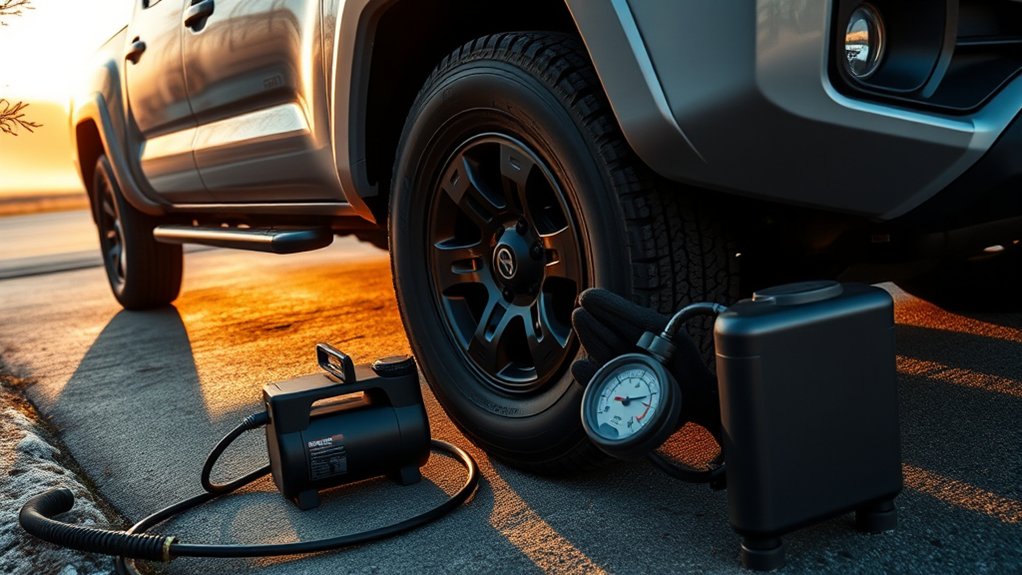
Your Toyota Tacoma’s tire pressure can change even when every tire looks normal. Check all road tires and the spare at least once a month, before long trips, after sharp temperature changes, and whenever the tire-pressure warning light appears. For a reliable reading, measure the tires cold and use the pressure listed on the driver-side Tire and Loading Information label.
Quick Answer
Check your Tacoma’s tire pressure at least monthly, before long trips or heavy loads, after major temperature changes, and when the TPMS light turns on. Measure after the truck has been parked for at least three hours, then inflate each tire to the cold PSI on the driver-door placard.
Key Takeaways
- Use the driver-door placard, not a generic Tacoma PSI range or the maximum pressure molded into the tire.
- Check pressure when the tires are cold, ideally after the truck has been parked for at least three hours.
- A steady TPMS light means you should inspect and measure the tires promptly; a flashing light that stays on usually indicates a system fault.
- Do not bleed air from warm tires simply because the reading is higher than the cold specification.
- Recheck pressure after major weather changes, towing preparation, off-road air-downs, or tire and wheel changes.
At a Glance
| Time Required | About 5 to 10 minutes |
| Difficulty | Easy |
| Tools Needed | A reliable tire-pressure gauge and an air compressor or inflation station |
| Cost | Usually free with your own equipment; some air stations charge a small fee |
Why Checking Tire Pressure Is Essential for Your Tacoma
Correct inflation helps your Tacoma handle, brake, carry loads, and wear its tires as designed. Underinflation increases sidewall flex and heat, while overinflation can reduce ride comfort and make the tire more vulnerable to impact damage.
The National Highway Traffic Safety Administration recommends checking every tire, including the spare, at least once a month when cold. Its guidance also explains that TPMS is a backup warning, not a replacement for manual checks.
Proper pressure can also reduce wasted fuel. FuelEconomy.gov reports an average fuel-economy improvement of about 0.6%, and up to 3% in some cases, when tires are kept at the correct pressure. It estimates that average fuel economy drops about 0.2% for each 1 PSI loss across all tires.
TPMS may not warn you until a tire is significantly underinflated, so a monthly gauge check can catch pressure loss earlier.
When to Check Tire Pressure
Best Time to Check
Check your Tacoma’s tire pressure when the tires are cold. In practical terms, that means the truck has been parked for at least three hours and the tires have not been heated by normal driving. Morning is often convenient, but the parked time matters more than the clock.
Use this schedule as a minimum:
- Once every month
- Before a long highway trip
- Before carrying a heavy load or towing
- After a strong temperature swing
- After hitting a pothole, curb, or road debris
- Whenever the TPMS light appears
Check More Often During Seasonal Changes
Pressure usually falls as outdoor temperature drops and rises as it warms. A useful rule of thumb is about 1 PSI for each 10°F change, although the exact movement varies with the tire, starting pressure, and conditions. Sudden autumn and winter temperature drops often expose tires that were already slightly low.
Do not wait for the TPMS light. A tire can be below its recommended pressure without crossing the warning threshold.
How Weather Changes Affect Tire Pressure in Your Tacoma
Cold air contracts, so the gauge reading may be lower after a cold night. Driving then warms the tires and raises the reading. That increase is normal and is one reason the placard specification is a cold-pressure value.
Warning: Do not release air from a warm tire just to bring it down to the cold placard number. You could leave the tire underinflated after it cools. If a warm tire seems low, add enough air to reach the placard value, then recheck and fine-tune it when cold.
Hot weather does not automatically mean you should lower the pressure. Set the tires to the placard value when cold, then let normal operating heat raise the pressure as the vehicle manufacturer intended.
Steps to Accurately Measure Tire Pressure on Your Tacoma
- Park and let the tires cool. Wait at least three hours for the most dependable cold reading.
- Find the correct PSI. Read the Tire and Loading Information label on the driver-side doorjamb. Note that the front and rear values may differ.
- Remove the valve cap. Keep it in a safe place so dirt and moisture do not enter the valve.
- Press the gauge firmly onto the valve stem. A brief hiss is normal while seating the gauge, but a continuous hiss means the seal is not tight.
- Compare the reading with the placard. Add air if the tire is low. If it is high while cold, release small amounts and check again.
- Repeat the measurement. Confirm the final reading, replace the valve cap, and check the remaining tires.
- Check the spare manually. The spare may use a different pressure and may not be monitored by the truck’s TPMS.
Pro Tip: Keep a quality pencil, dial, or digital gauge in the glove box. Compare it occasionally with a trusted shop gauge, especially if its readings suddenly seem inconsistent.
Understanding Your Tacoma’s Recommended Tire Pressure Settings
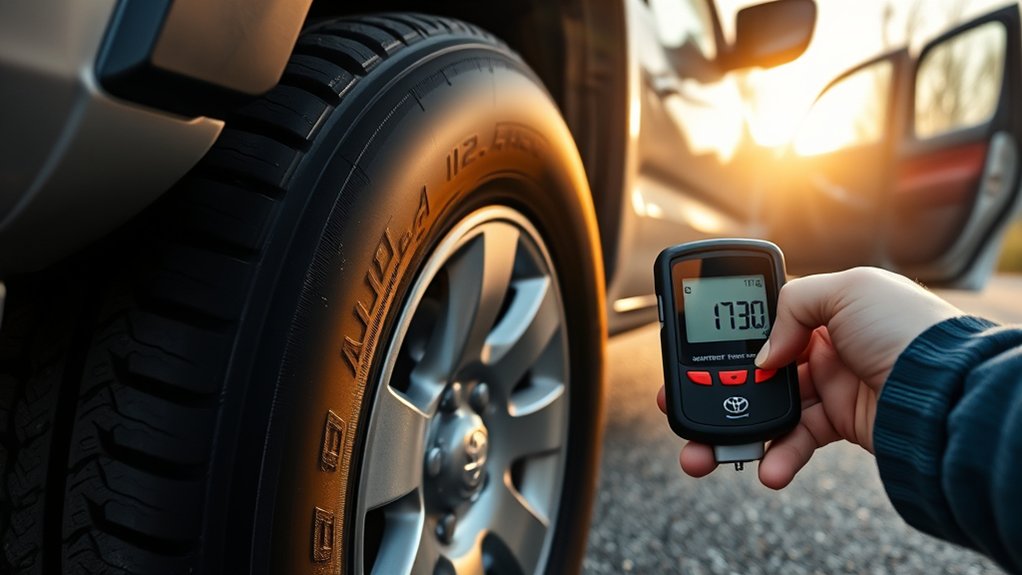
Toyota Tacoma tire pressure is not one universal number. The correct value depends on the model year, configuration, original tire size, axle position, and vehicle certification label. That is why broad ranges such as 30 to 36 PSI can be unsafe or misleading for a specific truck.
Use the following order of authority:
| Source | How to Use It | Important Detail |
|---|---|---|
| Driver-door Tire and Loading Information label | Use its front and rear cold PSI values for the original vehicle configuration. | This is the primary pressure reference. |
| Toyota owner’s manual | Check model-specific TPMS, spare-tire, loading, and initialization instructions. | Use the manual for your exact year and trim. |
| Tire sidewall | Use it to identify tire size, load rating, and maximum capacity information. | The sidewall maximum is not the normal target pressure. |
| Toyota dealer or qualified tire professional | Ask for a load-capacity calculation after changing tire size or load range. | Do not guess an equivalent PSI for aftermarket tires. |
Note: Toyota provides model-year manuals through its official Manuals and Warranties portal. Confirm your year before following any TPMS initialization or reset steps.
Tire Pressure for Towing, Heavy Loads, and Off-Road Driving
Towing or Carrying Heavy Cargo
Check pressure before loading the truck, then follow the door placard and your exact owner’s manual. Do not raise pressure to the sidewall maximum simply because you are towing. Also confirm the truck’s payload, axle ratings, tire load ratings, and trailer setup.
After Airing Down Off-Road
Lower pressure can improve traction on some off-road surfaces, but an aired-down tire is not ready for normal highway speed. Reinflate every tire to the correct cold-road pressure before sustained pavement driving, then recheck for bead leaks or sidewall damage.
After Installing Different Tires or Wheels
Aftermarket tire sizes and load ranges may need a professionally calculated pressure to carry the same load safely. Replacement wheels and sensors must also remain compatible with the TPMS. Check the warning light after the work is complete.
How to Address Low Tire Pressure When Your TPMS Light Activates
If the Light Stays On Steadily
- Slow down and stop in a safe place as soon as practical.
- Inspect each tire for a visibly flat condition, cuts, bulges, or exposed cords.
- Measure every road tire with a gauge instead of relying only on the dashboard display.
- Inflate each tire to its placard pressure.
- Drive only as directed in your owner’s manual to let the system update.
- If the light returns, have the tire checked for a puncture, leaking valve, bead leak, or wheel damage.
If the Light Flashes and Then Stays On
A TPMS light that flashes for about a minute and then remains illuminated generally indicates a system malfunction rather than ordinary low pressure. The system may not detect a low tire correctly, so check the tires manually and arrange service.
Reset or Initialize Only as Your Manual Directs
Tacoma procedures vary by model year and equipment. Some systems clear after correct inflation and driving, while others include an initialization procedure after tire, wheel, sensor, or pressure-setting changes. Do not assume every Tacoma has the same reset button or menu sequence.
Troubleshooting Repeated Pressure Loss
If one tire keeps losing pressure between checks, adding air is not a complete repair. Common causes include a tread puncture, leaking valve core, damaged valve stem, corroded wheel, bead-seal leak, or impact damage.
- One tire repeatedly drops: Have that tire and wheel inspected for a leak.
- All four tires drop after cold weather: Adjust them cold to the placard specification and keep monitoring.
- Pressure changes after new wheels or sensors: Confirm sensor registration and TPMS compatibility.
- The truck pulls, vibrates, or shows uneven wear: Check pressure first, then have alignment, balance, suspension, and tire condition inspected.
Warning: Do not continue driving on a visibly flat tire, a tire with a sidewall bulge or exposed cords, or a tire that will not hold pressure. Use the spare or roadside assistance when necessary.
Year-Round Tire Pressure Maintenance Tips for Your Tacoma
- Set a monthly reminder and check the tires on the same day.
- Measure the spare even if the dashboard shows all four road tires.
- Keep valve caps installed to protect the valve cores from dirt and moisture.
- Check tread and visible damage while you are already at each tire.
- Follow the owner’s manual for rotation intervals and approved patterns.
- Recheck pressure after tire service, rotation, repair, or seasonal wheel changes.
- Record repeated pressure loss so a technician can identify a pattern.
A simple monthly routine helps you catch a slow leak before it becomes a roadside problem. It also keeps the truck closer to the handling, load capacity, ride, and fuel economy Toyota intended.
Frequently Asked Questions
What is the best time of day to check Tacoma tire pressure?
Check when the tires are cold, usually after the truck has been parked for at least three hours. Morning is convenient, but any time works if the tires have cooled.
Should I check tire pressure when the tires are hot or cold?
Use a cold reading for final adjustment. If you must add air while the tires are warm, inflate to at least the placard value and recheck when cold. Do not bleed warm tires down to the cold specification.
What is the 5 PSI rule?
No universal 5 PSI rule determines whether a Tacoma tire is safe. Compare every reading with the exact cold pressure on your truck’s placard. A 5 PSI loss can be significant, especially when the recommended pressure is relatively low.
What PSI should my Toyota Tacoma tires be?
Use the front and rear cold PSI printed on the Tire and Loading Information label inside the driver-side door area. The correct pressure varies by year, configuration, and original tire setup, so a generic Tacoma PSI number is not dependable.
Why does the TPMS light appear on a cold morning and turn off later?
A marginally low tire can fall below the warning threshold overnight, then rise as the day or tire warms. Check and correct the pressure cold instead of assuming the light was harmless.
Does the Tacoma TPMS monitor the spare tire?
Coverage varies by model year and equipment. Check the spare manually every month and use the pressure specified for it in the owner’s manual or on its label.
Should I increase Tacoma tire pressure for towing?
Follow the door placard and the towing or loading instructions in the manual for your exact truck. Do not inflate to the tire’s sidewall maximum unless Toyota or a qualified tire professional specifically requires that pressure for your setup.
Conclusion
Check your Tacoma’s tire pressure monthly, before demanding trips, and whenever weather or warning lights give you a reason to look. Measure cold, follow the driver-door placard, and treat recurring pressure loss as a leak that needs inspection. That routine is safer than relying on a generic PSI number or waiting for TPMS to react.
Sources
- NHTSA TireWise — monthly cold-pressure checks, placard guidance, TPMS warnings, and tire safety.
- Toyota Manuals and Warranties — model-year-specific Tacoma owner’s manuals and procedures.
- FuelEconomy.gov: Keeping Your Vehicle in Shape — fuel-economy effects of proper tire inflation.
- 49 CFR 571.138 — federal TPMS detection, warning, and malfunction requirements.
- Continental Tire Pressure Guide — temperature effects, cold measurements, and manufacturer-pressure guidance.
