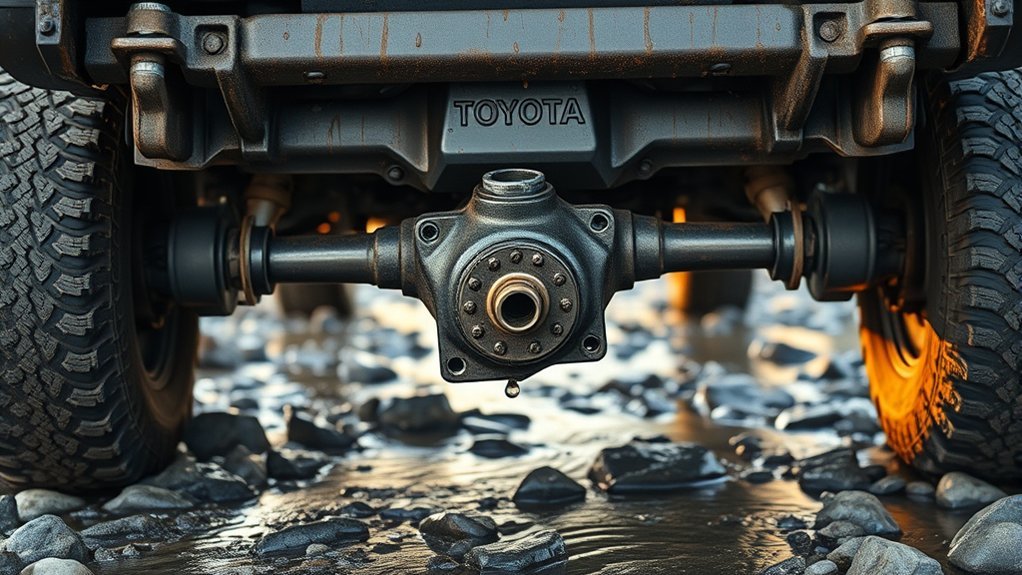
Deep water can contaminate a Toyota Tacoma’s differential oil, but a shallow splash does not automatically require a fluid change. The right response depends on water depth, exposure time, axle condition, and what you find during inspection. Checking the oil promptly can prevent water, corrosion, and poor lubrication from damaging gears and bearings.
Quick Answer
After a shallow splash, an automatic fluid change is not required. After driving through deep water, inspect the differential oil as soon as practical. Change it promptly if the oil is milky or cloudy, free water drains out, the level has risen, or contamination is otherwise suspected. Use the exact specifications for your Tacoma’s model year.
Key Takeaways
- Toyota lists a differential-oil check after driving through deep sand, mud, or water. It does not require an automatic change after every shallow crossing.
- Milky oil, separated water, an unexpectedly high level, persistent foam, or corrosion can indicate contamination.
- Replacement intervals and fluid specifications vary by model year, drivetrain, axle, differential, and operating conditions.
- Remove the fill plug before draining, use the specified fluid and sealing washers, torque the plugs correctly, and recheck for leaks.
- Stop driving and seek professional help if you find heavy metal debris, grinding or howling, damaged seals, or continued contamination.
When Should You Inspect or Change Differential Fluid After a Water Crossing?
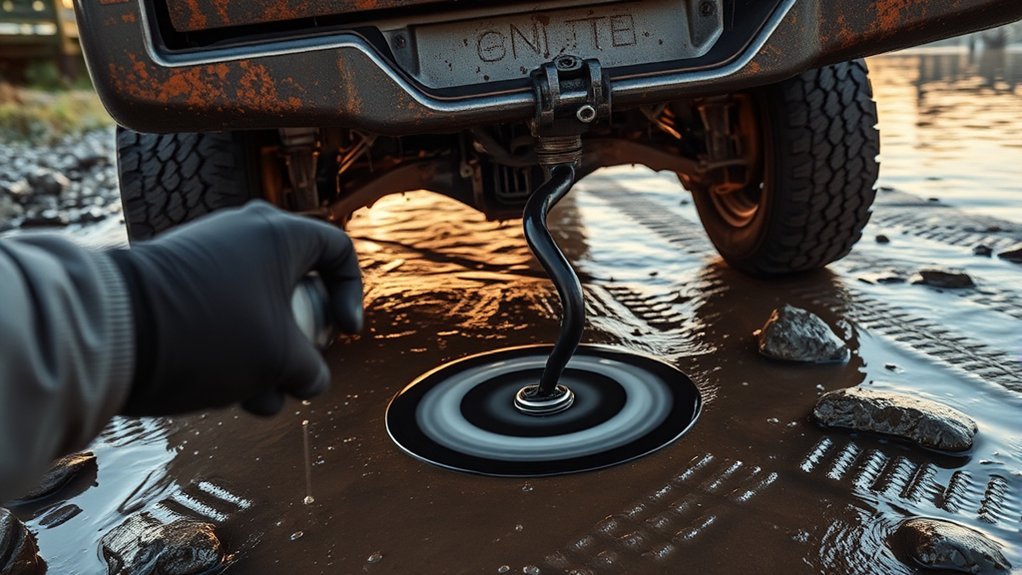
Toyota’s 2026 Tacoma Warranty and Maintenance Guide includes checking the differential oil among the daily checks recommended after driving through deep sand, mud, or water. That guidance supports prompt inspection after meaningful water exposure, not automatic replacement after every puddle or shallow splash.
Inspect the affected differential as soon as practical when water reaches the axle housing, the vehicle remains submerged, you become stuck in deep water, or you suspect a breather or seal was underwater. On a four-wheel-drive Tacoma, inspect both the front and rear differentials when both were exposed.
Use This Inspection Decision
- Shallow splash below the axle: Check for obvious leaks, damaged breather hoses, or warning noises. A fluid change is usually unnecessary when the housing and breathers were not submerged.
- Water reached the axle or differential housing: Check the oil level and condition promptly.
- Breather, seal, or housing was submerged: Treat contamination as possible even when the oil initially looks normal.
- Oil is milky, cloudy, foamy, rust-colored, or mixed with free water: Replace it promptly and inspect the entry point.
- Water repeatedly enters after service: Have the breather system, axle seals, housing, and vent routing inspected before another crossing.
Warning: Do not keep driving if the differential grinds, howls, binds, leaks heavily, or releases substantial water or metal pieces when opened. Continued driving can spread damage through the gears and bearings. Arrange professional inspection or towing when the vehicle cannot be driven safely.
How Can Water Enter a Tacoma Differential?
A differential housing must vent as its internal temperature changes. During a deep crossing, a warm axle can cool quickly. The resulting pressure change may draw moisture through a submerged breather, damaged breather hose, worn axle seal, loose plug, or compromised housing seal.
Water entry is more likely when the vehicle remains stopped in deep water, the breather sits below the waterline, mud blocks the vent, or seals are already worn. After off-road use, inspect accessible breather hoses for disconnection, pinching, cracking, or mud buildup. Do not relocate or modify a breather without a design suitable for the exact axle and drivetrain.
What Are the Signs of Water Contamination in Differential Fluid?
You cannot confirm every case from color alone, but several findings justify an immediate fluid change and closer inspection:
- Milky, cloudy, gray, or creamy oil: This commonly occurs when water and gear oil mix.
- Free water drains before the oil: Water can settle at the bottom of the housing and exit first when the drain plug is removed.
- An unexpectedly high fluid level: Added water can raise the level, although vehicle angle and previous overfilling must also be considered.
- Persistent bubbles or foam: This can indicate aeration or contamination, especially when combined with cloudy oil.
- Rust-colored residue or corrosion: Moisture may leave staining on plugs, internal surfaces, or drained oil.
- New howling, grinding, or bearing noise: Noise may mean lubrication has already been compromised and requires professional diagnosis.
A burnt odor can indicate overheated or oxidized oil, but it does not prove that water entered. Apparent thickness is also unreliable because viscosity changes with temperature. When the appearance is uncertain, draining the oil into a clean, light-colored container makes separated water, sediment, and metal easier to see.
Note: A light paste on a magnetic drain plug can occur through normal wear. Shiny flakes, chips, needle-like pieces, or larger fragments are not normal findings. Save a sample and have the differential inspected before returning to hard use.
Fluid Change Intervals for Tacoma Differentials
Tacoma differential service does not have one interval that applies to every year and use case. Toyota schedules inspections or replacements according to the model year, drivetrain, mileage, and operating conditions.
| Driving Condition | Recommended Approach |
|---|---|
| Normal road driving | Follow the inspection and replacement schedule in the maintenance guide for your exact model year. Do not substitute a generic 30,000- or 50,000-mile rule. |
| Towing or carrying heavy loads | Use Toyota’s special-operating-condition schedule. For example, the 2026 guide shows more frequent rear-differential replacement under listed towing or heavy-loading conditions. |
| Deep sand, mud, or water | Perform Toyota’s post-use checks. Inspect exposed differential oil promptly and replace it when contaminated. |
| Leak, noise, impact, or damaged seal | Inspect immediately instead of waiting for a mileage interval. |
The 2023 Tacoma maintenance guide and the 2026 guide use different schedules, which is why advice for one Tacoma generation should not be applied automatically to another.
Note: Mileage is only one trigger. Water exposure, a leaking seal, an impact to the housing, or contaminated oil requires attention even when the truck is below its next scheduled service mileage.
What Fluid, Capacity, and Torque Does Your Tacoma Need?
Do not assume every Tacoma differential uses 75W-90 synthetic gear oil. The required viscosity, performance specification, capacity, plug design, sealing washer, and tightening torque can vary by model year and configuration. Front and rear differentials may also have different requirements.
Use Toyota’s official manuals and warranties lookup to select the exact year and model. Confirm all of the following before opening a plug:
- Whether the truck is 2WD or 4WD.
- Which differential you are servicing.
- The required gear-oil viscosity and Toyota or industry specification.
- The approximate refill quantity.
- The correct fill-level method.
- The required sealing washer or gasket.
- The drain- and fill-plug torque values.
- Any special procedure for a locking differential or other axle option.
Capacity is a planning figure, not a substitute for the manual’s fill-level procedure. The vehicle must normally be level for an accurate final level check. Never mix an uncertain fluid with the specified oil simply because the bottle says “universal.”
How to Change Toyota Tacoma Differential Fluid Yourself
At a Glance
| Time Required | About 45 to 90 minutes for one accessible differential |
| Difficulty | Moderate; requires safe vehicle support and accurate torque work |
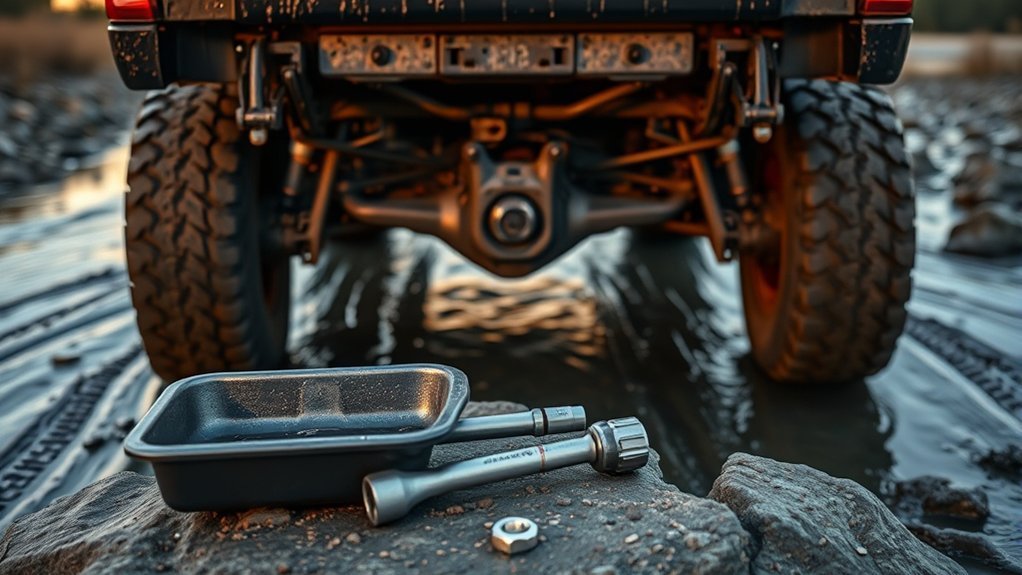
| Tools Needed | Wheel chocks, gloves, eye protection, drain pan, correct sockets or hex bits, breaker bar, torque wrench, fluid pump, shop towels, and new specified sealing washers |
| Cost | Varies by model, differential, fluid quantity, and required sealing hardware; professional service also includes labor |
Warning: Work on a level, stable surface. Chock the wheels and use Toyota-approved lifting points with properly rated jack stands when added clearance is required. Never work beneath a vehicle supported only by a jack. Allow hot drivetrain components and gear oil to cool enough to handle safely.
Before You Start
- Confirm the exact fluid specification, capacity, washer type, fill method, and plug torque for your Tacoma.
- Verify that you can identify the correct differential and both service plugs.
- Gather enough specified fluid to complete the refill without mixing products.
- Place the truck level so the final fluid level will be accurate.
- Wear gloves and eye protection. Gear oil can drain rapidly and may still be hot.
- Clean mud from the plug areas before opening the housing.
Pro Tip: Loosen and remove the fill plug before opening the drain plug. If the fill plug is seized or damaged, you will know before emptying a differential that you cannot refill.
Step-by-Step Differential Fluid Change
- Position the truck safely. Park on a level surface, set the parking brake, chock the wheels, and support the vehicle correctly when lifting is necessary.
- Identify and clean the plugs. Confirm the fill and drain locations for the differential being serviced. Brush or wipe away dirt so it cannot enter the housing.
- Remove the fill plug first. Inspect the opening, plug, and washer. A fluid level above the opening may indicate overfilling, vehicle angle, or water entry.
- Place the drain pan and remove the drain plug. Watch the first liquid that exits. Clear or separated water before the gear oil is strong evidence of contamination.
- Inspect the drained oil. Check for milkiness, foam, rust-colored residue, sediment, metal flakes, or larger fragments. Save a sample when damage is suspected.
- Clean the plugs. Remove paste from a magnetic plug and inspect the threads. Replace damaged plugs and use the specified new sealing washers or gaskets.
- Install the drain plug. Tighten it to the model-specific Toyota torque specification with a calibrated torque wrench.
- Add the specified gear oil. Use a clean pump. Follow the manual’s level-setting method rather than relying only on the listed capacity.
- Install the fill plug. Fit the correct sealing washer and tighten the plug to the specified torque. Do not apply sealant unless the applicable Toyota procedure specifically requires it.
- Clean and check the area. Remove spilled oil, confirm both plugs are dry, drive the truck briefly under light load, and inspect again for leakage.
When water contamination was present, inspect the oil again after a short period of driving. Residual moisture or a continuing seal or breather problem may contaminate the replacement oil.
Collect used oil in a clean, leak-proof container. Do not pour it onto the ground, into a drain, or into household waste. The U.S. Environmental Protection Agency’s used-oil guidance recommends taking it to an approved recycling or collection facility.
What Else Should You Inspect After Deep Water?
Differential oil is only one part of a post-crossing inspection. Toyota’s current Tacoma maintenance guidance lists several checks after operation through deep sand, mud, or water. The exact items depend on the truck’s drivetrain and equipment.
- Front and rear differential oil, as equipped.
- Transfer-case oil on four-wheel-drive models.
- Manual-transmission or automatic-transmission fluid, as applicable.
- Brake linings, drums, pads, discs, hoses, and lines.
- Driveshaft boots and accessible seals.
- Engine air filter and intake area.
- Steering linkage and related components.
- Chassis fasteners and areas that may have collected mud or debris.
- Differential breathers, hoses, plugs, and housing surfaces.
Test the brakes at low speed in a safe area after leaving the water. If braking feels weak, uneven, or abnormal, stop and have the system inspected. Also check for warning lights, fluid leaks, new vibration, or unusual drivetrain noise.
Why Preventive Maintenance Matters for Off-Road Tacomas
Water-contaminated oil cannot protect gears and bearings as intended. Moisture can also promote corrosion while the truck is parked. A quick inspection after deep water is cheaper and simpler than repairing a noisy or damaged differential.
Preventive maintenance also helps identify the cause instead of repeatedly replacing oil. A damaged seal, blocked breather, loose plug, or cracked hose can allow the next crossing to contaminate the housing again. Repair the entry point before returning to similar conditions.
Frequently Asked Questions
How often should I change the differential fluid on my Toyota Tacoma?
Use the maintenance guide for your exact model year and driving conditions. Toyota schedules can include routine inspections and more frequent replacement for listed special conditions. Deep-water exposure, leakage, or contamination can require service before the normal mileage point.
When should a differential be serviced?
Service it at the model-specific scheduled interval or sooner when you find contaminated oil, a leak, damaged seals, impact damage, abnormal noise, metal debris, or evidence that the housing or breather was submerged.
Can water get into a Tacoma differential?
Yes. Water may enter through a submerged breather, damaged breather hose, worn axle seal, loose plug, or compromised housing seal. Risk increases when a warm axle cools while submerged or the truck remains in deep water.
What happens if I do not change contaminated transfer-case fluid?
Contaminated or degraded transfer-case fluid can reduce lubrication, increase heat, and accelerate wear of transfer-case gears, bearings, or chains. It may also affect four-wheel-drive operation. The transfer case is separate from the differentials, so diagnose noises by their actual source.
Do I need to change differential fluid after every puddle?
No. A shallow splash below the axle housing normally does not justify an automatic change. Inspect after deep water, prolonged submersion, or any crossing that placed a breather or seal below the waterline.
Can I drive with milky differential fluid?
Avoid unnecessary driving. Milky or cloudy oil can indicate water contamination and reduced lubrication. Replace the oil promptly and investigate the entry point. If the differential is noisy, leaking, binding, or releasing metal debris, arrange professional inspection before driving farther.
Is 75W-90 the correct differential oil for every Tacoma?
No universal viscosity should be assumed. Check the official manual for your exact model year, drivetrain, axle, and differential. Verify the oil specification, quantity, fill method, sealing hardware, and plug torque before beginning service.
Conclusion
After a shallow splash, you normally do not need to replace your Tacoma’s differential fluid automatically. After deep water, inspect each exposed differential promptly. Milky oil, separated water, an abnormal level, corrosion, or persistent foam means the fluid should be changed and the entry point investigated.
Use the maintenance schedule and fluid specifications for your exact model year and drivetrain. Correct oil, safe vehicle support, new sealing hardware, accurate plug torque, and a post-service leak check matter as much as the fluid change itself.
Sources
- Toyota 2026 Tacoma Warranty and Maintenance Guide — post-off-road checks, maintenance schedules, and differential-oil guidance.
- Toyota 2023 Tacoma Warranty and Maintenance Guide — earlier-generation maintenance intervals and special operating conditions.
- Toyota Manuals and Warranties — official model-year manual lookup for fluid specifications and procedures.
- U.S. Environmental Protection Agency: Managing, Reusing, and Recycling Used Oil — safe collection and recycling of contaminated used oil.
