For the 2026 Toyota Tacoma, choose the six-speed manual if you specifically want clutch-and-shifter involvement, direct gear selection, and Clutch Start Cancel for certain trail situations. Choose the eight-speed automatic if you prioritize easier traffic driving, wider trim availability, full access to the i-FORCE MAX hybrid, and lower-effort towing or low-speed maneuvering. Toyota currently lists the manual on select SR, TRD Sport, and TRD Off-Road configurations, while the automatic is available across a much broader portion of the lineup.
Quick Answer
Choose the six-speed manual Tacoma if shifting is part of the experience you want and you value direct gear selection, engine braking, and Clutch Start Cancel. Choose the eight-speed automatic if you want easier commuting, broader trim and hybrid availability, quicker measured acceleration in comparable TRD Off-Road testing, and less clutch work while towing, parking, or crawling off-road. Neither transmission has a universal reliability or resale advantage.
Last updated: September 19, 2026
Key Takeaways
- For 2026, Toyota lists the six-speed iMT on select SR, TRD Sport, and TRD Off-Road configurations.
- The eight-speed automatic is available across more of the lineup and is required with the i-FORCE MAX hybrid powertrain.
- Manual models make 270 horsepower and 310 lb-ft of torque. Most non-SR gas automatics make up to 278 horsepower and 317 lb-ft, while the automatic SR uses a lower-output 228-hp/243-lb-ft tune.
- Current manual configurations are generally rated at 18 mpg city and 23 mpg highway; comparable automatic 4WD configurations can gain roughly one mpg depending on trim.
- Toyota issued separate 2024 technical service bulletins for specific automatic- and manual-transmission conditions, so reliability should be judged by VIN, production range, symptoms, repair history, and maintenance rather than transmission type alone.
- Compare the same model year, trim, cab, bed, drivetrain, tires, equipment, and tow rating before judging price, performance, fuel economy, or capability.
Key Factors to Consider When Choosing Your Tacoma Transmission
Start with the exact Tacoma you plan to buy. A comparison between two different trims can make the transmission look responsible for differences that actually come from engine tuning, axle ratio, tires, weight, suspension, cab and bed configuration, or optional equipment.
Note: The specifications below focus on the fourth-generation Tacoma introduced for the 2024 model year, with current 2026 U.S.-market information used where available. Earlier Tacomas use different engines, transmissions, gearing, fuel-economy ratings, and available features.
Which 2026 Tacoma Trims Offer a Manual Transmission?
For 2026, Toyota lists the six-speed intelligent manual transmission on select SR, TRD Sport, and TRD Off-Road models. It includes automatic rev matching and stall-avoidance technology. The standard automatic is an eight-speed electronically controlled transmission. The i-FORCE MAX hybrid integrates its electric motor with the eight-speed automatic, so the hybrid cannot be ordered with the manual gearbox. Toyota’s current lineup details are available in its 2026 Tacoma overview.
Manual availability is therefore much narrower than automatic availability. SR5, TRD PreRunner, Limited, TRD Pro, and Trailhunter shoppers should expect an automatic transmission in the current U.S. lineup. Exact cab, bed, drivetrain, package, and regional inventory combinations can change, so confirm the truck you are shopping rather than relying only on a trim name.
Tacoma Manual vs. Automatic at a Glance
| Factor | Six-Speed Manual | Eight-Speed Automatic |
| 2026 Availability | Select SR, TRD Sport, and TRD Off-Road gas configurations | Broad gas availability; required with i-FORCE MAX hybrid |
| Gas Output | 270 hp and 310 lb-ft | Up to 278 hp and 317 lb-ft; automatic SR uses 228 hp and 243 lb-ft |
| Current Manual MPG Benchmark | About 18 city / 23 highway / 20 combined in current 4WD manual configurations | Comparable 4WD gas versions can gain roughly 1 mpg depending on trim |
| Daily Driving | More involvement; more clutch work in stop-and-go traffic | Easier in traffic and during frequent speed changes |
| Trail Use | Direct gear choice, engine braking, and Clutch Start Cancel | Smooth low-speed control without clutch slipping and broader access to electronic aids on applicable configurations |
| Driver Assistance | Toyota Safety Sense 3.0 with transmission-dependent feature operation, including conventional DRCC | Supports Full-Speed Range DRCC on applicable current configurations |
| Maintenance Risk | Clutch wear depends heavily on driver technique and workload | More hydraulic and electronic complexity; fluid condition and heat management matter |
| Best Match | Drivers who actively want to shift and accept narrower configuration choices | Commuters, frequent towers, hybrid buyers, and convenience-focused drivers |
Key Performance Differences: Manual vs. Automatic
The transmission changes more than the shift method. Toyota tunes the current manual and automatic gas powertrains differently. Manual models produce 270 horsepower and 310 lb-ft of torque. Most non-SR gas automatics reach 278 horsepower and 317 lb-ft, while the automatic SR uses a lower-output 228-horsepower, 243-lb-ft tune. Toyota documents the main manual and higher-output automatic figures in its fourth-generation Tacoma launch specifications.
Is the Manual or Automatic Tacoma Faster?
The automatic is easier to launch consistently because it manages clutching and shift timing for you. Its eight ratios also help keep the turbocharged engine near a useful part of its torque band as speed changes.
Independent instrumented testing gives the difference useful scale. Car and Driver measured a current six-speed-manual TRD Off-Road at 7.9 seconds from 0–60 mph, while its automatic TRD Off-Road benchmark recorded 7.0 seconds. Those tests were not conducted under perfectly identical launch conditions, so they should be treated as a directional comparison rather than proof that every automatic Tacoma will be exactly 0.9 second quicker.
The manual still lets you select the exact gear and control clutch engagement. That can feel more responsive when you anticipate a hill, corner, loose surface, or passing maneuver. However, acceleration depends on clean shifts, and the manual’s lower output in TRD Sport and TRD Off-Road means it should not be assumed to be quicker.
Engine Noise and Cabin Comfort
Transmission type alone does not determine cabin noise. Engine speed, tire tread, road surface, exhaust load, and trim insulation can matter as much or more.
A manual driver can hold a lower gear and raise engine speed, which creates more engine sound. The automatic shifts without your input and often settles into a higher gear during steady cruising. If noise matters to you, test both trucks on the same road rather than relying on a general manual-versus-automatic claim.
Gear Selection and Engine Braking
The manual gives you direct access to six forward gears. You can hold a gear through a climb, use engine braking on a descent, or avoid an unwanted shift on uneven terrain. The manual’s automatic rev-matching feature also smooths many downshifts.
The automatic provides eight forward ratios and can change gears without interrupting your steering or throttle work. You can still use its sequential-selection mode when you want more control, although the transmission’s control system can protect the powertrain from inappropriate gear requests.
Do Manual and Automatic Tacomas Have the Same Driver-Assistance Features?
Both current transmissions can be paired with Toyota Safety Sense 3.0 features, but operation is not identical. Current automatic Tacoma configurations support Full-Speed Range Dynamic Radar Cruise Control, which can operate through a much broader speed range. Manual-transmission Tacomas use conventional Dynamic Radar Cruise Control because a clutch-equipped vehicle cannot manage stop-and-go operation the same way an automatic can.
This difference matters most to drivers who spend long periods in highway congestion or use adaptive cruise frequently. Always verify the exact window sticker and owner’s manual because driver-assistance availability can also vary by trim and equipment.
Fuel Efficiency: Compare Matching Tacoma Configurations
Do not compare fuel-economy numbers from different generations or unrelated trims. Four-wheel drive, cab and bed length, tires, ride height, engine tune, and hybrid hardware can all change the rating.
Does the Automatic Tacoma Get Better MPG?
In current like-for-like gas configurations, the automatic generally has a small efficiency advantage. A 2026 manual Tacoma is typically rated at about 18 mpg city, 23 mpg highway, and 20 mpg combined. A comparable automatic 4WD Tacoma can gain roughly one mpg, although the exact difference depends on trim.
| 2026 Example | Manual | Comparable Automatic |
| SR 4WD | 18 city / 23 highway / 20 combined | 19 city / 24 highway / 21 combined |
| TRD Sport 4WD | 18 city / 23 highway / about 20 combined | About 19 city / 23 highway / about 20–21 combined |
| TRD Off-Road 4WD | 18 city / 23 highway / 20 combined | About 19 city / 23 highway / about 20–21 combined |
Toyota also lists up to 26 mpg highway for the broader 2026 non-hybrid i-FORCE lineup and 23 mpg combined for the i-FORCE MAX hybrid, but those lineup maximums should not be treated as matched manual-versus-automatic figures. Use the official FuelEconomy.gov vehicle comparison tool and select the exact year, drivetrain, and configuration you are shopping.
A large tire change, roof load, trailer, short trips, cold weather, high highway speed, or aggressive acceleration can easily erase a one-mpg label difference.
How Your Driving Style Changes Fuel Use
- Manual: Early, smooth upshifts can reduce engine speed, while unnecessarily holding lower gears increases fuel use.
- Automatic: Gentle throttle inputs help the transmission avoid unnecessary downshifts and high boost demand.
- Both: Correct tire pressure, moderate highway speed, limited idling, and reduced unnecessary cargo can matter as much as a small label difference.
Choose the transmission you can operate smoothly every day. A driver who dislikes clutch work may use extra throttle or slip the clutch unnecessarily, while an aggressive automatic driver can trigger frequent boost and downshifts.
Driving Experience With the Tacoma Manual vs. Automatic
The manual makes routine driving more active. You coordinate the clutch, shifter, and throttle, which can be rewarding on open roads and tiring in slow traffic. Toyota’s rev-matching and stall-avoidance features reduce some of the effort, but they do not remove normal clutch work.
The automatic suits drivers who want consistent, low-effort operation. It is easier when parking on a grade, crawling through traffic, backing a trailer, or changing speed repeatedly. It also lets you keep both hands available for steering during rough trail sections.
Neither choice is universally more enjoyable. Your actual commute matters more than an enthusiast’s preference. A manual that feels engaging during a short test drive can become frustrating in a daily traffic jam, while an automatic can feel less involving on an empty back road.
Pro Tip: Test both transmissions on the same route. Include a hill start, parking maneuver, highway merge, rough road, and at least 15 minutes of slow traffic. Also try adaptive cruise operation if that feature matters to you. The route will reveal more than a showroom comparison.
Evaluating the Cost Benefits of Manual vs. Automatic

A manual Tacoma is not always a fixed amount cheaper. The difference changes by model year, trim, package, destination charge, and regional inventory. More importantly, the manual is tied to a much smaller set of configurations, so comparing two trucks with different cab, bed, trim, or equipment can make the transmission appear to create a price difference that actually comes from the rest of the build.
Compare total purchase prices for two trucks with the same trim, drivetrain, cab, bed, and options whenever possible. Then consider ownership costs:
- Manual clutch: The clutch is a wear item. Heavy towing, frequent hill starts, off-road slipping, or poor technique can shorten its life.
- Automatic service: The automatic has more internal hydraulic and electronic complexity. Overheating, contaminated fluid, warning codes, or ignored symptoms can lead to expensive repairs.
- Fuel: The automatic’s small current EPA advantage can matter to a high-mileage commuter but may be minor for a low-mileage trail truck.
- Insurance and financing: These usually depend more on the truck’s total value, location, driver, and coverage than on transmission type alone.
- Resale: A manual may attract enthusiasts, but it also has a smaller buyer pool. Rarity does not guarantee a higher resale price.
Use an actual out-the-door purchase quote and realistic annual mileage instead of relying on a universal manual-versus-automatic savings figure.
[Amazon Products Picked for You]

PREMIUM CLUTCH YOU CAN FEEL AND TRUST: ClutchMaxPRO is defining a new meaning of affordable performance clutch. It is simply the best bang and quality for the buck. Period. All ClutchMaxPRO products are designed, engineered, assembled, tested and inspected right here in the U.S.A. to ensure highest quality and satisfaction.

Engineered to exact original equipment specifications, AISIN clutch kits combine matched components to deliver optimal drivetrain efficiency
Maintenance and Longevity of Tacoma Transmissions
No reliable rule says every manual Tacoma will outlast every automatic Tacoma. Service history, production date, heat, towing, off-road use, modifications, driving technique, and early repairs all affect lifespan. For used fourth-generation trucks, model-specific service bulletins are more useful than internet claims that one transmission design is automatically “bulletproof.”
[Amazon Products Picked for You]
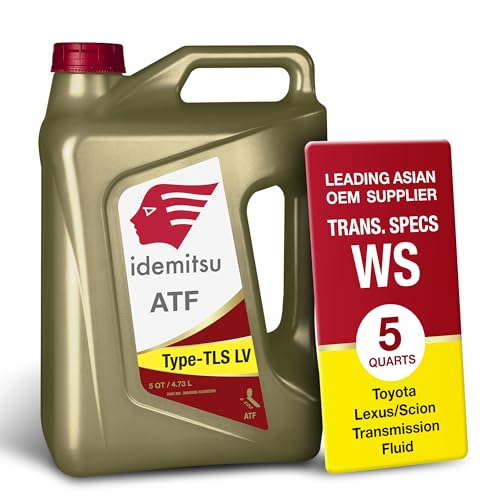
Optimized viscosity and advanced friction reducing additive technology provide exceptional fuel economy performance

6Qt Genuine 00289-ATFWS

For best performance, follow the manufacturer's recommendations in your vehicle owner’s manual.
Manual Transmission Maintenance
A manual gearbox has fewer shift-control components, but it adds a clutch, release system, shifter linkage, and driver-dependent wear. Watch for clutch slip, chatter, difficult engagement, grinding, fluid leaks, or a changing pedal feel. A worn clutch does not automatically mean the gearbox itself has failed.
Automatic Transmission Maintenance
An automatic depends on clean fluid, correct temperature control, sensors, valves, actuators, and software. Watch for delayed engagement, harsh or repeated shifts, slipping, warning lights, leaks, or unusual overheating. Do not use a universal fluid interval from an unrelated Tacoma generation.
What Should Used 2024 Tacoma Buyers Know?
Toyota has documented specific conditions for both transmission types. Technical Service Bulletin T-SB-0094-24 applies to certain 2024 Tacoma and Tacoma Hybrid automatic-transmission vehicles produced before listed production changes when specified torque-converter or pressure-control DTCs are present. Toyota’s repair procedure can require replacement of the automatic transmission assembly and torque converter, with additional hybrid components on affected hybrid trucks.
A separate bulletin, T-SB-0058-24, covers certain 2024 Tacomas with the RC60F manual transmission that may become unable to select second, fourth, and/or sixth gear because of cracking in the floor-shift control retainer housing. Toyota’s prescribed repair for qualifying vehicles is transmission replacement.
These bulletins do not mean every 2024 Tacoma has a transmission defect, and a technical service bulletin is not the same thing as a safety recall. For a used truck, check its VIN, production history, diagnostic codes, dealer repair records, and current operation instead of rejecting or approving the truck based only on transmission type.
Follow the schedule and fluid specification for your exact VIN and use Toyota’s official manuals and warranty guides. Severe use, including regular towing, deep sand, mud, or heavy commercial work, may require different inspections than ordinary commuting.
Off-Road Performance: Manual vs. Automatic in Tough Terrain
Both transmissions can work well off-road, but they solve low-speed control differently. Tires, differential equipment, suspension, ground clearance, recovery equipment, route choice, and driver judgment usually matter more than the gearbox by itself.
Where the Manual Helps
- You choose the gear before entering an obstacle and can hold it without an unexpected upshift.
- Engine braking can help manage speed on a descent.
- Toyota equips manual models with Clutch Start Cancel, which can let the truck start in gear during specific steep-grade or technical-trail situations.
- The clutch gives you another way to control power delivery, although excessive slipping creates heat and wear.
Where the Automatic Helps
- The torque converter can deliver smooth low-speed movement without repeated clutch slipping.
- You can focus on steering, braking, and wheel placement while the transmission handles shifts.
- Toyota offers systems such as Multi-Terrain Select, CRAWL Control, Downhill Assist Control, and an electronic locking rear differential on eligible off-road configurations.
- Automatic operation is often easier when backing, climbing slowly, or restarting on a steep grade.
Toyota describes CRAWL Control as low-speed off-road cruise control and Clutch Start Cancel as a manual-specific trail aid in its Tacoma off-road feature guide.
Warning: Do not use the Tacoma lineup’s 6,500-pound maximum tow rating as the rating for a manual truck. That maximum applies only to specific configurations, and the rating for your truck depends on its powertrain, trim, cab, bed, drivetrain, equipment, occupants, cargo, hitch, and trailer. Toyota also lists up to 1,705 pounds of payload for the 2026 lineup, but your truck’s placard may be substantially lower. Verify the certification labels, owner’s manual, and configuration-specific towing information before loading or towing.
What Tacoma Buyers Should Know About Availability and Resale
Manual Tacomas are harder to find because Toyota offers them on only a small part of the lineup. That scarcity can make a clean truck appealing to an enthusiast, but it can also restrict your choice of trim, color, cab, bed, packages, and nearby inventory.
The automatic reaches a wider audience and opens access to trims and the i-FORCE MAX hybrid that are unavailable with the manual. It can also be easier for a household in which not every regular driver is comfortable using a clutch.
Do not assume either transmission guarantees better resale value. Condition, mileage, accident history, modifications, maintenance records, local demand, repair history, and exact trim can outweigh gearbox choice. For a used Tacoma, check open recalls by VIN through the NHTSA recall database and arrange an independent pre-purchase inspection.
[Amazon Products Picked for You]

OE Number:33505-35020/33505-35030/335050K010/3350535010/33548-31010/33548-35010/3354804010/33556-20010


Compatible with Toyota Tacoma 1995 1996 1997 1998 1999 2000 Year
Choosing the Right Transmission for Your Driving Style
Choose the Manual Tacoma If
- You already enjoy driving a manual and want shifting to be part of the experience.
- Your regular route does not involve long periods of stop-and-go traffic.
- You value direct gear selection and engine braking on trails or hills.
- You want Clutch Start Cancel for applicable low-speed trail situations.
- You accept the narrower SR, TRD Sport, and TRD Off-Road availability.
- Every regular driver in your household can use a clutch confidently.
Choose the Automatic Tacoma If
- You commute in heavy traffic or make frequent short trips.
- You tow, reverse, park on grades, or maneuver at low speed often.
- You want the broadest choice of trims, options, cab/bed combinations, and powertrains.
- You prefer consistent acceleration without planning each shift.
- Full-Speed Range adaptive-cruise operation matters to you.
- You want the i-FORCE MAX hybrid.
Final Test-Drive Checklist
- Confirm the exact engine output, transmission, drivetrain, cab, bed, payload, and tow rating on the truck’s documentation.
- Check clutch take-up, shift quality, rev matching, and hill-start behavior in the manual.
- Check low-speed smoothness, downshift response, and parking behavior in the automatic.
- Try the adaptive-cruise system if highway driver assistance matters to you.
- Drive at highway speed and listen for tire, wind, and engine noise.
- Compare out-the-door prices for genuinely comparable configurations, not advertised base prices.
- For a used 2024 truck, scan for diagnostic codes and review dealer repair, maintenance, TSB-related, and recall records.
Frequently Asked Questions
Is a manual or automatic Toyota Tacoma better?
The manual is the better fit for drivers who specifically want clutch and gear control. The automatic is the better fit for heavy traffic, frequent towing maneuvers, broader trim selection, hybrid access, and lower-effort daily driving. Neither has a universal advantage in reliability or resale.
Which 2026 Tacoma models offer a manual transmission?
Toyota currently lists the six-speed intelligent manual on select SR, TRD Sport, and TRD Off-Road configurations. The i-FORCE MAX hybrid is automatic-only, and the manual is not offered across the rest of the current Tacoma trim range. Verify the exact cab, bed, drivetrain, and inventory configuration before ordering.
Is the manual Tacoma more fuel-efficient?
Generally, no. Current manual Tacomas are typically rated around 18 mpg city, 23 mpg highway, and 20 mpg combined. Comparable automatic 4WD gas models can gain roughly one mpg depending on trim. Compare the exact configuration rather than using a lineup-wide maximum.
Is a manual Tacoma better for off-roading?
It can be better when you want direct gear selection, engine braking, and Clutch Start Cancel. An automatic can be easier for smooth crawling, steep restarts, and concentrating on steering without managing a clutch. Tires, recovery equipment, differentials, clearance, and driver judgment remain more important than transmission type alone.
Which Tacoma transmission lasts longer?
Neither type has a guaranteed lifespan advantage. A manual can need clutch work and has driver-dependent wear, while an automatic has more hydraulic and electronic complexity. Service history, heat, towing, modifications, production history, driving technique, and prompt diagnosis matter more than a blanket manual-versus-automatic rule.
Should I avoid a 2024 Tacoma because of transmission problems?
Not automatically. Toyota TSB T-SB-0094-24 covers certain 2024 Tacoma and Tacoma Hybrid automatic-transmission vehicles with specified diagnostic codes, while T-SB-0058-24 covers certain 2024 RC60F manuals that may lose access to second, fourth, and sixth gears. These are condition- and production-range-specific bulletins, not proof that every 2024 Tacoma will fail. Check the VIN, diagnostic and dealer repair history, maintenance records, and current operation before buying.
Does the manual Tacoma have the same driver-assistance features as the automatic?
Not exactly. Current manual and automatic Tacomas can include Toyota Safety Sense 3.0, but the automatic supports Full-Speed Range Dynamic Radar Cruise Control on applicable configurations. Manual trucks use conventional Dynamic Radar Cruise Control because clutch operation prevents the same stop-and-go functionality. Verify the exact trim and equipment before buying.
Conclusion
Choose the manual Tacoma because you genuinely want to use a clutch and select every gear—not because of a promised fuel-economy, longevity, towing, or resale advantage. For 2026, that choice limits you to select SR, TRD Sport, and TRD Off-Road configurations but gives you 270 horsepower, direct gear control, rev matching, stall avoidance, and Clutch Start Cancel.
Choose the automatic when convenience, broader trim availability, Full-Speed Range adaptive-cruise operation, hybrid access, quicker measured acceleration, and easier low-speed maneuvering matter more. Compare matching trucks, test both on your real route, and verify every payload and tow rating for the exact configuration before you buy.
Sources
- Toyota USA Newsroom: 2026 Toyota Tacoma — current engine choices, transmission availability, fuel-economy maximums, towing, payload, and off-road equipment.
- Toyota USA Newsroom: Fourth-Generation Tacoma Launch — manual and automatic output, rev matching, stall avoidance, Clutch Start Cancel, and trail systems.
- U.S. Department of Energy and EPA: Find and Compare Cars — configuration-specific official fuel-economy listings.
- Toyota Manuals and Warranties — model-specific operating, maintenance, fluid, driver-assistance, and warranty guidance.
- National Highway Traffic Safety Administration — VIN-based recall research and manufacturer communications, including Toyota transmission service bulletins.
- Car and Driver: 2026 Tacoma TRD Off-Road six-speed-manual test and fourth-generation automatic TRD Off-Road instrumented testing — acceleration and fuel-economy comparison context.
- Toyota Technical Service Bulletin T-SB-0094-24 — specified 2024 Tacoma and Tacoma Hybrid automatic-transmission DTC conditions and repair procedure.
- Toyota Technical Service Bulletin T-SB-0058-24 — specified 2024 Tacoma RC60F manual-transmission shift-selection condition and repair procedure.
