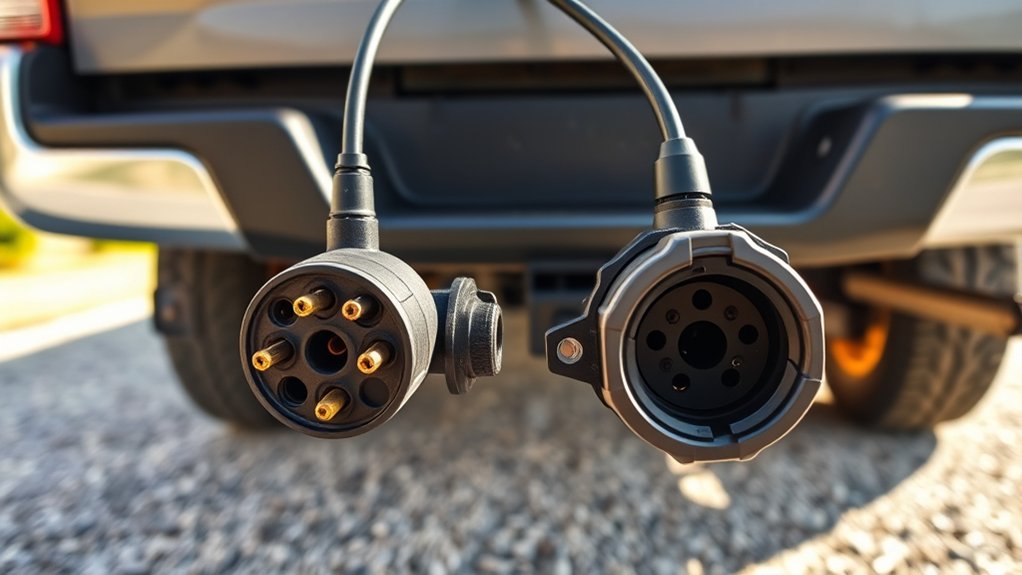
For Toyota Tacoma trailer wiring, use a 4-pin flat connector when the trailer needs only ground, running lights, and combined brake/turn lights. Use a 7-way RV blade connection when the trailer also needs electric-brake output, 12-volt auxiliary power, or a reverse/lockout circuit. Trailer weight still matters for tow ratings and brake-law compliance, but the connector choice is driven by the electrical functions the trailer requires.
Last updated: September 19, 2026
Quick Answer
Use a 4-pin connector when your trailer only needs running, brake, and turn-signal lights. Use a 7-pin RV-style connector when it also needs electric-brake output, 12-volt auxiliary power, or reverse-light power. A 7-pin socket does not by itself prove that a brake controller is installed or that every extra circuit is active.
Key Takeaways
- A 4-pin connection normally supplies the trailer’s ground, running lights, and combined brake-and-turn signals.
- A 7-pin connection can add electric-brake output, auxiliary 12-volt power, and a reverse-light or reverse-lockout circuit.
- A brake controller is needed for electric trailer brakes, but not for a basic hydraulic surge-brake system.
- A 4-to-7 adapter does not create missing brake, power, or reverse circuits unless those circuits are separately installed.
- Factory wiring and controller provisions vary by model year: Toyota documents combined 4-/7-pin Tow Package wiring on third-generation examples and an available/grade-dependent Integrated Trailer Brake Controller on 2024–2026 models.
Toyota Tacoma 4-Pin vs. 7-Pin Trailer Wiring Basics
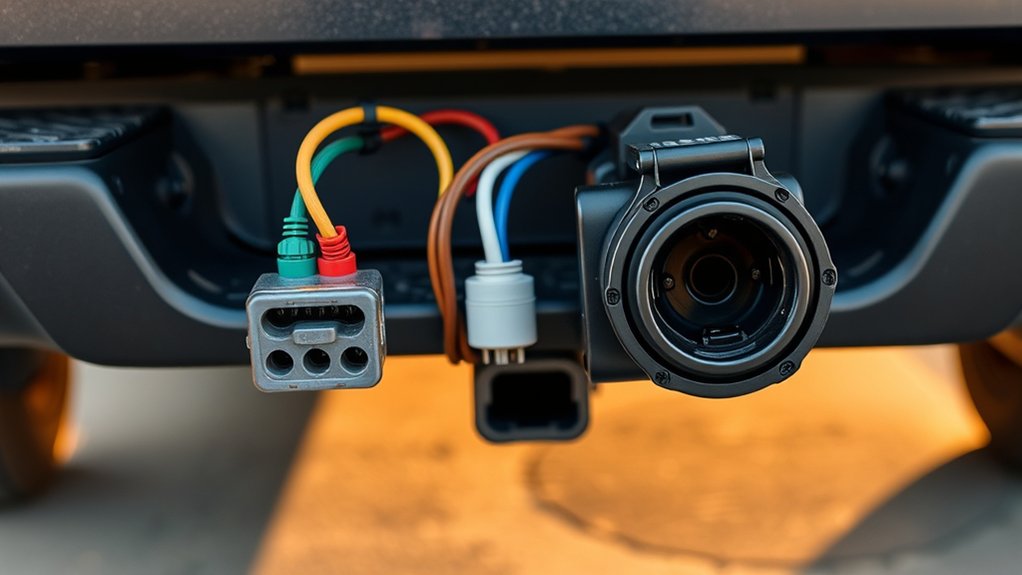
A 4-pin flat connector supplies the essential circuits used by a basic light-equipped trailer. These normally include a ground, running lights, left brake and turn signal, and right brake and turn signal.
A North American 7-way RV blade connector includes those lighting functions and can add circuits for electric trailer brakes, 12-volt auxiliary power, and reverse lights. The precise pin assignment should always be confirmed because aftermarket wiring, previous repairs, and trailer-side wiring may not follow the expected color pattern.
| Feature | 4-Pin Flat | 7-Way RV Blade |
|---|---|---|
| Ground | Yes | Yes |
| Running lights | Yes | Yes |
| Brake and turn lights | Yes | Yes |
| Electric-brake output | No | Yes, with a compatible brake controller and completed wiring |
| 12-volt auxiliary circuit | No | Possible if the circuit is powered, fused, and grounded correctly |
| Reverse-light or reverse-lockout circuit | No | Possible if wired |
| Typical use | Small utility trailers and other trailers with lights only | Travel trailers, equipment trailers, enclosed trailers, and trailers needing additional circuits |
Note: Do not identify a circuit by wire color alone. Confirm the socket pinout and test each function with a trailer tester or multimeter before connecting an unfamiliar trailer.
Which Tacoma Models Have Factory Trailer Wiring?
Tacoma equipment varies by model year, engine, trim, market, and factory package. For example, Toyota’s official 2021 Tacoma brochure lists an integrated 4-/7-pin connector with applicable V6 Tow Package equipment. That does not mean every 2021 Tacoma, or every Tacoma from another year, has both sockets.
| Model-year example | What Toyota documents | What to verify on your truck |
|---|---|---|
| 2021 | The V6 Tow Package includes a 4-/7-pin connector with converter. | Confirm the Tow Package and whether a separate brake controller is installed. |
| 2023 | Toyota lists the Tow Package with a 4- and 7-pin connector with converter; package availability depends on engine/configuration. | Check the truck’s exact engine, grade, equipment, and controller setup. |
| 2024 | Toyota lists a Class-IV hitch and wiring harness with 7-pin/4-pin connector as standard or available by grade, with the Integrated Trailer Brake Controller also grade/package dependent. | Confirm whether the truck has the factory Integrated Trailer Brake Controller, not just the rear socket. |
| 2026 | Toyota again lists the 7-pin/4-pin towing harness and Integrated Trailer Brake Controller as standard or available depending on grade/equipment. | Verify the installed equipment from the VIN/window sticker and test the socket before towing. |
These examples show why connector shape alone is not enough. A factory 7-way confirms that the truck has a 7-way receptacle, but it does not by itself confirm a working brake controller, an active 12-volt auxiliary feed, or correct trailer-side wiring.
Inspect the area near the rear bumper and hitch receiver. A factory combination socket normally has separate openings for a 4-pin flat plug and a 7-way blade plug in one housing. If you see only a 4-pin lead or an aftermarket socket, verify how it was installed before relying on its additional circuits.
Use your exact model year’s Toyota owner documentation to check towing limits, fuse information, and operating instructions. For reference, Toyota’s 2021 Tacoma owner documentation, 2024 Tacoma brochure, and 2026 Tacoma brochure show how equipment changes by generation and grade. You can also use the VIN, original window sticker, or a Toyota dealer’s equipment record to confirm the truck’s factory towing equipment.
Warning: A 7-pin socket does not increase your Tacoma’s towing capacity. Confirm the truck’s tow rating, payload, hitch rating, tongue-weight limit, tire capacity, and trailer weight before towing.
Common Towing Scenarios for Tacoma Trailer Wiring
The right connector depends on what the trailer must operate. Check the trailer plug, brake type, lighting system, and auxiliary equipment before choosing an adapter or modifying the truck.
Trailers With Lights Only
A 4-pin connector is normally sufficient for a small utility trailer that only needs running lights, turn signals, and brake lights. This setup is simple because it does not provide a controlled electric-brake output or a dedicated auxiliary-power circuit.
Some cargo carriers and bike racks have their own lights because they block the Tacoma’s taillights. Those lighted accessories may also use a 4-pin connection. An ordinary rack without lights generally does not need a trailer connector.
Trailers With Electric Brakes
A trailer with conventional electric drum brakes normally needs a 7-way connection and a compatible brake controller. The controller sends adjustable power through the 7-way brake-output circuit as the Tacoma slows.
The controller must be installed, configured, and tested according to its manufacturer’s instructions. Gain that is too low may provide weak trailer braking. Gain that is too high may lock the trailer wheels or make stops abrupt.
Trailers With Hydraulic Surge Brakes
Hydraulic surge brakes operate through compression at the trailer coupler. A basic surge-brake system does not use an in-cab electric brake controller.
However, some boat trailers use an electrical reverse-lockout solenoid so the surge brakes do not engage while backing up. That circuit may use a 5-pin flat connector or the reverse circuit in a 7-way connector. Electric-over-hydraulic brake systems are different and require a controller specifically approved for that system.
Trailers Needing Auxiliary Power
A travel trailer or enclosed cargo trailer may use the 7-way auxiliary circuit for functions such as maintaining a breakaway battery or supplying limited charging current while driving. The circuit must be correctly powered, fused, and grounded on the Tacoma.
Long wiring runs and small conductors can cause voltage drop. As a result, the 7-way auxiliary line may maintain a charged battery but may not fully recharge a deeply discharged battery. A properly sized DC-to-DC charger may be needed when reliable charging is important.
Why You Might Need a Brake Controller With 7-Pin Wiring
A 7-way socket provides a path for an electric-brake signal, but it does not decide how strongly the trailer should brake. The brake controller performs that job.
Controlled Trailer Braking
A correctly adjusted controller helps the trailer share the stopping load instead of pushing against the Tacoma. It can improve control, reduce stopping strain on the truck, and allow the driver to apply the trailer brakes manually when the controller includes a manual-override control.
The manual control is useful for low-speed setup tests and for applying trailer braking independently when the controller manufacturer specifically instructs it. Do not use manual brake application as a substitute for correcting sway causes such as excessive speed, poor loading, or improper tongue weight.
Proportional and Time-Delayed Controllers
A proportional controller measures vehicle deceleration or uses compatible vehicle data to vary trailer-brake output. A time-delayed controller increases output according to its programmed settings after the brake signal is activated.
Neither type follows a universal rule such as “half pedal equals half trailer braking.” Output depends on controller design, gain, boost settings, calibration, trailer loading, and road conditions.
Legal and Manufacturer Requirements
Trailer-brake laws are not the same in every state or province. Requirements may depend on gross trailer weight, registered weight, trailer type, number of axles, or the relationship between the trailer and tow-vehicle weights.
Do not rely on one nationwide weight threshold. Check the transportation or motor-vehicle authority for every jurisdiction where you plan to tow. You should also follow the Tacoma owner’s manual, trailer manufacturer’s instructions, hitch rating, and brake-system requirements.
Choose the connector by the trailer’s required electrical functions. Choose the towing setup by the truck’s ratings, trailer weight, brake system, and applicable law.
Can You Use a 4-Pin-to-7-Pin Adapter?
You can use an adapter to connect a trailer’s 7-way plug to a Tacoma that currently has a 4-pin lighting connection, but the adapter can only pass through the circuits already available from the truck.
A basic adapter will normally make the trailer’s running, brake, and turn lights work. It cannot create electric-brake output, auxiliary power, or a reverse circuit by itself. Those functions require separate wires, proper circuit protection, a suitable ground, and a brake controller where applicable.
The reverse arrangement is simpler. A properly wired 7-way Tacoma socket can use a 7-to-4 adapter for a trailer that needs only basic lights.
Pro Tip: Before buying an adapter, identify the plug on the trailer and list every function it needs. Matching the physical plug is not enough if the truck lacks the required circuits.
Installation Options for 4-Pin and 7-Pin Wiring
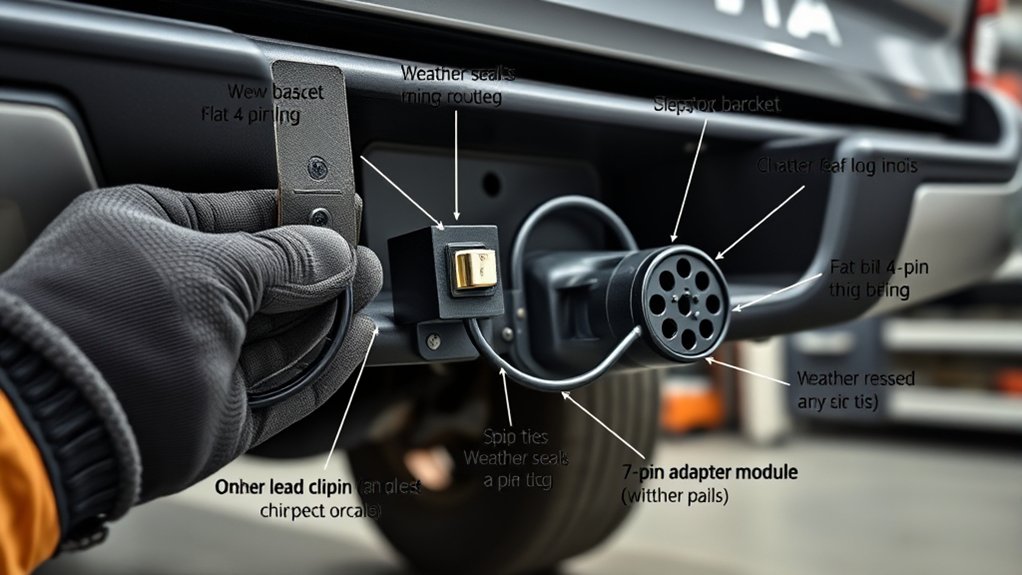
The safest installation method depends on the Tacoma’s existing equipment. A truck with a factory tow package may already have the necessary rear socket, power circuits, relays, and a connector or harness provision for a compatible brake controller.
Installing a 4-Pin Connector
A vehicle-specific 4-pin harness usually connects to the Tacoma’s lighting system through approved plug-in connectors or a powered converter. Avoid cutting into factory wiring when a compatible plug-in harness is available.
Route the harness away from the exhaust, sharp metal, suspension movement, and the spare tire. Secure the connector so it cannot drag on the road or collect water inside an upward-facing socket.
Upgrading From 4-Pin to 7-Pin
A complete upgrade may require more than a new socket. Depending on the truck and kit, the installation can include:
- A combination 4-/7-way socket or standalone 7-way socket
- A heavy-gauge 12-volt auxiliary-power wire
- A dedicated electric-brake-output wire
- A reverse-signal connection when the trailer needs it
- Appropriate fuses, circuit breakers, relays, and connectors
- A clean, adequately sized ground connection
- A compatible brake controller
Follow the wiring-kit instructions and the Tacoma’s exact service information. Fuse ratings and connection points vary, so do not assume a fuse size from another model year or an online diagram.
Installing a Brake Controller
Controller installation depends strongly on Tacoma generation and equipment. Some older configurations may have a factory connector that accepts a vehicle-specific controller adapter, while others require additional wiring. On 2024-and-newer Tacomas equipped with Toyota’s Integrated Trailer Brake Controller, use the factory system and follow the Toyota instructions; Toyota warns that using a third-party controller alongside the Toyota Genuine Trailer Brake Controller may cause unexpected system behavior. Confirm compatibility with the trailer’s brake type, especially for electric-over-hydraulic brakes.
For a factory-equipped fourth-generation Tacoma, start with the truck’s trailer settings and Integrated Trailer Brake Controller procedure before adding aftermarket hardware. For a Tacoma without the factory controller, verify whether a service connector or vehicle-specific harness is provided for your exact year and configuration.
Mount the controller in the position required by its manufacturer. Some proportional units must remain within a specified angle or orientation. Keep the display and manual control within the driver’s reach without placing the unit where it can interfere with the pedals or knee airbags.
Warning: Incorrect brake-output, auxiliary-power, or ground wiring can cause overheated wires, blown fuses, weak brakes, locked brakes, or vehicle damage. Use a qualified trailer-wiring installer when you cannot positively identify each circuit.
How to Test Tacoma Trailer Wiring Before Towing
Test the complete combination every time you connect a different trailer and after any wiring repair.
- Inspect both connectors. Look for bent contacts, loose terminals, water, green corrosion, damaged insulation, and dirt.
- Secure the coupler and safety chains. Confirm the hitch pin, latch, chains, and breakaway cable are connected correctly.
- Start with the lights. Check running lights, left turn, right turn, brake lights, hazard lights, and reverse lights when used.
- Check the brake controller. Confirm that it detects the trailer and shows no fault. Follow its setup procedure in a safe, traffic-free area.
- Test the manual control. At low speed, apply the controller’s manual lever as instructed to confirm that the trailer brakes respond.
- Check the breakaway system. If the trailer has electric brakes, inspect its breakaway switch, cable, wiring, and battery according to the trailer manufacturer’s instructions.
- Secure the cable. Leave enough slack for turns without allowing the plug or cable to touch the road, exhaust, or moving suspension parts.
How to Troubleshoot Common Trailer Wiring Issues on Your Tacoma
Begin by determining whether the fault follows the truck or the trailer. A plug-in trailer tester can check the Tacoma socket without the trailer. You can also connect the trailer to another known-good tow vehicle when it is safe to do so.
| Symptom | Likely Causes | What to Check |
|---|---|---|
| No trailer lights | Open ground, disconnected plug, blown fuse, failed converter, or no power at the socket | Connector seating, ground path, relevant fuses, and voltage at the truck socket |
| One light function is missing | Damaged wire, corroded terminal, failed lamp, or poor connection on that circuit | Test the corresponding socket terminal while activating that vehicle function |
| Lights flicker or several functions interact | Weak or shared ground, corrosion, loose plug, or damaged trailer wiring | Clean and tighten both truck-side and trailer-side grounds |
| Controller says no trailer is connected | Open brake circuit, poor ground, damaged 7-way contact, or trailer-brake wiring fault | Brake-output pin, trailer ground, brake wiring, magnets, and controller connections |
| Trailer brakes are weak | Low gain, voltage drop, poor ground, worn or misadjusted brakes, or overloaded trailer | Controller setup, voltage under load, wiring size, brake adjustment, and actual trailer weight |
| Trailer brakes lock abruptly | Gain or boost set too high, wiring fault, controller problem, or brake adjustment issue | Reduce settings according to the controller instructions and inspect the brake circuit |
| No auxiliary power | Circuit not installed or enabled, blown protection device, disconnected relay, poor ground, or excessive voltage drop | Exact Tacoma wiring diagram, fuse-box labels, socket voltage, and trailer battery connections |
When testing voltage, activate the matching truck function and measure between the relevant socket terminal and the ground terminal. A voltage reading with no load does not always prove that the circuit can carry current, so inspect for corroded or loose connections when a function fails only after the trailer is connected.
Pro Tip: Clean light corrosion with an electrical-contact cleaner intended for automotive connectors. Let the socket dry fully, repair loose terminals, and use a protective connector cover when the trailer is disconnected.
Related Guides
Frequently Asked Questions
Does a Toyota Tacoma come with a factory 7-pin connector?
It depends on model year, grade, engine, and towing equipment. Toyota documents combined 4-/7-pin Tow Package wiring on third-generation examples, while 2024–2026 brochures list a 7-pin/4-pin towing harness as standard or available by grade. Check your exact truck rather than assuming every Tacoma has the same socket.
Do I need a 7-pin trailer plug for my Toyota Tacoma?
You need a 7-pin plug when the trailer requires functions beyond basic lighting, such as electric-brake output, auxiliary 12-volt power, or a reverse circuit. A trailer with lights only can normally use a 4-pin connector. Connector choice does not change the Tacoma’s towing capacity.
Do I need a trailer brake controller if my Tacoma has a 7-pin connector?
You need a compatible controller when the trailer uses electric brakes or an electric-over-hydraulic system that requires controller input. You do not normally need an electric controller for a basic hydraulic surge-brake trailer. The presence of a 7-pin socket does not confirm that a controller is installed.
Can a 4-pin-to-7-pin adapter operate electric trailer brakes?
Not by itself. A simple adapter can transfer the existing lighting circuits, but electric brakes require a dedicated brake-output wire and a compatible controller. Auxiliary power and reverse functions also require their own properly protected circuits.
Do I need a 7-pin or 12-pin trailer plug?
Most North American Tacoma and light-trailer combinations use a 4-pin flat or 7-way RV blade connector. Use a 12-pin connector only when a specific trailer requires additional circuits and both the truck and trailer are wired to the same pinout. Do not select a connector solely because it has more pins.
Does a 7-pin trailer plug charge a trailer battery?
It can supply charging or maintenance current when the Tacoma’s auxiliary circuit is active, fused, grounded, and connected correctly. However, voltage drop and alternator behavior may limit the charging rate. A deeply discharged battery or high-demand battery bank may need a dedicated DC-to-DC charger.
Why do my trailer lights flicker when connected to my Tacoma?
Flickering commonly points to a weak ground, corrosion, a loose plug, damaged wiring, or an overloaded lighting circuit. Test the Tacoma socket and trailer separately, then clean and tighten the ground connections before replacing parts.
Conclusion
Use a 4-pin connector when your trailer only needs basic lights. Choose a properly wired 7-pin connector when it also needs electric-brake output, auxiliary power, or a reverse circuit. If the trailer has electric brakes, verify the controller setup as a separate step: a 7-way socket by itself does not prove that trailer braking is active.
Before towing, verify the Tacoma’s exact model-year equipment and ratings, inspect the hitch and wiring, test every trailer function, and check the brake rules that apply along your route. Owners of 2024–2026 Tacomas should also confirm whether the factory Integrated Trailer Brake Controller is installed before considering an aftermarket controller. When the wiring cannot be identified confidently, professional testing and installation are safer than relying on connector shape or wire color.
Sources
- Toyota 2021 Tacoma eBrochure — V6 Tow Package, towing-capacity, and 4-/7-pin connector information
- Toyota 2023 Tacoma Newsroom — Tow Package equipment including the 4- and 7-pin connector with converter
- Toyota 2024 Tacoma eBrochure — grade/package availability for the 7-pin/4-pin towing harness and Integrated Trailer Brake Controller
- Toyota 2026 Tacoma eBrochure — current grade-level towing-harness and Integrated Trailer Brake Controller availability
- Toyota 2024 Tacoma Quick Reference Guide — Integrated Trailer Brake Controller operation and third-party-controller warning
- etrailer 7-Way and Brake-Controller Installation Guide — 4-way-to-7-way circuit additions, brake-output wiring, auxiliary power, reverse circuit, and testing
