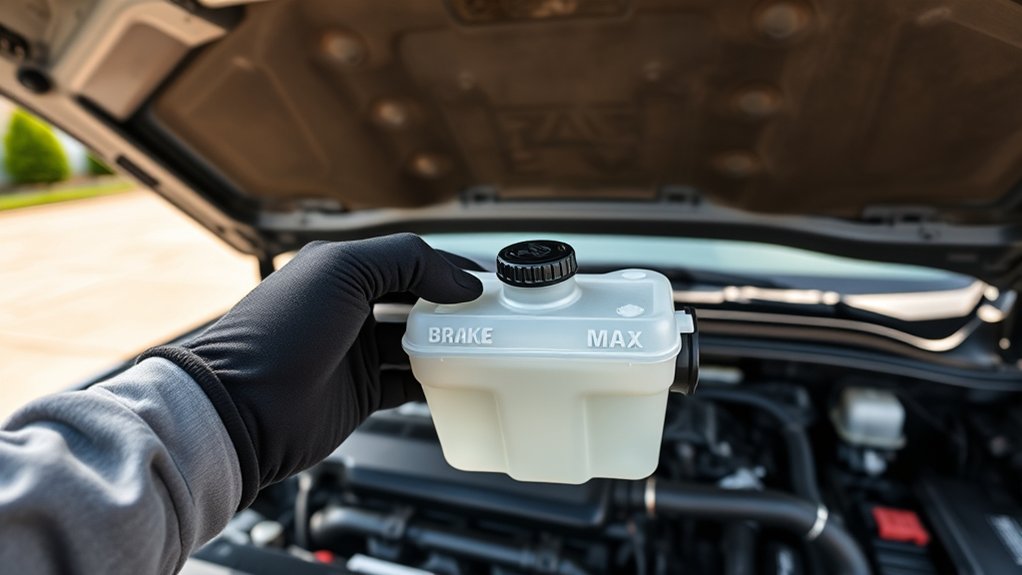
Checking your Toyota Tacoma’s brake fluid takes only a few minutes, but the result can reveal worn brakes, a possible hydraulic leak, or a need for professional service. Park on level ground, switch off the engine, and inspect the translucent reservoir without opening it. Use the exact fluid specification shown on your reservoir cap or in the owner’s manual.
Quick Answer
Find the brake fluid reservoir near the rear of the engine bay, usually on the driver’s side. With the Tacoma parked level and the engine off, confirm that the fluid sits between the MIN and MAX marks. Do not drive if it is below MIN, leaking, or paired with a soft pedal or brake warning light.
Key Takeaways
- Check the level with your Tacoma parked on level ground and the engine switched off.
- Read the fluid through the reservoir wall before considering whether the cap needs to be opened.
- A low level may result from brake-pad wear or a hydraulic leak, so do not treat it as a routine top-off.
- Use only the brake fluid specification printed on the cap or listed in the owner’s manual.
- Fluid color is a useful clue, but it cannot measure moisture content or boiling-point performance.
At a Glance
| Time Required | 5 to 10 minutes |
| Difficulty | Easy visual inspection |
| Tools Needed | Flashlight, clean lint-free cloth, and protective gloves |
| Cost | No cost for inspection; fluid, testing, or professional service costs extra |
Warning: Do not drive your Tacoma if the brake fluid is below the MIN mark, a leak is visible, the red brake warning remains illuminated, or the brake pedal feels soft, sinks, or requires pumping. Have the truck towed for inspection.
Why Brake Fluid Matters in Your Toyota Tacoma
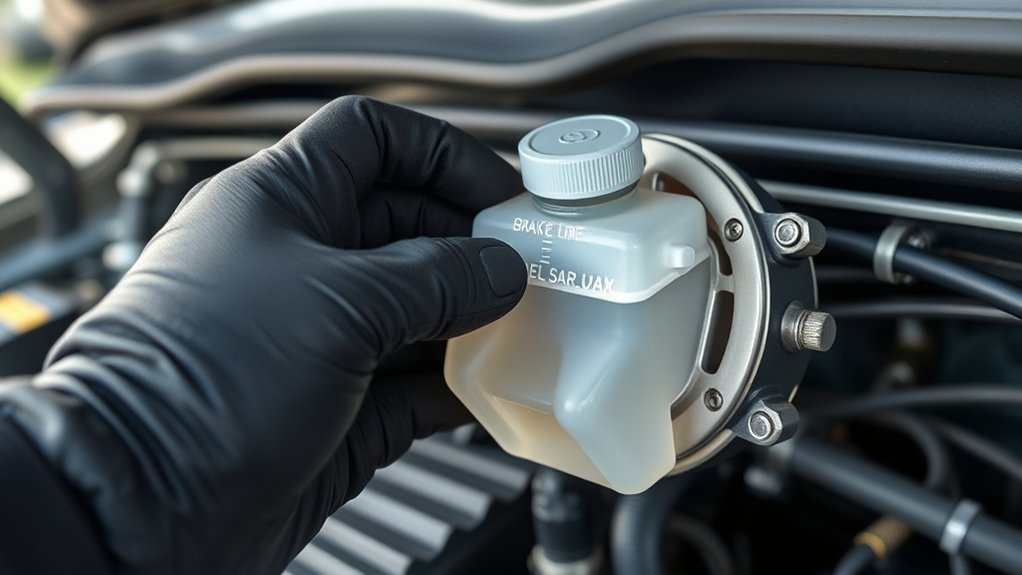
Brake fluid transfers hydraulic pressure from the master cylinder to the brakes at the wheels. The fluid must remain clean, compatible with the system, and high enough in the reservoir for the hydraulic system to operate correctly.
Unlike engine oil or fuel, brake fluid is not normally consumed during everyday driving. The reservoir level may gradually move downward as the brake pads wear and the caliper pistons extend. A sudden drop, a level below MIN, or repeated fluid loss can indicate a leak.
Brake fluid also faces heat and moisture over time. Moisture can lower its boiling-point performance, while dirt, petroleum products, or the wrong fluid can damage seals and other brake components. Federal brake-fluid labeling rules therefore instruct users to follow the vehicle manufacturer’s recommendation and keep the fluid clean and dry.
How to Locate the Brake Fluid Reservoir
Open the hood and look near the rear of the engine bay, close to the firewall. On many Tacoma models, the reservoir is on the driver’s side and sits above the brake master cylinder. It is usually a small translucent plastic container with MIN and MAX markings.
Engine-bay layouts can differ by model year, engine, and powertrain. Confirm the reservoir’s identity through your model-year Toyota owner’s manual instead of relying only on a general diagram.
Identify the Correct Container
Look for a cap labeled for brake fluid or marked with a brake-system symbol. Do not confuse the brake reservoir with the windshield-washer, coolant, power-steering, or clutch-fluid container.
Use a flashlight if the markings or fluid line are difficult to see. Check both sides of the reservoir because the fluid surface may be more visible from one angle.
Clean Around the Cap
Wipe dust and loose debris from the cap and surrounding area with a clean, lint-free cloth. This prevents dirt from falling into the reservoir if the cap later needs to be removed.
You usually do not need to open the cap for a routine level check. Keeping it closed reduces the chance of introducing moisture, dirt, or the wrong liquid.
Pro Tip: Shine a flashlight through the side or back of the translucent reservoir. This can make the fluid line easier to see without removing the cap.
How to Check the Brake Fluid Level Step by Step
- Park on level ground. A slope can make the fluid line appear higher on one side and lower on the other.
- Switch off the engine. Set the parking brake and allow hot engine-bay components to cool enough for safe access.
- Open and secure the hood. Make sure the hood is fully supported before reaching into the engine bay.
- Locate the reservoir. Confirm its position through the owner’s manual if you are uncertain.
- Clean the exterior. Remove dirt from the cap and reservoir so the markings and fluid line are visible.
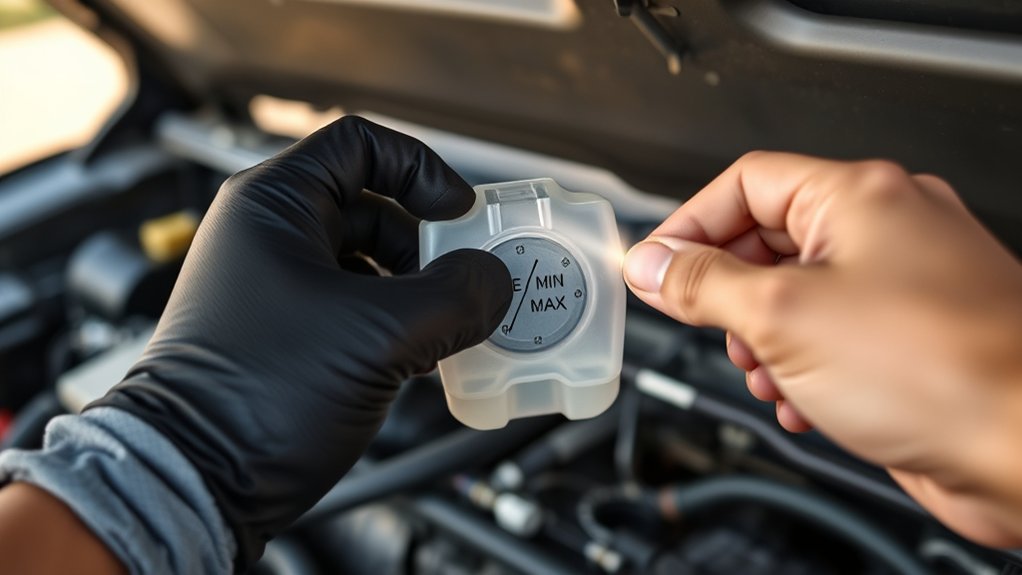
- Read the level through the reservoir wall. The fluid should sit between the MIN and MAX markings.
- Inspect the surrounding area. Look for wetness, staining, damaged hoses, or fluid collecting around the master cylinder.
- Close the hood after the inspection. If the level or pedal feel is abnormal, arrange a brake-system inspection before driving.
When the Fluid Is Between MIN and MAX
A level between the marks is normally acceptable. It does not prove that the entire brake system is healthy, so continue to pay attention to warning lights, pedal feel, fluid appearance, and your Tacoma’s maintenance schedule.
Do not add fluid merely to bring a safe level up to the MAX line. Unnecessary topping off can cause the reservoir to overflow when worn brake pads are replaced and the caliper pistons are pushed back.
When the Fluid Is at or Below MIN
Treat a level at or below MIN as a reason to investigate the braking system. Check for visible leakage and consider whether the brake pads may be heavily worn. If you cannot identify the cause, have a qualified technician inspect the truck.
Do not assume that adding fluid solves the problem. A leak may continue after the reservoir is refilled, and the loss of hydraulic pressure can reduce braking ability.
How to Interpret Brake Fluid Color and Clarity
New DOT 3, DOT 4, and DOT 5.1 fluids that meet federal requirements are generally colorless to amber. Fluid often becomes darker during service as it ages and collects wear products.
A visual check is useful, but it cannot measure moisture percentage, boiling point, acidity, or corrosion-inhibitor condition. Clear-looking fluid may still require service, while dark fluid does not reveal the exact cause by color alone.
Appearance Warning Signs
- Cloudiness: May indicate water or incompatible-fluid contamination.
- Visible particles or sediment: Require professional inspection and service.
- Milky or separated layers: Suggest contamination and should not be ignored.
- Very dark fluid: Supports having the fluid inspected or tested, especially when service history is unknown.
- Unexpected purple fluid: Stop before adding anything. DOT 5 silicone fluid is purple and is not a routine substitute for the glycol-based fluid specified in most modern brake systems.
Fluid color can alert you to a possible problem, but only the correct service history and appropriate testing can confirm whether the fluid still meets the vehicle’s needs.
What Causes Low Brake Fluid?
Brake-Pad Wear
As disc brake pads wear, the caliper pistons move farther outward. More fluid remains in the calipers, which can cause the reservoir level to move gradually downward. A technician should check pad thickness before deciding that the reservoir simply needs more fluid.
A Hydraulic Leak
A leak can occur at a brake hose, metal line, caliper, wheel cylinder, master cylinder, ABS hydraulic unit, or connection. Possible clues include wet areas near a wheel, fluid on the ground, a falling reservoir level, a soft pedal, or a brake warning light.
Brake fluid can spread across nearby surfaces, so the source may not sit directly above the visible drip. A professional pressure inspection may be needed to locate it.
Recent Brake Service
An incorrect fill level, incomplete bleeding, or a loose connection after service can also affect the reservoir level. Contact the repair facility promptly if the level falls or the pedal changes after brake work.
Note: Recall coverage depends on the model year, drivetrain, production date, and VIN. Check your Tacoma through the official Toyota recall lookup and NHTSA recall lookup.
How to Select the Correct Brake Fluid
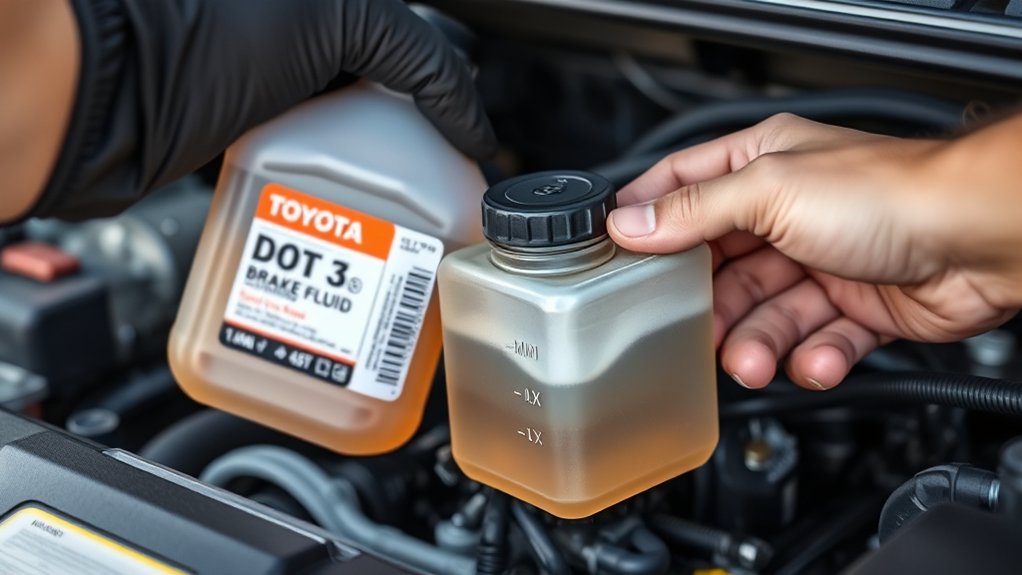
The correct fluid is the specification Toyota lists for your exact Tacoma. Check the reservoir cap first, then confirm the requirement in the owner’s manual. Model year, market, and system design matter more than a general online recommendation.
Choose a sealed container whose label states that the fluid meets the required DOT and manufacturer specification. Do not use a bottle with an unknown history or a cap that has been left loose.
| Label | What You Need to Know |
|---|---|
| DOT 3 | Glycol-based fluid. Use it only when it matches Toyota’s specification for your truck. |
| DOT 4 | Glycol-based fluid with different performance requirements. Do not substitute it based only on a higher boiling-point rating. |
| DOT 5.1 | Non-silicone fluid despite the “5” in its name. Use only when specifically approved for the vehicle. |
| DOT 5 | Purple silicone-based fluid. It is not interchangeable with DOT 3, DOT 4, or DOT 5.1 and should not be added unless Toyota explicitly specifies it. |
Warning: Never choose brake fluid by assuming that a higher DOT number is automatically better. Do not mix the existing fluid with DOT 5 silicone fluid, petroleum products, engine oil, power-steering fluid, or any unknown liquid.
How to Add Fluid Safely When Appropriate
Add fluid only after identifying why the level is low and confirming that topping off is appropriate. If a technician has ruled out a leak and the correct specification is known, follow these precautions:
- Use a fresh, sealed container that matches the cap and owner’s manual.
- Clean the reservoir cap and surrounding area.
- Open the cap only when you are ready to add the fluid.
- Pour slowly and stop below the MAX line.
- Do not allow the container tip or funnel to touch dirty surfaces.
- Reinstall the cap securely.
- Do not return unused fluid from a funnel or reservoir to the original container.
Never reuse fluid that has been drained or bled from a brake system. Once fluid has been exposed to contamination or an open service container, its condition is uncertain.
When Should Tacoma Brake Fluid Be Changed?
A single universal replacement interval does not fit every Tacoma model year, market, and operating condition. Follow the maintenance guide supplied for your exact truck and consider the vehicle’s service history.
Brake-fluid service may be appropriate when:
- Your model-year maintenance guide specifies it.
- A qualified test shows excessive moisture or inadequate boiling-point performance.
- The fluid contains particles, cloudiness, separation, or incompatible material.
- The hydraulic system has been opened for a component repair.
- The service history is unknown and an inspection supports replacement.
- A technician recommends service after diagnosing a brake concern.
A fluid exchange or flush requires controlled bleeding of the hydraulic system. This is different from checking the reservoir and should be completed with the correct procedure and equipment so air does not enter the system.
What to Do if the Fluid Is Dark or Cloudy
If the fluid is dark but clear, review the service history and arrange an inspection or test. Darkness alone cannot identify the moisture content or remaining boiling-point performance.
If the fluid is cloudy, milky, separated, or contains particles, do not add fresh fluid in an attempt to dilute the problem. Have the system inspected for contamination and serviced using the correct procedure.
A burnt odor, visible debris, damaged seals, or a change in pedal feel also calls for professional diagnosis. Replacing only the reservoir fluid will not remove contaminated fluid from the lines, ABS unit, calipers, or wheel cylinders.
Brake Fluid Handling and Spill Safety
Brake fluid can damage painted and finished surfaces. Keep the container upright, protect the surrounding bodywork, and avoid setting a wet cap or tool on painted panels.
If fluid spills, follow the product label and clean the affected area promptly. Avoid spreading it with an oily rag or using petroleum-based cleaners near the brake system.
Wear gloves and avoid eye contact. Keep brake fluid away from children and pets, and store it in its original, tightly closed container. Dispose of unwanted fluid according to local household hazardous-waste rules.
Troubleshooting Brake Fluid Problems
| What You Notice | What It May Mean | What to Do |
|---|---|---|
| Level is between MIN and MAX | Level is within the marked range | Do not top off unnecessarily. Continue normal inspections. |
| Level is near MIN and has fallen gradually | Possible brake-pad wear | Have pad thickness and the hydraulic system inspected. |
| Level is below MIN or drops quickly | Possible leak or service problem | Do not drive. Arrange towing and professional diagnosis. |
| Soft or sinking pedal | Air, leakage, internal master-cylinder trouble, or another hydraulic fault | Stop driving and have the system inspected immediately. |
| Cloudy fluid or particles | Contamination or component deterioration | Do not dilute it by topping off. Arrange a complete inspection. |
| Red brake warning remains on | Low fluid, parking-brake issue, or another brake-system fault | Stop safely, consult the manual, and do not continue driving if the warning remains. |
Frequently Asked Questions
How do I know whether my Tacoma has a safe brake fluid level?
Park on level ground and check the translucent reservoir with the engine off. The fluid should sit between the MIN and MAX marks. A safe-looking level does not rule out every brake problem, so investigate warning lights, leaks, or changes in pedal feel.
Should I check Tacoma brake fluid when the engine is hot or cold?
Check it with the engine switched off and the truck parked level. You do not need the engine to be completely cold, but wait until nearby components are cool enough to reach safely. Avoid opening the reservoir near hot parts.
Do I check brake fluid with the Tacoma running?
No. Switch off the engine, set the parking brake, and secure the hood before checking the reservoir. Running the engine is unnecessary for a visual level inspection.
Can I add brake fluid when the level is low?
Do not add it automatically. First determine whether worn brake pads, a leak, or recent service caused the low level. Use only the specification shown on the cap or in the owner’s manual, and never fill above MAX.
Can I use DOT 5 brake fluid in a Toyota Tacoma?
Do not use DOT 5 silicone fluid unless Toyota explicitly specifies it for your exact vehicle. DOT 5 is not a routine upgrade from DOT 3 or DOT 4 and must not be mixed with glycol-based fluid.
Does dark brake fluid always need immediate replacement?
Not based on color alone. Darkening supports checking the service history and having the fluid inspected or tested. Cloudiness, particles, separation, leakage, or abnormal pedal feel require more urgent attention.
Conclusion
Checking your Toyota Tacoma’s brake fluid is a simple visual task, but interpreting the result requires care. Keep the truck level, read the reservoir without opening it, and confirm that the fluid remains between MIN and MAX.
Never treat a low level as an ordinary fluid-consumption issue. Check for worn brakes or leakage, use only Toyota’s specified fluid, and stop driving when the level, warning lights, leakage, or pedal feel suggests a hydraulic problem. A prompt professional inspection protects both braking performance and the rest of the system.
Sources
- Toyota Manuals and Warranties — model-year owner’s manuals, maintenance guides, and vehicle-specific specifications.
- 49 CFR 571.116, Motor Vehicle Brake Fluids — federal brake-fluid classifications, labeling, color, handling, and contamination requirements.
- Toyota Safety Recall Lookup — checks Toyota recalls and service campaigns by VIN or vehicle information.
- National Highway Traffic Safety Administration Recall Lookup — official U.S. vehicle recall search.