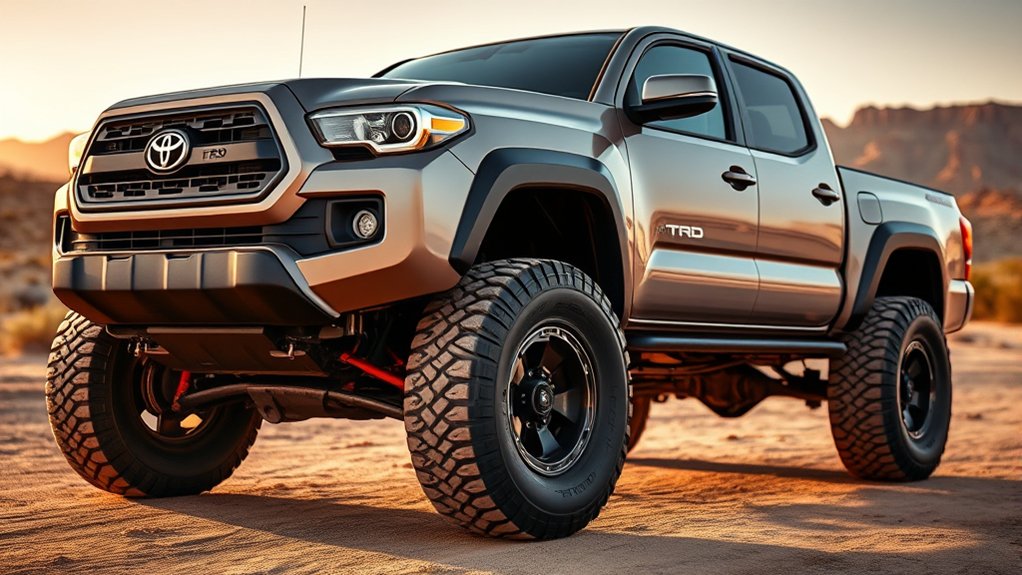
A Toyota Tacoma PreRunner is a rear-wheel-drive Tacoma that combines a two-wheel-drive powertrain with off-road-oriented suspension, tires and rear-traction hardware. For 2026, the TRD PreRunner uses a 278-horsepower turbocharged engine, an electronic locking rear differential, a two-seat XtraCab and a six-foot bed. It is well suited to dirt roads, sand and moderate trails, but it does not have a front drive axle or low-range four-wheel drive.
Quick Answer
A Tacoma PreRunner is a two-wheel-drive Tacoma with off-road-oriented equipment and styling. The 2026 TRD PreRunner has rear-wheel drive, 278 horsepower, 317 lb-ft of torque, an electronic rear differential lock, a two-seat XtraCab and a six-foot bed. Toyota currently lists a $39,135 base MSRP and 20/24 mpg city/highway estimates. It does not have 4WD or low-range gearing.
Key Takeaways
- The PreRunner is rear-wheel drive, not four-wheel drive.
- Its electronic rear locker can improve traction by turning both rear wheels together on loose surfaces.
- The current TRD PreRunner uses a two-seat XtraCab, utility storage and a six-foot bed.
- It can suit dry trails, sand, dirt roads, towing and work use, but 4WD is better suited to deep snow, mud and difficult climbs.
- Specifications for older PreRunners vary by year, engine, cab and TRD package.
Last updated: September 19, 2026. Current-model specifications refer to U.S.-market 2026 Toyota Tacoma information unless otherwise stated.
2026 update: Toyota currently lists the TRD PreRunner at a $39,135 base MSRP and identifies a black front logo as a 2026 model-year update. The core rear-wheel-drive XtraCab layout, turbocharged i-FORCE engine and electronic rear locker continue.
What Is a Tacoma PreRunner?
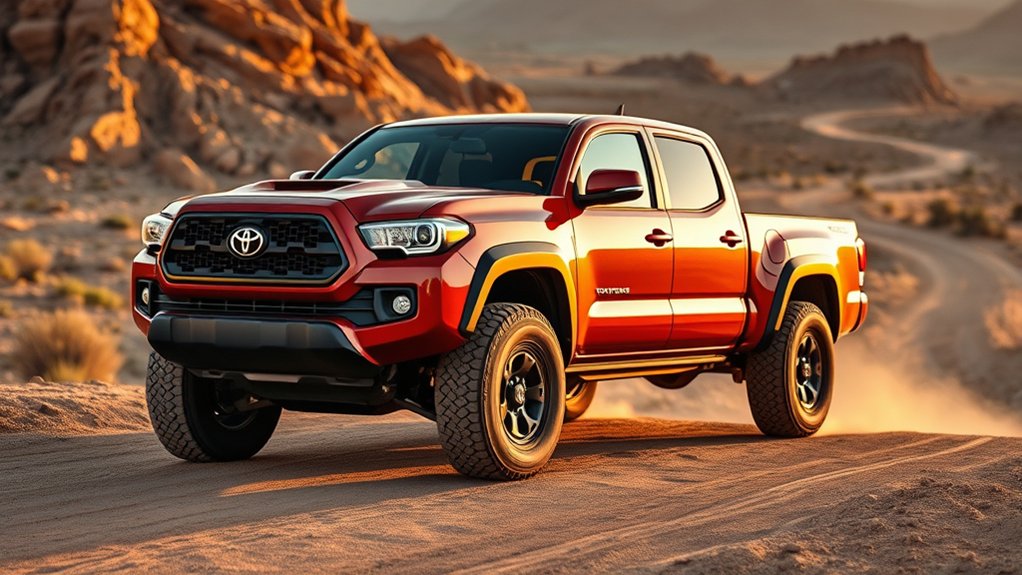
The Tacoma PreRunner concept pairs a two-wheel-drive powertrain with the taller stance, stronger appearance and selected traction equipment buyers often associate with an off-road truck. Power goes to the rear wheels, so the truck does not have a front drive axle, selectable four-wheel drive or a low-range transfer case.
Toyota returned the name for the fourth-generation Tacoma in 2024. The current model is officially called the TRD PreRunner and comes only as a rear-wheel-drive XtraCab. Toyota gives it a lifted front suspension, larger-diameter BFGoodrich all-terrain tires and an electronically controlled locking rear differential.
That combination makes the PreRunner more trail-friendly than a basic rear-wheel-drive pickup. However, it remains less capable in severe low-traction conditions than a properly equipped 4WD Tacoma.
Current 2026 Tacoma TRD PreRunner Specifications
| Feature | Current specification |
|---|---|
| Drivetrain | Rear-wheel drive |
| Engine | 2.4-liter turbocharged i-FORCE four-cylinder |
| Output | 278 horsepower and 317 lb-ft of torque |
| Transmission | Eight-speed automatic |
| Rear differential | Electronically controlled locking differential |
| Cab and seating | Two-seat XtraCab with storage behind the front seats |
| Bed | Six-foot bed |
| Rear suspension | Leaf springs |
| Estimated fuel economy | 20 mpg city and 24 mpg highway |
| Base MSRP | $39,135 Toyota-listed base MSRP |
You can verify the latest trim information on the official Toyota Tacoma page. Prices, standard equipment and ratings can change during a model year.
Price context: Toyota currently lists the 2026 TRD PreRunner at $39,135 and the TRD Off-Road at $42,815 in base MSRP, a difference of $3,680 before considering options, taxes, dealer charges or other applicable fees. That gap is useful when deciding whether the added 4WD capability of an eligible TRD Off-Road configuration matters for your driving.
Tacoma PreRunner Off-Road Features That Matter
The most useful PreRunner features are its electronic locking rear differential, increased front ride height, all-terrain tires and utility-focused leaf-spring rear suspension. These features improve traction, clearance and load control without adding a four-wheel-drive transfer case.
Electronic Locking Rear Differential
An open differential allows the rear wheels to rotate at different speeds, which helps the truck turn smoothly. However, power may follow the wheel with the least grip when one rear tire is on mud, loose sand or an uneven surface.
The PreRunner’s electronic locker connects the rear axle shafts so the rear wheels turn together. That can help you move when one rear tire has grip and the other starts spinning. Toyota lists the electronic locking rear differential as standard equipment on the current TRD PreRunner. For operating details, see the site’s guide on how to engage the rear differential lock on a Toyota Tacoma.
Warning: A locked rear differential changes how the truck turns and can cause tire scrub or driveline stress on firm, high-traction pavement. Engage and disengage it only under the conditions described in your Tacoma owner’s manual.
| It can help with | It does not provide |
|---|---|
| Loose dirt, sand, shallow mud and uneven rear-wheel traction | Power to the front wheels |
| Slow movement through ruts or over small obstacles | Low-range gearing |
| Maintaining rear-wheel momentum when one tire lifts or slips | The same control as four driven wheels in deep snow or mud |
Suspension and Ride Height
The current TRD PreRunner has a lifted front suspension and a rear leaf-spring axle. The raised front helps provide a more off-road-oriented stance and useful clearance for dirt roads and moderate trails.
Leaf springs support cargo and towing loads well, but they can produce a firmer or bouncier ride when the bed is empty. Many Double Cab Tacoma grades use a coil-spring rear suspension, so you may notice a comfort difference when comparing trims.
The PreRunner does not receive the Bilstein reservoir shocks Toyota lists for the TRD Off-Road. It also lacks the advanced FOX or Old Man Emu suspension systems used on higher off-road grades.
Tire and Wheel Package
Toyota equips the current TRD PreRunner with larger-diameter BFGoodrich all-terrain tires. Their more aggressive tread can improve loose-surface grip and puncture resistance compared with street-focused tires, although they may produce more road noise and rolling resistance.
Do not order replacement tires from an online article alone. Read the tire-size label on the driver’s door jamb and confirm wheel width, load rating, speed rating and clearance before changing sizes.
Pro Tip: Tire pressure often affects trail performance more than an aggressive-looking tread. Use Toyota’s road-pressure specification for normal driving, and seek professional guidance before reducing pressure for off-road use.
How the Tacoma PreRunner Differs From a Standard Tacoma
A basic rear-wheel-drive Tacoma focuses on value and everyday truck use. The TRD PreRunner adds off-road-oriented tires, a lifted front suspension, TRD styling and a standard electronic rear locker. It also uses the utility-focused XtraCab layout. For a broader lineup comparison, see the site’s guide to Toyota Tacoma trim levels.
A 4WD Tacoma goes further by adding a transfer case and power to the front wheels. Part-time 4WD models can provide high-range and low-range four-wheel drive, depending on the configuration. That added hardware improves control in deep mud, snow, steep terrain and other situations where rear-wheel traction alone is not enough.
| Category | TRD PreRunner | 4WD Tacoma |
|---|---|---|
| Driven wheels | Rear wheels | Front and rear wheels when 4WD is selected |
| Low range | No | Available on part-time 4WD configurations |
| Rear locker | Standard | Standard or available on selected off-road grades |
| Current cab | Two-seat XtraCab only | Available in several cab and bed combinations |
| Best use | Dry trails, dirt roads, sand, towing and utility use | Snow, mud, steep trails, rocks and severe low-traction conditions |
| Complexity | Simpler two-wheel-drive system | Additional transfer-case and front-driveline components |
Cab, Storage and Towing Practicality
The current TRD PreRunner is available only as an XtraCab. It has two front seats, no rear passenger seat and no rear side doors. Toyota uses the space behind the seats for lockable storage, while the front passenger seat can fold flat to create a work surface. The site’s Tacoma cab-configuration guide explains how the current XtraCab differs from older Access Cab and Double Cab layouts.
This layout suits one or two people who carry tools, fishing equipment, recovery gear or other items that need protection from the weather. The six-foot bed also provides more floor length than the five-foot bed fitted to many Double Cab Tacomas.
Toyota has rated the fourth-generation TRD PreRunner XtraCab to tow up to 6,500 pounds when properly equipped. Your actual limit can be lower because passengers, cargo, accessories, tongue weight and factory equipment affect the truck’s available payload and combined-weight limits. See the site’s Tacoma towing-capacity versus payload guide for the calculations that determine the usable limit.
Note: Use the certification labels on your truck and the towing section of its owner’s manual as the final authority. A general trim-level maximum does not replace the ratings assigned to your exact vehicle.
Evolution of the Tacoma PreRunner
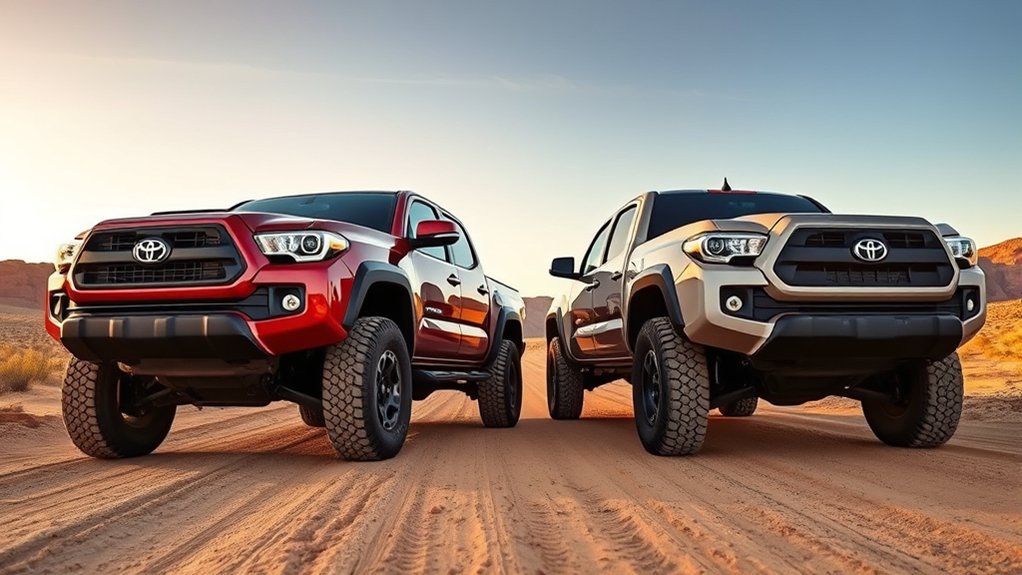
The PreRunner name first appeared for the 1998 Tacoma as a way to combine a rear-wheel-drive powertrain with the stance and selected hardware of a four-wheel-drive truck. Early models commonly used six-lug wheels and could be ordered with four-cylinder or V6 engines, depending on year and configuration.
The concept continued through the second-generation Tacoma. During those years, PreRunner, SR5, TRD Sport and TRD Off-Road designations could overlap in ways that make used-truck listings confusing. A PreRunner badge identified the two-wheel-drive, high-riding configuration, while a TRD package identified a separate equipment package.
Toyota offered the original PreRunner through the 2015 model year. It did not use the PreRunner grade name during the third-generation Tacoma, covering the 2016 through 2023 model years. The TRD PreRunner returned for 2024 as a distinct XtraCab grade with a turbocharged four-cylinder engine and standard electronic rear locker.
| Period | What to know |
|---|---|
| 1998–2015 | A high-riding 2WD Tacoma configuration whose engines, cabs, locker availability and TRD equipment varied by model year. |
| 2016–2023 | The third-generation Tacoma did not use the PreRunner grade name. |
| 2024–current | TRD PreRunner returned as a rear-wheel-drive, two-seat XtraCab with a turbo engine and electronic rear locker. |
Real-World Pros and Cons: Ride, Capability and Running Costs
The TRD PreRunner offers meaningful capability for drivers who do not need four-wheel drive. Its turbocharged engine provides 278 horsepower and 317 lb-ft of torque, while the rear locker can keep the truck moving through moderate low-traction sections.
The lighter and mechanically simpler rear-wheel-drive layout avoids the transfer case and front driveline used by 4WD models. However, any difference in long-term fuel or maintenance cost depends on driving conditions, insurance, tires, repairs and how the truck is equipped.
Independent Road-Test Context
Independent testing adds useful context beyond the specification sheet. Car and Driver tested a 2025 Tacoma TRD PreRunner and recorded 0–60 mph in 7.0 seconds, a 177-foot stop from 70 mph and 21 mpg observed fuel economy. Its testers also described the leaf-spring ride as firmer than the coil-spring Tacoma they compared it with and observed rear-axle hop during hard braking. These are results from one 2025 test vehicle, not guaranteed performance figures for every truck or a separate 2026 instrumented test. See the Car and Driver TRD PreRunner instrumented test for its full methodology and results.
Advantages
- Standard rear locker: Improves rear-axle traction on loose or uneven surfaces.
- Useful engine output: The turbocharged engine provides strong low-speed torque for towing and everyday driving.
- Six-foot bed: Provides practical cargo length for work and outdoor equipment.
- Secure interior storage: The XtraCab has lockable space behind the front seats.
- Simpler drivetrain: It avoids the extra front-drive and transfer-case hardware of a 4WD truck.
- Off-road stance: The lifted front suspension and all-terrain tires suit dirt roads and moderate trails.
Disadvantages
- No rear passenger seats: The current XtraCab carries only two people.
- No four-wheel drive: The front wheels cannot pull the truck through deep mud, snow or steep loose terrain.
- No low-range gearing: It lacks the slow-speed torque multiplication available from a 4WD transfer case.
- Firm empty-bed ride: Rear leaf springs can feel less compliant than the coil suspension used on many Double Cab trims.
- Limited configuration choice: You cannot order the current PreRunner as a Double Cab or with a five-foot bed.
- All-terrain tire compromises: Road noise, replacement cost and fuel use may be higher than with highway-focused tires.
Where a PreRunner Works Best
A PreRunner works well on maintained dirt roads, desert tracks, dry forest roads, shallow sand and moderate trails where rear clearance and traction matter more than four-wheel-drive pulling power. It can also suit towing, jobsite travel and outdoor recreation.
Conditions become more challenging when both rear tires lose grip. Deep snow, clay mud, wet grass on a steep grade and slippery boat ramps can overwhelm a rear-wheel-drive truck even when it has a locker.
A rear locker helps both rear tires work together, but it cannot send engine power to the front tires or replace low-range four-wheel drive.
Should You Buy a Tacoma PreRunner?
Choose the Tacoma TRD PreRunner when you want a two-seat truck with a long bed, secure cab storage, strong turbocharged power and more loose-surface traction than a basic rear-wheel-drive pickup. It makes the most sense in dry climates and for drivers whose off-road use consists mainly of dirt roads, sand and moderate trails.
You should also consider it when the maximum 6,500-pound tow rating, when properly equipped, fits your trailer and you prefer the XtraCab’s cargo-focused layout over rear passenger seating. At Toyota’s current 2026 base MSRPs, the PreRunner is $3,680 below the TRD Off-Road, so the decision is partly whether four-wheel-drive capability is worth that higher starting price for the terrain you actually encounter.
Skip the PreRunner when you regularly carry more than one passenger or drive through deep snow, heavy mud, steep rocky terrain or remote trails where four-wheel drive provides an important traction advantage. A Tacoma TRD Off-Road or another suitable 4WD configuration will generally fit those conditions better.
Used-truck shoppers should decode the VIN, review the original equipment record and inspect the differential controls rather than assuming every older PreRunner has the same equipment. Engines, lockers, suspension components, cab styles and TRD packages varied across earlier model years.
Frequently Asked Questions
What is the difference between a regular Tacoma and a PreRunner?
A PreRunner is a rear-wheel-drive Tacoma with added off-road-oriented equipment. The current TRD PreRunner includes a lifted front suspension, larger all-terrain tires, TRD styling and an electronic locking rear differential. A basic Tacoma may not include those features.
Why is it called a Tacoma PreRunner?
The name comes from desert racing, where a pre-runner vehicle is used to inspect or practice a course before the race. Toyota applied the name to a high-riding two-wheel-drive Tacoma inspired by that style of truck.
What years did Toyota make the Tacoma PreRunner?
Toyota originally offered the Tacoma PreRunner from the 1998 through 2015 model years. The name was absent from the 2016–2023 third-generation lineup, then returned for 2024 as the TRD PreRunner. It remains part of the U.S.-market 2026 Tacoma lineup.
What is included with the current Tacoma TRD PreRunner?
The 2026 TRD PreRunner includes rear-wheel drive, a 278-horsepower turbocharged engine, an eight-speed automatic transmission, an electronic locking rear differential, a lifted front suspension, all-terrain tires and a two-seat XtraCab with a six-foot bed.
Is a Tacoma PreRunner 4WD?
No. A Tacoma PreRunner is rear-wheel drive. Its rear locker can improve traction at the rear axle, but the truck cannot send engine power to the front wheels and does not have a 4WD low range.
Is a Tacoma PreRunner good in snow?
It can handle light snow with suitable winter tires and careful driving, but rear-wheel drive is a disadvantage in deep or steep snow. The locker should not be treated as a substitute for four-wheel drive. Choose a 4WD Tacoma if snow travel is frequent or severe.
How much can a Tacoma TRD PreRunner tow?
Toyota has rated the fourth-generation TRD PreRunner XtraCab to tow up to 6,500 pounds when properly equipped. Check your truck’s certification labels, payload limit, owner’s manual and towing guide because options, cargo and tongue weight can reduce the usable limit.
Conclusion
The Tacoma TRD PreRunner fills the space between a basic rear-wheel-drive pickup and a full 4WD off-road truck. For 2026, it combines 278 horsepower, a standard rear locker, all-terrain tires, a lifted front suspension, a six-foot bed and cargo-focused XtraCab with a $39,135 Toyota-listed base MSRP.
Its strengths are dry trails, dirt roads, towing and two-person utility use. Its limitations are just as important: no rear passenger seats, no front-wheel drive and no low range. Compare those limits with the terrain you actually drive, then confirm towing, payload and operating instructions in the documentation for the exact truck before choosing it over a 4WD Tacoma.
Sources
- Toyota: 2026 Tacoma — current TRD PreRunner price, fuel-economy estimates, drivetrain and trim features.
- Toyota USA Newsroom: The 2026 Toyota Tacoma — current engine, cab, storage, model-year updates, safety and lineup information.
- Toyota USA Newsroom: 2024 Tacoma Launch — PreRunner suspension, tires, rear locker, engine output, XtraCab and towing information.
- Toyota USA Newsroom: 2015 Tacoma — earlier PreRunner configuration and final original-era model-year context.
- Toyota Owner’s Manuals and Warranties — model-specific operating, differential-lock, towing and safety instructions.
- Car and Driver: 2025 Tacoma TRD PreRunner Instrumented Test — independent acceleration, braking, observed fuel economy and ride observations.

