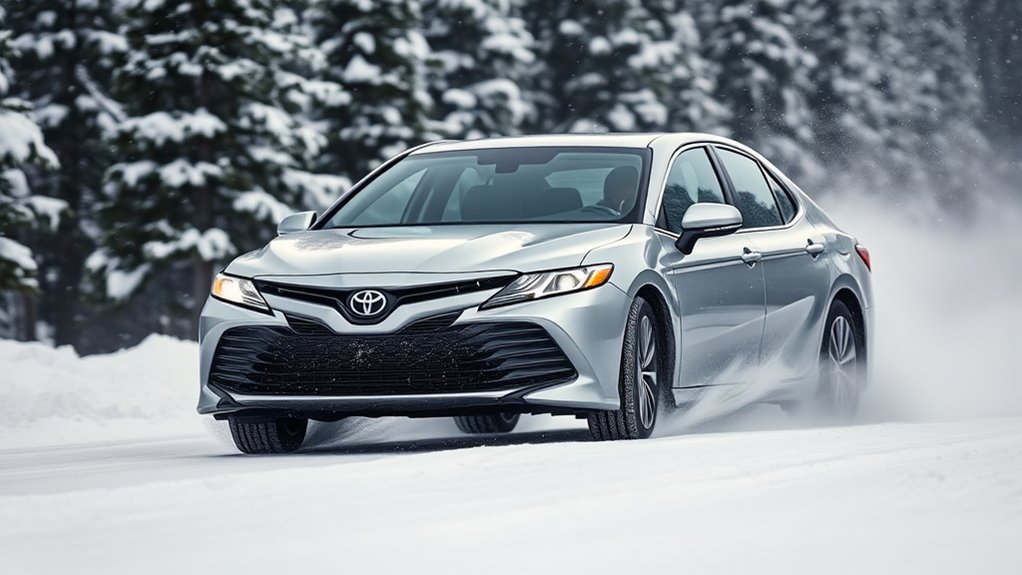
Snow and ice can sharply reduce a Toyota Camry’s ability to accelerate, turn, and stop. Safe winter driving starts before you leave: fit suitable tires, clear the entire vehicle, check the weather and road reports, and allow extra time. Once moving, slow down and make every accelerator, steering, and braking input smooth.
Quick Answer
To drive a Toyota Camry safely in snow and ice, use four matching winter tires, clear all snow and ice, reduce your speed, and leave a much longer following gap. Keep cruise control off, use firm continuous brake pressure in an ABS emergency stop, and never rely on AWD or driver-assistance systems to replace tire grip.
Key Takeaways
- Install four matching winter tires when you regularly drive in freezing temperatures, snow, or ice.
- Check cold tire pressure and avoid using winter tires that are worn close to 4 mm (5/32 inch) of tread for snow-covered roads.
- Slow down early, use a much longer following gap, and make every control input smooth.
- Leave conventional and adaptive cruise control off whenever the road is slippery.
- Keep traction control and stability control on during normal winter driving.
- AWD may help your Camry accelerate, but it does not create extra braking or cornering grip.
- Carry winter supplies and know how to stay safe if you become stranded.
At a Glance
| Time Required | About 10–15 minutes for a pre-drive inspection and complete snow removal |
| Difficulty | Easy preparation, but winter driving requires patience, practice, and careful judgment |
| Tools Needed | Ice scraper, snow brush, tire-pressure gauge, winter washer fluid, phone charger, and emergency kit |
| Cost | Basic checks cost little; winter-tire, battery, and maintenance costs vary by Camry model and condition |
Why Winter Tires Are Essential for Your Camry’s Safety
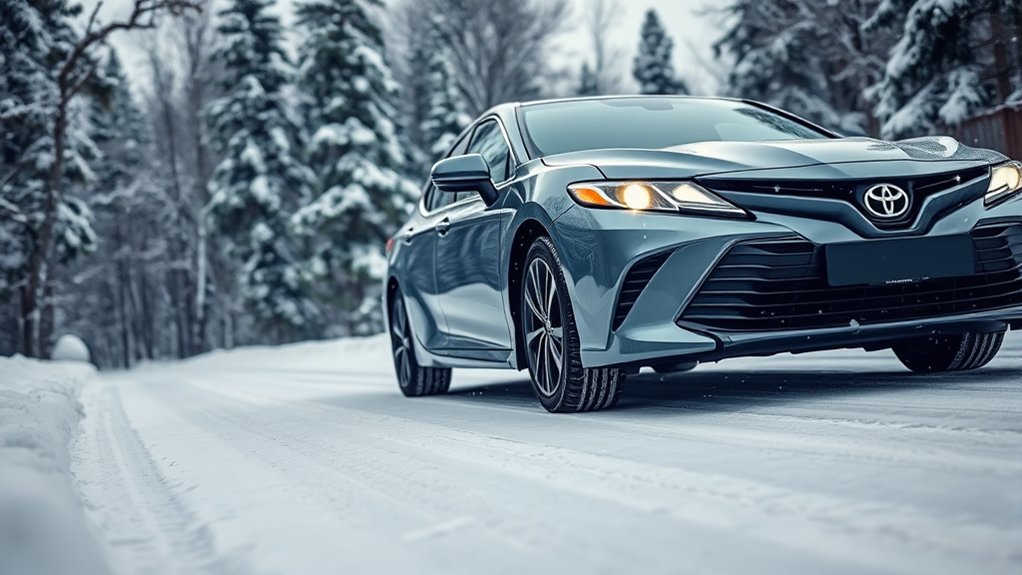
Winter tires use cold-weather rubber compounds and tread patterns designed to provide more grip in low temperatures, snow, and ice. According to Transport Canada, all-season and summer tires begin losing elasticity and traction below approximately 7°C, or 45°F.
Use four matching winter tires rather than fitting them only to the drive wheels. For the best stability, use the same type, size, speed rating, load index, construction, and tread pattern on all four wheels. Look for the three-peak mountain snowflake symbol when you need a tire that meets severe-snow traction requirements.
Inspect tread depth before winter and throughout the season. Transport Canada advises against using tires worn close to 4 mm, or 5/32 inch, on snow-covered roads. Also check for cracks, bulges, punctures, uneven wear, damaged valves, and tires that are too old for safe service.
Winter tires improve available grip, but they do not make an icy road behave like dry pavement. Your speed and following distance must still match the conditions.
Avoid relying on one fixed stopping-distance percentage. Test results vary with the tire, temperature, road surface, speed, vehicle, tread depth, and amount of snow or ice. The reliable takeaway is that suitable winter tires can reduce stopping distance and improve control compared with tires that have hardened in cold weather.
Winter-tire laws also vary by location. For example, the current Québec winter-tire regulation generally requires qualifying tires on covered vehicles registered in Québec from December 1 through March 15, subject to listed exceptions. Check the rules for every state, province, territory, or mountain route you plan to use.
Prepare Your Camry Before Driving in Snow
Check the weather, road reports, and your full route before leaving. Postpone nonessential travel when officials advise drivers to stay off the roads or when freezing rain, whiteout conditions, deep unplowed snow, or untreated ice make safe control doubtful. Tell someone your route and expected arrival time before a long or remote trip.
- Remove all snow and ice. Clear the windshield, windows, mirrors, roof, hood, trunk lid, headlights, taillights, and license plates. Snow left on the roof can slide onto your windshield or strike another road user.
- Clear camera and radar areas. Snow, road salt, slush, or ice can interfere with driver-assistance sensors. Use your model-year manual to identify their locations and follow any dashboard warnings.
- Check cold tire pressure. Check tires before driving or after the vehicle has been parked for at least three hours. Use the recommended pressure on the driver-door label or in the owner’s manual, not the maximum pressure molded into the tire sidewall.
- Inspect tire condition. Confirm adequate winter tread, even wear, and no visible cuts, bulges, cracks, or embedded objects. Check the spare tire or tire-repair equipment as well.
- Confirm visibility equipment. Test the defrosters, heater, wipers, headlights, taillights, hazard lights, and winter-rated washer fluid. Use washer fluid rated below the lowest temperature you expect.
- Carry enough fuel. Keep a gasoline or hybrid Camry’s fuel tank well supplied. For a long winter trip, plan for delays and avoid unnecessary electrical loads if you become stranded.
- Remove packed snow around the vehicle. Make sure snow is not blocking steering movement, the exhaust outlet, the front bumper area, or the wheel wells.
- Secure passengers and cargo. Everyone should wear a seat belt. Avoid placing a bulky winter coat under a child-seat harness; secure the child in thin warm layers and place a blanket or coat over the fastened harness.
Pro Tip: Keep your snow brush and ice scraper inside the cabin instead of the trunk. You will still be able to reach them when the trunk lid is frozen shut or covered by heavy snow.
Essential Driving Techniques for Winter Conditions
The right tires provide the foundation, but your driving inputs determine whether the available grip is used safely. Treat the accelerator, steering wheel, and brake pedal as if any sudden movement could break traction.
| Technique | Why It Matters | What to Do |
|---|---|---|
| Reduce speed | A slick surface reduces the grip available for braking and turning. | Slow down before curves, intersections, bridges, hills, ramps, or visible patches of snow and ice. |
| Increase following distance | Your Camry may need much more space to stop. | Use a much longer gap than on dry pavement. An 8- to 10-second gap is a conservative practical target in severe conditions; add more space when visibility or traction worsens. |
| Use smooth controls | Abrupt steering, braking, or acceleration can overwhelm tire grip. | Accelerate gradually, steer with small movements, and begin normal braking early. |
| Plan for hills | Stopping on an incline can make it difficult to regain momentum. | Build gentle momentum before climbing and avoid hard acceleration. Descend slowly without riding the brakes; use a lower range or special setting only when your manual recommends it. |
| Watch for hidden ice | Bridges, ramps, shaded areas, and untreated intersections may freeze first. | Ease off the accelerator before the suspect area and avoid braking or turning sharply while crossing it. |
| Protect visibility | Blowing snow, spray, and darkness can hide traffic and lane edges. | Turn on the headlights, keep windows clear, avoid lingering beside snowplows, and stop somewhere safe if you can no longer see far enough ahead to stop. |
Warning: Do not use conventional cruise control or Dynamic Radar Cruise Control on snow, slush, freezing rain, or ice. Keep direct control of acceleration so you can respond immediately when traction changes.
How to Brake a Camry on Snow or Ice
For an ordinary stop, release the accelerator early and apply the brake progressively. Try to complete most braking before entering a curve rather than braking hard while the tires are also being asked to turn.
During an emergency stop in an ABS-equipped Camry, press the brake pedal firmly and continuously. The pedal may pulse or vibrate while ABS works. Keep pressing and steer toward a clear path. Do not pump the pedal unless your exact vehicle lacks ABS and its manual instructs you to do so. NHTSA’s winter-driving guidance also recommends firm, continuous pressure for vehicles with ABS.
What to Do if Your Camry Starts to Skid
Skid recovery depends on which tires have lost grip. If the front tires slide and the Camry continues straight despite steering input, ease off the accelerator and avoid adding more steering. If the rear starts to slide sideways, look toward the open path and steer smoothly in the direction you want the front of the car to travel. Avoid large corrections that can start a skid in the opposite direction.
- Stay calm and look toward the open path where you want the car to travel.
- Ease off the accelerator. Do not stamp on the brake pedal merely because the car has begun to slide.
- Steer smoothly toward your intended path without making a large, sudden correction.
- If the rear begins sliding the opposite way, unwind and adjust your steering smoothly rather than snapping the wheel back.
- Once the tires regain grip, straighten the wheels and reduce speed before continuing.
- If an obstacle makes an emergency stop unavoidable, apply firm, continuous pressure to the ABS brake pedal while steering toward a clear path.
Avoid staring at a ditch, barrier, or stopped vehicle because drivers often steer toward the object they are watching. If there is no safe recovery path, prioritize reducing speed and avoiding a secondary collision rather than trying an abrupt maneuver.
Share the Road with Snowplows and Drive Safely in Poor Visibility
Snowplows travel slowly, make wide turns, stop often, and can create clouds of snow that hide the road. Stay well behind a working plow, avoid traveling beside it, and pass only when the road, visibility, markings, and local rules clearly allow it. Never squeeze between plows operating in formation.
Use low-beam headlights when visibility is poor and keep the windshield, mirrors, and lights clear. If blowing snow or a whiteout prevents you from seeing far enough ahead to stop safely, reduce speed smoothly and leave the roadway at a safe exit, rest area, or other protected location. Avoid stopping in a live travel lane.
Use Your Camry’s Safety Features in Winter
Your Camry may include Vehicle Stability Control, Traction Control, an Anti-lock Brake System, Brake Assist, and other features within Toyota’s Star Safety System. These technologies can assist with acceleration, steering stability, and braking, but they cannot produce grip that the tires and road surface do not provide. Toyota explains these functions in its Safety Hub.
Leave traction control and stability control on during normal winter driving. A flashing traction or stability indicator often means the system is responding to wheel slip. Treat that flashing light as a signal to reduce accelerator pressure and slow down.
Toyota Safety Sense features such as the Pre-Collision System, Lane Departure Alert, Lane Tracing Assist, and Dynamic Radar Cruise Control are driver-assistance systems rather than substitutes for attentive driving. Falling snow, dirty sensors, poor lane markings, glare, slush, and ice can affect what cameras or radar can detect. Keep the windshield camera area and exterior sensor areas clean, and follow warnings shown on the instrument panel.
Front-Wheel Drive vs. AWD Camry in Snow
Camry drivetrain availability varies by model year, trim, and market. Front-wheel drive can work well in moderate winter conditions when the car has suitable tires and adequate ground clearance. An AWD Camry can send power to additional wheels when needed and may help the car move from a stop or climb a slippery grade.
However, AWD does not shorten braking distance by itself and does not prevent a skid during a fast turn. All four tires still provide the braking and cornering grip. Toyota’s current U.S. Camry information lists front-wheel drive and available Electronic On-Demand All-Wheel Drive, but you should confirm the equipment and operating instructions for your exact vehicle.
Note: Do not assume your Camry has a Snow Mode. Equipment and control procedures vary by year, trim, drivetrain, and country. Look for a labeled control and confirm its operation in the Toyota manual for your exact vehicle.
What to Do if Your Camry Gets Stuck in Snow
Avoid spinning the tires continuously. Fast wheelspin can dig the tires deeper, overheat components, and throw snow or debris.
- Turn on the hazard lights if other traffic may approach.
- Clear snow from around the drive wheels, under the front bumper, and beneath the vehicle.
- Make sure the exhaust outlet is completely clear.
- Straighten the front wheels and apply light accelerator pressure.
- Place sand, a traction mat, or another approved abrasive material in front of the drive tires.
- Try moving gently without rapid forward-and-reverse shifts. Rock the vehicle only if the owner’s manual permits that procedure.
- If the owner’s manual permits it, traction control may be disabled briefly when wheelspin control prevents the car from moving. Turn it back on immediately after the car is free.
- Stop trying if you smell overheating, see a warning message, hear abnormal noise, or cannot move without aggressive wheelspin. Call roadside assistance.
Use tire chains, cables, or other traction devices only when local rules require or permit them and your Camry’s manual approves them for the installed tire size. Follow the device manufacturer’s installation and speed instructions. Incorrect traction devices can damage the tires, brakes, suspension, wheel wells, sensors, or body.
What to Pack in Your Winter Emergency Kit?
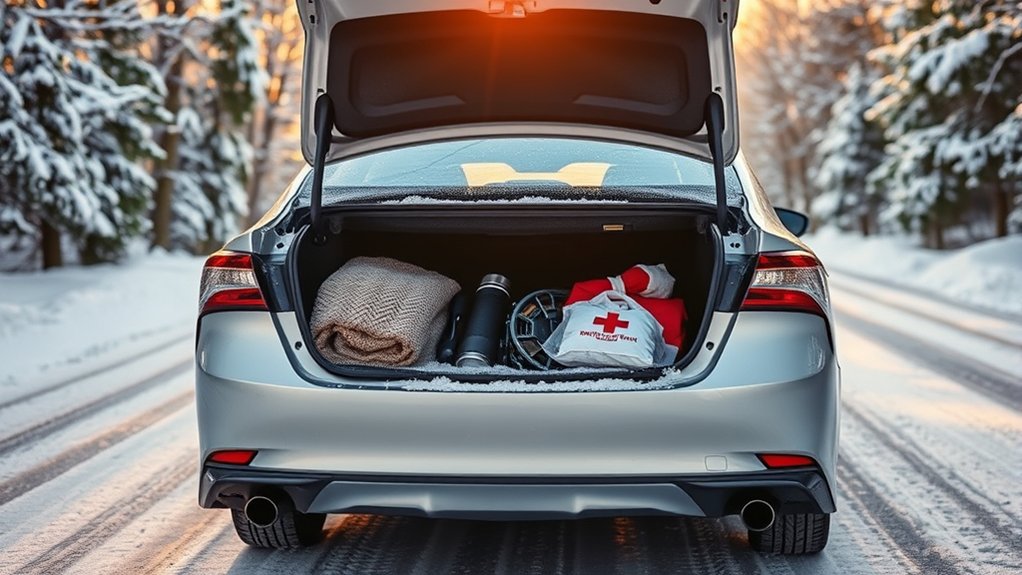
Keep the kit inside a secure container so loose items do not become hazards during sudden braking. Check food, batteries, medicine, and other dated supplies at the start of each winter.
- Warm blankets, gloves, hats, and spare dry clothing
- Drinking water and non-perishable food
- Flashlight or headlamp with spare batteries
- Charged phone, vehicle-compatible charging cable, and portable power bank
- First-aid kit and necessary medication
- Ice scraper, snow brush, and compact shovel
- Jumper cables or a properly maintained portable jump starter
- Reflective triangles or other approved warning devices
- Sand, traction mats, or another approved abrasive traction material
- Tire-pressure gauge
- Extra winter-rated washer fluid
- Basic tow strap only if it is properly rated and you know the approved attachment points and safe recovery procedure; otherwise use professional roadside assistance
How to Stay Safe if You Are Stranded
Stay with the vehicle unless a nearby building offers clearly safer shelter. Move as far from active traffic as safely possible, turn on the hazard lights, keep seat belts fastened if another vehicle could strike you, place visible markers where appropriate, conserve phone power, and contact emergency services or roadside assistance.
Keep the exhaust outlet clear, open a window slightly on the side sheltered from the wind, and run the engine only intermittently for warmth. Avoid heavy shoveling or pushing in extreme cold, and use blankets, dry clothing, and hand warmers to conserve body heat.
Warning: Keep the exhaust pipe completely clear of snow before running the engine. Never run the engine for a long period in an enclosed area. A blocked or leaking exhaust can allow deadly carbon monoxide to enter the cabin.
Regular Maintenance Tips for Winter Performance
Winter reliability depends on more than tires. Inspect the following items before freezing weather arrives and again before a long winter trip:
- Tires: Check cold pressure, tread, sidewalls, valves, tire age, and the spare or tire-repair equipment. Inspect pressure at least monthly and after a major temperature drop.
- Battery: Have the 12-volt battery and charging system tested if starting becomes slow, warning lights appear, or the battery is several years old.
- Wipers and washer fluid: Replace streaking blades and use washer fluid designed for expected freezing temperatures.
- Cooling system: Confirm that coolant meets Toyota’s specification and that no hoses or connections are leaking.
- Lights: Test the headlights, brake lights, turn signals, hazard lights, license-plate lights, and interior lights.
- Brakes: Have unusual noise, vibration, pulling, warning lights, or reduced braking performance inspected promptly.
- Exhaust: Repair leaks promptly because exhaust gases can enter the cabin, especially when snow surrounds the vehicle.
- Floor mats: Secure the correct-size mats with their retention points so they cannot interfere with the accelerator or brake pedal.
- Recalls: Check your VIN for open safety recalls and arrange the manufacturer’s remedy when one applies.
Schedule a winter inspection with a Toyota dealer or qualified technician when you cannot complete these checks safely or when the vehicle displays a warning. Follow the maintenance schedule, tire specifications, fluid requirements, and traction-device instructions for your exact model year rather than using one interval or procedure for every Camry.
Related Guides
Frequently Asked Questions
Are Toyota Camrys good in snow?
A Toyota Camry can handle moderate winter conditions when it has suitable tires and the driver uses safe techniques. Performance depends on tire grip, tread depth, ground clearance, road treatment, speed, and whether the car has front-wheel drive or AWD. Deep, unplowed snow may exceed a Camry’s ground clearance.
How do you put a Toyota Camry in Snow Mode?
Do not follow a universal button sequence because Snow Mode is not fitted to every Camry. Check the controls and owner’s manual for your exact model year, trim, drivetrain, and market. If the manual does not identify a Snow Mode control, there is no Snow Mode procedure to activate.
What is the 7-degree guideline for winter tires?
The guideline recommends considering winter tires when temperatures remain near or below 7°C, or about 45°F. Transport Canada states that summer and all-season tires begin losing elasticity and traction below this temperature. It is a practical temperature guideline, not a universal law or a claim that one temperature instantly makes every tire unsafe.
Is an automatic or manual transmission better in snow?
Tires, speed, and smooth driver inputs usually matter more than transmission type. In an automatic or hybrid Camry, use gentle accelerator pressure and let the vehicle manage normal gear selection. Use a lower range or approved drive setting only when your model’s manual recommends it for a descent or low-speed condition.
Does an AWD Camry still need winter tires?
Yes, when your climate and road conditions call for them. AWD can improve acceleration by sending power to more wheels, but braking and cornering still depend on the four tire contact patches. AWD does not turn all-season tires into winter tires.
Should you turn off traction control in snow?
Keep traction control on during normal winter driving. It can reduce excessive wheelspin while you accelerate. Briefly disabling it may help in a limited stuck-vehicle situation when the owner’s manual permits that method, but turn the system back on as soon as the car is moving.
Are all-season tires enough for a Camry in winter?
All-season tires may be adequate in mild conditions where temperatures stay above freezing and snow is rare. For regular driving below about 7°C, on packed snow, or on ice, four winter tires provide better cold-weather traction. Local law may also require qualifying winter tires.
How much tread should winter tires have?
Transport Canada advises against using tires worn close to 4 mm, or 5/32 inch, on snow-covered roads. Legal minimums may be lower and vary by location, but a tire can become unsuitable for winter service before it reaches the general legal wear limit.
Can you put tire chains on a Toyota Camry?
Only when local rules allow or require them and the owner’s manual approves a traction device for your exact model, wheel, and tire size. Clearance varies by Camry configuration. Use the approved type, install it on the specified wheels, and follow the device’s speed limit and tightening instructions.
Is front-wheel drive or AWD better for a Camry in snow?
AWD can provide an advantage when starting or climbing on a slippery surface, while front-wheel drive can still perform well with good winter tires and careful driving. Tire quality, tread, speed, and ground clearance usually matter more than the drivetrain label for stopping and cornering.
Sources
- National Highway Traffic Safety Administration: Winter Weather Driving Tips — winter driving, ABS braking, tire pressure, passenger restraints, maintenance, emergency supplies, and stranded-vehicle precautions
- Transport Canada: Using Winter Tires — the 7°C guideline, severe-snow symbol, four-tire installation, tread depth, and cold tire pressure
- Transport Canada: Driving Safely in Winter — snow removal, speed, braking, skids, cruise-control limits, and driver-assistance limitations
- Toyota Safety Hub — Toyota Safety Sense, traction control, stability control, ABS, and system limitations
- Toyota Manuals and Warranties — model-year-specific controls, warnings, maintenance, and traction-device instructions
- Légis Québec: Regulation Respecting Winter Tires — Québec winter-tire dates, definitions, and exceptions
Conclusion
Your Toyota Camry can provide dependable winter transportation when you prepare it properly and respect the limits of available traction. Use four suitable tires, clear the entire vehicle, slow down, leave extra space, and keep cruise control off on slippery roads. Stability control, traction control, ABS, AWD, and Toyota Safety Sense can assist you, but none can replace careful judgment.
When conditions become worse than your tires, visibility, ground clearance, or experience can safely handle, delay the trip or stop in a protected location. Arriving later is always better than taking an unnecessary risk on snow or ice.
