
A Toyota Camry seat belt warning chime usually means the vehicle detects an occupied seating position with an unlatched belt. A bag on the front passenger seat, a buckle-switch problem, disturbed wiring, or an occupant-classification fault can also cause an unexpected alert. Begin with simple parked-vehicle checks, but stop DIY troubleshooting if an SRS airbag warning appears or a belt will not latch securely.
Quick Answer
Confirm that every occupant is properly buckled, remove bags and cargo from all seats, and look for obvious buckle damage or loose debris. If the chime continues with an empty seat or a securely fastened belt, arrange professional diagnosis. Do not use a buckle bypass or disconnect under-seat wiring.
Key Takeaways
- Seat belt reminder behavior varies by Camry model year, trim, market, seating position, and vehicle speed.
- Cargo on the front passenger seat can trigger an alert, so move it to the floor or trunk and secure it.
- A damaged buckle switch, pinched harness, or occupant-classification fault can create a false warning.
- The seat belt reminder, SRS warning light, passenger-airbag indicator, and rear-seat reminder are different signals.
- Do not disconnect under-seat connectors, use a buckle bypass, or sit in front of a pre-buckled belt.
- A persistent warning, an SRS light, or a belt that will not latch requires professional inspection.
At a Glance
| Time Required | 5–15 minutes for safe basic checks |
| Difficulty | Easy for visual checks; professional diagnosis for restraint-system faults |
| Tools Needed | Flashlight, exact owner’s manual, and a vacuum for loose surface debris |
| Cost | No cost for basic checks; diagnostic and repair costs vary by fault and coverage |
How to Manage the Toyota Camry Seat Belt Warning Chime
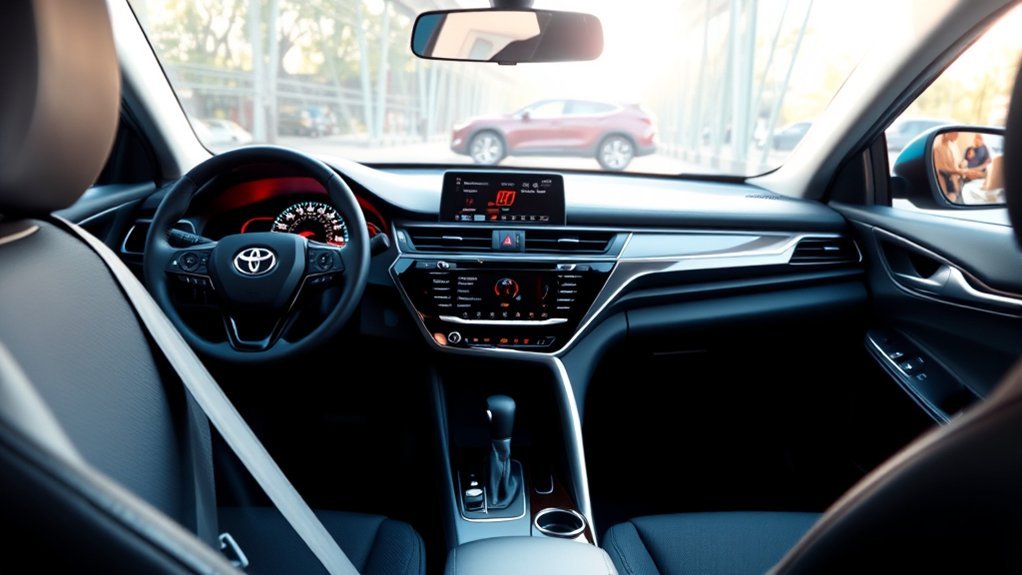
Start by identifying the seating position the Camry believes is occupied and unbuckled. The exact light, message, seating diagram, and chime pattern can differ by model year, so use the manual for your specific vehicle rather than a universal reset sequence.
- Park safely. Do not troubleshoot a distracting chime while the vehicle is moving.
- Check every occupant. Make sure each person is using the correct belt and that the latch clicks fully into its matching buckle.
- Clear every unoccupied seat. Move backpacks, laptops, groceries, pet carriers, and other cargo to the floor or trunk, then secure it.
- Check belt routing. The shoulder belt should not be behind the occupant’s back, under an arm, or routed around an object.
- Restart the vehicle. After the seats are clear and the doors are closed, switch the Camry off, wait briefly, and restart it.
- Identify the displayed position. Note whether the cluster indicates the driver, front passenger, or a rear seating position.
- Check the exact manual. Use Toyota’s vehicle-specific owner’s manual to confirm normal reminder behavior.
Warning: Do not unplug connectors under a seat, install a buckle bypass insert, wear a belt behind your back, or sit in front of a pre-buckled belt. Under-seat wiring can serve buckle, occupant-classification, pretensioner, and airbag circuits.
Toyota advises owners to consult the vehicle-specific manual for warning indicators. If the SRS airbag light stays on, flashes, fails to illuminate during its normal startup check, or appears with another restraint warning, follow Toyota’s warning-light guidance and arrange prompt inspection rather than trying to silence the chime.
Common Causes of the Seat Belt Warning Chime
A seat belt chime can be a normal reminder or a symptom of a fault. Use the table below to narrow the likely cause without disassembling a seat, buckle, or restraint-system connector.
| Cause | What Happens | Safe Next Step |
|---|---|---|
| Unbuckled occupant | The vehicle detects an occupied position with an unused belt. | Buckle the correct belt before moving. |
| Cargo on a seat | Weight or pressure may be interpreted as a passenger. | Move and secure the item off the seat. |
| Wrong or incomplete buckle engagement | The latch may look inserted without fully operating the switch. | Park, release it, and buckle it again until it clicks securely. |
| Buckle-switch problem | The buckle may not report that the latch is inserted. | Check for obvious damage or loose debris and arrange service if it continues. |
| Under-seat wiring issue | A loose, pinched, wet, or damaged harness may interrupt the signal. | Look without touching connectors and have a technician inspect it. |
| Occupant-classification fault | The front passenger seat may be classified incorrectly. | Request an SRS-capable scan and any required calibration check. |
| Rear belt unlatched during a trip | Some systems warn when a rear belt changes from latched to unlatched while driving. | Stop safely, confirm the occupant is buckled, and review the exact manual. |
| Cluster or warning-display issue | The visual seat-status information may be missing or unreliable. | Check for other missing telltales and search the VIN for open recalls. |
If the light remains on with every occupied seat correctly buckled, treat it as a possible system fault rather than fastening unused belts to hide the alert.
Why Does the Seat Belt Warning Light Blink?
A blinking light often means the reminder has entered an active warning stage. Toyota’s timing, sound pattern, vehicle-speed threshold, and seating display vary, so a blinking symbol alone does not prove that a sensor has failed.
Read any accompanying dashboard message and compare the icon with the exact owner’s manual. A seat belt indicator is not the same as an SRS airbag warning or the passenger airbag ON/OFF indicator.
Seat Belt Reminder vs. Other Safety Indicators
| Indicator or Message | What It Usually Means | Response |
|---|---|---|
| Seat belt icon or seating-position display | A monitored belt is unlatched, or its status is not being read correctly. | Confirm belt use, clear cargo, and investigate a persistent false alert. |
| SRS airbag warning light | The supplemental restraint system has detected a fault or failed its normal check. | Arrange prompt professional inspection; do not alter seat wiring. |
| Passenger AIR BAG ON/OFF indicator | The occupant-classification system is reporting passenger-airbag status. | Follow the manual if the status does not match the passenger and seating conditions. |
| Check rear seat or rear-seat reminder | On some models, a separate convenience reminder may respond to rear-door use rather than belt status. | Check the rear area, then use the manual to identify the exact feature. |
Possible Sensor Malfunctions
A buckle switch can fail to recognize a latched belt. Wiring may also be pinched after a seat is moved, serviced, removed, or reinstalled. In other cases, the passenger-seat occupant-classification system may need diagnosis or calibration.
Do not spray cleaner into a buckle, apply lubricant, blow compressed air into it, or probe it with metal tools. Remove only loose, visible surface debris without inserting anything into the mechanism. A buckle that sticks, feels damaged, releases unexpectedly, or does not latch securely should be inspected and replaced as necessary by a qualified technician.
Weight Detection Issues
The front passenger seat uses occupant information for more than the audible reminder. Depending on the Camry, the same seat-area system may also contribute information used to determine passenger-airbag status. Bags, packages, seat accessories, a passenger’s posture, or unusual pressure on the cushion or seatback can affect what the system detects.
| Observation | Likely Meaning | What to Do |
|---|---|---|
| Alert stops when cargo is removed | The seat was likely detecting pressure from the item. | Keep cargo off the seat and secure it elsewhere. |
| Alert continues with an empty seat | A buckle, wiring, classification, or control fault is possible. | Record the conditions and schedule diagnosis. |
| Alert changes when the seat moves | A harness or connector may be pinched or making intermittent contact. | Stop repeatedly moving the seat and have the wiring inspected. |
| Passenger-airbag status seems incorrect | Posture, seat pressure, an accessory, or a classification fault may be affecting the reading. | Correct the seating conditions and obtain diagnosis if the status remains abnormal. |
| SRS light appears too | The issue may involve the broader supplemental restraint system. | Arrange prompt professional service. |
Note: A federal interim final rule published April 6, 2026, unified the compliance date for enhanced front- and rear-seat belt warning requirements at September 1, 2028, with optional early compliance. Newer Camrys may therefore use different warning logic than older models. See the current federal rule and your vehicle-specific manual.
How Seat Weight Affects the Warning System
The front passenger system looks for conditions that suggest the seat is occupied. Toyota does not publish one universal weight threshold that applies to every Camry year, trim, market, passenger posture, and seat configuration, so do not rely on a single number found in a forum or generic guide.
A laptop bag, grocery bag, pet carrier, package, or other object may create enough pressure to activate a reminder. The safest response is to move the item off the seat and secure it where it cannot become a projectile during sudden braking or a crash.
Do not place a loose object on the seat and buckle the belt only to stop the chime. That hides the cause and does not secure the item as safely as proper cargo storage.
Aftermarket seat covers, thick cushions, heated pads, protective mats, or objects wedged between the cushion and console may affect the seat-area system on some models. Follow the restrictions in the exact owner’s manual and remove an accessory if the warning began after it was installed.
The Role of Occupancy Sensors in Seat Belt Alerts

Occupancy and classification sensors help the Camry decide whether a front-passenger reminder should activate. In many configurations, the same seat-area system contributes information used by the passenger airbag system, which is why seat disassembly and wiring changes are not appropriate DIY fixes.
Sensor Functionality and Accuracy
Normal readings can be affected by cargo, an occupant sitting unusually, pressure against the seatback, objects under the seat, or changes to the upholstery. Aftermarket cushions and covers may also interfere on some models.
If the seat, upholstery, wiring, floor area, or buckle has recently been repaired, tell the technician. Occupant-classification systems may require a specified inspection, zero-point procedure, initialization, or calibration after certain repairs. The required process depends on the model year and equipment.
Common Sensor Malfunctions
Possible fault areas include the buckle switch, seat harness, connector terminals, occupant-classification sensors, seat-position inputs, and the control module receiving those signals. A technician should confirm the cause with Toyota-compatible or SRS-capable diagnostic equipment rather than replacing parts based only on the chime.
A basic emissions code reader may show no fault because standardized generic OBD-II functions focus mainly on emissions-related powertrain data. Tool capabilities vary, but restraint-system codes, live buckle status, classification data, and calibration functions commonly require enhanced or manufacturer-specific access.
Do not clear restraint-system codes before the problem is documented. Stored history, freeze-frame information, and live data can help a technician identify an intermittent fault.
How to Fix Seat Belt Warning Light Issues

Use the following safe sequence before scheduling service. Stop immediately if you see damaged wiring, notice an electrical-burning smell, find signs of water intrusion, or see an SRS airbag warning.
- Confirm the alert location. Read the dashboard icon, message, or rear-seat status display to identify the affected seating position.
- Check belt use. Make sure the latch is in its matching buckle and that the belt is not twisted, routed behind the occupant, placed under an arm, or trapped around an object.
- Remove seat cargo. Clear every unoccupied seat, especially the front passenger seat, and secure the items elsewhere.
- Inspect the buckle visually. Look for obvious physical damage or loose visible debris without inserting tools or liquids.
- Check the belt’s mechanical operation. Confirm that it latches, remains latched when pulled, releases normally, and retracts without obvious damage.
- Look under the seat. With the vehicle off, use a flashlight to check for objects pressing against the harness. Do not disconnect, pull, probe, or reposition connectors.
- Restart and retest. Start the Camry with the seats clear and observe whether the same warning returns under the same conditions.
- Review model-specific information. Check the exact Toyota manual, warning-light guidance, and recall information for the VIN.
- Schedule diagnosis. Ask for the buckle switch, occupant-classification system, seat wiring, restraint-system codes, live data, and any required calibration to be checked.
Pro Tip: Write down which seat triggers the warning, whether it is occupied, the vehicle speed, seat position, passenger posture, and whether moving the seat changes the alert. Intermittent-fault details can help a technician reproduce the problem.
[Amazon Products Picked for You]

Front Left Front Right Inner : 1999 2000 2001 2002 2003 2004 2005 2006 2007 F250 F350 F450 F550 Super Duty , making it ideal for DIY repairs. Compatible with 2000-2005 Excursion:2000 2001 2002 2003 2004 2005 Excursion

【 UNIVERSAL FIT】 These safety belt stop buttons fit any car, truck or SUV seat belt
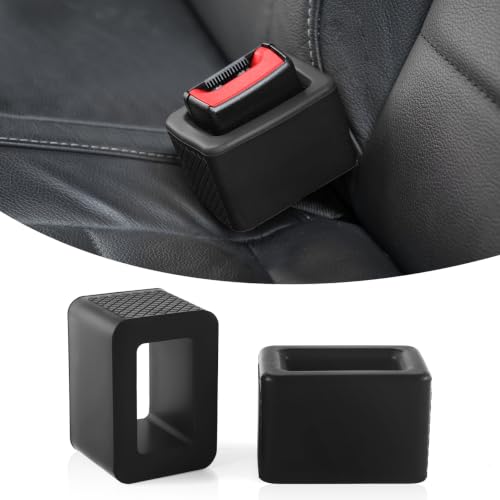
【Safe and Practical】 This seat belt buckle holder keeps the seatbelt receiver upright, allowing passengers to insert the seatbelt with one hand. It eliminates the need to search for the receiver in seat gaps and prevents scratching the car seat, saving time and effort.
Is It Safe to Drive With the Seat Belt Warning On?
| Condition | Recommended Action |
|---|---|
| The alert stops after cargo is removed and all occupants are properly buckled | The system is likely responding normally. Secure the cargo elsewhere. |
| The alert persists, but every occupied belt latches securely and no SRS warning appears | Limit distractions, avoid using the suspect empty passenger seat, and schedule diagnosis soon. |
| A passenger-seat belt will not latch or remain latched | Do not carry an occupant in that seating position until it is repaired. |
| The driver’s belt will not latch or remain latched | Do not drive the vehicle until the belt can properly restrain the driver. |
| An SRS airbag warning is illuminated or the passenger-airbag status is clearly abnormal | Follow the manual and arrange prompt professional inspection. |
| Wiring is cut, wet, corroded, overheated, or visibly damaged | Stop DIY inspection and have the restraint wiring evaluated professionally. |
Can You Turn Off the Seat Belt Chime?
Do not assume your Camry has an owner-accessible setting that disables the seat belt reminder. Available customization, if any, depends on the model year, market, software, and vehicle configuration. The exact owner’s manual and VIN-specific Toyota service information are the reliable sources.
Third-party OBD apps and coding tools may advertise seat belt chime settings, but compatibility and side effects can differ. Do not use coding to conceal a warning that continues with a correctly fastened belt, an empty seat, abnormal airbag status, or an SRS light.
- Do not unplug under-seat wiring.
- Do not insert a metal or plastic buckle substitute.
- Do not wear the shoulder belt behind your back or under an arm.
- Do not sit in front of a pre-buckled belt.
- Do not disable a reminder that may be reporting a buckle, wiring, or occupant-classification fault.
- Do not use a generic belt extender as a chime bypass.
A genuine manufacturer-approved seat belt extender is intended only for an occupant who cannot obtain proper belt fit with the standard belt. It must be correct for the vehicle and seating position and should never be left installed merely to silence a reminder.
For normal driving, leave the reminder active and correct the cause. If a legitimate manufacturer-supported customization is needed for a special use case, ask Toyota to confirm whether it exists for the VIN and whether it changes any related warning behavior.
[Amazon Products Picked for You]

✈️[Adjustable Length]: The longer adjustable size of 7-31" means for large-size passengers. such as big waists, pregnant women, and those who have just completed abdominal surgery, and improve comfort.

2 -in 1 AIRLINE SEAT BELTS - Coolrunner Newly upgraded 2-in-1 aircraft seat belt extender, fits 99.99% of airplane seat belts, compatible with Southwest planes(737-800/737MAX8).

Safety Implications of Ignoring Warning Lights
A seat belt warning is not merely an annoyance. It may indicate that someone is unrestrained or that the vehicle is not reading a buckle or occupant condition correctly.
Increased Injury Risk
Seat belts do not prevent a crash, but they substantially reduce the risk of severe or fatal injury when a crash occurs. NHTSA reports that a properly worn belt reduces fatal-injury risk for front-seat passenger-car occupants by 45% and moderate-to-critical injury risk by 50%.
NHTSA’s current public data reports a 91.3% national seat belt use rate in 2025. It also reports that 48% of passenger-vehicle occupants killed in 2024 were unrestrained, based on cases with known belt use.
A reminder that keeps occupants properly restrained is part of the vehicle’s injury-reduction system, not a fault to bypass for convenience.
NHTSA also estimates that seat belts saved 14,955 lives in 2017 and could have saved another 2,549 people that year if every affected occupant had been buckled. Those are documented historical estimates for 2017, not fixed annual totals.
Legal Consequences of Neglect
Seat belt laws, primary or secondary enforcement rules, exemptions, and occupant-age requirements vary by state. A warning chime does not determine whether a citation will be issued, but driving unbelted may violate applicable law and increases injury risk.
Use your state’s official transportation, motor-vehicle, or public-safety resources for current legal requirements. Avoid broad claims that a chime fault automatically changes warranty coverage, insurance coverage, or legal liability because those questions depend on the facts, policy terms, and governing law.
Potential Vehicle Malfunctions
A persistent false alert may point to a buckle switch, wiring, occupant-classification, warning-display, or control-module problem. The chime alone does not prove that an airbag will fail, but an SRS warning light or related diagnostic code requires prompt attention.
Ignoring an intermittent fault can make it harder to diagnose later. Record when it occurs and avoid repeatedly moving, unplugging, or attempting to repair restraint-system wiring yourself.
Tips for Managing Unwanted Seat Belt Alerts
- Keep unoccupied seats clear of bags, packages, electronics, and pet carriers.
- Secure cargo on the floor or in the trunk so it cannot move during braking.
- Ask passengers to buckle before the vehicle starts moving.
- Keep buckle openings dry and free of loose visible debris.
- Do not place coins, clips, tools, or liquids inside a buckle.
- After moving a power seat, note whether the warning changes.
- Do not store objects where they can press against under-seat wiring.
- Remove a new seat cover or cushion if the warning began after installation.
- Use the exact Camry owner’s manual instead of a universal reset procedure.
- Check the VIN for open safety recalls or service campaigns.
If the warning appears only after a rear passenger exits or unbuckles during a trip, review the rear-seat belt reminder section for your model year. Some systems retain or display rear belt status differently from older Camrys.
Also distinguish a rear-seat belt-status alert from a separate “check rear seat” convenience reminder. Depending on the model, the latter may respond to a rear-door opening pattern and does not necessarily mean that a rear buckle or occupancy sensor has failed.
When to Consult a Professional for Seat Belt Issues
Schedule professional service when basic checks do not resolve the warning or when any condition suggests a restraint-system fault.
- The warning stays on with all occupied seats correctly buckled.
- The front passenger warning appears with an empty, clear seat.
- An SRS airbag warning stays on, flashes, or fails its normal startup check.
- A buckle will not latch, releases unexpectedly, or feels damaged.
- A belt is cut, frayed, contaminated, twisted internally, or does not retract properly.
- The alert changes when a seat moves.
- Wiring looks pinched, cut, wet, corroded, overheated, or previously repaired.
- The vehicle was recently in a collision or had water intrusion.
- The seat, upholstery, floor, buckle, or wiring was recently serviced.
- The issue began after a battery replacement or electrical repair.
- The cluster is blank or other safety telltales are missing.
Note: Certain 2025 Camrys equipped with a specific 12.3-inch combination meter were included in NHTSA recall 25V595 because the display could go blank and prevent warning indicators from appearing. This is not a universal cause of a seat belt chime, but owners with a blank cluster or missing telltales should check their VIN.
Before the appointment, record the model year, trim, VIN, affected seat, whether the seat was occupied, vehicle speed, seat position, passenger posture, other warning lights, and any recent collision, upholstery, battery, or electrical work.
A qualified technician can read restraint-system codes, inspect live buckle and occupant-classification data, test the wiring, verify warning-display operation, and perform any model-specific calibration. Check both Toyota’s recall lookup and the NHTSA VIN lookup before paying for a repair that may be covered by a safety recall or service campaign.
[Amazon Products Picked for You]

This passenger-side buckle end is specifically designed to replace part number BB5Z-7860044-AC, ensuring a precise fit and restoring the safety and functionality of your system.

【UNIVERSAL SIZE】: The size of seatbelt stopper is: 0.59"/15mm in diameter and 0.24"/6mm thick, it is a universal fit seatbelt stopper kit universal for all vehicles, Including cars, trucks or SUVs.
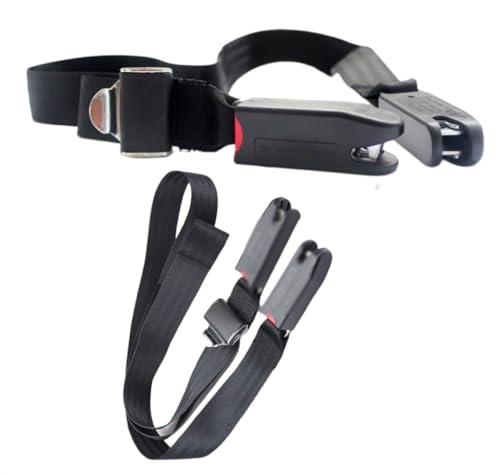
Adjustable Easy-Snap Design: The ISOFIX strap pad for infant car seats features a built-in spring-loaded pad switch for smooth and effortless insertion and removal. It automatically locks upon engagement to prevent accidental loosening. The one-touch release and one-handed operation make it an essential tool for frequent installation and removal of child safety seats.
Related Guides
Frequently Asked Questions
What makes the Toyota Camry seat belt alarm go off?
It normally activates when the vehicle detects an occupied seating position with an unlatched belt. Cargo on a seat, a buckle-switch fault, disturbed wiring, or an occupant-classification problem can also cause an alert.
Can you turn off the seat belt alarm on a Toyota Camry?
Do not assume an off setting is available. Manufacturer-supported customization depends on the exact model year, market, and configuration. Do not use buckle bypasses, disconnect wiring, or code out a warning that may be reporting a real fault.
Why is the passenger seat belt light on with no passenger?
Remove every object and accessory from the seat, make sure nothing is pressing against the seatback or underneath the seat, and restart the vehicle. If the warning remains, the buckle switch, seat wiring, occupant-classification system, or control module may need diagnosis.
Why does my seat belt sensor keep beeping while driving?
A passenger may be unbuckled, cargo may be pressing on a seat, a rear belt may have been released during the trip, or the system may have an intermittent buckle or wiring fault. Park safely, clear the seats, confirm correct belt use, and arrange service if the alert returns.
Is it safe to unplug a connector under the seat to stop the chime?
No. Under-seat wiring can include buckle, occupant-classification, pretensioner, seat-position, and airbag-system circuits. Disconnecting or altering it can create new faults and may affect restraint operation.
Will a basic OBD-II scanner diagnose a seat belt warning?
Not always. Generic scanners mainly support standardized emissions-related powertrain data. A Toyota-compatible or SRS-capable tool may be needed to read buckle status, occupant-classification data, airbag codes, and calibration functions.
Can I drive if the warning is false but my belt is buckled?
If every occupied belt latches securely and no SRS warning appears, move cargo off the seats and arrange diagnosis if the alert continues. Do not drive if the driver’s belt will not latch, and do not carry a passenger in a seating position with an unusable belt.
Is a rear-seat reminder the same as a rear seat belt warning?
Not necessarily. A rear seat belt warning reports buckle status on equipped seating positions. A separate check-rear-seat reminder may use rear-door activity or other logic to remind the driver to inspect the rear area. Consult the exact owner’s manual to identify the message.
Conclusion
The Toyota Camry seat belt warning chime is designed to keep occupants restrained, but cargo, buckle faults, wiring problems, occupant-classification issues, and warning-display faults can create unexpected alerts. Clear the seats, confirm correct belt use, inspect only what is safely visible, and use the exact owner’s manual for your model year.
Do not bypass the reminder or unplug seat wiring. When the warning persists, changes as the seat moves, appears with abnormal passenger-airbag status, or is accompanied by an SRS warning, professional diagnosis is the safest next step.
Sources
- Toyota Manuals and Warranties — model-year owner’s manuals and vehicle-specific restraint instructions.
- Toyota Warning Lights — safety-system indicator guidance and inspection advice.
- Toyota Recall and Service Campaign Lookup — VIN-based Toyota recall and campaign information.
- NHTSA Seat Belt Safety — current belt-use data, injury-risk reductions, and historical lives-saved estimates.
- NHTSA Recall Lookup — VIN, make-and-model, investigation, and recall information.
- Federal Register: Seat Belt Reminder Systems Interim Final Rule — current September 1, 2028 compliance date for enhanced warning requirements.
