Last updated: September 22, 2026
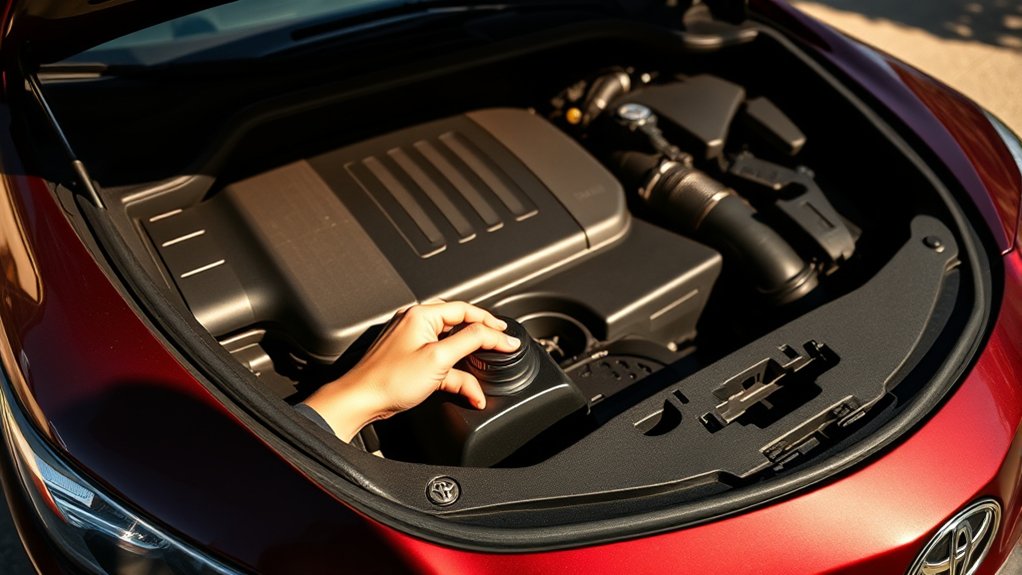
To open a Toyota Camry hood, pull the hood-release lever below the driver-side dashboard, then go to the front of the car, release the secondary safety latch, and raise the hood. On the 2025 Camry, Toyota shows the auxiliary catch lever moving to the left and the hood being supported with a prop rod. Older model years use the same basic two-stage release concept, but latch details can differ. Before you begin, park on a level surface, switch off the vehicle, apply the parking brake, and let hot engine components cool.
Quick Answer
Pull the Toyota Camry hood-release lever below the driver-side dashboard. Go to the front, reach under the slightly raised hood near the center, operate the secondary safety latch, and lift the hood. On the 2025 Camry, the auxiliary latch moves to the left. Secure the hood with the factory support before placing your hands or tools in the engine compartment.
Key Takeaways
- Your Camry uses an interior release lever and a secondary safety latch.
- The exact auxiliary-latch movement can vary by model year; Toyota shows a leftward movement on the 2025 Camry.
- Park, turn off the vehicle, and allow hot components to cool before reaching into the engine compartment.
- Never place your head or hands under an unsupported hood.
- Do not drive if the hood will not latch securely after closing.
At a Glance
| Time Required | About 1 minute when the latch works normally |
| Difficulty | Easy |
| Tools Needed | None for normal opening; a flashlight may help you see the secondary latch |
| Cost | Free unless the latch, cable, or hood alignment needs repair |
How to Open a Toyota Camry Hood
1. Park and Shut Off the Engine
Park the Camry on a level surface, shift into Park, and apply the parking brake. Turn off the engine or hybrid system and keep the key or smart key with you. If the vehicle has been running, allow time for the engine bay and surrounding metal parts to cool.
Warning: Do not open the hood if you see steam or hot coolant escaping from the engine compartment. Move away from the front of the vehicle and wait until the condition has stopped and the vehicle has cooled.
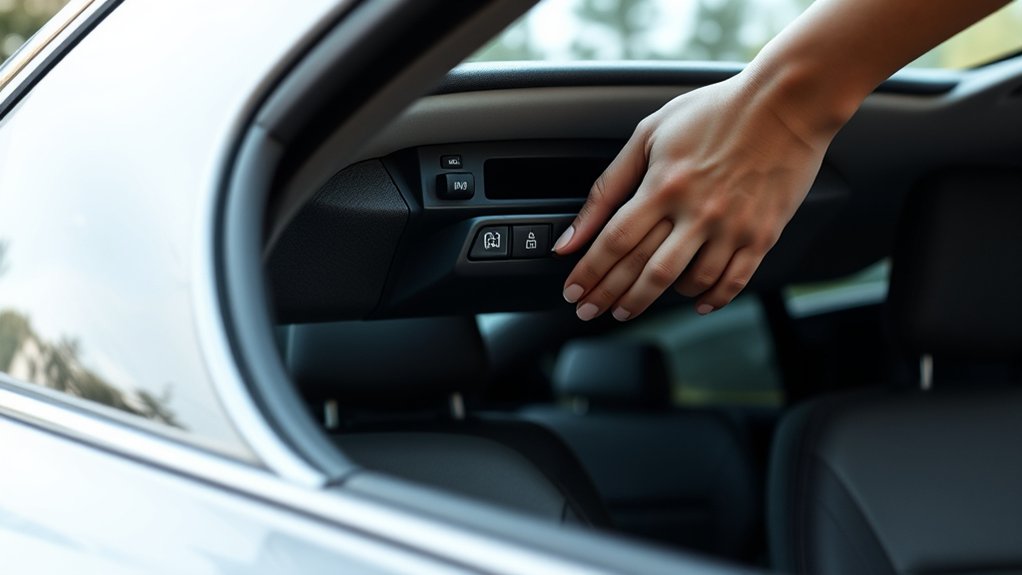
2. Pull the Interior Hood-Release Lever
Sit in the driver’s seat and look below the dashboard near the driver-side footwell. Find the lever marked with a hood-open symbol. Pull it firmly until you hear or feel the primary latch release. The front edge of the hood should rise slightly.
If the lever is difficult to see, use a flashlight rather than reaching around blindly near pedals or wiring.
3. Find the Secondary Safety Latch
Walk to the front of the car and place your fingers under the slightly raised front edge of the hood, usually near the center. Feel for the secondary safety latch and move it only far enough to release the hood.
On the 2025 Camry, Toyota’s official Quick Reference Guide shows the auxiliary catch lever moving to the left before the hood is raised. The exact latch shape or movement may differ on another model year, so check your Camry’s official Toyota owner’s manual when the release direction is not obvious.
The second latch is an important safety feature. NHTSA explains that federal hood-latch requirements call for a second latch position or second latch system when a front-opening hood could obstruct the driver’s forward view if it opens. See the NHTSA interpretation of FMVSS No. 113.
4. Lift and Support the Hood
Lift the hood while keeping your face and body clear of the opening. If your Camry uses a prop rod, remove the rod from its retaining clip and place its end fully into the designated support hole or slot. Toyota’s 2025 Camry guide specifically shows the hood being held open with the factory support rod.
If your model year uses a different factory support arrangement, follow the owner’s manual and confirm that the hood is fully supported before placing your hands or tools in the engine compartment.
Pro Tip: Before leaning over the engine bay, visually confirm that the prop rod or factory support is fully seated and cannot be knocked loose by your movement.
Do Camry Model Years Open Differently?
The basic sequence is consistent across multiple Camry generations: release the hood from inside the cabin, operate the auxiliary safety catch at the front, and raise the hood. Toyota manuals for older models such as the 2010 and 2012 Camry use that same two-stage release sequence.
The details are not identical on every generation. For the 2025 Camry, Toyota shows the interior hood-release lever, a secondary lever that moves to the left, and a prop rod that supports the raised hood. Use the owner’s manual for your exact year when the latch position, movement, or support method differs from the description above. Do not force a latch simply because it moves differently from one shown in a video or on another Camry.
Note: On a Camry Hybrid, opening the hood uses the same basic release process, but do not touch, disconnect, or service orange high-voltage cables, connectors, or labeled hybrid-system components.
How to Close Your Camry’s Hood Safely
- Check the engine bay. Remove tools, cloths, containers, and other loose items before lowering the hood.
- Release the hood support. Hold the hood securely while removing the prop rod from its support hole, if equipped.
- Return the prop rod to its clip. Make sure it is fully secured before closing. Toyota warns that closing the hood with the support rod out of its clip can damage the hood.
- Lower the hood carefully. Use the closing method specified in the owner’s manual for your exact model year. Keep your fingers clear of the hood edge and latch area, and do not force or repeatedly slam the panel.
- Confirm that it is locked. Before driving, make sure the hood is fully closed and securely latched. If it does not sit or latch normally, reopen it and inspect for an obstruction rather than driving the vehicle.
A hood that does not latch securely is not safe for driving. Keep the vehicle parked until the problem is corrected.
Identifying Common Hood Latch Issues
The way the lever and hood respond can help narrow the problem. Dirt, corrosion, cable damage, previous body repairs, and hood or latch misalignment can interfere with normal release or closing.
The Interior Lever Feels Normal, but the Hood Does Not Pop Up
The primary latch may be under pressure, dirty, or binding. Have a helper pull and hold the interior release while you apply only light downward pressure above the latch area, then release that pressure. If the hood does not release promptly, stop rather than striking, jumping on, or prying the panel.
The Interior Lever Feels Loose
A lever with little or no resistance may indicate a detached, stretched, or broken release cable. Stop pulling repeatedly because this may further damage the handle or cable connection.
A failed release cable may require model-specific access to the latch. Because the route varies by model year and may involve work through the grille or from below the vehicle, this repair is best handled by a qualified technician rather than attempted with improvised tools.
The Hood Pops Up, but the Secondary Latch Will Not Release
Use a flashlight to inspect the latch area for leaves, packed dirt, or visible corrosion. Keep your fingers away from pinch points. Do not force the latch with a screwdriver or pry bar because the tool can slip, damage the grille, or bend the latch.
The Hood Will Not Stay Open
Check that the factory support rod is inserted into the correct support point, if equipped. If a support rod is bent, its clip is broken, or another factory support cannot hold the hood securely, do not work underneath it until the support is repaired.
The Hood Will Not Latch Closed
Look for tools, debris, a misplaced prop rod, or other objects blocking the hood. Do not repeatedly slam it. A latch that is stuck, bent, loose, damaged, or misaligned needs inspection before the vehicle is driven.
How to Address Common Hood Latch Problems
Start with cleaning and inspection. Avoid adjusting hinges, the striker, or other alignment components unless you have the correct Toyota service information and repair experience.
| Problem | Safe First Step | When to Seek Service |
|---|---|---|
| Latch is dirty or moves slowly | Remove loose debris with a soft brush or cloth and inspect the mechanism. | The latch remains stiff, heavily corroded, damaged, or will not return to position. |
| Hood does not pop up | Use only light downward pressure while a helper operates the release lever. | The release operates but the latch remains seized or the hood still will not rise. |
| Interior lever has no resistance | Stop pulling and inspect the visible lever connection for damage. | The cable is detached, stretched, frayed, or broken. |
| Hood sits unevenly | Check for obvious obstructions and signs of prior impact. | Hinges, striker, bump stops, or latch alignment require adjustment. |
| Hood will not remain latched | Do not drive. Check for debris and confirm the prop rod is secured, if equipped. | The latch, striker, cable, or hood alignment appears damaged. |
Do not loosen hood-hinge or latch bolts as a trial-and-error repair. Small changes can affect panel alignment and secure latch engagement. A body shop or qualified automotive technician can inspect the alignment and make the correct adjustment.
If a recurring latch problem appears safety-related, check your VIN with the NHTSA recall lookup tool. You can also report a suspected vehicle safety defect to NHTSA.
Tips for Maintaining Your Hood Latch
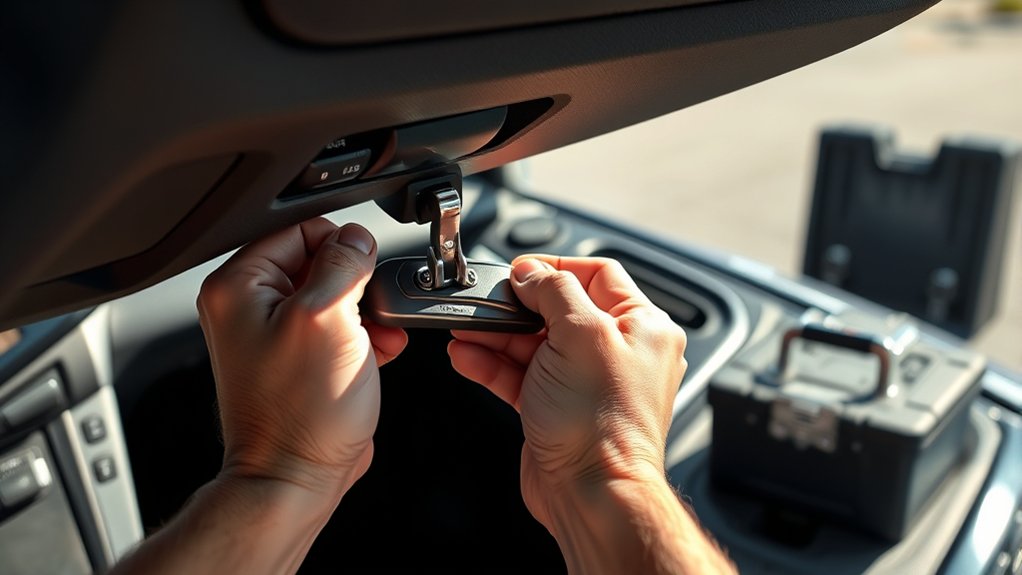
Basic inspection and cleaning can help the hood-release system continue to operate smoothly. Include the latch in occasional under-hood checks, especially after exposure to mud, heavy dust, or road salt.
- Remove debris: Wipe away leaves, dirt, and hardened residue around the latch and striker.
- Check for corrosion: Surface rust, binding pivots, or a latch that does not return normally may require service.
- Inspect the cable response: The interior lever should move smoothly and return after release.
- Lubricate only when appropriate: Use a lubricant suitable for an automotive hood latch and follow Toyota service information or qualified service guidance for the application point and amount.
- Avoid soaking the cable housing: Do not spray chemicals into the release-cable sheath unless model-specific service information calls for it.
- Check alignment: The hood should close evenly without requiring excessive force.
If the latch shows heavy corrosion, cracked parts, a damaged spring, or significant movement at its mounting points, have it inspected rather than relying on repeated lubrication.
What Should You Check After Opening the Camry Hood?
Once the hood is safely supported, use the owner’s manual for your exact Camry to identify the engine-oil dipstick or level-check procedure, coolant reservoir, washer-fluid tank, 12-volt battery or jump terminal, fuse boxes, and other service points. Locations can change with model year and powertrain, so do not rely on an engine-bay diagram from a different Camry.
Keep the inspection visual unless the applicable manual gives you a specific procedure. Do not open a hot cooling system, reach near a moving cooling fan, or touch unfamiliar electrical equipment. On a hybrid, stay away from orange high-voltage wiring, connectors, and labeled high-voltage components.
For related maintenance procedures, see the guides on cleaning a Toyota Camry engine bay safely, using the Toyota Camry jump-start terminal, and following Toyota Camry service intervals.
Toyota also provides model-specific manuals and information about factory-scheduled maintenance and maintenance plans. When a repair involves the hood hinges, latch alignment, release cable, cooling system, electrical equipment, or hybrid system, use the correct Toyota service information or contact a qualified technician.
Related Guides
Frequently Asked Questions
Where is the hood release on a Toyota Camry?
The interior hood-release lever is normally below the dashboard on the driver’s side, near the footwell, and is marked with a hood symbol. After pulling it, you must also release the secondary safety latch under the front edge of the hood.
Which way does the hood safety latch move on a 2025 Toyota Camry?
Toyota’s 2025 Camry Quick Reference Guide shows the auxiliary hood latch being pulled to the left. After it releases, raise the hood and insert the factory support rod into its designated support point.
How do you pop the hood on a 2012 Toyota Camry?
Pull the hood-release lever below the driver-side dashboard. Move to the front of the car, operate the auxiliary safety catch under the slightly raised hood, and lift the hood. Secure it using the factory support method shown in the 2012 owner’s manual before reaching into the engine compartment.
Is the hood release a button or a lever?
On the Camry models covered by the Toyota manuals reviewed here, the interior hood release is a pull lever rather than an electronic button. Look below the driver-side dashboard for the hood symbol.
How do you open the hood on a 2010 Toyota Camry?
Pull the interior hood-release lever on the lower driver side. At the front of the vehicle, operate the auxiliary catch under the hood and lift it. Secure the hood using its factory support before reaching into the engine compartment.
Why does my Camry hood-release lever feel loose?
A loose lever may indicate that the cable has stretched, detached, frayed, or broken. Stop pulling it repeatedly. Because emergency latch access differs by model year, have the cable and latch inspected by a qualified technician.
Can I drive if the hood will not latch completely?
No. A hood that is not fully latched may rise or open while the vehicle is moving and block your view. Keep the vehicle parked until the obstruction, latch, striker, cable, or alignment problem has been repaired.
Conclusion
To open a Toyota Camry hood, pull the interior hood-release lever, operate the secondary safety latch, raise the hood, and secure the factory support correctly. On the 2025 Camry, Toyota shows the secondary lever moving to the left and the hood being held open with a prop rod.
When you finish, return the support rod to its clip if equipped, close the hood according to the procedure for your model year, and confirm that it is fully locked before driving. If the release lever feels loose, the hood requires excessive force, or the latch will not hold securely, keep the car parked and arrange an inspection.
Sources
- Toyota Manuals and Warranties — official model-specific owner’s manuals and vehicle guidance.
- 2025 Toyota Camry Quick Reference Guide — official hood-release location, auxiliary-latch direction, and support-rod guidance.
- NHTSA Interpretation of FMVSS No. 113 — federal hood-latch and secondary-latch requirements.
- ToyotaCare and Maintenance Plans — information about factory-scheduled maintenance.
- NHTSA Recall Lookup — VIN-based safety-recall information.
- NHTSA Report a Safety Problem — official vehicle safety-defect reporting resource.
