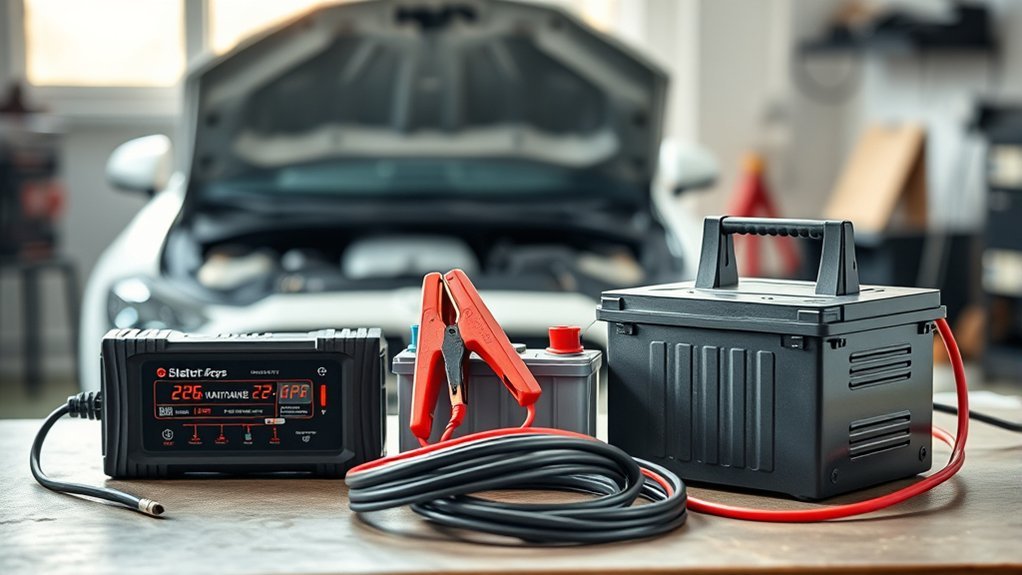
A battery maintainer and a trickle charger can both supply low current to a 12-volt battery, but they do not necessarily control that current in the same way. The most important difference is not the amp rating. It is what the device does when the battery becomes fully charged and whether it is approved for unattended, long-term use.
Quick Answer
Choose an automatic battery maintainer for seasonal storage or a vehicle that sits unused for long periods. Choose a properly sized smart charger when a weak battery needs recharging. Use a basic trickle charger only when its manual approves the battery type and you can monitor and disconnect it at the correct time.
Key Takeaways
- A maintainer monitors battery voltage and reduces, pauses, or cycles its output after the battery reaches full charge.
- A basic trickle charger may continue supplying low current until you unplug it, which can make long-term monitoring necessary.
- Amperage alone does not define either category. Modern smart chargers may charge at several amps and then switch to maintenance mode.
- Battery voltage, chemistry, capacity, temperature, and manufacturer instructions must match the selected charger mode.
- Vehicle programming may require a regulated battery-support power supply rather than an ordinary low-output maintainer.
What Are Battery Maintainers and Trickle Chargers?
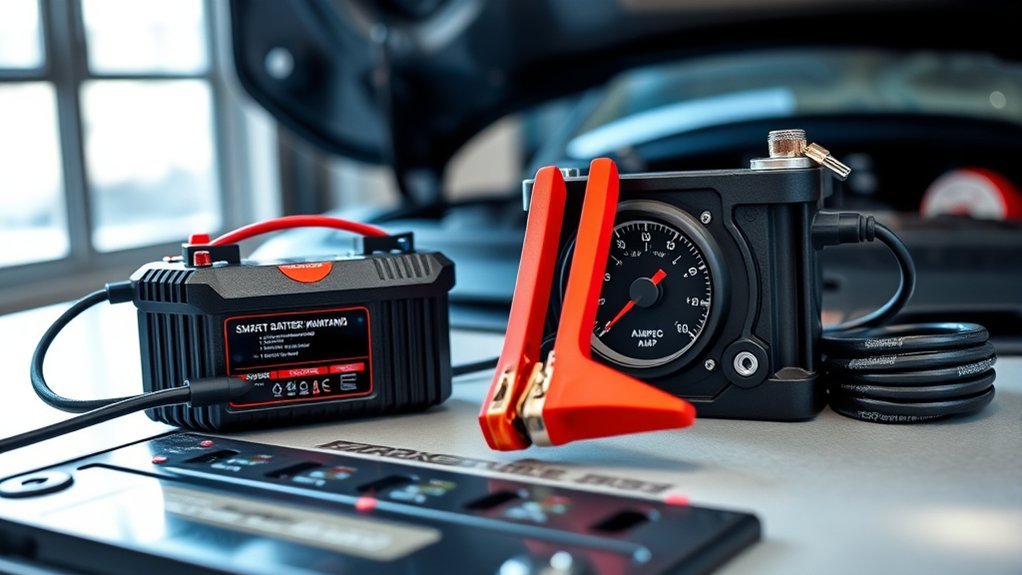
A battery maintainer is an automatic charging device intended to keep a compatible battery near full charge during storage. It monitors battery voltage and changes its output as needed. Depending on the model, it may enter a float stage, pause until voltage falls, or apply short maintenance cycles.
A basic trickle charger supplies a small, steady charging current. Older or simpler models may not respond intelligently when the battery reaches full charge. If the current continues for too long, the battery can experience excessive heat, gassing, electrolyte loss, or reduced service life.
Product labels can overlap. A device sold as a smart charger may perform bulk charging, absorption charging, and long-term maintenance in one unit. Some manufacturers also use “trickle charger” informally when describing an automatic maintainer.
Note: Do not choose solely by the words printed on the package. Check whether the manual describes automatic charge stages, float or maintenance mode, battery-chemistry compatibility, and approval for long-term connection.
The practical difference is how the charger controls voltage and current after the battery reaches full charge, not whether its maximum output is above or below a fixed amp rating.
Key Differences Between Battery Maintainers and Trickle Chargers
| Feature | Automatic Battery Maintainer | Basic Trickle Charger | Smart Charger With Maintenance Mode |
|---|---|---|---|
| Main purpose | Preserve a charged or nearly charged battery during storage | Provide continuous low-current charging | Recharge a low battery and then maintain it |
| Output control | Monitors voltage and adjusts, pauses, or cycles output | May continue supplying a steady current until disconnected | Uses multiple automatic charging stages |
| Long-term connection | Usually allowed when the manufacturer explicitly approves it | May require regular monitoring and timed disconnection | Often allowed after it enters maintenance mode |
| Recharging a weak battery | Possible with some models, but often slow | Possible but normally slow and potentially manual | Normally the best option when correctly sized |
| Monitoring required | Periodic inspection is still wise | Usually greater monitoring is needed | Minimal during normal automatic operation |
| Battery compatibility | Limited to the chemistries and voltages listed by the manufacturer | Must match the battery’s voltage and charging requirements | May offer separate flooded, AGM, reconditioning, or LiFePO4 modes |
There is no universal rule that a maintainer must produce one amp or less. The NOCO GENIUS1 is a 1-amp charger and maintainer, while the CTEK CS ONE can deliver up to 8 amps and still provide automatic maintenance charging.
Battery Maintainer vs. Float Charger vs. Smart Charger
A float charger holds a compatible lead-acid battery at a controlled maintenance voltage. A modern maintainer may use float charging or may stop charging and resume only when voltage drops. A smart charger usually performs the full recharge process before entering a maintenance stage.
Because these functions can exist in the same product, the manufacturer’s operating description is more useful than the marketing name.
When to Use a Battery Maintainer or Trickle Charger
Use an Automatic Battery Maintainer When:
- Your motorcycle, classic car, boat, RV, lawn tractor, or seasonal vehicle will sit unused for weeks or months.
- The battery is already charged or only mildly discharged.
- The vehicle has a normal standby electrical draw.
- The charger is approved for the battery’s voltage, chemistry, and capacity.
- The manufacturer allows the charger to remain connected during storage.
Use a Smart Battery Charger When:
- The battery is weak and needs a meaningful recharge.
- You want automatic bulk, absorption, and maintenance stages.
- You need a charger that can identify faults or a battery voltage below the detection range of a basic maintainer.
- You need faster charging than a very-low-output maintenance device can provide.
Use a Basic Trickle Charger Only When:
- Its voltage and charging profile are approved for the battery.
- You can calculate or monitor the charging period.
- You will disconnect it before prolonged overcharging becomes possible.
- The product manual specifically allows the intended use.
Pro Tip: For most vehicle owners, an automatic smart charger that includes maintenance mode is more versatile than a basic, unregulated trickle charger. It can recharge the battery first and then reduce its output for storage.
Match the Charger to Your Battery Type
Before connecting any charger, identify the battery voltage and chemistry from its label or manual. Chargers designed for one chemistry may use voltage limits or charging stages that are unsuitable for another.
| Battery Type | What to Check | Important Caution |
|---|---|---|
| Flooded lead-acid | Correct voltage, battery capacity range, ventilation, and electrolyte condition when serviceable | Charging can produce gas, so keep sparks, flames, and smoking materials away |
| AGM | An AGM-compatible mode or charging profile | Do not assume every conventional lead-acid charger has a suitable voltage profile |
| Gel | Specific gel-battery approval | Excess charging voltage can damage a gel battery |
| EFB | EFB or compatible lead-acid charging approval | Follow the vehicle and battery manufacturer’s instructions for start-stop systems |
| 12-volt LiFePO4 | A dedicated LiFePO4 mode and compatibility with the battery-management system | Do not use a lead-acid reconditioning or desulfation mode unless the lithium-battery manufacturer explicitly permits it |
Lithium-compatible maintainers do exist. For example, the NOCO GENIUS1 and CTEK CS ONE list support for compatible 12-volt lithium or LiFePO4 batteries. This does not mean that every lithium battery can be charged by every maintainer.
Warning: Do not charge a battery that is cracked, leaking, swollen, frozen, unusually hot, or otherwise identified as unsafe by its manufacturer. Stop charging if the battery develops a strong odor, excessive heat, smoke, or visible deformation.
How to Connect a Battery Maintainer or Charger
- Identify the battery. Confirm its voltage, chemistry, capacity, and required charging mode.
- Read both manuals. Follow the vehicle and charger instructions, especially for vehicles with designated charging posts or a battery-monitoring sensor.
- Inspect the equipment. Do not use damaged clamps, frayed cables, a cracked charger case, or loose battery terminals.
- Turn the vehicle and charger off. Attach the charging leads before connecting the charger to AC power unless the product manual gives a different sequence.
- Connect to the approved points. The positive lead normally goes to the positive terminal or charging post. Connect the other lead to the battery negative terminal or designated chassis ground specified by the vehicle and charger manufacturers.
- Select the correct mode. Choose the voltage and chemistry before charging. Some fully automatic products identify these settings themselves.
- Check the indicators. Confirm that the charger recognizes the battery and does not display a polarity, voltage, temperature, or battery fault.
- Disconnect safely. For a charger that is not intended to remain connected, switch off or unplug AC power first and then remove the leads in the order stated by the manual.
Pro Tip: Manufacturer-approved fused ring-terminal leads can make repeated storage charging easier. Keep the connector capped and secured away from belts, fans, hot exhaust components, and moving parts.
Safety Tips for Using Battery Maintainers and Trickle Chargers
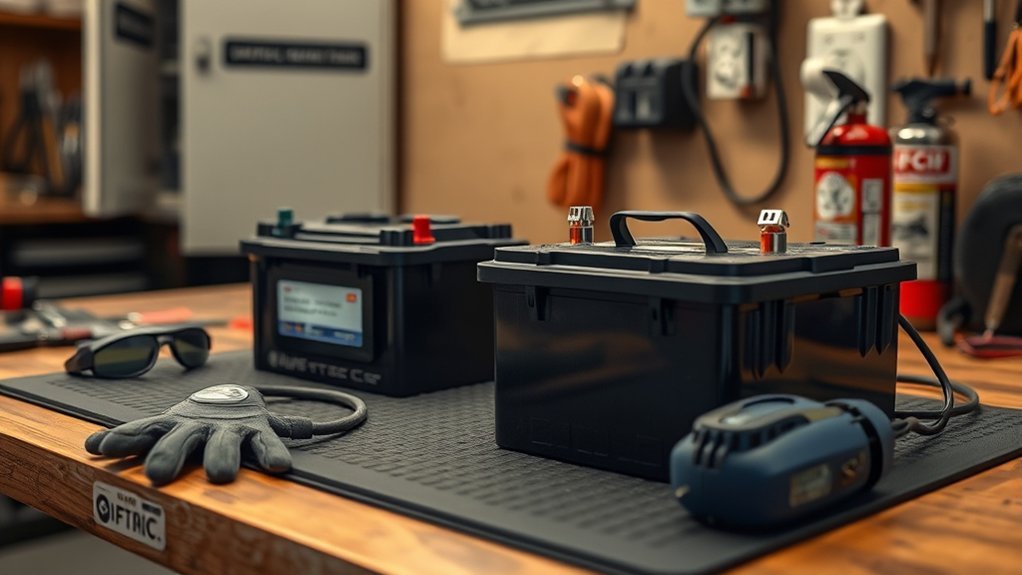
Use the battery, vehicle, and charger manuals as the controlling instructions. The following practices provide a useful general safety checklist.
| Safety Tip | What to Do | Why It Matters |
|---|---|---|
| Provide ventilation | Charge lead-acid batteries in a dry, ventilated location | Helps disperse gas that may be released during charging |
| Control ignition sources | Keep cigarettes, flames, sparks, and arcing equipment away | Battery gas can create an ignition hazard |
| Use the correct mode | Match voltage, chemistry, and charging program | The wrong profile can overcharge or damage the battery |
| Check the connection points | Use the terminals or remote charging posts named in the vehicle manual | Protects vehicle electronics and battery-monitoring systems |
| Inspect cables and clamps | Replace worn, corroded, overheated, or damaged components | Reduces resistance, overheating, and short-circuit risks |
| Protect your eyes and skin | Wear eye protection and suitable gloves when working around serviceable lead-acid batteries | Helps protect against electrolyte and accidental sparks |
| Inspect during storage | Periodically check the charger, outlet, leads, battery temperature, and status lights | Automatic operation does not eliminate the need to notice damage or an electrical fault |
The OSHA battery-charging requirements for applicable workplaces emphasize ventilation and precautions against smoking, flames, sparks, and electrical arcs near charging batteries.
Can a Battery Maintainer Handle Parasitic Draw?
A small normal standby draw from clocks, alarm systems, keyless-entry receivers, and control modules can often be offset by a suitable maintainer. The maintainer must have enough available output to cover the electrical draw while still maintaining the battery.
A high or abnormal parasitic draw is different. If the vehicle repeatedly discharges a healthy battery, diagnose the electrical problem instead of relying on a charger to hide it. A higher-output maintainer may be needed for vehicles with greater normal standby loads. Battery Tender, for example, directs users with larger batteries or high parasitic draws toward a higher-capacity model on its Battery Tender Junior product guidance.
Can a Maintainer or Trickle Charger Recover a Dead Battery?
It depends on what “dead” means. A discharged but otherwise healthy battery may accept a slow recharge. A damaged, internally shorted, frozen, heavily sulfated, or worn-out battery may not recover safely or retain useful capacity.
Automatic chargers also have a minimum voltage at which they can detect a connected battery. Some offer a manual low-voltage or force mode. The NOCO GENIUS1, for example, documents automatic detection down to 1 volt and a manual force mode for lower-voltage batteries.
Warning: A recovery or force mode can bypass normal detection safeguards. Use it only when the charger manual permits it, you have confirmed the battery voltage and polarity, and the battery shows no signs of physical damage.
Choosing the Right Charging Solution for Your Needs
Choose the device by function, compatibility, and available safety features rather than by its marketing name alone.
- For seasonal storage: Choose an automatic maintainer approved for continuous or extended connection.
- For a weak battery: Choose a smart charger with enough output for the battery capacity and the time available.
- For a small powersport battery: Use a lower-output charger whose stated capacity range includes the battery.
- For a large automotive, marine, or RV battery: Use a charger sized for the battery’s amp-hour capacity and expected electrical loads.
- For AGM, gel, EFB, or LiFePO4: Confirm explicit chemistry support rather than assuming a standard setting is safe.
- For changing temperatures: Consider automatic temperature compensation.
- For outdoor or damp locations: Check the charger’s enclosure rating and installation instructions.
- For long-term connection: Look for automatic maintenance control, reverse-polarity protection, short-circuit protection, and clear fault indicators.
A higher output can shorten recharge time, but it should remain within the battery and charger manufacturers’ limits. Very-low-output maintainers may need a long time to restore a deeply discharged full-size vehicle battery.
Battery Support During Vehicle Programming
Module programming, software updates, code reading, and extended diagnostic work can keep control modules, lighting, pumps, fans, and communication networks active while the engine is off. The resulting load may exceed the output of an ordinary low-amp maintainer.
Use a regulated battery-support supply that meets the voltage and current requirements stated by the vehicle manufacturer or programming-tool provider. The supply should maintain stable voltage as vehicle load changes. Do not assume that a device is suitable merely because it has a maintenance setting.
Professional equipment such as the CTEK MXTS 40 uses a selectable regulated supply, parallel-load compensation, and up to 40 amps of 12-volt battery support for diagnostic, repair, and reprogramming procedures.
Note: Some multifunction chargers include a supply mode, but its maximum current may still be too low for a particular programming procedure. Follow the OEM service information rather than choosing an arbitrary amp rating.
Frequently Asked Questions
What is better, a battery maintainer or a trickle charger?
An automatic battery maintainer is usually the safer and more convenient choice for long-term vehicle storage because it monitors the battery and adjusts its output. A basic trickle charger may be suitable for controlled short-term charging, but it can require closer monitoring and timely disconnection.
When should you use a battery maintainer?
Use a maintainer when a compatible battery will remain installed in a seasonal or infrequently used vehicle for several weeks or months. Charge a heavily discharged battery first unless the maintainer is also designed to perform a full recharge.
Is it okay to leave a battery maintainer connected all the time?
Only leave it connected when the manufacturer approves long-term operation, the selected mode matches the battery, the battery is in serviceable condition, and the outlet and charging area meet the product’s requirements. Inspect the setup periodically even when the device is automatic.
Can a battery maintainer be used on a lithium battery?
Yes, but only when both the maintainer and the battery manufacturer approve the exact lithium chemistry, usually 12-volt LiFePO4 in vehicle applications. Do not use a lead-acid desulfation or reconditioning program on a lithium battery unless expressly permitted.
Can a maintainer recharge a completely dead battery?
Some charger-maintainers can recharge deeply discharged batteries, but every model has detection limits. A battery with extremely low voltage may require an approved recovery mode, testing, or replacement. Do not try to recover a battery that is damaged, frozen, leaking, swollen, or unusually hot.
What is the main advantage of a battery maintainer when programming a vehicle?
A normal maintainer may provide some support, but it is not automatically suitable for programming. The proper tool is a regulated battery-support supply that can hold stable voltage while meeting the vehicle’s changing electrical load and the current requirement specified for the procedure.
Sources
- NOCO GENIUS1 Smart Battery Charger and Maintainer — charger-maintainer functions, lithium compatibility, maintenance operation, and low-voltage recovery features.
- Battery Tender Junior Charger and Maintainer — automatic charging stages, float maintenance, battery compatibility, and parasitic-load considerations.
- CTEK CS ONE Charger and Maintainer — 8-amp adaptive charging, long-term maintenance, LiFePO4 compatibility, and supply-mode features.
- CTEK MXTS 40 Professional Battery Support — regulated power-supply operation for diagnostics, repair, and vehicle reprogramming.
- OSHA 29 CFR 1910.178(g) — ventilation and ignition-source precautions for applicable battery-charging areas.
Conclusion
An automatic battery maintainer is normally the better choice for seasonal storage because it monitors the battery and controls its output after charging. A basic trickle charger can provide slow charging, but it may require closer supervision. For a weak battery, choose a properly sized smart charger. For vehicle programming, use a regulated battery-support supply that meets the procedure’s voltage and current requirements. In every case, match the device to the battery voltage, chemistry, capacity, and manufacturer instructions.