If your Toyota Camry’s tire pressure monitoring system (TPMS) light stays on after you add air, one or more tires may still be below the correct cold pressure, a tire may be leaking, or the monitoring system may have a fault. Start with the Tire and Loading Information label inside the driver’s door—not the maximum-pressure number molded into the tire sidewall.
Quick Answer
Recheck all four road tires when cold and set them to the front and rear PSI values on your Camry’s driver-door label. A solid warning usually means significant underinflation. If the light flashes for about a minute and then stays on, the TPMS has detected a malfunction that requires diagnosis rather than more air.
Key Takeaways
- Measure every road tire with an accurate gauge and use the cold-pressure values on the driver-door label.
- Do not use the sidewall’s maximum-pressure number as your Camry’s normal inflation setting.
- A solid warning usually points to low pressure; flashing for about a minute followed by steady illumination indicates a TPMS malfunction.
- A nail, leaking valve, damaged wheel, or poor bead seal can make the warning return after you add air.
- Pressure correction, TPMS initialization, and sensor registration are different procedures. Follow the instructions for your exact Camry model year.
At a Glance
| Time Required | About 10–20 minutes of hands-on work; allow about three hours of cooling time if the vehicle was recently driven |
| Difficulty | Easy for pressure checks; professional equipment may be needed for leaks, sensor faults, or registration |
| Tools Needed | Accurate tire-pressure gauge, safe air source, and the correct Toyota owner’s manual |
| Cost | Usually free if you already have a gauge and air source; leak repair, sensor diagnosis, registration, or replacement costs extra |
Understanding Your Camry’s TPMS Light
Your Camry’s TPMS is an added safety system. It does not replace manual pressure checks, and it cannot inspect the tread, sidewalls, valve stems, wheel condition, alignment, or overall structural safety of a tire.
According to the National Highway Traffic Safety Administration, a solid low-pressure symbol means at least one tire is significantly underinflated. Inspect the tires and measure their pressure as soon as it is safe.
The federal TPMS standard is designed around significant underinflation rather than small maintenance differences. Under its compliance test, the system must warn when pressure reaches 25% below the vehicle manufacturer’s recommended cold pressure or the applicable minimum pressure in the standard, whichever is higher. A manufacturer may design a system that warns sooner. This is why an unlit TPMS lamp does not prove that every tire is at the exact placard pressure.
| Light behavior | Likely meaning | What to do |
|---|---|---|
| Solid and stays on | One or more tires may be significantly underinflated. | Inspect the tires and check all road-tire pressures with a gauge. |
| Flashes for about a minute, then stays on | The TPMS has detected a malfunction and may not warn correctly about low pressure. | Check pressures manually and arrange TPMS diagnosis. |
| Appears on a cold morning, then turns off | The cold pressure may be close to or below the warning threshold and rise as the tires warm. | Check and correct the pressures when the tires are cold. |
The warning light tells you to check the tires. It does not certify that the tread, sidewall, valve stem, or wheel is undamaged.
Under 49 CFR § 571.138, a combined TPMS malfunction lamp flashes for at least 60 seconds but no more than 90 seconds and then remains illuminated while the fault exists. The sequence normally repeats after later vehicle start-ups until the malfunction is corrected.
The warning may remain on after inflation if a tire is still below its correct cold pressure, loses air again, or has not yet supplied an updated reading. A damaged, incompatible, non-transmitting, or unregistered sensor can also keep the malfunction warning active.
Why Is Your TPMS Light Still On?
If the warning remains after you add air, work through the likely causes before pressing any reset control.
- The tires were measured while warm. Driving heats the tires and raises their pressure temporarily. A tire that looks correct while warm may be below specification after it cools.
- One tire was missed or adjusted to the wrong value. Check all four road tires and confirm whether the driver-door label lists different front and rear pressures.
- A tire has a slow leak. Common causes include a nail or screw, a leaking valve stem, corrosion or debris at the wheel bead, a damaged wheel, or an improper previous repair.
- Cold weather lowered the pressure. A tire close to the warning threshold can fall below it when the outside temperature drops.
- The system needs model-specific initialization. Some Camry systems provide a pressure-setting or initialization function after pressure changes or wheel service.
- A sensor cannot communicate. It may be damaged, incompatible, unregistered, or unable to transmit because its sealed battery is depleted.
- Recent tire or wheel service changed the system configuration. Replacement wheels, alternate tire assemblies, or new sensors may require compatibility checks and sensor-ID registration.
- The light is reporting two conditions. A tire can be low while the TPMS also has a malfunction, so always verify pressure manually even when the lamp flashes.
Note: Check a spare tire separately if your Camry has one. Many temporary spares are not monitored. For example, Toyota’s 2009 Camry Hybrid quick guide expressly excluded the spare, but you should confirm the arrangement in the manual for your exact year and equipment.
What to Do If the TPMS Light Comes On While Driving
Do not assume that you must keep driving until the system updates. Respond according to the tire’s condition and the vehicle’s handling.
- Reduce speed smoothly. Avoid abrupt steering, hard braking, and high-speed cornering while you assess the vehicle.
- Move to a safe location. Stop away from moving traffic when possible.
- Inspect every tire. Look for an obviously flat tire, sidewall bulge, exposed cords, smoke, severe cracking, wheel damage, or a puncturing object.
- Check pressure if it is safe. A tire measured after driving is warm, so its reading will not be a true cold-pressure reading.
- Add air if a warm tire is low. Do not leave a significantly underinflated tire low merely because it is warm. Inflate it to at least the placard pressure as a temporary correction, then check and adjust it again when cold.
- Do not release air from a warm tire to match the cold placard value. The reading normally falls as the tire cools.
- Stop driving if the tire is unsafe. Use roadside assistance, the approved spare-tire procedure, or a tow when the tire is flat, rapidly losing air, visibly damaged, or affecting control.
Warning: Do not keep driving merely to make the warning light turn off if a tire is visibly flat, rapidly losing pressure, bulging, vibrating, or changing the Camry’s handling. A cleared lamp would not make a damaged tire safe.
How to Check Tire Pressure and Reset Your TPMS
Use this process before assuming that a sensor has failed.
- Park safely and let the tires cool when practical. Check them before driving or after the Camry has been parked for at least three hours. If a tire is already low and warm, add air for safety and perform the precise adjustment later when cold.
- Find the correct PSI. Open the driver’s door and read the Tire and Loading Information label. Use its listed front and rear cold-pressure values.
- Do not use the sidewall number. The pressure molded into the tire sidewall is not your Camry’s recommended normal operating pressure.
- Inspect each tire and wheel. Look for nails, screws, cuts, cracks, bulges, exposed material, bent rims, damaged valve stems, missing caps, or an obviously low tire.
- Measure all four road tires. Press an accurate gauge squarely onto each valve stem. Record the readings so you can identify a tire that is losing air.
- Add or release air as needed. Adjust each cold tire to the applicable placard value. The front and rear values may differ.
- Measure again. Confirm the final pressure in every tire and reinstall the valve caps.
- Start the vehicle and observe the lamp. A solid low-pressure warning may clear after the system receives updated readings. There is no single clearing time or driving distance that applies to every Camry.
- Use only the correct model-year procedure. Consult Toyota’s official manual lookup for initialization, pressure-setting, wheel-set selection, or sensor-registration instructions.
- Recheck the next morning. If one tire has dropped again, diagnose the leak instead of repeatedly adding air.
Pro Tip: Use the same reliable gauge for the follow-up check. A consistent drop in one tire is stronger evidence of a leak than a one-time difference between two gauges.
The recommended PSI comes from the vehicle placard, not the maximum-pressure information molded into the tire sidewall.
[Amazon Products Picked for You]
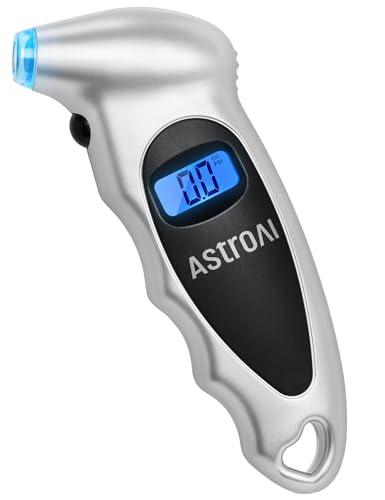
Accurate, Dependable Readings: Factory‑calibrated to ±1 PSI, so you can confidently match your vehicle’s recommended PSI (check the door jamb sticker). Ideal for monthly checks and road trips — consistent results every time, cold or warm.

EXPERT-GRADE CALIBRATION: Each AstroAI Tire Pressure Gauge is calibrated with professional-grade tools, ensuring quick and accurate measurement results within plus-minus 1PSI. Stay prepared for any roadside emergency and travel with peace of mind.

TRUSTED BY OVER 3 MILLION USERS: Based in Garden Grove, California, AstroAI serves customers in more than 15 countries worldwide. Known for professional-grade accuracy and durable construction, this digital tire inflator with gauge is a trusted choice for drivers, mechanics, and DIYers who rely on dependable tools.
TPMS Initialization, Registration, and Relearning
These terms are often used interchangeably online, but they do not always describe the same operation.
- Pressure correction means physically adding or releasing air until each tire matches the driver-door placard.
- Initialization or pressure setting tells the vehicle to establish or store a pressure reference according to the system’s design. It does not repair a leak or revive a failed sensor.
- Sensor registration stores a replacement sensor’s identification code in the vehicle. This may require Toyota-compatible diagnostic equipment or a capable TPMS service tool.
- Relearning is a general service term for the process by which the vehicle recognizes registered sensors or their wheel positions. The exact meaning and method vary by system.
Warning: Do not initialize or set the TPMS while the tires are underinflated. On systems that store the current pressures as a reference, doing so may establish an incorrect baseline. Correct every tire first.
Pressing a reset button or selecting “Set Pressure” cannot register an incompatible sensor, restore a depleted sensor battery, repair wiring, or seal a leaking tire. If the lamp flashes and then remains on, diagnose the malfunction rather than repeatedly reinitializing the system.
[Amazon Products Picked for You]
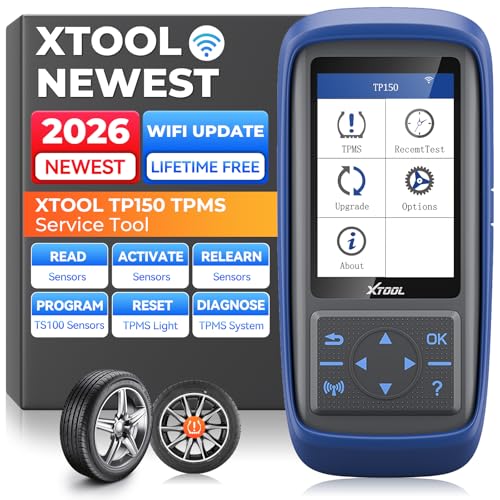
Why XTOOL TP150 TPMS Relearn Tool Stands Out: Perfect for DIYers and professional technicians, the XTOOL TP150 TPMS Reset Tool combines TPMS diagnostics, sensor activation, relearn, reset and sensor programming with XTOOL TS100 Sensors in one portable tool, making common TPMS service easier in one device. Its durable physical button interface is easy to operate with greasy gloves, making it ideal for garages, workshops, or roadside use. Check tire pressure, reset TPMS warning lights, and simplify sensor service with simple, easy-to-use controls. Supports the newest car models with frequent lifetime software updates and 13+ languages. 𝐍𝐎𝐓𝐄: TPMS Programming for XTOOL Sensors Only.
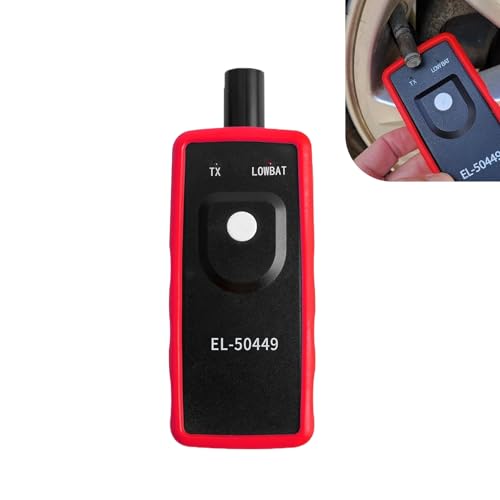
Key Functions: The battery not included. This tpms relearn tool is for vehicles with direct TPMS. It activates sensors, clears dashboard warning lights, and checks for bad or low-power sensors. It is compatible with many major vehicle brands.

Warm Note: 1.TP150 tpms tool is not for all sensors, but only works for pre-programmed sensors or XTOOL TS100/ TS100 PRO sensors. 2. Need to update the TP150 tire pressure sensor reset tool but shows system configuration error? Please follow the user maual first install "TP200 software" from xtooltech, and connect TP150 with Windows PC(ios cannot be supported), go "settings – About" to check the SN and pasword required, and click the TP150 disk and the mouse right button to format it and then upload the software again. Any issue you can find XTOOL for help
How Camry TPMS Procedures Vary by Model Year
The examples below show why one universal Toyota Camry reset instruction is unreliable. They are representative procedures from Toyota quick-reference guides, not substitutes for the manual assigned to your VIN.
| Example | Toyota procedure shown in the guide | Important limitation |
|---|---|---|
| 2009 Camry Hybrid | A physical SET button is held until the indicator blinks three times, followed by a waiting period for initialization. | The guide says pressing SET should not be used to turn off a low-pressure warning. Correct inflation comes first. |
| 2022 Camry | The MID uses Vehicle Settings, TPWS, and Set Pressure. The control is held until the warning light blinks three times. | Display size and installed equipment affect the menu controls. |
| 2025 Camry | The MID provides TPWS Setting and Tire Pressure Setting, including options based on specified pressure or the current pressure. | The current-pressure option should be used only after every tire has been adjusted correctly. |
Your Camry may use a different menu, a physical button, multiple registered wheel sets, or a service-tool procedure. Match the instructions to the exact year, market, trim, display, wheel equipment, and owner’s manual.
Diagnosing and Fixing TPMS Sensor Problems
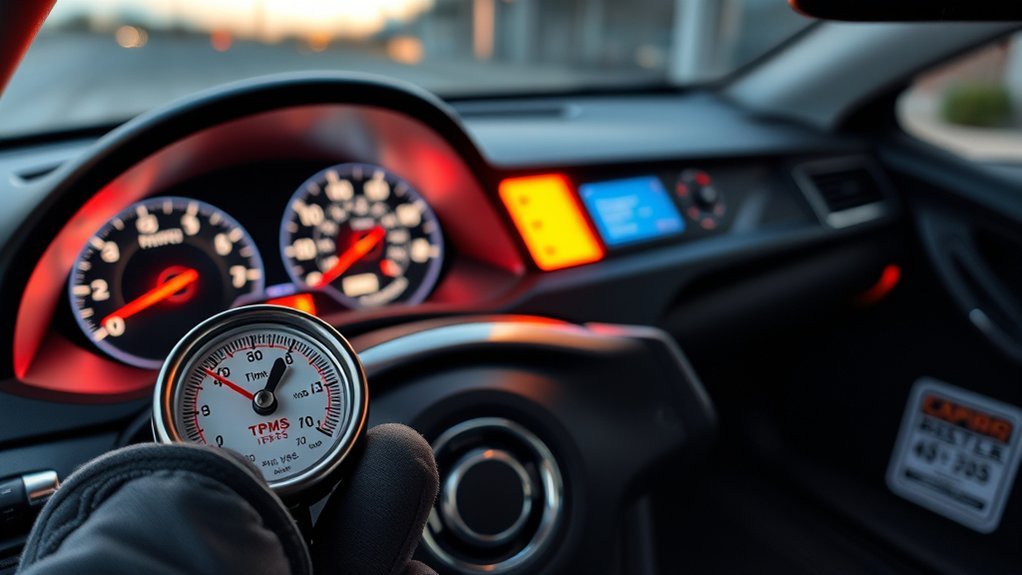
If every tire is correct when cold but the light flashes and then remains on, the system needs diagnosis. Adding more air will not repair a sensor, registration, receiver, or communication fault.
A tire shop or Toyota service technician can use a TPMS activation tool and vehicle diagnostic equipment to check:
- Whether each wheel sensor transmits a signal
- Whether the sensor identification codes match those stored in the vehicle
- Sensor compatibility, frequency, and application
- Battery or operating-status information where the sensor and tool support it
- TPMS diagnostic trouble codes
- Damage to a sensor, valve stem, receiver, antenna, or related wiring
- Whether alternate wheels or tires interfere with normal operation
- Whether the correct wheel set is selected on vehicles that support more than one set
The technician should activate and test each sensor separately before recommending replacement. This can distinguish a non-transmitting sensor from an identification-code error, incompatible part, or vehicle-side communication problem.
After a sensor is replaced, its identification code may need to be registered. Initialization alone may not complete that task. Depending on the Camry, registration may require Toyota-compatible diagnostic equipment, a qualified TPMS tool, or another procedure specified in the service information.
After repair, verify all of the following:
- Every road tire is at the correct cold pressure.
- The repaired tire holds pressure.
- Every installed sensor transmits and is compatible.
- Required sensor IDs are registered.
- The warning clears and does not repeat after later start-ups.
- Any individual tire-pressure display shows plausible readings for all monitored wheels.
[Amazon Products Picked for You]

Live Top-View Guidance, Zero Learning Curve: The color LCD shows a real-time vehicle top-view with tire activation status and battery level, so even first-timers can relearn all 4 tires in as fast as 2 minutes. Designed for GM & Ford vehicles with factory TPMS relearn mode; works with 315/433 MHz OEM and pre-programmed replacement sensors.
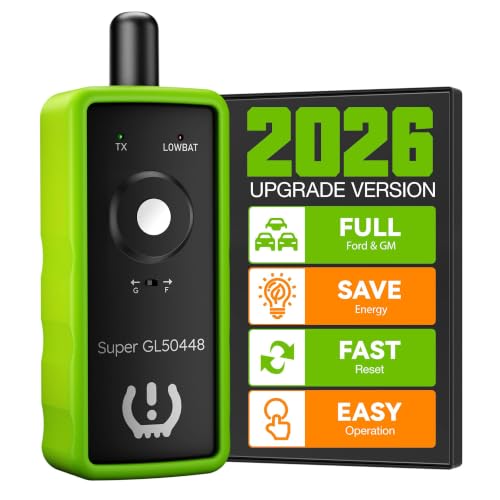
INNOVATIVE 2-IN-1 DESIGN: VXDAS TPMS relearn tool supports for GM and Ford series vehicles, (Buick, Cadillac, Chevrolet, GMC, Lincoln, Mazda, F150, F250, Focus, Fusion, and more). The added "G" and "F" model switch button on top makes it more convenient to use
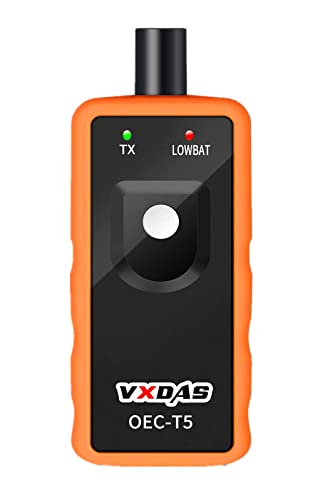
🚗2023 UPDATED FOR WIDER COMPATIBILITY: Specifically designed to work with most GM vehicles 2006-2023 (Chevy / Buick / GMC / Opel /Cadillac and more) equipped with 315/433 MHz. Your vehicle deserves the best tire pressure sensor reset tool.(It is not suitable for heavy trucks with more than 4 tires or vehicles with an external TPMS system.)Tip:Based on factory and customer-tested models shown in A+, please refer to the car model list to confirm compatibility with the VXDAS TPMS tool.
How Weather Affects Your Tire Pressure
Outside-temperature changes alter tire pressure without necessarily creating a sensor fault. Cold air can lower pressure enough to activate the warning, especially when a tire was already close to the system’s threshold.
A warning that disappears as the tires warm can still mean the cold pressure is too low.
NHTSA notes that a TPMS warning can appear on a cold morning and turn off after the tires warm. Check the tires with a gauge rather than assuming that warming has permanently corrected the pressure.
Warm tires normally show a higher reading after driving. Do not bleed air from a warm tire merely to force the reading down to the cold placard value. If a warm tire is low, add air for safety and perform the final adjustment after the vehicle has been parked long enough for a cold reading.
Seasonal checks are particularly useful during the first major temperature drop of fall or winter. They reduce repeated warnings and help prevent prolonged underinflation.
When to Get Professional TPMS Service
You do not need professional service every time a solid warning appears. First inspect the tires and correct their cold pressure. Professional diagnosis becomes appropriate when the warning continues, repeatedly returns, or displays the malfunction sequence.
Persistent Light Issues
Arrange a tire or TPMS inspection when:
- The warning flashes for about a minute and then stays illuminated.
- The light remains solid after all road tires are adjusted correctly when cold.
- One tire repeatedly loses pressure after inflation.
- You see a nail, sidewall damage, wheel damage, or a leaking valve stem.
- The warning began after tire rotation, wheel replacement, sensor replacement, or seasonal wheel installation.
- The tire-pressure display shows a missing reading, implausible value, or dashes for one wheel.
- The lamp clears but returns after each overnight temperature drop.
If all tires are correctly inflated and show no visible damage, you can usually arrange prompt service rather than treating the warning alone as an immediate breakdown. Stop driving when pressure is falling quickly, the tire is visibly damaged, or the vehicle feels unstable.
Sensor Malfunction Diagnosis
A technician should begin by scanning or activating each sensor rather than replacing parts based only on age. The test may reveal a non-transmitting sensor, incompatible replacement, incorrect registration, selected-wheel-set problem, or vehicle-side communication fault.
If a tire is losing air, the technician should also inspect the tread, inner liner, valve assembly, bead area, and rim. Repairing the leak is necessary even when the TPMS sensor itself works correctly.
After service, confirm that every sensor communicates, any required IDs are registered, all tires hold the correct pressure, and the malfunction sequence no longer returns on later start-ups.
TPMS Maintenance Tips
Good TPMS maintenance begins with the tires. The system is a warning aid, not a substitute for pressure checks and visual inspections.
Regular Pressure Checks
NHTSA recommends checking tire pressure at least monthly when the tires are cold. Check again before a long trip and after a major temperature change.
- Use an accurate gauge rather than judging pressure by appearance.
- Follow the separate front and rear values on the driver-door label.
- Inspect the tread, sidewalls, valves, and wheels while checking pressure.
- Replace missing valve caps to help keep moisture and debris away from the valve core.
- Check the spare separately according to the owner’s manual.
- Investigate any tire that repeatedly needs more air.
- Do not wait for the TPMS lamp before performing routine checks.
Sensor Replacement Schedule
TPMS sensors do not require replacement on one universal calendar schedule. Their sealed batteries, valve components, and electronics age at different rates depending on design and operating conditions.
Ask the tire shop to test the sensors when the tires are removed or when the malfunction warning appears. Replace a sensor when it is physically damaged, cannot transmit, has an exhausted battery, uses the wrong specification, or cannot be registered correctly.
If one older sensor fails, the remaining sensors may be a similar age, but one failure does not prove that all must be replaced. Ask the technician to test the full set and compare the cost of replacing only the failed unit with replacing additional aging sensors during the same tire service.
Any replacement sensor must be compatible with the exact Camry system and may require identification-code registration and a model-specific initialization or relearning process.
Keeping Your Tires Safe and Efficient
Correct pressure supports tire durability, predictable handling, braking performance, and fuel efficiency. Pressure is only one part of tire safety.
Inspect your tires regularly for uneven wear, exposed cords, cracks, cuts, bulges, embedded objects, and vibration. Follow the rotation and replacement guidance in your Camry owner’s manual, and correct alignment or balance problems when you notice irregular wear or steering changes.
Do not depend on the TPMS lamp to reveal every problem. A damaged tire can remain above the warning threshold, and a malfunctioning system may not report low pressure as intended.
When the warning appears, respond in this order: assess the tires, check pressure with a gauge, add air when needed for immediate safety, perform a cold-pressure adjustment, confirm that the tires hold air, follow the exact model-year initialization instructions, and obtain professional diagnosis if the warning persists or flashes.
Frequently Asked Questions
Why is the TPMS light on when I just aired my tires?
One tire may still be below the correct cold pressure, the tires may have been checked while warm, or a slow leak may be lowering the pressure again. The light can also remain on when the system needs model-specific initialization or has a sensor or registration fault.
Why is my tire-pressure light on when my Camry’s tires look fine?
Moderate or significant underinflation can be difficult to identify visually. Check all four road tires with a gauge when cold. If they match the driver-door label, watch for a flashing-then-solid malfunction sequence and have the TPMS scanned if necessary.
How long should the TPMS light stay on after inflating the tires?
There is no universal clearing time for every Camry. Some lights turn off after updated readings arrive, while some model years require a pressure-setting or initialization procedure. Recheck the cold pressure and follow the exact owner’s manual if the light remains on.
Do I need to reset my Camry’s TPMS every time I add air?
Not necessarily. Many warnings clear after the proper pressure is restored and the sensors report again. Use initialization only when the model-year manual instructs you to do so, and never initialize the system before setting every tire to the correct pressure.
What does it mean when the Camry TPMS light flashes and then stays on?
Flashing for roughly one minute followed by steady illumination indicates a TPMS malfunction. A sensor may be damaged, incompatible, unregistered, unable to communicate, or low on battery power. Check tire pressure manually because the system may not warn correctly.
Can cold weather turn on the TPMS light?
Yes. Colder air can lower tire pressure enough to cross the warning threshold. Check and adjust the tires when cold instead of waiting for the warning to disappear after the tires warm during driving.
Can I drive with the Camry TPMS light on?
Inspect the tires first. If none is visibly damaged and the pressures are safe and stable, you can usually drive cautiously to obtain air or service. Do not drive on a flat, rapidly deflating, bulging, severely damaged, or unstable tire.
Why did the TPMS light return the next morning?
The tires may have been adjusted while warm, cold overnight temperatures may have lowered the pressure, or one tire may have a slow leak. Check all tires cold and compare the readings with the previous day.
Is the Camry’s spare tire monitored by the TPMS?
It depends on the model year, market, and spare-tire equipment. Many temporary spares are not monitored, so check the spare manually at the interval and pressure specified in your owner’s manual.
Conclusion
If your Camry’s TPMS light remains on after you add air, check every road tire when cold and set it to the pressure on the driver-door label. Do not rely on appearance, a generic PSI range, or the maximum-pressure number on the tire sidewall.
A solid warning usually calls for a pressure and leak check. A warning that flashes for about a minute and then remains on points to a TPMS malfunction. When the tires hold the correct pressure but the warning continues, follow the exact model-year Toyota instructions or have a qualified tire shop or Toyota technician test the sensors, registration, and vehicle-side system.
Sources
- National Highway Traffic Safety Administration: TireWise — cold-pressure checks, vehicle placard guidance, warm-tire corrections, TPMS warnings, and tire maintenance.
- 49 CFR § 571.138: Tire Pressure Monitoring Systems — federal low-pressure detection and malfunction-warning requirements.
- Toyota Manuals and Warranties — model-year-specific Camry instructions and warning information.
- Toyota 2009 Camry Hybrid Quick Reference Guide — physical SET-button initialization and spare-tire monitoring information.
- Toyota 2022 Camry Quick Reference Guide — MID-based TPWS pressure-setting procedure and malfunction warning.
- Toyota 2025 Camry Quick Reference Guide — current-pressure and specified-pressure TPWS settings and warning behavior.
