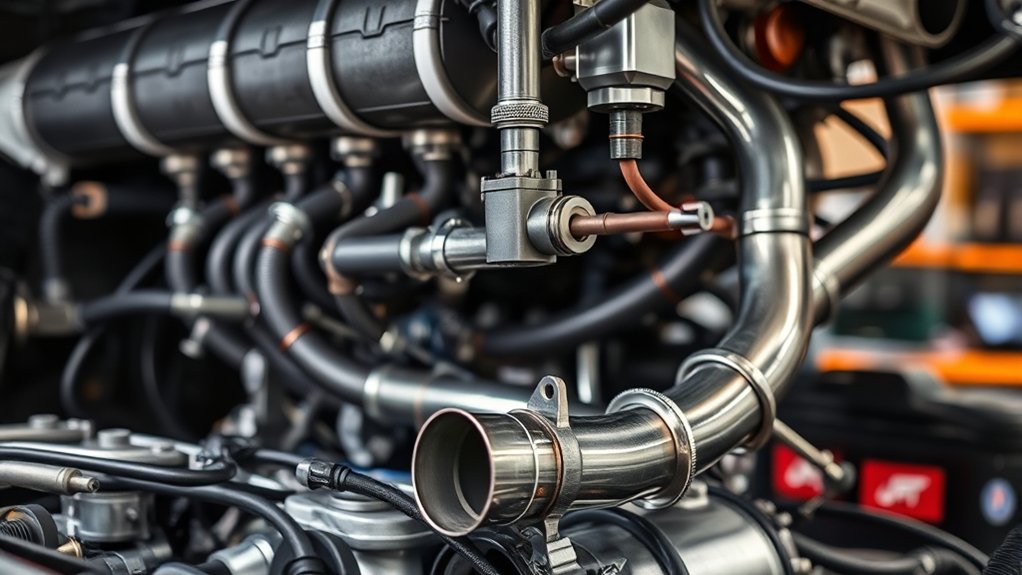
Your Toyota Camry’s emission system limits tailpipe pollution and fuel-vapor release while helping the gasoline engine run efficiently. The exact parts, sensor count, warning messages, and emissions certification vary by model year, engine, drivetrain, and market, so use your vehicle’s VIN, under-hood emissions label, diagnostic codes, owner’s manual, and warranty guide when diagnosing a problem.
Quick Answer
The Toyota Camry emission system uses engine controls, exhaust sensors, catalytic converters, and EVAP components to reduce pollution. A steady check engine light needs prompt diagnosis. Stop driving when the light flashes or the car has severe shaking, major power loss, overheating, smoke, or fuel or exhaust fumes in the cabin.
Last updated: July 13, 2026
Key Takeaways
- A diagnostic trouble code identifies what the onboard system detected; it does not automatically prove that the part named in the code has failed.
- A flashing check engine light or severe misfire can overheat the catalytic converter and requires immediate attention.
- Record confirmed, pending, and permanent codes plus freeze-frame data before anyone clears them.
- Clearing codes or disconnecting the 12-volt battery may reset emissions readiness monitors and delay an inspection pass.
- Check Toyota’s model-specific manual and warranty guide before approving a costly sensor or catalytic-converter replacement.
At a Glance
| Time Required | About 5–15 minutes for safe owner checks; professional diagnosis varies with the fault. |
| Difficulty | Beginner for checking the warning light, fuel cap, and visible hoses; advanced for electrical, fuel, exhaust, catalyst, or hybrid testing. |
| Tools Needed | Owner’s manual, flashlight, and an OBD-II scan tool for code retrieval; system testing may require professional equipment. |
| Cost | Visual checks may cost nothing. Scan-tool, diagnostic, parts, labor, and inspection costs vary by fault and location. |
How the Toyota Camry Emission System Works
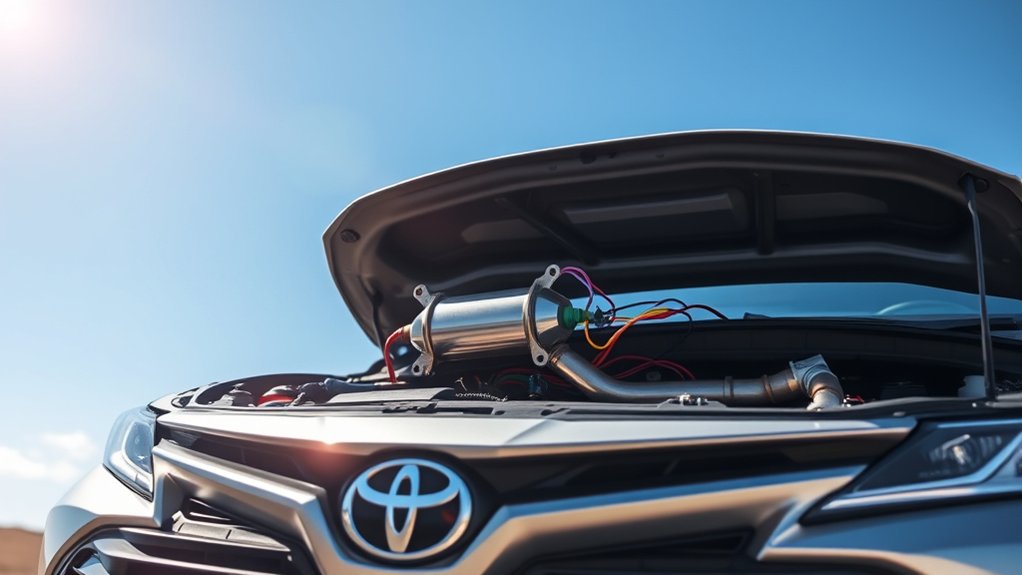
The Camry’s emission system combines four jobs: controlling combustion, treating exhaust, containing fuel vapors, and checking whether the monitored systems work as designed.
The engine control module uses sensor data to manage fuel delivery, ignition timing, valve operation, and other engine functions. An upstream air-fuel-ratio sensor or oxygen sensor helps the module judge combustion and adjust the mixture.
Exhaust then passes through one or more catalytic converters. The catalyst promotes chemical reactions that reduce hydrocarbons, carbon monoxide, and nitrogen oxides. A downstream oxygen sensor commonly helps the onboard diagnostic system judge catalyst performance.
The evaporative emission control system, or EVAP system, keeps gasoline vapors from venting freely into the air. Depending on the model, it may include a charcoal canister, purge valve, vent valve, pressure sensor, hoses, fuel tank, and a fuel cap or another sealing design.
The onboard diagnostic system watches circuits and operating results. When it detects a qualifying fault, it stores a diagnostic trouble code and may turn on the malfunction indicator lamp, commonly called the check engine light.
Note: Sensor type, sensor count, catalytic-converter layout, EVAP design, and warning messages vary among Camry generations and markets. Select your exact vehicle in Toyota’s manuals and warranties portal.
Key Components of the Emission System
Some parts directly treat exhaust or capture vapors. Other engine systems support clean combustion and can trigger emissions-related codes when they fail.
| Component | What It Does | Possible Problems |
|---|---|---|
| Upstream A/F or oxygen sensor | Reports exhaust oxygen information used to control the air-fuel mixture. | Sensor aging, heater-circuit faults, wiring damage, exhaust leaks, or mixture problems. |
| Catalytic converter | Converts major exhaust pollutants into less harmful gases. | Overheating, contamination, internal damage, restriction, or reduced conversion efficiency. |
| Downstream oxygen sensor | Helps the diagnostic system monitor catalyst performance. | Circuit faults, slow response, exhaust leaks, or readings affected by another engine problem. |
| EVAP system | Stores fuel vapors and routes them into the engine under controlled conditions. | Loose cap, damaged seal, cracked hose, sticking purge valve, vent fault, canister damage, or a leak. |
| Engine control module and OBD-II system | Controls operation, checks monitored systems, and records diagnostic information. | Power, ground, wiring, communication, calibration, or sensor-input faults. |
| Supporting engine systems | Air intake, ignition, fuel delivery, PCV, cooling, and valve control support clean combustion. | Misfires, vacuum leaks, dirty airflow sensors, worn spark plugs, incorrect fuel pressure, coolant leaks, or oil burning. |
The engine air filter supports combustion by keeping abrasive debris out of the engine. It should not be confused with the catalytic converter, EVAP system, or parts that directly control exhaust and fuel-vapor emissions.
What an Emission System Warning Means
On many Camrys, an emissions-related fault appears as a check engine light rather than a message that names one failed part. Warning wording and display behavior vary by year and market. Toyota directs owners to select the exact vehicle or consult its owner’s manual for indicator details.
Do not confuse the check engine light with a maintenance reminder. A maintenance reminder generally tracks scheduled service; it is not a diagnosis of an emissions failure. A hybrid-system warning, charging warning, oil-pressure warning, or high-temperature warning also needs its own model-specific response.
If the light comes on soon after refueling, inspect the fuel cap or sealing area when it is safe. A cap-related EVAP fault may not turn the light off immediately because the vehicle must rerun the monitor under suitable conditions. Scan the car if the light stays on or returns.
Signs of Emission System Issues
Your Camry may show several warning signs when engine or emissions controls are not working correctly. These symptoms can overlap with transmission, electrical, cooling, and fuel-system faults, so begin with codes and test data rather than assumptions.
Check Engine Light Activation
A steady check engine light means the onboard diagnostic system detected a fault. The cause may be a small EVAP leak, but it could also be a misfire, fuel-control fault, sensor-circuit problem, exhaust leak, or reduced catalyst efficiency.
A flashing check engine light usually signals a severe fault, often an active misfire that can overheat the catalytic converter. Reduce load, move to a safe location, and follow the model-specific manual. Toyota’s warning-light resource directs owners to select their vehicle and consult the owner’s manual or arrange service.
Unusual Odors Detection
A sulfur or rotten-egg odor can occur when the engine runs too rich, the fuel contains sulfur compounds, or the catalytic converter becomes unusually hot. The smell alone does not prove the converter has failed.
A raw-fuel smell may point to a fuel leak, EVAP problem, leaking injector, incomplete combustion, or a recent spill. An exhaust smell inside the cabin can indicate an exhaust leak and creates a possible carbon-monoxide hazard.
Rough Engine Performance
Shaking, stumbling, hard starting, stalling, weak acceleration, or an unstable idle can occur with emissions-related faults. Possible causes include ignition misfires, intake leaks, fuel-metering problems, damaged wiring, sensor faults, or restricted exhaust flow.
Higher fuel use can also occur, but it is not specific to the emission system. Tire pressure, weather, traffic, brake drag, maintenance, short trips, and driving style also affect fuel economy.
Warning: Stop driving as soon as it is safe if the check engine light flashes continuously, the engine shakes severely, power drops sharply, the vehicle overheats, you see smoke, or raw-fuel or exhaust fumes enter the cabin. Shut the vehicle off and arrange professional help or towing.
Consequences of Ignoring Emission Problems
An unresolved fault can affect more than an emissions inspection. The outcome depends on the cause, the severity, and how long you continue driving.
| Possible Consequence | How It Can Happen | Recommended Response |
|---|---|---|
| Higher fuel consumption | Incorrect fuel control, misfire, airflow errors, or other engine faults can waste fuel. | Read the codes and diagnose the underlying cause. |
| Catalytic-converter damage | Unburned fuel from an active misfire can overheat the converter. | Stop driving when the light flashes or severe misfire occurs. |
| Poor performance or stalling | Fuel, ignition, intake, sensor, or exhaust problems may worsen. | Arrange prompt testing instead of replacing parts by guesswork. |
| Emissions-test failure | Stored codes, an illuminated warning light, incomplete monitors, or excessive emissions may prevent a pass. | Complete the repair and confirm readiness before retesting. |
| Unsafe fumes | Fuel or exhaust leaks can release fumes around or inside the vehicle. | Stop using the vehicle and have the leak inspected. |
Why You Shouldn’t Ignore Emission Issues
A small EVAP leak may not change how your Camry drives. Other faults can cause misfires, stalling, catalyst damage, or unsafe fumes. The light’s behavior and the vehicle’s symptoms matter more than the light alone.
Delaying repairs may also complicate registration or inspection in places that check OBD readiness, stored codes, warning-light status, or tailpipe emissions. Rules vary by state, province, and country.
Avoid shortcuts that hide a warning light without correcting the fault. Removing a catalytic converter, installing an oxygen-sensor spacer to conceal catalyst performance, or using software or hardware that defeats emissions controls may violate applicable law. The U.S. Environmental Protection Agency enforces Clean Air Act rules covering tampering and defeat devices.
How the Camry Meets Emission Standards
Toyota certifies each Camry configuration for the rules that apply to its model year and destination market. Certification can differ by engine, hybrid system, drivetrain, calibration, and emissions family.
The Vehicle Emission Control Information label is usually under the hood. It identifies the emissions family and certification information for that vehicle. The label may also show items such as catalyst, sensor, fuel, or evaporative-control information.
Do not assume every Camry has the same SULEV classification or meets the same European, federal, or California standard. Toyota states that emissions warranty coverage varies under federal and California regulations, so use the documents for your exact vehicle.
Systems that help a Camry meet its applicable standards can include:
- A precisely controlled air-fuel mixture
- Ignition and valve-timing management
- One or more catalytic converters
- Upstream and downstream exhaust sensors
- EVAP fuel-vapor controls
- Onboard monitoring for misfire, catalyst, sensor, fuel, and EVAP faults
How Oxygen Sensors Affect Your Emission System
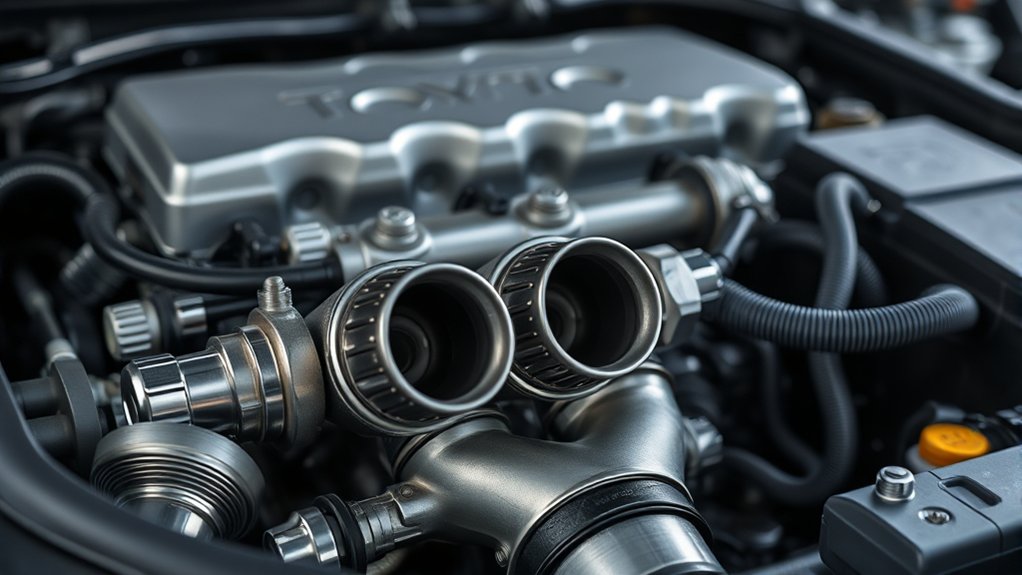
Exhaust sensors give the engine control module information about combustion and catalyst operation. Toyota may use conventional oxygen sensors, wide-range air-fuel-ratio sensors, or a combination, depending on the engine and year.
| Sensor Position | Typical Function | What Can Affect the Reading |
|---|---|---|
| Upstream | Helps the control module evaluate and adjust the air-fuel mixture. | Vacuum leaks, fuel pressure, injectors, misfires, exhaust leaks, wiring, or the sensor itself. |
| Downstream | Helps monitor catalytic-converter performance. | Converter efficiency, exhaust leaks, misfires, oil or coolant contamination, wiring, or sensor response. |
What Bank and Sensor Numbers Mean
“Bank 1” means the side of the engine that contains cylinder 1. An inline four-cylinder engine has one bank. “Sensor 1” normally means the upstream sensor before the main catalyst, while “Sensor 2” usually means a downstream sensor. Exact naming and layout still depend on the engine and exhaust design.
A code that names an oxygen-sensor circuit does not always mean the sensor must be replaced. Diagnosis may require checks of heater operation, wiring, fuel trims, exhaust leaks, waveform data, and related codes.
Toyota does not use one universal oxygen-sensor replacement interval for every Camry. Replace a sensor when testing confirms a fault or when model-specific service information calls for replacement.
Typical Emission System Issues in Toyota Camry
No single emissions fault is most common across every Camry generation. Technicians often diagnose the following categories on OBD-II vehicles:
| Fault Category | Possible Symptoms | Related Code Families |
|---|---|---|
| EVAP leak or flow problem | Steady warning light, fuel odor, or no noticeable driving symptom | P0440–P0457 and model-specific codes |
| Misfire | Flashing light, shaking, weak acceleration, or rough idle | P0300–P030x |
| Fuel mixture too lean or rich | Poor idle, hesitation, higher fuel use, or hard starting | P0171, P0172, P219x, and related codes |
| A/F or oxygen-sensor circuit problem | Warning light, fuel-control problems, or a failed monitor | P013x–P016x and manufacturer-specific codes |
| Catalyst-efficiency fault | Steady warning light, sulfur odor, excess heat, or reduced power if restricted | P0420 and related codes |
| Intake, airflow, or exhaust leak | Lean codes, rough idle, noise, or incorrect sensor data | Varies with the location and effect of the leak |
Confirmed, Pending, and Permanent Codes
- Pending code: The system detected a possible fault, but the conditions may not yet meet the threshold for a confirmed code or warning light.
- Confirmed code: The fault met the system’s criteria and may command the check engine light.
- Permanent code: On supported vehicles, the code remains in nonvolatile memory until the onboard system verifies that the fault is no longer present. A basic scan-tool clear command does not simply erase it.
Code status, freeze-frame data, monitor status, and related codes can change the diagnosis. Save the full report before clearing anything.
A diagnostic trouble code identifies what the vehicle detected. It does not automatically identify the part that caused the condition.
Solutions for Emission System Troubles
Use a structured process instead of replacing the component named in a code description.
- Observe the warning light. Note whether it is steady or flashing and whether other warnings appear.
- Check for serious symptoms. Stop driving for severe shaking, overheating, smoke, major power loss, raw-fuel odor, or exhaust fumes in the cabin.
- Record the circumstances. Note fuel level, outside temperature, speed, recent refueling, repairs, and when the light appeared.
- Inspect the fuel cap or sealing area. On cap-equipped models, confirm that the cap is installed correctly and its seal is not visibly damaged.
- Scan before clearing anything. Record confirmed, pending, and permanent codes, freeze-frame data, fuel trims, and monitor status.
- Check related basics. Inspect visible hoses, connectors, intake ducting, fluid levels, maintenance history, and signs of an exhaust or fuel leak.
- Test the affected system. Depending on the code, testing may include an EVAP smoke test, circuit checks, fuel-pressure testing, misfire analysis, sensor waveform review, or catalyst-efficiency testing.
- Repair the verified cause. Do not replace sensors or converters only because their names appear in a code description.
- Confirm the repair. Recheck live data, codes, symptoms, and readiness monitors after the required operating conditions occur.
Pro Tip: Save a scan report before anyone clears the codes. Freeze-frame data records operating conditions when a qualifying fault was stored and can make an intermittent problem easier to diagnose.
Checks You Can Safely Do at Home
You can check the warning-light behavior, fuel cap, visible intake ducting, obvious disconnected hoses, fluid levels, and maintenance records. A basic OBD-II scanner can retrieve generic codes and monitor status, but a code reader alone does not complete the diagnosis.
Do not touch hot exhaust parts, open a pressurized fuel system, crawl under an unsupported vehicle, or work around hybrid high-voltage components without the correct training and equipment.
What Usually Requires Professional Testing
EVAP smoke testing, fuel-pressure checks, oscilloscope testing, catalyst evaluation, wiring diagnosis, exhaust-leak testing, and hybrid-related work often require special equipment and service information. Repair cost depends on the verified cause, access, parts, labor rates, warranty coverage, and local rules.
Use the fuel grade, engine oil specification, spark plugs, and maintenance schedule listed for your exact model. Premium fuel, cleaning additives, or “catalytic-converter cleaners” are not substitutes for diagnosis.
Where to Find Expert Help for Your Toyota Camry
A qualified Toyota dealer, experienced independent repair shop, or licensed emissions-repair facility can diagnose your Camry. The best choice depends on warranty status, fault complexity, local inspection rules, and whether hybrid high-voltage work is involved.
Trusted Local Service Centers
Look for a shop that can provide more than a code reading. It should be able to test circuits, inspect live data, perform an EVAP smoke test, analyze fuel trims and misfires, and explain why a repair is needed.
Ask whether the shop has current Toyota service information, suitable scan equipment, and experience with your Camry’s model year and powertrain. For warranty questions, begin with a Toyota dealer and your warranty guide.
Expert Technicians Available Nearby
A thorough technician should document the stored codes, freeze-frame data, test results, and confirmed cause. A code alone is not a complete diagnosis.
Hybrid Camrys require added care because the gasoline engine, exhaust system, cooling system, and high-voltage components interact. High-voltage repairs should be handled by trained personnel.
Schedule Your Inspection Today
Arrange prompt service when a warning light stays on, returns after being cleared, or appears with drivability symptoms. Seek immediate help for a flashing light, severe misfire, fumes, overheating, smoke, or major power loss.
Before approving an expensive catalytic converter or sensor replacement, ask the shop to explain the tests that confirmed the failure and whether an upstream engine problem could damage the replacement part.
Emissions Testing and Readiness Monitors
OBD-II vehicles run internal checks called readiness monitors. Depending on the vehicle, these can include catalyst, oxygen-sensor, oxygen-sensor-heater, EVAP, fuel-system, and misfire monitoring.
Clearing codes or disconnecting the 12-volt battery can reset monitor status. A vehicle may then be rejected or fail an inspection because required monitors show “not ready,” even if the warning light is off.
After a verified repair, the vehicle must encounter the conditions needed for its monitors to run. This may require several normal trips with cold starts, steady cruising, acceleration, deceleration, and city driving. Do not attempt an unsafe generic drive cycle. Use model-specific information and obey traffic laws.
The California Air Resources Board’s OBD-II fact sheet explains how onboard diagnostics monitor emissions-related systems. Inspection rules still vary by location.
Maintenance That Helps Prevent Emission Problems
Emissions parts usually do not need frequent routine replacement. Preventive maintenance focuses on keeping the engine and fuel system healthy so they do not damage the converter or create excessive emissions.
- Use the specified engine oil and do not overfill it.
- Replace spark plugs at the model-specific interval.
- Inspect or replace the engine air filter according to the maintenance schedule and operating conditions.
- Repair misfires, coolant loss, and excessive oil consumption promptly.
- Keep intake hoses and electrical connectors secure.
- Stop refueling when the pump nozzle clicks off instead of repeatedly topping off the tank.
- Keep the fuel-cap seal clean and undamaged on models with a conventional cap.
- Repair exhaust leaks before they affect sensor readings or allow fumes into the cabin.
Replace a catalytic converter or oxygen sensor because testing confirms a fault, not simply because the vehicle reached a certain mileage.
Emissions Warranty, Recalls, and Tampering
Emissions coverage depends on the vehicle’s certification, age, mileage, original sale location, component, and applicable law. Toyota states that federal and California emissions coverage differs, so review the warranty guide for your exact Camry before paying for a major repair.
For qualifying U.S. light-duty vehicles, federal law provides two emissions warranties. The general federal performance and design-and-defect periods are 2 years or 24,000 miles, whichever comes first. Specified major components—the catalytic converter, electronic emissions control unit or computer, and onboard emissions diagnostic device or computer—receive federal coverage for 8 years or 80,000 miles, whichever comes first. Conditions and additional state coverage can apply, so confirm eligibility in the vehicle’s warranty booklet and with an authorized dealer.
Use Toyota’s VIN-based recall and service-campaign lookup for U.S.-market vehicles. Toyota distinguishes safety recalls from special and limited service campaigns. You can also enter the VIN at the NHTSA recall lookup to check for unrepaired U.S. safety recalls. NHTSA notes that its VIN result may not show repaired recalls, some very recent recalls, older recalls beyond its displayed period, international vehicles, or non-safety manufacturer campaigns.
Do not remove or hollow out a catalytic converter, install a sensor spacer to conceal converter performance, disable an emissions monitor, or use software intended to defeat the system. These actions can increase pollution, cause inspection failure, create engine problems, and violate applicable law.
Frequently Asked Questions
Can I still drive my Camry when the check engine light is on?
A short, direct trip for diagnosis may be reasonable when the light is steady, the vehicle drives normally, and no other serious warning appears. Stop driving if the light flashes, the engine shakes badly, power drops, the vehicle overheats, smoke appears, or fuel or exhaust fumes enter the cabin.
What is the most common Toyota Camry emission-system problem?
No single problem is most common across every model year. EVAP leaks, misfires, mixture faults, sensor-circuit problems, exhaust leaks, and catalyst-efficiency codes are common diagnostic categories. Their frequency varies by engine, age, maintenance, climate, and driving conditions.
How does the Toyota EVAP system work?
The EVAP system keeps fuel vapors from venting directly into the air. A charcoal canister stores vapors, and the engine control system opens the purge valve under suitable conditions so the engine can burn them. The system also checks for leaks and incorrect flow.
What do the plus and minus marks mean on a Toyota Camry?
On Camry models with manual shift-range selection, the plus and minus marks let you request a higher or lower transmission range. They are unrelated to the emission system and are not battery-terminal controls. Exact behavior depends on the model year and transmission.
Can a loose gas cap turn on the check engine light?
Yes. On a Camry with a conventional fuel cap, a loose, damaged, or poorly sealing cap can allow an EVAP leak and trigger a code. Tighten it correctly and inspect the seal. Scan the vehicle if the light stays on because another EVAP fault may be present.
How long does it take for the light to turn off after tightening the gas cap?
There is no universal number of miles or trips. The EVAP monitor must rerun under the right fuel-level, temperature, and driving conditions. Do not clear the code before an inspection just to turn off the light; scan the car if the light remains on or returns.
What does code P0420 mean on a Toyota Camry?
P0420 means the onboard diagnostic system detected catalyst efficiency below its expected threshold for Bank 1. It does not prove the converter is the only cause. Exhaust leaks, misfires, fuel-control faults, oil burning, sensor problems, contamination, or an internally damaged converter may contribute.
Will clearing the check engine light help my Camry pass an emissions test?
Usually not. Clearing codes may turn off the light for a while, but it also erases useful data and resets readiness monitors. The vehicle may be rejected for incomplete monitors, and the warning light will return if the fault remains.
Does every Toyota Camry have only two oxygen sensors?
No. Sensor count and type depend on the engine, exhaust layout, model year, and market. Use the VIN, under-hood emissions label, parts catalog, wiring diagram, or service information to identify the correct configuration.
Is the maintenance-required light the same as the check engine light?
No. A maintenance reminder normally tracks scheduled service, while the check engine light reports a fault detected by the onboard diagnostic system. Other warning lights can require different action, so confirm the symbol and wording in the exact Camry owner’s manual.
Conclusion
Your Toyota Camry’s emission system depends on accurate sensor data, clean combustion, effective catalytic treatment, controlled fuel vapors, and a working onboard diagnostic system. A warning light should lead to testing, not automatic parts replacement.
Check whether the light is steady or flashing, record codes and freeze-frame data before clearing them, and watch for severe shaking, fumes, overheating, smoke, or major power loss. Use the model-specific Toyota manual, warranty guide, and emissions label, and choose a technician who verifies the cause with test results.
Sources
- Toyota Manuals and Warranties — model-specific owner information and Toyota warranty guidance.
- Toyota Warning Lights — vehicle-specific indicator and owner-manual guidance.
- U.S. EPA Transportation FAQ — federal emissions-warranty periods and covered major components.
- California Air Resources Board: OBD-II Systems Fact Sheet — onboard emissions monitoring and diagnostic-system information.
- U.S. EPA Clean Air Act Vehicle and Engine Enforcement — tampering, defeat-device, warranty, and enforcement information.
- NHTSA Recall Lookup — VIN-based U.S. safety-recall checking and lookup limitations.

