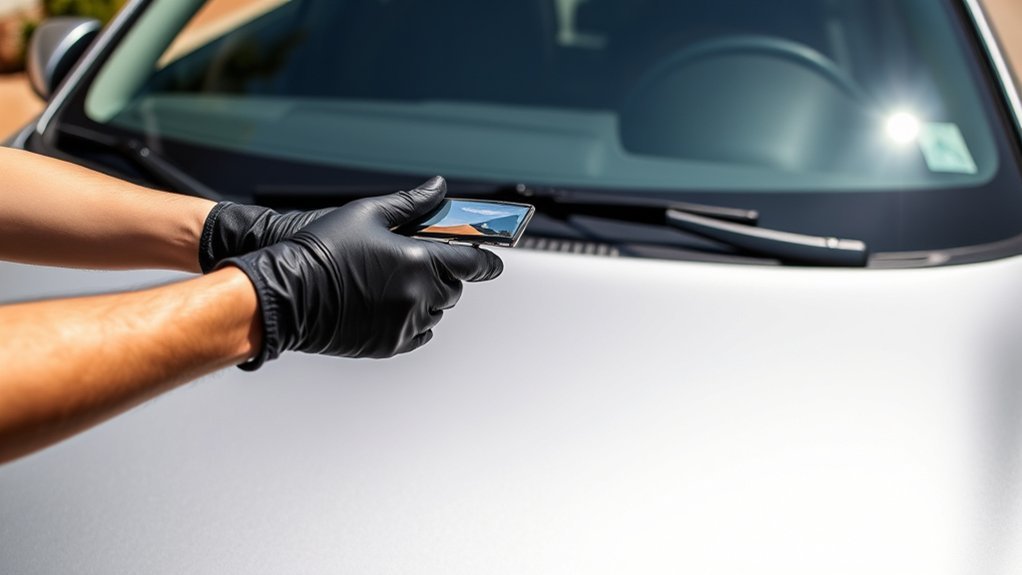
To replace Toyota Camry wiper blades, first confirm the exact model year, both blade lengths, and the arm connector. Park the car, switch the wipers off, move recessed wipers to the model-year service position if needed, protect the windshield with a folded towel, replace one blade at a time, and test the new blades on wet glass. The job is usually tool-free, but fitment and the safe arm-lifting procedure vary by year.
Quick Answer
Park your Camry, switch the wipers off, confirm the exact year, blade sizes, and connector, and place a towel over the windshield. If the parked arms sit below the hood, use the owner’s-manual service-position procedure before lifting them. Replace one blade at a time, confirm each adapter locks, lower the arms gently, and test the blades with washer fluid.
Key Takeaways
- Verify the exact model year, blade lengths, and connector before buying replacements.
- Common U.S. catalog sizes are 26/18 inches for many 2013–2017 Camrys and 26/20 inches for many 2018–2024 Camrys. Current catalogs conflict for some 2012 applications, so verify that year directly before purchase.
- Use a folded towel to protect the windshield whenever a blade is removed.
- Do not force an adapter or let the bare metal arm snap against the glass.
- Test new blades on a wet windshield and investigate the arm or wiper system if poor wiping continues.
At a Glance
| Time Required | About 10–15 minutes |
| Difficulty | Beginner |
| Tools Needed | Correct replacement blades or inserts, folded towel, glass cleaner, and a soft cloth |
| Cost | Varies by blade design, brand, and whether you replace the complete blade or only the rubber insert |
Why Toyota Camry Wiper Blade Maintenance Matters
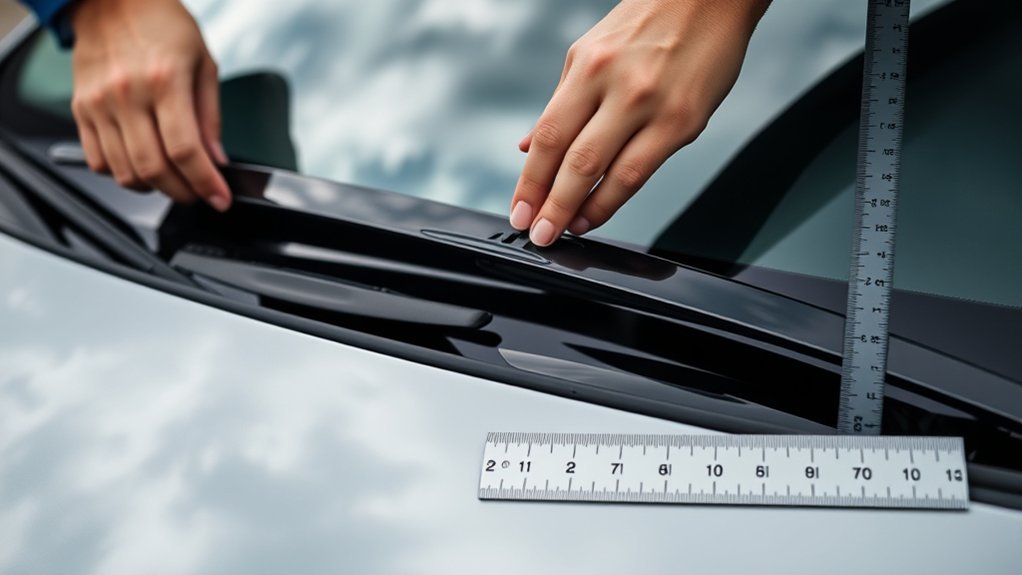
Windshield wipers remove rain, washer fluid, road spray, snow, and loose debris from the driver’s field of view. When the rubber edge becomes hardened, cracked, contaminated, or uneven, it may leave streaks or unwiped areas that make it harder to see.
The National Highway Traffic Safety Administration recommends checking that the windshield wipers and defrosters work and replacing worn blades as part of winter vehicle preparation.
There is no single lifespan that applies to every blade. Heat, ultraviolet exposure, road salt, ice, dirt, frequency of use, and blade quality all affect wear. Inspect the blades at least twice a year and replace them whenever their performance or physical condition declines.
Replace wiper blades based on their condition and wiping performance—not only on the date printed on a maintenance reminder.
When Should You Replace the Wiper Blades?
Replace a blade when cleaning it no longer restores smooth, quiet, complete contact with the windshield. A blade that looks intact can still be worn if its wiping edge has hardened or become rounded.
Signs of Worn or Damaged Blades
- Streaking: Thin lines remain in the wiped area after each pass.
- Smearing: Water or grime spreads across the glass instead of being removed.
- Skipping: Sections of the blade jump or leave repeated unwiped bands.
- Chatter: The blade vibrates or makes a rapid knocking sound.
- Squeaking: Noise continues even after the windshield and rubber edge are cleaned.
- Visible damage: The rubber is cracked, split, torn, distorted, or pulling away from the blade frame.
- Lift at speed: A blade loses contact with the windshield during highway driving.
- Missing sections: Part of the windshield remains wet even though the blade is securely installed.
How Long Do Wiper Blades Last?
Toyota says wiper blades usually last about six to twelve months, but that is not a fixed service interval. Actual life depends on blade quality, climate, storage, contamination, and use, so replace them sooner whenever visibility declines.
Replace a blade immediately when it interferes with visibility. There is no benefit to keeping a defective blade until a specific calendar interval has passed.
How Weather Affects Wiper Blades
Strong sunlight and heat can harden the wiping edge. Freezing temperatures can make rubber less flexible, while ice can tear the edge or overload the wiper mechanism. Road salt, dust, tree sap, insects, and oily windshield residue may also cause streaking or chatter.
Warning: Never switch on wipers that are frozen to the windshield. Clear snow and ice by hand, free the blades carefully, and defrost the glass first. Operating stuck blades can damage the rubber, arm, linkage, fuse, or wiper motor.
Choose the Correct Blade Sizes and Connector
The safest way to buy Toyota Camry wiper blades is to search by the exact model year and verify the application on the blade manufacturer’s or retailer’s fitment system. You can also compare the new blades with the existing blades before removing anything. This guide focuses on replacement technique; for a broader year-by-year sizing reference, see our Toyota Camry wiper blade size chart.
For model-specific operating and lifting instructions, use Toyota’s official owner’s-manual lookup. A wiper manufacturer’s application catalog, such as the Bosch Toyota wiper fitment tool, can help confirm compatible replacement products.
| Camry model years | Common driver-side size | Common passenger-side size | Important note |
|---|---|---|---|
| 2013–2017 | 26 inches | 18 inches | Common U.S. catalog fitment; verify before purchase. |
| 2012 | Check application | Check application | Current catalogs disagree on some 2012 listings. Confirm by VIN, the existing blades, or a current fitment lookup. |
| 2018–2024 | 26 inches | 20 inches | Common U.S. catalog fitment; connector and lifting procedure still require verification. |
| Other years or markets | Check application | Check application | Do not select blades from the table alone. |
Note: Blade length alone does not confirm compatibility. The replacement must also fit the arm connector and include the correct adapter. Product designs can differ even when two blades have the same nominal length.
Identify the Wiper Connector
Many Camry applications use a hook-style arm, often called a J-hook or U-hook, but the exact attachment must be checked on the vehicle or in a current fitment catalog. On a hook-style arm, the curved end of the metal arm passes through the blade adapter and locks behind a tab. The release button and adapter housing still vary among blade brands.
Before removing the old blade:
- Look at the end of the metal arm where it enters the blade.
- Check whether the arm is curved like a hook or uses another attachment design.
- Read the installation diagram on the replacement package.
- Confirm that the required adapter is included and already installed in the correct orientation.
Do not force a blade that will not slide into position. Stop and recheck the application and adapter.
Complete Wiper Blade or Rubber Refill?
A complete replacement includes the wiping rubber, supporting structure, and connector. It is the simplest option when the frame is corroded, bent, loose, or incompatible with available inserts.
Some original Toyota blade assemblies accept replaceable rubber inserts. A genuine insert preserves the existing blade frame and may cost less than replacing the complete assembly. The insert must match the original blade and be threaded through the retainers in the correct direction. Toyota lists model-specific windshield wiper inserts through its parts catalog.
Tools and Supplies for Wiper Blade Replacement

Most Camry wiper blades can be replaced without hand tools. Prepare the following items:
- Correct replacement blades or inserts: Confirm both sides before opening the packages.
- Folded towel: Place it between the bare arm and windshield.
- Soft microfiber cloth: Use it to clean the wiping edge and glass.
- Automotive glass cleaner or mild soap solution: Remove oily film and dirt before testing.
- Owner’s manual: Use it if the arms cannot be raised safely from their normal parked position.
A flathead screwdriver is not normally required. Using a metal tool on the connector can damage the plastic adapter or slip against the vehicle.
Warning: A wiper arm is spring-loaded. Once the blade is removed, never release the bare arm or leave it standing unattended. It can snap against the windshield and chip or crack the glass.
Prepare the Camry and Raise the Wiper Arms
- Park on a level surface and shift into Park.
- Switch off the windshield wipers and confirm that they have stopped.
- Turn off the vehicle.
- Check whether each parked arm can be lifted without contacting the hood.
- If the hood blocks the arm, follow the “changing the windshield wiper rest position” or “lifting the windshield wipers” procedure in the owner’s manual for that model year.
- Place a folded towel on the windshield below the blade you are replacing.
How Do You Put Recessed Camry Wipers in Service Position?
On Camry models whose wipers park below the hood, Toyota uses a service position so the arms can be raised without contacting the hood. A common Toyota procedure is to switch the vehicle off, then within about 45 seconds move the wiper lever to the MIST/up position and hold it for about 2 seconds or more. The wipers move upward to the service position. Exact switch icons and steps can vary by model year and market, so use the owner’s manual for your car if the controls differ.
Warning: Do not pull a recessed wiper arm upward while it is still parked below the hood. Toyota warns that the arm or blade can contact the hood. Hold the hook portion of the arm when lifting it rather than pulling on the blade itself.
Do not use the method of switching off the vehicle while the blades are moving halfway across the windshield. The blades may continue to park, and the correct procedure varies by model.
Pro Tip: Replace one side at a time. Leaving the other blade installed gives you a reference for adapter orientation and reduces the chance of swapping the driver and passenger blades.
How to Remove the Old Wiper Blades
Remove a Typical J-Hook Blade
- Lift the first wiper arm away from the windshield until it remains raised.
- Rotate the blade so it forms an angle with the arm and exposes the connector.
- Locate the release tab or button on the adapter.
- Press or lift the release as directed by the blade design.
- Slide the blade toward the open end of the hook until the adapter clears it.
- Guide the curved hook through the adapter opening and remove the blade.
- Lower the bare arm carefully onto the folded towel while you prepare the replacement.
Some adapters have a small cover that opens before the blade can slide free. Follow the old blade’s release design rather than prying at random.
Inspect the Arm Before Installation
Check the connector and arm for rust, cracks, looseness, distortion, or a damaged retaining surface. Wipe away dirt from the hook or attachment point.
A new blade may not solve the problem if the arm is bent, twisted, loose at its pivot, or has weak spring tension. Have the arm inspected if it does not hold the blade evenly against the glass.
How to Install New Wiper Blades on a Toyota Camry
- Compare the new blade with the old one and confirm the length, connector, and orientation.
- Verify that the correct adapter is installed on the new blade.
- Hold the arm securely and guide its hook or connector into the adapter opening.
- Slide the blade in the locking direction shown by the product instructions.
- Continue until the locking tab clicks or visibly seats.
- Pull gently on the blade without pressing the release to confirm that it cannot slide off.
- Place the blade flat against the windshield and lower the arm slowly. Do not let it drop.
- Repeat the process on the other side.
On a typical J-hook installation, the curved portion of the hook passes through the adapter opening and the blade slides upward until the lock engages. The exact adapter movement can vary by brand.
Note: If the blade appears to fit but does not click, do not rely on friction to hold it. Remove it and check the adapter. A blade that is not locked can detach while driving.
Test the New Wiper Blades
- Confirm that both arms have been lowered onto the windshield.
- Remove the towel and all packaging from the work area.
- Wet the glass with washer fluid or clean water.
- Operate the wipers at low speed for several cycles.
- Check for smooth movement, full contact, correct parking, and secure attachment.
- Listen for clicking, scraping, chatter, or contact between the two blades.
Do not test the blades repeatedly on dry glass. Toyota’s owner guidance warns against operating wipers on a dry windshield because it can damage the windshield or wiping surfaces. Use washer fluid or clean water for the test, and use seasonal washer fluid appropriate for cold weather.
Troubleshooting Wiper Blade Problems
| Problem | Likely causes | What to do |
|---|---|---|
| Streaks | Dirty rubber, oily glass, worn edge, or damaged blade | Clean the glass and blade edge. Replace the blade if streaking remains. |
| Wide smears or haze | Road film, wax, silicone residue, or contaminated rubber | Clean the windshield thoroughly with an automotive glass cleaner and wipe the blade edge. |
| Chatter or skipping | Dry glass, contamination, incorrect adapter, distorted rubber, or a twisted arm | Wet and clean the glass, reseat the blade, and inspect the arm angle if the problem continues. |
| Blade misses part of the glass | Wrong blade, protective cover not removed, weak arm tension, bent arm, or defective blade | Confirm fitment and installation. Replace a defective blade or have the arm inspected. |
| Blade is loose | Lock not engaged, wrong adapter, or incompatible product | Do not drive in rain. Remove and reinstall it with the correct adapter or exchange the blade. |
| Blades collide | Incorrect length, blades swapped, loose arm, or arm position problem | Stop the wipers and confirm both applications. Do not continue operating them while they touch. |
| Wipers do not move | Frozen blades, electrical fault, fuse, motor, linkage, or loose arm | Free any ice and stop using the system if it remains inoperative. Blade replacement alone will not repair the mechanism. |
| No washer fluid | Empty reservoir, frozen fluid, blocked nozzle, hose leak, or pump fault | Check the fluid level and temperature rating. Do not insert a hard pin into a Toyota washer nozzle unless the service instructions specifically permit it. |
If both old and new blades leave the same unwiped area, the problem is more likely to involve the windshield surface, arm alignment, arm tension, or wiper mechanism than the replacement rubber.
Aftermarket vs. OEM Wiper Blades

OEM and aftermarket blades can both work well when they are fresh, correctly sized, securely attached, and designed for the windshield curvature.
OEM Toyota Blades or Inserts
- Designed for a specific Toyota application.
- May preserve the original appearance and spoiler design.
- Some original blade frames accept lower-cost rubber refill inserts.
- Fitment can be confirmed through a Toyota parts department using the VIN.
Aftermarket Blades
- Available in conventional, beam, hybrid, silicone, and winter designs.
- Often available in several price and performance levels.
- May include a universal adapter system or a vehicle-specific connector.
- Require careful fitment verification because adapter design varies by product line.
Do not choose solely by the OEM or aftermarket label. Compare fitment, adapter security, blade design, warranty, refill availability, climate suitability, and replacement cost.
Maintenance Tips for Longer-Lasting Wiper Blades
- Clean the windshield regularly so grit does not drag beneath the wiping edge.
- Wipe the rubber edge gently with a damp microfiber cloth.
- Remove leaves, pine needles, and packed snow from the cowl before operating the wipers.
- Use washer fluid suited to the season and local temperatures.
- Do not use the blades to scrape ice.
- Avoid prolonged operation on a dry windshield.
- Inspect the rubber after severe heat, freezing rain, heavy snow, or long storage.
- Check that the blades park normally and remain securely locked to the arms.
- Replace both blades when they have similar age and wear, even if one side deteriorates first.
Parking in a garage or shaded area can reduce sun and weather exposure, but storage alone does not guarantee a specific blade lifespan. Continue to judge the blades by their condition and wiping quality.
Related Guides
Frequently Asked Questions
How do you remove wiper blades from a Toyota Camry?
Lift the arm safely, rotate the blade to expose the connector, press the release tab, and slide the blade out of the hook or attachment. Place a towel on the windshield and control the bare arm until the new blade is installed.
How do you change Toyota Camry wiper blades step by step?
Confirm the fitment, switch the wipers off, raise the arms or use the manual’s service position, protect the windshield, release one old blade, lock the matching replacement onto the arm, lower it gently, repeat on the other side, and test both blades on wet glass.
How do you put the wipers up on a Toyota Camry?
Older Camry arms may lift directly from their parked position. If an arm contacts the hood or is concealed below its edge, do not force it. Follow the model-year owner’s manual instructions for changing the wiper rest position or lifting the windshield wipers.
Do Toyota Camry wipers need to be put in service position before replacement?
If the wiper arms park below the hood and cannot be lifted safely, yes. Use the model-year owner’s-manual service-position procedure first. On many Camrys with recessed wipers, Toyota directs you to switch the vehicle off, then move and hold the wiper lever within about 45 seconds so the arms move upward for safe lifting.
What size windshield wipers does a Toyota Camry use?
The size depends on the model year. Common U.S. catalog listings specify 26/18 inches for many 2013–2017 Camrys and 26/20 inches for many 2018–2024 Camrys. Current catalogs conflict for some 2012 applications, so verify the exact year, market, connector, and product application before purchasing.
Can you replace only the rubber wiper insert?
Some original Toyota blade assemblies accept replaceable rubber inserts. Confirm the insert part number with the VIN or Toyota parts catalog. Replace the complete blade when the frame, spoiler, connector, or support structure is damaged.
Why do new wiper blades still streak or chatter?
New blades may perform poorly because of an oily windshield, protective packaging left on the rubber, an incorrect adapter, a twisted arm, weak arm tension, or an incompatible blade. Clean the glass, verify installation, and inspect the arm if the problem continues.
Conclusion
Replacing Toyota Camry wiper blades is straightforward once you have confirmed the correct sizes, connector, and arm-lifting procedure. Protect the windshield, replace one blade at a time, verify that each adapter locks securely, and test the installation with washer fluid. If new blades still skip, chatter, or miss part of the glass, inspect the windshield and wiper arms instead of repeatedly replacing the rubber. If you still need to confirm blade length, use the Toyota Camry wiper blade size chart before buying.
Sources
- Toyota — How to Change Windshield Wiper Blades — general removal, attachment, lowering, and testing guidance.
- Toyota Owners — Manuals and Warranties — model-year-specific Camry operating and wiper-lifting instructions.
- Toyota — 2019 Camry Manuals — official manuals for the 2019 gasoline Camry.
- NHTSA — Winter Weather Driving Tips — guidance on checking wipers, defrosters, and winter washer fluid.
- Toyota Auto Parts — Windshield Wiper Inserts — information on model-specific replacement rubber inserts.
- Bosch — Toyota Wiper Blade Fitment Tool — manufacturer application lookup for compatible replacement blades.
