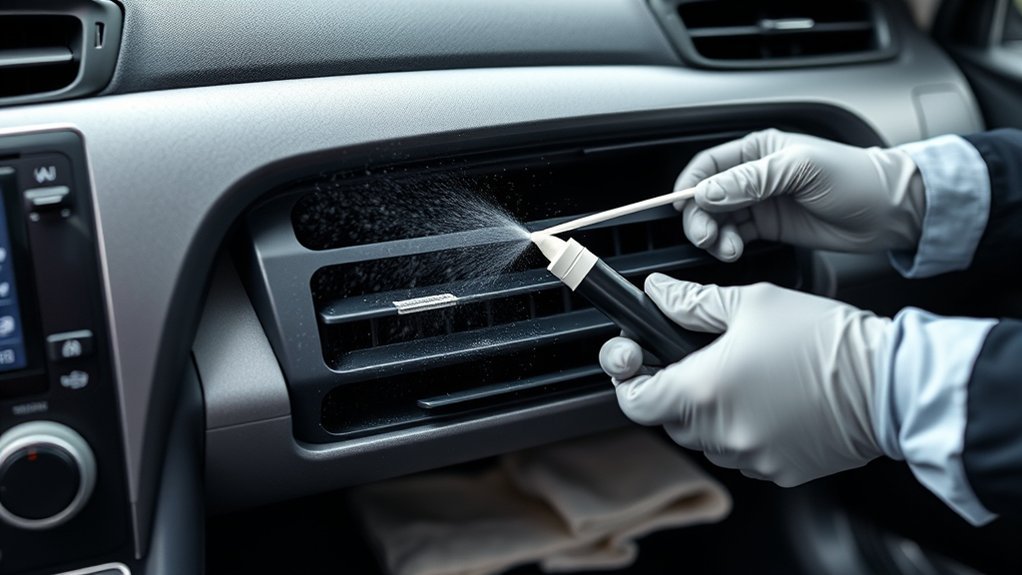
A musty odor from your Toyota Camry’s vents may come from moisture or debris around the cowl intake, cabin air filter, evaporator case, or condensate drain. Cleaning can help when contamination is the cause, but it will not repair low refrigerant, a damaged evaporator, a failing blower, or another mechanical AC problem. Check the procedure for your exact model year before removing parts or applying any cleaner.
Quick Answer
To clean a Toyota Camry AC evaporator, inspect the cowl intake and cabin air filter, verify that the condensate drain is open, and use only an automotive evaporator cleaner through the access point specified for your model year and product. Let it dwell, drain, ventilate, and dry exactly as directed.
Key Takeaways
- Confirm the Camry’s model year because cabin-filter access, drain location, and approved treatment methods can differ.
- A musty odor does not by itself prove that mold is growing on the evaporator.
- Install the cabin filter clean and dry unless both its manufacturer and Toyota’s procedure specifically allow a treatment.
- Use only a cleaner labeled for automotive evaporators and follow its application, dwell-time, ventilation, and disposal instructions.
- Seek professional diagnosis when cooling is weak, the passenger carpet is wet, cleaner will not drain, or the odor quickly returns.
At a Glance
| Time Required | Plan for about 45–90 minutes as a working estimate, plus any label-required drying time |
| Difficulty | Beginner to intermediate for inspection and chemical treatment; professional-level if HVAC-case or refrigerant work is needed |
| Tools Needed | Gloves, eye protection, towels, flashlight, drain pan, vacuum, compatible evaporator cleaner, and any model-specific hand tools |
| Cost | Varies by filter, cleaner, model year, access method, and whether diagnosis or repair is required |
Warning: Do not crawl beneath a Camry supported only by a jack. Use approved lifting points and properly rated jack stands, or have a technician access the drain. Turn the ignition and blower off before placing your hands near the blower housing. Never mix cleaning chemicals, and keep cleaner away from electrical connectors, screens, and upholstery.
Signs Your Toyota Camry AC Needs Inspection

Start with the symptoms rather than assuming that the evaporator needs cleaning. Common signs that justify an inspection include:
- A musty, earthy, or sour odor when the fan or AC first starts
- Reduced vent airflow despite a normal blower sound
- A dirty, damp, or damaged cabin air filter
- Leaves and organic debris around the exterior air intake
- Water on the front-passenger carpet or beneath the HVAC housing
- Sloshing or gurgling from behind the dashboard
- An odor that returns soon after the cabin filter is replaced
Water dripping beneath the passenger side while the AC runs is usually normal condensate drainage. The amount depends on outdoor humidity, temperature, and operating time. A dry pavement check does not prove that the drain is blocked, especially in cool or dry weather.
Weak cooling, warm air, unusual compressor noise, repeated fuse problems, or rapid compressor cycling calls for AC-system diagnosis rather than evaporator cleaning. Those symptoms may involve refrigerant, pressure sensors, electrical controls, cooling fans, blend doors, or mechanical components.
Why Evaporator and Drain Maintenance Matters
The evaporator becomes cold during AC operation, so moisture in the air can condense on its fins. That water should leave through the evaporator drain. Leaves, dust, and other material entering through the intake can hold moisture and contribute to odors.
The U.S. Environmental Protection Agency’s moisture-control guidance is written for buildings, not cars, but its central principle still applies: correct the moisture source instead of only masking the odor. Cleaning may remove contamination, but a recurring leak or blocked drain must also be repaired.
A fragrance may hide an odor temporarily, but lasting improvement requires removing debris, correcting water entry, and allowing condensate to drain.
What “Evaporator Cleaning” Means
For most do-it-yourself jobs, evaporator cleaning means applying a compatible foam or solution inside the HVAC case and then allowing it to drain. It does not mean removing the evaporator core and scrubbing it by hand. Direct core removal can require major dashboard and HVAC-case disassembly, opening the refrigerant circuit, and specialized recovery equipment.
Note: Stop at inspection and approved chemical treatment. Do not disconnect refrigerant lines or vent refrigerant. The EPA regulates motor-vehicle AC servicing, and paid refrigerant service must be performed by properly trained and certified technicians using appropriate equipment.
Confirm Your Camry’s Model Year Before Starting
Toyota Camry HVAC layouts have changed across generations. Before lowering the glove box, disconnecting a drain tube, or applying cleaner, check the instructions for your exact year, market, and equipment.
Toyota provides vehicle-specific owner documents through its Manuals and Warranties portal. Detailed repair procedures and applicable service bulletins are available through the Toyota Technical Information System.
Confirm these points before continuing:
- How the glove box and any damper arm are released
- The correct cabin-filter size and the meaning of its airflow or “UP” arrow
- Where the evaporator drain exits on your model
- Whether the selected cleaner is compatible with the HVAC case and evaporator materials
- Whether the cleaner is applied through the drain, filter opening, blower opening, or another service port
- Whether the procedure requires the cabin filter or blower motor to be removed during treatment
Essential Tools for AC Evaporator Cleaning
Cleaning Product
Choose a product specifically labeled for automotive AC evaporators. Verify that its label permits use with aluminum, plastics, rubber seals, and electronic components found in an automotive HVAC housing.
Use the applicator supplied with the product. Do not substitute household bleach, ammonia, drain opener, pressure-washer chemicals, heavy degreaser, or an unmarked spray. Follow the label and safety data sheet for application volume, dwell time, ventilation, personal protection, disposal, and first aid.
Basic Hand Tools and Supplies
- Flashlight
- Clean towels or absorbent pads
- Drain pan or container
- Vacuum with a narrow attachment
- Screwdriver or small socket set only when specified for the model
- Correct replacement cabin air filter, if needed
- Flexible plastic trim tool, if the procedure calls for one
Avoid metal wire, sharp picks, and rigid rods in the drain tube. They can puncture the tube, damage nearby parts, or push debris farther into the case.
Safety Equipment
- Chemical-resistant gloves suitable for the selected cleaner
- Safety goggles
- Long sleeves
- Good ventilation
- A suitable mask or respirator when required by the product label
The CDC notes that damp or moldy environments may affect people differently. Someone with asthma, a mold allergy, chronic lung disease, or a weakened immune system should avoid direct exposure to suspected contamination and consider professional service.
Prepare the Car and Inspect the Air Intake
- Park on a level surface, select Park, and apply the parking brake.
- Turn the AC, blower, and ignition off.
- Open the doors or windows so fumes cannot build up.
- Remove leaves from the base of the windshield and exterior air-intake area without forcing debris through the screen.
- Check for obvious water entry, damp carpeting, or standing water.
- Read the cleaner’s complete label and safety instructions before opening it.
- Place towels beneath the passenger-side HVAC housing before disconnecting or opening anything.
Pro Tip: Photograph the glove-box damper, filter cover, and old filter orientation before removal. The pictures make correct reassembly easier.
How to Access the Cabin Air Filter

Many Camry cabin filters are accessed behind the glove box, but the release method varies. Use the following as a general guide and follow your model-year instructions when they differ.
| Step | Action | Important Detail |
| 1 | Empty the glove box | Remove loose items before lowering it. |
| 2 | Release the damper if fitted | Do not pull or twist it until you confirm how it disconnects. |
| 3 | Release the side stops | Gently press the glove-box sides inward only as the manual directs. |
| 4 | Remove the filter cover | Release its tabs without forcing them. |
| 5 | Slide out the filter | Note the arrow wording and which side faces upward before removal. |
Inspect and Replace the Cabin Air Filter
What to Look For
Replace the filter when it is torn, damp, heavily loaded with debris, deformed, or due under the maintenance schedule for your model. Inspect it sooner if you regularly drive on dusty roads or in heavy smoke, pollen, or construction dust.
A dirty filter can restrict airflow and hold odors. However, replacing it will not remove contamination already inside the evaporator case.
Install the Filter Correctly
- Use a vacuum to remove loose debris around the filter opening. Do not strike the blower wheel or push dirt deeper into the housing.
- Wipe only accessible hard surfaces with a clean, slightly damp cloth.
- Insert the correct filter in the direction shown by its arrow wording and the Toyota instructions.
- Install the filter cover until its tabs lock.
- Raise the glove box and reconnect its damper or stops.
Note: Do not spray fragrance, disinfectant, or evaporator cleaner onto a new cabin filter unless the filter manufacturer and the applicable Toyota procedure explicitly allow it. Install an ordinary replacement filter clean and dry.
Signs of Filter Damage
- Tears or holes in the filter media
- A collapsed frame
- Dark, oily, or sticky contamination
- Dampness that returns after the filter area dries
- Debris bypassing the filter seal
- A persistent odor embedded in the filter
Recurring dampness may indicate a drain, windshield, door-seal, cowl, or sunroof-drain problem rather than a dirty evaporator alone.
Locate and Test the Evaporator Drain
The evaporator drain generally exits the HVAC case near the passenger side of the firewall, but its visibility and access vary by Camry generation. Consult the exact repair information before reaching from above or lifting the vehicle.
Perform a Condensate Test
- Reinstall the filter cover before operating the blower.
- Start the vehicle outdoors.
- In warm, humid conditions, run the AC long enough to cool the evaporator and produce condensate—often about 10–15 minutes—with the doors closed and the blower at a moderate setting.
- Look for condensate beneath the passenger-side area.
- Turn the system and ignition off before touching or inspecting components.
A steady drip in humid weather generally suggests that condensate can escape. Little or no dripping is not conclusive in dry or cool conditions.
Signs That Make a Blockage More Likely
- Water entering the front-passenger footwell while the AC runs
- Sloshing behind the dashboard
- Water spilling from the HVAC case during turns
- A drain outlet that remains dry during prolonged operation in humid weather
- Debris visible at the drain outlet
Clear the Drain Safely
If the outlet is accessible without unsafe lifting, inspect it with a flashlight. Remove loose material from the end of the tube by hand while wearing gloves. Gently flexing a removable rubber outlet may release soft debris.
Do not push metal wire, screwdrivers, or rigid rods into the tube. Do not apply shop-air pressure or a high-pressure water hose unless a Toyota procedure provides a specified method and pressure. If the tube is difficult to reach, disconnected inside the vehicle, or still blocked, have a technician service it.
How to Clean the Toyota Camry AC Evaporator

The exact application path depends on the product and Camry model. Some automotive evaporator foams are applied through the drain tube, while other procedures use an access point near the cabin-filter opening or blower housing. Do not choose an application point by guesswork.
- Verify compatibility. Confirm that the cleaner is intended for automotive evaporators and permitted for your Camry’s HVAC materials.
- Protect the interior. Place towels beneath the HVAC housing and a drain pan below the condensate outlet.
- Turn the vehicle off. Keep the ignition and blower off during application unless the product instructions explicitly state otherwise.
- Remove only the parts directed. If the procedure calls for removing the filter or blower motor, follow the model-specific steps and protect exposed connectors.
- Attach the supplied applicator. Do not replace it with a garden hose, improvised tube, or high-pressure nozzle.
- Apply the stated amount. Insert the applicator only to the depth directed by the product and vehicle procedure. Do not overfill the HVAC case.
- Allow the required dwell time. Give the foam or solution time to contact the evaporator and loosen contamination.
- Let the system drain. Watch the drain pan and allow the used solution to leave completely.
- Ventilate and dry the system. Follow the product’s instructions for operating the blower, fresh-air mode, recirculation mode, and AC after treatment.
- Install the dry cabin filter. Replace the filter after treatment when the cleaner’s directions call for filter removal during application.
- Check for leaks and odors. Confirm that no cleaner entered the carpet, connectors, blower motor area, or other interior surfaces.
Warning: Stop immediately if cleaner enters the passenger compartment, reaches an electrical connector, fails to drain, or causes unusual blower noise. Do not continue adding liquid to force it through.
Dry the System After Cleaning
After the cleaner’s required draining period, ventilate the cabin and operate the system exactly as the label directs. A common optional moisture-reduction habit is to switch the AC compressor off while leaving the blower on for the final few minutes before parking. This may help dry residual moisture, but it does not replace cleaning or drain repair.
Do not rely on recirculation or fresh-air mode alone as an odor cure. When outside air is clean and less humid, periodic fresh-air operation can exchange cabin air. In hot or humid conditions, recirculation may still be appropriate for cooling efficiency; follow the vehicle manual and use whichever mode the cleaner specifies during drying.
Post-Treatment Checklist
- Confirm that used cleaner and condensate exit the drain rather than the carpet.
- Check that the blower runs smoothly at every speed.
- Verify that airflow is normal and the filter cover is fully latched.
- Make sure no chemical residue remains on trim, upholstery, wiring, or connectors.
- Expect the cleaner’s own scent to linger briefly only if the label says this is normal.
- Reinspect the passenger footwell after the next several AC cycles.
Troubleshooting Common AC Cleaning Issues
| Symptom | Possible Cause | Next Step |
| Odor remains after cleaning | Dirty cowl, contaminated filter, wet carpet, incomplete treatment, spilled material, or another odor source | Reinspect the intake, filter housing, mats, carpet, and cabin; seek diagnosis if the odor persists. |
| No liquid drains after treatment | Blocked, kinked, or disconnected drain; wrong application point; insufficient drain time | Stop adding cleaner and have the drain and HVAC case inspected. |
| Passenger carpet is wet | Blocked or detached AC drain, cowl leak, windshield leak, door leak, sunroof-drain problem, or misapplied cleaner | Dry the carpet and padding promptly, then identify the water source before odor, mold, or corrosion develops. |
| Airflow remains weak | Incorrect filter, obstructed intake, blower fault, closed HVAC door, or internal restriction | Verify filter fit and orientation; obtain HVAC diagnosis if airflow does not improve. |
| Air is still warm | Refrigerant, compressor, sensor, fan, electrical, or blend-door issue | Arrange professional AC diagnosis; evaporator cleaner will not correct these faults. |
| New scraping or clicking noise | Debris or liquid reached the blower, filter cover is loose, or a component was disturbed | Turn the system off and inspect the filter area; seek service before running the blower again if the cause is not obvious. |
Avoid These Common AC Cleaning Mistakes
- Skipping the model-year check: A method that works on one Camry generation may damage clips or place cleaner in the wrong area on another.
- Using household chemicals: Bleach, ammonia, drain cleaner, and harsh degreasers can create dangerous fumes or damage HVAC materials.
- Mixing products: Never combine cleaners, disinfectants, or fragrances.
- Spraying the replacement filter: Keep it dry unless treatment is explicitly approved.
- Spraying blindly through the filter opening: The blower motor or electronics may sit in the spray path.
- Forcing the drain open: Hard wire and high-pressure air or water can cause damage.
- Overfilling the HVAC case: Excess liquid may reach carpeting, electronics, or the blower motor.
- Ignoring wet carpet: Drying the carpet without repairing the water source allows the problem to return.
- Treating weak cooling as a cleaning problem: Cleaning does not replace refrigerant, electrical, airflow-door, or compressor diagnosis.
- Masking the odor with fragrance: Scent does not remove contamination or moisture.
- Opening the refrigerant circuit: Evaporator removal is not a routine DIY cleaning step.
Ongoing Maintenance for Your Toyota Camry’s AC
Check the Cabin Filter Regularly
Follow the replacement schedule in the owner’s manual or maintenance guide for your exact Camry. Inspect the filter sooner when the vehicle is used in dusty, smoky, or high-pollen conditions. Replace it if it is damp, damaged, deformed, or heavily loaded.
Keep the Drain and Intake Clear
Remove leaves from the cowl intake and watch for normal condensate drainage during humid-weather AC operation. Investigate water inside the cabin promptly. Do not wait for wet padding, corrosion, or a persistent odor to develop.
Habits That May Reduce Odors
- Use fresh-air mode periodically when outdoor air is clean and conditions permit.
- Turn the compressor off and leave the blower running briefly before parking when practical.
- Keep food, damp mats, pet moisture, and spilled drinks from becoming separate odor sources.
- Dry wet carpet and padding completely after any leak.
- Do not block the exterior air intake with leaves, covers, or accessories.
- Address a recurring odor instead of repeatedly adding fragrance.
When to Call a Professional
Arrange professional service when:
- The drain cannot be reached safely
- The passenger carpet repeatedly becomes wet
- The evaporator cleaner does not drain
- The odor returns soon after a correct cleaning
- Airflow remains weak with the correct new filter
- The AC blows warm or cools inconsistently
- You hear scraping, clicking, or abnormal blower noise
- You see oily residue that may indicate a refrigerant leak
- Dashboard or HVAC-case disassembly appears necessary
- Refrigerant lines would have to be opened
- You are sensitive to mold or chemical exposure
Ask the shop to distinguish among filter replacement, drain clearing, evaporator treatment, leak diagnosis, blower service, and evaporator replacement. These are different services with different labor and equipment requirements. The EPA regulates motor-vehicle AC refrigerant servicing; refrigerant recovery and paid service should be handled with compliant equipment by a properly trained technician.
Frequently Asked Questions
How do I clean a Toyota Camry AC evaporator?
Inspect the cowl intake and cabin filter, confirm that the condensate drain is open, and apply a compatible automotive evaporator cleaner through the access point specified by the cleaner and your model-year Toyota procedure. Allow it to dwell, drain, ventilate, and dry exactly as directed.
Can I spray evaporator cleaner through the cabin-filter opening?
Only when the cleaner’s instructions and the applicable Toyota procedure identify that opening as the correct application point. Spraying blindly can wet the blower motor, electrical connectors, or interior surfaces.
Should I spray cleaner on the new cabin air filter?
No, not as a general practice. Install the filter clean and dry unless the filter manufacturer and Toyota’s model-specific procedure clearly approve a particular treatment.
Does a musty odor mean the evaporator has mold?
Not necessarily. Moisture and contamination on the evaporator are possible causes, but the cabin filter, cowl debris, wet carpet, water leaks, spills, damp mats, and other materials can produce similar odors.
How much does Toyota Camry evaporator cleaning cost?
Pricing varies by location, model year, access method, cleaner, and whether the service includes diagnosis, filter replacement, drain repair, blower removal, or refrigerant work. Ask for an itemized estimate that states exactly what will be inspected, cleaned, or repaired.
Why is my passenger carpet wet when the AC runs?
A blocked, kinked, or disconnected evaporator drain is one possibility. Water may also enter through the cowl, windshield, doors, or sunroof drains. Dry the carpet and padding promptly, then identify and repair the source.
Will cleaning the evaporator fix weak AC cooling?
Usually not when the problem involves refrigerant, the compressor, a sensor, a cooling fan, an electrical fault, or a blend door. Cleaning mainly addresses contamination, drainage, and some odor problems.
Can I clean the evaporator without removing the dashboard?
Often, an approved chemical treatment can be applied through a service point without removing the dashboard. Physical evaporator removal is a different repair that may require major disassembly and refrigerant recovery, so it is not a routine DIY cleaning method.
How often should a Toyota Camry evaporator be cleaned?
There is no universal cleaning interval for every Camry. Inspect the filter, intake, drain, and cabin when symptoms appear, and follow the maintenance information for your exact model. Repeated chemical treatment without finding the moisture source is not a substitute for diagnosis.
Conclusion
Cleaning a Toyota Camry AC evaporator can reduce odors when moisture and contamination are the cause, but the method must match the vehicle’s model year and the cleaner’s instructions. Begin with the cowl, cabin filter, and condensate drain. Avoid household chemicals, filter spraying, hard wire, high pressure, and blind application through an unconfirmed opening.
After treatment, confirm that the system drains, ventilates, and operates normally. Recurring odor, wet carpet, weak cooling, abnormal blower noise, oily residue, or failed drainage requires diagnosis rather than repeated chemical treatment.
Sources
- Toyota Manuals and Warranties — vehicle-specific owner and maintenance documents
- Toyota Technical Information System — Toyota repair manuals, wiring information, and service bulletins
- U.S. EPA: A Brief Guide to Mold, Moisture and Your Home — general moisture-control and cleanup principles
- CDC: About Mold — possible health effects and exposure precautions
- U.S. EPA: Servicing Motor Vehicle Air Conditioners — refrigerant-service requirements and technician resources
