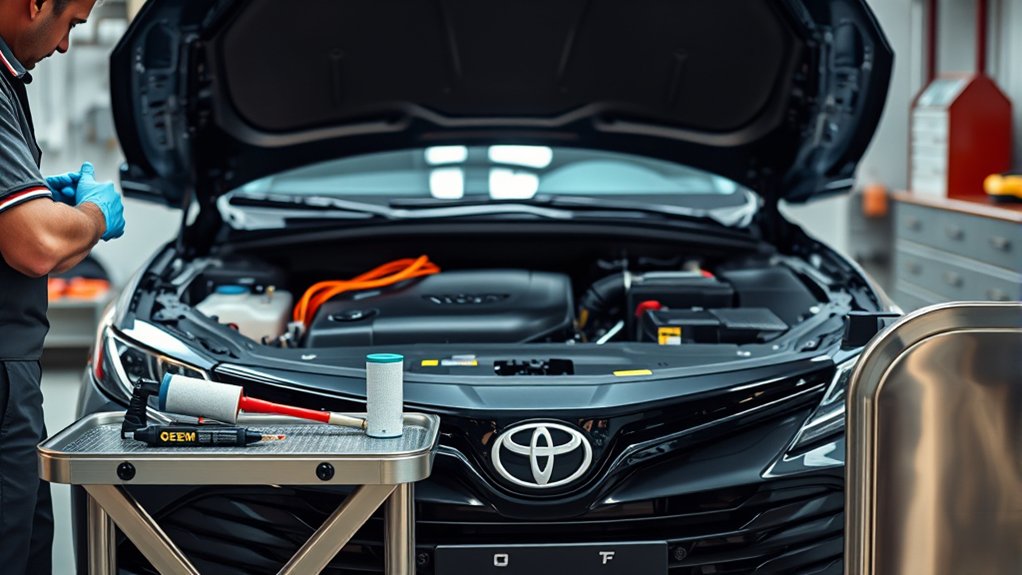
Toyota Camry Hybrid maintenance is not one-size-fits-all. The correct service schedule depends on the vehicle’s model year, mileage, age, equipment, and operating conditions. Use this guide as a planning framework, then confirm every interval in the Warranty & Maintenance Guide for your exact Camry Hybrid.
Quick Answer
Service a Toyota Camry Hybrid at the mileage or time interval listed in its model-year guide, whichever comes first. For the 2025 U.S. Camry, routine checks occur every 5,000 miles, oil is normally due every 10,000 miles or 12 months, and spark plugs are listed at 120,000 miles.
Key Takeaways
- Always use the maintenance guide for your exact model year; generic Camry schedules can mix hybrid and non-hybrid requirements.
- A 5,000-mile hybrid-system item may refer to inspecting the high-voltage battery cooling intake, not opening or servicing the traction battery.
- For the 2025 U.S. Camry, normal oil service is listed at 10,000 miles or 12 months, with shorter intervals under specified severe conditions.
- Keep tires, brakes, fluids, filters, and the battery cooling intake in good condition because each can affect efficiency and reliability.
- Leave high-voltage diagnosis and repair to a Toyota dealer or a technician trained to service hybrid vehicles.
At a Glance
| Time Required | About 10–20 minutes for an owner inspection; routine shop service commonly takes 45–90 minutes |
| Difficulty | Easy for visual checks; professional service required for high-voltage work and diagnostic testing |
| Tools Needed | Owner’s manual, tire-pressure gauge, flashlight, clean cloth, and maintenance records |
| Cost | Owner checks are usually free; service cost varies by model year, mileage, labor rate, parts, and required work |
Note: The intervals below use the 2025 U.S. Camry Warranty & Maintenance Guide as an example. Older Camry Hybrid schedules can differ. Find the guide for your exact model year through Toyota’s Manuals & Warranties portal.
Why Regular Maintenance Matters for Your Camry Hybrid
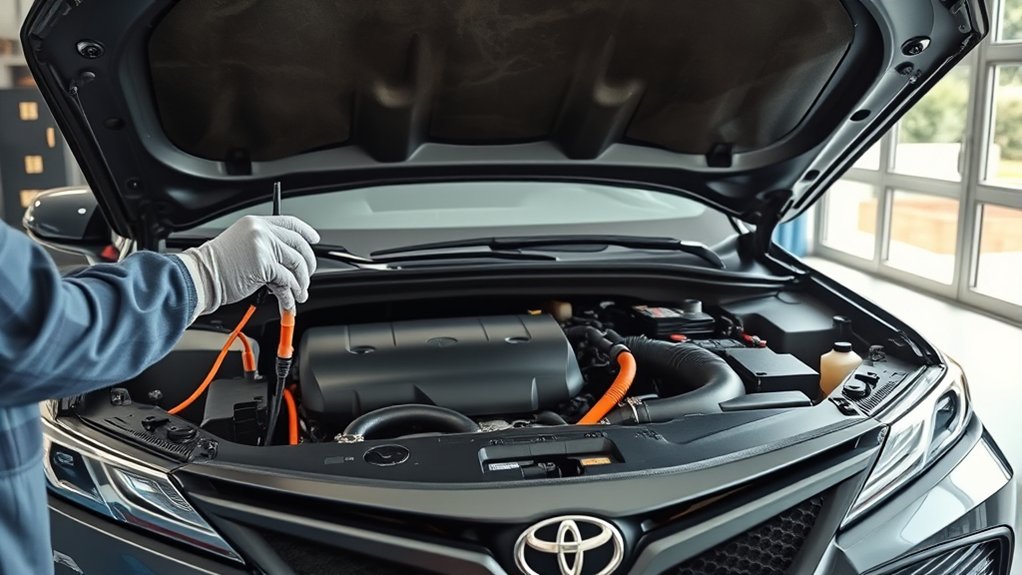
Regular maintenance helps preserve fuel economy, braking performance, ride quality, emissions control, and long-term reliability. It also gives a technician a chance to find fluid leaks, damaged tires, worn suspension parts, blocked cooling inlets, or warning codes before they become larger problems.
Maintenance is based on both time and mileage. A vehicle driven only a few thousand miles each year can still need service because oil, coolant, brake fluid, rubber parts, and the 12-volt battery age while the vehicle is parked. Follow whichever limit in your model-year guide comes first.
Keep invoices and record the date, mileage, service performed, and parts used. These records help with warranty questions, resale, and future diagnosis.
Pro Tip: Save a PDF of the correct maintenance guide on your phone and create calendar reminders for both the mileage and time limits. Do not rely only on a dashboard reminder.
Essential Checks for Your Camry Hybrid Maintenance
A complete Camry Hybrid service plan includes more than oil and battery care. Tires, brakes, coolant, filters, lights, wipers, suspension parts, and the 12-volt electrical system all affect safety and efficiency.
High-Voltage Battery Cooling Intake
The traction battery is a sealed high-voltage component. Routine owner maintenance normally focuses on keeping its cabin air intake unobstructed and having the cooling intake filter inspected or cleaned at the interval specified for the model year.
For the 2025 U.S. Camry, Toyota lists inspection of the high-voltage battery cooling intake filter at 5,000-mile service intervals and cleaning at specified intervals, including 20,000 miles. Pets, lint, dust, seat covers, luggage, or debris near the intake can restrict airflow.
- Locate the intake using the owner’s manual for your exact vehicle.
- Keep the grille clear of bags, clothing, pet hair, and loose objects.
- Do not pour or spray cleaner into the opening.
- Have a trained technician inspect persistent fan noise, warning messages, or stored hybrid-system codes.
Warning: Never touch orange high-voltage cables, high-voltage connectors, the hybrid service plug, inverter components, or the traction battery enclosure. These parts can retain dangerous voltage even when the vehicle is switched off. High-voltage diagnosis and repair require trained personnel and proper safety equipment.
Fluid Checks and Coolant Systems
Check visible fluid reservoirs only as directed by the owner’s manual and only when the vehicle is parked safely. Use the exact fluid specification Toyota lists; mixing incompatible coolant or installing the wrong oil can cause damage.
- Engine oil: Check the level periodically and investigate unexplained loss, leaks, warning lights, or unusual engine noise.
- Engine coolant: Controls temperature in the gasoline-engine cooling circuit.
- Inverter/intercooler coolant: Serves the hybrid power-electronics cooling circuit and has its own replacement schedule.
- Brake fluid: Should be inspected for level and condition during scheduled service.
- Windshield-washer fluid: Top up with an appropriate product for the climate.
In the 2025 U.S. maintenance guide, initial engine-coolant replacement is listed at 100,000 miles or 120 months, followed by shorter recurring intervals. Initial inverter/intercooler-coolant replacement is listed at 150,000 miles or 180 months. Confirm the applicable schedule before servicing another model year.
Spark Plug Replacement Timing
Spark-plug timing is model- and engine-specific. The 2025 U.S. Camry maintenance guide lists spark-plug replacement at 120,000 miles. A generic 60,000-mile recommendation can be misleading because some older Camry maintenance charts apply that interval to a non-hybrid V6 engine rather than the Camry Hybrid powertrain.
Use the plug type and installation procedure Toyota specifies. Incorrect plugs, an improper gap, or incorrect tightening torque can cause misfires, warning lights, thread damage, or reduced efficiency.
Engine Oil and Filter Interval
For the 2025 U.S. Camry, Toyota lists engine-oil and filter replacement at 10,000 miles or 12 months under normal conditions. Toyota shortens the interval to 5,000 miles or six months for specified severe use, including extensive driving on dirt or dusty roads and repeated trips of less than five miles in temperatures below 32°F or 0°C.
Other model years, oil specifications, or operating conditions may use different intervals. Follow the guide for the vehicle and use the oil viscosity and quality grade shown in the owner’s manual.
Tires, Brakes, and Air Filters
- Tires: Check pressure when the tires are cold, using the driver-door-jamb label rather than the maximum pressure molded into the tire sidewall. Rotate tires at the interval in the maintenance guide and inspect for uneven wear or damage.
- Brakes: Regenerative braking can reduce friction-brake wear, but pads, rotors, calipers, hoses, and brake fluid still require inspection.
- Engine air filter: Replace it at the listed interval or sooner in dusty conditions.
- Cabin air filter: Replace it when airflow falls, odors persist, or the model-year schedule calls for service.
How to Identify Signs of Hybrid Battery Issues
No single fuel-economy number proves that a hybrid battery is failing. Cold weather, short trips, tire pressure, speed, traffic, hills, cabin heating or cooling, roof racks, payload, and driving style can all change MPG.
Signs that justify professional inspection include:
- A hybrid-system warning message or master warning light
- Rapid or unusual swings in the displayed battery state of charge
- A cooling fan that runs loudly or frequently under ordinary conditions
- Reduced electric assist or noticeably different engine operation
- A persistent fuel-economy decline across several comparable tanks after tire pressure and driving conditions have been checked
- Difficulty starting the vehicle, which may also indicate a weak 12-volt auxiliary battery rather than a failed traction battery
Do not replace a traction battery based only on a dashboard display or one low-MPG tank. A trained technician should scan the vehicle for diagnostic trouble codes, inspect cooling airflow, test the 12-volt system, and follow Toyota’s diagnostic procedure.
Note: Toyota states that hybrid batteries in 2020-and-newer Toyota vehicles generally carry a 10-year or 150,000-mile warranty, whichever comes first. Warranty terms, exclusions, and eligibility are controlled by the guide supplied with the exact vehicle.
Critical Maintenance Milestones for Your Camry Hybrid

The following table is a condensed example based on the 2025 U.S. Camry guide. It is not a substitute for the full maintenance log, and it should not be applied unchanged to an older model year.
Example 2025 U.S. Service Intervals
| Interval | Selected Maintenance Items |
| Every 5,000 miles or 6 months | Rotate tires; inspect brake components, fluid levels, wiper blades, and the high-voltage battery cooling intake filter; perform the remaining items listed in the full maintenance log. |
| Every 10,000 miles or 12 months | Replace engine oil and oil filter under normal operating conditions, plus the applicable 5,000-mile inspection items. |
| 5,000 miles or 6 months under specified severe use | Replace engine oil and filter when the severe-use conditions in the Toyota guide apply. |
| 20,000 miles | Clean the high-voltage battery cooling intake filter and complete the other listed inspection and replacement items. |
| 30,000 miles or 36 months | Replace the engine air filter and perform the additional inspections listed for this milestone, including applicable transmission-fluid inspection. |
| 100,000 miles or 120 months | Initial engine-coolant replacement, plus all other scheduled items. |
| 120,000 miles or 144 months | Replace spark plugs and complete the remaining maintenance-log items. |
| 150,000 miles or 180 months | Initial inverter/intercooler-coolant replacement and the other scheduled services. |
Special operating conditions can add or shorten maintenance requirements. These may include extensive driving on dirt or dusty roads, repeated short trips in freezing weather, towing where permitted, heavy loading, prolonged low-speed use, or extensive idling. Read the special-operating-condition notes in the exact maintenance guide rather than assuming the normal schedule applies.
12-Volt Battery Versus Hybrid Battery
The Camry Hybrid has a high-voltage traction battery and a separate 12-volt auxiliary battery. They serve different purposes and produce different symptoms.
- High-voltage traction battery: Stores energy for electric propulsion and regenerative braking. Owners should keep its cooling intake clear but should not open or service the high-voltage system.
- 12-volt auxiliary battery: Powers computers, locks, lights, and the control systems needed to make the vehicle ready. A weak 12-volt battery can cause a no-start condition, warning messages, or erratic electrical behavior even when the traction battery is healthy.
Visible corrosion on an accessible 12-volt battery connection should be handled according to the owner’s manual or by a technician. Do not apply this advice to high-voltage cables or traction-battery connections.
Best Practices for Supporting Hybrid Battery Health
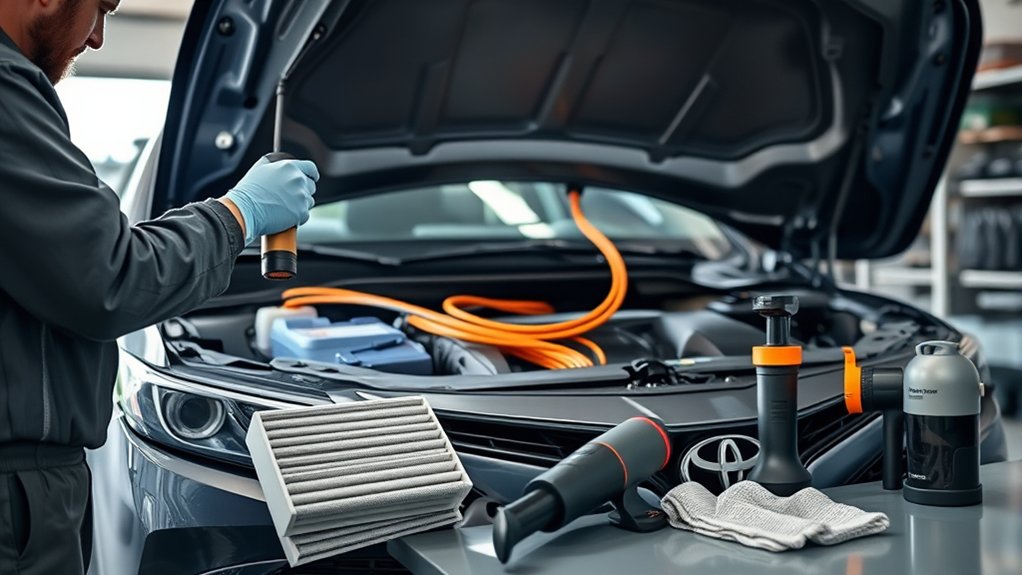
No maintenance routine can guarantee a specific traction-battery lifespan, but the following practices support proper cooling, efficient operation, and early problem detection:
- Keep the cooling intake unobstructed. Do not cover the intake with luggage, clothing, seat covers, or pet bedding.
- Follow the filter-inspection and cleaning schedule. Increase attention in dusty environments or when pets frequently ride in the vehicle.
- Maintain correct tire pressure. Underinflated tires increase rolling resistance and can reduce fuel economy.
- Respond to warning lights promptly. Delaying diagnosis can allow a cooling, electrical, or control-system problem to worsen.
- Drive the vehicle regularly. For extended storage, follow the owner’s manual and consider professional guidance for the 12-volt battery.
- Avoid unnecessary heat buildup. When practical, park in shade during extreme heat and keep the cabin intake area clean.
- Use smooth inputs. Gradual acceleration and anticipatory braking can improve efficiency, although normal driving will not eliminate battery aging.
The most useful battery-maintenance habit is simple: keep the cooling airflow clear and investigate warning messages instead of relying on an MPG guess.
Budgeting for Your Camry Hybrid Maintenance Costs
There is no reliable universal ten-year maintenance total. Costs vary by model year, annual mileage, local labor rates, tire choice, operating conditions, warranty coverage, and whether the vehicle develops age-related repairs.
A practical budget should include:
- Routine inspections and tire rotations
- Engine oil and filter service
- Cabin and engine air filters
- Tires, alignment, and balancing
- Brake-fluid and friction-brake service when required
- Engine and inverter coolant at their scheduled milestones
- Spark plugs at the model-year-specific interval
- A reserve for the 12-volt battery, damaged tires, warning-light diagnosis, or unscheduled repairs
Ask for an itemized estimate before authorizing work. Compare each recommendation with the Toyota maintenance guide, especially when a shop describes a service as mandatory. Maintenance-guide requirements, condition-based repairs, optional treatments, and dealer packages are not always the same thing.
New-vehicle owners may have ToyotaCare or another prepaid maintenance plan. Coverage, duration, mileage limits, and included services vary, so verify the plan for the vehicle instead of assuming every service is covered. Current information is available from Toyota Maintenance Plans.
Scheduling Your Next Service Appointment Made Easy
- Identify the exact vehicle. Record the model year, current mileage, in-service date, and VIN.
- Open the correct maintenance guide. Review both the normal schedule and special-operating-condition notes.
- Check your records. Confirm what was completed, when it was completed, and whether a time-based service is due before its mileage limit.
- Note symptoms. Record warning messages, sounds, odors, leaks, fuel-economy changes, and the conditions under which they occur.
- Request the required work. Ask the service provider to separate scheduled maintenance from optional recommendations and condition-based repairs.
- Keep documentation. Save the final invoice and update your maintenance log.
Before scheduling paid repair work, check the VIN for open recalls or service campaigns through Toyota’s recall lookup and the National Highway Traffic Safety Administration recall tool. Safety recalls are repaired without charge when the vehicle and campaign qualify.
Warning: A red warning light, overheating indication, brake warning, loss of power, smoke, burning odor, or instruction to stop the vehicle requires immediate attention. Move to a safe location when possible and follow the owner’s manual. Do not continue driving solely to reach a scheduled appointment.
Frequently Asked Questions
What maintenance is required on a Toyota Camry Hybrid?
Required maintenance commonly includes tire rotation, brake and fluid inspections, engine-oil and filter replacement, air-filter service, coolant replacement, spark plugs, and inspection or cleaning of the high-voltage battery cooling intake. The exact tasks and intervals must come from the maintenance guide for the vehicle’s model year.
Why is my Toyota Camry saying “Maintenance Required”?
The maintenance reminder normally indicates that a mileage-based service interval has arrived; it does not by itself diagnose a mechanical failure. Check the odometer and maintenance guide, complete the required service, and reset the reminder according to the owner’s manual. Do not confuse it with a check-engine light or hybrid-system warning.
What does the “Check Hybrid System” warning mean on a Toyota Camry?
It means the vehicle detected a fault related to the hybrid powertrain or one of its supporting systems. The message does not identify the failed part. Follow any instructions shown on the display, avoid touching high-voltage components, and arrange diagnostic testing promptly. Stop driving if the vehicle loses power, overheats, or displays an urgent red warning.
What is hybrid system maintenance?
Hybrid-system maintenance includes inspecting the battery cooling intake, checking applicable cooling circuits, scanning warning codes when symptoms appear, maintaining the 12-volt electrical system, and following Toyota’s scheduled inspections. Internal high-voltage work is not routine owner maintenance and must be performed by qualified personnel.
How often does a Toyota Camry Hybrid need an oil change?
It depends on the model year and operating conditions. As one current example, the 2025 U.S. Camry guide lists oil and filter replacement every 10,000 miles or 12 months under normal conditions and every 5,000 miles or six months under specified severe conditions. The exact vehicle guide overrides this example.
How long is the Toyota hybrid battery warranty?
Toyota states that hybrid batteries in 2020-and-newer Toyota vehicles generally have coverage for 10 years or 150,000 miles, whichever comes first. Confirm the terms, exclusions, transfer rules, and applicability in the warranty guide supplied with the exact vehicle.
Can I clean the Camry Hybrid battery cooling intake myself?
An owner can keep the exterior intake grille unobstructed and follow any owner-service procedure specifically described in the manual. Do not dismantle trim, open the traction-battery enclosure, touch orange cables, or use liquid cleaner near the intake. Have a trained technician perform work beyond the manual’s instructions.
Conclusion
The safest Toyota Camry Hybrid maintenance schedule is the one written for the vehicle’s exact model year. Use it to plan time- and mileage-based service, shorten intervals when Toyota’s severe-use conditions apply, keep the high-voltage battery cooling intake clear, and address warning lights promptly.
Accurate maintenance is less about replacing parts early or following a generic mileage chart and more about completing the correct inspection or service at the correct interval. Keep records, verify recalls, and use a hybrid-trained technician whenever diagnosis involves the high-voltage system.
Sources
- Toyota 2025 Camry Warranty & Maintenance Guide — model-year maintenance intervals, coolant schedules, battery-cooling intake service, warranty terms, and high-voltage safety.
- Toyota Manuals & Warranties — model-year manual lookup and Toyota hybrid-battery warranty overview.
- Toyota Maintenance Plans — current ToyotaCare and prepaid-maintenance information.
- Toyota Warning Lights — official warning-light guidance and owner-manual lookup.
- Toyota Recall Lookup — VIN-based Toyota recall and service-campaign checking.
- U.S. Department of Energy FuelEconomy.gov Maintenance Tips — tire-pressure, oil-specification, warning-light, and fuel-economy maintenance guidance.

