
Cleaning a Toyota Camry steering wheel safely requires more than choosing a general interior cleaner. The correct method depends on the wheel’s material, which can differ by model year and trim. Use as little moisture as possible, apply cleaner to a cloth rather than the wheel, keep liquid away from button openings, and leave the grip completely dry and residue-free before driving.
Quick Answer
Park the Camry, switch it off, and confirm the steering-wheel material in the owner’s manual. Dust the wheel and buttons with a soft brush, then wipe the grip with a barely damp microfiber cloth and a compatible cleaner. Never spray controls directly, saturate seams, or leave a shiny or slippery coating.
Key Takeaways
- Do not assume the wheel is genuine leather; verify its material before selecting a cleaner.
- Put cleaner on the cloth, not directly on the steering wheel or buttons.
- Use a dry brush first around buttons, seams, stitching, emblems, and trim.
- A finished steering wheel should feel clean, dry, matte, and secure—not greasy, glossy, or slick.
- Stop cleaning if the surface peels, transfers color, remains tacky, or shows signs of coating failure.
At a Glance
| Time Required | 10–20 minutes, plus drying time |
| Difficulty | Easy |
| Tools Needed | Microfiber cloths, soft detailing brush, clean water, material-compatible cleaner, and optional cotton swabs |
| Cost | Approximately $0–$20 if basic cleaning supplies are already available |
Why Does Cleaning Your Toyota Camry Steering Wheel Matter?

The steering wheel is one of the most frequently touched surfaces in a vehicle. Skin oil, perspiration, hand lotion, sunscreen, food residue, dust, and old interior dressing can build up on the grip. This buildup may make the wheel look shiny, feel sticky, or become harder to hold securely.
Regular, material-safe cleaning removes residue before it becomes difficult to lift. It also keeps dirt from collecting around stitching, button edges, emblems, and trim. The goal is not to make the wheel glossy. A properly cleaned steering wheel should have an even appearance and a dry, dependable grip.
A clean steering wheel should feel dry and secure. Shine or slickness often means residue is still on the grip.
Identify the Steering-Wheel Material Before Cleaning
Do not select a cleaner based only on the vehicle name. The article applies to many Toyota Camry model years and trims, and the material may not be identical in every vehicle. The grip may be genuine leather, coated leather, synthetic material, vinyl, or another finished surface.
Check the interior-care section of the owner’s manual for your exact model year. Toyota provides manuals through its official Manuals and Warranties portal. You can also check the product label and test the cleaner on a small, inconspicuous area before treating the full wheel.
Note: A product labeled for “car interiors” is not automatically suitable for every steering-wheel material. Confirm that it is approved for the specific surface and for areas handled frequently.
What You’ll Need for Safe Cleaning of Your Steering Wheel
- Two or three clean microfiber cloths: one for cleaning, one for removing remaining product, and one for drying.
- A soft detailing brush: use it dry around buttons, stitching, seams, emblems, and textured areas.
- Clean water: use only enough to make a cloth barely damp when rinsing is appropriate.
- A compatible cleaner: choose a product approved for the wheel’s confirmed material.
- Cotton swabs or foam swabs: optional for narrow edges, provided they are only lightly dampened.
- A small bowl: useful for controlling the amount of water instead of working from a spray bottle.
Products and Tools to Avoid
- Household degreasers, oven cleaner, glass cleaner, or strong all-purpose cleaner
- Bleach, ammonia, acetone, adhesive remover, or other solvents
- Undiluted alcohol unless the vehicle and product manufacturer specifically approve it
- Magic erasers, scouring pads, stiff brushes, or aggressive scrubbing
- Silicone-rich dressings, oily protectants, furniture polish, wax, or products that leave a glossy film
- Steam cleaners or excessive water around switches, seams, and electrical controls
Warning: Never spray cleaner directly onto the steering wheel, buttons, horn pad, switch openings, or trim. Liquid can run behind the controls or damage printed symbols and surface coatings. Apply the product to a cloth or swab away from the wheel.
Step-by-Step Guide to Cleaning Your Steering Wheel and Buttons
1. Park and Prepare the Vehicle
Park on a level surface, apply the parking brake, switch off the vehicle, and remove the key or move the smart key away from the cabin. Work in shade and allow a hot steering wheel to cool. Clean and dry your hands so you do not immediately transfer more oil or lotion to the surface.
2. Remove Loose Dust
Use a clean, dry microfiber cloth on the grip. Then use a dry, soft-bristled brush around the buttons, stitching, seams, emblem, spoke edges, and textured trim. Brush gently so debris moves outward instead of being forced farther into openings.
3. Prepare the Cleaner
Read the cleaner’s directions and dilute it only when the label requires dilution. Put a small amount on the microfiber cloth. The cloth should be lightly damp, not wet enough to drip when squeezed.
4. Clean the Wheel in Sections
Clean one small section at a time. Wrap the cloth around the rim and wipe with light, controlled pressure. Rotate to a clean part of the cloth as residue transfers. Avoid aggressive rubbing, especially on perforated surfaces, stitching, painted trim, or areas that have already begun to wear.
If the first pass does not remove the buildup, repeat the gentle process rather than using a stronger chemical or abrasive tool.
5. Clean the Buttons and Crevices
Start with the dry brush. For remaining residue, lightly dampen the corner of a microfiber cloth or a swab with the compatible cleaner. Wipe around the edges without pressing liquid into the gaps. Do not flood a button, hold a wet swab against an opening, or allow cleaner to collect beneath a switch.
6. Remove Residue and Dry the Surface
If the cleaner’s label calls for a rinse wipe, use a separate microfiber cloth barely dampened with clean water. Follow immediately with a dry cloth. Buff gently until the wheel no longer feels damp, tacky, greasy, or coated.
7. Check the Grip and Button Operation
Wait until the wheel is completely dry. With clean, dry hands, check the full rim for slick areas. Start the vehicle and test the steering-wheel controls while parked. If a button sticks, behaves unexpectedly, or was exposed to significant liquid, switch the vehicle off and have the control inspected.
Pro Tip: Fold the microfiber cloth into quarters. Each fold gives you a fresh cleaning face and helps prevent oily residue from being spread back across the wheel.
How to Clean a Sticky Toyota Camry Steering Wheel
A sticky wheel does not always require a stronger cleaner. First determine what may be causing the problem.
Hand Oil, Lotion, or Sunscreen
Use the normal material-compatible cleaning process, changing to a clean section of the cloth frequently. Several light passes are safer than one aggressive pass. Wash and dry your hands before checking the result.
Food or Drink Residue
Lift as much residue as possible with a barely damp microfiber cloth. Use a compatible mild cleaner for what remains. Do not soak the area in an attempt to dissolve dried sugar because the liquid may enter seams or controls.
Old Dressing or Conditioner
A glossy or greasy wheel may be coated with old protectant. Use a cleaner approved for the underlying material and repeat gentle wipes until the surface feels dry. Do not apply another dressing to hide the residue.
Surface-Coating Failure
If the wheel remains tacky after careful cleaning, transfers color to the cloth, peels, flakes, cracks deeply, or feels soft and gummy, the finish may be deteriorating. Continued scrubbing can make the damage worse. Consult a qualified automotive interior repair professional or Toyota service department.
Should You Condition a Leather Steering Wheel?
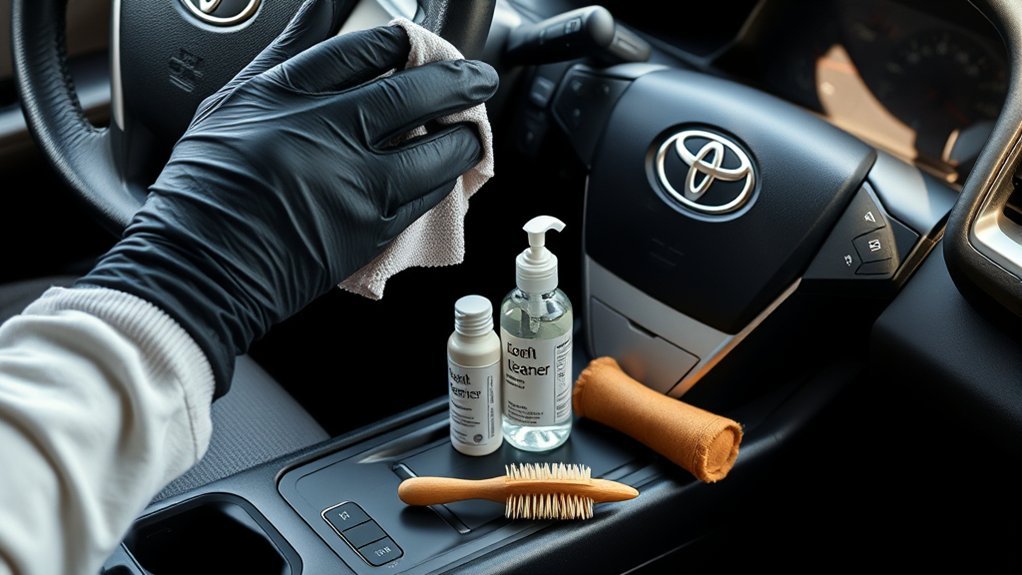
Conditioning is not an automatic step for every Camry. First confirm that the grip is genuine leather and that the owner’s manual permits a conditioner or protectant on the steering wheel. The product must also state that it is suitable for automotive steering wheels or frequently handled leather surfaces.
Skip any product that leaves a shiny, oily, waxy, or slippery film. Steering-wheel grip is more important than cosmetic gloss. When the manual recommends cleaning only, stop after cleaning and drying.
Choose a Compatible, Residue-Free Product
If conditioning is approved, test the product on a hidden area and allow the test spot to dry completely. Check for darkening, color transfer, gloss, tackiness, or texture change. Use the smallest amount specified by the product label and apply it to a cloth rather than directly to the wheel.
After the stated dwell time, remove all excess with a clean microfiber cloth. Continue buffing until the grip feels dry and secure. Do not drive while the surface is damp or slick.
Use a Condition-Based Schedule
There is no single conditioning interval that suits every wheel and product. Follow the vehicle manual and product label instead of using a universal three- or six-month schedule. Reapply only when permitted and necessary; adding more product to a wheel that already feels coated can create buildup.
Essential Tips for Prolonging the Life of Your Steering Wheel

- Clean the wheel when it is visibly dirty, shiny from residue, or beginning to feel tacky.
- Wash or wipe excess lotion, sunscreen, food residue, and grease from your hands before driving.
- Use a windshield sunshade and park in shade when practical to reduce heat and direct sunlight.
- Do not use a loose steering-wheel cover that can shift, bunch, or interfere with grip and controls.
- Keep a clean microfiber cloth available for dry wipe-downs, but do not store wet wipes or cleaners in extreme cabin heat unless their labels permit it.
- Address small spills promptly before residue dries around switches or stitching.
- Inspect the wheel during cleaning for loose trim, peeling material, damaged stitching, and buttons that bind or fail to return normally.
How to Keep Your Steering Wheel Looking Great
Use a Practical Cleaning Schedule
There is no required monthly schedule for every driver. A shared vehicle, rideshare car, work vehicle, or frequently used family car may need attention every few weeks. A lightly used personal vehicle may only need cleaning every one to three months or whenever residue becomes visible. Gentle cleaning based on actual condition is better than frequent use of strong chemicals.
Use Appropriate Products
Choose a cleaner based on the confirmed material, not on a general claim that it works on all automotive interiors. Follow the label’s dilution, application, dwell-time, and removal directions. Test every new product before treating the full wheel.
Avoid assuming that a product suitable for leather seats is automatically suitable for the steering wheel. Seats are not continuous hand-contact control surfaces, and a soft or glossy finish that feels acceptable on upholstery may be unsafe on the grip.
Limit Heat and UV Exposure
Parking in shade and using a windshield sunshade can reduce direct sunlight and cabin heat. These steps avoid adding another chemical coating to the wheel. If the vehicle manual permits a UV-protective product, confirm that it dries without gloss, tackiness, or reduced grip before using it on the steering wheel.
When and How to Disinfect the Steering Wheel
Routine cleaning is sufficient in most situations. The CDC’s cleaning and disinfecting guidance recommends cleaning high-touch surfaces regularly and notes that disinfection is generally most relevant when someone is sick or at increased risk.
If disinfection is needed in a shared or illness-related situation, first confirm that the product is compatible with the wheel material and steering-wheel controls. Use an EPA-registered product only as directed, observe the required contact time, provide ventilation, and never mix cleaning chemicals. The EPA provides additional instructions in its safe disinfectant-use guidance.
Warning: Do not use a disinfectant on leather, synthetic trim, painted symbols, or soft-touch coatings unless its label and the vehicle guidance confirm compatibility. A product can disinfect a hard household surface while still damaging a vehicle interior.
Related Guides
Frequently Asked Questions
What can I use to clean a Toyota Camry steering wheel?
Use clean microfiber cloths, a soft detailing brush, and a cleaner approved for the wheel’s confirmed material. Check the model-year owner’s manual and the cleaner label first. Apply the product to the cloth, not directly to the wheel or buttons.
How do I clean a Toyota leather steering wheel?
After confirming that the wheel is genuine leather, use a leather-safe automotive cleaner according to its label. Work in small sections with a lightly damp microfiber cloth, avoid soaking stitching or perforations, remove all residue, and dry the grip completely. Use conditioner only when the owner’s manual and product label permit it.
How do I clean a sticky steering wheel without removing it?
Use several gentle passes with a material-compatible cleaner and fresh sections of a microfiber cloth. Do not use a stronger chemical or abrasive pad. If the wheel remains sticky, transfers color, peels, or feels gummy, the surface coating may be failing and should be professionally inspected.
How can I make my steering wheel look new again?
Remove surface buildup with the correct cleaner and leave the grip dry and even. Do not use glossy dressing to hide wear. Cleaning cannot reverse missing coating, deep cracks, peeling material, damaged stitching, or worn color; those conditions may require professional repair or replacement.
Can I use alcohol or disinfectant wipes on the steering wheel?
Only when the vehicle guidance and wipe label confirm compatibility with the exact material. Alcohol and disinfectant formulas may dry, discolor, soften, or remove some finishes. Routine cleaning is normally enough unless there is a specific reason to disinfect.
How often should I clean the steering wheel?
Clean it when it is visibly dirty, shiny from hand residue, sticky, or after a spill. Frequently shared or heavily used vehicles may need cleaning every few weeks, while a lightly used vehicle may need it less often. Use the gentlest effective method each time.
Conclusion
To clean a Toyota Camry steering wheel and buttons safely, begin by confirming the wheel material. Use a dry brush and a lightly damp microfiber cloth, apply only a compatible cleaner, and keep liquid out of control openings. Remove every trace of residue and do not drive until the wheel feels completely dry and secure.
Gentle cleaning can remove ordinary oil, dirt, sunscreen, and old dressing, but it cannot repair a failing surface coating. Stop if the material peels, transfers color, remains gummy, or shows significant damage. A clean steering wheel should improve grip and appearance without adding gloss, grease, or unnecessary chemicals.
Sources
- Toyota Manuals and Warranties — provides model- and year-specific owner documentation.
- CDC: When and How to Clean and Disinfect Your Home — supports regular cleaning of high-touch surfaces, product compatibility, and situational disinfection.
- U.S. EPA: Six Steps for Safe and Effective Disinfectant Use — supports label compliance, correct application, and safe disinfectant handling.
