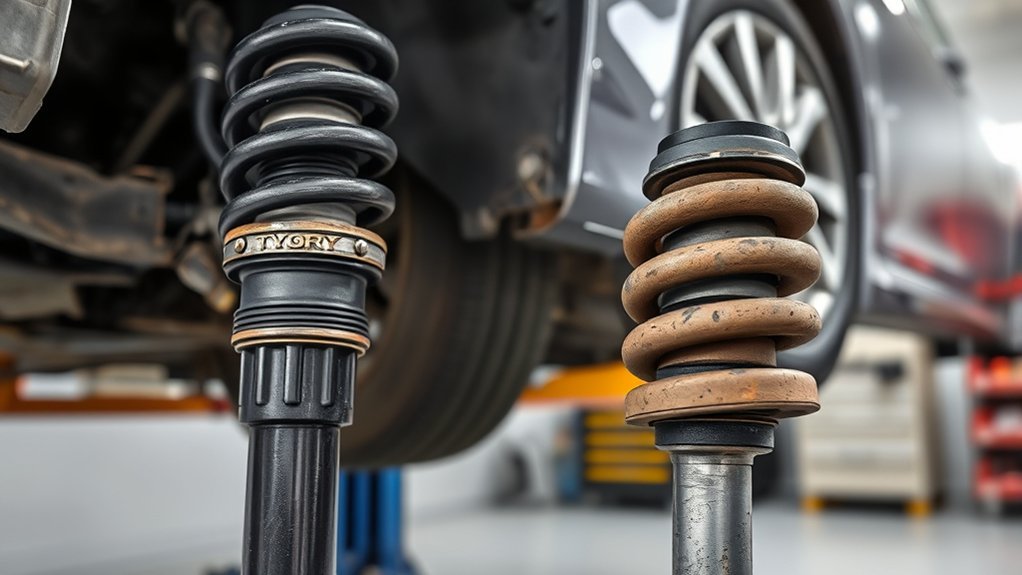
Your Toyota Camry’s struts, shocks, mounts, and suspension bushings help control body movement, keep the tires in contact with the road, and isolate vibration from the cabin. Toyota does not publish one universal replacement mileage for every Camry strut or bushing. Inspect these parts when handling changes, noises appear, tires develop unusual wear, or your model-specific maintenance information calls for a suspension or steering check.
Last updated: September 19, 2026 — RepairPal cost estimates rechecked; Toyota documentation and recall resources reviewed.
Quick Answer
Toyota does not publish one universal Camry strut replacement mileage. Replace struts, shocks, or bushings based on confirmed wear or damage rather than the odometer alone. RepairPal notes that shocks or struts may need replacement somewhere around 50,000 to 100,000 miles, but road conditions and component condition matter more than the mileage. Warning signs include repeated bouncing, excessive body movement, clunks, loose steering, unusual tire wear, heavy leakage, or visible damage.
Key Takeaways
- Toyota does not use one universal replacement interval for every Camry strut or bushing.
- A leak, clunk, vibration, or uneven tire pattern does not automatically prove that the strut is the failed part.
- Struts or shocks are normally replaced in pairs on the same axle to maintain balanced damping.
- Alignment should be checked after strut, control-arm, or ride-height changes.
- Exact parts must match your Camry’s model year, trim, drivetrain, axle, and suspension configuration.
What Do Struts and Bushings Do in a Toyota Camry?
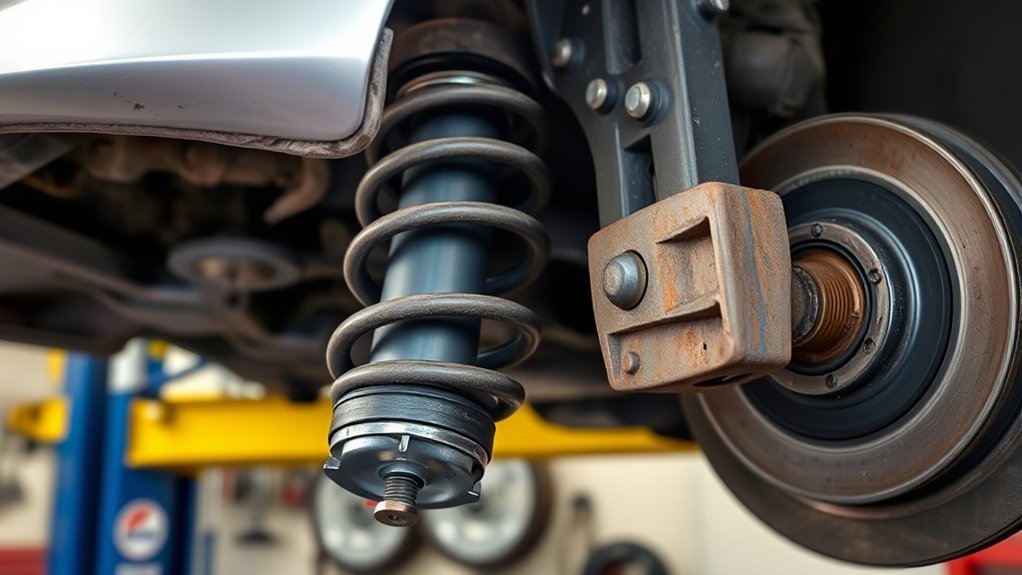
A strut is more than a simple shock absorber. In a strut-type suspension, the assembly contains a damper and also forms part of the wheel’s structural support. It controls spring movement, limits repeated bouncing, and helps maintain predictable tire contact as you brake, turn, and travel over uneven pavement.
A shock absorber performs a similar damping job but is not normally used as the same type of structural suspension member. Your Camry’s exact front and rear arrangement depends on its generation and market. Do not assume the car uses four identical dampers; check the parts catalog or service information for your specific model year before ordering components.
Bushings are flexible rubber or synthetic sleeves placed between moving suspension parts. Camry bushings may be found in control arms, stabilizer bars, strut mounts, and other connection points. They allow controlled movement while reducing vibration, metal-to-metal contact, and road noise.
| Component | Main Job | Common Failure Clues |
|---|---|---|
| Strut or shock | Controls spring and body movement | Repeated bouncing, fluid leakage, excessive dive, squat, or body roll |
| Upper mount or bearing | Secures the strut and permits steering movement where applicable | Clunking, creaking, binding, or noise while steering |
| Control-arm bushing | Locates the wheel while allowing controlled suspension movement | Loose steering feel, braking movement, clunks, cracks, or separated rubber |
| Stabilizer-bar bushing or link | Helps limit body roll and connects the stabilizer bar | Rattling or clunking over small, sharp bumps |
Note: Use symptoms to narrow the inspection, not to name the failed part. A noise near a strut does not prove that the damper itself has failed. Upper mounts, springs, stabilizer links, control-arm bushings, ball joints, tie rods, wheel bearings, brake hardware, and loose fasteners can produce similar symptoms.
Signs That Your Camry Struts or Bushings May Be Worn
Pay attention to changes in handling as well as noises. Suspension wear often develops slowly, so you may become accustomed to the change before realizing that the car no longer responds as it once did.
- Repeated bouncing after a bump: The body continues moving instead of settling promptly.
- Excessive nose dive or rear squat: The front drops noticeably during braking, or the rear settles excessively during acceleration.
- More body roll in turns: The Camry feels less controlled during lane changes or cornering.
- Fluid running down a strut or shock body: Fresh fluid running down the body or recurring wetness after cleaning can indicate a failed seal. A light film, old residue, or road grime alone does not confirm failure.
- Clunking over bumps: Possible causes include bushings, mounts, links, loose hardware, springs, ball joints, or struts.
- Creaking or binding while steering: This may point to an upper strut bearing, mount, bushing, or steering component.
- Loose or wandering steering: Control-arm bushings, tie rods, ball joints, tires, alignment, and wheel bearings should also be checked.
- Uneven or cupped tire wear: Weak damping can contribute, but incorrect pressure, imbalance, bent wheels, worn bearings, and alignment problems can create similar patterns.
- Visible bushing damage: Deep cracks, torn rubber, separation from the sleeve, or excessive movement can justify replacement.
Warning: Stop driving and arrange an inspection or tow if a coil spring is broken or displaced, a strut is bent, a wheel sits at an abnormal angle, a tire rubs the body, steering control changes suddenly, or the vehicle feels unstable enough to be unsafe.
How to Perform a Basic Suspension Check
At a Glance
| Time Required | 10 to 15 minutes for a basic visual check |
| Difficulty | Basic visual inspection; final diagnosis may require a technician and vehicle lift |
| Tools Needed | Flashlight, gloves, and tire-pressure gauge; no lifting is required for this check |
| Cost | No cost for the visual check; professional inspection charges vary |
- Park safely. Use a level surface, shift into Park, apply the parking brake, switch the vehicle off, and allow hot brake and suspension parts to cool.
- Check tire pressure and wear. Compare all four tires. Note cupping, inside-edge wear, outside-edge wear, bulges, or one tire that differs from the others.
- Look through the wheel openings. Use a flashlight to check for a broken spring, damaged dust boot, displaced part, heavy fluid leak, or visibly torn bushing.
- Compare ride height. One corner sitting much lower than the matching side may indicate a broken or weakened spring, incorrect part, or structural problem.
- Listen during a careful low-speed drive. Record whether the sound occurs while steering, braking, accelerating, driving straight, crossing a one-wheel bump, or traveling over rough pavement. These differences can help a technician isolate the source.
- Arrange a lift inspection. A technician can check bushing movement, ball-joint play, links, mounts, bearings, fastener torque, leakage, and alignment-related wear more accurately.
You can press down on a corner of the vehicle as a rough screening test. Repeated movement after release can suggest weak damping, but a vehicle that rises once and settles is not automatically free of strut or suspension problems.
Pro Tip: Record the exact road condition, speed, steering position, and side of the vehicle when a noise occurs. “Front-left clunk while turning into a driveway” is more useful to a technician than “the suspension makes noise.”
When Should Toyota Camry Struts Be Replaced?
Toyota does not publish one replace-by mileage that applies to every Camry. RepairPal notes that struts or shocks may need replacement somewhere between 50,000 and 100,000 miles, while some fail earlier and others remain serviceable much longer. Treat that range as general wear guidance, not a Toyota scheduled-replacement interval. Road conditions, corrosion, temperature, loading, driving habits, and component quality all influence service life.
Replacement is appropriate when inspection confirms one or more of the following:
- The strut or shock is bent, broken, physically damaged, or leaking heavily.
- Damping has weakened enough to cause repeated bouncing, poor body control, or unsafe handling.
- An upper mount or bearing is damaged and cannot be serviced separately in a practical way.
- A coil spring is cracked, broken, sagging, or displaced.
- A bushing has torn, separated, deformed, or developed excessive movement.
- The vehicle cannot be aligned because a suspension part is worn or damaged.
- A technician confirms the component as the source after ruling out tires, bearings, steering parts, links, springs, and loose hardware.
Struts or shocks are normally replaced in pairs on the same axle. Replacing only one damping unit can create side-to-side differences in response. This does not mean every bushing on the vehicle must be replaced at the same time. Replace bushings according to their individual condition and the design of the assembly.
After strut, control-arm, spring, or ride-height work, have the alignment checked. Alignment is especially important when the repair changes suspension mounting points or when the vehicle already shows uneven tire wear or steering pull.
How Driving Conditions Affect Strut and Bushing Life
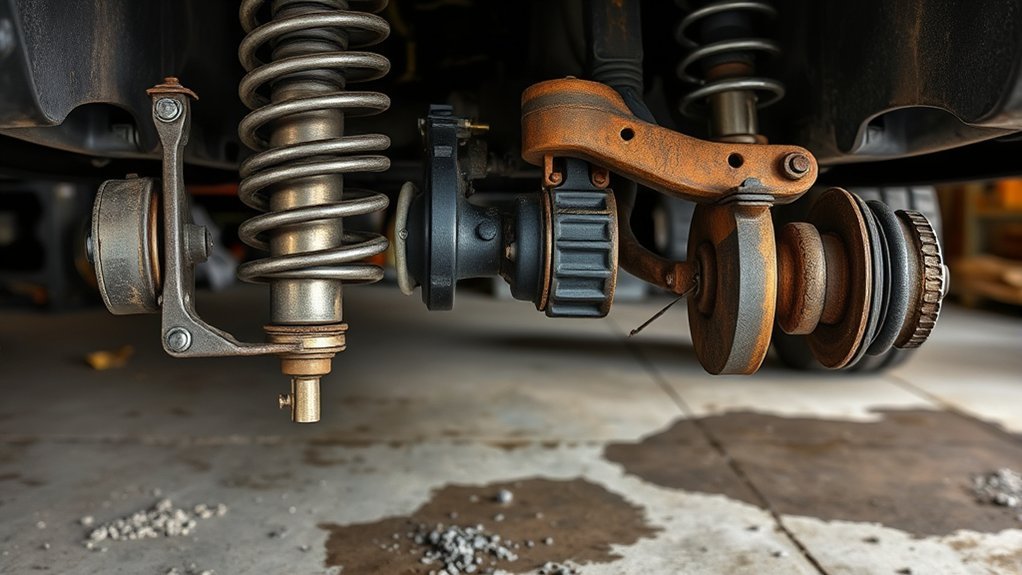
No mileage estimate can predict exactly how long your Camry’s suspension parts will last. These conditions can accelerate wear:
- Potholes and sharp impacts: High-energy impacts can damage dampers, springs, mounts, bushings, wheels, and alignment settings.
- Rough roads: Constant suspension movement increases the number of operating cycles placed on dampers and rubber joints.
- Road salt and moisture: Corrosion can weaken springs, fasteners, strut bodies, and mounting surfaces.
- Extreme heat or cold: Temperature changes can affect rubber flexibility and accelerate aging.
- Heavy loading: Regularly carrying heavy cargo increases suspension movement and stress.
- Aggressive driving: Hard braking, rapid acceleration, and fast cornering place additional loads on mounts and bushings.
- Incorrect tire pressure or damaged wheels: These conditions can increase vibration and may be mistaken for suspension failure.
Avoiding potholes when safe, maintaining correct tire pressure, correcting alignment problems, and inspecting the undercarriage after a severe impact can help prevent secondary damage.
How Much Does Toyota Camry Strut or Bushing Replacement Cost?
Repair prices vary by model year, location, labor rate, parts choice, axle, and whether related components are replaced. As of September 3, 2026, RepairPal estimates average Toyota Camry shock or strut replacement at $831 to $998. Its listed estimate for a 2025 or 2026 Camry is $1,019 to $1,201. Taxes, fees, alignment, and related repairs may be additional.
| Repair | Typical Cost Considerations |
|---|---|
| Shock or strut replacement | RepairPal’s September 2026 national Camry estimate is $831 to $998, with higher or lower figures depending on model year and location. |
| Complete control-arm replacement | RepairPal’s September 2026 Camry estimate is $561 to $716. Some shops replace the complete arm rather than pressing in one bushing. |
| Stabilizer-bar bushing or link | Usually a smaller repair than a control arm, but access, corrosion, and labor rates affect the final price. |
| Alignment | Often recommended after strut, control-arm, spring, or ride-height work and may be quoted separately. |
Ask each shop whether its quote includes both sides of the axle, upper mounts, bearings, springs, boots, bump stops, hardware, alignment, taxes, and disposal fees. A low estimate may cover only a bare strut. Another estimate may include complete preassembled units and related parts.
[Amazon Products Picked for You]

Replacement for Toyota Camry (2002, 2003)

[Fitment & Reference Number]:These Shock Absorber Assemblies & Shocks compatible with 2012-2017 Toyota Camry SE 2.5L, compatible with 2012-2014 Toyota Camry SE 3.5L. Reference Number:173034, 173033, 1333375L, 1333375R.

Ready to Install Complete Struts / Shocks Assemblies
What Else Should Be Inspected During Strut Replacement?
Replacing related worn parts during the same visit can reduce repeat labor, but serviceable components should not be replaced automatically. Ask the technician to inspect:
- Upper strut mounts and bearings
- Coil springs and spring seats
- Dust boots and bump stops
- Control arms and control-arm bushings
- Ball joints and tie-rod ends
- Stabilizer-bar links and bushings
- Wheel bearings
- Brake hoses and wheel-speed sensor wiring near the work area
- Tires, wheels, and alignment angles
- Fasteners and mounting surfaces for corrosion or damage
A complete or loaded strut assembly normally includes a strut, spring, mount, and related hardware. It can reduce the need to transfer an old spring. A bare strut usually costs less as a part, but installation may require compressing and reusing the existing spring and mount.
Warning: A compressed coil spring stores substantial energy. Do not dismantle a loaded strut assembly unless you have the correct spring compressor, training, protective equipment, and service procedure. Improper compression or tool placement can cause severe injury.
[Amazon Products Picked for You]

[Vehicle Fitment]: Compatible with Cadillac DeVille 1997-1999, Eldorado 1997-2002, Seville 1997

COMPATIBILITY – Fits 2015-2020 Chevrolet Suburban; 2007-2007 Chevrolet Avalanche; 2008-2012 Chevrolet Avalanche; 2008-2008 Chevrolet Avalanche; 2009-2009 Chevrolet Avalanche; 2010-2012 Chevrolet Avalanche; 2013-2013 Chevrolet Avalanche; 2007-2014 Chevrolet Suburban 1500; 2007-2008 Chevrolet Suburban 1500; 2009-2009 Chevrolet Suburban 1500; 2010-2014 Chevrolet Suburban 1500; 2007-2011 Chevrolet Tahoe; 2012-2014 Chevrolet Tahoe; 2012-2013 Chevrolet Tahoe; 2015-2020 Chevrolet Tahoe; 2015-2020 GMC Yukon XL; 2007-2014 GMC Yukon; 2015-2020 GMC Yukon; 2007-2014 GMC Yukon XL 1500
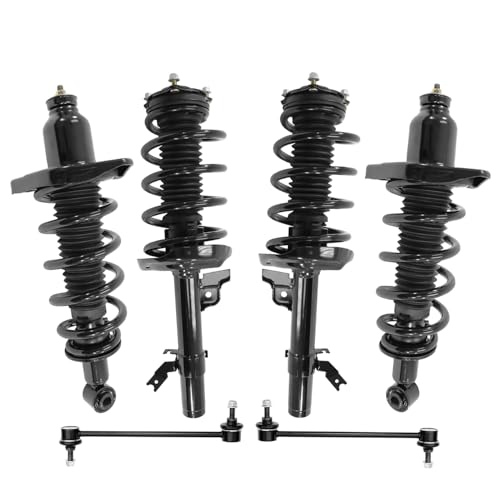
Struts Replacement for Acura 2014 2015 2016 2017 2018 2019 2020 MDX (AWD)
Why Regular Suspension Inspections Matter
Struts and bushings usually deteriorate gradually rather than failing on a predictable date. Periodic inspection helps you identify wear before it damages other components or significantly changes the way the vehicle responds.
- Handling: Healthy dampers and joints help the car remain controlled during braking, cornering, and emergency maneuvers.
- Tire life: Correcting looseness, damping problems, and alignment issues can prevent continued abnormal tire wear.
- Ride quality: Replacing a confirmed failed mount, bushing, strut, or shock can reduce harshness, rattles, and unwanted body movement.
- Repair planning: Early diagnosis may allow you to combine related work and avoid paying repeated labor charges.
- Safety campaigns: Check your VIN through the Toyota recall and service-campaign lookup and the NHTSA recall database.
Use the Toyota Manuals and Warranties portal to locate documentation for your exact model year. Service procedures, torque specifications, suspension layouts, and maintenance requirements can differ across Camry generations.
Upgrading Toyota Camry Struts and Bushings
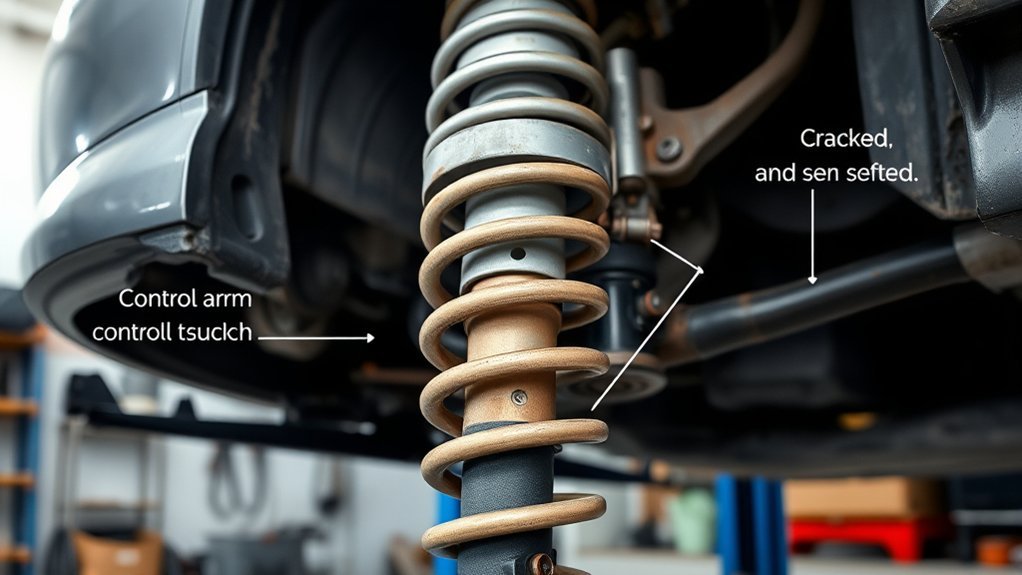
Choose suspension parts according to your goal rather than assuming that a stiffer or lower setup is automatically better. Confirm every part number against your Camry’s year, trim, drivetrain, axle, and suspension configuration.
| Goal | Suitable Approach | Tradeoff or Check |
|---|---|---|
| Restore factory-like comfort | Model-specific OEM or reputable OEM-equivalent dampers with rubber bushings | Match the original spring rate, ride height, and trim application. |
| Simplify installation | Complete preassembled strut units | Quality varies, so verify spring, mount, bearing, and fitment specifications. |
| Sharper response | Matched performance dampers or firmer bushings listed for the exact vehicle | May increase road noise, vibration, and ride firmness. |
| Lower ride height | A matched spring-and-damper system designed as a complete package | Reduces ground clearance and suspension travel and requires an alignment check. |
Polyurethane bushings can sharpen response in some applications, but they may transmit more noise and vibration than rubber. Some designs also require periodic lubrication. For a daily-driven Camry, quality rubber bushings and properly matched dampers usually provide the most balanced combination of comfort, noise control, and predictable handling.
[Amazon Products Picked for You]

[Vehicle Fitment]: Compatible with Toyota Camry 2007-2011 L4 2.4L --- It comes without Bracket

COMPATIBILITY — Fits 2001-2007 Toyota Highlander; 2002-2006 Toyota Camry; 2005-2006 Lexus ES330.
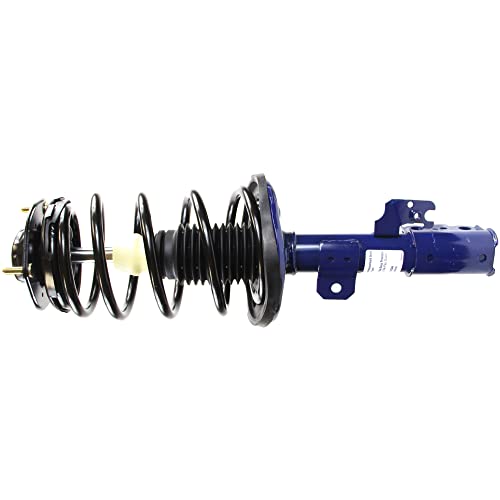
COMPATIBILITY – Fits 2004-2006 Lexus ES330; 2004-2006 Toyota Camry; 2004-2005 Toyota Solara; 2006-2006 Toyota Solara
Related Guides
Frequently Asked Questions
How long do Toyota Camry struts usually last?
Toyota does not specify one universal replacement lifespan for every Camry strut. RepairPal notes that shocks or struts may need replacement somewhere around 50,000 to 100,000 miles, but road conditions, corrosion, loading, driving style, and component quality can shorten or extend that range. Replace them when inspection confirms wear, damage, leakage, or poor damping.
How much does Camry strut replacement cost?
RepairPal’s U.S. estimate, updated September 3, 2026, is $831 to $998 for average Toyota Camry shock or strut replacement. Its estimate for a 2025 or 2026 Camry is $1,019 to $1,201. Prices vary by location, axle, parts choice, and related repairs. Alignment, taxes, fees, mounts, springs, and other components may cost extra.
When should Toyota Camry struts be replaced?
Replace them when they are bent, broken, heavily leaking, physically damaged, or no longer controlling body movement properly. Confirm the diagnosis because tires, springs, mounts, bushings, links, bearings, and steering components can create similar symptoms.
Can Camry struts last 150,000 miles?
Yes, some may remain usable for that distance under favorable conditions. Mileage alone does not prove that a strut is good or bad. A high-mileage unit should be evaluated for leakage, damage, damping performance, mount condition, tire wear, and handling changes.
Should Camry struts be replaced in pairs?
Yes, replacing struts or shocks in pairs on the same axle is normally recommended. This helps maintain similar damping response from side to side. It does not mean that all four units must always be replaced when only one axle is worn.
Does a Camry need an alignment after strut replacement?
An alignment check is strongly recommended after strut replacement, control-arm work, spring replacement, or any ride-height change. It is particularly important when mounting points were loosened or the vehicle has steering pull, an off-center steering wheel, or uneven tire wear.
Can a Camry suspension bushing be replaced by itself?
Sometimes. Stabilizer-bar bushings and certain pressed bushings may be available separately. In other locations, replacing the complete control arm or mount may be more practical because it includes a new bushing and reduces pressing labor. The correct choice depends on the model year, part design, corrosion, and available components.
Can I drive a Toyota Camry with bad struts?
Mild wear may allow a careful trip for inspection, but worsening struts can reduce ride control and handling. Stop driving and arrange an inspection or tow if a strut is bent or broken, a spring is broken or displaced, a wheel sits at an abnormal angle, a tire rubs the body, steering changes suddenly, or the Camry feels unstable enough to be unsafe.
Conclusion
Do not replace Toyota Camry struts or bushings only because the odometer has reached a particular number. Watch for changes in ride control, steering, noise, tire wear, leakage, and visible component condition. Confirm the failed part before authorizing repairs, replace damping units in axle pairs when appropriate, inspect related components, and check alignment after work that affects suspension geometry.
For the safest and most accurate repair, use parts listed for your exact model year and suspension configuration. Have loaded strut assemblies, coil-spring work, steering joints, and severely worn bushings handled by a qualified technician when the job requires specialized tools or diagnosis.
Sources
- Toyota Manuals and Warranties — model-year-specific owner documentation and maintenance information
- Toyota Safety Recall and Service Campaign Lookup — VIN-based Toyota campaign information
- National Highway Traffic Safety Administration Recall Lookup — open recalls, investigations, complaints, and manufacturer communications
- RepairPal Toyota Camry Shock or Strut Replacement Estimate — September 3, 2026 cost estimate plus service-life, pair-replacement, symptoms, and alignment guidance
- RepairPal Toyota Camry Control Arm Replacement Estimate — September 3, 2026 control-arm parts and labor estimate
