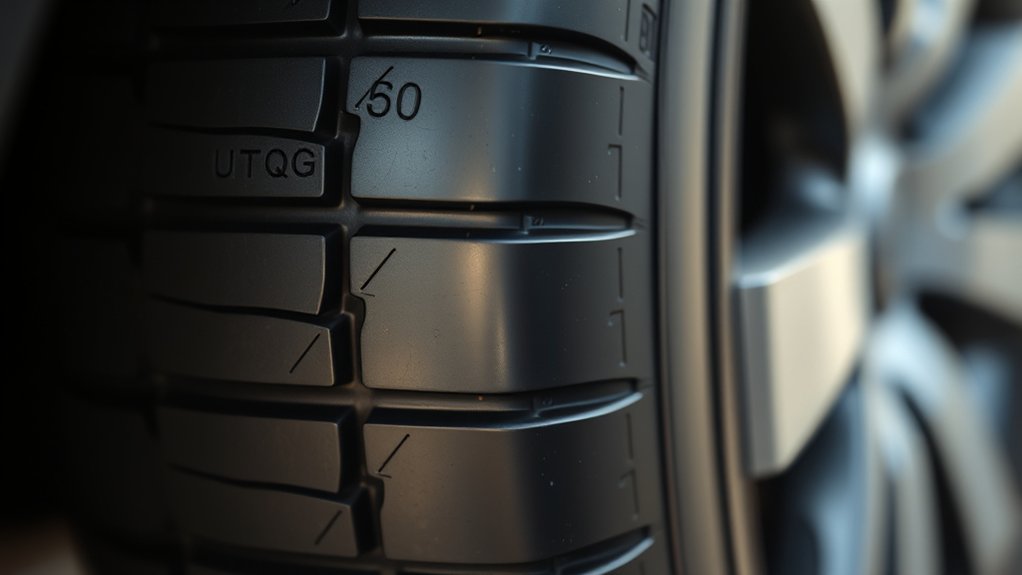
UTQG ratings can help you compare replacement tires for your Toyota Camry, but the numbers are easy to misread. They describe relative treadwear, wet straight-line braking traction, and heat resistance under controlled tests. They do not guarantee mileage or identify the best tire for every Camry, climate, or driving style.
Quick Answer
UTQG helps you compare a Camry tire’s relative treadwear, wet straight-line braking traction, and heat resistance. It does not predict exact mileage or replace checks for the correct size, load index, speed rating, season, and independent test results. Use it as one comparison tool, not the final decision.
Key Takeaways
- A higher treadwear number means slower wear in the controlled UTQG test, not a guaranteed number of road miles.
- Traction grades run from AA to C and measure wet, straight-line locked-wheel braking on specified test surfaces.
- Temperature grades run from A to C, but they are not the same as a tire’s speed rating.
- Confirm your Camry’s correct size, cold pressure, load capacity, speed specification, and seasonal needs before comparing UTQG grades.
- Driving habits, pressure, rotation, alignment, climate, road conditions, tire damage, and tire age all affect actual service life.
Last updated: July 13, 2026
What Is the UTQG System and Why Does It Matter for Toyota Camry Tires?

UTQG stands for Uniform Tire Quality Grading. The U.S. system gives consumers comparative information about three tire characteristics: treadwear, traction, and temperature resistance.
The federal UTQG regulation applies to most new passenger-car tires. Important exceptions include winter-type snow tires, deep-tread tires, temporary or space-saver spares, tires with nominal rim diameters of 12 inches or less, and qualifying limited-production tires.
Tire manufacturers or brand owners assign the grades using the required federal procedures. Each tire must be able to achieve the performance represented by its molded grades, and NHTSA may conduct compliance testing or review supporting information.
A complete marking may look like this:
TREADWEAR 600 TRACTION A TEMPERATURE A
You can usually find the grades molded into the tire sidewall between the tread shoulder and the tire’s widest section. They may also appear on a new replacement tire’s tread label, manufacturer specification sheet, or retailer listing. Original-equipment tires on new vehicles are not subject to the same tread-surface label requirement, so inspect the sidewall or product specifications.
Note: UTQG is a U.S. consumer-grading system. A tire may still be sold or used in other markets, but the presence and presentation of UTQG markings can depend on the tire category and market.
How to Read a UTQG Code
| Component | What It Measures | What It Does Not Tell You |
|---|---|---|
| Treadwear | Relative wear during a controlled road test compared with course-monitoring tires. | Exact mileage, warranty coverage, grip, comfort, noise, or rolling resistance. |
| Traction | Wet, straight-line locked-wheel braking on specified asphalt and concrete surfaces. | Dry grip, cornering, acceleration, snow performance, ice performance, or hydroplaning resistance. |
| Temperature | Resistance to heat generation and the ability to dissipate heat during a laboratory test. | The tire’s speed rating or permission to exceed legal and safe driving speeds. |
How the Federal UTQG Tests Work
The three grades come from different procedures, so they should not be treated as one overall tire score.
| Grade | Basic Test Method | Important Limitation |
|---|---|---|
| Treadwear | Candidate tires are compared with course-monitoring tires on an NHTSA-established road course. The formal procedure includes an 800-mile break-in followed by approximately 6,400 miles of test-course driving. | Your Camry’s roads, weather, alignment, loading, pressure, and driving style will differ from the test. |
| Traction | A test trailer is towed at 40 mph while a test wheel is locked on wetted asphalt and concrete surfaces. | The test does not measure cornering, acceleration, dry braking, snow grip, ice grip, or complete wet-road control. |
| Temperature | The tire is loaded against a laboratory test wheel and operated through staged test speeds under specified temperature, inflation, and load conditions. | The result is not the tire’s road-speed rating and does not override safe loading or inflation requirements. |
A treadwear number is a controlled-test comparison, not a promise of how many miles the tire will last on your Camry.
What Treadwear Ratings Mean for Toyota Camry Tires
A higher treadwear number indicates slower wear during the standardized test. A lower number indicates faster wear under the same test framework. Federal treadwear grades are expressed in increments of 20, such as 300, 320, 340, or 600.
You should not convert the number directly into mileage. A grade of 400 does not mean 40,000 miles, and a grade of 800 does not mean 80,000 miles.
How to Interpret Lower and Higher Grades
Federal rules do not establish official “low,” “medium,” or “high” treadwear ranges. The descriptions below are relative shopping categories, not government classifications.
| Relative Grade | Practical Meaning | Important Caution |
|---|---|---|
| Relatively lower number | The tread wore faster during the controlled test. Some performance-focused tires fall into this group because their design priorities may extend beyond long tread life. | A lower number does not automatically mean poor quality or prove better real-world grip. |
| Mid-range number among comparable tires | The tire may balance wear, comfort, handling, and other goals for general road use. | Check the exact tire’s independent test results, warranty terms, construction, and intended use. |
| Relatively higher number | The tread wore more slowly during the controlled test. | The grade does not prove superior wet grip, snow traction, ride quality, impact resistance, or overall safety. |
No federal rule defines one treadwear number as “good” for every Toyota Camry. Your best range depends on whether you prioritize long commuting life, responsive handling, wet-road performance, winter capability, comfort, low noise, or low rolling resistance.
Can You Compare UTQG Ratings Across Tire Brands?
You can use UTQG for broad comparisons across brands because every covered tire must follow the federal grading framework. However, manufacturers or brand owners assign the grades, and fine differences can appear more precise than they are. A 600 tire should not automatically be treated as meaningfully better than a 580 tire in every real-world situation.
Make the fairest comparison by checking tires in the same size, seasonal category, service description, and intended use. A touring all-season tire and a summer performance tire may have very different design goals even when both fit the same wheel.
Why a Grade Cannot Predict Exact Tire Life
The official treadwear test creates a standardized comparison, but your Camry will not operate under those exact conditions every day. Real service life can change because of:
- Hard acceleration, abrupt braking, and fast cornering
- Incorrect cold tire pressure
- Skipped rotations or an unsuitable rotation pattern
- Wheel misalignment or worn suspension parts
- Potholes, rough pavement, gravel, and road debris
- High temperatures, freezing weather, and prolonged sunlight
- Heavy loads and frequent high-speed highway travel
- Differences in tire construction, tread depth, and rubber compound
- Tire age, previous damage, improper repairs, and repair history
Factors Influencing Treadwear Performance in Your Camry
Your Camry’s front tires may wear differently from the rear tires because the front axle handles steering and much of the braking load. Front-wheel-drive versions also send engine or hybrid-system driving force through the front tires.
Aggressive acceleration, hard braking, and sharp cornering increase tread stress. A smoother driving style can reduce irregular wear and help all four tires age more evenly.
Inflation also matters. Underinflation can create excess heat and shoulder wear, while overinflation may increase center wear and reduce the tire’s ability to absorb road impacts.
Alignment problems often produce feathering, rapid shoulder wear, an off-center steering wheel, or pulling on a straight and level road. Tire imbalance more commonly causes vibration at particular speeds.
Inspecting the wear pattern can therefore tell you more about a developing vehicle or maintenance problem than the UTQG number alone.
UTQG vs. Tire Size, Load Index, Speed Rating, and Other Markings
UTQG is only one part of a tire’s sidewall information. The following markings serve different purposes and are not interchangeable.
| Marking | What It Identifies | Why It Matters for a Camry |
|---|---|---|
| Tire size | Width, aspect ratio, construction, and wheel diameter, such as a code in the format 215/55R17. | The replacement must fit the wheel and vehicle configuration and maintain suitable clearance and operating characteristics. |
| Load index | The maximum load the tire can support under specified conditions. | An inadequate load index can make an otherwise high-UTQG tire unsuitable. |
| Speed rating | A separate service-description symbol based on standardized speed-capability testing. | It is not the same as UTQG temperature grade and does not authorize unsafe or illegal speed. |
| Seasonal markings | Markings such as M+S or the three-peak mountain snowflake identify separate seasonal or snow-performance classifications. | UTQG traction does not rate snow or ice grip, and qualifying winter-type snow tires may be exempt from UTQG. |
| DOT Tire Identification Number | A code identifying the manufacturing plant and other tire information; its final four digits show the manufacturing week and year. | It helps you determine tire age and identify the tire accurately for recall research. |
| UTQG | Relative treadwear plus wet straight-line traction and temperature-resistance grades. | It helps compare otherwise suitable tires but does not establish fitment. |
Warning: Never select a tire solely because it has an impressive UTQG number. Confirm the approved size, suitable load capacity, service description, wheel compatibility, and seasonal design for your exact Camry before installation.
How to Choose Camry Tires With the Right UTQG Ratings
Start with compatibility and safety requirements before comparing treadwear grades. A high UTQG number cannot make an incorrectly sized or under-rated tire suitable for your vehicle.
- Identify the exact Camry configuration. Note the model year, trim, engine or hybrid version, drivetrain, and wheel size.
- Confirm the approved tire size. Check the driver-side Tire and Loading Information label and the applicable Toyota manual.
- Verify load and speed requirements. The replacement tire must safely support the vehicle and follow the service specifications appropriate for that Camry.
- Choose the correct tire category. Consider all-season, summer, touring, performance, or winter tires based on your climate and driving.
- Compare the complete UTQG code. Review treadwear, traction, and temperature together.
- Read independent testing. Look for wet braking, dry handling, snow performance, hydroplaning, comfort, noise, and rolling-resistance results.
- Review the warranty terms. A mileage warranty is separate from the UTQG grade and may require rotations, records, correct pressure, and even wear across the set.
- Check the DOT date code and tire condition. Avoid assuming an unused tire is automatically fresh or undamaged.
- Check for safety recalls. Search the exact tire brand, line, size, and identification information before purchase or installation.
Pro Tip: Compare UTQG numbers only after narrowing your options to tires that fit the same Camry configuration and driving need. Then check the exact size because one tire line may carry different specifications or grades across sizes.
Match the Ratings to Your Driving Needs
| Driving Need | How UTQG Can Help | What Else to Check |
|---|---|---|
| Daily commuting | A relatively higher treadwear grade may support a longevity-focused comparison. | Ride comfort, road noise, wet braking, warranty, and rolling resistance. |
| Frequent rain | AA or A represents a stronger result in the specified UTQG wet straight-line traction test. | Independent wet-cornering, hydroplaning, and emergency-braking tests. |
| Sportier handling | A lower treadwear grade may be acceptable when maximum tread life is not the main goal. | Dry grip, steering response, braking, heat management, and ride quality. |
| Snow and ice | UTQG offers limited help, and qualifying winter-type snow tires may not carry the grades. | Winter-specific design, cold-weather compound, snow testing, seasonal markings, and local conditions. |
A Practical UTQG Comparison Example
Suppose two touring all-season tires both match your Camry’s required size, load index, speed specification, and seasonal needs:
- Tire A: 700 A A. It has the higher relative treadwear grade.
- Tire B: 500 AA A. It has the stronger UTQG wet straight-line traction grade.
Tire A may look better for a longevity-focused commuter, while Tire B may look better when the UTQG wet-braking grade receives more weight. That still does not settle the choice. Independent wet-cornering, hydroplaning, noise, ride, winter, and braking tests could reveal advantages that the UTQG code cannot show.
Tips to Extend Your Toyota Camry Tires’ Lifespan
Good maintenance helps your tires wear evenly and allows them to deliver the performance their design intended.
Use the Correct Cold Tire Pressure
Check all tires, including an applicable full-size or temporary spare, at least monthly with an accurate gauge. NHTSA defines a cold reading as one taken after the vehicle has not been driven for at least three hours.
Use the pressure printed on the Camry’s Tire and Loading Information label or specified in the applicable owner’s manual. Do not use the maximum pressure molded into the tire sidewall as your normal target.
Warning: Toyota Camry tire pressure can vary by model year, trim, wheel package, axle, and tire specification. Never rely on a generic 30–35 PSI range when the vehicle placard provides the correct cold setting.
Rotate the Tires as Toyota Recommends
Follow the maintenance guide for your exact model year. Rotation frequency and pattern can change with directional tires, staggered sizes, different front and rear specifications, or other fitment differences.
Rotate sooner when you notice uneven wear, provided the tire design and Toyota guidance allow it. Keep service records because some treadwear warranties require documented rotations.
Inspect Tread and Sidewalls
Look for uneven wear, embedded objects, cuts, cracks, bulges, exposed cords, or repeated pressure loss. NHTSA says tires are worn out at 2/32 inch of remaining tread, which is also the point at which the tread surface becomes level with standard treadwear indicators.
A tire may need replacement before reaching 2/32 inch. Vibration, noise, air loss, impact damage, age-related deterioration, visible deformation, reduced wet performance, or an unsafe repair deserves professional inspection.
Read the DOT Date Code and Check Recalls
Find the full DOT Tire Identification Number on the sidewall. Its final four digits identify the manufacturing week and year. For example, 2325 means the tire was manufactured during the 23rd week of 2025. The complete code may appear on only one side of the tire, so you may need to inspect the inward-facing sidewall.
Tread depth alone does not reveal age-related deterioration. NHTSA notes that some vehicle and tire manufacturers recommend replacing tires after six to ten years regardless of remaining tread. Follow the guidance for your exact Camry and tire brand, and have older tires inspected regularly.
Use the NHTSA recall search to check the tire manufacturer, product line, size, and identification information. A tire with adequate tread can still require removal if it is subject to a safety recall.
Check Balance, Alignment, and Suspension
New tires should be balanced during installation. Ask for another balance check if the steering wheel, seat, or floor vibrates at particular speeds.
Have the alignment inspected when the Camry pulls, the steering wheel sits off-center, the tires develop abnormal wear, or the vehicle has hit a severe pothole or curb. Worn steering and suspension parts should be repaired before alignment.
Understanding Traction and Temperature Ratings for Toyota Camry Tires
Treadwear receives most of the attention, but the two letter grades also provide useful information. Read all three components together.
Traction Ratings Explained
UTQG traction grades run from highest to lowest as AA, A, B, and C. They measure a tire’s ability to stop on wet asphalt and concrete during a controlled, straight-line locked-wheel test.
| Grade | UTQG Meaning |
|---|---|
| AA | Highest performance level in the specified wet straight-line traction test. |
| A | Strong performance in the specified wet straight-line traction test. |
| B | Lower test performance than A and AA. |
| C | Lowest permitted UTQG traction grade. |
The grade does not measure wet cornering, dry braking, acceleration, snow grip, ice grip, or hydroplaning resistance. Independent road testing remains important, especially if you drive in frequent rain.
Temperature Ratings Significance
Temperature grades run from highest to lowest as A, B, and C. They measure resistance to heat generation and the ability to dissipate heat during a controlled laboratory test.
Heat can increase when a tire is underinflated, overloaded, damaged, or operated at excessive speed. The temperature grade assumes proper inflation and loading during the applicable test conditions.
Note: A temperature grade is not a speed rating. Always follow posted limits, drive for the conditions, and confirm that the tire’s separate speed and load specifications suit your Camry.
Limitations of UTQG Ratings You Should Know
UTQG creates a useful comparison framework, but it does not test every quality that affects your driving experience.
- The treadwear number is relative. It is not predicted mileage and does not guarantee the life of the tire.
- Manufacturers assign the grades. They must support the assigned performance, but grading practices can still make fine comparisons less precise than the numbers suggest.
- The traction test has a narrow scope. It covers wet straight-line locked-wheel braking rather than total wet-weather handling.
- The temperature test is not a road-speed recommendation. It measures controlled laboratory performance.
- Some tire types are exempt. Winter-type snow tires and several specialized categories may not display UTQG grades.
- UTQG does not rate every useful trait. It does not directly grade snow traction, dry handling, hydroplaning, comfort, noise, fuel economy, impact resistance, or ride quality.
- The number is separate from the warranty. Mileage warranties have their own terms, exclusions, maintenance duties, and adjustment formulas.
- UTQG does not establish fitment. Tire size, load capacity, speed specification, wheel compatibility, and seasonal design must be checked separately.
Use UTQG to narrow comparable choices, then read the complete specification sheet, warranty, recall status, and independent performance tests.
Where to Find Reliable Camry Tire Information
Start with the Tire and Loading Information label on the driver-side door edge or doorjamb. It identifies the original tire size and recommended cold inflation pressure for that vehicle configuration.
Next, use the Toyota manuals and warranties portal to select your Camry’s model year. Review the owner’s manual and maintenance guide for tire pressure, rotation, spare-tire, inspection, and fitment instructions.
The NHTSA TireWise resource explains UTQG, pressure checks, tread inspection, rotation, balance, alignment, tire age, recalls, and replacement safety.
The NHTSA Consumer Guide to Uniform Tire Quality Grading provides a detailed official explanation of treadwear, traction, temperature, tire labeling, load index, speed symbol, and tire identification information.
Use the NHTSA recall database to research safety recalls for tires and other vehicle equipment.
You can also review the exact tire manufacturer’s product page and warranty booklet. Independent tire tests can provide information that UTQG omits, including wet cornering, dry braking, snow grip, noise, comfort, and rolling resistance.
Forums and owner groups can reveal common experiences, but treat those reports as anecdotal. Tire age, size, road surface, alignment, climate, maintenance, and driving habits may differ from yours.
A Practical Checklist for Choosing Camry Tires

Before buying replacement tires, work through this checklist:
- Confirm your Camry’s model year, trim, drivetrain, wheel size, and original tire specification.
- Match the approved size and suitable load and speed specifications.
- Choose a tire category that fits your weather and driving conditions.
- Compare the complete UTQG code rather than the treadwear number alone.
- Review independent wet, dry, winter, comfort, hydroplaning, and noise testing.
- Read the mileage-warranty requirements, exclusions, and maintenance duties.
- Read the full DOT date code and inspect the tire’s condition before installation.
- Check the exact tire for safety recalls.
- Have the tires professionally installed, balanced, and inspected for correct fitment.
- Maintain the placard pressure and follow Toyota’s model-specific rotation schedule.
This process gives UTQG the right amount of weight. It remains useful without allowing one number to override fitment, safety, weather, tire age, recall status, and real-world performance.
Frequently Asked Questions
What is a good UTQG treadwear rating?
No official grade counts as “good” for every driver. A higher number indicates slower wear during the controlled test, but your ideal choice depends on tire type, climate, handling needs, maintenance, warranty, independent performance results, and compatibility with your Camry.
Is UTQG 600 AA good?
A 600 treadwear grade indicates relatively slow wear in the UTQG road test, while AA is the highest wet straight-line traction grade. The marking is incomplete without its temperature grade, and it still does not guarantee mileage, snow performance, comfort, or overall suitability for your Camry.
What does a UTQG treadwear rating of 800 mean?
It means the tire received a relatively high treadwear grade under the controlled UTQG procedure. It does not mean the tire will last 80,000 miles. Actual life depends on the tire, vehicle, pressure, alignment, maintenance, climate, roads, loads, tire age, and driving habits.
Is 400 a good treadwear rating?
A grade of 400 can be reasonable for many tires, but the number cannot be judged alone. Compare the exact tire’s traction and temperature grades, intended use, warranty, independent tests, seasonal design, and compatibility with your Camry.
Does a higher treadwear grade mean a safer tire?
No. A higher number only indicates slower wear in the controlled treadwear test. Safety also depends on fitment, pressure, load capacity, braking, wet and dry grip, winter performance, tire condition, age, recall status, and maintenance.
Where can I find the UTQG rating?
Look on the tire sidewall for the words TREADWEAR, TRACTION, and TEMPERATURE. You may also find the grades on a new replacement tire’s tread label, manufacturer specification page, or retailer listing. Some exempt tire categories may not display UTQG grades.
Can I compare UTQG ratings from different tire brands?
Yes, but use the numbers as broad comparisons rather than exact predictions. Manufacturers or brand owners assign the grades under the federal procedures, and small differences may not produce a noticeable difference on your Camry. Compare tires in the same size, category, and intended use.
Why does my winter tire not have a UTQG rating?
Qualifying winter-type snow tires are exempt from the federal UTQG requirement. Evaluate them using correct fitment, seasonal markings, cold-weather design, independent snow and ice testing, load and speed specifications, and the tire manufacturer’s instructions.
Is temperature grade A the same as an A speed rating?
No. UTQG temperature grade A describes performance in a controlled heat-resistance test. A tire’s speed rating is a separate part of its service description. Neither marking gives permission to exceed posted limits or drive faster than conditions allow.
Conclusion
UTQG gives you useful comparison data, but it cannot choose a Toyota Camry tire for you. Treat treadwear as a relative test grade, read traction and temperature alongside it, and never convert the number directly into mileage.
Confirm the correct Camry fitment first, then compare the tire’s complete service description, seasonal design, independent test results, warranty, manufacturing date, recall status, and maintenance needs. That approach will help you choose tires that suit your actual roads and driving rather than relying on one impressive number.
Sources
- NHTSA TireWise — UTQG explanations, tire pressure, tread, rotation, balance, alignment, aging, and safety guidance.
- NHTSA Consumer Guide to Uniform Tire Quality Grading, July 2024 — official treadwear, traction, temperature, labeling, identification, and exemption information.
- 49 CFR §575.104 — federal scope, grading requirements, classifications, and test procedures.
- Toyota Manuals and Warranties — model-year-specific Camry owner’s manuals and maintenance guides.
- NHTSA Recalls — official tire, vehicle, and equipment recall research.

1 thought on “Toyota Camry UTQG Tire Treadwear Grade Explained”