
Road salt and winter brine collect on a Toyota Camry’s lower panels, wheel wells, seams, and underbody. Intact clear coat and factory coatings provide useful protection, but chips, scratches, loose liners, and scraped underbody coatings can expose metal. The best defense is a repeatable routine: remove salt before it builds up, protect clean paint, dry trapped-water areas, and repair damage early.
Quick Answer
Protect Toyota Camry paint from road salt by pre-rinsing the car after meaningful exposure, washing with automotive shampoo, cleaning the wheel wells and underbody, and drying seams and seals before temperatures fall. Maintain a compatible wax, sealant, coating, or paint-protection film, and repair chips before corrosion spreads.
Key Takeaways
- Wash according to actual salt exposure; do not rely on one universal calendar interval.
- Pre-rinse before touching the paint so grit is less likely to scratch the clear coat.
- Clean the wheel wells, rocker panels, lower door edges, seams, and underbody—not only the visible upper panels.
- Wax, sealants, and ceramic products help with contamination release; paint-protection film adds physical chip resistance in covered areas.
- Have bubbling paint, spreading rust, damaged lines, heavy scaling, or structural corrosion inspected professionally.
At a Glance
| Time Required | About 30–60 minutes for a wash and inspection, plus any drying or curing time required by the protectant |
| Difficulty | Easy for routine washing; moderate for decontamination or small chip repair |
| Tools Needed | Water supply or touchless wash, automotive shampoo, soft wash mitt, two buckets, dedicated wheel tools, and microfiber drying towels |
| Cost | Varies by supplies, protection type, wash access, and whether paint or corrosion repair requires a professional |
How Road Salt Damages Toyota Camry Paint
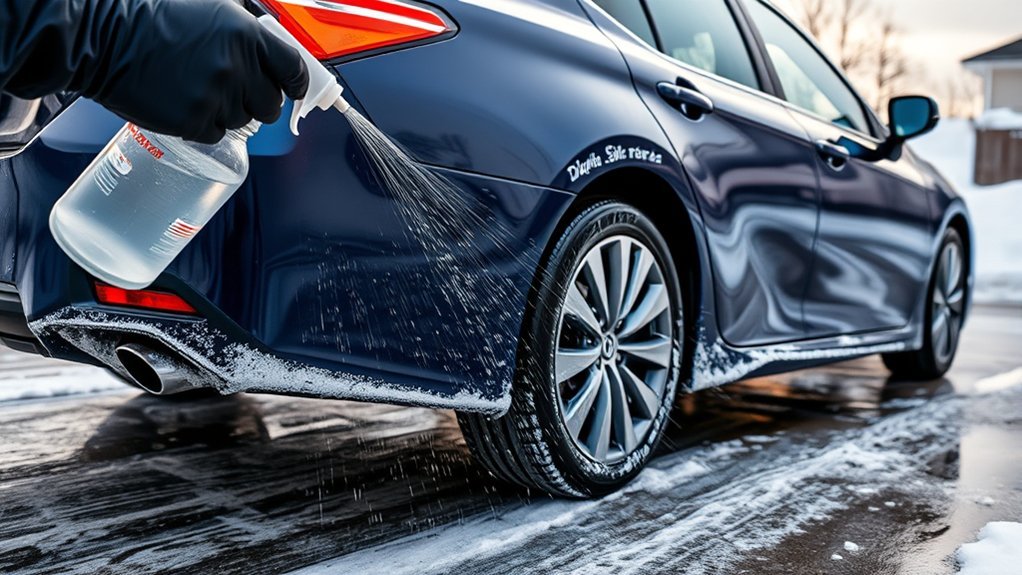
Road-maintenance agencies commonly use sodium chloride, calcium chloride, magnesium chloride, and chloride-based brines to reduce winter ice. The U.S. Environmental Protection Agency notes that road-salt use contributes to corrosion of vehicles and infrastructure.
Salt does not immediately eat through healthy clear coat. The greater risk appears where salty moisture reaches exposed metal, damaged coatings, seams, fasteners, and crevices. The Association for Materials Protection and Performance explains that most corrosion is an electrochemical process and that moisture, salt exposure, surface condition, protective coatings, and inspection all affect corrosion control.
Winter residue also contains sand and road grit. Rubbing a dry, dirty panel can drag particles across the finish and create fine scratches. Loosen and rinse contamination before using a mitt, sponge, brush, or towel.
Areas Most Likely to Hold Salt
- Wheel wells and fender-liner edges: Tires continually throw salty slush into these areas.
- Rocker panels and pinch-weld areas: Their low position exposes them to road spray and trapped debris.
- Lower door edges and drain openings: Residue can collect around seams or behind blocked drains.
- Front and rear bumper edges: Gaps, clips, and fasteners can retain dirty water.
- Undercarriage components: Subframes, brackets, suspension parts, brake and fuel lines, shields, and exhaust hardware face repeated exposure.
- Existing chips and scratches: Bare metal needs prompt attention because a surface protectant cannot permanently repair a deep defect.
Warning: Do not crawl beneath a Camry supported only by its factory jack. Use a suitable lift or properly rated support equipment, or have the underbody inspected professionally.
When to Wash Your Camry During Winter
No single schedule fits every winter. Base wash timing on actual exposure, visible buildup, temperature, parking conditions, and how quickly the car can be dried. A Camry driven on wet, freshly treated roads needs attention sooner than one that stayed garaged during the storm.
Wash or thoroughly rinse the vehicle when you see a white film, salty streaks, or packed residue around the wheel wells and lower panels. After a major storm or a long drive on treated roads, clean the car as soon as practical when water can drain without creating an ice hazard. AAA specifically advises removing road salt and paying attention to the undercarriage.
- Heavy or repeated exposure: Rinse after the storm or driving cycle when safe washing and drying are available.
- Regular winter commuting: Inspect the finish and lower body at least weekly; wash when visible buildup appears or after especially salty driving.
- Lighter exposure: A wash every one to two weeks can be a practical reminder, but visible residue and recent road treatment matter more than the calendar.
- End of the salt season: Complete a thorough body, wheel-well, seam, and underbody wash, followed by a corrosion inspection.
Note: If outdoor washing would freeze doors, handles, seals, locks, or pavement, use a suitable indoor or commercial facility. Dry trapped-water areas before the car returns to severe cold.
Choosing Wax, Sealant, Ceramic, or Paint-Protection Film
Paint protection creates a sacrificial or replaceable surface that can make salty grime easier to remove. It does not make the paint damage-proof, repair existing chips, or eliminate washing. Apply liquid protection only to clean, properly prepared paint and follow the product’s temperature, curing, compatibility, and maintenance instructions.
| Protection Type | Best For | Main Limitation |
|---|---|---|
| Traditional or synthetic wax | Simple DIY application, gloss, and seasonal maintenance | Usually needs more frequent refreshing than longer-lasting sealants |
| Synthetic paint sealant | Drivers seeking straightforward application and longer protection than basic wax | Needs properly prepared paint and periodic maintenance |
| Spray ceramic sealant | Quick maintenance and water-repellent behavior without a complex installation | Durability varies widely; the word “ceramic” alone does not establish performance |
| Professional ceramic coating | Owners willing to pay for paint preparation, controlled application, and long-term maintenance | Does not prevent rock chips, deep scratches, or corrosion beneath existing damage |
| Paint-protection film (PPF) | High-impact painted areas such as the bumper, hood edge, mirrors, rocker panels, and areas behind the wheels | Protects only covered surfaces, needs correct installation and care, and does not protect the underbody |
How to Choose an Effective Protectant
Choose a product intended for automotive clear coat and suitable for your application temperature. Its instructions should explain surface preparation, curing time, compatible maintenance products, and reapplication. Do not stack products simply because they use different marketing terms; confirm compatibility with the manufacturer first.
What Paint-Protection Film Does Differently
Wax, sealants, and ceramic products mainly improve surface behavior and contamination release. Paint-protection film is a physical layer intended to reduce damage from light road debris in the areas it covers. It can be useful on the front bumper, hood edge, mirrors, rocker panels, and lower doors, but it cannot stop corrosion that begins behind the film or on uncovered underbody parts. Existing chips, lifting edges, and trapped contamination should be corrected before installation.
How to Know When Protection Needs Refreshing
Do not rely only on a promised number of months. Reinspect the paint after repeated winter washes. Maintenance may be due when water behavior changes from the product maker’s description, grime becomes harder to remove, or the surface loses slickness after a proper wash.
A rough surface can also indicate bonded contamination rather than failed protection. Use a paint-safe decontamination process or professional detailing before adding another layer. Applying protection over contamination can reduce clarity and bonding.
Pro Tip: Complete paint correction, chip repair, and your main protection step before regular road-salt use begins. Winter maintenance is easier when the finish starts clean and protected.
Prepare Your Camry Before Winter
- Wash the body and wheels thoroughly. Remove existing dirt before it becomes trapped beneath protection.
- Inspect the paint in bright, indirect light. Check the hood edge, front bumper, rocker panels, wheel arches, door edges, mirror caps, and trunk opening.
- Repair chips and scratches. Confirm the paint code and use a compatible, color-matched process for your Camry.
- Apply wax, sealant, coating, or approved maintenance product. Follow all surface-temperature and curing instructions.
- Consider physical protection for impact zones. Professionally installed PPF can help on frequently chipped painted areas; correctly fitted splash guards may reduce some spray but do not eliminate salt exposure.
- Check accessible drains and seals. Remove debris without enlarging, probing, or damaging drain openings.
- Inspect the underbody from a safe position. Look for damaged splash shields, loose liners, missing fasteners, scraped coatings, wet lines, or existing rust.
- Prepare dedicated washing supplies. Keep a clean mitt, automotive shampoo, buckets, wheel tools, and drying towels separate from household-cleaning equipment.
Use the Toyota Manuals and Warranties portal to select your Camry’s exact model year. Materials, sensors, trim, paint-care cautions, and maintenance instructions can differ between generations and markets.
How to Wash Road Salt Off Your Camry Safely
1. Choose a Safe Location and Temperature
Wash where water can drain legally and will not freeze into a walking or driving hazard. Follow local rules for detergent and contaminated runoff. A commercial facility may be safer during severe cold or where driveway water flows directly into a storm drain.
2. Let Hot Components Cool
Avoid spraying very hot wheels, brakes, or exhaust components with cold water. After driving, allow the vehicle to cool. Keep hands, clothing, and tools away from hot or moving parts.
3. Pre-Rinse Before Touching the Paint
Start at the roof and work downward. Use a broad stream of water to loosen salt, sand, and slush before making contact with the finish. Spend extra time on the lower doors, rocker panels, bumper edges, wheel arches, and areas behind the wheels.
If you use a pressure washer, follow its instructions, use a suitable fan pattern, keep the nozzle moving, and begin from a conservative distance. Do not hold concentrated pressure close to chips, peeling clear coat, camera lenses, parking sensors, seals, badges, electrical connectors, PPF edges, or damaged underbody coatings.
4. Wash With Automotive Shampoo
Use a clean, soft wash mitt and a shampoo intended for automotive finishes. Household dish detergent is not formulated as routine car shampoo and may be incompatible with existing waxes, sealants, coatings, trim dressings, or repair products.
A two-bucket method can help reduce the amount of grit returned to the paint. Keep shampoo solution in one bucket and rinse the mitt in the other. Work from cleaner upper panels toward dirtier lower areas, and use a separate mitt for the rocker panels and other heavily contaminated sections when possible.
5. Clean the Wheels and Wheel Wells Separately
Use dedicated wheel tools so brake dust and road grit do not reach the bodywork. Rinse the wheel-well liner, lip, mud-flap area, and visible suspension surroundings without placing your hands behind the wheel or beneath the vehicle. Confirm that any wheel cleaner is compatible with the wheel finish and do not let it dry on the surface.
6. Rinse the Undercarriage
Use a touchless underbody option or a suitable low-profile rinsing tool to flush loose residue. Do not direct concentrated pressure at rubber boots, electrical connections, brake components, open vents, loose shields, or areas with flaking protective material.
7. Rinse and Dry Thoroughly
Rinse away all shampoo, then dry the paint with clean microfiber towels or a paint-safe air dryer. Open and wipe accessible door jambs, trunk channels, the fuel-door area, handles, and seals. Dry these trapped-water areas before temperatures fall below freezing.
8. Inspect and Maintain the Protectant
Once the surface is clean, check for new chips, lifted PPF edges, damaged splash shields, and changes in the wax, sealant, or coating. Apply a compatible maintenance product only when the surface and weather meet the label requirements.
Choosing a Hand Wash, Touchless Wash, or Automatic Wash
- Careful hand wash: Offers the most control when you have clean tools, safe drainage, and above-freezing conditions.
- Touchless automatic wash: Avoids brush contact and may include an underbody rinse, but cleaning strength varies and heavily bonded film may remain.
- Soft-touch automatic wash: Can remove more visible film, but contact media may carry grit or leave fine marks on sensitive finishes.
- Self-service bay: Useful for targeted rinsing, but keep high-pressure wands away from damaged paint, sensors, seals, and loose materials.
Whichever method you use, prioritize a thorough pre-rinse, underbody cleaning, complete rinse, and drying of trapped-water areas. Never wipe remaining white film from dry paint; wash or rinse it again.
The safest winter wash removes loose grit before any mitt, brush, or towel touches the paint.
Spotting and Addressing Paint Damage Early

Inspect your Camry after winter storms, long highway trips, and thorough washes. Clean, dry paint makes small defects easier to see.
- Fresh chip: A small missing area of paint with no visible corrosion.
- Surface contamination: Orange or brown particles or staining that may sit on top of the clear coat.
- Active rust: Corrosion beginning on exposed steel.
- Bubbling paint: A possible sign that corrosion is spreading beneath the finish.
- Seam or underbody rust: Deterioration around joints, mounting points, lines, brackets, welds, or structural areas.
How to Handle a Small Paint Chip
- Wash the area and remove all salt, wax, and dirt.
- Dry it completely and work within the repair product’s temperature range.
- Confirm the Camry’s paint code through the vehicle label, model-year documentation, or a Toyota dealer; do not choose by color name alone.
- Follow the product instructions for rust removal or treatment, primer, color coat, clear coat, and curing.
- Keep the repaired area dry and avoid washing or protecting it until the stated curing period has passed.
A small cosmetic chip may be suitable for careful DIY repair. Seek professional help when corrosion is spreading, paint is bubbling or peeling, a defect reaches a seam, a panel is dented, or the repair is close to cameras, parking sensors, radar equipment, or complex bumper finishes.
When Underbody Rust Needs Professional Attention
Road salt affects more than visible paint. Have a qualified technician inspect the vehicle if you see heavy scaling, flaking metal, wet or visibly damaged brake or fuel lines, loose shields, corroded mounting points, holes, or rust around suspension and structural components.
Do not hide active rust beneath an unverified coating. Effective treatment starts with cleaning, drying, and assessing the remaining metal. Brake friction surfaces, tires, belts, exhaust components, drains, sensors, connectors, labels, and service points must remain free of inappropriate coating.
Professional oil-, wax-, or film-based corrosion treatments may be suitable for some vehicles and climates, but application method and compatibility matter. Ask what areas will be cleaned, treated, masked, and inspected, how often the product requires renewal, and whether drilling or plug installation is involved. Cosmetic discoloration, removable surface contamination, and structural corrosion require different responses.
Common Winter Paint-Care Mistakes
- Rubbing dry salt from the paint: This can drag abrasive grit across the clear coat.
- Using one dirty sponge for everything: Wheel and lower-panel debris can scratch cleaner areas.
- Ignoring the underbody: Visible body panels are only part of the exposure.
- Washing immediately before a deep freeze: Water can freeze around seals, handles, locks, the fuel door, and pavement.
- Holding a pressure nozzle too close: Concentrated force may worsen chips, lifted film, loose trim, or damaged coatings.
- Applying protection over dirty or rough paint: Contamination can interfere with bonding and appearance.
- Assuming ceramic means maintenance-free: Every coating still needs safe washing and inspection.
- Expecting PPF to protect uncovered metal: Film protects only the painted areas it covers.
- Spraying generic undercoating over rust: It may conceal deterioration instead of correcting it.
- Using aggressive chemicals without checking compatibility: Strong cleaners can affect trim, coatings, polished metals, wheel finishes, or repair materials.
Maintaining Your Toyota Camry’s Condition Through Winter
Consistent care can help preserve your Camry’s finish and make developing problems easier to catch, but no wax, coating, film, or wash schedule can guarantee resale value. Vehicle value also depends on age, mileage, mechanical condition, accident history, trim, market demand, and documented maintenance.
Keep simple records of paint repairs, PPF installation, professional coatings, detailing, and corrosion inspections. At the end of the salt season, complete a thorough wash and inspect the lower body, wheel wells, door edges, trunk channels, wheels, splash shields, and underbody.
Continue checking the finish during spring. Salt can remain in seams and sheltered areas after roads look clean. Addressing new chips, blocked drains, damaged liners, and loose fasteners early is usually easier than repairing spreading corrosion later.
Related Guides
Frequently Asked Questions
How do you protect a car from road salt in winter?
Pre-rinse and wash after meaningful salt exposure, including the lower panels, wheel wells, seams, and underbody. Maintain compatible paint protection, repair chips, keep accessible drains clear, dry trapped-water areas before a freeze, and inspect vulnerable metal components for corrosion.
Does road salt damage Toyota Camry paint?
Road salt does not immediately destroy intact clear coat, but salty moisture can accelerate corrosion where metal is exposed by chips, scratches, seams, or damaged coatings. Grit in winter residue can also scratch the finish when it is rubbed before rinsing.
How often should you wash a Camry during a salty winter?
Wash according to exposure rather than one fixed interval. Rinse after heavy road-salt contact when safe washing is available, inspect the vehicle weekly during regular winter driving, and wash whenever visible residue builds up. A one- to two-week reminder is only a practical baseline for lighter exposure.
What is the best paint protection for a winter car?
The best option is one you can prepare, apply, and maintain correctly. Wax is simple, synthetic sealant may last longer, ceramic products can improve contamination release, and PPF adds physical protection in covered impact areas. None replaces washing, inspection, or chip repair.
Does a ceramic coating stop road-salt damage?
A ceramic coating can make grime and salty water easier to remove, but it does not stop rock chips, repair exposed metal, or protect every underbody component. It still needs compatible washing, maintenance, and regular inspection.
Is a touchless car wash good for removing road salt?
A touchless wash is useful when outdoor hand washing is unsafe and may provide an underbody rinse. It avoids brush contact, but cleaning strength and coverage vary, so inspect the lower panels and wheel wells afterward and repeat the wash if visible film remains.
How can you protect a car from coastal salt air?
Coastal salt aerosol differs from road slush, but the prevention approach is similar. Wash exposed surfaces regularly, rinse the underbody, maintain paint protection, repair chips, and inspect seams and fasteners more often when the car is parked or driven close to the shoreline.
Can you wash road salt off a car when it is below freezing?
Avoid outdoor washing when water will freeze on the car or pavement. Use a suitable indoor or commercial facility, then dry the door jambs, seals, handles, fuel door, trunk channels, and other trapped-water areas before returning to severe cold.
Conclusion
Protecting a Toyota Camry from road salt depends on removing contamination before it remains trapped, maintaining suitable paint protection, and correcting damage early. Pre-rinse before touching the finish, clean the lower body and undercarriage, dry seams and seals, and inspect chips, liners, fasteners, and metal components throughout winter.
Wax, sealants, ceramic products, and paint-protection film can each help in different ways, but none replaces safe washing or repair of exposed metal. When you see bubbling paint, spreading rust, damaged lines, heavy scaling, or corrosion around structural or suspension components, arrange a professional inspection instead of covering the area.
Sources
- Toyota Manuals and Warranties — model-year-specific owner documentation, care instructions, cautions, and warranty information.
- U.S. Environmental Protection Agency: Winter Road Salt — chloride deicers, road-salt use, and corrosion concerns.
- AAA: Road Salt and Vehicle Rust Damage — vehicle washing, undercarriage care, and salt-exposure reduction.
- Association for Materials Protection and Performance: What Is Corrosion? — corrosion mechanisms, inspection, protective coatings, and mitigation principles.
