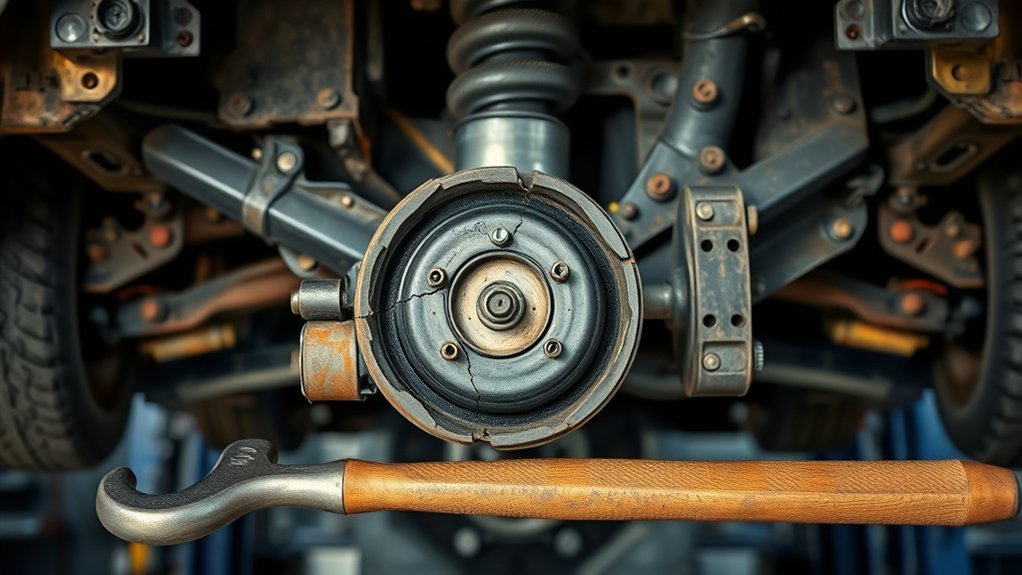
Clunking over bumps, wandering steering, or unusual tire wear can point to worn control arm bushings in your Toyota Camry, but none of those symptoms confirms a failed bushing by itself. This guide focuses mainly on front lower control-arm bushings and shows how to separate bushing wear from tire, alignment, ball-joint, tie-rod, sway-bar-link, strut-mount, wheel-bearing, and related problems. Exact arm design, inspection procedures, replacement parts, and tightening instructions vary by Camry model year, so verify repair information by VIN.
Last updated: September 19, 2026. Repair-cost data was refreshed and the diagnostic guidance was cross-checked against Toyota maintenance information, NHTSA tire-safety guidance, OSHA raised-load guidance, and current repair-cost data.
Verification note: This is a source-based diagnostic guide. It does not claim that one hands-on test, part number, torque specification, or repair procedure applies to every Toyota Camry generation.
Quick Answer
Common Toyota Camry control arm bushing symptoms include knocking over bumps, steering that wanders or feels delayed, changes in alignment, and irregular tire wear. High-speed vibration alone is not a strong indicator because tire or wheel problems are more common causes. Replace the bushing or control arm when inspection confirms structural tearing or separation that permits abnormal movement, a displaced sleeve, missing rubber or metal contact, or play beyond the model-specific allowance.
Key Takeaways
- Clunking, wandering, and uneven tire wear can indicate bushing wear, but none of these symptoms confirms it by itself.
- Visible structural damage plus abnormal control-arm movement is stronger evidence than noise or vibration alone.
- Do not work beneath a Camry supported only by a jack. Use rated stands at approved support points or have a technician inspect it.
- Toyota does not publish one universal replacement mileage for Camry control arm bushings.
- Whether you replace a bushing or the complete arm depends on the model year, part design, corrosion, labor, and condition of the ball joint.
- Have the wheel alignment checked after a control arm or bushing repair.
At a Glance
| Time Required | Basic tire, road-test, and parked visual checks are relatively quick. A complete lifted diagnosis can take longer depending on the model year, access, corrosion, and faults found. |
| Difficulty | Easy for observation and tire checks; moderate to advanced for a lifted inspection; advanced for replacement. |
| Tools Needed | Flashlight, tire-pressure gauge, tread-depth gauge, wheel chocks, gloves, and the correct model-year repair information. Use a rated jack and stands only if you know the approved lift and support points. |
| Cost | As of September 3, 2026, RepairPal estimates complete Toyota Camry control arm replacement at $561 to $716 before taxes, fees, location adjustments, alignment, and related repairs. Bushing-only work can differ substantially. |
Understanding the Role of Control Arms and Bushings in Your Toyota Camry
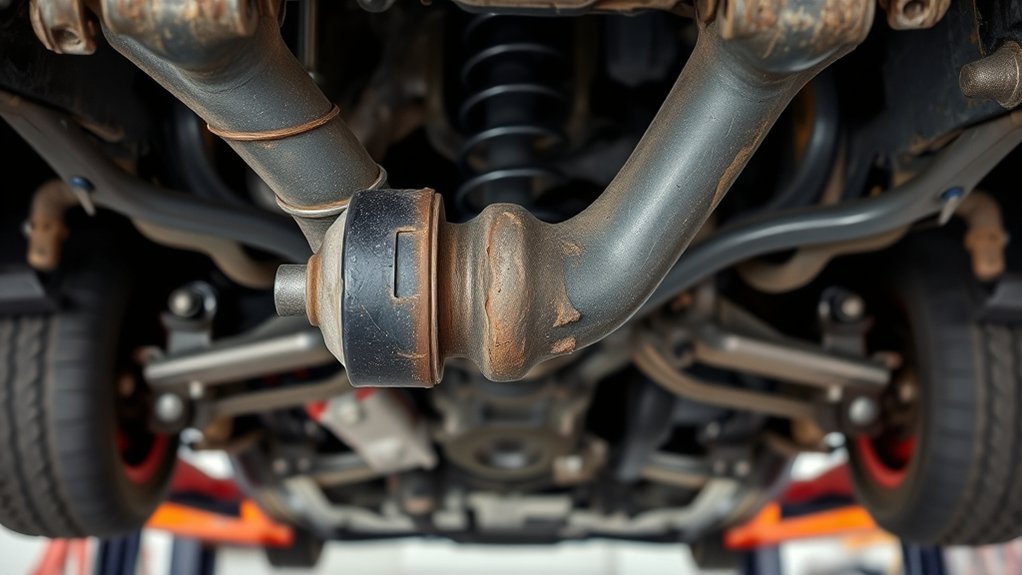
A front control arm connects the steering knuckle to the Camry’s body or subframe. As the wheel moves over bumps, the arm pivots while helping keep the wheel in its intended position.
The bushings sit between the control arm and its mounting points. Factory-style bushings commonly use bonded rubber to isolate road noise and allow controlled movement. Some aftermarket replacements use different materials, including polyurethane, which can change noise, vibration, and firmness.
Heat and petroleum contamination can damage rubber bushings, while age, corrosion, road impacts, and rough-road use can also contribute to deterioration. Mild surface checking does not always prove that a bushing has failed. More meaningful findings include structural tearing or separation that permits abnormal movement, a displaced inner sleeve, missing rubber, metal contact, or movement beyond the specification for your Camry’s model year.
Common Signs of Control Arm Bushing Wear
Control arm bushing symptoms often overlap with other steering, tire, and suspension problems. Use the following signs as reasons to inspect the vehicle, not as proof that the bushings need replacement.
Clunking Noises While Driving
A worn bushing may allow the control arm to shift when you accelerate, brake, turn, or drive over a bump. This can create a dull clunk or knock near the lower front suspension. The noise may become more noticeable on broken pavement or when the vehicle’s weight transfers forward and backward.
Clunking can also come from a loose ball joint, sway bar link, tie-rod end, strut mount, brake component, or damaged engine mount. The source should be confirmed before parts are ordered. If the noise itself is your main symptom, see the related guide on Toyota Camry clunking over bumps.
Uneven Tire Wear Patterns
A badly worn bushing can allow the wheel position to change as the Camry moves. You may see faster wear on an inner or outer shoulder, feathering across the tread, or a difference between the two front tires.
Uneven wear is not unique to control arm bushings. Incorrect tire pressure, worn tie rods, bent suspension parts, poor alignment, and delayed tire rotation can produce similar patterns. The National Highway Traffic Safety Administration recommends checking tire pressure and tread at least monthly and notes that proper balancing, rotation, and alignment help protect tire life and vehicle tracking.
Loose Steering Response
You may notice a delayed response when you turn the steering wheel, a vague feeling near the center position, or a tendency to wander on a straight road. The car may also feel less settled during braking or lane changes.
Check tire pressure before assuming the bushings are responsible. A tire problem, alignment error, tie-rod issue, ball-joint problem, brake drag, or road crown can also make a Camry pull or wander. For a broader differential diagnosis, see Toyota Camry steering pull causes.
High-Speed Vibration
Vibration that becomes stronger with road speed is a weak bushing indicator by itself. Wheel imbalance, a damaged tire, wheel runout, packed debris, or a worn wheel bearing is often a more likely starting point.
A severely worn bushing can contribute to instability or allow another suspension movement to be felt through the cabin, but tire and wheel checks should come first when speed-related vibration is the main complaint. See the separate Toyota Camry highway-speed vibration guide for the broader diagnostic path.
Diagnosing Control Arm Bushing Issues: What to Look For
[Amazon Products Picked for You]

COMPATIBILITY – Fits 2010-2019 Lexus RX350; 2010-2019 Lexus RX450h; 2016-2018 Lexus RX450h; 2002-2003 Lexus ES300; 2001-2015 Toyota Highlander; 2013-2018 Toyota Avalon; 2002-2017 Toyota Camry; 2004-2010 Toyota Sienna; 2009-2015 Toyota Venza

COMPATIBILITY – Fits 2010-2018 Lexus RX350; 2010-2015 Lexus RX450h; 2016-2018 Lexus RX450h; 2001-2015 Toyota Highlander; 2013-2018 Toyota Avalon; 2007-2017 Toyota Camry; 2004-2010 Toyota Sienna; 2009-2015 Toyota Venza.
Which Findings Are Strongest Evidence of a Bad Bushing?
No single sound or driving symptom confirms a failed control arm bushing. The diagnosis becomes stronger when visible structural damage and abnormal control-arm movement match a repeatable driving symptom.
| Evidence Strength | Finding | How to Interpret It |
| Strong | Structural tearing or separation with abnormal movement, a displaced sleeve, missing rubber, metal contact, or movement beyond the model-specific allowance. | These findings directly involve the bushing or control-arm mounting point and support repair when confirmed with the correct inspection procedure. |
| Supporting | A repeatable clunk during braking, acceleration, turning, or bumps together with steering wander, an alignment change, or irregular tire wear. | The pattern raises suspicion but still overlaps with ball joints, tie rods, strut mounts, sway bar links, tires, and other faults. |
| Weak by itself | Speed-related vibration, an isolated squeak, an off-center steering wheel, or tire wear with no confirmed bushing movement. | Start with tires, wheels, alignment, bearings, steering joints, and other common causes before condemning the bushing. |
What Else Can Mimic a Worn Control Arm Bushing?
| Symptom | Possible Bushing Connection | Other Common Causes |
| Clunk over bumps | The arm shifts because the bushing no longer controls movement correctly. | Sway bar link, ball joint, strut mount, loose fastener, or brake hardware. |
| Pulling or wandering | Bushing movement changes the wheel position under load. | Tire pressure, alignment, tie rod, brake drag, damaged tire, or road crown. |
| Uneven tire wear | The arm may no longer hold wheel position consistently. | Incorrect pressure, poor alignment, bent parts, worn tie rods, or missed rotations. |
| Speed-related vibration | Possible with severe looseness, but not a specific sign. | Wheel balance, tire damage, wheel runout, debris, axle, or wheel bearing. |
| Clicking during a sharp turn | Not a typical primary bushing symptom. | Outer CV joint, wheel contact, or loose trim and shields. |
Inspection Techniques and Tips
- Park safely. Use a flat, solid surface, set the parking brake, switch the vehicle off, and place the transmission in Park.
- Check the tires first. Compare cold tire pressures with the driver-door placard. Inspect tread wear, bulges, cuts, and visible wheel damage or missing balance weights.
- Perform a careful road test. Note whether the noise occurs during braking, acceleration, turning, or travel over one-wheel bumps. Avoid aggressive maneuvers.
- Look for visible damage. With the vehicle safely parked, use a flashlight to inspect any visible bushing surfaces for structural tearing, separation, displacement, contamination, missing material, or contact marks.
- Inspect surrounding parts. The ball joint, tie-rod end, sway bar link, strut, wheel bearing, CV boot, and mounting bolts should be checked because they can create similar symptoms.
- Use proper lifting equipment if necessary. Follow the exact lift and support points in the model-year owner or repair manual. Chock the wheels and support the vehicle with correctly rated stands before going near the underside. For more detail, see the Toyota Camry jack-points guide.
- Leave loaded movement testing to a technician. A technician can apply controlled load while watching the bushing and comparing movement with model-specific repair information. Excessive force or leverage in the wrong place can damage parts or destabilize the vehicle.
- Check alignment after the repair. The control arm helps establish wheel position, so alignment should be measured after bushing or arm replacement.
Warning: Never work under a Camry supported only by a hydraulic or emergency jack. Use correctly rated stands on approved support points, or have a repair shop perform the inspection. On hybrid Camry models, do not touch orange high-voltage cables, connectors, or labeled high-voltage components.
Effects of Worn Control Arm Bushings on Vehicle Performance
As bushing wear becomes more severe, the control arm may move farther than intended. This can affect several parts of the driving experience:
- Reduced steering precision: The wheel position may change slightly as load transfers through the suspension.
- Unstable braking feel: The vehicle may feel as though it shifts or changes direction when the brakes are applied.
- Irregular tire wear: Wheel position can vary while the vehicle is moving, shortening tire life.
- More noise and harshness: Damaged rubber isolates less vibration, and severe wear may allow unintended contact between parts.
- Stress on nearby components: Continued excess movement can contribute to abnormal tire wear and additional load on suspension mounting points and joints.
The severity matters. A small surface crack with no separation or abnormal movement is different from a bushing whose rubber has structurally failed or whose sleeve no longer stays in its intended position. Diagnosis should be based on the complete inspection, not appearance alone.
Why Regular Suspension Checks Matter
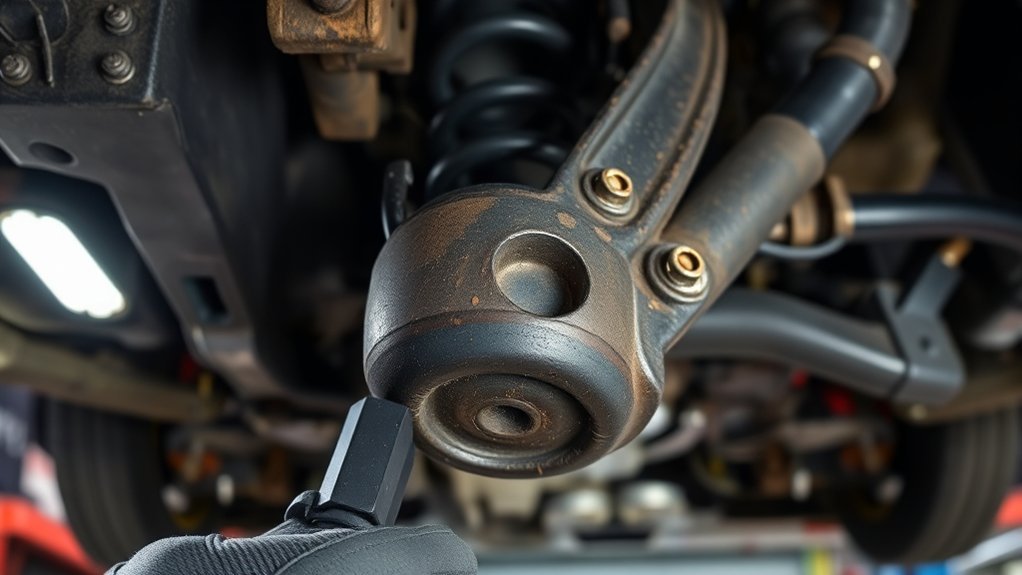
Toyota does not give every Camry control arm bushing one fixed replacement mileage. The correct maintenance schedule depends on the model year and operating conditions. Toyota’s 2025 Camry Warranty and Maintenance Guide schedules inspection of items including ball joints and dust covers, steering linkage and boots, tires, and chassis-related hardware under specified mileage and operating conditions.
Inspect the suspension sooner after a hard pothole impact, curb strike, collision, or sudden change in steering. Visible damage, a new repeatable clunk, unusual tire wear, or a wheel that appears displaced also justifies prompt inspection rather than waiting for the next routine service.
Routine tire rotations are a useful opportunity to compare tire wear and inspect visible suspension parts. Toyota includes tire rotation in its maintenance schedule, while NHTSA recommends regular pressure, tread, balance, rotation, and alignment attention.
There is no universal mileage at which every Camry control arm bushing fails. Condition, abnormal movement, handling symptoms, and model-specific inspection information determine when repair is needed.
When Should You Stop Driving?
Do not use a fixed number of miles to decide how long a damaged bushing is safe. The severity and exact failed component matter, and a suspension problem that seems mild can change after another pothole, curb impact, or heavy braking event.
Arrange prompt inspection if you hear a new clunk but the Camry still tracks normally and there is no obvious displacement, tire contact, or severe looseness. Avoid unnecessary high-speed driving and rough roads until the source is confirmed.
Stop driving and arrange towing when you notice any of the following:
- Severe or repeated knocking accompanied by abnormal steering or wheel movement.
- The vehicle suddenly wanders, darts, or becomes difficult to keep in its lane.
- A wheel appears shifted within the wheel opening.
- The tire rubs the body or suspension.
- The control arm is visibly bent, cracked, or displaced after an impact.
- The bushing or sleeve shows major displacement together with uncontrolled arm movement.
- A technician identifies dangerous ball-joint, steering, or mounting-point damage.
Should You Replace Just the Bushings or the Entire Control Arm?
The best choice depends on the exact Camry year, suspension position, replacement-part design, shop equipment, and condition of the arm and ball joint. Verify all parts by VIN instead of relying only on a broad “fits Camry” listing.
| Choose Bushing-Only Replacement When | Choose a Complete Control Arm When |
|
|
Replacing both sides is not automatically required. Inspect both sides and compare their condition. Pair replacement may be sensible when both bushings are similarly aged or damaged, but a recently replaced or undamaged opposite side may not need replacement.
Pro Tip: Ask whether the quoted replacement arm includes bushings, a ball joint, new hardware, and wheel alignment. Two quotes that appear very different may not include the same parts or services.
[Amazon Products Picked for You]

Replacement for Toyota Avalon 1994-2007; Replacement for Toyota Camry,Vista 1990-1998; Replacement for Toyota Carina 1989-1993; Replacement for Toyota Celca 1989-1999

Usable: Fit for:for LEXUS RX300 MCU15 4WD 1998-2003,, for TOYOTA AVALON MCX10 1994-1999, for TOYOTA CAMRY ACV3#/MCV3# 2001-2006, for TOYOTA CAMRY ACV35/MCV35 4WD 2001-2006, for TOYOTA CAMRY ACV45 4WD 2006-2011,, for TOYOTA CAMRY GRACIA MCV25/SXV25 4WD 1997-2001, for TOYOTA CAMRY/VISTA SV3#/VZV3#/CV30 1990-1994, for TOYOTA CAMRY/VISTA SV4#/CV40 1994-1998, for TOYOTA COROLLA AE9#/CE9#/EE9# 1987-1992, for TOYOTA CORONA AT17#/ST17#/CT17#/ET176 1987-1992.
What Are Your Options for Replacing Control Arm Bushings?
OEM and Aftermarket Parts
Toyota Genuine Parts are cataloged for specific Toyota applications, but availability and assembly design vary by model year. Use the Toyota owner-manual portal and a VIN-based parts catalog or dealer lookup to confirm the correct arm, bushing, side, and suspension position.
Aftermarket choices may include replacement bushings or complete arm assemblies. Check the manufacturer’s catalog, warranty terms, material, included hardware, and exact fitment. A brand name or broad “Camry” description alone does not confirm compatibility with your year and suspension configuration.
DIY or Professional Installation
A basic visual check is reasonable for many owners. Bushing or control-arm replacement is more demanding because the job can involve high fastener torque, corrosion, ball-joint separation, pressing equipment, safe vehicle support, and model-specific tightening procedures.
Use the exact repair information for your Camry. Do not copy torque values or installation steps from another generation. Incorrect tightening can damage a new bushing, leave hardware loose, or change how the suspension moves.
Professional repair is the safer choice when you lack rated support equipment, a torque wrench with the required range, pressing tools, alignment access, or experience separating suspension joints.
Expected Replacement Cost
Costs vary substantially by year, side, location, labor rate, corrosion, part brand, and whether the job includes a ball joint or alignment. A RepairPal estimate updated September 3, 2026 places average Toyota Camry control arm replacement at $561 to $716 before taxes and fees. Its estimate lists labor at $320 to $470 and parts at $240 to $246, while model-year estimates can differ significantly from the overall range.
That figure is for control arm replacement, not a universal price for pressing individual bushings. A bushing-only job is not always cheaper because press labor, seized hardware, removal time, and alignment can change the total. Request an itemized quote showing parts, labor, hardware, alignment, and related repairs.
Alignment After Replacement
Have the alignment measured after replacing a control arm or its bushings. The arm helps position the wheel, and even a correctly installed replacement can affect alignment or steering-wheel position. RepairPal also recommends a four-wheel alignment after control arm replacement.
Do not use an alignment to hide loose suspension parts. The bushings, ball joints, tie rods, wheel bearings, tires, and mounting hardware should be inspected and repaired first.
Related Guides
Frequently Asked Questions
What are the symptoms of a worn Toyota Camry control arm bushing?
Possible symptoms include clunking during braking or travel over bumps, wandering steering, alignment changes, and irregular front-tire wear. Visible structural damage, sleeve displacement, or abnormal control-arm movement provides stronger evidence than noise alone.
What does a bad control arm bushing sound like?
A badly worn bushing can produce a dull clunk or knock when the suspension loads and unloads during bumps, braking, acceleration, or turning. The sound is not proof by itself because sway bar links, ball joints, strut mounts, brake hardware, and other parts can make similar noises.
Can bad control arm bushings cause steering-wheel vibration?
Severe bushing wear can contribute to looseness or vibration, but vibration that mainly increases with road speed is not a strong bushing-specific symptom. Check tire pressure, tire damage, wheel balance, wheel runout, bearings, and other suspension parts before blaming the bushing.
How do you know when control arm bushings need replacement?
Replacement is justified when inspection confirms structural tearing or separation that allows abnormal movement, a displaced sleeve, missing rubber, metal contact, or movement beyond the model-specific allowance. Minor surface checking without abnormal movement or related handling symptoms does not automatically prove the bushing has failed.
How long can you drive with bad control arm bushings?
There is no reliable mileage limit. A mild isolated noise still calls for prompt inspection, while severe knocking with steering changes, impact damage, tire rubbing, obvious displacement, or uncontrolled wheel or arm movement calls for towing. The exact failed component and severity determine the risk.
Is it okay to drive with worn control arm bushings?
It depends on the amount of wear and the vehicle’s behavior. Do not continue normal driving when steering control changes, a wheel or arm is visibly displaced, the tire rubs, the arm is impact-damaged, or the suspension shows major uncontrolled movement. Arrange an inspection promptly even when the only symptom is a mild clunk.
Should Toyota Camry control arm bushings be replaced in pairs?
Not automatically. Both sides should be inspected. Pair replacement can make sense when both sides show similar deterioration, but an undamaged or recently replaced opposite side may remain in service.
Do you need an alignment after replacing a control arm or bushing?
Yes, an alignment check is strongly recommended. The control arm affects wheel position, and the repair can alter alignment or steering-wheel position. Loose steering or suspension parts should be repaired before the alignment is performed.
Conclusion
Clunking, loose steering, and irregular tire wear can warn you that your Toyota Camry’s control arm bushings need attention, but these symptoms are not unique to the bushings. Start with tire pressure and condition, note exactly when the symptom occurs, inspect nearby steering and suspension parts, and look for structural bushing damage or abnormal control-arm movement before authorizing replacement.
There is no universal Camry bushing replacement mileage. Use model-year repair information, verify parts by VIN, support the vehicle safely, and have the alignment checked after the repair. If steering becomes unstable, a wheel or arm appears displaced, a tire rubs, or the suspension shows major uncontrolled movement, stop driving and arrange professional inspection or towing.
Sources
- Toyota 2025 Camry Warranty and Maintenance Guide — maintenance schedules for tires, steering linkage and boots, ball joints and dust covers, and related chassis checks.
- Toyota Manuals and Warranties — model-specific owner information and access to Toyota manuals.
- NHTSA TireWise — tire pressure, tread, balance, alignment, rotation, and tire-safety guidance.
- OSHA Standard 1910.244 — jack capacity, operation, and securing raised loads.
- RepairPal Toyota Camry Control Arm Replacement Estimate — estimate updated September 3, 2026, including current overall, labor, and parts ranges plus alignment guidance.
