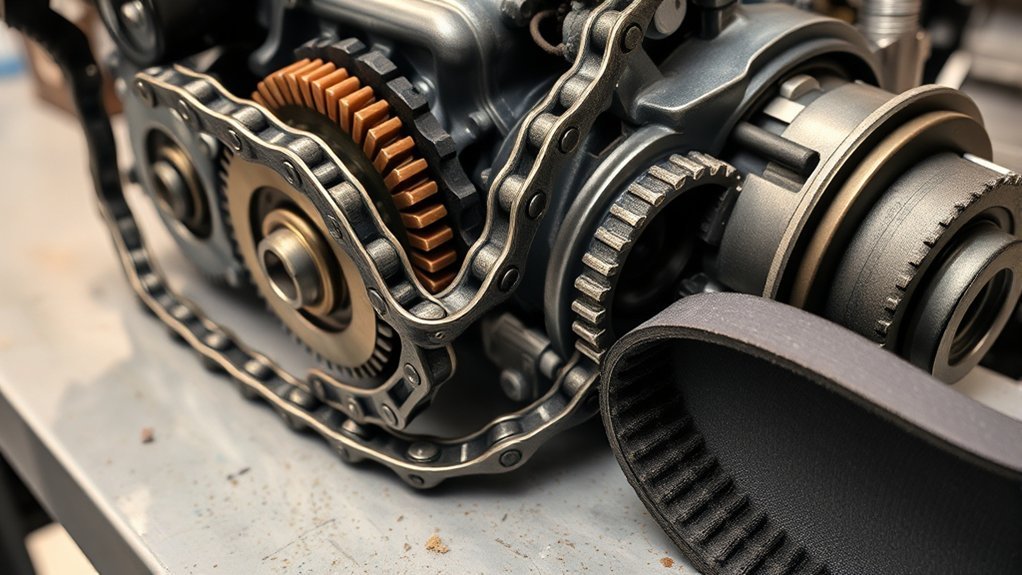
Timing belt vs. timing chain: neither design is universally better. Timing chains usually avoid the scheduled replacement required by many timing belts, but they depend heavily on clean engine oil and can be expensive to repair when guides, tensioners, sprockets, or the chain itself wear. Timing belts are quiet and lightweight, but many have a manufacturer-set age or mileage replacement interval. For either design, the best maintenance plan is the one specified for your exact year, model, and engine.
Last updated: September 19, 2026. Repair-cost estimates and timing-system guidance were rechecked against current sources.
Quick Answer
Timing chains usually last longer and often have no routine replacement interval, but they depend on clean engine oil and can still wear. Timing belts are quieter and lighter, but many have a scheduled age or mileage limit. Always follow the maintenance schedule for your exact engine rather than a universal mileage rule. No scheduled chain interval should be treated as a lifetime guarantee.
Key Takeaways
- Both systems synchronize the crankshaft and camshaft; the engine design determines which one your vehicle uses.
- A timing belt may have a scheduled replacement interval based on both time and mileage.
- A timing chain may last a long time, but poor oil maintenance, worn guides, or a weak tensioner can cause early failure.
- A failed belt or chain can cause major internal damage in an interference engine.
- Replacement costs vary widely by engine access, local labor rates, and the parts replaced with the timing system.
What Are Timing Chains and Timing Belts?
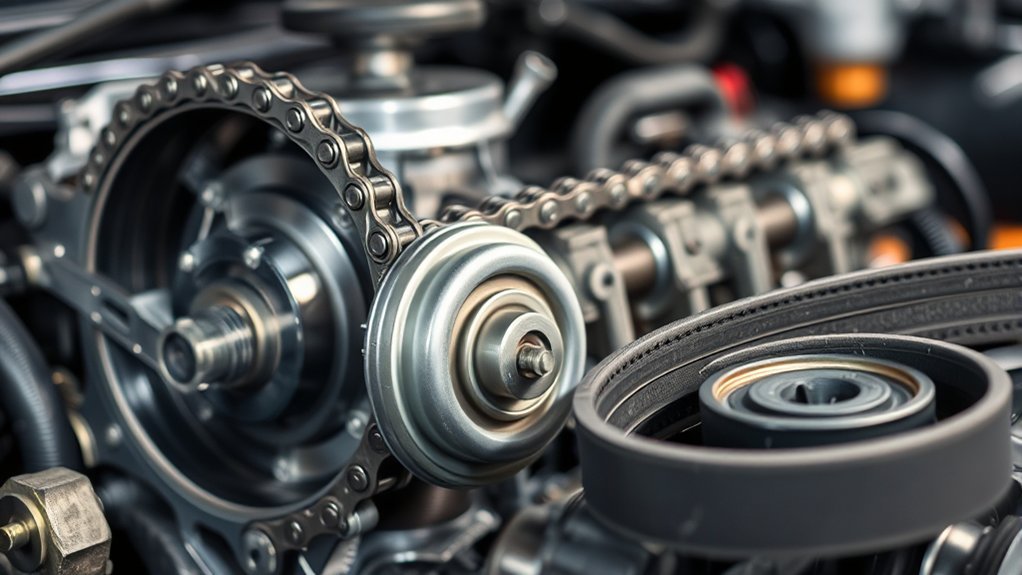
Your engine’s pistons move because the crankshaft turns. The valves open and close because one or more camshafts turn. A timing belt or chain connects these rotating parts and keeps them in the correct relationship.
A timing belt is a toothed composite belt reinforced with strong cords. Most conventional timing belts run dry behind a protective cover. Some newer engines use a belt-in-oil, often called a wet timing belt, which runs inside the engine oil. Gates describes belt-in-oil systems as operating continuously in the engine’s oil environment. Because oil compatibility is part of the design, use the exact oil specification and service procedure listed by the vehicle manufacturer rather than applying generic dry-belt advice.
A timing chain is a metal chain that runs inside the engine. It works with sprockets, guides, and a mechanical or hydraulic tensioner. Because the chain system depends on engine oil for lubrication and tensioner operation, correct oil level, viscosity, quality, and change intervals matter. Cloyes explains that contaminated oil, the wrong viscosity, and extended oil-change intervals can accelerate chain, guide, and tensioner wear.
Note: A timing belt is not the same as the visible serpentine or accessory belt. The accessory belt drives parts such as the alternator and air-conditioning compressor. The timing system controls valve timing and is usually hidden behind a cover.
Key Differences Between Timing Belts and Chains
| Feature | Timing Belt | Timing Chain |
|---|---|---|
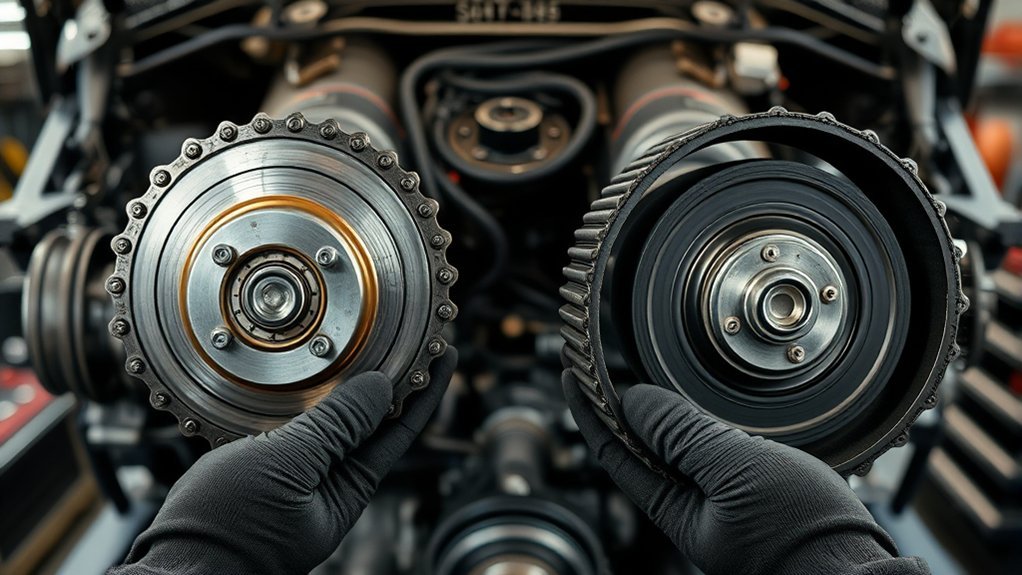
| Construction | Reinforced toothed composite belt | Metal chain with sprockets, guides, and tensioner |
| Lubrication | Usually dry; wet-belt designs run in engine oil | Lubricated by engine oil |
| Routine service | Often replaced at a manufacturer-set age or mileage | Often has no routine replacement interval, but must be repaired if wear develops |
| Noise | Usually quieter | Can transmit more mechanical noise; abnormal rattle needs diagnosis |
| Common wear points | Teeth, belt material, tensioner, idlers, seals, and sometimes the water pump | Chain pins and links, guides, tensioner, sprockets, and oil-control parts |
| Typical repair cost | Usually lower, but still labor intensive | Usually higher because the system is inside the engine |
| Ownership planning | Scheduled replacement can be planned and documented in advance | Often avoids scheduled replacement, but diagnosed wear can require a more involved repair |
Neither design is automatically more reliable in every engine. A well-designed belt system replaced on schedule can be dependable. A well-designed chain system with proper oil service can also run for a very long time. Problems often involve the complete timing drive, not only the belt or chain.
How Long Do Timing Belts and Timing Chains Last?
There is no safe universal replacement mileage for every timing belt. Some manufacturers set a mileage limit, a time limit, or whichever comes first. The correct interval may also change by engine, market, climate, or severe-use conditions.
Timing chains often do not appear as a scheduled replacement item. That does not mean every chain will last the life of the vehicle. The chain, guides, tensioner, and sprockets can wear, and some engine families develop known timing-system problems earlier than others. A missing scheduled interval is not a guarantee that the system will never need service.
The safest service interval is the one listed for your exact engine, not a general mileage range from another vehicle.
What Shortens Timing Belt Life?
- Age, heat cycles, and material fatigue
- Oil or coolant leaking into a dry-belt area
- A worn tensioner, idler, or water-pump bearing
- Incorrect installation or tension
- Using the wrong engine oil in a wet-belt design
- Skipping a time-based replacement because the vehicle has low mileage
What Shortens Timing Chain Life?
- Low oil level or low oil pressure
- Long oil-change intervals
- The wrong oil viscosity or specification
- Sludge and abrasive contaminants in the oil
- A worn hydraulic tensioner or broken guide
- Known design or component defects in a specific engine family
Maintenance Needs: Timing Belts vs. Timing Chains
[Amazon Products Picked for You]
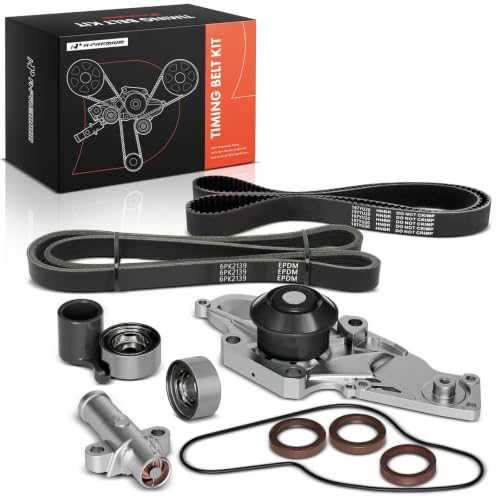
[Vehicle Fitment]: ①Compatible with Honda Accord 2003-2007 3.0L | 2008-2017 3.5L, Accord Crosstour 3.5L, Crosstour 3.5L, Odyssey 2005-2017 3.5L, Pilot 2005-2015 3.5L, Ridgeline 2006-2014 3.5L; ②fits for Acura MDX 2003-2006 3.5L | 2007-2013 3.7L, RDX 2013-2018 3.5L, RL 2005-2008 3.5L | 2009-2012 3.7L, TL 2004-2008 3.2L | 2007-2014 3.5L | 2009-2014 3.7L; ③fits for Saturn Vue 2004-2007 3.5L --- [It fits the model for SOHC Engine]
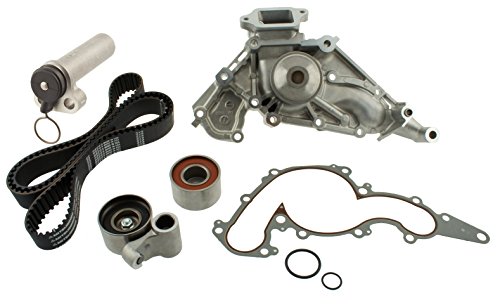
AISIN's Water Pump/Timing Belt Service Kit is the common-sense combo as these components should always be replaced at the same time regardless of which component needs replacement

AISIN's Water Pump/Timing Belt Service Kit is the common-sense combo as these components should always be replaced at the same time regardless of which component needs replacement
Timing Belt Maintenance
Find the replacement interval in the owner’s manual, maintenance booklet, or manufacturer service information for your exact engine. Do not rely only on a visual check. Much of a belt’s internal aging may not be obvious from the exposed surface.
When the belt is replaced, the shop should inspect the full drive system. Depending on the engine, that may include the tensioner, idler pulleys, camshaft and crankshaft seals, and the water pump. Replacing related wear parts can avoid paying the same labor again soon afterward.
Timing Chain Maintenance
Use the oil viscosity and specification listed by the vehicle manufacturer. Keep the oil at the correct level and follow the normal or severe-use oil-change schedule that matches how you drive. Contaminated oil can increase wear at chain interfaces and interfere with the small oil passages that supply hydraulic tensioners and variable-valve-timing components.
If startup rattle, timing-related fault codes, or rough running develops, have the system diagnosed instead of waiting for a routine interval. Chain rattle is not a diagnosis by itself: accessory-drive parts, variable-valve-timing components, oil-pressure faults, and other engine noises can produce similar symptoms.
Pro Tip: Keep the invoice after a timing-belt service. It should list the date, mileage, belt kit, water pump if replaced, and other parts used. This record helps you plan the next service and adds value when selling the vehicle.
Performance, Engine Efficiency, and Noise
A timing chain does not automatically make an engine more powerful or efficient. A timing belt does not automatically reduce performance. Engineers choose a complete timing system based on packaging, friction, weight, noise, durability targets, cost, and valve-train loads.
Belts usually reduce mechanical noise and can be lighter. Chains tolerate high loads and compact internal layouts, but they require lubrication and more supporting hardware. In normal ownership, the condition of the timing system matters more than the material alone. A worn belt, chain, guide, or tensioner can allow timing to move out of specification and cause poor running.
How Much Does Timing Belt or Timing Chain Replacement Cost?
National estimates are useful only as a starting point. Engine layout, local labor rates, taxes, seals, water-pump access, and damage from a failed timing system can change the bill.
As of September 19, 2026, RepairPal’s estimate last updated September 3 puts average timing-belt replacement at $918 to $1,338, excluding taxes, location differences, and related repairs. Its timing-chain estimate is $2,120 to $2,764 under the same limitations.
| Cost Factor | Why It Matters |
|---|---|
| Engine access | Some engines require removal of mounts, covers, accessories, or cooling parts. |
| Parts included | A full kit may include guides, tensioners, idlers, sprockets, seals, or a water pump. |
| Labor rate | Rates vary by region, dealer, and independent shop. |
| Failure damage | Bent valves, damaged pistons, or cylinder-head work can raise the total sharply. |
[Amazon Products Picked for You]

[Compatible with A-Premium Camry Timing Belt Kit with Water Pump-Vehicle Fitment]: Compatible with Lexus ES300 2002-2003 V6 3.0L, ES330 2004-2006 V6 3.3L, RX330 2004-2006 V6 3.3L; Compatible with Toyota Camry 2002-2006 V6 3.0L, Camry 2004-2006 V6 3.3L, Highlander 2001-2003 V6 3.0L 2004-2007 V6 3.3L 2006 V6 3.3L, Sienna 2004-2006 V6 3.3L, Solara 2004-2008 V6 3.3L

AISIN's Water Pump/Timing Belt Service Kit is the common-sense combo as these components should always be replaced at the same time regardless of which component needs replacement

AISIN's Water Pump/Timing Belt Service Kit is the common-sense combo as these components should always be replaced at the same time regardless of which component needs replacement
Warning Signs of Timing Belt or Timing Chain Trouble
Possible Timing Belt Symptoms
- Known service interval has passed or the service history is missing
- Visible cracking, fraying, glazing, damaged teeth, or contamination when the cover is removed
- Oil or coolant leaking near the timing cover
- Engine cranks but will not start
- Misfire, rough running, or camshaft-to-crankshaft correlation codes if the belt has jumped teeth
A timing belt may fail with little warning. Squealing from the front of the engine is often caused by an accessory belt, pulley, or tensioner, so sound alone does not identify the timing belt.
Possible Timing Chain Symptoms
- Rattle or clatter at cold startup or from the timing-cover area
- Check-engine light with camshaft and crankshaft correlation codes
- Rough idle, poor acceleration, misfire, or hard starting
- Metal or plastic guide debris found during oil service
- Noise that continues after oil pressure builds
Warning: Stop driving and arrange professional assistance if the engine develops a loud timing-area rattle, suddenly loses substantial power, stalls, or runs badly. A timing-correlation fault code without severe symptoms does not prove the chain or belt is about to fail, but it should be diagnosed promptly and unnecessary driving should be avoided until the cause is known.
What Happens When a Timing Belt or Chain Fails?
If the belt or chain breaks or jumps far enough, the camshaft and crankshaft lose synchronization and the engine may stop running. The amount of damage depends heavily on the engine design.
In an interference engine, an open valve can occupy the same space that a piston travels through. Correct valve timing prevents contact. If the timing system fails, the piston may strike a valve and cause bent valves, damaged pistons, cylinder-head damage, or a complete engine replacement.
In a non-interference engine, the engine often stops without piston-to-valve contact, although towing, diagnosis, and timing-system repair are still required. Do not assume your engine is non-interference without checking reliable service information.
Does My Car Have a Timing Belt or Timing Chain?
- Check the maintenance schedule. A listed timing-belt replacement service is the clearest clue.
- Use the exact engine code. The same vehicle model may use different engines and different timing systems.
- Check manufacturer or dealer parts information. Search by VIN when possible.
- Review service records. A previous belt-kit or chain-service invoice confirms the system and repair history.
- Ask a qualified shop. Provide the VIN and engine size rather than only the model name.
The NHTSA VIN decoder can help identify basic vehicle and engine information. It may not show every timing-system detail, so confirm the result with manufacturer service information or a parts catalog.
For model-specific examples, see our Toyota Tacoma timing belt vs. timing chain guide and Toyota RAV4 timing belt or chain guide. These pages separate the answer by model year and engine rather than applying one timing system to every version of the vehicle.
Which Is Better for Your Vehicle?
For a vehicle you already own, the practical answer is simple: use the system the engine was designed to use and maintain it correctly. Converting from a belt to a chain, or from a chain to a belt, is not a normal maintenance choice.
When comparing vehicles before purchase, a chain may reduce the chance of a scheduled belt replacement, but it does not eliminate timing-system risk. A belt-equipped vehicle may still be a good choice if the replacement interval is clear, the service is affordable, and the records show it was completed on time.
Ownership Decision: A documented timing-belt replacement creates a predictable maintenance history. If a belt-equipped used vehicle is at or beyond its scheduled interval and no invoice proves the work was completed, include that service in your purchase budget. With a chain-equipped vehicle, give extra weight to oil-service records, a true cold-start noise check, warning lights, and any timing-related diagnostic codes.
[Amazon Products Picked for You]

2.4 Ecotec Timing Chain Kit, also known as Timing Kit. It's a major component in your engine. If you have a rattling noise from front of engine, or noisy timing chains, or timing related fault codes in ECU, and all problems related to timing chains, tensioners, phasers, or guides, you may consider replace you 2.4L Engine Timing Kit with these

【Applicability】The part compatible with Mercedes-Benz 2006-2007 C230 2006-2007 C280 2008-2012 C300 2006-2011 C350 2008-2010 CL550 2006-2009 CLK350 2007-2009 CLK550 2007-2011 CLS550 2006-2011 E350 2007-2011 E550 2009-2015 G550 2007-2012 GL450 2008-2011 GL550 2010-2012 GLK350 2006-2011 ML350 2010-2011 ML450 2008-2011 ML550 2006-2011 R350 2010-2013 S400 2007-2011 S550 2011-2012 SL550 2007-2009 SL550 2006-2008 SLK280 2006-2011 SLK350

【Vehicle Compatibility】This Autodevil Timing Chain Kit + Water Pump Compatible with Ford Flex Taurus Edge 2007 2008 2009 2010 3.5L,for Edge 2007-2010 3.5L,for Taurus 2008-2011 3.5L,for Flex 2009-2011 3.5L,for Taurus X 2008-2019 3.5L; For MKS 2009-2011 3.5 3.7L,for MKT 2010-2011 3.5 3.7L,for MKX 2007-2010 3.5L,for MKZ 2007-2010 3.5L; For CX-9 2008-2011 3.7L,for 6 2009-2011 3.7L. It ensures a perfect fit and seamless integration with the engine.
Used-Car Timing-System Checklist
- Confirm the exact engine and whether it uses a dry belt, wet belt, or chain.
- Read the manufacturer’s time and mileage requirements.
- Ask for invoices rather than accepting a verbal claim that the belt was changed.
- If a belt-equipped vehicle is at or beyond its scheduled interval and no invoice confirms replacement, include the service in your purchase budget.
- Listen for chain rattle during a true cold start.
- Check for oil leaks, coolant leaks, warning lights, and rough running.
- Research known timing-system issues for that engine code.
- Budget for overdue service before agreeing on the purchase price.
Frequently Asked Questions
What is the main difference between a timing belt and a timing chain?
A timing belt is a reinforced toothed composite belt, while a timing chain is made of metal and runs with guides and a tensioner inside the engine. Both synchronize the crankshaft and camshaft.
Does a timing chain last longer than a timing belt?
Often, yes. Many chains have no scheduled replacement interval, while many belts do. However, a chain can wear early because of oil problems, guide failure, tensioner trouble, or an engine-specific defect.
How often should a timing belt be replaced?
Use the time and mileage interval in the maintenance schedule for your exact engine. There is no single interval that is safe for every vehicle, and low annual mileage does not cancel an age limit.
Is a timing chain more expensive to replace?
Usually. The chain, guides, and tensioner are commonly located behind a sealed engine cover, so access and labor are greater. The exact cost depends on the engine and whether related damage or parts are involved.
Should the water pump be replaced with the timing belt?
It is often sensible when the timing belt drives the water pump or when the same labor provides access to it. The technician should follow the engine-specific repair procedure and inspect the full belt drive.
Can I keep driving with a rattling timing chain?
Do not ignore it. A brief noise can have several causes, but persistent startup or timing-cover rattle may mean excess chain slack, a weak tensioner, or worn guides. Arrange diagnosis before the chain jumps timing.
What if I do not know when the timing belt was replaced?
Check the manufacturer’s schedule and look for a dated invoice or other reliable service record. If the vehicle is at or beyond the required interval and you cannot confirm the belt was replaced, include the service in your maintenance or purchase budget rather than assuming it was done.
Conclusion
Timing chains generally reduce scheduled timing-system maintenance, but they are not maintenance-free or guaranteed to last forever. Timing belts are quiet and dependable when replaced at the correct time and mileage. For either design, identify the exact engine, follow its oil and maintenance requirements, keep timing-service records, and act on abnormal noise or running problems early. If a belt’s required service history cannot be confirmed, plan around the manufacturer’s schedule rather than assuming the work was completed.
Sources
- Cloyes: Timing Chain System Frequently Asked Questions — chain operation, lubrication, wear, tensioners, guides, and warning signs.
- Cloyes: The Importance of Clean, Quality Oil in Timing Chain Systems — oil contamination, tensioner operation, guide wear, and timing-system lubrication.
- Gates: Belt-in-Oil — wet timing-belt design and operation in the engine-oil environment.
- RepairPal: Timing Belt Replacement Cost Estimate — current national cost range and repair-scope limitations.
- RepairPal: Timing Chain Replacement Cost Estimate — current national cost range, labor, parts, and related repairs.
- National Highway Traffic Safety Administration: VIN Decoder — vehicle and engine identification support.