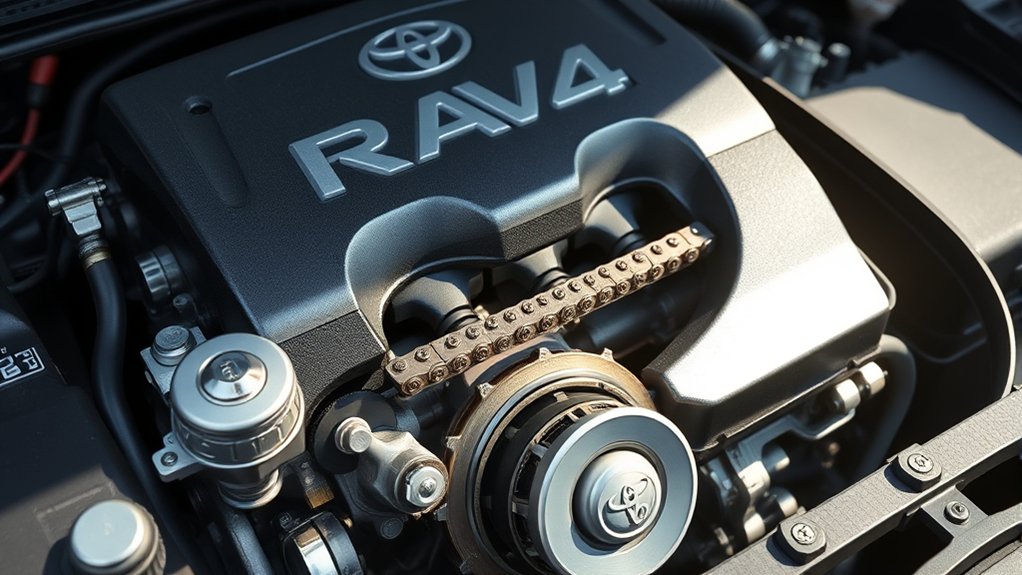
Most U.S.-market Toyota RAV4s use a timing chain. The main gasoline-engine exception is the 1996–2000 four-cylinder RAV4, which uses a timing belt. Gasoline-engine RAV4s from 2001 onward generally use timing chains. For 2026, Toyota’s U.S. lineup is hybrid and plug-in hybrid only, and the gasoline engines in those powertrains are chain-driven. RAV4 EV models use neither a timing belt nor a timing chain.
Last updated: September 19, 2026.
Quick Answer
Most U.S.-market Toyota RAV4s use a timing chain. The 1996–2000 gasoline four-cylinder RAV4 uses a timing belt, while gasoline-engine models from 2001 onward generally use a chain. The 2026 U.S. RAV4 is offered as a hybrid or plug-in hybrid, both with chain-driven gasoline engines. RAV4 EV models use neither.
Key Takeaways
- 1996–2000 gasoline RAV4s: Four-cylinder models use a timing belt.
- 2001 and newer gasoline-engine RAV4s: These generally use a timing chain.
- 2006–2012 V6 models: The V6 uses a timing chain.
- Hybrid and plug-in hybrid models: The gasoline engine uses a timing chain.
- 2026 U.S. RAV4: Toyota offers HEV and PHEV powertrains rather than a gasoline-only version.
- RAV4 EV models: The 1997–2003 and 2012–2014 battery-electric RAV4 EV uses neither a timing belt nor an engine timing chain.
- First-generation belt service: Toyota’s 2000 U.S. maintenance guide lists timing-belt replacement at 90,000 miles or 72 months; check the exact guide for your model year.
- A timing chain normally has no fixed replacement interval, but poor lubrication, worn guides, or a failing tensioner can still cause problems.
Which Toyota RAV4 Years Use a Timing Belt or Timing Chain?
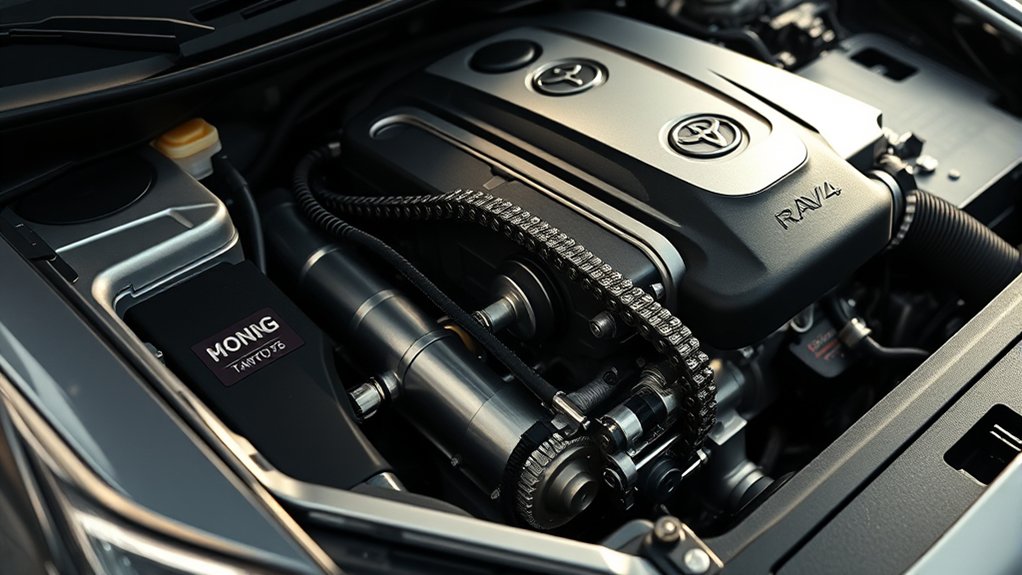
The Toyota RAV4 timing system depends mainly on the model year and engine. According to Toyota’s official timing belt and timing chain chart, 1996–2000 four-cylinder RAV4s use a belt. Toyota lists 2001–2019 four-cylinder models, 2006–2012 V6 models, and 2016–2020 RAV4 Hybrids as chain-driven.
Later gasoline, hybrid, and plug-in hybrid RAV4 powertrains also use chain-driven gasoline engines. Toyota’s current U.S. lineup changed for 2026: the RAV4 is offered as a Hybrid Electric Vehicle or Plug-in Hybrid Electric Vehicle rather than with a gasoline-only powertrain. Because regional engines can differ, confirm an imported or non-U.S. vehicle through the correct manual or by VIN.
| Model Years | Powertrain | Timing System | Service Guidance |
|---|---|---|---|
| 1996–2000 | Gasoline four-cylinder | Timing belt | For the 2000 U.S. RAV4, Toyota lists replacement at 90,000 miles or 72 months. Check the exact model-year schedule for earlier vehicles. |
| 2001–2005 | Gasoline four-cylinder | Timing chain | No routine timing-belt replacement is required. |
| 2006–2012 | Gasoline four-cylinder or V6 | Timing chain | Service the chain system only when diagnosis shows wear, damage, or another fault. |
| 2013–2015 | Gasoline four-cylinder | Timing chain | Follow the year-specific oil and maintenance schedule. |
| 2016–2020 | Gasoline four-cylinder or hybrid | Timing chain | No fixed timing-chain replacement interval is listed. |
| 2021–2025 | Gasoline, hybrid, or plug-in hybrid | Timing chain on the gasoline engine | No routine timing-chain replacement is listed; follow the exact maintenance guide. |
| 2026 | Hybrid or plug-in hybrid 2.5-liter four-cylinder | Timing chain on the gasoline engine | The U.S. lineup is HEV/PHEV only. Confirm service requirements through the current Toyota manual or VIN. |
| 1997–2003 and 2012–2014 RAV4 EV | Electric motor | Neither | A battery-electric motor does not use an engine valve-timing drive. |
Note: This model-year guide focuses on U.S.-market RAV4s. Diesel engines and other powertrains sold outside the United States may use a different timing system. Check the regional manual or confirm the vehicle by VIN.
Does a Toyota RAV4 Timing Chain Need Scheduled Replacement?
Normally, no. Toyota RAV4 timing chains generally do not have a fixed mileage-based replacement interval. The chain connects the crankshaft and camshaft so the engine’s valves open at the correct time, and it operates inside the engine while being lubricated by engine oil.
No scheduled replacement interval does not mean the chain is guaranteed to last forever. Correct oil level and oil pressure, healthy guides, and a properly working tensioner all matter. A worn guide, weak tensioner, restricted oil passage, damaged sprocket, or worn chain can disturb valve timing and require repair.
Durability and Longevity Benefits
A chain can operate for a high mileage without replacement when the engine receives correct maintenance. Its internal location also protects it from much of the dirt, water, and road debris that may affect exposed components.
This durability does not make the system failure-proof. If symptoms or diagnostic testing point to a timing problem, the chain and its supporting components should be inspected rather than replaced solely because the vehicle has reached a particular mileage.
Lower Routine Timing-System Maintenance
A chain-driven RAV4 usually avoids the scheduled timing-belt replacement associated with a belt-driven engine. That can reduce routine maintenance over the vehicle’s life.
Chain-system repairs can still be expensive because the components sit inside the engine. Access may require removing covers, accessories, seals, and other parts. The practical advantage is the lack of a routine replacement job, not a guarantee that the chain will never need service.
Timing Chains vs. Timing Belts: What’s the Difference?
| Feature | Timing Chain | Timing Belt |
|---|---|---|
| Material | Metal links | Reinforced rubber or composite material |
| Location | Inside the engine behind a sealed cover | Behind a protective timing cover |
| Lubrication | Lubricated by engine oil | Runs dry and must remain free from oil contamination |
| Routine replacement | Usually none unless condition or diagnosis requires it | May require replacement according to the manufacturer’s schedule |
| Common concerns | Guide wear, tensioner faults, lubrication problems, chain wear, or timing deviation | Age cracking, tooth damage, contamination, tension loss, or breakage |
| Typical service access | More labor-intensive because the system is internal | Often easier to access, although labor varies by engine |
Note: The accessory or serpentine belt visible under the hood is not the timing belt. A chain-driven RAV4 can still have one or more external rubber drive belts for the alternator, air conditioner, water pump, or other accessories.
When Should the 1996–2000 RAV4 Timing Belt Be Replaced?
The belt-driven first-generation RAV4 needs different maintenance from later chain-driven models. Toyota’s 2000 U.S. Scheduled Maintenance Guide lists timing-belt replacement at 90,000 miles or 72 months in the SUV and truck maintenance schedule.
Do not apply the “no scheduled replacement” guidance for a timing chain to a 1996–2000 gasoline RAV4. Check the Toyota maintenance schedule for the exact model year, especially if you do not have complete service records. If a used first-generation RAV4 has no documented belt history, verify its maintenance status before assuming the belt has already been replaced.
How Should You Maintain a RAV4 Timing Chain?
You do not lubricate or adjust a RAV4 timing chain as a separate routine service. The chain receives lubrication from the engine’s oil system, so correct oil maintenance is the most important preventive step.
Follow the Correct Oil-Change Schedule
Use the oil grade, viscosity, filter, mileage interval, and time interval specified for your exact model. Older RAV4s may have different requirements from current models.
For example, Toyota’s 2025 RAV4 Warranty and Maintenance Guide calls for scheduled maintenance every 5,000 miles or six months. Its normal-service chart places engine-oil and filter replacement at 10,000-mile intervals, while listed special operating conditions can require 5,000-mile oil service.
- Check the oil level regularly and address unexplained oil consumption.
- Use the viscosity and specification listed in the owner’s manual.
- Do not extend the interval simply because the oil is synthetic.
- Repair significant oil leaks instead of repeatedly topping up the engine.
- Use a shorter interval only when the model’s guide, driving conditions, or professional inspection supports it.
Pro Tip: Keep oil-service receipts and note the date, mileage, oil viscosity, and filter used. A complete record helps a technician diagnose a possible lubrication, tensioner, or chain-wear problem later.
Inspect the Chain System When Symptoms Appear
The chain, guides, and tensioner are internal components. Toyota does not generally list a routine mileage-based timing-chain inspection for the RAV4.
A technician may inspect or test the system when you report persistent rattling, timing-related diagnostic codes, difficult starting, rough running, an oil leak near the timing cover, or other symptoms. Diagnosis may include listening tests, an oil-pressure check, scan-tool data, camshaft and crankshaft correlation checks, or physical inspection.
Replacing a chain or tensioner without proper diagnosis can waste money because accessory drives, variable valve timing components, heat shields, low oil pressure, and other engine parts may produce similar noises.
What Are the Signs of RAV4 Timing Chain Wear?
A single symptom does not prove that the timing chain is failing. However, repeated mechanical noise or several timing-related symptoms together justify prompt diagnosis.
- Persistent rattling from the timing-cover area: A brief sound and a continuous mechanical rattle are not the same. Repeated startup noise or a rattle that continues while running needs diagnosis.
- Check-engine light: Camshaft-position, crankshaft-position, variable-valve-timing, or correlation faults may appear when valve timing is incorrect.
- Hard starting or stalling: A chain that has jumped or a failed timing component can prevent normal starting and running.
- Rough idle, misfires, or reduced power: Incorrect valve timing can disturb combustion, although many other faults can produce the same symptoms.
- Oil leakage near the timing cover or tensioner: Low oil level or pressure can interfere with hydraulic timing components and lubrication.
- Sudden change in engine sound: A loud new rattle, clatter, or impact sound should not be ignored.
Warning: Stop driving and arrange professional assistance if the engine develops a loud persistent rattle, severe misfire, repeated stalling, an oil-pressure warning, or an inability to start. Continuing to run the engine may increase internal damage.
How Can You Confirm Your RAV4’s Timing System?
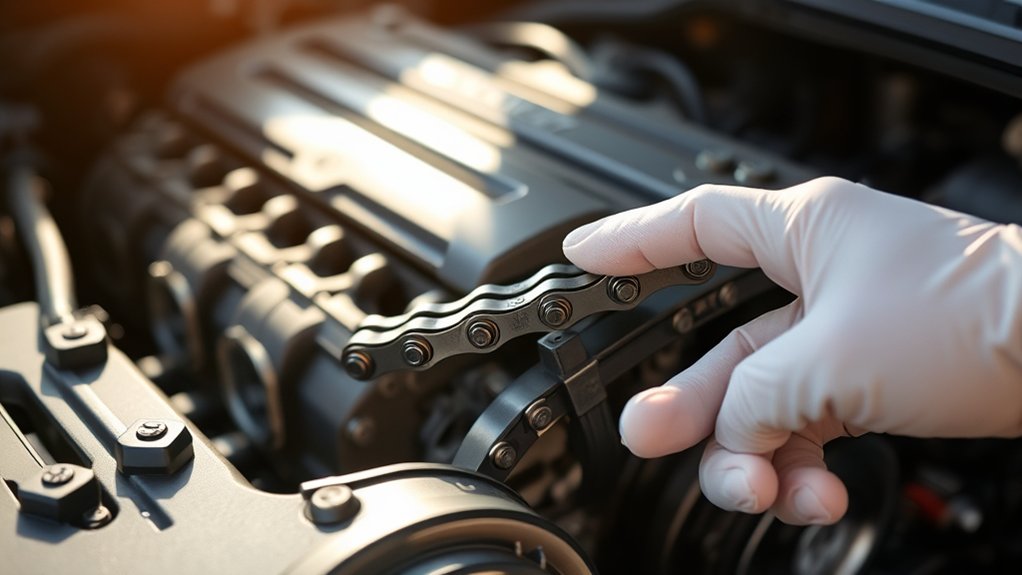
You can usually identify the timing system from the model year, but the engine and sales market also matter. Use these checks before buying parts or approving a repair:
- Record the VIN: Find the 17-character VIN at the lower driver-side windshield, door-jamb label, registration, or insurance document.
- Confirm the model year and powertrain: Determine whether the vehicle is gasoline, V6, hybrid, plug-in hybrid, EV, or a regional diesel model.
- Check Toyota’s manual library: Select the vehicle at Toyota Manuals and Warranties and open the applicable maintenance guide.
- Review Toyota’s timing-system chart: Compare the year and engine with Toyota’s official belt-and-chain reference.
- Ask a Toyota parts or service department: Provide the full VIN so the staff can check the engine and original timing components.
Do not rely only on a used-vehicle advertisement, trim badge, registration description, or the presence of an external rubber belt. Those details may not identify the internal timing system.
Related Guides
Frequently Asked Questions
How often should I check my RAV4’s timing chain?
Most RAV4 maintenance schedules do not include a routine mileage-based timing-chain inspection. Follow the correct oil schedule and request diagnosis when you notice persistent rattling, timing-related trouble codes, hard starting, rough running, stalling, or an oil leak near the timing cover.
Can a timing chain break suddenly?
It is uncommon, but a chain or another timing component can fail. Problems may also develop when a guide breaks, a tensioner loses control, oil pressure drops, or the chain jumps on a sprocket. Some failures provide warning noise or fault codes, while others progress quickly.
What symptoms indicate timing-chain problems?
Possible symptoms include persistent startup rattling, a check-engine light, hard starting, stalling, misfires, rough idle, reduced power, and oil leakage near the timing cover. These symptoms can have other causes, so confirm the fault before replacing timing components.
Is timing-chain maintenance expensive?
Routine ownership normally does not include a separate timing-chain service. If the chain, guides, sprockets, seals, or tensioner require replacement, labor can be substantial because the system is inside the engine. The final cost depends on the engine, damaged parts, labor rates, and whether other repairs are needed.
Does the RAV4’s timing chain affect fuel efficiency?
A healthy timing chain does not normally reduce fuel economy. Incorrect valve timing caused by a worn or damaged timing system could affect performance and efficiency, but reduced mileage alone is not enough to diagnose a chain problem.
Which Toyota RAV4 years have a timing belt?
Toyota’s U.S. timing-system chart identifies the 1996–2000 gasoline four-cylinder RAV4 as belt-driven. Four-cylinder gasoline RAV4s from 2001 onward generally use a timing chain. Regional engines sold outside the United States may differ.
When should a first-generation RAV4 timing belt be replaced?
For the 2000 U.S.-market RAV4, Toyota’s Scheduled Maintenance Guide lists timing-belt replacement at 90,000 miles or 72 months. Owners of earlier 1996–1999 vehicles should check the maintenance schedule for the exact model year rather than assuming the same interval.
Does a RAV4 timing chain need scheduled replacement?
A RAV4 timing chain normally has no scheduled replacement mileage. It should be replaced when testing or inspection confirms excessive wear, damaged guides, a faulty tensioner, incorrect timing, or another related defect.
Does the 2026 Toyota RAV4 have a timing chain?
Yes. The 2026 U.S. RAV4 is offered with hybrid and plug-in hybrid powertrains, and their gasoline engines use timing chains rather than scheduled-replacement timing belts. Confirm service requirements through the current Toyota documentation for the exact VIN.
Conclusion
Most Toyota RAV4s have a timing chain. The important U.S.-market gasoline exception is the 1996–2000 four-cylinder RAV4, which uses a timing belt. Gasoline-engine models from 2001 onward, including the 2006–2012 V6 and RAV4 hybrid and plug-in hybrid powertrains, use timing chains. Battery-electric RAV4 EV models use neither.
If you own a belt-driven first-generation RAV4, check its documented replacement history and the maintenance schedule for its exact model year. If you own a chain-driven RAV4, follow the correct oil and maintenance requirements and arrange diagnosis for persistent rattling, timing-related fault codes, hard starting, stalling, or severe misfires rather than replacing the chain at an arbitrary mileage.
Sources
- Toyota: Does My Vehicle Have a Timing Belt or Timing Chain? — identifies belt, chain, and EV configurations by model year and engine.
- Toyota 2000 Scheduled Maintenance Guide — lists timing-belt replacement at 90,000 miles or 72 months in the SUV and truck schedule.
- Toyota 2001 Scheduled Maintenance Guide — provides period maintenance guidance and excludes the 2001 RAV4 from the listed timing-belt replacement item.
- Toyota 2008 RAV4 Scheduled Maintenance Guide — provides model-specific service requirements for four-cylinder and V6 RAV4s.
- Toyota 2025 RAV4 Warranty and Maintenance Guide — provides maintenance, oil-service, and special-operating-condition guidance.
- Toyota 2026 RAV4 — confirms the current U.S. HEV and PHEV powertrain lineup.
- Toyota: 75 Years of Toyota — RAV4 EV History — documents the RAV4 EV’s 1997 U.S. launch and first-generation program.
- Toyota USA Newsroom: 2012–2014 RAV4 EV — documents the second-generation RAV4 EV model years.
- Toyota Manuals and Warranties — allows owners to select the correct year and vehicle documentation.
- Toyota Timing Chain Tensioner Assembly — confirms the tensioner’s role in maintaining stable chain operation and valve timing.
