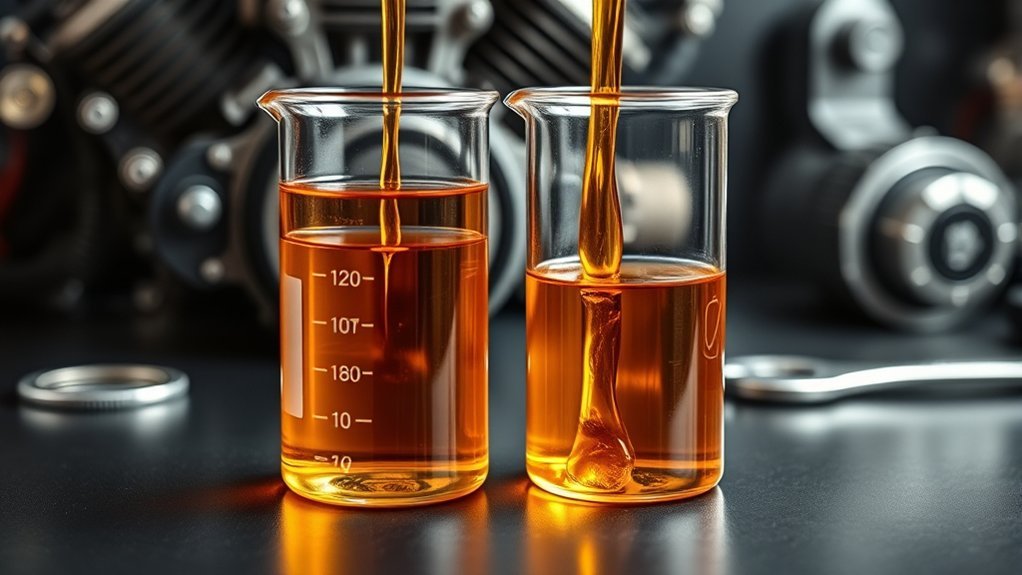
0W-20 vs. 5W-30 comes down to two measurable differences: 0W-20 qualifies at lower cold-start test temperatures and is thinner at operating temperature, while 5W-30 has a higher hot-viscosity range. Neither is universally better. Use the viscosity and performance specification listed for your exact engine; switch grades only when the manufacturer explicitly permits it.
Last updated: September 19, 2026. This revision rechecked SAE viscosity limits, current API/ILSAC gasoline-oil categories, oil-selection guidance, and wrong-grade FAQs.
Quick Answer
Use the viscosity grade and oil specification listed in your owner’s manual. Compared with 5W-30, 0W-20 meets lower-temperature cranking requirements and is thinner at normal operating temperature. 5W-30 is thicker when hot, but it is not automatically safer for heat, towing, high mileage, or older engines unless the manufacturer permits it.
Key Takeaways
- The “W” describes winter performance. A 0W oil meets lower-temperature cranking and pumping tests than a 5W oil.
- At 100°C, 5W-30 is thicker than 0W-20 because SAE 30 has a higher operating-temperature viscosity range than SAE 20.
- Thicker oil is not automatically better. Engine clearances, oil pumps, valve-timing systems, and bearing designs are calibrated for specified grades.
- Driving conditions may change your service interval without changing the approved viscosity grade.
- Check the viscosity, API or ILSAC category, and any manufacturer-specific approval before buying oil.
Understanding Oil Viscosity Ratings: What Do 0W-20 and 5W-30 Mean?

Both 0W-20 and 5W-30 are multigrade engine oils classified under the SAE J300 Engine Oil Viscosity Classification. Each part of the label describes a different temperature range.
- 0W or 5W: The first number and the letter W describe low-temperature cranking and pumping performance. The W means winter, not weight.
- 20 or 30: The second number describes the oil’s viscosity range at operating temperature, including its kinematic viscosity at 100°C.
| Feature | 0W-20 | 5W-30 |
|---|---|---|
| Winter grade | 0W | 5W |
| SAE cold-cranking test point | Maximum 6,200 mPa·s at -35°C | Maximum 6,600 mPa·s at -30°C |
| Viscosity at 100°C | 6.9 to less than 9.3 mm²/s | 9.3 to less than 12.5 mm²/s |
| Minimum HTHS viscosity at 150°C | 2.6 mPa·s | 2.9 mPa·s |
| Primary rule | Use when specified or permitted by the manufacturer | Use when specified or permitted by the manufacturer |
Note: The SAE cold-cranking temperatures are laboratory classification points. They are not universal minimum outdoor-temperature ratings for every oil, engine, battery, or starting system.
Decision rule: If the manual lists only one viscosity, use that grade. If it lists both 0W-20 and 5W-30, follow the manual’s temperature and operating-condition guidance. Do not switch solely because of hot weather, towing, or high mileage.
Is 5W-30 Thicker Than 0W-20 at Operating Temperature?
At operating temperature, 5W-30 is thicker than 0W-20. Its SAE 30 rating gives it a higher kinematic-viscosity range at 100°C and a higher minimum high-temperature/high-shear viscosity.
That difference can provide a thicker oil film in an engine designed to use SAE 30 oil. However, it does not mean that pouring 5W-30 into an engine designed only for 0W-20 will improve protection.
An unapproved thicker oil can change oil flow, hydraulic response, variable valve timing operation, cold-start circulation, and fuel use. The effect depends on the engine design and operating temperature.
The safest oil is the viscosity and performance specification your engine was designed to use, not simply the thickest oil available.
Towing, high-speed driving, and hot weather can increase oil temperature and engine load. Check the owner’s manual to see whether it permits a different viscosity for those conditions. If it does not, follow the specified grade and use the severe-service maintenance schedule when applicable.
Is 0W-20 Better Than 5W-30 in Cold Weather?
The 0W portion of 0W-20 meets a lower-temperature cold-cranking test than the 5W portion of 5W-30. This gives 0W-20 an advantage during very cold starts when both grades are approved for the same engine.
When both grades are approved and temperatures are sufficiently low, the 0W grade is designed to meet cranking and pumping limits at lower test temperatures than a 5W grade. That can reduce resistance during a cold start, but the exact flow difference between two finished oils depends on their formulations and the actual temperature.
The difference is most relevant in severe winter conditions. During mild weather, the condition of the battery, oil formulation, engine design, and maintenance history may have a greater practical effect on starting than the difference between 0W and 5W alone.
Cold-weather performance does not make 0W-20 suitable for an engine that requires 5W-30. The second number still matters after the engine warms up.
Does 0W-20 Improve Fuel Economy Compared With 5W-30?
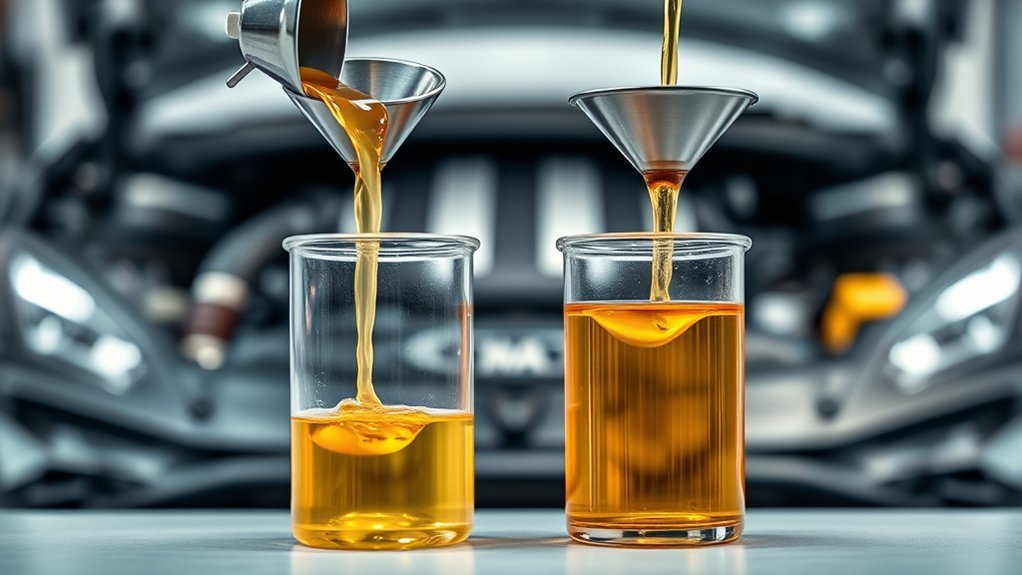
Lower-viscosity oil can reduce pumping resistance and fluid friction in an engine designed around that viscosity. This is one reason many manufacturers specify 0W-20 in vehicles engineered to meet fuel-economy and emissions targets.
The effect is not a guaranteed percentage. Fuel economy also depends on engine design, temperature, trip length, vehicle load, tire pressure, speed, traffic, oil formulation, and driving style.
Reduced Engine Friction
0W-20 moves with less resistance than 5W-30 at comparable temperatures. In an approved application, this can reduce some of the energy used to pump oil and move lubricated parts.
Using a thinner grade than the manufacturer allows is not a safe fuel-saving shortcut. An oil that is too thin for the engine may not provide the required hot-viscosity or high-shear performance.
Enhanced Fuel Efficiency
For engines calibrated for 0W-20, the grade can support the fuel-economy performance intended by the manufacturer. You should still verify the complete specification on the container, not just the viscosity printed on the front.
Look for the API service category, ILSAC classification, and any manufacturer-specific approval required by the owner’s manual. API explains its quality marks and service categories in its Motor Oil Guide.
Current U.S. gasoline-oil categories: API’s 2026 Motor Oil Guide lists API SQ and ILSAC GF-7A/GF-7B as current categories. GF-7B applies only to SAE 0W-16, so a currently certified 0W-20 or 5W-30 passenger-car oil falls under GF-7A when ILSAC certification is required. Your owner’s manual still controls the viscosity and minimum performance level for your vehicle.
Should You Use 0W-20 or 5W-30 in Your Engine?
Do not choose by broad labels such as fuel-efficient, high-performance, old, new, highway, or city engine. Use the following process instead.
- Read the owner’s manual. Find the engine-oil viscosity, required service category, manufacturer approval, capacity, and maintenance interval.
- Check the oil-filler cap. Many vehicles print the primary viscosity on the cap, but the manual remains the complete source.
- Look for permitted alternatives. Some manuals list more than one grade for certain climates or operating conditions. Others specify only one.
- Match the full specification. Two oils with the same viscosity may carry different API, ILSAC, European, diesel, or manufacturer approvals.
- Use the correct service schedule. Towing, repeated short trips, dusty roads, idling, and extreme temperatures may shorten the oil-change interval even when the viscosity stays the same.
For Toyota-specific examples of how these rules vary by model year and engine, see what 0W-20 means for Toyota Camry engine oil, the Toyota Camry oil-viscosity chart guide, and the synthetic vs. conventional oil guide.
[Amazon Products Picked for You]

Advanced protection against the four main causes of engine breakdown: wear friction heat and deposits

Helps extend engine life, even in severe conditions

6X better wear protection on critical engine parts than industry standards**
When 0W-20 Is the Right Choice
Use 0W-20 when your manufacturer specifies or permits it and the oil meets the required performance standard. It is common in engines designed for low-temperature flow, controlled hydraulic operation, and reduced internal resistance.
When 5W-30 Is the Right Choice
Use 5W-30 when it is the specified or approved grade. Its SAE 30 hot-viscosity range may be required for the engine’s bearing clearances, turbocharger system, oil-pressure targets, temperature range, or durability testing.
Warning: Do not ignore an oil-pressure warning light, severe ticking, knocking, or sudden mechanical noise after an oil change. Shut the engine off as soon as it is safe and check the oil level and specification. Continuing to drive with inadequate oil pressure can cause serious damage.
Switching Motor Oils: What Should You Consider?
Switching from 0W-20 to 5W-30 may be acceptable if the owner’s manual lists both grades for your engine and operating conditions. If the manual specifies only 0W-20, do not switch simply because the weather is hot, the vehicle has high mileage, or you plan to tow.
Before changing grades, consider:
- Manufacturer permission: Confirm that the alternate grade is approved for your engine and model year.
- Ambient-temperature guidance: Follow any viscosity chart in the manual rather than a generic chart online.
- Required oil specification: Match the API, ILSAC, ACEA, diesel, or manufacturer approval as applicable.
- Oil consumption: Do not use thicker oil to hide a leak, worn component, blocked ventilation system, or internal oil-burning problem.
- Warranty and maintenance records: Use oil that meets the documented manufacturer requirements.
What to Do if You Accidentally Used the Wrong Grade
First, confirm the exact viscosity, the amount added, the engine and model year, and whether the owner’s manual lists that grade as acceptable. If the alternate grade is approved for the engine and conditions, no corrective action may be needed.
If the grade is not approved, contact the vehicle manufacturer, dealer, or qualified technician for model-specific advice. The response can differ between a small top-up and a full crankcase filled with the wrong grade. Until you confirm the correct action, avoid towing, high engine speeds, and other severe operation.
If the oil-pressure warning appears or the engine develops unusual noise, stop the engine immediately. A full oil and filter change may be the safest correction when an unapproved grade has filled the entire system.
Pro Tip: Keep a photo of the oil specification page from your owner’s manual on your phone. It makes it easier to confirm the correct viscosity, approval, and capacity when buying oil or visiting a service shop.
Does Synthetic Oil Make 0W-20 and 5W-30 Interchangeable?
Synthetic, synthetic-blend, and conventional describe the oil’s base stocks and formulation. They do not replace the SAE viscosity grade.
A full-synthetic 0W-20 must still meet the SAE 0W and SAE 20 viscosity requirements. A full-synthetic 5W-30 must meet the SAE 5W and SAE 30 requirements. The fact that both oils are synthetic does not make them interchangeable.
Synthetic formulations may offer advantages such as strong low-temperature performance, oxidation resistance, deposit control, and stability under demanding conditions. However, the oil must still meet every viscosity and performance requirement listed by the vehicle manufacturer.
The API Engine Oil Licensing and Certification System evaluates licensed oils against physical, chemical, viscosity, and engine-performance requirements. Check the container for the required marks and approvals.
[Amazon Products Picked for You]

Improves Gas Mileage***

High Mileage for engines 75,000+ miles

Advanced protection against the four main causes of engine breakdown: wear friction heat and deposits
What About Older or High-Mileage Engines?
An engine does not automatically need thicker oil when it reaches a certain age or mileage. Many well-maintained high-mileage engines should continue using their specified viscosity.
High-mileage oils are available in several viscosity grades. Their formulation may include additives intended to support seal condition, deposit control, or oil-consumption management. A high-mileage label does not make an unapproved viscosity suitable.
If your engine is losing oil, burning oil, showing low pressure, or making new noises, check for leaks and mechanical problems. Possible causes include worn seals, piston-ring wear, bearing clearance, a malfunctioning crankcase-ventilation system, or an incorrect oil level.
Some manufacturers permit a different grade under defined temperature or operating conditions. Use that option only when it appears in the manual or a manufacturer-issued service document.
[Amazon Products Picked for You]

Designed for vehicles with 75,000 miles or more, Valvoline MaxLife Full Synthetic High Mileage Motor Oil helps maximize engine life and performance for the many miles still ahead
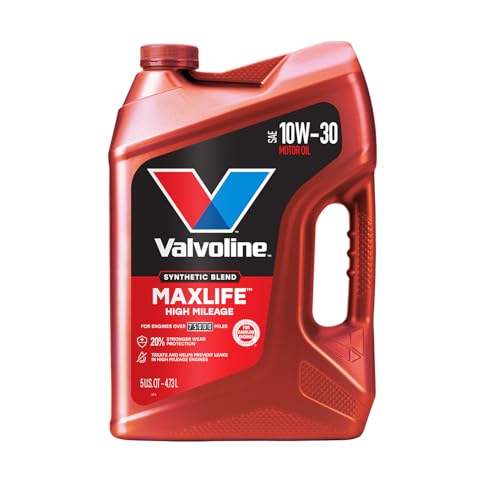
MaxLife Technology prevents engine breakdown with 40% better wear protection than the industry standard
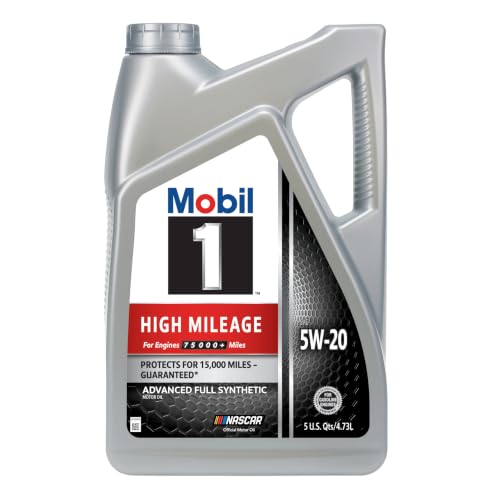
High Mileage for engines 75,000+ miles
Expert Recommendations for Choosing the Right Oil
- Start with the manual: API also advises vehicle owners to consult their owner’s manuals before selecting an oil category or grade.
- Match more than viscosity: Confirm the required API, ILSAC, ACEA, diesel, or manufacturer-specific approval.
- Check the exact engine: Different engines in the same model year may require different oil.
- Do not assume thicker is safer: Higher viscosity can change flow, hydraulic response, friction, and cold-start performance.
- Follow the oil-life monitor correctly: Reset it only after the oil and filter have been changed. For a model-specific example, see the Toyota Camry oil-change interval guide.
- Check the level regularly: The correct grade cannot protect an engine that is running low on oil.
- Recycle used oil: Store drained oil in a sealed, leak-proof container and take it to an approved collection point. The U.S. Environmental Protection Agency recommends recycling used oil and filters rather than disposing of them with household waste or pouring oil onto the ground.
Frequently Asked Questions
Is it okay to use 5W-30 instead of 0W-20?
Only when the vehicle manufacturer lists 5W-30 as an approved alternative for your exact engine and operating conditions. The grades differ in both low-temperature qualification and hot viscosity, so do not substitute 5W-30 based only on climate, mileage, towing, or the belief that thicker oil is automatically safer.
Which is better in hot weather, 0W-20 or 5W-30?
Neither is automatically better for hot weather. 5W-30 has a higher hot-viscosity range, but an engine designed for 0W-20 should normally stay on 0W-20 unless its manufacturer permits another grade. Follow any temperature chart or severe-service instructions in the owner’s manual.
Is 5W-30 better for a high-mileage engine?
Not automatically. Mileage alone does not prove that an engine needs thicker oil. If an older engine is leaking, burning oil, showing low pressure, or making new noise, diagnose the cause and use a different viscosity only when the manufacturer or qualified diagnosis supports it.
Can you mix 0W-20 and 5W-30?
Mixing different viscosity grades creates a blend whose final viscosity and approval status may not match either original product. For normal service and routine top-ups, use the owner-manual-approved grade and specification. If a substantial amount of the wrong grade was added, get model-specific advice and correct it as appropriate.
Is 5W-30 better than 0W-20 for towing?
Not automatically. Towing raises engine load and temperature, but use 5W-30 only if the manufacturer specifies or permits it. Some vehicles keep the same viscosity while using a shorter severe-service oil-change interval.
What should you do after using the wrong oil viscosity?
Confirm the exact grade, how much was added, and whether the manual permits it. A small top-up and a full fill are different situations. If the grade is not approved, seek model-specific guidance; stop the engine immediately if an oil-pressure warning or abnormal mechanical noise appears.
Conclusion
The main difference between 0W-20 and 5W-30 is measurable: 0W-20 meets lower-temperature winter tests and remains thinner at operating temperature, while 5W-30 has a higher hot-viscosity range. Neither grade is universally better.
Use the viscosity, service category, and manufacturer approval specified for your exact engine. Do not switch grades solely because of hot weather, towing, high mileage, short trips, or the belief that thicker oil always protects better. When the manual permits both grades, use its temperature and operating-condition guidance to make the final choice.
Sources
- SAE International: Engine Oil Viscosity Classification, SAE J300 (May 2024 revision) — defines the established winter-grade and operating-temperature viscosity framework used in this comparison. [VERIFY: SAE’s indexed revision history shows J300_202608 dated August 18, 2026; replace this source with the canonical current SAE production page once confirmed.]
- American Petroleum Institute: Engine Oil Licensing and Certification System — explains oil certification, testing, monitoring, and quality marks.
- American Petroleum Institute: API 1509 Documents — identifies the current API 1509 edition as the 24th Edition, July 2026.
- American Petroleum Institute: Motor Oil Guide — explains API certification marks and consumer oil-label information.
- U.S. Environmental Protection Agency: Managing, Reusing, and Recycling Used Oil — provides consumer guidance for handling and recycling used motor oil and filters.