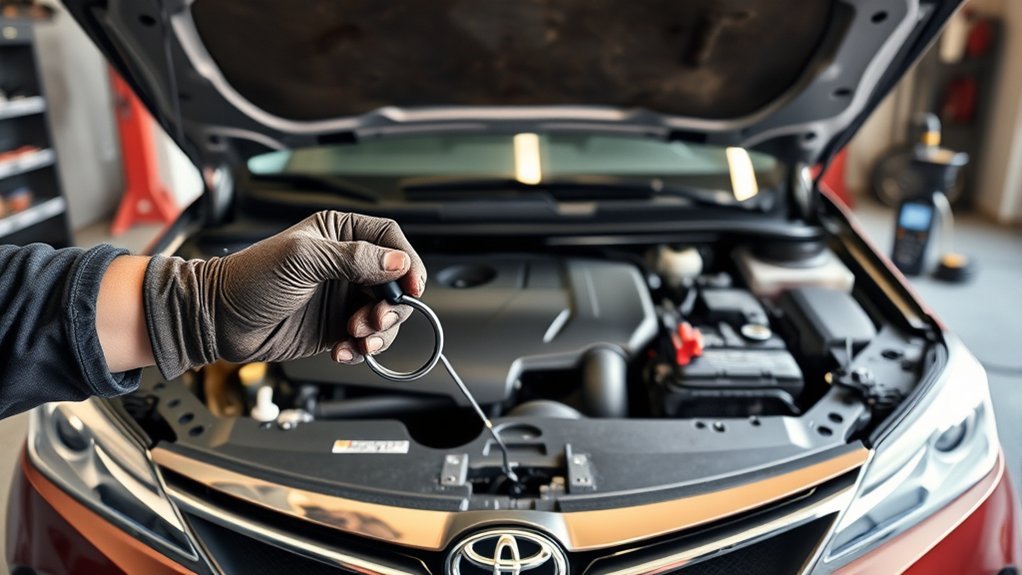
If your Toyota Camry has an engine knocking sound, first separate a brief light ping from a deep mechanical knock. Light pinging under load can relate to fuel quality, combustion control, overheating, or a lean mixture; a deep metallic knock that follows engine speed can point to low oil pressure, bearing wear, or other internal damage. Check warning lights and engine oil before replacing parts, and stop driving if the sound is loud, persistent, or paired with low oil pressure, overheating, severe rough running, or sudden power loss.
Last updated: September 22, 2026 — model-year scope, diagnostic-code guidance, safety wording, internal links, and schema were rechecked.
Scope: This guide covers U.S.-market Toyota Camry models broadly. Fuel, oil, engine design, diagnostic trouble codes, and repair procedures vary by model year and powertrain. The 2025 and 2026 U.S. Camry use a hybrid powertrain, while older Camrys also include gasoline-only four-cylinder and V6 configurations.
Quick Answer
Toyota Camry engine knocking can come from abnormal combustion, low oil level or pressure, ignition or air/fuel faults, knock-sensor circuit problems, carbon deposits, overheating, or internal wear. A brief light ping under heavy load is different from a deep rhythmic knock. If the noise is loud or persistent, or comes with a low-oil-pressure warning, overheating, severe rough running, or power loss, shut the engine off and arrange professional diagnosis.
Key Takeaways
- A brief light ping under load is different from a deep rod knock. Toyota manuals for multiple Camry generations note that occasional light knocking during acceleration or uphill driving can occur, while persistent or heavy knocking needs attention.
- Check oil level, oil condition, warning lights, fuel quality, and stored trouble codes before replacing parts.
- Use the octane rating, oil grade, spark plugs, and service procedures listed in your exact Camry model-year owner’s manual.
- A knock-sensor code does not prove the sensor itself has failed. Check the circuit, related codes, and engine condition before replacing parts.
- Do not keep driving with a loud metallic knock, low oil pressure warning, overheating warning, severe rough running, or sudden loss of power.
At a Glance
| Time Required | Varies. An oil-level and code check can be quick; pinpointing an intermittent or internal-engine noise may require extended shop diagnosis. |
| Difficulty | Basic checks are beginner-friendly. Oil pressure, timing, sensor, and internal engine checks are mechanic-level. |
| Tools Needed | Owner’s manual, dipstick, flashlight, and OBD-II scanner for basic checks. A mechanic may also use a stethoscope, oil-pressure gauge, scan data, and model-specific service information. |
| Cost | Basic checks may cost little. Repairs can range from fuel or spark-plug service to expensive internal engine work, depending on the cause. |
Warning: Shut the engine off and arrange a tow if the knock is loud and metallic, the low engine oil pressure warning appears, the engine overheats, the engine runs severely rough, or the car suddenly loses power. Toyota identifies low engine oil pressure as a condition requiring immediate attention.
Common Causes of Knocking Sounds in Toyota Camry Engines
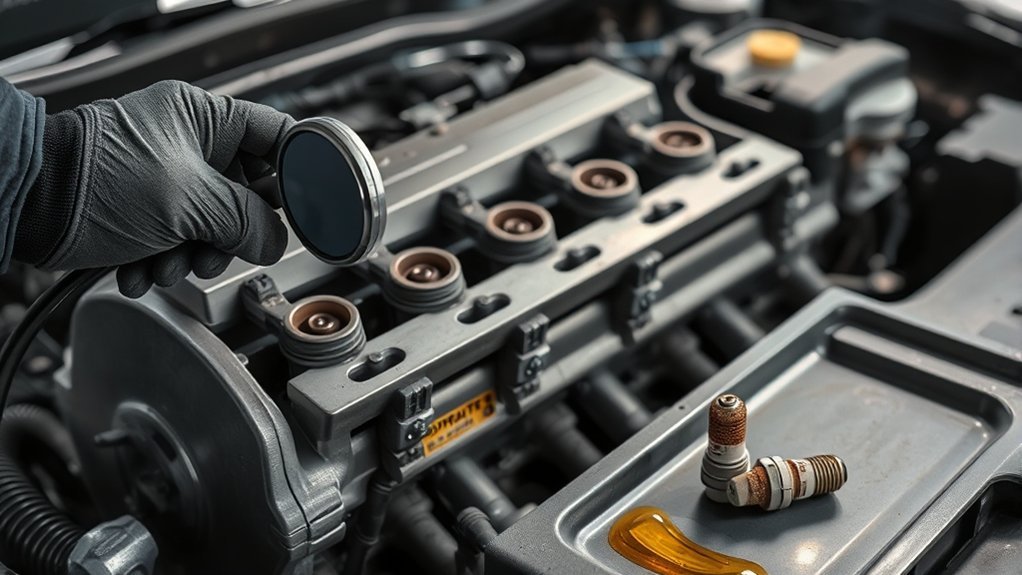
Camry engine knocking can come from combustion problems, lubrication problems, sensor or wiring faults, or parts outside the engine that only sound like internal knock. Start by identifying when the sound happens: cold start, warm idle, acceleration, uphill driving, steady-speed cruising, or all the time.
Detonation vs. Rod Knock: What Is the Difference?
Detonation or spark knock is usually a lighter metallic ping or rattle that appears when the engine is under load. Fuel octane below the vehicle’s requirement, excessive combustion heat, a lean mixture, deposits, or control-system faults can contribute. Rod knock is a deeper, heavier, more rhythmic sound from the lower engine that often follows RPM and can indicate bearing or crankshaft damage. Accessory pulleys, heat shields, injectors, and valvetrain parts can also imitate a knock, so the sound alone is not a final diagnosis.
| Sound Pattern | Likely Area | Urgency |
|---|---|---|
| Light pinging under acceleration or uphill load | Fuel octane, carbon buildup, lean mixture, ignition control, overheating | Occasional brief light ping can occur on some Camrys; diagnose persistent, heavy, or worsening pinging. |
| Deep metallic knock that rises with RPM | Rod bearings, low oil pressure, internal wear | High. Stop driving and get professional diagnosis. |
| Ticking or tapping from the belt side of the engine | Belt tensioner, pulley, accessory bearing, loose shield | Moderate. Inspect before belt or pulley failure. |
| Brief rattle at cold start | Oil drain-back, timing chain/VVT area, heat shield, accessory noise | Needs diagnosis if frequent, loud, or getting worse. |
Common causes include low or incorrect fuel octane, stale or contaminated fuel, low oil level, low oil pressure, worn spark plugs, ignition misfire, lean air/fuel mixture, carbon deposits, overheating, faulty knock sensor wiring, worn rod bearings, and accessory-drive noise.
Is It Safe to Drive a Camry With Engine Knock?
It depends on the sound and the warning lights. Toyota manuals for several Camry generations state that brief light knocking can occur during acceleration or uphill driving, but persistent heavy knocking is different. If the sound is deep, loud, constant, or getting worse—or if you have a low-oil-pressure warning, overheating, severe rough running, or loss of power—move to a safe location, shut the engine off, and arrange diagnosis rather than continuing the trip.
Toyota’s warning-light guidance says red warning icons can indicate conditions that need immediate attention, including low engine oil pressure. If the oil-pressure warning appears, do not “test drive” the car to see if it improves. Shut the engine off and check the oil level only when it is safe to do so. A normal dipstick level does not prove oil pressure is normal; pressure requires proper testing.
Before you spend money on parts, check whether your Camry has open recalls by VIN through the NHTSA recall lookup. Recalls are not the same as routine repairs, but a VIN check is a smart step whenever you diagnose a repeated engine or safety issue.
How to Diagnose Engine Knocking in Your Camry
Use a simple order of checks. This reduces the chance of replacing a knock sensor when the real issue is low oil, a misfire, a lean mixture, fuel quality, or mechanical wear. Record codes and freeze-frame data before clearing anything.
- Stop and listen safely. Note whether the knock happens at idle, during acceleration, at cold start, or all the time.
- Check warning lights. A low oil-pressure warning, overheating warning, or severe rough-running condition changes the repair priority.
- Check engine oil level and condition. Low oil, visible contamination, metal debris, or a strong fuel smell can point to lubrication, wear, or fuel-dilution problems. If you need the correct dipstick method, use the Toyota Camry oil-level guide.
- Scan for codes. Look for stored and pending codes, not just active codes. Misfire codes, lean codes, knock sensor codes, cam/crank correlation codes, and VVT codes can all matter.
- Confirm the correct fuel. Use the octane rating listed in your exact model-year and market Camry owner’s manual. Do not assume that a grade used by another Camry year or country applies to yours.
- Inspect ignition parts. Worn spark plugs, wrong plugs, bad coils, or misfires can create knock-like symptoms.
- Look for lean-condition causes. Vacuum or intake leaks, mass-airflow sensor faults, fuel-pressure problems, injector restriction, and air/fuel or oxygen-sensor circuit faults can all appear in Toyota lean-condition diagnostics, depending on the engine.
- Have oil pressure and mechanical noise tested. A mechanic can use an oil-pressure gauge, stethoscope, scan data, and model-specific service information to separate bearing noise from accessory, valvetrain, combustion, or control-system noise.
Pro Tip: Record a short video of the sound before you visit the shop, but only from a safe position. Note whether the engine was cold or warm, the approximate RPM, whether the car was accelerating or climbing, which warning lights were on, what fuel was added most recently, and the oil level. Those details make an intermittent knock easier to reproduce.
[Amazon Products Picked for You]

Understand Your Check Engine Light – The ANCEL AD410 OBD2 scanner helps everyday drivers quickly read and clear engine-related fault codes, view code definitions, and understand why the check engine light is on before visiting a repair shop. With 42,000+ built-in DTC lookups, this car code reader helps reduce guesswork and makes basic vehicle diagnostics easier for beginners and DIY users

【Diagnose Check Engine Light in Seconds – No Mechanic Needed】The FOXWELL NT301 OBD2 scanner instantly reads & clears engine fault codes (DTCs) with one click. Simply plug into the 16-pin DLC port, turn ignition on, and get accurate results within seconds—No prior car knowledge required. Save hundreds on dealership fees by knowing exactly what’s wrong before you visit a shop. The #1 choice car scanner for DIYers and car owners who want to take control of their vehicle’s health

[All System Diagnostics, Professional-Level Scanner] - BLCKTEC 460T is the ultimate OBD2 diagnostic tool for home mechanics and professionals. It supports all 10 OBD2 modes, reads and clears Engine/Transmission/ABS/SRS codes, performs All-System Diagnostics, offers workshop reset tools, and provides real-time live data. It helps you pinpoint issues, assess your car's condition, and prepare for SMOG checks with ease. NOTE: Function availability depends on your vehicle. Before you buy, be sure to use the Compatibility Checker on BLCKTEC website or contact our customer support to verify that the features you need are supported for your vehicle’s specific year, make, and model.
How Low Octane Fuel Causes Engine Knock
Octane measures gasoline’s resistance to abnormal combustion under pressure. Toyota warns that using fuel below the vehicle’s required octane can lead to knocking or pinging and, if persistent, engine damage. Higher octane is not a repair for mechanical knock; the correct grade is the one specified for your exact Camry.
Do not guess the correct octane from another Camry owner’s advice. Check your exact model year and engine in the Toyota owner’s manual lookup. Many Camry models are designed for regular unleaded fuel, but the safest rule is to follow the manual for your vehicle.
If the knock started immediately after a fill-up, verify that the pump grade matched the manual and consider fuel quality. If the sound is only a brief light ping and no urgent warnings are present, avoid heavy load and re-evaluate after using the specified fuel from a reputable station. Persistent or heavy knock still needs diagnosis; fuel cannot fix low oil pressure, bearing damage, a wiring fault, or a failing accessory.
A brief light ping and persistent heavy knocking are not the same symptom. Use the pattern, warning lights, oil condition, fuel history, and scan data together before deciding on a repair.
Can Incorrect Timing Cause a Toyota Camry to Knock?
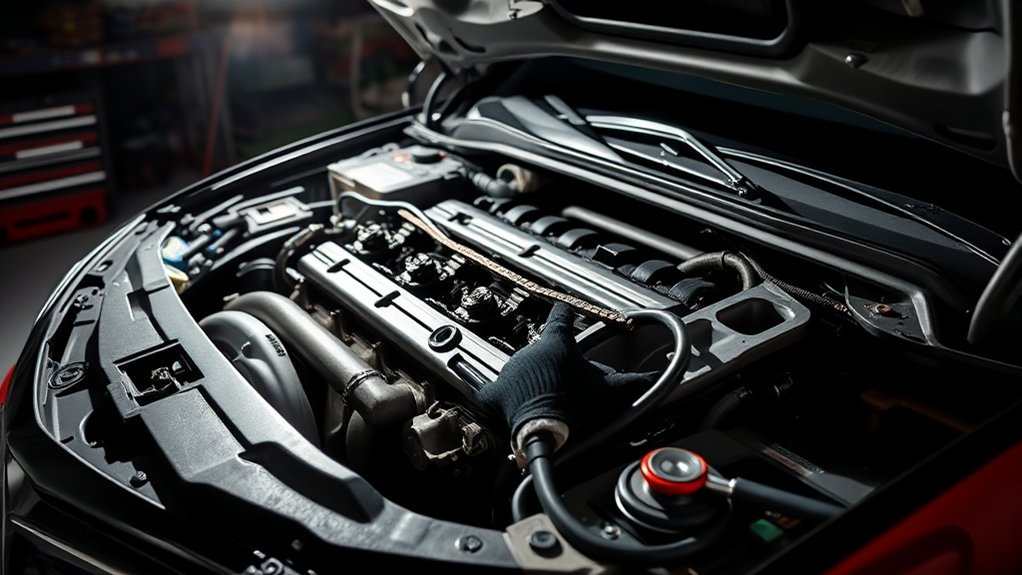
Yes. On modern Camrys, the engine control module manages ignition timing using sensor inputs and programmed control strategies; there is no normal owner adjustment for spark timing. A timing-related knock can therefore point to sensor-signal, VVT, mechanical-timing, combustion, or wiring problems rather than a simple distributor adjustment.
Incorrect Spark Timing
If the spark happens too early, combustion pressure can rise at the wrong time and create pinging or knock. The engine computer may reduce spark advance to protect the engine, but it can only do that if the sensors and wiring give reliable data.
Related problems can include faulty crankshaft or camshaft position signals, VVT faults, mechanical timing problems, incorrect spark plugs, misfires, overheating, or deposits. A scan tool can identify relevant DTCs and freeze-frame data, but a code identifies a system or circuit to test; it does not automatically prove which part has failed.
Engine Performance Degradation
Timing and combustion problems can make your Camry feel sluggish, jerky, or less efficient. You may notice poor acceleration, rough idle, reduced fuel economy, or a check-engine light. If the engine computer detects knock, it may reduce timing to protect the engine, which can make the car feel weak under load.
Do not keep clearing codes without diagnosing them. If the same code returns, the engine is telling you the problem is still present.
Can a Lean Air/Fuel Mixture Cause Camry Engine Knock?
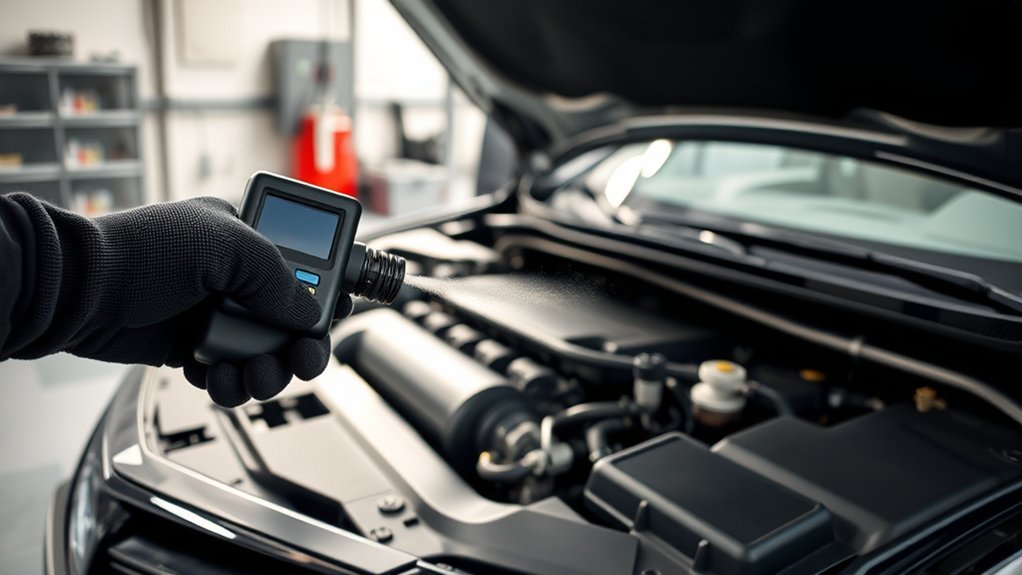
A lean air/fuel mixture means the engine is operating with more air relative to fuel than the control system expects. Depending on engine and load, a lean condition can cause hesitation, reduced power, higher combustion temperature, or pinging.
Toyota service information for different Camry engines lists causes such as intake or vacuum leaks, fuel-pressure problems, injector restriction, airflow-meter faults, air/fuel-sensor faults, and exhaust leaks. DTC P0171 is used for a lean condition on many four-cylinder applications; V6 applications may also use P0174 for bank 2. Exact diagnostic paths vary by model year and engine.
- Reduced power: The engine may hesitate because the mixture does not burn as smoothly.
- Higher combustion heat: Lean operation can raise temperatures and increase the chance of pinging.
- Long-term risk: Persistent abnormal combustion or excessive heat can damage engine or emissions components, depending on the cause and severity.
Diagnose lean conditions with fuel trims, sensor readings, smoke testing for vacuum leaks, and fuel-delivery checks. Guessing at oxygen sensors without checking live data can waste money.
What Does Rod Knock Sound Like in a Toyota Camry?
Rod knock is one of the most serious knock patterns. It is typically described as a deep, rhythmic metallic knock from the lower engine that follows engine speed and may change with load. Worn connecting-rod bearings, oil starvation, crankshaft damage, or other internal wear are possible causes, but the sound must be confirmed because accessory and valvetrain noises can imitate it.
| Symptom | Possible Cause | Best Next Step |
|---|---|---|
| Deep knock during acceleration | Worn rod bearing or crankshaft damage | Stop driving and get professional diagnosis. |
| Oil pressure warning or flickering oil light | Low oil level, oil pump issue, bearing clearance, sludge | Shut off the engine and check oil only when safe. |
| Metal flakes in oil or filter | Internal wear | Do not keep running the engine. Have the oil and filter inspected. |
| Knock after running low on oil | Oil starvation damage | Tow to a shop for oil-pressure and internal-noise diagnosis. |
Rod knock is not a “try an additive and wait” problem. If a bearing is damaged, the engine may need major repair, engine replacement, or a used/rebuilt engine depending on the vehicle’s value and condition.
[Amazon Products Picked for You]

Exquisite design: Oil Pressure Tester Tool have dual display pressure gauge head, clear scale, easy to clean, and equipped with rubber buffer protection cover, shockproof and scratchproof.

Exquisite design: dual display pressure gauge head, clear scale, easy to clean, and equipped with rubber buffer protection cover, shockproof and scratchproof

Exquisite design: Oil Pressure Tester Tool have dual display pressure gauge head, clear scale, easy to clean, and equipped with rubber buffer protection cover, shockproof and scratchproof.
What Does the Toyota Camry Knock Sensor Do?
A knock sensor listens for vibration patterns that match abnormal combustion. Delphi explains that knock sensors use piezoelectric material to create voltage signals when knock-related vibration occurs, and the ECU uses that information to adjust engine operation.
Knock Sensor Functionality Explained
The knock sensor does not prevent every engine problem by itself. It gives the engine computer feedback. The computer can then adjust ignition timing and fuel control within its programmed limits. If the sensor, connector, wiring, or engine condition is faulty, you may see poor performance, reduced power, or a check-engine light.
- Detection: The sensor detects vibration linked to knock or detonation.
- Signal: It sends an electrical signal to the engine control module.
- Correction: The ECU may reduce timing or adjust control strategy to protect the engine.
Impact on Engine Performance
A bad knock sensor, damaged wiring, poor connector contact, or another circuit fault can prevent the ECU from reading knock correctly. The car may feel sluggish if the ECU uses a conservative timing strategy. The exact DTC depends on the engine and model year: Toyota service information shows examples such as P0325, P0327, and P0328 for sensor 1 on some Camrys, while some V6 applications also use bank-2 codes such as P0330, P0332, and P0333.
Still, a knock-sensor code is not proof that the sensor alone is bad. P0325 is a knock-sensor-circuit code, and diagnostic guidance includes checking wiring, connectors, related codes, and engine mechanical or combustion problems before replacing the sensor.
Importance of Regular Diagnostics
Good diagnosis protects the engine and saves money. A scan tool can show trouble codes, freeze-frame data, fuel trims, misfire counters, and sensor readings. That information tells you whether the knock is more likely fuel-related, ignition-related, mixture-related, sensor-related, or mechanical.
Note: P0340 is a camshaft position sensor circuit code, not a knock-sensor code. It can affect timing and drivability, but it should be diagnosed as part of the cam/crank timing system, not treated as proof of engine knock.
Could a Belt Tensioner or Pulley Sound Like Engine Knock?
Yes. Not every knocking sound comes from inside the engine. Belt tensioners, idler pulleys, accessory bearings, A/C components, brackets, and loose shields can make tapping, clicking, rattling, or knocking noises. Component layout varies by Camry engine and model year, so inspect the actual accessory drive before naming a part.
| Symptom | Common Cause | Solution |
|---|---|---|
| Tapping or clicking that changes with engine speed | Worn tensioner or idler pulley | Inspect belt drive and replace worn parts. |
| Slapping sound near the belt | Loose, cracked, or stretched belt | Replace belt and check pulley alignment. |
| Rattle at certain RPM | Loose heat shield or bracket | Secure or replace loose hardware. |
| Grinding or wobbling pulley | Failing bearing | Replace the affected pulley or accessory. |
A mechanic’s stethoscope can help locate accessory noise, but moving belts and pulleys are dangerous. Keep hands, hair, sleeves, and tools away from the belt drive while the engine runs.
[Amazon Products Picked for You]

Designed to keep drive belt at proper tension

Compatible with Dodge Avenger 3.6 2011-2014, Challenger 3.6 2011-2023, Charger 3.6 2011-2023, Durango 3.6 2011-2015, Grand Caravan 2011-2020, Journey 3.6 2011-2019

Replaces part numbers: 16620-31031, 16620-31020, 16620-31021, 16620-3103, 16620-31050
When Should You Call a Mechanic for Camry Engine Knock?
Consult a mechanic when the knock is persistent, loud, metallic, or paired with a warning light. You should also get professional diagnosis if you see repeated trouble codes, rough running, overheating, low oil pressure, or metal in the oil.
- Fuel or light pinging issue: Confirm the correct octane, use fresh fuel, check for overheating, and inspect spark plugs and air/fuel data.
- Misfire or lean code: Diagnose ignition coils, plugs, injectors, vacuum leaks, fuel delivery, oxygen sensor data, and mass airflow readings.
- Knock sensor code: Inspect wiring, connectors, sensor mounting, and related engine conditions before replacing the sensor.
- Cam/crank or VVT code: Check oil condition, oil level, VVT components, timing correlation, and service-manual procedures.
- Deep mechanical knock: Stop driving and have oil pressure, bearing condition, and internal engine noise checked.
Repair cost depends on the root cause and model year. Fuel correction, spark-plug service, a loose shield, or an accessory-drive repair can be far less involved than internal bearing, mechanical-timing, or oil-starvation damage. Diagnose first; a sound description or DTC by itself is not a parts-replacement plan.
Related Camry Diagnostic Guides
- How to check Toyota Camry engine oil level — useful when knock appears with a low-oil concern.
- Toyota Camry oil viscosity chart explained — confirms why oil grade must match the exact year and engine.
- Toyota Camry cooling system components — use this when knocking appears with overheating or temperature warnings.
- Toyota Camry fuel octane requirements — checks regular vs. premium fuel by model-year context.
Frequently Asked Questions
What is the most common cause of engine knocking in a Toyota Camry?
There is no single most common cause for every Camry generation. Start with the pattern: light pinging under load can involve fuel or combustion control, while a deep rhythmic knock can involve lubrication or internal wear. Check oil level, warnings, recent fuel, stored codes, and the exact model-year service information before replacing parts.
Can low oil cause a Camry engine to knock?
Yes. Low oil level or low oil pressure can reduce lubrication between internal engine parts. That can cause tapping, rattling, or deep knocking sounds. If the oil pressure warning light appears, stop driving and shut off the engine as soon as it is safe.
Is engine knocking expensive to fix?
It can be cheap or expensive depending on the cause. Bad fuel, worn spark plugs, a loose heat shield, or a belt pulley may cost far less than internal bearing damage. A deep metallic knock from the lower engine is the warning sign that can lead to major repair costs.
Does engine knocking mean I need a new engine?
Not always. Light pinging, fuel issues, ignition problems, lean mixtures, and accessory-drive noises may be repairable without replacing the engine. A deep rod knock, oil-starvation damage, or metal in the oil can mean major internal damage, so get it diagnosed before driving further.
What trouble codes should I look for with engine knocking?
Exact codes vary by year and engine. Toyota service information shows P0325, P0327, and P0328 on some Camry knock-sensor-1 circuits, while some V6 applications also use P0330, P0332, and P0333 for bank 2. Also check for misfire, lean-condition, cam/crank, and VVT-related codes. P0340 is a camshaft position sensor circuit code, not a knock-sensor code.
What does Toyota Camry engine knock sound like?
A combustion ping is usually a lighter metallic ping or rattle under load, while possible rod or bearing knock is deeper and more rhythmic and often follows RPM. Pulleys, shields, injectors, and valvetrain parts can mimic knock, so use the sound as a clue rather than a final diagnosis.
Will premium gas stop a Toyota Camry from knocking?
Only if the ping is related to fuel below the octane requirement or another fuel-quality problem. Use the grade specified in your exact owner’s manual. Premium fuel will not repair low oil pressure, worn bearings, damaged wiring, a faulty sensor circuit, or accessory-drive noise.
Conclusion
Engine knocking in a Toyota Camry is a symptom, not a diagnosis. Start with warning lights, oil level, recent fuel, and stored plus pending codes. Then separate combustion ping from accessory noise and deeper mechanical knock before replacing parts.
If the sound is only a brief light ping under load, reduce load and confirm the correct fuel and operating condition. If the knock is deep, persistent, or paired with low oil pressure, overheating, severe rough running, or power loss, stop driving and get professional help. Early diagnosis is the best way to separate a manageable fuel, ignition, or accessory issue from internal engine damage.
Sources
- Toyota: What Is Octane Rating? — supports octane, knocking, performance, and engine-damage guidance.
- Toyota Owners: Manuals and Warranties — supports checking the correct model-year manual for fuel, oil, and service information.
- Toyota Owners: Warning Lights — supports urgent warning-light guidance, including low engine oil pressure.
- Delphi Technologies: How to Diagnose a Faulty Knock Sensor — supports knock sensor function, symptoms, and diagnosis methods.
- AutoZone: Understanding the P0325 Trouble Code — supports the distinction between a circuit code and automatically condemning the sensor.
- Toyota USA Newsroom: Next-Generation Camry Hybrid Powertrain — supports the hybrid-only U.S. powertrain context beginning with the 2025 model year.
- NHTSA Recall Lookup — supports VIN-based recall checks during repeated vehicle problem diagnosis.
