
Checking the engine oil level in your Toyota Camry takes only a few minutes, but it can help you catch low oil, leaks, overfilling, or dirty oil before they turn into expensive engine problems. Park on level ground, shut the engine off, let the oil settle, then use the dipstick to confirm the level sits between the low and full marks.
Quick Answer
To check Toyota Camry engine oil level, park on level ground, turn the engine off, wait 5-10 minutes, pull the engine oil dipstick, wipe it clean, reinsert it fully, then pull it out again. The oil should sit between the low and full marks. If it is low, add the correct oil slowly and recheck.
Key Takeaways
- Check your Camry’s oil on level ground after the engine has been off long enough for oil to drain back into the pan.
- Wipe the dipstick first, reinsert it fully, then read the oil level on the second pull.
- Keep the oil level between the low and full marks, not above the full mark.
- Use the oil type and capacity listed in your owner’s manual because Camry specs vary by year and engine.
- If the red oil-pressure warning light comes on, stop safely and address it right away.
At a Glance
| Time Required | 3-5 minutes |
| Difficulty | Easy beginner maintenance |
| Tools Needed | Clean lint-free rag or paper towel, correct engine oil if topping off, funnel if needed |
| Cost | Free to check; topping off depends on the oil your Camry requires |
Why Checking Engine Oil Is Essential for Your Toyota Camry
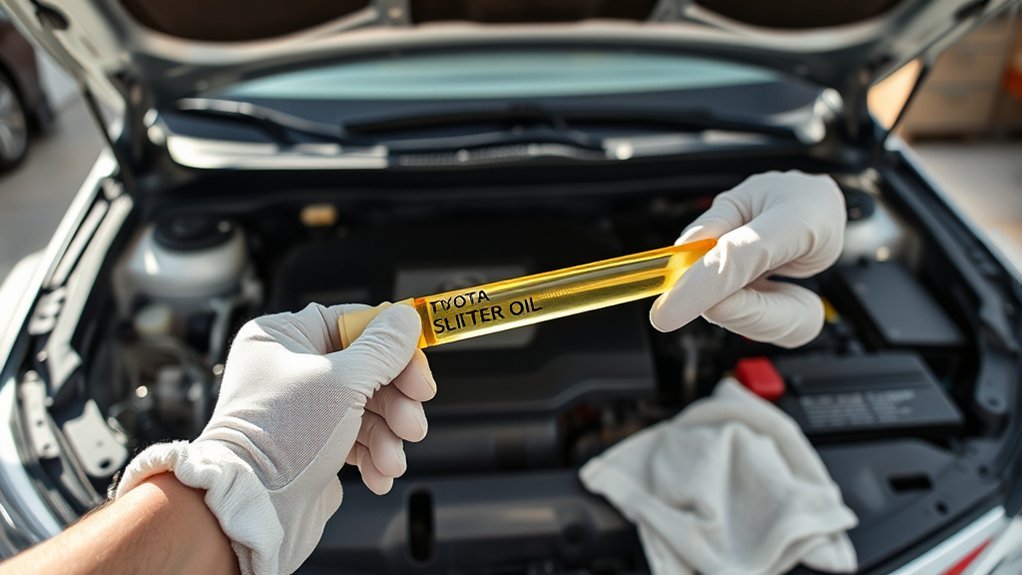
Although it feels like a small maintenance habit, checking your Toyota Camry’s oil level helps protect the engine’s moving parts. Engine oil lubricates internal components, helps control heat, and carries contaminants to the oil filter.
Low oil can reduce lubrication and raise the risk of engine wear. Too much oil can also cause problems because the crankshaft may whip the oil into foam, which can reduce proper lubrication.
Your Toyota owner’s manual is the best source for your Camry’s exact oil type, capacity, dipstick markings, and maintenance schedule. Camry oil specs can vary by model year, engine, and hybrid configuration.
A quick dipstick check can catch low oil, overfilling, or a leak before the engine warns you with a light or noise.
Best Time to Check Toyota Camry Engine Oil
For a reliable reading, check the oil when the vehicle is parked on level ground and the engine is off. Let the engine sit for about 5-10 minutes after driving so oil can drain back into the oil pan.
You can also check the oil before the first drive of the day, as long as the car is level. The most important habit is consistency. Use the same method each time so you can spot changes in the oil level more easily.
Warm Engine Checks
A warm-engine check works well after a short drive because the oil has circulated through the engine. Shut the engine off, wait 5-10 minutes, then check the dipstick.
Do not check the oil while the engine is running. Oil moving through the engine can give you an inaccurate reading and creates an unnecessary safety risk near belts, fans, and hot parts.
Cold Engine Checks
A cold-engine check can also give a clear reading because the oil has had more time to settle in the pan. This is often easiest first thing in the morning before you start the car.
Avoid checking immediately after a cold start. Once the engine has started, oil begins moving through the engine, so you should shut it off and give it time to settle before reading the dipstick.
Step-by-Step Guide to Checking Your Engine Oil Level
Before you begin, park your Camry on level ground, set the parking brake, and make sure the engine is off. Give the oil a few minutes to settle, then follow these steps:
| Step | Action | Why It Matters |
|---|---|---|
| 1 | Open the hood and secure it. | You need clear, safe access to the engine bay. |
| 2 | Locate the engine oil dipstick, which is often yellow or orange. | The dipstick measures the oil level in the oil pan. |
| 3 | Pull the dipstick out and wipe it clean. | Old oil streaks can hide the true level. |
| 4 | Reinsert the dipstick fully, then pull it out again. | A full reinsert gives the most accurate reading. |
| 5 | Check whether the oil sits between the low and full marks. | This confirms the engine has a safe oil level. |
| 6 | Reinstall the dipstick completely. | A loose dipstick can allow oil mist or dirt into the tube. |
Pro Tip: Keep a clean rag or paper towel in the trunk. It makes monthly oil checks cleaner and easier, especially before a road trip.
How to Read the Oil Level on the Dipstick
Most Toyota Camry dipsticks use two marks, holes, dots, or a crosshatched area to show the safe range. The exact design can vary, so use the marking style on your dipstick and confirm it in your owner’s manual if you are unsure.
Identifying Dipstick Markings
The oil level should sit between the low and full marks. A reading near the lower mark means you should top off carefully. A reading above the full mark means the engine may be overfilled.
| Dipstick Reading | What It Means | What To Do |
|---|---|---|
| Between low and full | Normal oil level | Reinstall the dipstick and keep your regular check schedule. |
| At or below the low mark | Oil level is low | Add the correct oil slowly, wait, and recheck. |
| Above the full mark | Oil may be overfilled | Do not add oil. Have excess oil drained if the level is clearly high. |
| No oil on dipstick | Oil may be very low, or the reading was taken incorrectly | Recheck on level ground. If still dry, do not keep driving until the level is corrected. |
Interpreting Oil Color and Texture
Oil color gives you a useful clue, but it does not tell the whole story. Fresh oil is often amber or light brown. Used oil usually darkens as it collects heat, soot, and contaminants.
Very gritty oil, oil with metal flakes, milky-looking oil, or oil that smells burnt can point to a problem. If you see any of these signs, schedule service instead of relying on a simple top-off.
Also check the oil level trend. If your Camry keeps needing oil between oil changes, inspect for leaks and ask a technician to check for oil consumption or engine wear.
How to Handle Low or Overfilled Oil
If the oil level is low on the dipstick, use the oil type listed in your owner’s manual or on the oil-fill cap. Remove the oil-fill cap, add a small amount, wait a minute, then recheck the dipstick.
Do not pour in a large amount at once. It is easier to add more oil than to fix an overfilled engine. Stop when the oil level sits inside the safe range.
Warning: If the red oil-pressure warning light comes on while driving, pull over safely, shut the engine off, and check your owner’s manual. Low oil pressure can need immediate attention, even if the dipstick reading is not obviously low.
If the oil level is clearly above the full mark, do not add more oil. A small reading variation can happen if the car is not level or the dipstick was not wiped first, so recheck carefully. If it is still high, have the excess oil drained.
Tips for Maintaining Your Engine Oil and Overall Vehicle Health

Check your Camry’s engine oil about once a month and before long drives. This simple habit helps you catch low oil, dirty oil, and leaks early.
Change the oil and oil filter according to your Camry’s factory maintenance schedule. The right interval depends on model year, engine, oil type, mileage, and driving conditions, so avoid using a one-size-fits-all mileage rule.
Use the correct oil viscosity and specification listed in your owner’s manual. If your Camry has a newer hybrid powertrain, an older gasoline engine, or a high-mileage engine, the correct oil recommendation may differ from another Camry.
While the hood is open, glance at coolant level, washer fluid, belts, hoses, and visible leaks. You do not need to diagnose everything yourself, but spotting a drip or low fluid early can help you prevent a breakdown.
Avoid These Common Mistakes When Checking Oil Levels
Small mistakes can make the dipstick reading look higher or lower than it really is. Start with level ground and a clean dipstick every time.
- Checking on a slope: A tilted car can move oil to one side of the pan and skew the reading.
- Checking while the engine is running: Shut the engine off first so oil can settle safely.
- Skipping the wipe-and-reinsert step: The first pull often has oil smeared along the dipstick.
- Not inserting the dipstick fully: A partial insert can make the level look wrong.
- Adding too much oil: Add a little, wait, and recheck before adding more.
- Ignoring repeated low readings: Frequent top-offs may point to a leak or oil consumption issue.
Note: If you recently had an oil change and the level looks wrong, recheck it on level ground. If it still reads low or high, contact the shop or a Toyota service center before driving far.
Troubleshooting Oil Level Problems
If the dipstick reading does not make sense, do not guess. Recheck the level after the car has been sitting on level ground for several minutes.
- Dipstick looks dry: Reinsert it fully and check again. If it is still dry, add the correct oil carefully or get service before driving.
- Oil is above the full mark: Confirm the car is level. If it still reads high, have excess oil removed.
- Oil looks milky: This can suggest coolant contamination or condensation. Schedule service.
- Oil smells burnt or feels gritty: Plan an oil and filter change and have the engine checked if the issue returns quickly.
- Oil level drops often: Look for leaks under the car and ask a technician to check for oil consumption.
Frequently Asked Questions
How do you check Toyota Camry engine oil level?
Park on level ground, turn the engine off, wait 5-10 minutes, pull the dipstick, wipe it clean, reinsert it fully, then pull it out again. The oil should sit between the low and full marks on the dipstick.
Do you check Toyota oil hot or cold?
You can check it warm after shutting the engine off and waiting several minutes, or cold before the first start of the day. The key is to park on level ground and let the oil settle before reading the dipstick.
What is the correct way to read a Toyota oil dipstick?
Pull the dipstick, wipe it clean, insert it all the way back into the tube, then pull it out again. Read the oil film at the low and full marks, holes, dots, or crosshatched area on your dipstick.
How much oil should I add if my Camry is low?
Add a small amount at a time, wait briefly, and recheck the dipstick. Do not guess the total capacity unless you are doing a full oil change. Your owner’s manual lists the correct oil capacity for your model year and engine.
What should I do if the oil pressure light comes on?
Pull over safely, shut the engine off, and check your owner’s manual. A red low-oil-pressure warning can signal a problem that needs immediate attention. Do not keep driving just because the engine still sounds normal.
Conclusion
Checking your Toyota Camry’s oil level is one of the easiest ways to protect the engine. Park on level ground, let the oil settle, wipe and reinsert the dipstick, then confirm the level sits between the low and full marks.
If the oil is low, add the correct oil slowly and recheck. If it is overfilled, milky, gritty, burnt-smelling, or dropping often, get the issue checked. Your owner’s manual remains the final source for your Camry’s oil type, capacity, and maintenance schedule.
Sources
- Toyota Manuals and Warranties — vehicle-specific owner’s manual guidance for oil type, capacity, and maintenance details.
- Toyota Warning Lights — Toyota guidance that red warning icons, including low engine oil pressure, need immediate attention.
- ToyotaCare & Maintenance Plans — factory scheduled maintenance guidance and maintenance-plan context.
- U.S. EPA Used Oil Guidance — proper handling and recycling guidance for used motor oil.
