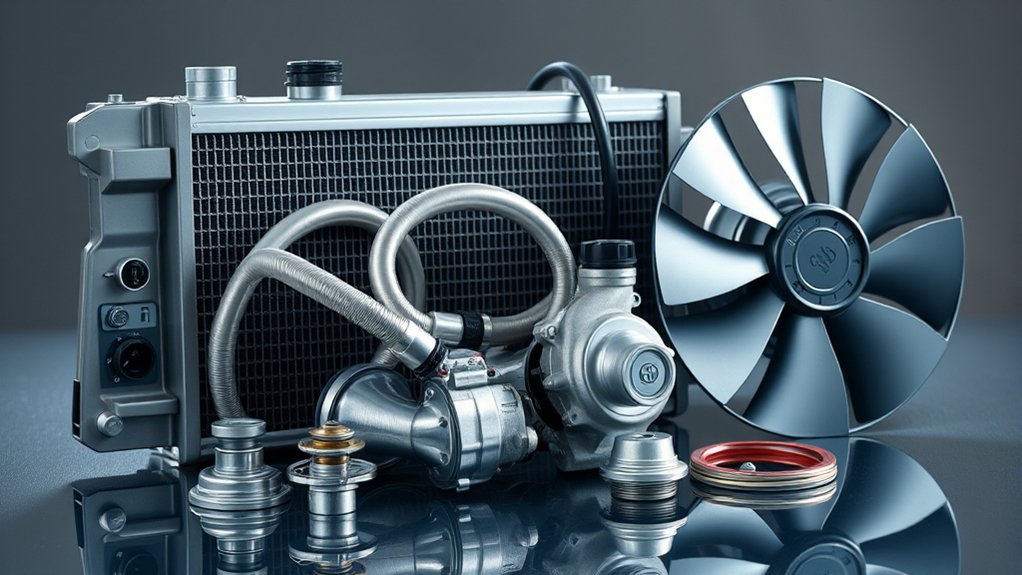
A Toyota Camry cooling system controls engine temperature by circulating coolant through the engine and radiator, then releasing heat through airflow. The main liquid-cooling parts include the water pump, thermostat or other flow controls, radiator, electric fans, hoses, reservoir or expansion tank, pressure cap, temperature sensors, and coolant passages.
Hybrid Camrys add an important distinction: the gasoline engine and inverter or power electronics may use separate liquid-coolant circuits, while the high-voltage traction battery is generally cooled by cabin air through a dedicated intake and filter. The exact layout, coolant type, pump design, service interval, and bleeding procedure vary by model year, engine, market, and hybrid configuration, so use this guide with your vehicle’s Toyota owner’s manual and maintenance guide.
Current U.S. model note: The 2025 redesign made the U.S.-market Camry exclusively hybrid, and the 2026 Camry remains an all-hybrid lineup. Older model years still include gasoline-only configurations, so identify the model year and powertrain before applying hybrid-specific guidance.
Last updated: September 19, 2026 — checked against Toyota’s 2026 U.S. Camry maintenance guidance and current U.S. lineup information.
Quick Answer
The Toyota Camry cooling system absorbs engine heat into coolant, circulates it through the radiator, and releases the heat through airflow. Core parts include the pump, thermostat or flow controls, radiator, fans, hoses, reservoir, pressure cap, sensors, coolant passages, and, on hybrid models, a separate inverter-cooling system.
Key Takeaways
- Cooling-system layouts and specifications differ across Camry generations, engines, markets, and hybrid models.
- Older configurations may use mechanically driven pumps, while newer Toyota engine designs may use motor-driven pumps and electronic flow controls.
- Never open a radiator cap or any pressurized coolant cap while the engine or hybrid system is hot.
- Use only the coolant type and mixture listed for your exact Camry, and do not identify coolant by color alone.
- A hybrid traction battery’s cooling-air intake is separate from the engine and inverter liquid-coolant circuits.
- Repeated cold-level loss, overheating, warning lights, steam, or pump noise requires prompt diagnosis.
At a Glance: Basic Cold-Engine Inspection
| Time Required | About 10–20 minutes of active inspection time after the engine has cooled completely; cooling time is additional and may take an hour or longer |
| Difficulty | Beginner for visual checks; professional service is recommended for pressure testing, bleeding, electrical diagnosis, or internal-leak testing |
| Tools Needed | Gloves, flashlight, clean rag, and the correct model-year owner’s manual or maintenance guide |
| Cost | No cost for a visual inspection; coolant, testing, and repair costs vary by model, location, and fault |
Warning: Never loosen a radiator cap or any pressurized coolant-reservoir cap while the engine, radiator, or hybrid system is hot. Hot coolant and steam can escape under pressure and cause severe burns. Let the vehicle cool fully before inspecting the system.
Understanding the Toyota Camry Cooling System Basics
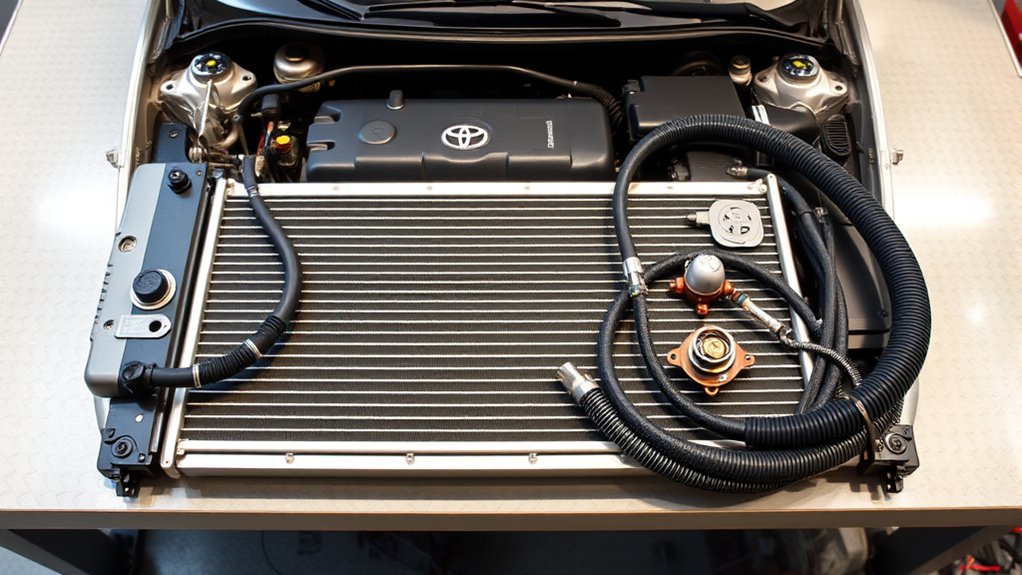
Your Camry produces heat whenever its gasoline engine burns fuel. Coolant absorbs some of that heat as it passes through channels in the engine block and cylinder head. The pump then moves the heated coolant through the available circuits and toward the radiator when additional cooling is needed.
A thermostat, heated thermostat, control valve, or related flow-control system regulates when and where coolant circulates. Electric cooling fans add airflow when road speed alone is not enough, such as while idling, driving slowly, or operating the air conditioner.
The cooled fluid returns to the engine and repeats the cycle. A pressure cap helps raise the coolant’s boiling point by maintaining the designed system pressure. Depending on the layout, a reservoir or expansion tank gives coolant room to expand and contract as its temperature changes.
This process applies broadly, but the hardware and control strategy differ across Camry generations. Some older engines use a mechanically driven water pump. Newer Toyota engine technology can use a motor-driven water pump, heated thermostat, and variable cooling system.
Essential Components of the Toyota Camry Cooling System
A Camry cooling system includes more than four major parts. The exact component count depends on whether individual hoses, sensors, valves, heat exchangers, and hybrid circuits are counted separately.
| Component | What It Does | Common Warning Signs |
|---|---|---|
| Radiator | Transfers heat from the coolant to the surrounding air. | Leaks, damaged fins, restricted flow, or overheating. |
| Water pump | Circulates coolant through the engine and heat exchangers. | Leakage, noise, warning lights, trouble codes, or poor circulation. |
| Thermostat or flow controls | Regulates coolant flow as operating conditions change. | Slow warm-up, unstable temperature, weak heat, or overheating. |
| Cooling fans | Move air through the radiator and nearby condenser when extra airflow is needed. | Overheating at idle, in traffic, or with the air conditioner running. |
| Hoses and pipes | Carry coolant between the engine, radiator, reservoir, heater core, and other components. | Cracks, swelling, soft spots, seepage, abrasion, or collapse. |
| Reservoir and pressure cap | Manage coolant expansion, recovery, level monitoring, and system pressure according to the design. | Repeated cold-level loss, damaged seals, staining, or coolant discharge. |
| Heater core | Uses hot coolant to warm the passenger compartment. | Sweet odor inside, damp carpet, window film, gurgling, or weak cabin heat. |
| Temperature sensors and controls | Report temperature and help control pumps, fans, warning lights, and engine protection. | Incorrect readings, warning lights, trouble codes, or improper fan operation. |
| Coolant passages | Route coolant through the engine block, cylinder head, and related assemblies. | Restricted flow, uneven heating, or internal leakage. |
| Coolant | Transfers heat while helping protect against freezing, boiling, and corrosion. | Low level, contamination, incorrect concentration, or incompatible products. |
| Inverter cooling circuit, if equipped | Uses a separate pump, reservoir, hoses, and heat exchanger to cool hybrid power electronics. | Hybrid warnings, inverter overheating, low coolant, pump faults, or reduced-power operation. |
| HV battery cooling intake and filter, if equipped | Draws cabin air across the traction battery; it is not an engine-coolant reservoir. | Blocked intake, loud cooling fan, battery-temperature warnings, or reduced hybrid performance. |
How Does the Radiator Regulate Engine Temperature?
Hot coolant enters the radiator and flows through narrow internal tubes. Thin fins attached to those tubes increase the surface area exposed to air. Heat moves from the coolant into the tubes and fins, then into the passing air.
At road speed, natural airflow may provide much of the cooling. At low speed or while idling, one or more electric fans move air through the radiator. Air-conditioning operation can also affect fan commands because the condenser sits near the radiator and releases its own heat.
Dirt, leaves, bent fins, internal deposits, external damage, or a blocked grille can reduce heat transfer. A leak can lower the coolant level and allow air to enter the system.
A radiator can appear intact and still cool poorly if airflow is blocked, coolant flow is restricted, the cap cannot control pressure, or trapped air prevents proper circulation.
The pressure cap also supports radiator performance. It must match the vehicle’s specified pressure rating, depth, and sealing design. Do not substitute a cap based only on its diameter or appearance, and never install a higher-pressure cap as an upgrade. For model-specific selection and testing context, see the Toyota Camry radiator cap pressure guide.
How the Water Pump Ensures Coolant Circulation
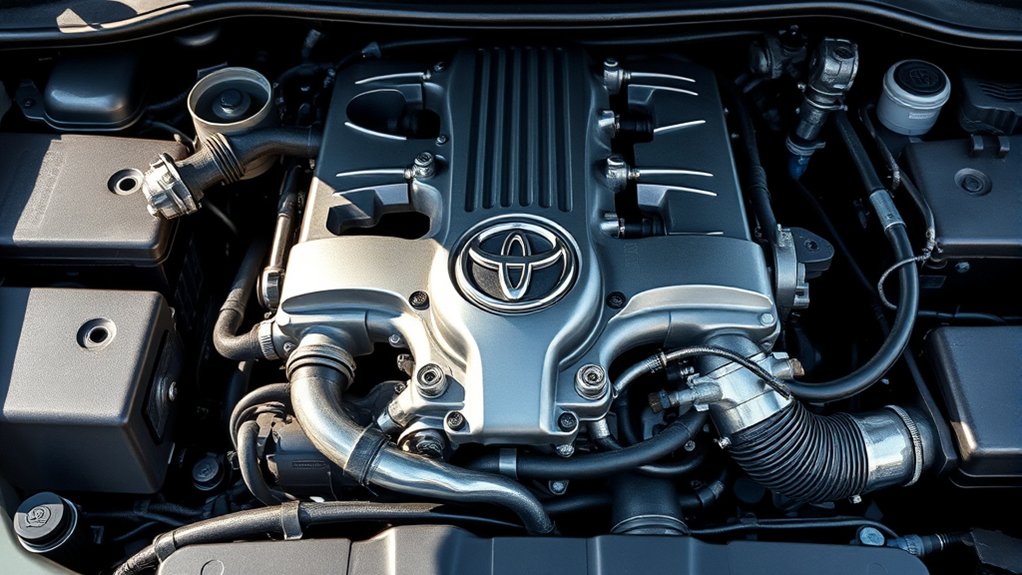
The water pump keeps coolant moving through the engine, radiator, heater circuit, and any applicable bypass passages. Without steady circulation, heat can build rapidly in the cylinder head and engine block.
Pump design varies. Some Camry engines use a mechanically driven pump, while newer Toyota engine designs may use an electric motor-driven pump. An electric pump can be controlled according to temperature and operating conditions instead of being tied directly to engine speed.
Importance of Coolant Flow
Coolant must move at the correct rate and through the correct path. During warm-up, the system may limit radiator flow so the engine reaches an efficient operating temperature. As temperatures rise, the thermostat, water-control valve, or related system routes more coolant through the radiator.
Low coolant, trapped air, a restricted passage, a malfunctioning thermostat, a failed control valve, or a weak pump can interrupt this process. The result may be unstable temperature readings, reduced cabin heat, warning lights, diagnostic trouble codes, or overheating.
Signs of Water Pump Failure
Possible water-pump symptoms include:
- Coolant seepage or dried residue near the pump
- Grinding, whining, or bearing noise on mechanically driven designs
- A cooling-system warning or diagnostic trouble code on electronically controlled designs
- Temperature that rises under load or changes unexpectedly
- Poor cabin heat combined with a rising engine temperature
- Repeated cold-level loss with no obvious hose or radiator leak
These symptoms do not prove the pump is faulty. A technician may need to inspect pump operation, electrical commands, coolant flow, system pressure, wiring, and stored trouble codes.
Note: Toyota’s 2026 U.S. Camry maintenance guide does not list routine water-pump replacement as a scheduled service item. Follow the guide for your vehicle and replace the pump when inspection or diagnosis confirms a fault.
What Role Does the Thermostat Play in Cooling Efficiency?
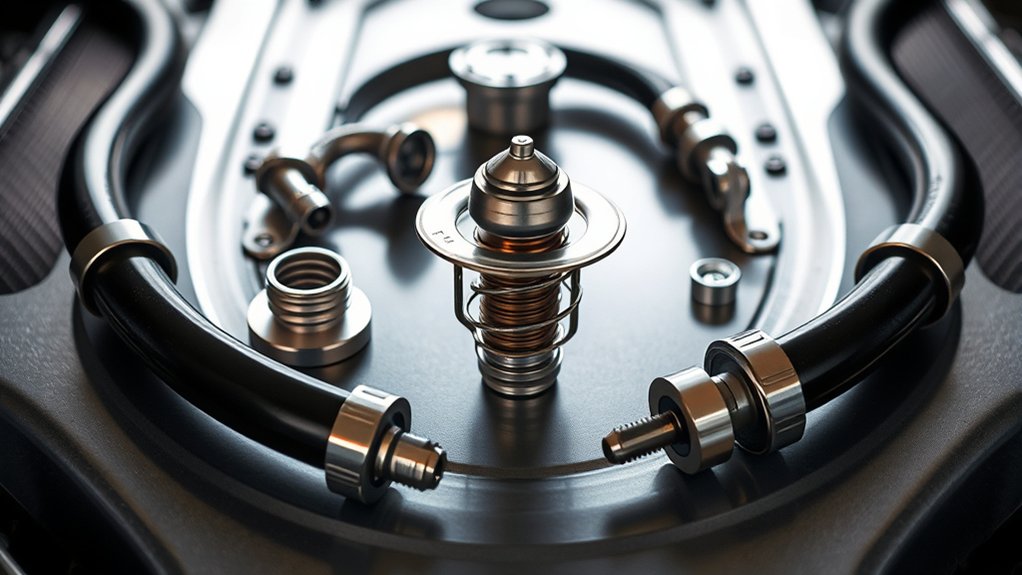
The thermostat helps the engine warm up promptly and then keeps it within its intended operating range by regulating coolant flow. Some newer systems add heated thermostats, control valves, electric pumps, grille shutters, or computer-managed strategies.
Thermostat Functionality Overview
When the engine is cold, the thermostat limits flow through the radiator. Coolant may continue moving through an internal bypass or heater circuit, depending on the design.
As the coolant reaches the thermostat’s calibrated range, the valve begins opening and allows more flow through the radiator. It does not simply switch from fully closed to fully open at one universal Camry temperature.
The correct opening range, valve travel, seal, orientation, and testing procedure depend on the thermostat and engine. Use the applicable Toyota service information when testing or replacing it.
Temperature Regulation Importance
An engine that runs too cold may warm up slowly, deliver weak cabin heat, consume more fuel during warm-up, increase emissions, or set a diagnostic code. An engine that runs too hot can suffer detonation, warped components, gasket failure, oil degradation, or severe internal damage.
Stable temperature depends on the whole system. A good thermostat cannot compensate for low coolant, a blocked radiator, a failed fan, trapped air, a faulty control valve, or a weak pump.
Common Thermostat Issues
- Stuck closed or restricted: Coolant cannot reach the radiator effectively, so temperature may rise quickly.
- Stuck open: The engine may warm slowly, the heater may remain weak, and the temperature may stay below its expected range.
- Intermittent movement: Temperature may fluctuate as the valve sticks and releases.
- Incorrect replacement part: The wrong opening specification, seal, or physical design may disrupt flow.
- Installation or bleeding problem: A damaged seal, wrong orientation, loose housing, or trapped air can mimic thermostat failure.
What Do the Hoses Do in the Cooling System?
Cooling hoses and molded pipes connect the engine, radiator, reservoir, heater core, and other cooling components. Their number, material, and routing differ by model.
The upper radiator hose commonly carries hot coolant toward the radiator, while the lower hose returns cooled fluid toward the pump or engine. Smaller hoses may serve the reservoir, heater core, bypass system, coolant valves, or hybrid power-electronics circuit.
Inspect accessible hoses only after the engine has cooled. Look for:
- Cracks, cuts, abrasions, or exposed reinforcement
- Swelling near a clamp or connection
- Unusually soft, brittle, hardened, or oil-soaked areas
- Coolant residue, dampness, staining, or a sweet smell
- A hose that appears flattened, kinked, or collapsed
- Loose, damaged, corroded, or incorrectly positioned clamps
Hoses do not require automatic replacement at one universal four-year interval. Replace them when inspection reveals deterioration, a leak develops, or the maintenance information for the vehicle directs replacement. For a focused inspection checklist, see Toyota Camry radiator hose aging signs.
How Does the Cooling System Work Step by Step?
- The engine generates heat. Combustion and friction raise the temperature of the engine block and cylinder head.
- Coolant absorbs that heat. Fluid passes through internal coolant jackets around hot engine areas.
- The pump maintains circulation. A mechanical or electric pump moves coolant through the available circuits.
- Flow controls manage warm-up. The thermostat, control valve, or related system limits radiator flow while the engine is cold.
- Hot coolant reaches the radiator. Once cooling is needed, more fluid moves through the radiator tubes.
- Air removes heat. Road airflow and electric fans carry heat away from the radiator fins.
- Cooled fluid returns to the engine. The cycle continues while the engine operates.
- The reservoir manages expansion. Coolant expands as it heats and contracts as it cools, causing some normal level movement.
- Sensors monitor operation. The vehicle’s control systems use temperature information to manage fans, pumps, warning indicators, and engine protection.
Hybrid Toyota Camry Cooling-System Differences
A hybrid Camry may have more than one liquid-coolant circuit. In addition to the gasoline engine’s cooling system, a separate circuit may cool the inverter, converter, or related power-electronics components.
Separate circuits can have their own reservoir, electric pump, hoses, and heat exchanger. Do not assume that two under-hood reservoirs serve the same system. Never transfer coolant between them, overfill them, or open either system while hot.
A warning related to the hybrid system, inverter temperature, or electric coolant pump requires model-specific diagnosis. High-voltage hybrid components should be handled only by qualified personnel.
Traction-Battery Cooling Is a Separate System
The high-voltage traction battery should not be confused with the inverter. On current Camry Hybrid models, the traction battery is generally cooled by cabin air drawn through an intake vent and filter or screen. Toyota’s 2026 U.S. Camry maintenance chart lists an HEV battery cooling intake filter separately from the engine and inverter coolant items.
Keep the battery-cooling intake unobstructed by luggage, seat covers, pet hair, dust, or debris. Do not pour coolant into or spray cleaner through an air intake. Follow the maintenance guide for inspection and cleaning intervals.
Warning: Do not touch orange high-voltage cables, remove hybrid-system covers, or dismantle power-electronics or battery components while inspecting a hybrid Camry’s cooling systems.
How to Maintain Your Toyota Camry Cooling System
Good cooling-system maintenance starts with the correct manual, a fully cold engine, and regular visual checks. A top-up may restore the level temporarily, but it does not repair the leak or fault that caused coolant to disappear.
1. Check the Coolant Level Safely
Park on level ground and let the engine cool completely. Check the appropriate reservoir against its marked cold range. Hybrid models may have separate reservoirs, so identify each one before adding anything.
Do not fill above the specified upper mark. Overfilling can cause coolant discharge as the fluid expands and may hide useful evidence about the system’s normal level movement.
A level that keeps falling when checked under the same cold conditions indicates leakage or another fault. Topping it off repeatedly without finding the cause can allow a serious problem to worsen.
2. Use the Correct Toyota Camry Coolant
Use the coolant type, concentration, and service procedure listed for your model year, engine, market, and cooling circuit. Toyota advises owners to check the vehicle manual and confirm whether Toyota Genuine Super Long Life Coolant is specified.
Do not choose coolant only by color. Products can look similar while using different base fluids, concentrations, or additive packages. Mixing incompatible coolant can reduce corrosion protection, shorten service life, or create deposits. For a deeper compatibility discussion, see Toyota Camry engine coolant types.
Do not assume plain water, concentrated antifreeze, or a so-called universal coolant is suitable. Use the premixed product or water-to-coolant concentration specified in the manual.
3. Inspect for Leaks and Damage
Use a flashlight to check accessible areas around:
- The reservoir, seams, and cap
- Radiator seams and hose connections
- The water-pump area
- Thermostat housing, coolant outlets, and control valves
- Heater hoses near the firewall
- Hybrid inverter-cooling components, without touching high-voltage parts
- The ground beneath the front of the car
Fresh coolant may appear wet, while an older leak may leave colored, white, or pale crusty residue. A sweet odor after driving can also indicate leakage.
4. Keep Airflow Paths Clear
Check the front grille and visible heat-exchanger surfaces for leaves, plastic bags, mud, insects, or other debris. Avoid bending delicate fins or spraying high-pressure water directly into them.
On a hybrid, also keep the traction-battery cooling-air intake clear. Its location varies, so use the owner’s manual rather than assuming every Camry has the intake in the same place.
5. Follow the Model-Specific Service Interval
Coolant replacement schedules vary by year, market, and circuit. Follow the applicable Warranty and Maintenance Guide rather than treating one mileage figure as universal. For model-year schedule examples, see the Toyota Camry coolant replacement interval guide.
Current U.S. Example: The 2026 Toyota Camry Warranty & Maintenance Guide schedules initial engine/intercooler-coolant replacement, if applicable, at 100,000 miles or 120 months, followed by every 50,000 miles or 60 months. It schedules applicable inverter/intercooler coolant initially at 150,000 miles or 180 months, then every 50,000 miles or 60 months. These figures are a current U.S. example, not a schedule for every Camry.
Proper coolant replacement may require multiple drain points, a vacuum-fill tool, operation of an electric pump, a scan-tool procedure, or a specific bleeding sequence. Air left inside the system can cause weak heat, gurgling, unstable temperature, poor circulation, or overheating.
6. Check for Recalls and Service Campaigns
Use Toyota’s VIN-based recall and service-campaign lookup to check whether your Camry has an open campaign. A campaign is not proof of a cooling-system fault, but it should be reviewed before paying for related repairs.
Pro Tip: Photograph the coolant level when the vehicle is fully cold, parked in the same place, and viewed from the same angle. Comparing dated photos over several weeks makes a slow loss easier to detect than relying on memory.
Normal Versus Abnormal Cooling-System Behavior
| Observation | Often Normal | Needs Attention |
|---|---|---|
| Reservoir level | Some movement between hot and cold conditions while remaining within the marked range. | A repeated decline when checked fully cold under the same conditions. |
| Cooling fans | Fans cycling on and off according to temperature and air-conditioning demand. | No fan operation during overheating, damaged wiring, or a fan that runs continuously with warnings present. |
| Exhaust vapor | Light condensation that clears as the exhaust warms, especially in cool weather. | Dense white exhaust that continues after warm-up, especially with coolant loss or a sweet odor. |
| Cabin heat | Heat gradually increasing as the engine warms. | The heater suddenly turning cold while engine temperature rises. |
| Odor or residue | No persistent sweet odor, dampness, or crusty deposits. | Sweet odor, wet areas, dried coolant residue, or drips beneath the vehicle. |
Warning Signs of Toyota Camry Cooling-System Problems
| Symptom | Possible Causes | Recommended Action |
|---|---|---|
| Temperature warning or gauge rising | Low coolant, leak, fan fault, thermostat problem, pump fault, restriction, sensor problem, or internal engine fault | Stop safely, shut the vehicle off, and let it cool. Do not open the hot system. |
| Overheating mainly in traffic | Cooling-fan, fan-control, electrical, or airflow problem | Have fan operation, wiring, controls, and radiator airflow tested. |
| Overheating at highway speed or under load | Low coolant, restricted radiator, pump problem, thermostat fault, trapped air, or combustion leak | Stop driving and arrange diagnosis before the vehicle overheats again. |
| Weak cabin heat with rising engine temperature | Low coolant, trapped air, or poor circulation | Shut the vehicle off and check the cold level only after full cooling. |
| Sweet odor or visible residue | External coolant leak | Locate and repair the leak instead of repeatedly topping off. |
| Steam from under the hood | Severe overheating or a pressurized coolant leak | Pull over, switch off the vehicle, stay clear of the steam, and arrange towing. |
| Persistent white exhaust, milky oil, or repeated bubbling from a cold start | Possible internal coolant leak or combustion gases entering the cooling system | Avoid driving and request professional testing. |
| Hybrid-system or inverter-temperature warning | Low inverter coolant, electric-pump fault, blocked heat exchanger, electrical problem, or another hybrid-system fault | Stop safely and obtain hybrid-qualified diagnosis; do not handle high-voltage components. |
How to Troubleshoot Common Toyota Camry Cooling System Issues
Start with the symptom, not a guessed part. Several cooling-system faults can produce the same warning, and replacing a thermostat or pump without testing may leave the actual problem unresolved.
If the Camry Starts Overheating While Driving
- Turn off the air conditioner.
- Move to a safe place and stop as soon as possible.
- Shift into Park and apply the parking brake.
- If steam or coolant spray is present, shut the vehicle off immediately and do not open the hood until the steam subsides.
- Keep clear of steam, spraying coolant, electric fans, and moving components.
- Do not remove any cooling-system cap while the vehicle is hot.
- After the system has cooled fully, inspect the appropriate reservoir level and look for an obvious leak without touching high-voltage components.
- Arrange towing if a reservoir is empty, coolant is leaking, steam appeared, the warning returns, or the cause is unknown.
Warning: Do not continue driving merely because the warning disappears after the vehicle cools. A leak, fan fault, pump problem, electrical failure, or flow restriction can return without warning and cause major engine or hybrid-system damage.
If the Coolant Level Is Low
Inspect for visible leakage after the engine cools. Check the reservoir, hose joints, radiator seams, pump area, thermostat housing, coolant-control valves, and ground beneath the car. If the level keeps dropping, use the Toyota Camry coolant leak guide for a leak-focused diagnostic path.
Add coolant only when the manual permits it, using the correct premixed product or specified mixture. Fill only to the marked cold range. If a substantial amount is missing, do not assume topping off makes the vehicle safe to drive.
If the Engine Overheats Only at Low Speed
A low-speed problem often points toward inadequate airflow. Possible causes include a cooling fan that does not run, a fan-control fault, damaged wiring or a connector, grille debris, or a radiator and condenser packed with dirt. If overheating happens mainly at highway speed or under load instead, use the highway-speed overheating guide to separate airflow problems from coolant-flow, pressure, and heat-transfer faults.
Keep hands, clothing, and tools away from electric fans. They can start automatically even when the gasoline engine is stopped or the vehicle appears quiet.
If the Temperature Fluctuates
Fluctuating temperature may come from trapped air, a sticking thermostat, low coolant, intermittent electric-pump operation, a control-valve fault, an inaccurate sensor, or combustion gases entering the system.
A professional may use a scan tool to compare reported temperatures, command electric components, monitor pump operation, inspect live data, and check for diagnostic trouble codes.
If No External Leak Is Visible
A pressure test can reveal small external leaks, but the tester and cap adapter must match the vehicle. Internal-leak diagnosis may require a combustion-gas test, cooling-system pressure observation, spark-plug inspection, exhaust analysis, cylinder-leakage testing, or other model-appropriate procedures.
Do not rely on stop-leak products as a substitute for diagnosis. Some products can restrict small passages, heater cores, control valves, pumps, or radiators and may complicate later repairs.
When to Seek Professional Cooling-System Service
Arrange professional inspection when you notice any of the following:
- The engine or hybrid system has overheated or produced steam
- The cold coolant level drops repeatedly
- A temperature, hybrid-system, or check-engine warning remains on
- The heater turns cold while engine temperature rises
- The electric fans do not operate as expected
- The water pump leaks, makes noise, operates intermittently, or sets a related code
- Coolant appears contaminated with oil, rust, debris, or an unidentified product
- White exhaust continues after normal condensation should clear
- The traction-battery cooling fan becomes unusually loud or its intake is heavily contaminated
- You cannot identify the correct reservoir, coolant, cap, or bleeding procedure
Pressure testing, vacuum filling, hybrid cooling service, electric-pump diagnosis, scan-tool operation, and internal engine testing require suitable tools and model-specific information.
Coolant Handling and Disposal
Coolant can be harmful to people, pets, wildlife, and the environment. Clean spills promptly, keep coolant in its original or clearly labeled sealed container, and prevent children or animals from reaching it.
Do not pour used coolant onto the ground, into a storm drain, or down a household drain. Do not mix it with engine oil, brake fluid, fuel, or solvents. Follow the product label and contact a local household hazardous-waste program, coolant recycler, or automotive service facility for an approved disposal option. The U.S. Environmental Protection Agency’s household hazardous-waste guidance explains why improper disposal can threaten health and pollute the environment.
Related Guides
Frequently Asked Questions
What are the main parts of a Toyota Camry cooling system?
The main parts include the radiator, water pump, thermostat or other flow controls, electric cooling fans, hoses and pipes, coolant reservoir or expansion tank, pressure cap, heater core, temperature sensors, and coolant passages. Hybrid models may also have a separate inverter or power-electronics cooling circuit.
How does the Toyota Camry cooling system work?
Coolant absorbs heat inside the engine, and the pump keeps it circulating. A thermostat or other flow-control system routes more coolant through the radiator when cooling is needed. Road airflow and electric fans remove heat from the radiator, and the cooled fluid returns to the engine while sensors help the vehicle manage pumps, fans, warnings, and protection strategies.
Which coolant should I use in a Toyota Camry?
Use the coolant type and concentration listed for your exact model year, engine, market, and cooling circuit. Do not choose coolant by color alone, and do not mix products unless compatibility with the specified Toyota coolant chemistry is confirmed.
How often should Toyota Camry coolant be replaced?
Use the maintenance guide for your exact Camry and follow whichever limit comes first: mileage or time. As a current U.S. example, the 2026 guide lists initial engine/intercooler coolant replacement, if applicable, at 100,000 miles or 120 months and initial inverter/intercooler coolant replacement, if applicable, at 150,000 miles or 180 months. Both are then listed every 50,000 miles or 60 months.
Why does a hybrid Camry have more than one coolant reservoir?
A hybrid Camry can use one liquid-cooling circuit for the gasoline engine and a separate circuit for the inverter or related power electronics. Each circuit may have its own reservoir, pump, hoses, and heat exchanger, so identify the correct reservoir before checking or adding coolant.
Does the Camry Hybrid traction battery use engine coolant?
The Camry Hybrid traction battery is generally cooled by cabin air through a dedicated intake and filter or screen. That battery-cooling air path is separate from the engine and inverter liquid-coolant systems. Keep the intake clear and follow the maintenance guide for inspection and cleaning.
What are common signs of a Toyota Camry cooling-system problem?
Warning signs include a rising temperature gauge or coolant-temperature warning, repeated cold-level loss, steam, a sweet coolant odor, visible residue or drips, weak cabin heat while engine temperature rises, abnormal fan behavior, persistent white exhaust after warm-up, or a hybrid-system or inverter-temperature warning.
Is it normal for the Toyota Camry coolant level to move?
Some movement between hot and cold conditions can be normal because coolant expands and contracts. Compare the level under the same fully cold conditions. A repeated decline, a level below the specified range, staining, drips, or a persistent sweet odor needs investigation.
Can I drive a Toyota Camry that is overheating?
Move only far enough to reach a safe stopping place, then shut the vehicle off and let it cool. Continuing to drive can cause severe engine or hybrid-system damage. Arrange towing if coolant is leaking, steam is present, a reservoir is empty, the warning returns, or the cause is unknown.
Conclusion
Your Toyota Camry’s cooling system depends on steady coolant circulation, controlled flow, effective radiator airflow, correct pressure, and accurate temperature monitoring. Hybrid models may also have a separate inverter liquid-cooling circuit and a traction-battery cooling-air intake, which must not be confused with one another.
Check coolant only when the vehicle is fully cold, keep the level within the marked range, inspect for leakage and damaged hoses, keep airflow paths clear, and follow the maintenance guide for your Camry. Stop driving when the vehicle overheats, never open a hot pressurized system, and seek professional diagnosis when coolant loss, steam, warnings, or unstable temperature returns.
Sources
- Toyota Manuals and Warranties — model-specific owner, warranty, safety, and maintenance information.
- 2026 Toyota Camry Warranty & Maintenance Guide — current U.S. engine/intercooler coolant, inverter/intercooler coolant, radiator/heat-exchanger, and HEV battery cooling-intake maintenance examples.
- Toyota 2026 Camry Newsroom — current U.S. lineup and hybrid powertrain context.
- Toyota Genuine Super Long Life Coolant — coolant purpose and Toyota’s instruction to confirm the product specified in the vehicle manual.
- Toyota Dynamic Force Engine Technical Overview — motor-driven water-pump, heated-thermostat, and variable-cooling technology.
- Toyota Recall and Service Campaign Lookup — VIN- or license-plate-based checks for open safety recalls and service campaigns.
- U.S. EPA Household Hazardous Waste Guidance — safe handling, storage, and disposal principles for potentially hazardous household products.

