
A meat thermometer is the easiest way to cook meat safely without drying it out. It helps you check the internal temperature instead of guessing from color, cooking time, or juices. When you use it correctly, you can avoid undercooked poultry, dry pork, overdone steak, and unsafe ground meat.
Quick Answer
To use a meat thermometer correctly, insert the probe into the thickest part of the meat, away from bone, fat, or gristle. Wait until the reading stabilizes, then compare it with safe internal temperatures: 165°F for poultry, 160°F for ground meats, and 145°F with rest time for whole cuts of beef, pork, veal, lamb, and fish.
Key Takeaways
- Use a meat thermometer to confirm food safety and avoid relying only on color, texture, or cooking time.
- Place the probe in the thickest part of the meat and avoid touching bone, fat, gristle, or the pan.
- Cook poultry to 165°F, ground meats to 160°F, and whole cuts of beef, pork, veal, lamb, and fish to 145°F with proper rest time.
- Clean the probe before and after each use to reduce cross-contamination.
- Check your thermometer’s accuracy with the ice-water test if readings seem off.
At a Glance
| Time Required | 10 to 30 seconds for most checks, depending on thermometer type |
| Difficulty | Easy |
| Tools Needed | Instant-read, leave-in probe, oven-safe, or digital meat thermometer |
| Cost | Usually low to moderate, depending on features such as speed, accuracy, alarms, and wireless monitoring |
The significance of meat thermometers in cooking cannot be overstated. These devices serve as essential tools for ensuring that meat is cooked to the appropriate temperature, which is crucial for both safety and quality. Undercooked meat can harbor harmful bacteria such as Salmonella, E. coli, and Campylobacter, which can lead to foodborne illness.
By using a meat thermometer, you remove guesswork from cooking. Your dishes become safer to eat, and they also have a better chance of staying juicy and flavorful. Poultry should reach an internal temperature of 165°F, while ground meats should reach 160°F. Whole cuts of beef, pork, veal, lamb, and fish should reach 145°F, with the proper rest time for whole cuts.
The precision offered by a meat thermometer makes it an indispensable tool in any kitchen. It also gives you more control over doneness. You can cook a steak to medium-rare, keep a pork loin tender, or avoid overcooking chicken breast. Instead of cutting into the meat and losing juices, you can check the temperature quickly and accurately.
Using a thermometer can also improve the overall cooking experience. It helps you avoid repeated checking, unnecessary slicing, and uncertainty at the table. For example, a properly cooked pork loin can stay succulent and tender when removed from heat at the right internal temperature, while an overcooked piece can become dry and tough. Understanding how to use a meat thermometer is a basic skill that can improve nearly every meat dish you cook.
Choosing the Right Meat Thermometer for Your Needs
Selecting the right meat thermometer starts with how you cook most often. Some thermometers work best for quick spot checks, while others are better for roasting, smoking, grilling, or slow cooking. The best option for you depends on speed, accuracy, ease of use, and whether you want to monitor food while it cooks.
[Amazon Products Picked for You]

Fast & Accurate: Get precise readings in just 1 second with ±0.9°F accuracy. NSF Certified for trusted food safety, this digital food thermometer features a 4.3 inches food-grade stainless steel meat probe, perfect for grilling, frying, baking, making candy and more

Completely Waterproof: IPX6 waterproof rating means you can wash this cooking thermometer under running water without fear. This food thermometer for cooking ensures cleanup is ultra-fast

Bluetooth Monitor Remotely: Govee Bluetooth meat thermometer lets you check the temperature of your grill, smoker, or oven from your phone. With this smart BBQ thermometer, you can multitask while grilling.
Instant-Read Thermometers
Instant-read thermometers are ideal for quick checks. They provide readings in seconds, which makes them useful when grilling burgers, checking chicken breasts, or testing several pieces of meat at once. You insert the probe, wait for the temperature to stabilize, read the number, and remove it. Most instant-read thermometers are not designed to stay in the oven or grill during cooking.
Leave-In Probe Thermometers
Probe thermometers can stay in the meat while it cooks. They allow continuous monitoring without opening the oven, smoker, or grill too often. This helps maintain a consistent cooking environment, especially for turkey, roast chicken, prime rib, brisket, pork shoulder, and other large cuts.
Oven-Safe Thermometers
Oven-safe thermometers are designed to remain in the food during cooking. Many have analog displays, while some digital models use cords or probes connected to an outside display. They are useful for roasts, whole poultry, and long oven cooks, but they may be slower than a good instant-read thermometer.
Infrared Thermometers
Infrared thermometers measure surface temperature only. They can be useful for checking a grill grate, pan, pizza stone, or cooking surface. However, they do not measure the internal temperature of meat. Do not use an infrared thermometer as your only food safety tool for poultry, ground meat, or thick cuts.
When choosing a thermometer, consider features such as temperature range, response time, accuracy, readability, water resistance, and probe length. Some models come with large digital displays, backlights, foldable probes, alarms, or preset temperatures for different meats. A thermometer with clear buttons and a quick display can make meal preparation easier, especially when you cook several foods at once.
Note: Preset meat settings can be helpful, but you should still know the safe internal temperatures yourself. Some presets may focus on doneness preference rather than food safety.
Proper Meat Thermometer Placement for Accurate Readings

The placement of a meat thermometer is critical for accurate readings. Incorrect placement can lead to misleading results, which may compromise both safety and quality. For most cuts of meat, the thermometer should be inserted into the thickest part of the meat. Avoid bones, fat, and gristle because these areas can give readings that do not reflect the true internal temperature of the meat.
For example, when measuring a chicken breast, insert the thermometer into the thickest section from the side or top, depending on the shape of the piece. This helps you check the part that takes the longest to cook. If you test only the thin end, the reading may look safe even though the center is still undercooked.
In larger cuts of meat, such as roasts or whole turkeys, it is wise to check multiple spots. The center of a roast is often the coolest area. In whole poultry, check the thickest part of the breast and the innermost part of the thigh without touching bone. This gives you a better picture of whether the whole bird is cooked safely.
When using a probe thermometer that stays in the meat during cooking, position it before the food goes into the oven, smoker, or grill. Make sure the probe tip rests in the center of the thickest area. It should not touch a bone, pan, grill grate, or pocket of fat. Poor placement can skew the reading and lead to overcooking or undercooking.
Warning: Do not rely on meat color alone. Chicken can look white before it reaches a safe temperature, and some cooked meats can stay pink even after they are safe to eat.
How to Insert a Meat Thermometer Step by Step
- Choose the thickest area. Find the part of the meat that will cook the slowest.
- Insert the probe correctly. Push the probe into the center of the meat, avoiding bone, fat, gristle, and the cooking surface.
- Wait for the reading to stabilize. Digital instant-read thermometers often need only a few seconds, while analog models may take longer.
- Compare the number with the safe temperature. Use the correct temperature for the meat type and cooking method.
- Check another spot when needed. Test large cuts, whole poultry, and uneven pieces in more than one location.
- Clean the probe. Wash or sanitize it before using it again, especially after contact with raw meat.
Interpreting Meat Thermometer Readings
| Meat Type | Doneness | Temperature (°F) |
|---|---|---|
| Beef (steak) | Rare | 125-130 |
| Beef (steak) | Medium Rare | 130-135 |
| Beef (steak) | Medium | 135-145 |
| Beef (steak) | Medium Well | 145-155 |
| Beef (steak) | Well Done | 160+ |
| Pork | Medium | 145 |
| Pork | Well Done | 160 |
| Chicken (breast) | Well Done | 165 |
| Ground Meat | Well Done | 160 |
Interpreting the readings from a meat thermometer requires an understanding of safe cooking temperatures and personal doneness preferences. Each type of meat has a minimum internal temperature that helps reduce food safety risks. For instance, ground meat should reach 160°F, while poultry should reach 165°F.
Whole cuts of beef, pork, veal, and lamb are commonly cooked to different doneness levels. A steak may be rare around 125°F to 130°F, medium-rare around 130°F to 135°F, medium around 135°F to 145°F, and well done at 160°F or higher. These doneness levels describe eating preference, but safe handling, proper cooking, and rest time still matter.
It is also important to consider carryover cooking. This happens when meat continues to cook after it is removed from heat because residual heat remains inside the food. For example, a steak taken off the grill at 130°F may rise several degrees while resting. Many cooks remove meat from heat when it is about 5°F below the target serving temperature, especially for steaks and roasts.
A thermometer reading is only useful when the probe is in the right place. The thickest part of the meat gives the safest and most reliable reading.
Safe Internal Temperature Guide
| Food | Minimum Internal Temperature | Helpful Note |
|---|---|---|
| Whole cuts of beef, pork, veal, and lamb | 145°F | Rest for at least 3 minutes before carving or serving. |
| Ground beef, pork, veal, and lamb | 160°F | Check the center of the thickest patty or portion. |
| Poultry, including chicken and turkey | 165°F | Check the breast and the innermost part of the thigh for whole birds. |
| Fish and seafood | 145°F | Fish should be opaque and separate easily with a fork. |
| Leftovers and casseroles | 165°F | Stir when possible and check the center. |
Tips for Using a Meat Thermometer for Different Types of Meat
Different types of meat require specific thermometer techniques to ensure accurate results. Poultry, steaks, roasts, ground meats, fish, and leftovers all cook differently. Matching the method to the food helps you get a safer and better result.
Poultry
For poultry, it is important to check multiple areas because whole birds can have uneven thickness. The innermost part of the thigh and the thickest part of the breast should be checked carefully. These areas often take longer to cook than thinner sections. Avoid touching bone because bone can affect the reading.
Chicken breasts should be checked in the thickest part. For thin pieces, insert the thermometer from the side so more of the probe sits inside the meat. This gives the sensor a better chance of reaching the center.
Beef Steaks and Roasts
For steaks, insert the thermometer into the side of the steak and aim for the center. This works better than checking from the top, especially with thin cuts. For large roasts, check the center and at least one other thick area. Let the roast rest before slicing so juices can redistribute.
Pork
For pork chops, tenderloin, and pork loin, insert the probe into the thickest part without touching bone. Pork can dry out quickly when overcooked, so a thermometer is especially useful. Whole cuts of pork can be safely cooked to 145°F with a rest time, while ground pork should reach 160°F.
Ground Meat
For ground meats like burgers, meatballs, meatloaf, and sausages, check that the center reaches 160°F. Ground meat needs careful temperature checking because bacteria can be mixed throughout the meat during grinding. For burgers, insert the thermometer from the side into the center of the patty.
Fish
For fish, check the thickest part of the fillet or steak. Fish is generally done at 145°F. The flesh should look opaque and separate easily with a fork. For very thin fillets, a fast instant-read thermometer helps because the temperature can rise quickly.
Leftovers and Casseroles
For leftovers and casseroles, check the center and the thickest area. Stir dishes when possible so heat spreads evenly. Reheated foods should reach 165°F. This is especially important for dense dishes, sauces, gravies, and foods reheated in a microwave.
Pro Tip: For thin cuts like burgers, pork chops, and chicken cutlets, insert the probe from the side instead of straight down. This makes it easier to reach the true center.
Cleaning and Maintaining Your Meat Thermometer

Proper cleaning and maintenance of a meat thermometer are vital for safety, longevity, and accuracy. After each use, especially when the probe touches raw meat, clean it thoroughly with hot soapy water or a food-safe disinfecting wipe. This helps prevent cross-contamination between raw and cooked foods.
Many digital thermometers are water-resistant, but that does not always mean they are fully waterproof. Avoid submerging the display or electronic body unless the manufacturer says it is safe. Instead, wipe the probe and handle carefully with a damp cloth and dry them before storage.
Regular calibration is another important part of thermometer maintenance. Over time and with frequent use, thermometers can drift from their original settings. If your readings seem too high, too low, or inconsistent, check the thermometer before relying on it for food safety.
[Amazon Products Picked for You]
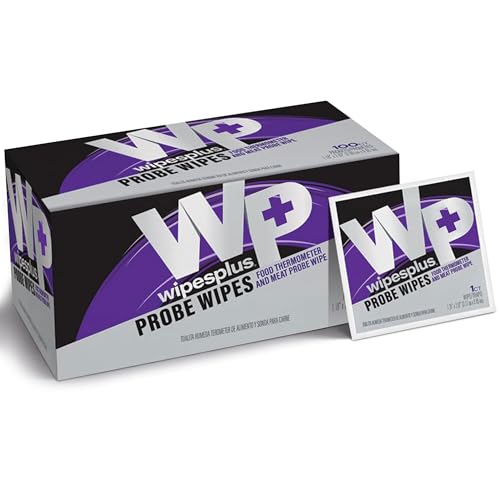
Pre-moistened with alcohol, WIPESPLUS Probe Wipes clean thermometer probes in just one swipe, ensuring cleanliness and efficiency in any food prep environment
Designed to clean thermometers and probes
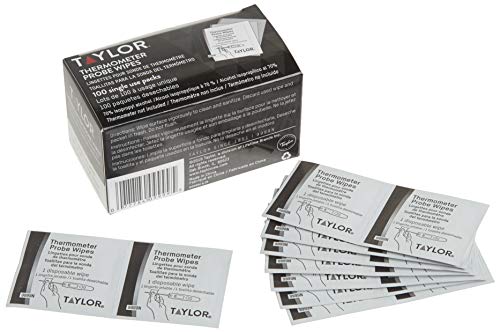
Use these HACCP probe wipes to sterilize thermometers between each use.
How to Check Accuracy With Ice Water
- Fill a glass with crushed ice.
- Add cold water until the glass is full.
- Let the mixture sit for a minute so the temperature stabilizes.
- Insert the probe into the ice water without touching the sides or bottom of the glass.
- Wait for the reading to stabilize.
- The thermometer should read close to 32°F.
If the reading is off, follow the manufacturer’s calibration instructions if your model allows adjustment. If it cannot be recalibrated and the reading is far from accurate, replace it. A thermometer that cannot measure correctly should not be used for food safety decisions.
Common Mistakes to Avoid When Using a Meat Thermometer
Several common mistakes can undermine the effectiveness of a meat thermometer and lead to poor cooking results. One common error is not allowing enough time for the reading to stabilize. Some cooks pull out the thermometer too quickly, especially when using analog or slower digital models. Give the device enough time to produce a reliable number.
Another mistake is inserting the thermometer incorrectly. Placing the probe too close to bone, fat, gristle, or the edge of the meat can give a misleading reading. If you are checking a roast, whole bird, or uneven cut, test more than one spot to make sure the coldest area has reached the right temperature.
Some cooks also forget to clean the probe between uses. This can spread bacteria from raw meat to cooked food, cutting boards, or serving plates. Clean the thermometer before and after checking food, especially when checking several pieces during the same cooking session.
Relying on visual cues alone is another common problem. Clear juices, browned surfaces, and firm texture do not always prove that meat is safe. A thermometer provides a more dependable answer than color or timing.
- Do not check too close to the surface. Surface temperature is often hotter than the center.
- Do not touch the pan or grill grate. This can cause a falsely high reading.
- Do not use an infrared thermometer for internal doneness. It only checks the surface.
- Do not skip rest time for whole cuts. Resting helps temperature stabilize and improves texture.
- Do not use a damaged probe. A bent, cracked, or unreliable thermometer should be replaced.
Troubleshooting Meat Thermometer Problems
If your thermometer gives strange readings, the issue may be placement, calibration, battery power, or probe damage. Before assuming the food is cooked incorrectly, check the tool and how you are using it.
| Problem | Likely Cause | What to Do |
|---|---|---|
| Reading changes every time | Probe is not in the same location or the meat is unevenly cooked | Check the thickest part and test multiple spots. |
| Reading seems too high | Probe may be touching bone, pan, grill grate, or fat | Reinsert the probe into the center of the meat. |
| Reading seems too low | Probe may not be deep enough or thermometer may need calibration | Check placement and perform the ice-water test. |
| Digital screen fades or shuts off | Weak battery or moisture damage | Replace the battery and dry the unit. Replace it if unreliable. |
| Slow reading | Analog model, low battery, or older sensor | Wait longer or upgrade to a faster instant-read thermometer. |
Advanced Techniques for Using a Meat Thermometer
For those looking to elevate their culinary skills further, advanced techniques involving meat thermometers can provide even greater precision. One useful technique is using multiple thermometers when preparing large meals or multiple types of meat at once. This allows you to monitor several foods without repeatedly opening the oven, smoker, or grill.
Remote-read thermometers can also help during long cooks. Some models connect through Bluetooth or Wi-Fi, allowing you to monitor temperatures from a phone or receiver. This is useful for smoking meats, slow-roasting large cuts, or cooking a turkey when you do not want to open the oven door repeatedly.
Leave-in probes with alarms are helpful when cooking to a target temperature. You can set an alert and remove the meat at the right time. This helps reduce overcooking, especially with chicken breast, pork tenderloin, turkey, prime rib, and thick steaks.
Some cooks also use thermometers with sous-vide cooking, where precise temperature control is essential. In sous-vide cooking, food is sealed in bags and cooked in a water bath at a controlled temperature. A reliable digital thermometer can help confirm that the water bath stays consistent throughout the cooking process.
Temperature mapping is another advanced method. For large cuts such as brisket, pork shoulder, or turkey, you can check several areas to understand how evenly the meat is cooking. This helps you adjust placement, rotate the food, or protect hotter areas from overcooking.
Related Kitchen Safety and Cooking Tools
If you’re looking to elevate your kitchen game beyond just using a meat thermometer correctly, you may want to consider investing in one of the 5 Top Decorative Bowls for Your Coffee Table. These stylish and functional bowls can add a touch of elegance to your kitchen decor. Additionally, ensuring your kitchen is clean and safe is essential, so you may also want to check out the 5 Top All-Purpose Cleaners for Your Kitchen. And for overall safety in your home, consider investing in one of the 5 Best Smart Carbon Monoxide Detectors to protect yourself and your loved ones.
[Amazon Products Picked for You]
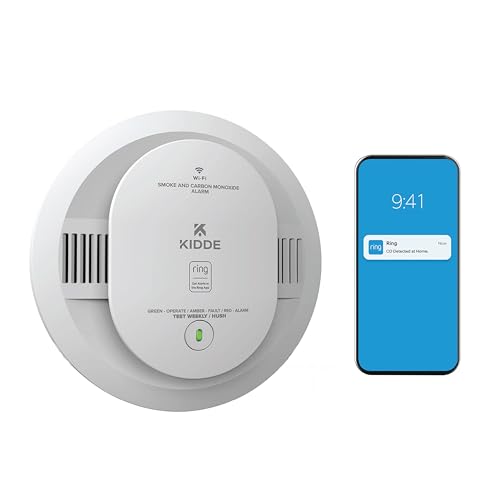
Double the Detection: Alerts you to both smoke and carbon monoxide (CO)

Know your air – An Alexa air quality monitor that makes it easy to understand what’s in your indoor air.

REAL-TIME KIDDE APP NOTIFICATIONS: Get alerted to CO when you’re home or away (no subscription required); sounds a loud 85-dB alarm when CO is detected; uses 2.4 GHz Wi-Fi
Related Guides
Frequently Asked Questions
What is a meat thermometer?
A meat thermometer is a kitchen tool used to measure the internal temperature of meat and other cooked foods. It helps you confirm that food has reached a safe temperature and is cooked to your preferred doneness.
Why is it important to use a meat thermometer correctly?
Using a meat thermometer correctly is important because it helps prevent undercooked food and reduces the risk of foodborne illness. It also helps you avoid overcooking, so meat stays juicier and more tender.
How do you use a meat thermometer correctly?
Insert the probe into the thickest part of the meat, avoiding bone, fat, and gristle. Wait for the reading to stabilize, then compare the temperature with the recommended safe internal temperature for that food.
What are the recommended safe cooking temperatures for different types of meat?
Common safe internal temperatures include 145°F for whole cuts of beef, pork, veal, lamb, and fish; 160°F for ground meats; and 165°F for poultry, leftovers, and casseroles. Whole cuts should rest before serving.
What are the different types of meat thermometers?
Common types include instant-read thermometers, oven-safe thermometers, leave-in probe thermometers, and wireless thermometers. Instant-read models are best for quick checks, while leave-in probes are better for roasts, smoking, and long cooks.
How do you calibrate a meat thermometer?
Fill a glass with ice and cold water, then insert the thermometer probe into the mixture without touching the sides or bottom. The thermometer should read close to 32°F. If it does not, follow the manufacturer’s calibration steps or replace the thermometer.
Can you leave a meat thermometer in the oven?
Only leave a thermometer in the oven if the manufacturer labels it oven-safe or designed as a leave-in probe. Many instant-read thermometers should not stay in the oven, grill, or smoker.
Where should you put a thermometer in a burger?
Insert the thermometer from the side of the burger into the center of the patty. This helps the probe reach the thickest part and gives a more accurate internal temperature reading.
Should you wash a meat thermometer after every use?
Yes. Wash or sanitize the probe before and after each use, especially after it touches raw meat. This helps prevent cross-contamination between raw and cooked foods.
Sources
- USDA FSIS Safe Minimum Internal Temperature Chart — supports safe internal temperatures for meat, poultry, fish, leftovers, and casseroles.
- FoodSafety.gov Safe Minimum Internal Temperatures — supports temperature guidance for common foods.
- USDA FSIS Kitchen Thermometers — supports thermometer use, placement, and accuracy guidance.
- FDA Food Safety in Your Kitchen — supports safe handling and cross-contamination prevention.
