
TSA wait times by state can look dramatically different, but an airport’s location tells only part of the story. Passenger volume, staffing, terminal layout, and departure schedules all affect how long you spend in security. The mysterious “Hat Man” mentioned in some online discussions has no established connection to airport screening. For travelers, the useful question is how to find reliable airport wait estimates and plan enough time to reach the gate.
Quick Answer
There is no recognized “Hat Man” measure of airport delays. U.S. TSA wait times are tracked by airport and checkpoint, not reliably by state. A short line at one Florida airport does not prove Florida is faster than California. Use airport-specific estimates and allow extra time for boarding, baggage, and connections.
Last checked: September 28, 2026. Dates and figures were verified against official sources.
What Does “Hat Man” Mean for Airport Wait Times?
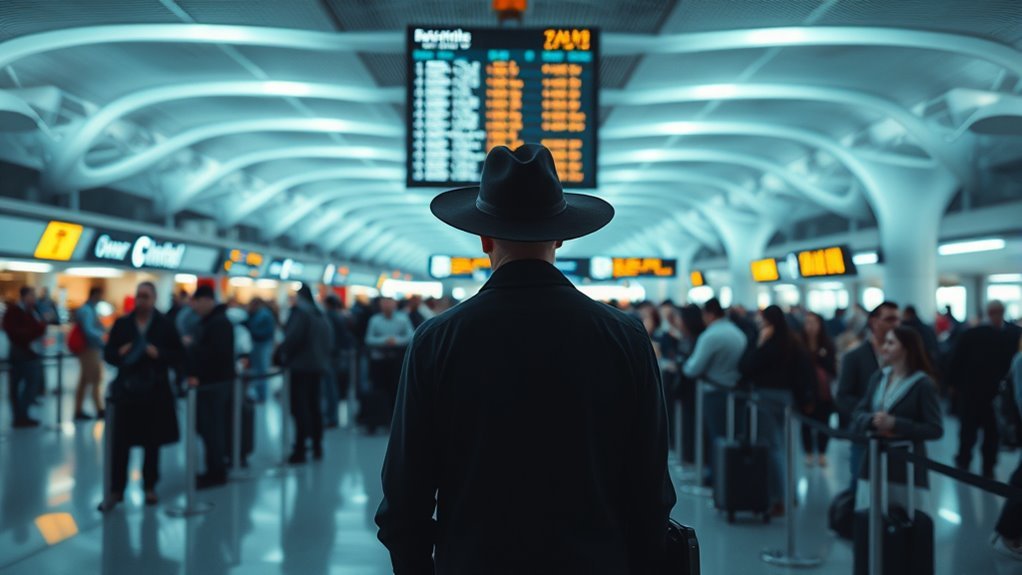
The Hat Man is a figure from sleep-related folklore, not an official airport term. People describe a dark, humanlike figure wearing a hat, often in accounts associated with sleep paralysis.
According to the Cleveland Clinic’s explanation of sleep paralysis, some people experience frightening hallucinations while moving between sleep and wakefulness.
There is no established evidence linking these experiences to TSA checkpoint delays or particular U.S. states.
For airport travel, the measurable issues are passenger processing, security screening, immigration, and customs clearance.
What Actually Determines Airport Wait Times?
Several processes contribute to the time between arriving at an airport and reaching your gate:
- Airline check-in: Document checks, baggage acceptance, and boarding-pass collection.
- TSA screening: Identity verification and security inspection before entering the secure terminal.
- Terminal travel: Walking, shuttle rides, or trains between checkpoints and gates.
- International arrivals: Passport control, baggage collection, and customs inspection where applicable.
These processes have different operators and different waiting times. A short security queue does not guarantee a quick international arrival or connection.
Which U.S. Airports Have the Shortest TSA Waits?
There is no permanently fastest U.S. airport for TSA screening. Wait times change throughout the day, and an airport with a short morning queue can become crowded before a major departure period.
Florida airports, California hubs, and smaller regional facilities cannot be compared fairly using a single statewide average.
Compare the airport, checkpoint, and travel time—not just the state.
Portland International Airport
Portland International Airport (PDX) provides a useful example of how airport-specific information helps travelers.
The official Portland airport website displays separate TSA wait estimates for its B/C and D/E checkpoint areas, including general screening and TSA PreCheck.
The displayed figures change as airport conditions change. They are useful for planning a particular journey, but they do not establish a permanent national ranking.
San Diego International Airport
San Diego International Airport (SAN) is another airport travelers may consider when comparing West Coast departures.
However, the original claim that San Diego consistently has one of America’s shortest TSA queues could not be confirmed through a standardized national comparison.
Its actual screening time depends on the terminal, flight schedule, checkpoint activity, and travel date.
How to Compare Airports Properly
Use the same type of measurement when comparing airports. A TSA checkpoint estimate should not be compared with immigration processing or total airport arrival time.
The official MyTSA app provides historical airport crowd information, crowd-sourced checkpoint wait reports, and real-time wait support at select airports.
Because some reports come from travelers, they are estimates rather than guaranteed screening times.
For international arrivals, U.S. Customs and Border Protection provides separate historical information through its Airport Wait Times reporting system.
CBP’s figures cover passport-control processing at major international airports. They do not include baggage collection or travel through the terminal.
Why TSA Wait Times Vary by State
TSA wait times by state reflect conditions at individual airports rather than a fixed statewide standard. Airport size, staffing, passenger volume, and checkpoint capacity all influence how quickly lines move.
For example, Los Angeles International Airport (LAX), Miami International Airport (MIA), and smaller regional airports serve different passenger patterns.
Even airports in the same state can experience very different queues.
| State | Typical pattern |
|---|---|
| California | Major hubs can experience heavy passenger demand. Wait times depend on the airport, terminal, and departure period. |
| Florida | Tourism and seasonal travel can create busy periods. There is no verified statewide 30-minute TSA average. |
New York’s major airports face similar variations. A long queue at one JFK checkpoint does not establish the average waiting time for the entire state.
Passenger Volume and Departure Schedules
Airports often experience concentrated demand when several flights depart around the same time.
Holiday travel, school vacations, and seasonal tourism can increase passenger numbers. Large international hubs may also have additional terminal and document-processing demands.
TSA Staffing and Checkpoint Capacity
Available screening lanes and personnel affect how many passengers an airport can process.
Temporary staffing shortages, equipment issues, and additional screening requirements can increase waiting times.
These conditions may change between checkpoints and operating periods, even within the same airport.
Airport Size and Terminal Layout
A smaller airport may have fewer passengers, but it may also operate fewer screening lanes.
Large hubs often have more extensive screening facilities, yet passengers may need additional time to move between terminals.
Therefore, airport size alone cannot predict how quickly a traveler will reach the gate.
How Much Time Should You Allow for Connections?
For a domestic connection, 60–75 minutes may be workable on a single ticket, while 90–120 minutes provides more room for ordinary delays. For an international arrival connecting onward in the United States, allowing 2–3 hours is a more cautious planning approach.
These are planning guidelines, not universal airline minimums or guarantees.
Domestic Connections
A domestic connection usually involves leaving one aircraft, finding the next gate, and boarding the following flight.
If both flights use the same secure terminal area, you may not need another TSA screening.
However, changing terminals, traveling with children, or arriving late can make a short layover difficult.
International Arrivals
International arrivals often require more time because travelers must complete U.S. entry procedures before continuing.
Depending on the airport and itinerary, the process can involve:
- Leaving the aircraft and reaching passport control.
- Completing immigration inspection.
- Collecting checked baggage when required.
- Passing customs inspection.
- Rechecking bags for the connecting flight.
- Completing TSA screening again when required.
- Traveling to the departure gate.
Not every international itinerary follows every step. Some precleared flights and approved transfer arrangements use different procedures.
What Is Minimum Connection Time?
Minimum connection time (MCT) is the shortest scheduled transfer interval permitted for a particular flight connection.
The International Air Transport Association explains that MCT depends on airport and connection requirements.
Some connections may have minimums around 40 minutes, while others require approximately two hours or longer. The applicable figure depends on the route, airline, and transfer arrangements.
A published MCT is not the same as a comfortable layover.
What About Separate Tickets?
Separate tickets create additional risks because the second airline may treat your arrival as a new journey.
The American Airlines through-checked baggage policy explains that travelers on separate tickets may need to collect their bags and check them again.
Minimum connecting times designed for a single-ticket itinerary may not provide enough time for those additional steps.
For separate bookings, allow a longer transfer window and account for the second airline’s check-in and baggage deadlines.
How to Reduce Your Airport Wait Time
You cannot control passenger demand or TSA staffing, but you can reduce avoidable delays. The most useful steps involve arriving with enough time, preparing your documents, and understanding your airport’s layout.
1. Plan Your Airport Arrival
A common starting point is arriving two hours before a domestic departure and three hours before an international departure.
These are general planning recommendations rather than guaranteed processing times.
For example, Delta’s domestic check-in guidance recommends arriving at least two hours before departure.
Delta also lists a standard domestic checked-bag deadline of 45 minutes before departure at most airports, with exceptions for specific locations.
Do not confuse a baggage deadline with a recommended airport arrival time.
2. Use the Right Trusted Traveler Program
Expedited programs serve different parts of the journey.
The USAGov trusted traveler guide explains the main differences:
- TSA PreCheck: Expedited security screening for eligible travelers departing from participating U.S. airports.
- Global Entry: Expedited U.S. entry processing for approved international travelers.
Global Entry membership also provides eligibility for TSA PreCheck benefits. Travelers must use the appropriate membership information in their airline reservations.
Neither program guarantees that every journey will be free from additional screening.
3. Consider Mobile Passport Control
Eligible international travelers can also use CBP’s free Mobile Passport Control application at participating entry locations.
The official CBP traveler information page identifies the application as an option for eligible arrivals.
Mobile Passport Control concerns U.S. entry processing. It does not replace TSA PreCheck for departing airport security.
4. Prepare Before Reaching the Checkpoint
Have your boarding pass and accepted identification ready, and follow the instructions for your screening lane.
Check your carry-on items before traveling so prohibited objects do not cause avoidable inspections.
Also confirm your departure terminal. Entering the wrong terminal can waste more time than the security line itself.
5. Plan Your Route Through the Airport
Use the airport map or airline app to identify your arrival gate, departure gate, and terminal connections.
Some airports require a train, shuttle, or long walk between gates.
For international connections, sitting closer to the front of the aircraft may help you leave sooner. However, it does not guarantee quicker immigration or baggage delivery.
If you have a short connection, confirm whether your checked baggage transfers automatically and whether another security screening is necessary.
Frequently Asked Questions
Which States in the USA Are Considered the Safest?
Maine, New Hampshire, Connecticut, Rhode Island, and Wyoming were among the states with the lowest reported violent-crime rates in the 2024 FBI-derived comparison. However, safety depends on the measure used. Property crime, neighborhood conditions, traffic safety, and access to emergency services also matter. Statewide crime rates do not describe every community.
Which US State Has the Lowest Crime Rate?
Maine had the lowest reported violent-crime rate among states in the 2024 FBI-derived comparison, at approximately 100 offenses per 100,000 residents. Idaho had the lowest property-crime rate. These are separate measures, so one state cannot automatically be called the safest across every category.
How Long Does Entry Into the USA at the Airport Take?
Entry time varies by airport, arrival period, immigration status, and baggage processing. Allowing 2–3 hours for an onward connection is a cautious planning guideline, not a standard immigration wait. Passport control may be shorter, but baggage collection, customs, terminal transfers, and additional security screening can increase the total time.
Which US State Is the Best to Live In?
No single state suits everyone. Florida, Texas, California, and New York offer different combinations of housing costs, employment opportunities, climate, and transportation. Hawaii and Alaska offer distinct environments but also have location-specific living costs. Compare individual cities and neighborhoods rather than relying on statewide averages alone.
Are TSA Wait Times the Same as Customs Wait Times?
No. TSA wait times refer to security screening before entering the secure airport area. Customs and Border Protection processes international arrivals entering the United States. These are different operations, so their published waiting times should not be combined or compared as if they measured the same service.
Does Global Entry Reduce TSA Wait Times?
Global Entry primarily speeds up U.S. entry processing for approved international travelers. Membership also provides eligibility for TSA PreCheck, which offers expedited security screening at participating airports. Enter your membership number in your airline reservation and confirm that TSA PreCheck appears on your boarding pass when applicable.
Conclusion
The supposed Hat Man pattern offers no reliable way to understand airport delays. Real TSA wait times depend on airport operations, passenger demand, and checkpoint conditions—not state borders.
Use airport-specific estimates, distinguish TSA screening from international arrival processing, and allow extra time for connections. These steps provide a more reliable travel plan than any statewide wait-time ranking.
Sources
- Cleveland Clinic — Sleep Paralysis: Sleep-related hallucinations and the distinction between folklore and airport operations.
- Transportation Security Administration — MyTSA: Official app features, historical airport crowd information, and checkpoint wait reporting.
- Portland International Airport: Airport-specific security checkpoint estimates.
- U.S. Customs and Border Protection — Airport Wait Times: Historical international passenger processing and passport-control data.
- International Air Transport Association: Minimum connection time definitions and airport transfer requirements.
- American Airlines — Through-Checked Baggage Policy: Baggage handling and minimum connection considerations for separate tickets.
- Delta Air Lines — Domestic Check-In Requirements: Airport arrival recommendations and check-in deadlines.
- USAGov — Trusted Traveler Programs: TSA PreCheck and Global Entry benefits.
- U.S. Customs and Border Protection — Traveler Information: Mobile Passport Control availability and eligibility information.
- USAFacts — Crime Rates by State: FBI-derived 2024 violent-crime and property-crime comparisons.
