
You want a Fujifilm camera that fits how you shoot, not simply the model with the longest specification list. These five X Series and GFX cameras cover high-resolution stills, fast action, travel, vlogging, and professional medium-format work. The comparisons below focus on the practical differences that should guide your choice.
Quick Verdict: The Fujifilm X-T5 is the strongest all-around choice for photographers who want 40.2MP files, classic controls, in-body stabilization, and capable video. Choose the X-H2S for sports and wildlife, the X-M5 for the smallest creator setup, the X-S20 for a stabilized travel-and-video hybrid, or the GFX100 II when maximum image detail matters more than size and cost.
Important: X-mount and G-mount lenses are not interchangeable. Also confirm whether an Amazon listing is body-only or includes a lens before ordering.
Top Picks
|
Category |
Product |
Best For |
|---|---|---|
|
🏆 Best Overall |
High-resolution photography, travel, and hybrid use |
|
|
🎯 Best Compact Creator Pick |
Travel, social video, and a lightweight lens kit |
|
|
⭐ Best for Resolution |
Commercial, studio, fine-art, and landscape work |
|
|
🚀 Best for Speed |
Sports, wildlife, events, and high-frame-rate video |
|
|
🔰 Best Stabilized Hybrid |
Vlogging, travel, family photography, and everyday video |
How We Picked
We compared manufacturer-published specifications and the practical tradeoffs that matter in everyday use. The main criteria were sensor size and resolution, autofocus and burst speed, stabilization, video formats, screen and viewfinder design, body weight, lens system, and the type of buyer each camera serves.
This is an editorial comparison rather than a hands-on laboratory test. The recommendations prioritize clear use cases instead of unsupported scores, and they account for important limitations such as missing in-body stabilization, body-only listings, crop factors at the fastest burst rates, and the separate Fujifilm X and G lens mounts.
Before You Buy a Fujifilm Camera
- Check the mount: X Series cameras use Fujifilm X-mount lenses, while the GFX100 II uses larger Fujifilm G-mount lenses.
- Check the bundle: The X-M5 link is a kit with an XC15-45mm lens, while several other links may be body-only listings.
- Decide whether you need IBIS: The X-T5, GFX100 II, X-H2S, and X-S20 include sensor-shift stabilization. The X-M5 does not have mechanical IBIS.
- Plan for storage: High-resolution bursts and high-bitrate video may require faster SD cards or CFexpress Type B media, depending on the model and recording mode.
- Compare complete carry weight: Published body weights usually include a battery and memory card but exclude the lens.
You get much of the detail associated with high-resolution cameras without moving to a larger full-frame or medium-format system. The X-T5 is compact enough for daily use, yet its sensor, weather-resistant body, stabilization, and dual-card design suit demanding photography.
Its main compromise is speed. The camera can reach 20 fps with the electronic shutter, but that mode uses a 1.29x crop. The X-H2S is the better choice for sustained action, while the X-S20 is easier for front-facing video because it uses a vari-angle screen.
Review Themes
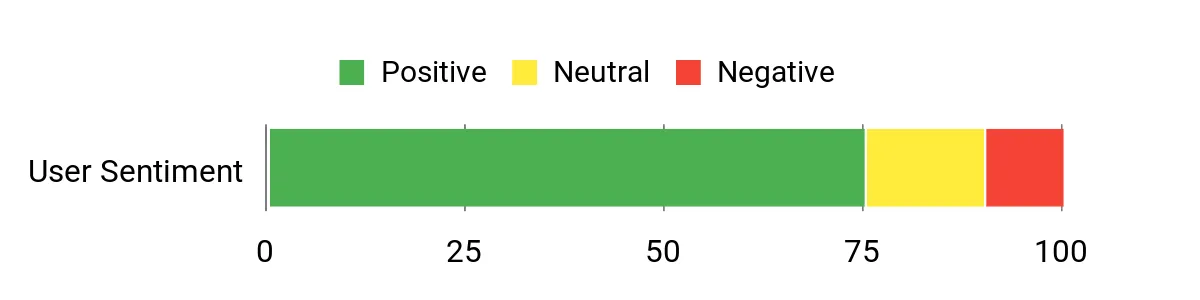
The original review summary emphasizes image quality, Fujifilm color, tactile controls, and stabilization. It also notes mixed opinions about autofocus compared with the fastest rival systems. Treat the chart below as a directional summary because its source, sample size, and date are not shown.
Why You’ll Like It
The X-T5 gives stills photographers direct controls, a high-resolution sensor, and a compact body without stripping away modern video tools. The three-way tilting screen also keeps the camera aligned with the lens for waist-level and portrait-orientation photography.
Who Should Buy It
Choose it when photography comes first and you want detailed files, strong stabilization, classic controls, and an easier travel setup than a larger professional body.
Who Should Skip It
Skip it if you mainly record yourself, need a fully articulating screen, or regularly shoot fast sports and wildlife at the highest burst rates.
Key Benefits
- 40.2MP X-Trans CMOS 5 HR sensor for detailed stills
- Up to seven stops of in-body image stabilization
- 160MP Pixel Shift Multi-Shot for suitable static scenes
- 6.2K/30p and 4K/60p video options
- Approximate body weight of 557g with battery and memory card
The X-M5 solves a common creator problem: carrying a capable camera without turning every outing into a heavy production setup. Its small body, fully articulating screen, onboard audio features, and open-gate video make it practical for vertical and horizontal content.
The tradeoffs matter. It has no electronic viewfinder and no sensor-shift IBIS. You will rely on stabilized lenses, digital movie stabilization, or a support system when you need steadier footage. The linked Amazon listing is a kit with the XC15-45mm power-zoom lens, so compare it with body-only offers carefully.
Review Themes
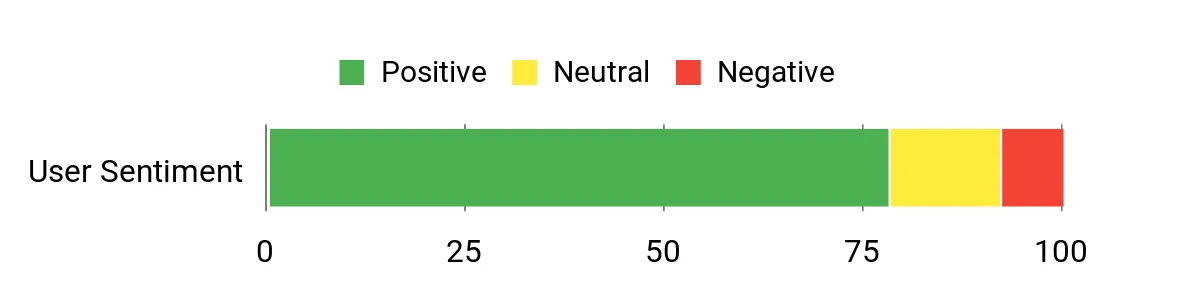
The original review summary focuses on portability, approachable controls, film simulations, autofocus, and creator tools. Treat the chart below as directional because the underlying review source and sample size are not provided.
Why You’ll Like It
You get strong image quality and advanced video options in one of the smallest current Fujifilm interchangeable-lens bodies. The dedicated film-simulation dial and simplified controls also reduce setup time for casual shooting.
Who Should Buy It
Choose it for travel, family moments, short-form video, and beginner-friendly content creation when low weight matters more than an EVF or mechanical IBIS.
Who Should Skip It
Skip it if you prefer composing through a viewfinder, shoot many handheld low-light stills, or want built-in sensor-shift stabilization.
Key Benefits
- 26.1MP X-Trans CMOS 4 sensor with X-Processor 5
- 6.2K/30p open-gate and 4K/60p video options
- Vari-angle touchscreen and three-microphone system
- Subject-detection autofocus and a film-simulation dial
- Approximate body weight of 355g with battery and memory card
This is the specialist option for buyers who need exceptional detail, broad tonal control, and large files for demanding retouching or output. It also offers a more modern autofocus and video workflow than older medium-format cameras, making it useful beyond static studio work.
The GFX100 II is not a direct upgrade path from an X Series body. It uses the separate G mount, and both the camera and lenses are larger and more expensive. The body weighs about 948g with battery and memory card before the detachable EVF, or about 1,030g with the EVF attached.
Review Themes
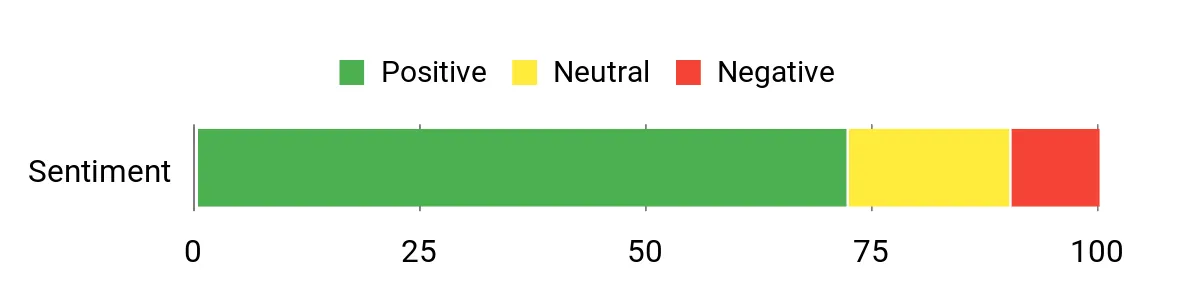
The original review summary highlights resolution, autofocus, EVF quality, and professional workflow features. Treat the chart below as directional because the source, sample size, and collection date are not displayed.
Why You’ll Like It
The larger sensor and 102MP resolution give commercial and fine-art photographers exceptional room for cropping, retouching, and large-format output. Its 8K and 4K recording options also support mixed stills-and-video production.
Who Should Buy It
Choose it when image quality and production flexibility justify the higher system cost, larger lenses, heavier files, and more demanding storage needs.
Who Should Skip It
Skip it for casual travel, lightweight everyday use, or sports work where the X-H2S offers a faster and more practical system.
Key Benefits
- 102MP GFX-format sensor for high-detail stills
- Up to 8 fps full-resolution continuous shooting
- Detachable 9.44-million-dot electronic viewfinder
- 8K/30p and 4K/60p video options
- Approximate weight of 948g without the EVF or 1,030g with it, including battery and memory card
The stacked sensor is the main reason to choose this model. It reduces readout time and supports faster bursts with less rolling-shutter distortion than Fujifilm’s high-resolution APS-C bodies. The deep grip, large buffer, dual-format card slots, and professional controls also suit long assignments.
For video, the X-H2S can record ProRes internally to compatible CFexpress Type B media and offers high-frame-rate 4K. The tradeoff is that its 26.16MP files do not match the X-T5 for resolution, and the body is larger and heavier.
Review Themes
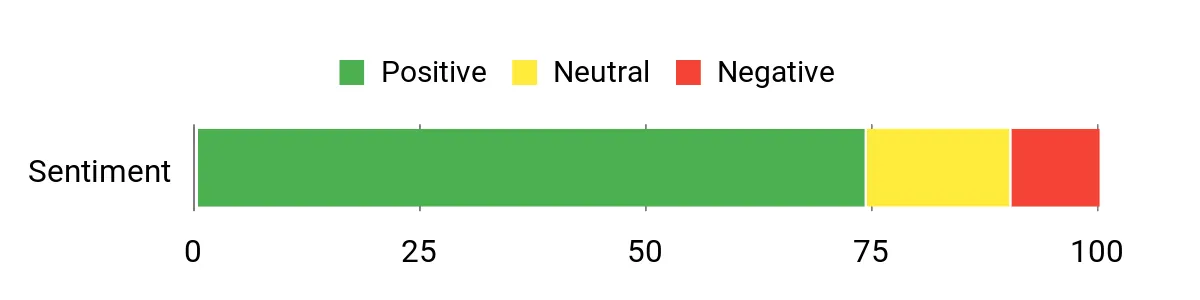
The original review summary emphasizes speed, tracking, handling, EVF clarity, and video tools. Treat the chart below as directional because the article does not show the review source, sample size, or collection date.
Why You’ll Like It
The X-H2S helps you capture unpredictable movement without giving up strong video features. Custom settings, a secure grip, and fast card support also make it easier to switch between stills and motion on assignment.
Who Should Buy It
Choose it when autofocus tracking, burst speed, buffer performance, reduced rolling shutter, and professional video formats matter more than maximum still-image resolution.
Who Should Skip It
Skip it if you mostly shoot landscapes, portraits, or controlled scenes and would benefit more from the X-T5’s 40.2MP sensor and smaller body.
Key Benefits
- 26.16MP stacked X-Trans CMOS 5 HS sensor
- Up to 40 fps electronic-shutter continuous shooting
- Up to seven stops of in-body image stabilization
- 6.2K/30p, 4K/120p, and internal ProRes options
- Approximate body weight of 660g with battery and memory card
The X-S20 fills the gap between the tiny X-M5 and more photography-focused X-T5. It gives creators a viewfinder, mechanical IBIS, a comfortable grip, a fully articulating screen, and strong battery life while remaining compact enough for travel.
It records to SD media and does not provide the stacked sensor or CFexpress workflow of the X-H2S. It also lacks the X-T5’s 40.2MP sensor. For most everyday creators, however, its balance of stabilization, video, stills quality, and portability is easier to justify.
Review Themes
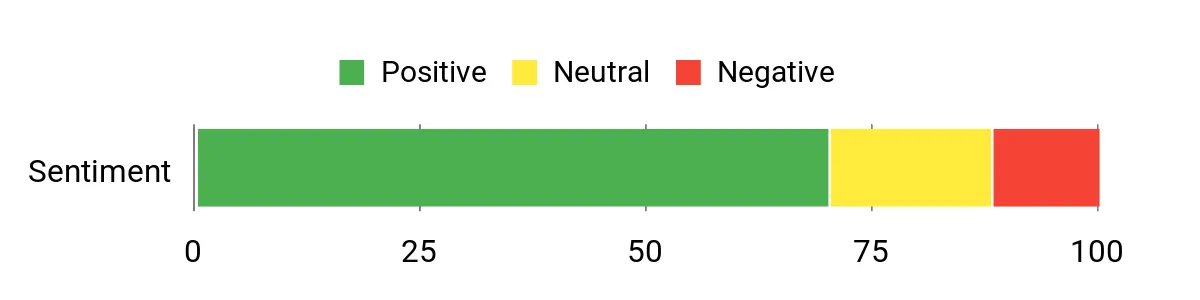
The original review summary focuses on versatility, grip comfort, stabilization, video features, and portability. Treat the chart below as directional because the underlying review source and sample size are not shown.
Why You’ll Like It
You get a practical hybrid body with a viewfinder, strong stabilization, a vari-angle screen, and open-gate video. It is easier to handhold than the X-M5 and less specialized than the X-H2S.
Who Should Buy It
Choose it when you want one camera for travel photos, family events, handheld video, vlogging, and longer shooting days.
Who Should Skip It
Skip it if you require dual-card redundancy, the fastest action performance, CFexpress-based workflows, or the X-T5’s higher-resolution sensor.
Key Benefits
- 26.1MP X-Trans CMOS 4 sensor with X-Processor 5
- Up to seven stops of in-body image stabilization
- 6.2K/30p open-gate and 4K/60p video
- Vari-angle touchscreen, EVF, and creator-focused controls
- Approximate body weight of 491g with battery and memory card
FAQ
Which Fujifilm Camera Should I Choose?
Choose the X-T5 when high-resolution photography and classic controls are your priorities. Pick the X-H2S for sports, wildlife, events, and fast-moving subjects. The X-S20 is the most balanced stabilized hybrid for travel and vlogging, while the smaller X-M5 suits creators who can accept no EVF and no mechanical IBIS.
The GFX100 II is the specialist option for professional buyers who need 102MP files and the larger GFX sensor. Remember that G-mount lenses are not compatible with X Series bodies.
How Reliable Are Fujifilm Autofocus and Stabilization?
Autofocus performance depends on the body, lens, subject, settings, and firmware. The stacked-sensor X-H2S is the strongest option here for fast tracking. The X-T5, X-S20, X-M5, and GFX100 II also offer subject-detection modes, but they serve different speeds and use cases.
The X-T5, GFX100 II, X-H2S, and X-S20 include sensor-shift stabilization. The X-M5 does not; it uses digital stabilization for movie mode and can benefit from lenses with optical stabilization.
Are Fujifilm Cameras Good for Video?
Yes. The X-M5 and X-S20 offer 6.2K open-gate recording for flexible reframing, the X-H2S adds 4K/120p and internal ProRes options, the X-T5 records 6.2K/30p and 4K/60p, and the GFX100 II reaches 8K/30p. Match the camera to your recording time, card requirements, stabilization needs, screen design, and post-production workflow.
What Is the Difference Between Fujifilm X Series and GFX?
X Series cameras use APS-C sensors and X-mount lenses. They are generally smaller, lighter, and better suited to travel, everyday photography, and fast hybrid work. GFX cameras use a larger 43.8 x 32.9mm sensor and G-mount lenses, prioritizing resolution and image quality over compactness.
Do These Amazon Listings Include a Lens?
The linked X-M5 listing is presented as a kit with an XC15-45mm lens. The X-T5, GFX100 II, X-H2S, and X-S20 links are presented as camera-body listings in the supplied article. Confirm the current Amazon title and package contents before buying because sellers and bundles can change.
Wrapping Up
The X-T5 is the safest recommendation for a stills-first buyer who wants high resolution, strong stabilization, and classic Fujifilm handling. The X-S20 is the better everyday hybrid when a vari-angle screen, long battery life, and handheld video matter more than 40.2MP files.
Choose the X-M5 for the smallest creator setup, the X-H2S for demanding action, or the GFX100 II for professional high-resolution work. Your lens plan, preferred screen style, stabilization needs, and total carry weight should decide the final purchase.
Final Recommendation: Start with the X-T5 for photography or the X-S20 for video-heavy hybrid use. Move to the X-H2S only when speed is essential, choose the X-M5 when low weight is the priority, and consider the GFX100 II when your work clearly benefits from a larger sensor and 102MP files.
Detailed Specification Comparison
| Product Name | Image | Sensor Resolution | Maximum Video | Maximum Continuous Shooting | Approximate Body Weight |
|---|---|---|---|---|---|
| Fujifilm X-T5 Mirrorless Digital Camera Body – Black |
 |
40.2 MP | 6.2K/30p; 4K/60p | 20 fps electronic with 1.29x crop; 15 fps mechanical | 557g / 1.23 lb |
| Fujifilm X-M5 Mirrorless Digital Camera XC15-45mmF3.5-5.6 OIS PZ Lens Kit – Silver |
 |
26.1 MP | 6.2K/30p; 4K/60p | 30 fps electronic with 1.25x crop; 20 fps electronic without crop | 355g / 0.78 lb body only |
| Fujifilm GFX100 II Mirrorless Medium Format Camera Body |
 |
102 MP | 8K/30p; 4K/60p | Up to 8 fps at full resolution | 948g / 2.09 lb without EVF; 1,030g / 2.27 lb with EVF |
| Fujifilm X-H2S Mirrorless Camera Body – Black |
 |
26.16 MP | 6.2K/30p; 4K/120p | 40 fps electronic | 660g / 1.46 lb |
| Fujifilm X-S20 Mirrorless Camera Body Black |
 |
26.1 MP | 6.2K/30p; 4K/60p | 30 fps electronic with 1.25x crop; 20 fps electronic without crop | 491g / 1.08 lb |
Weight figures include the battery and memory card but exclude the lens. The GFX100 II figure is shown both without and with its detachable EVF. Burst speed, crop, buffer depth, and available video modes depend on camera settings and compatible media.
